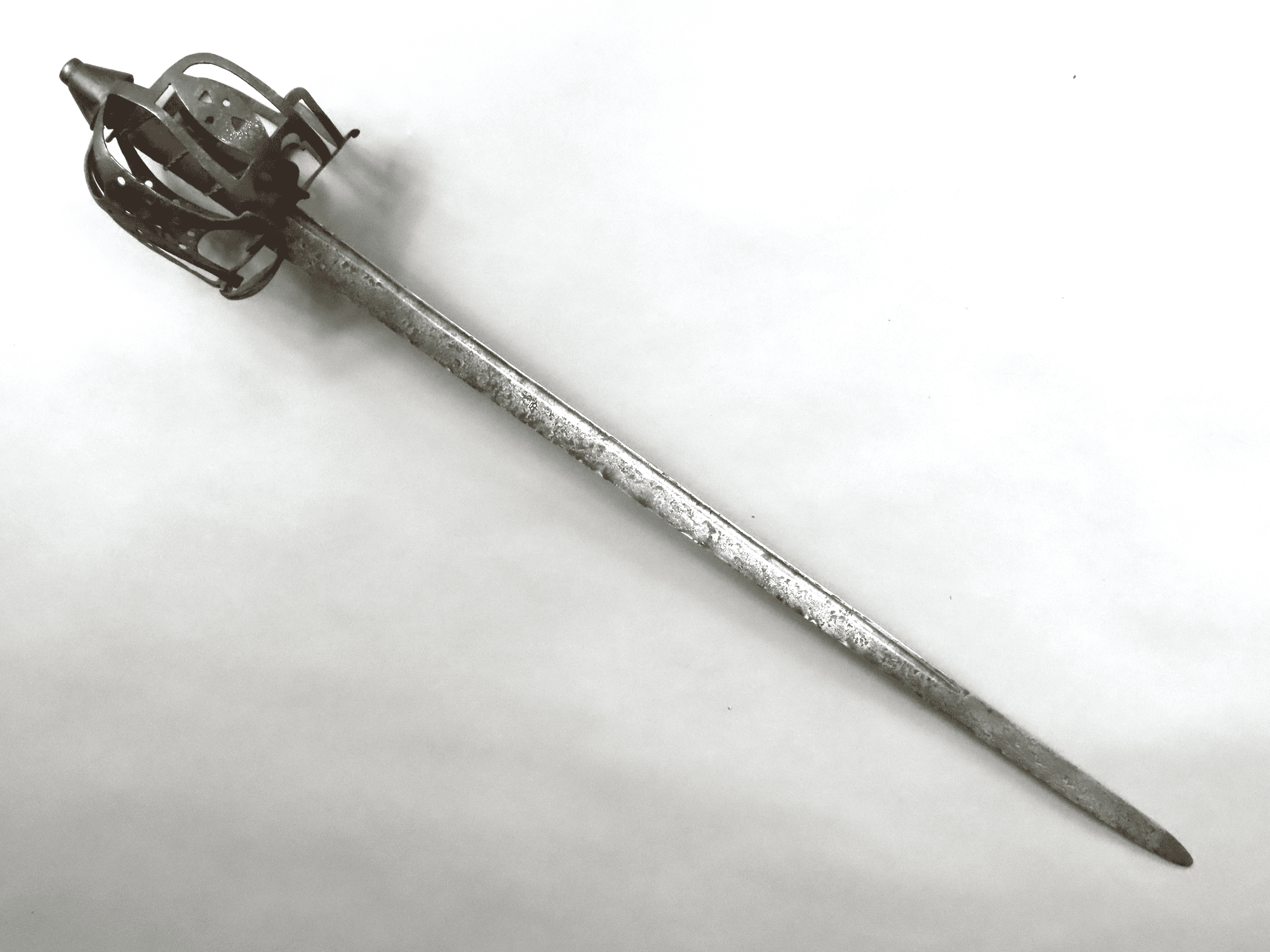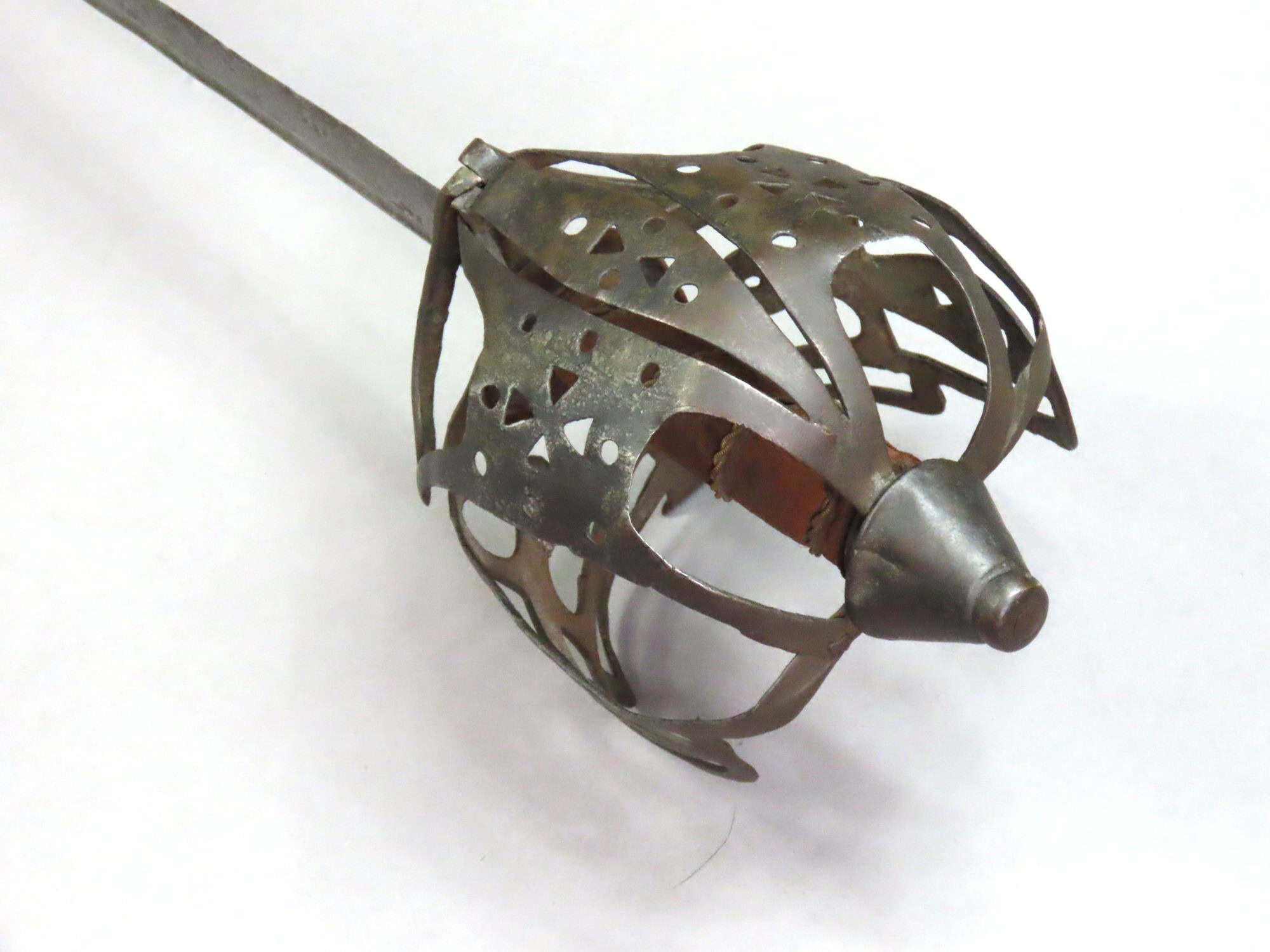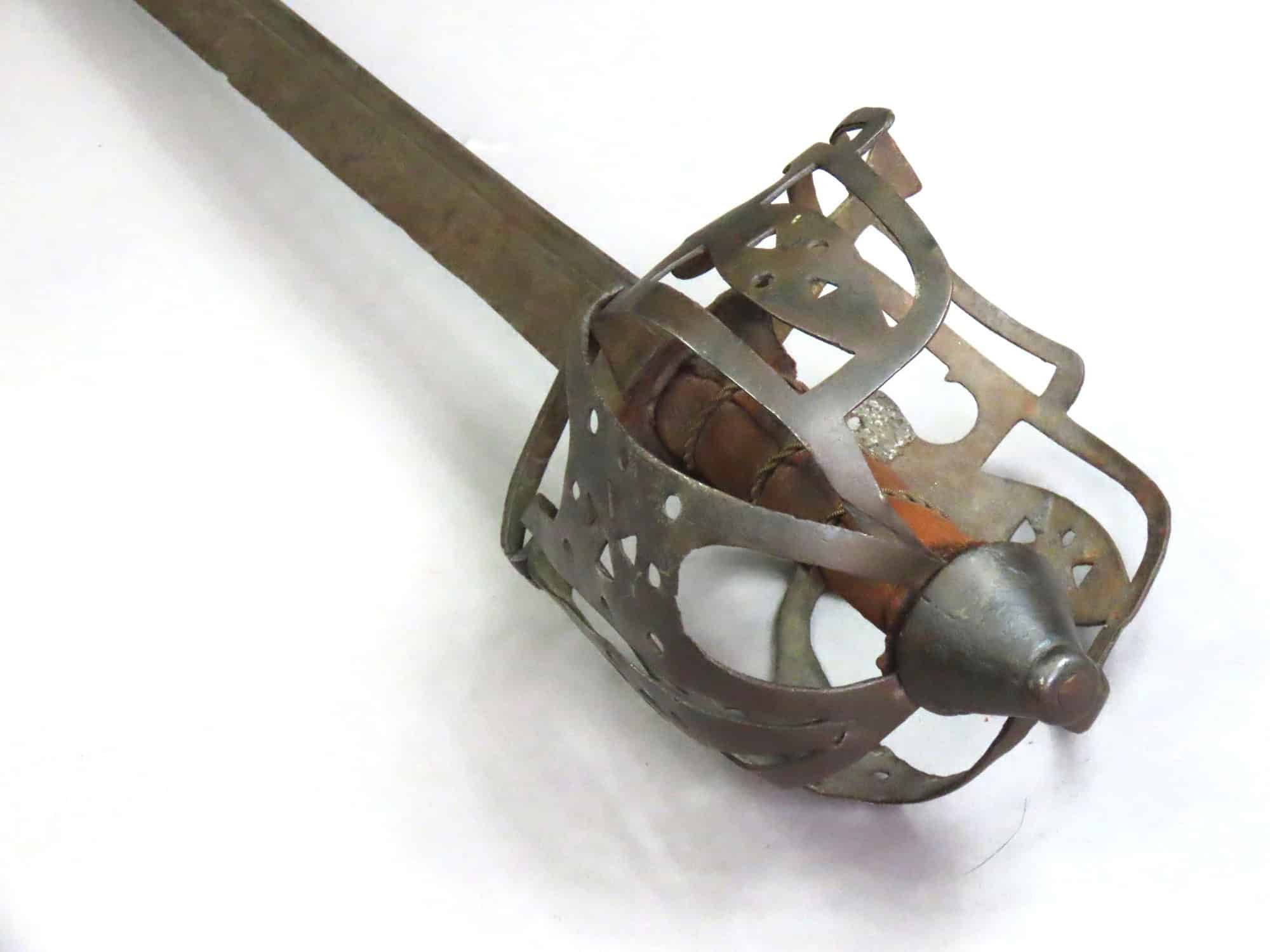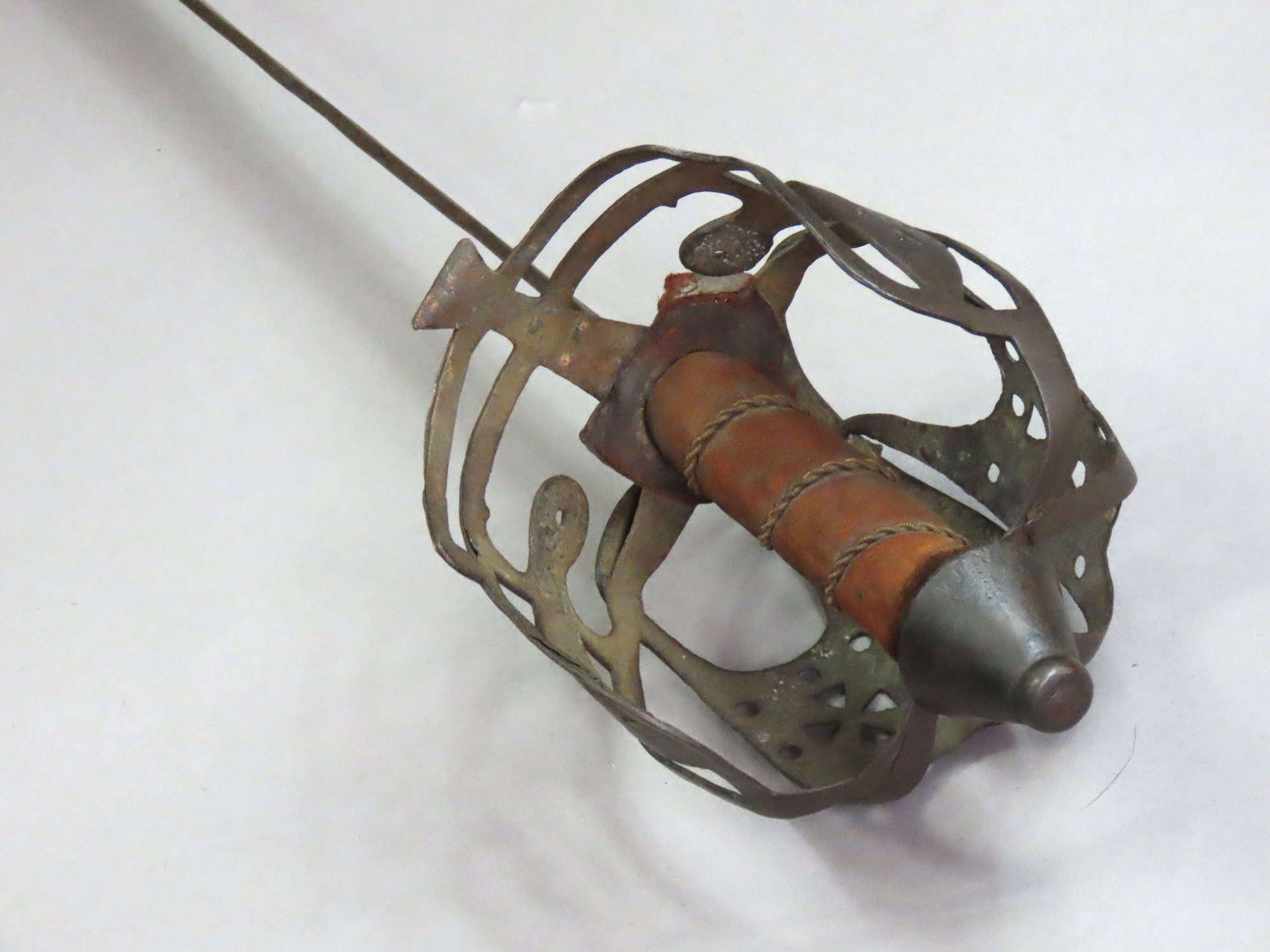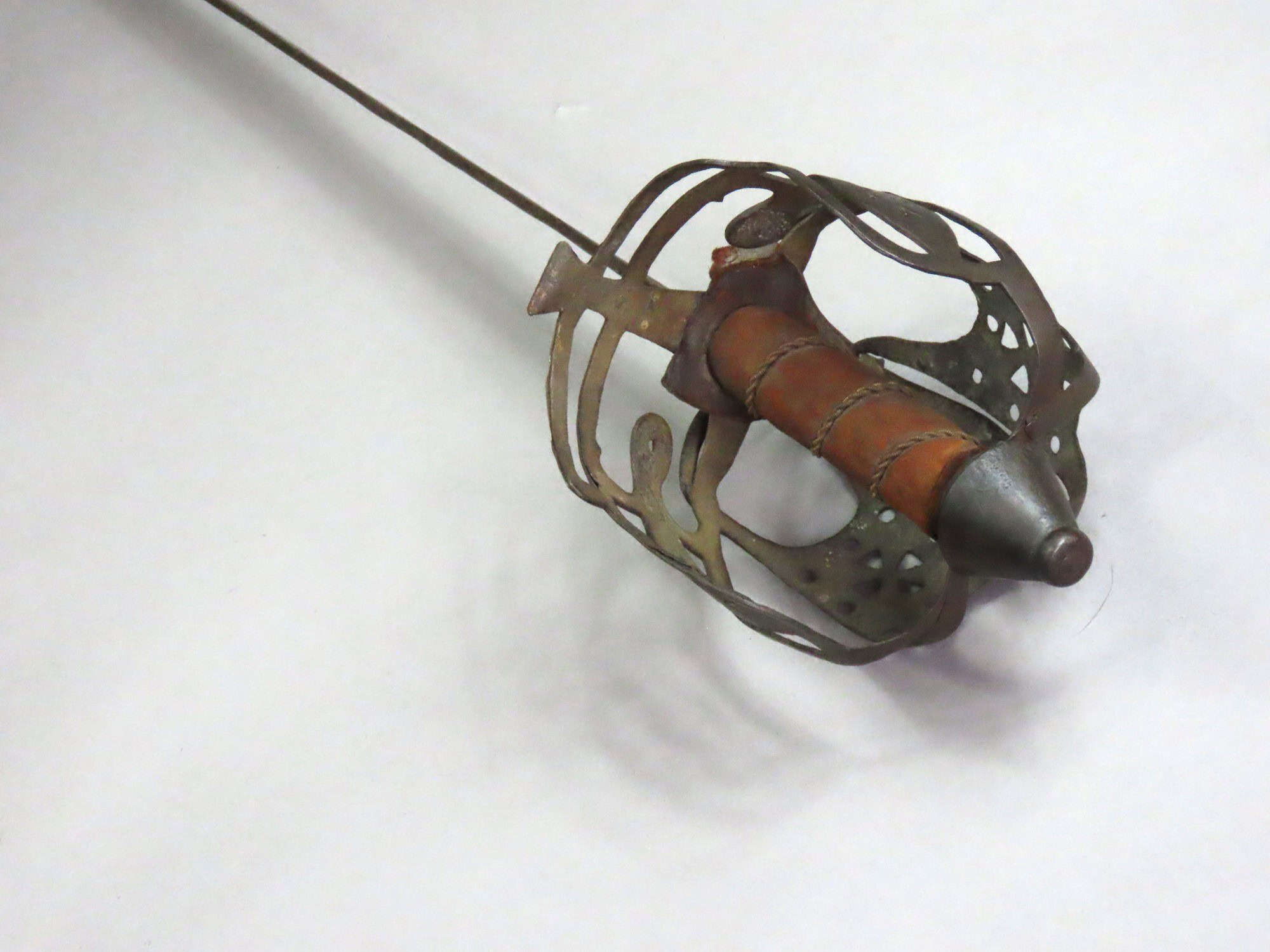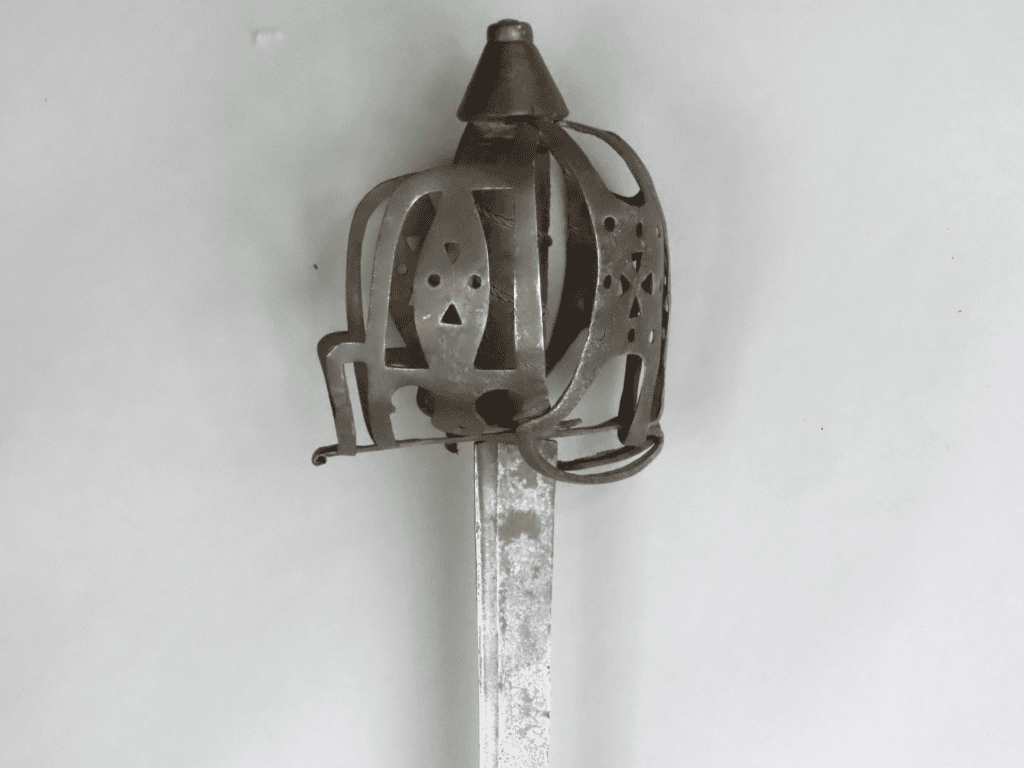
Scottish Basket Hilted Sword made for a Highland Regiment by Dru Drury of London circa 1775
To enquire about this itemplease click here
Price: £1,575
Ref: 62022552
Item Description
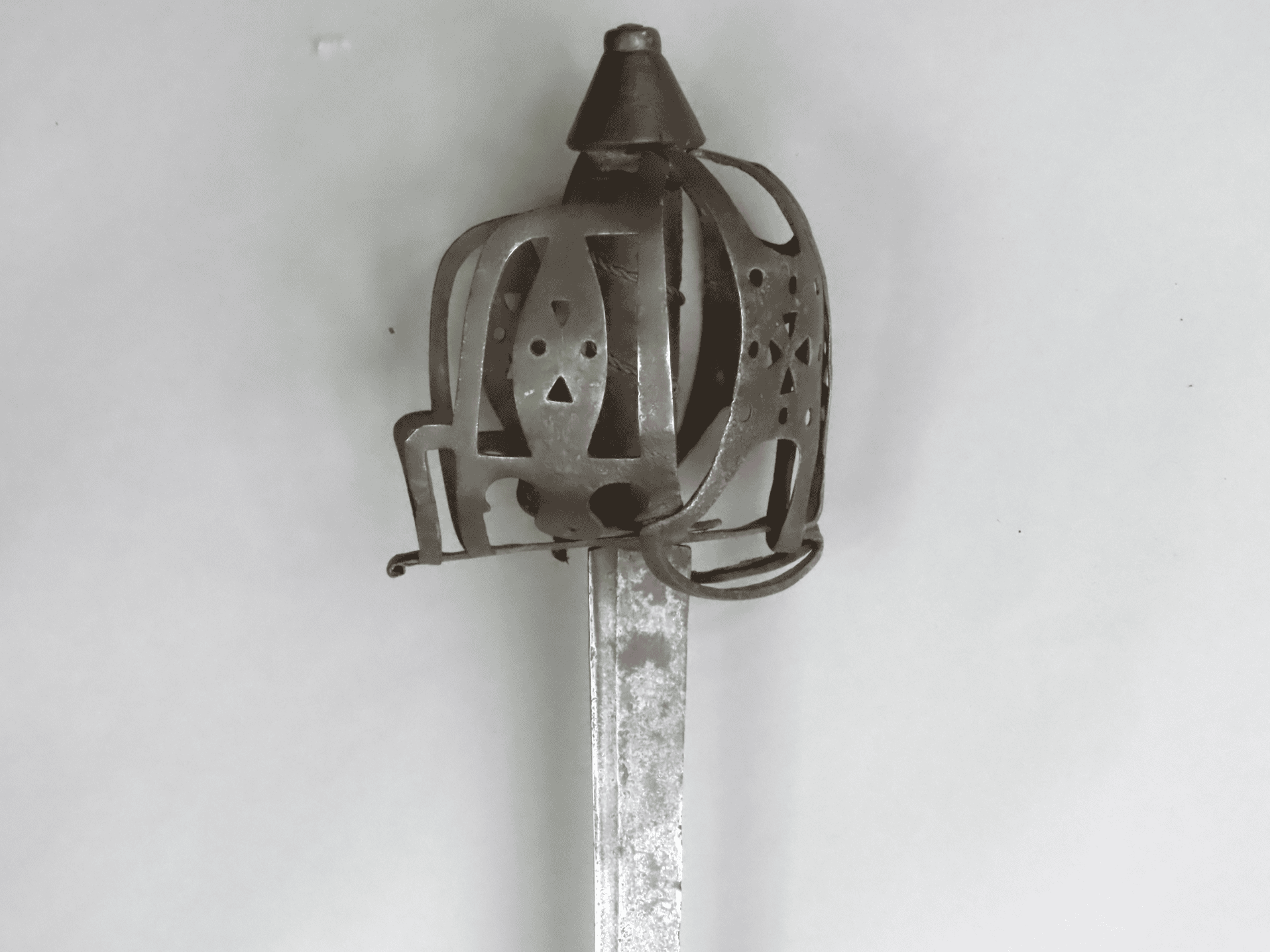
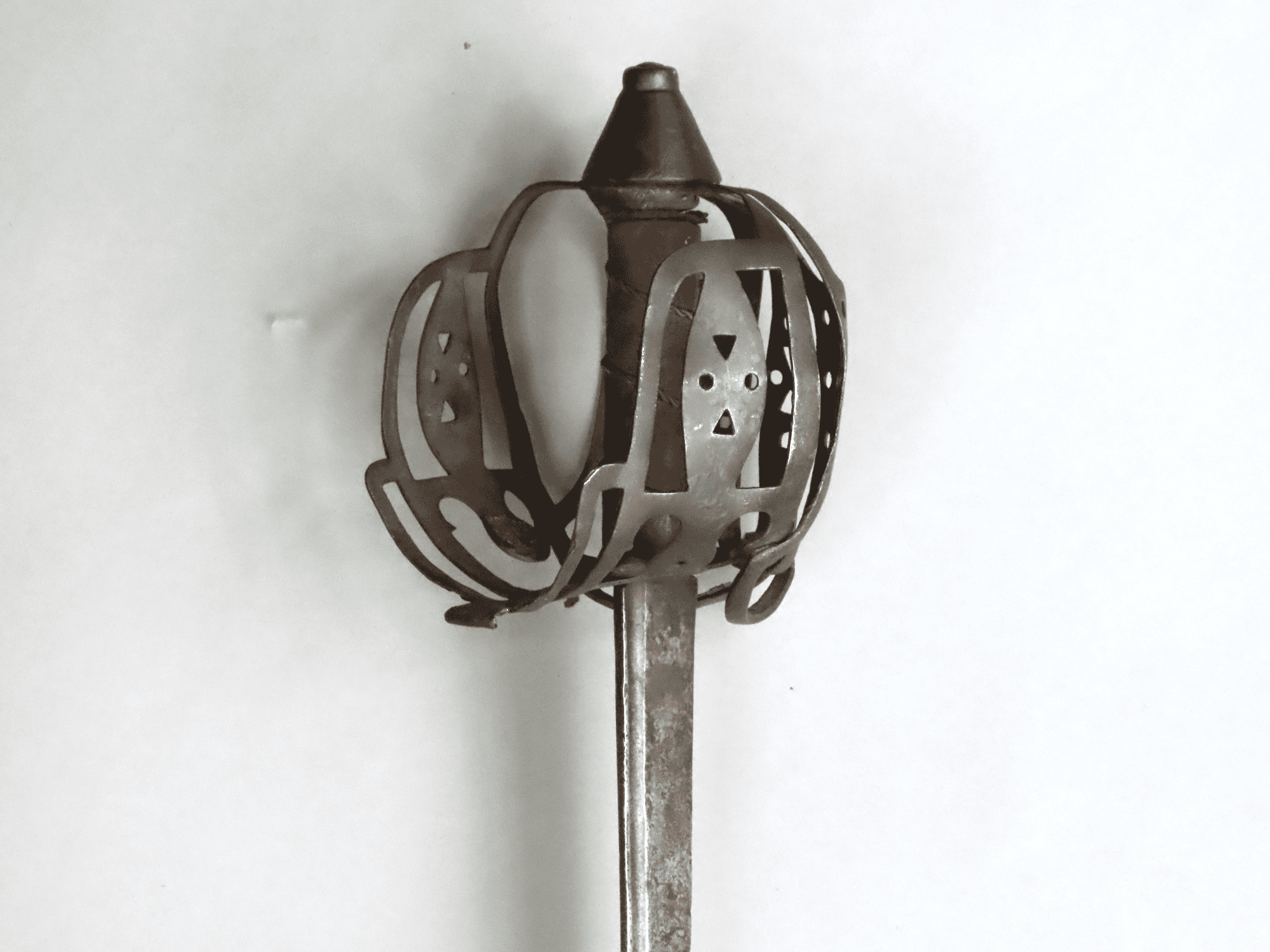
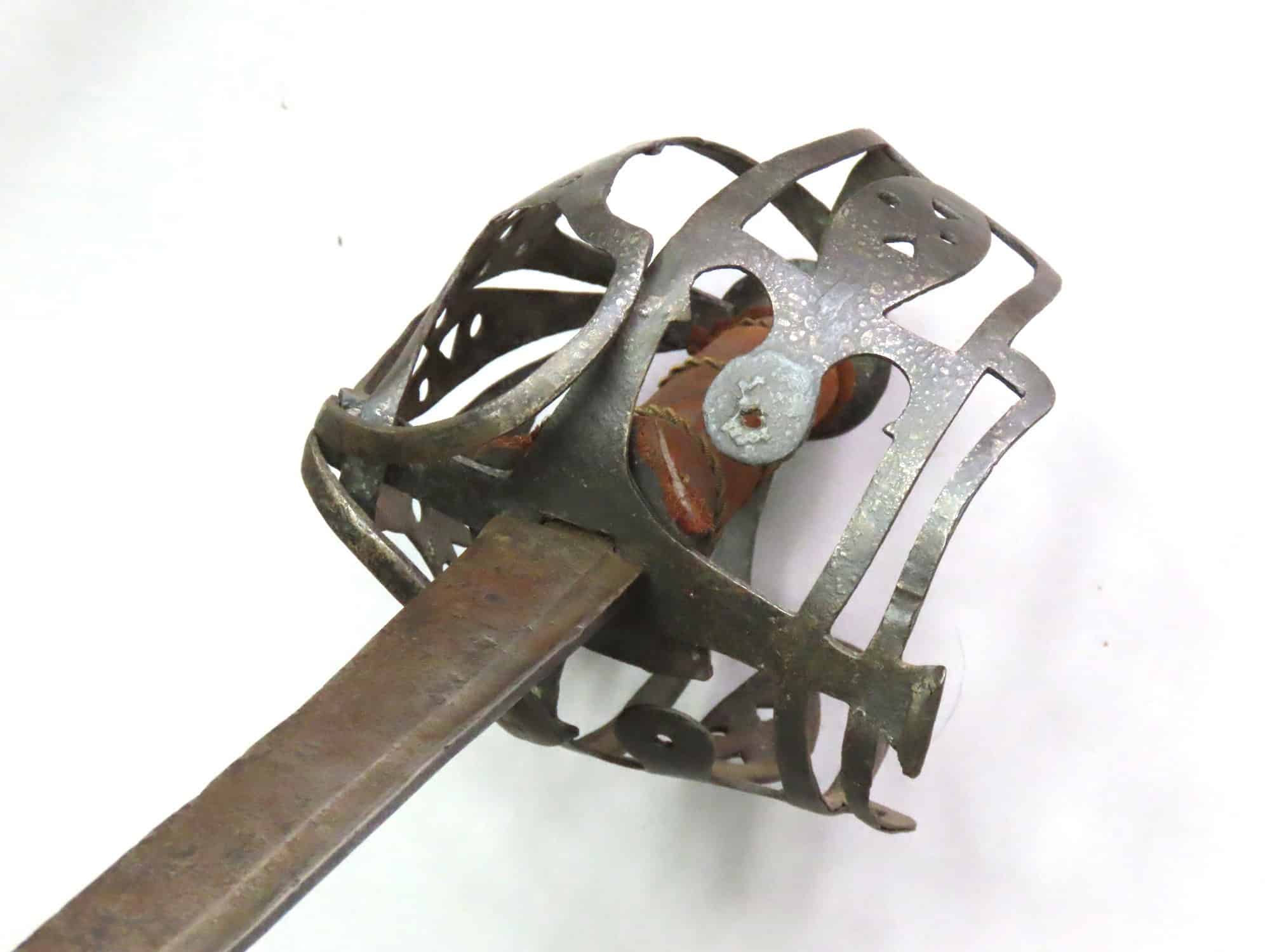
A representative example of a distinctive type of Scottish munitions grade military basket hilted sword dating to the middle to third quarter of the 18th century. These swords were issued to soldiers serving in Scottish Highland infantry regiments such as the 42nd (Black Watch), and are often associated with their service in the French / Indian and Revolutionary Wars in North America. Some swords bear store or rack numbers marked into the pommels and guards, and occasionally amongst these marks the specific regiment can be identified. Most are unmarked. The swords were funded by regimental colonels from their allowances. Anthony D Darling in his “Weapons of the Highland Regiments 1740 to 80” (Historical Arms Series No 33) devotes a section to the background of this sword type.
This hilt type evolved in Scotland towards the mid 18th century as a simplified version of the earlier more usual Scottish basket hilted sword, intended to be cheaper to produce for government troops recruited from the Highlands. The 43rd, later to become the 42nd , the Black Watch, was first formed for this purpose.
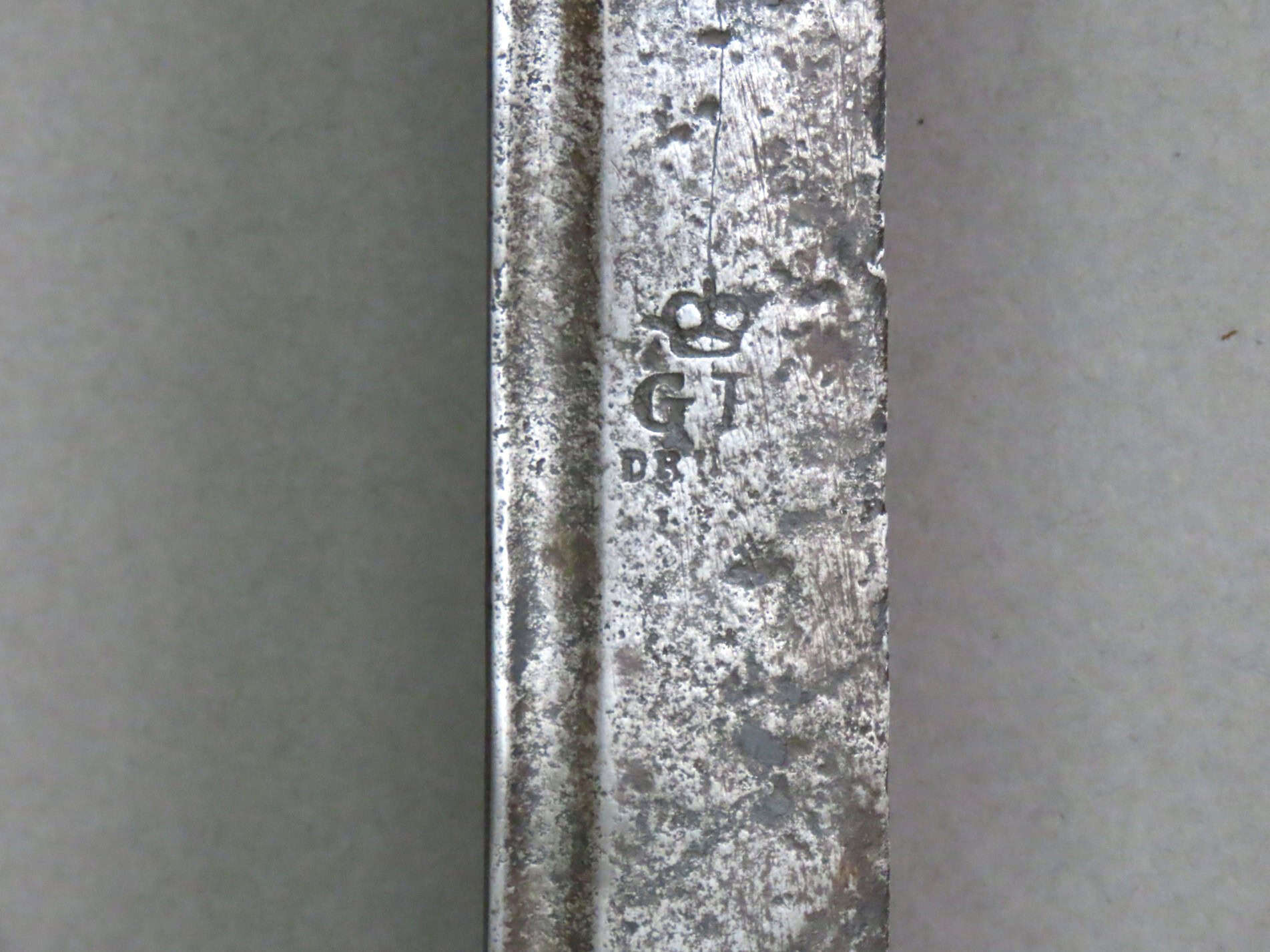
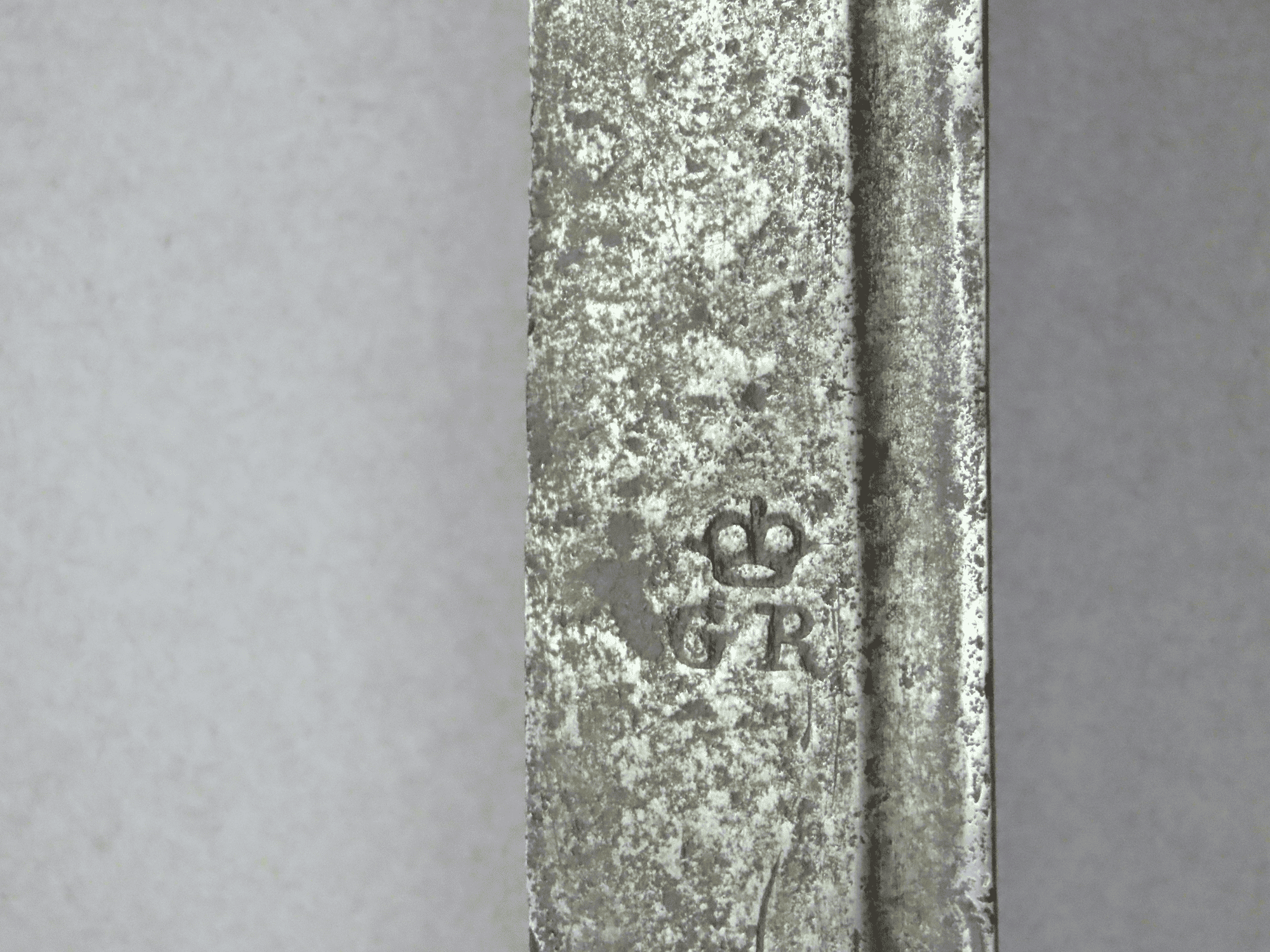
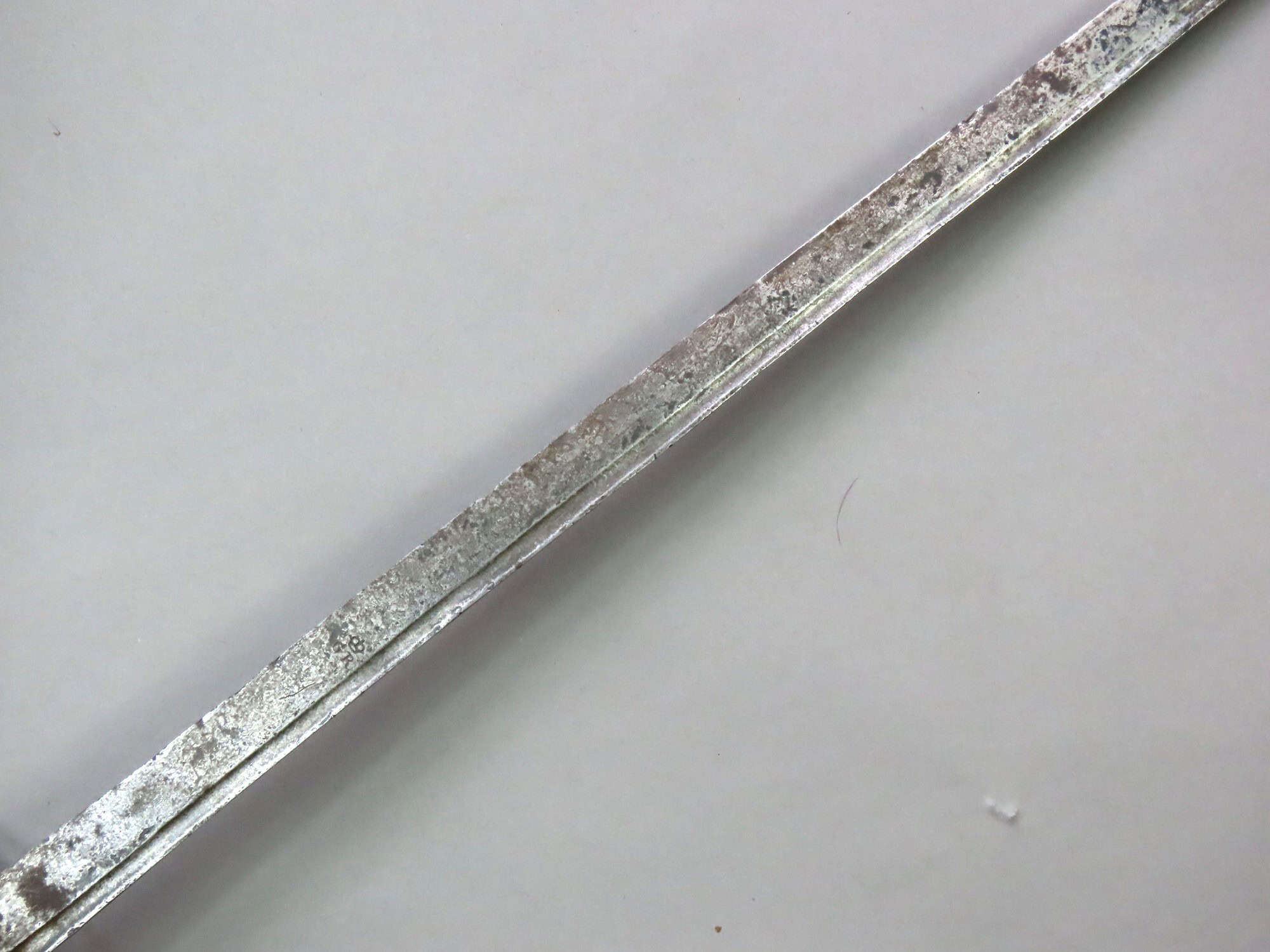
Around 1757 production of these swords transferred to England as demand grew due to the increasing numbers of Highlanders being recruited into the newly raised Highland regiments. England was industrially better placed to fulfill bigger contracts in a more cost-effective and timely manner. Production fell mainly into the hands of one firm first owned by Nathaniel Jeffreys then taken over by Dru Drury in 1771. Little is known of the exact process of manufacture, but it is thought that the hilts, blades, scabbards, and grips were sourced from Birmingham, Sheffield and London, then the swords were assembled in workshops in London. Drury and Jeffreys commissioned similar single edged blades, usually between circa 29 inches and 32 inches long, as witnessed on surviving swords, with single fullers. Generally they stamped their blades both sides in a similar manner and size with a crown, “G R” beneath, and the business name below.
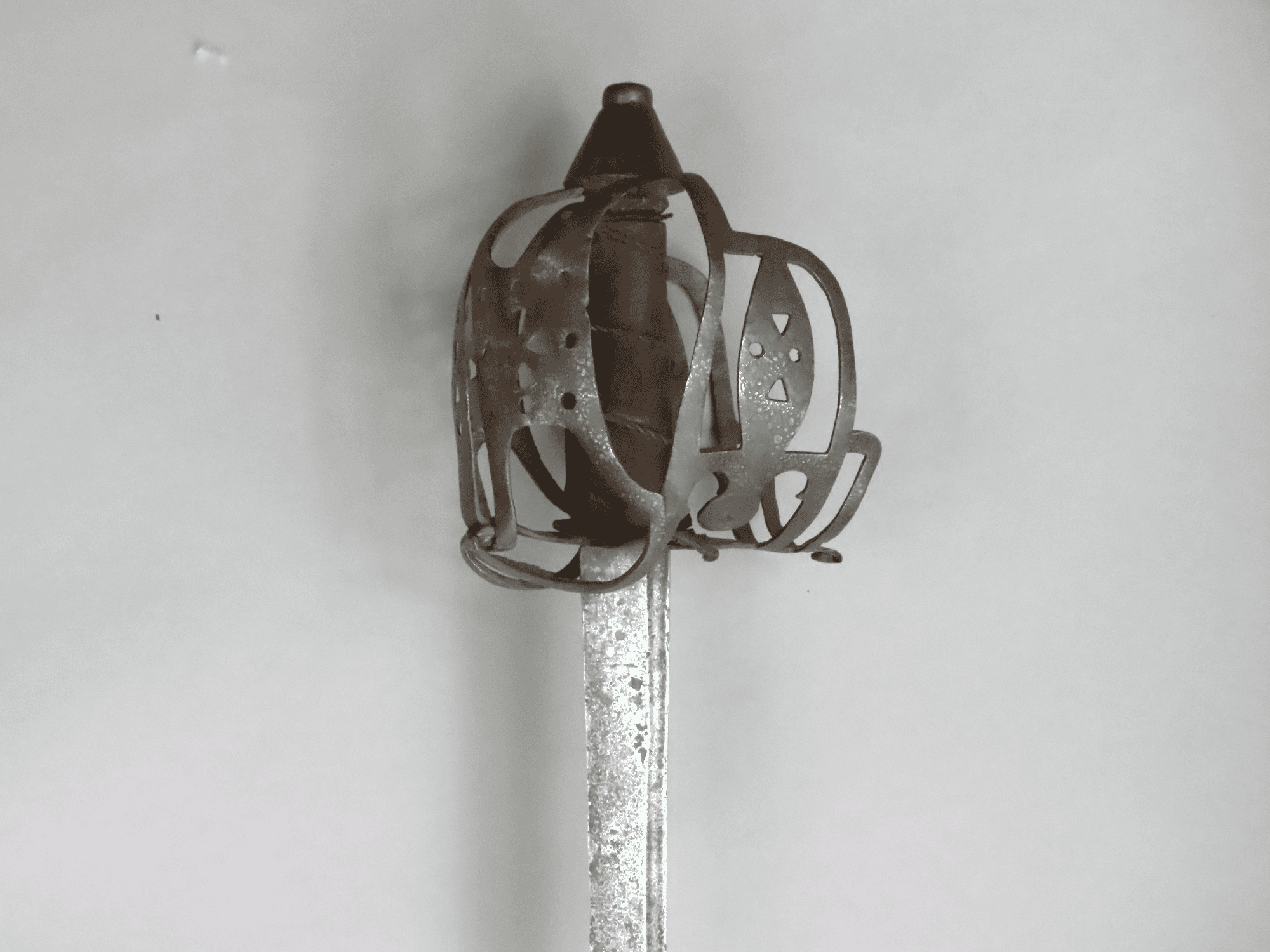
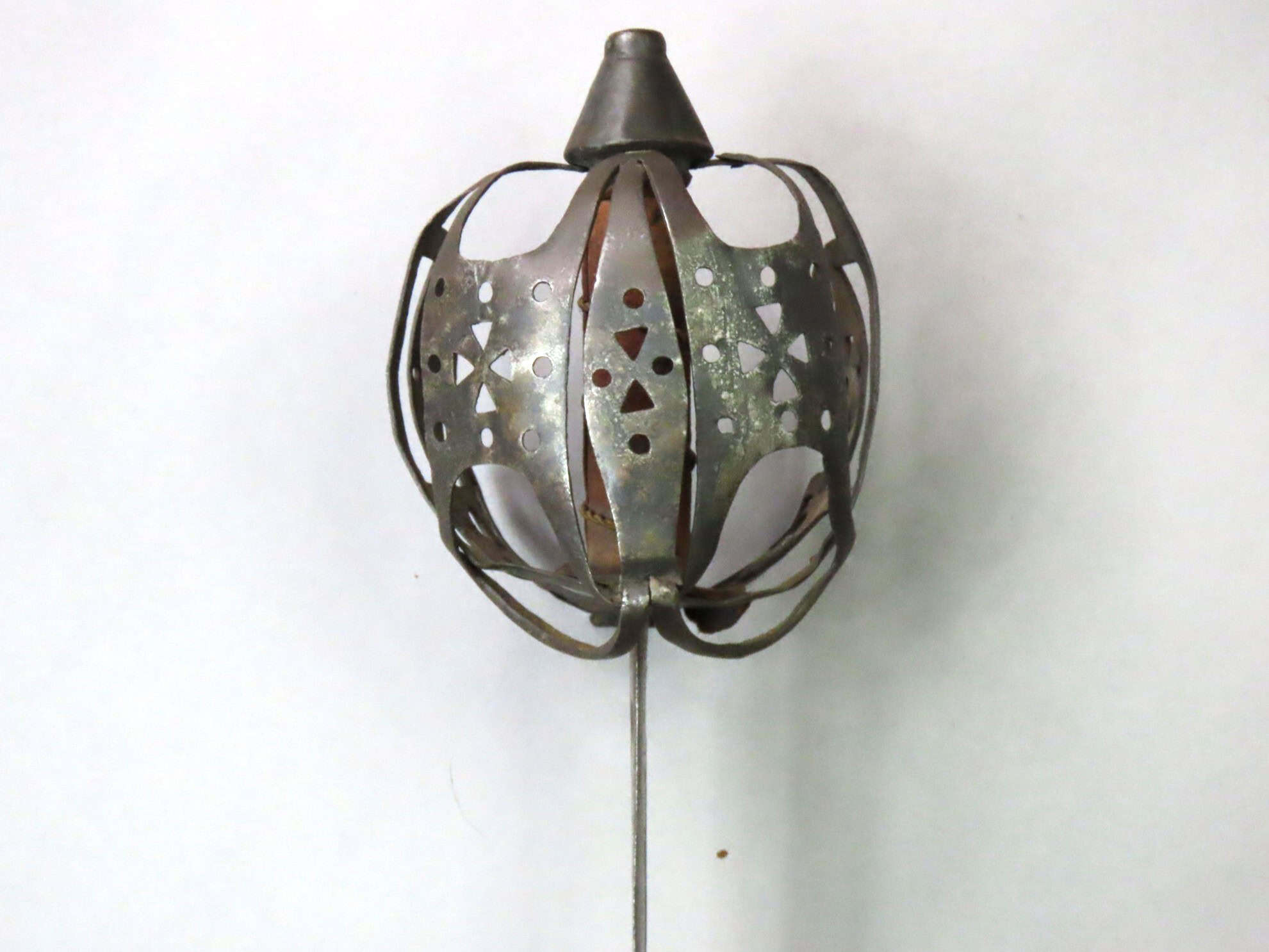
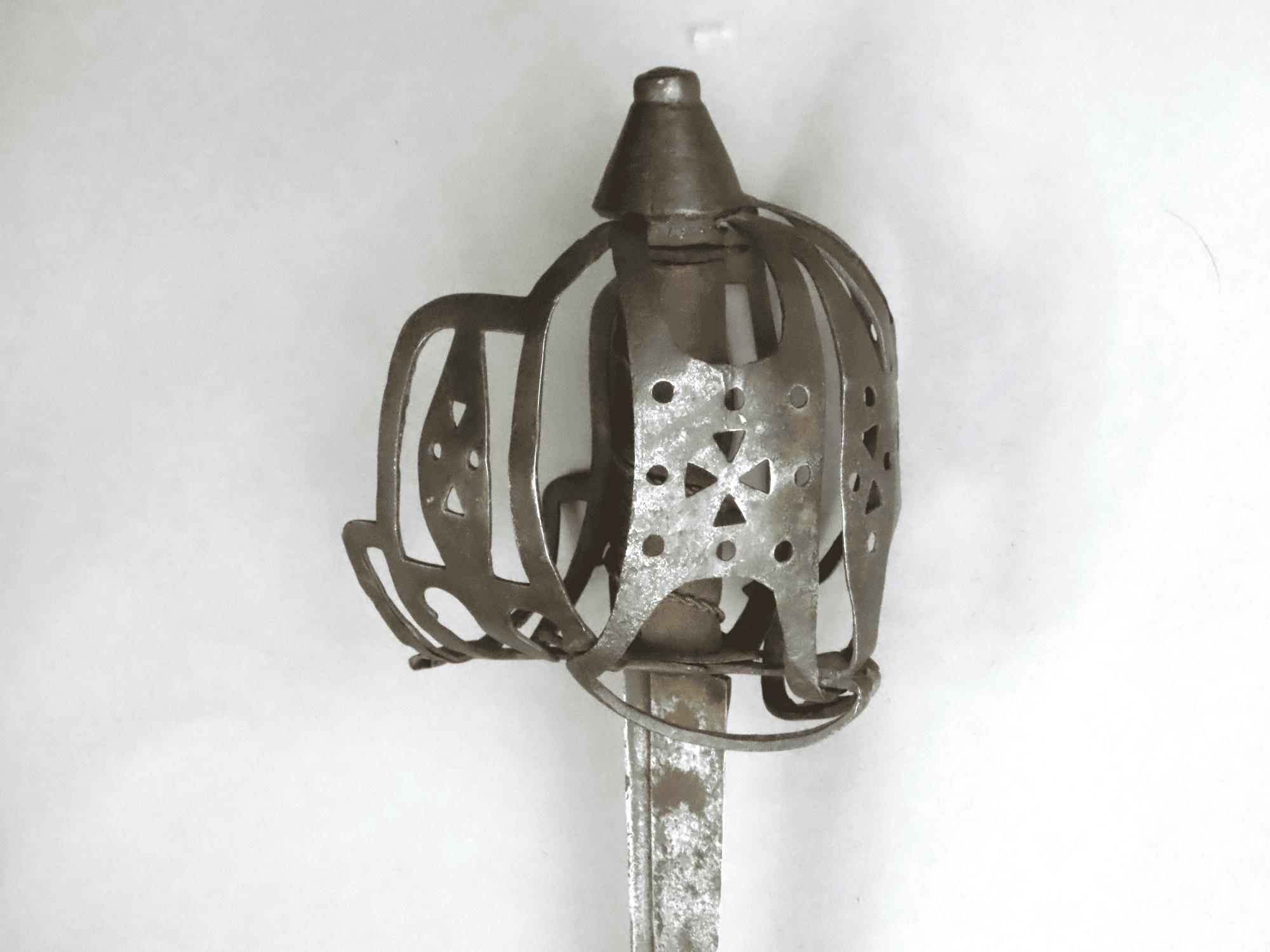
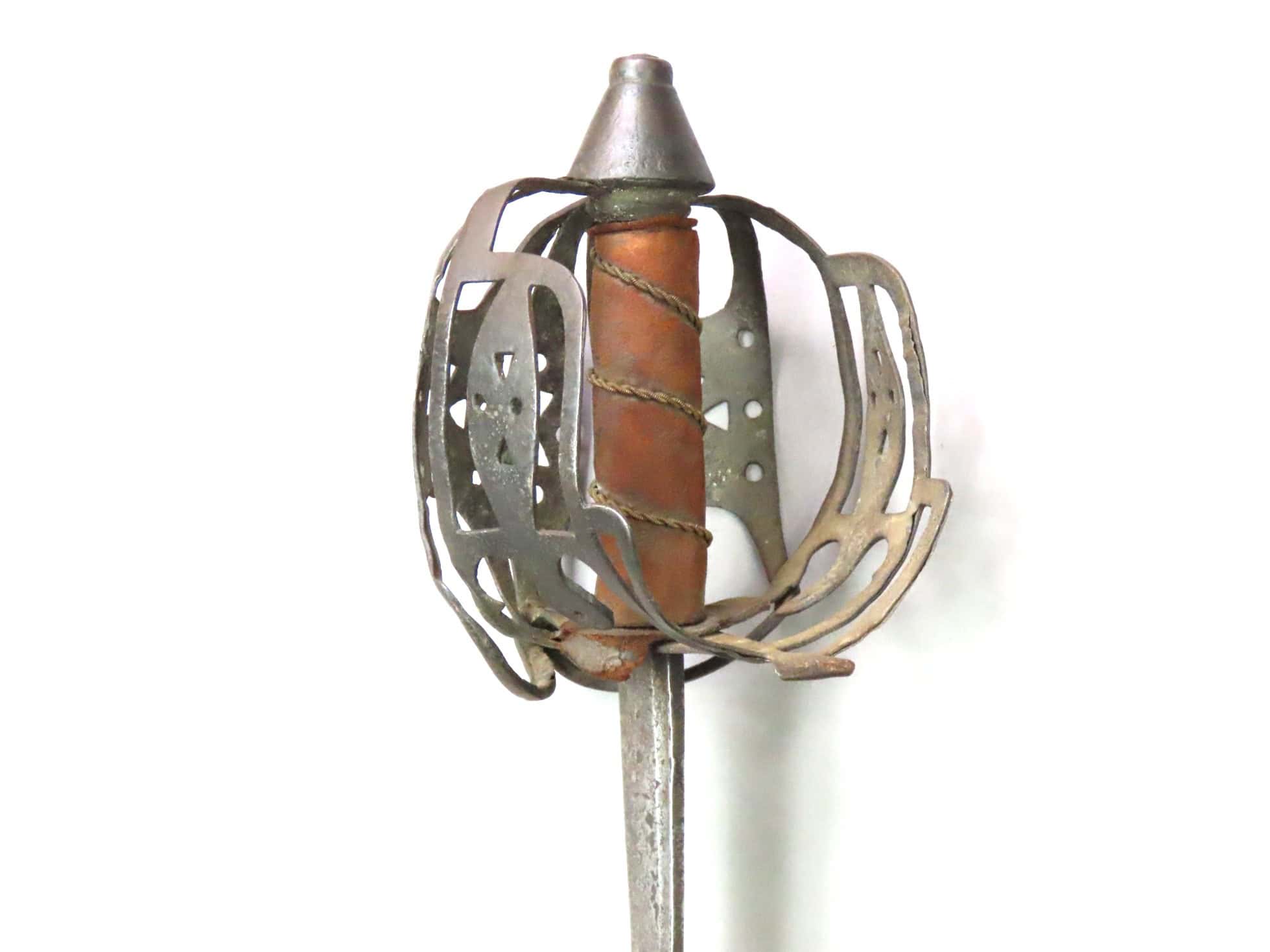
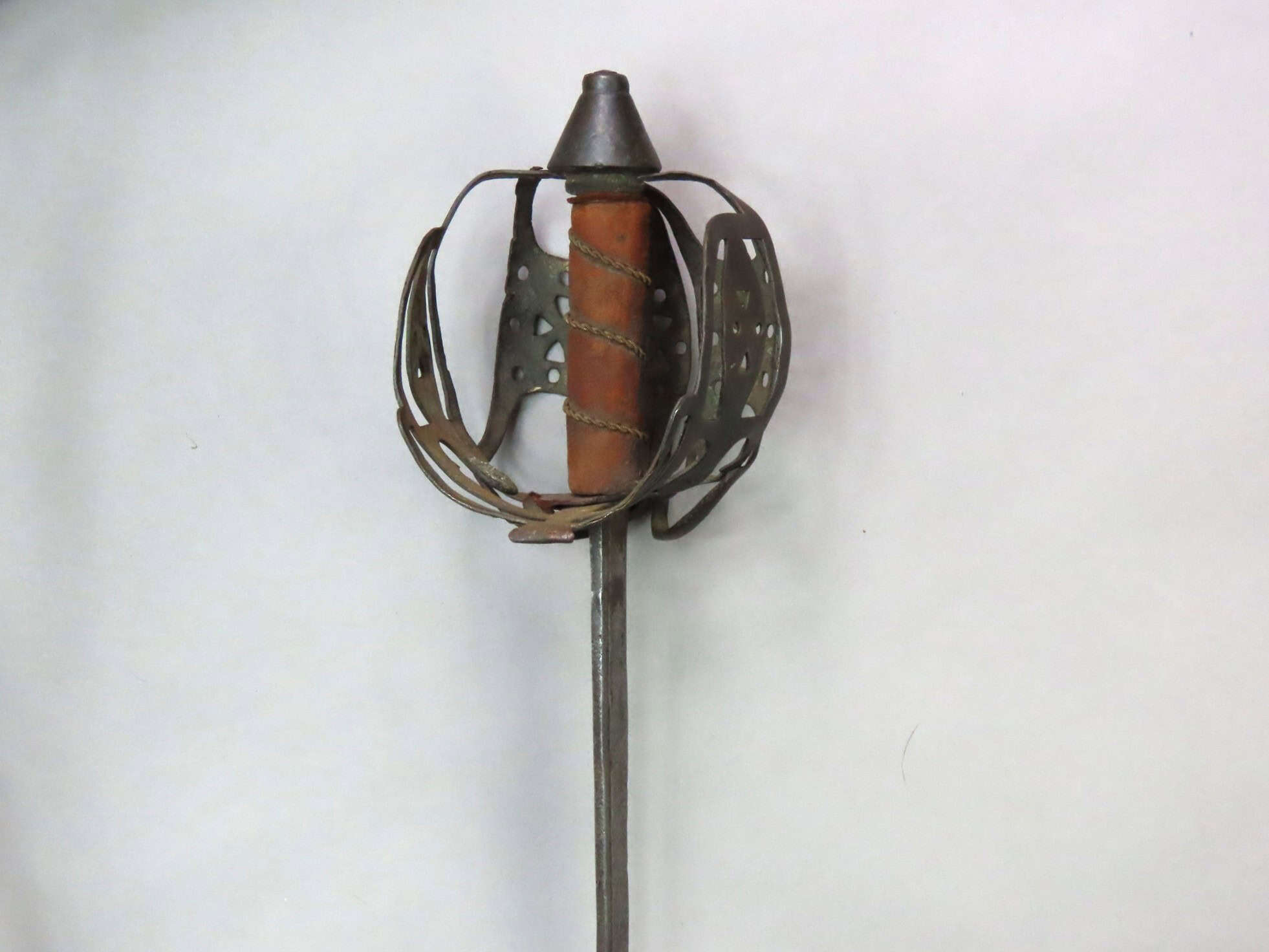
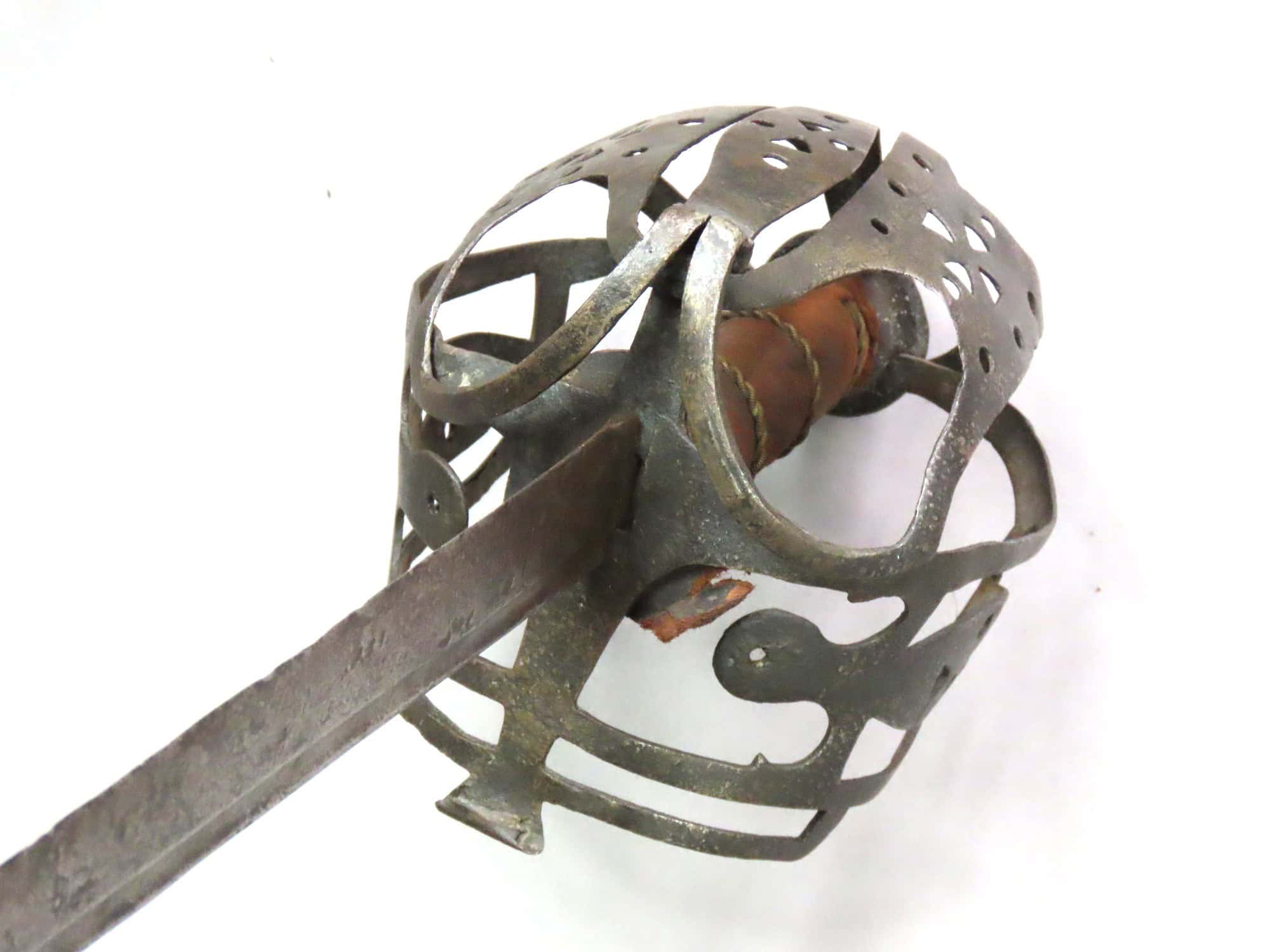
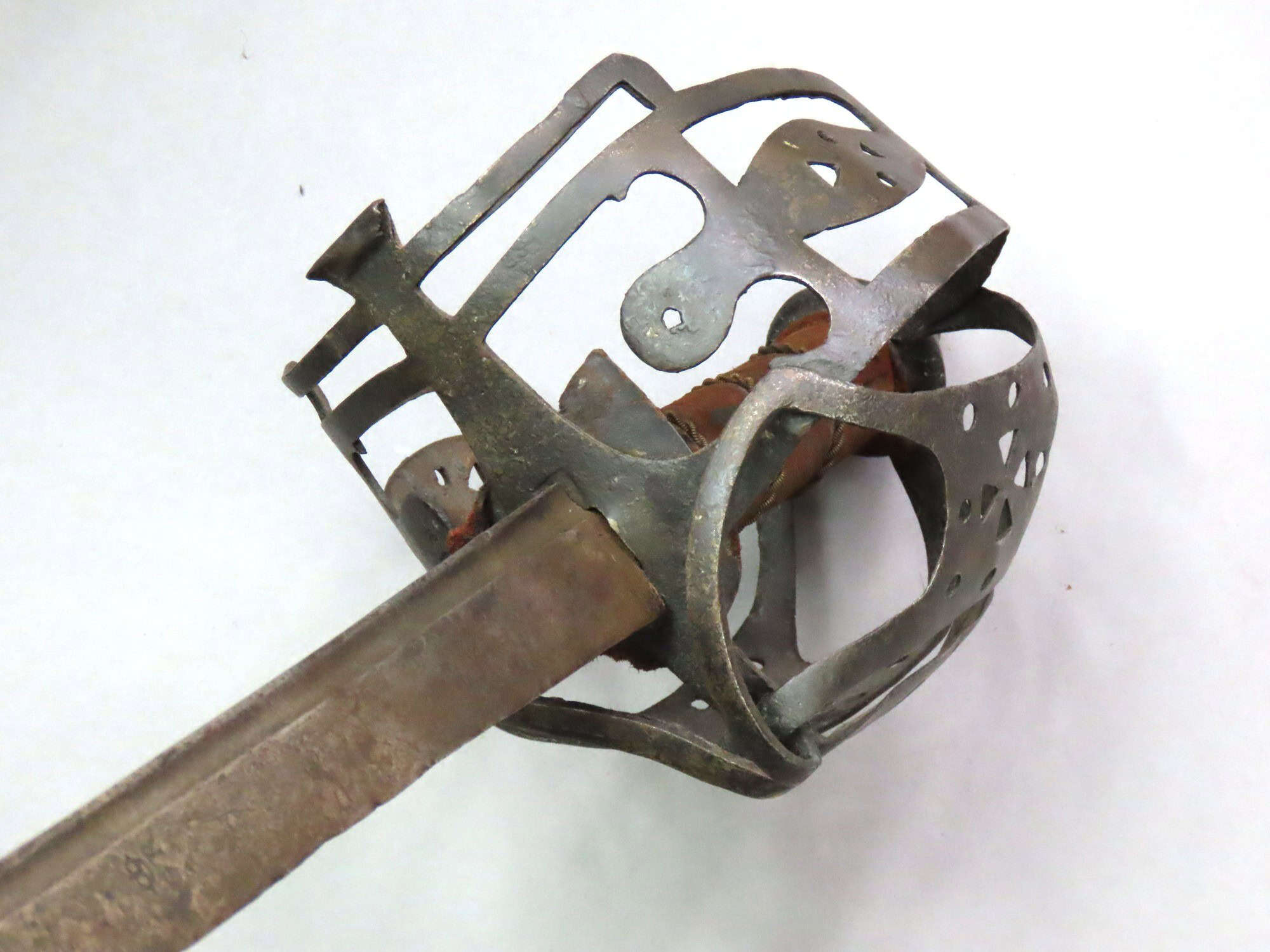
The hilts are made from thin flattened ribbon-like iron bars mainly cut from plate which are forged together. Between these, primary and secondary guard plates are fixed and pierced with circles and triangles. The pommel is a pronounced cone shape with an integral button on top from which three shallow incised lines radiate downwards to the pommel edge. The tops of the three guard arms are secured under a lip which extends around the pommel base.
The grip is a cylindrical piece of spirally grooved wood bound with twisted brass rope. The hilt retains pieces of its original leather lining top and bottom of the grip. The Highland Regiments gave up their swords in 1784 when production of this sword type had ceased.
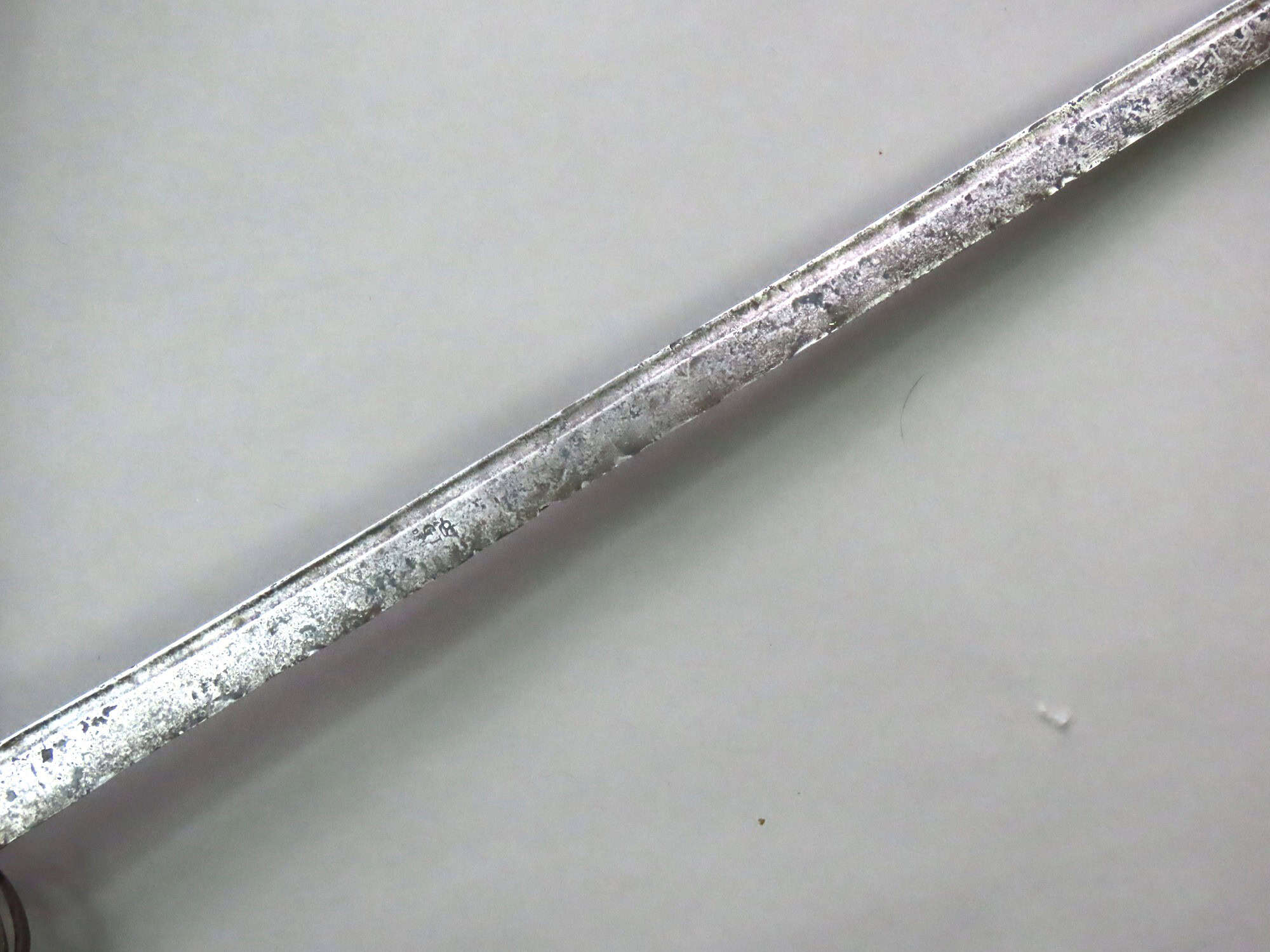
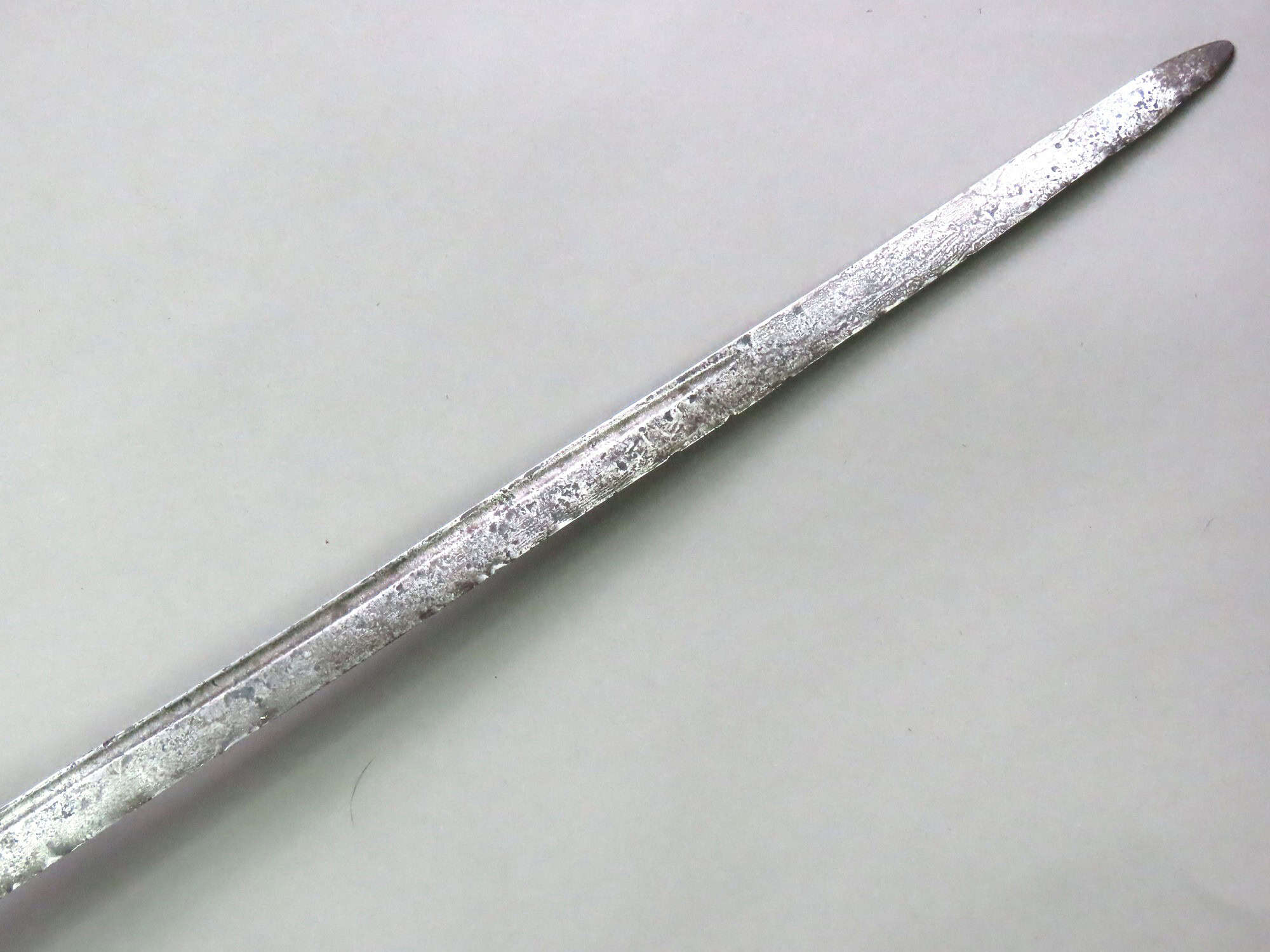
The single edged blade has a fuller running underneath the blunt back edge for 80% of its length and is 29.75 inches (75.5 cm) long. The blade is stamped with “GR” beneath a crown on both sides and beneath this “DRURY” on one side of which only the first three letters “DRU” are discernible. The overall length of the sword is 35.75 inches (91 cm). The sword is in russet condition consistently pitted all over. There is a riveted repair to one of the guard arm terminals near the pommel.
For a full discussion of this sword type see Anthony D Darling, Swords for the Highland Regiments 1757 – 1784, Mowbray Incorporated, 1988. For other examples see Cyril Mazansky, British Basket-Hilted Swords, Boydell Press / Royal Armouries, 2005, pages 129 to 130. And John Wallace, Scottish Swords and Dirks, Arms and Armour Press, 1970, fig 42, for a sword now in the National Museums of Scotland, collection reference LA 27.