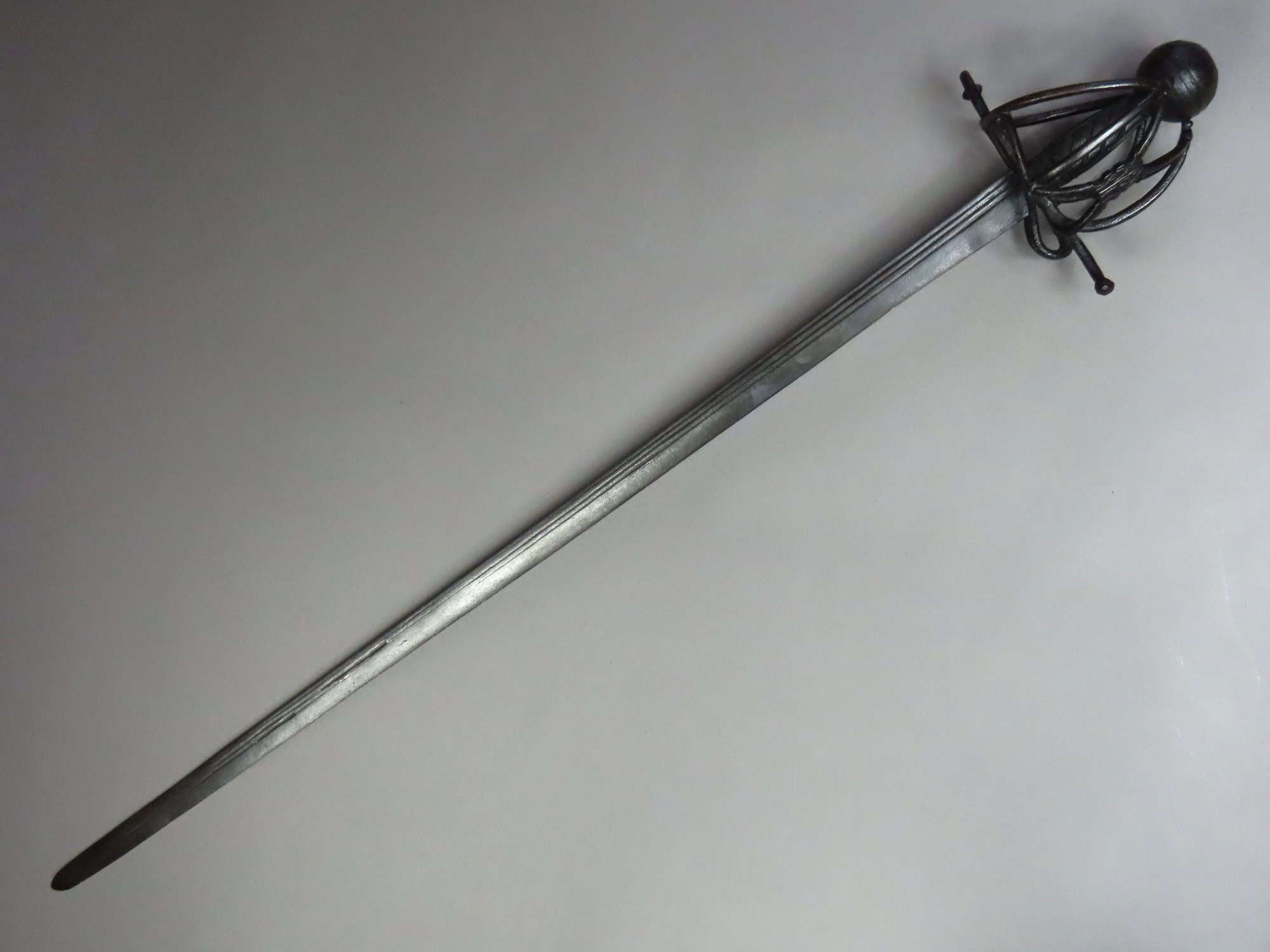
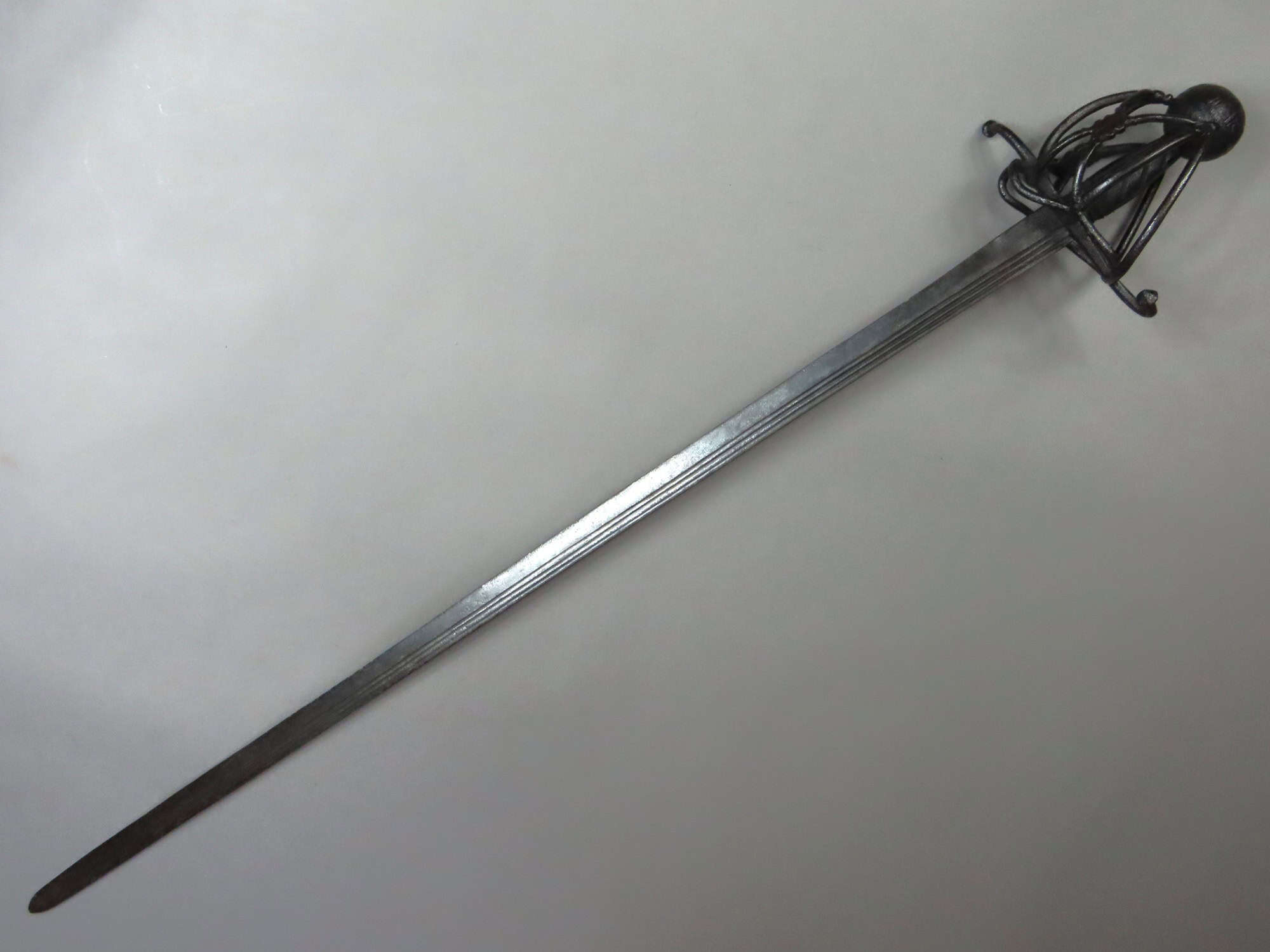
Fine and Rare English Basket Hilted Sword circa 1550
To enquire about this itemplease click here
Price: £25,000
Ref: 52120341
Item Description
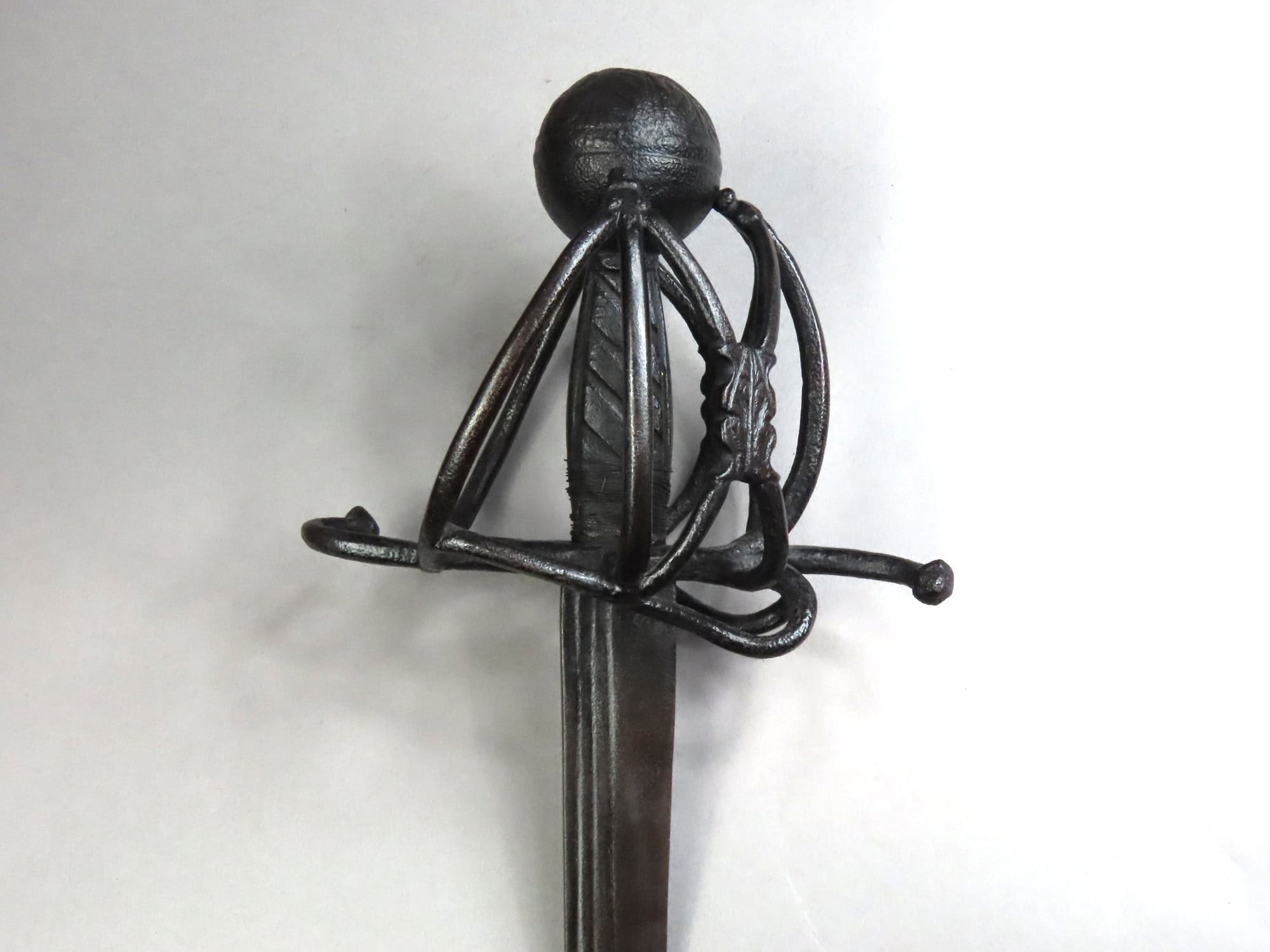
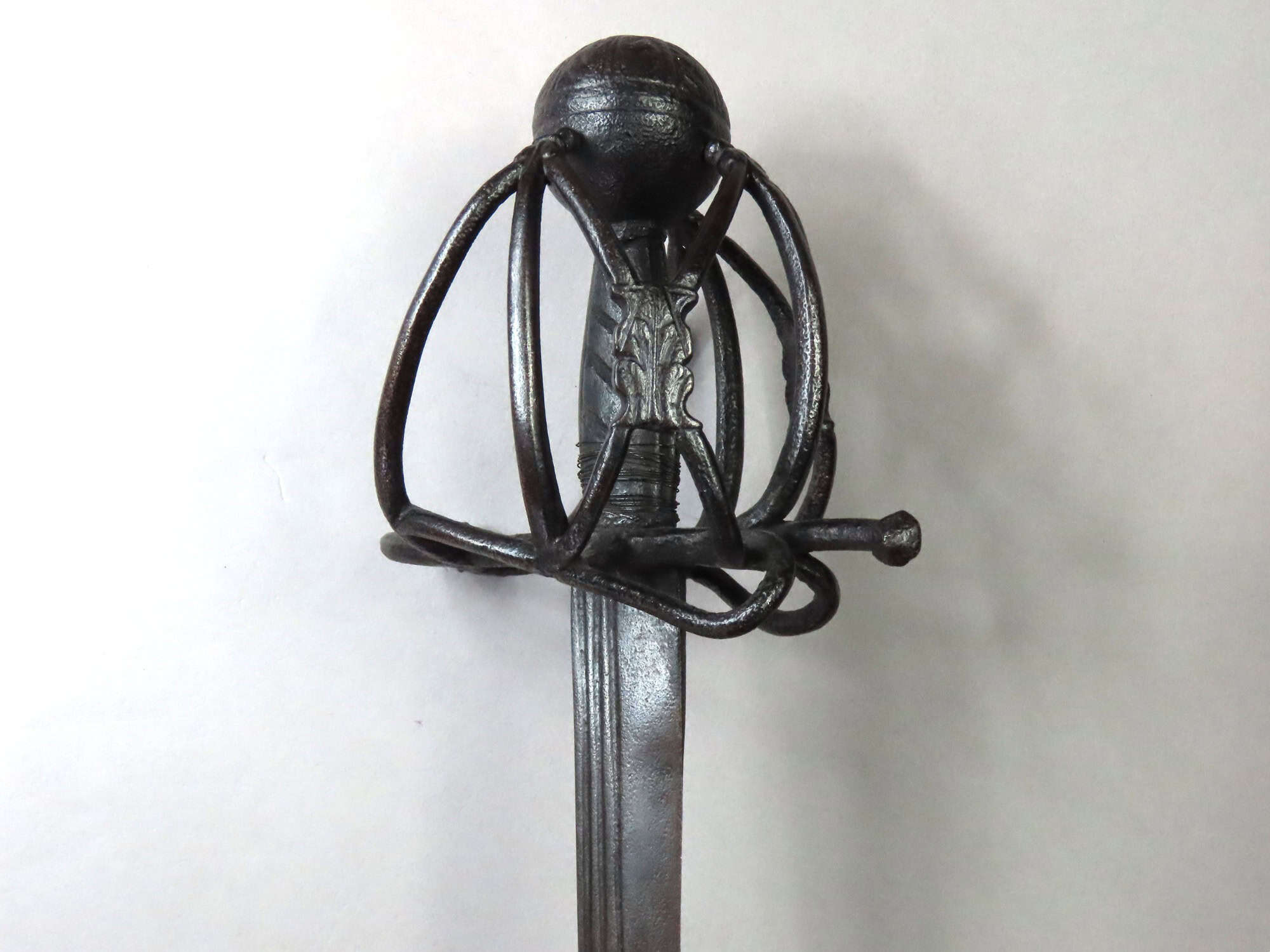
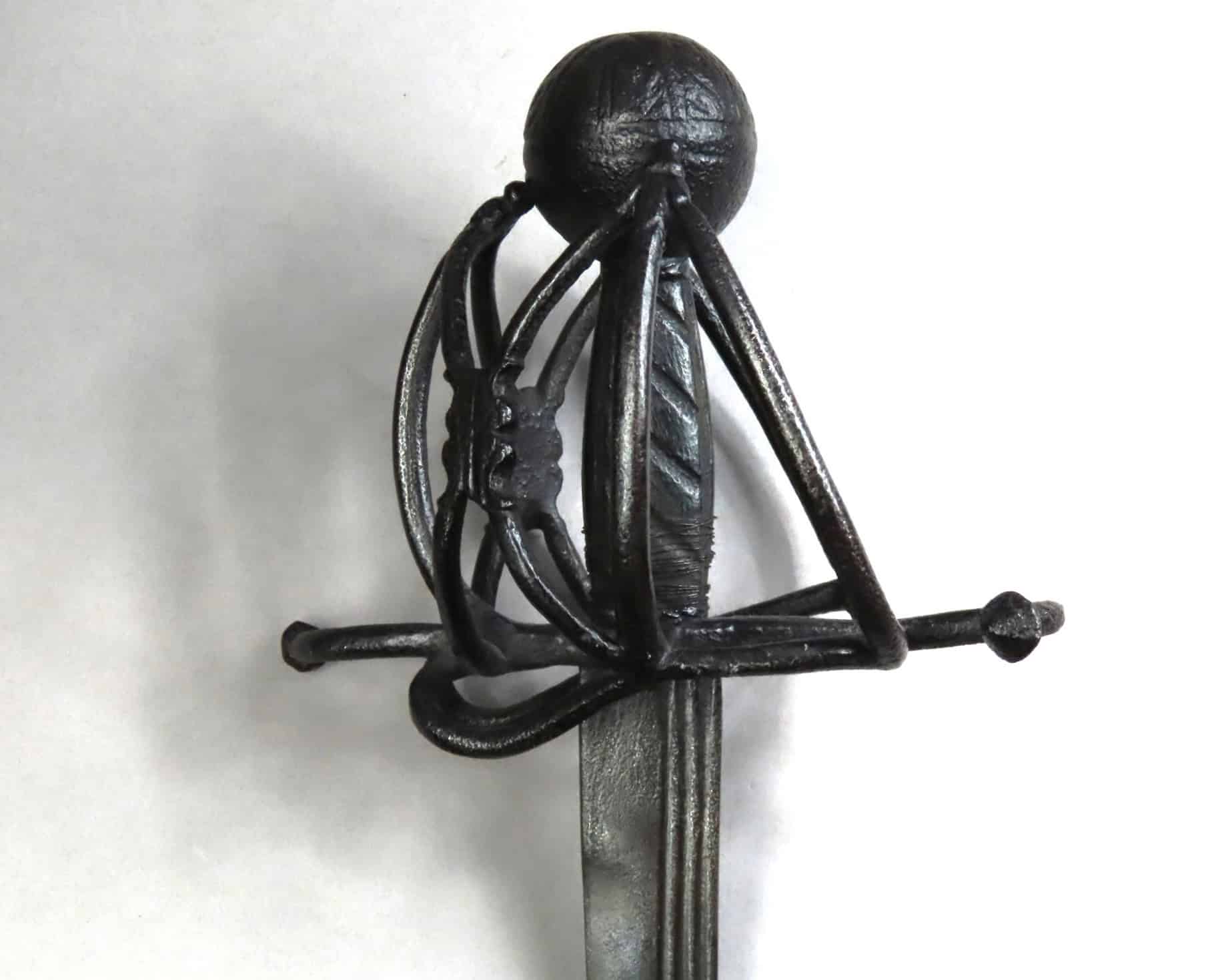
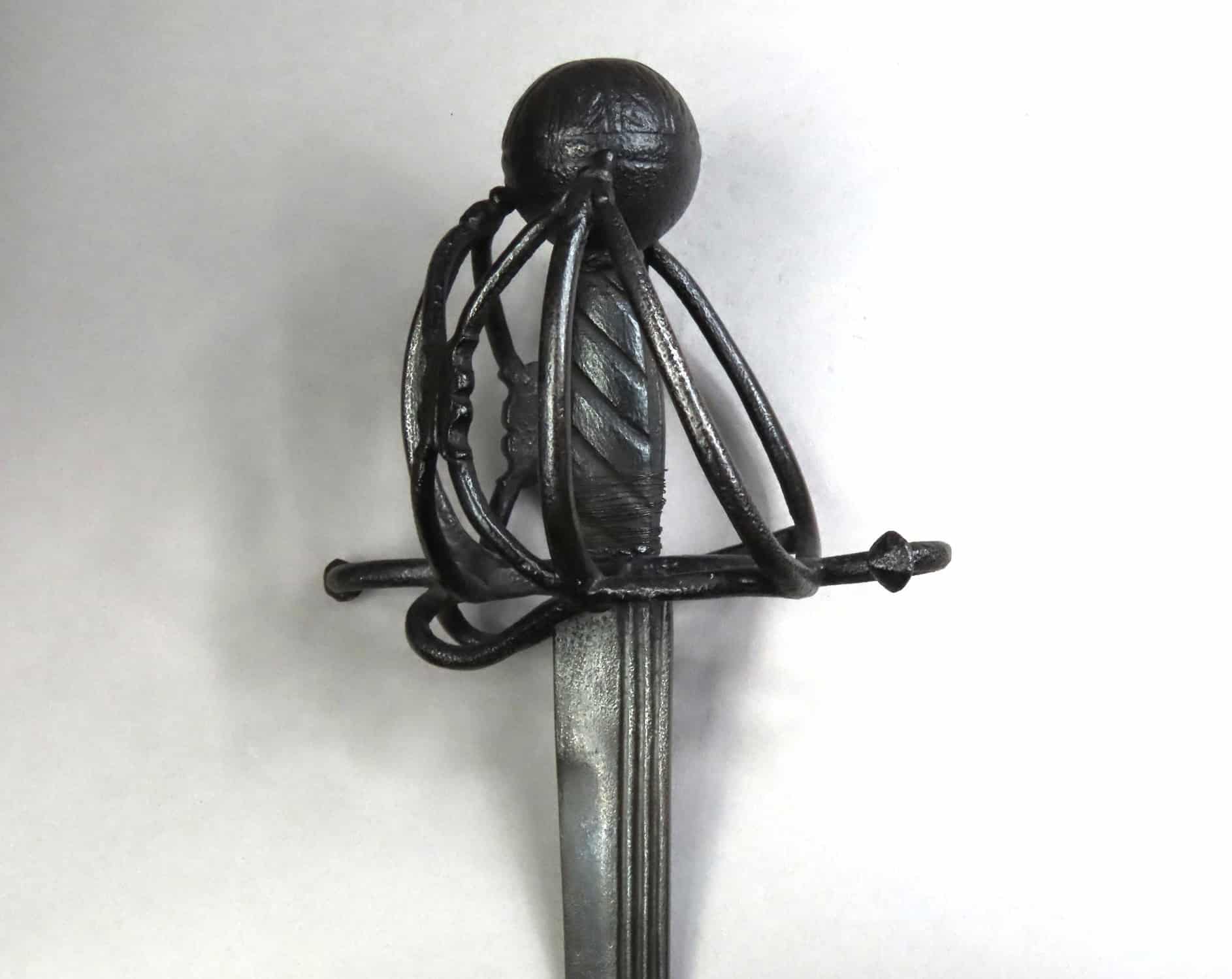
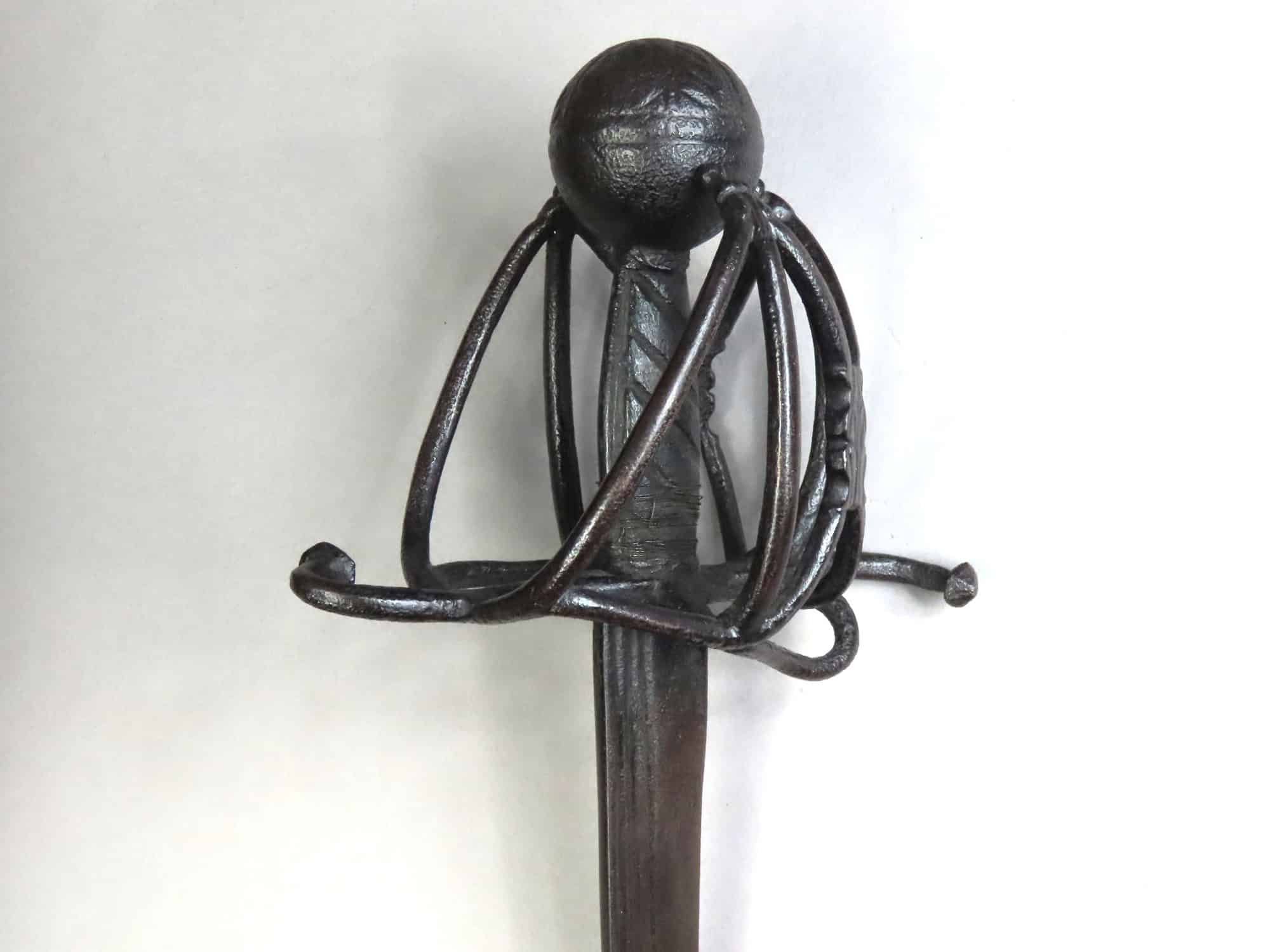
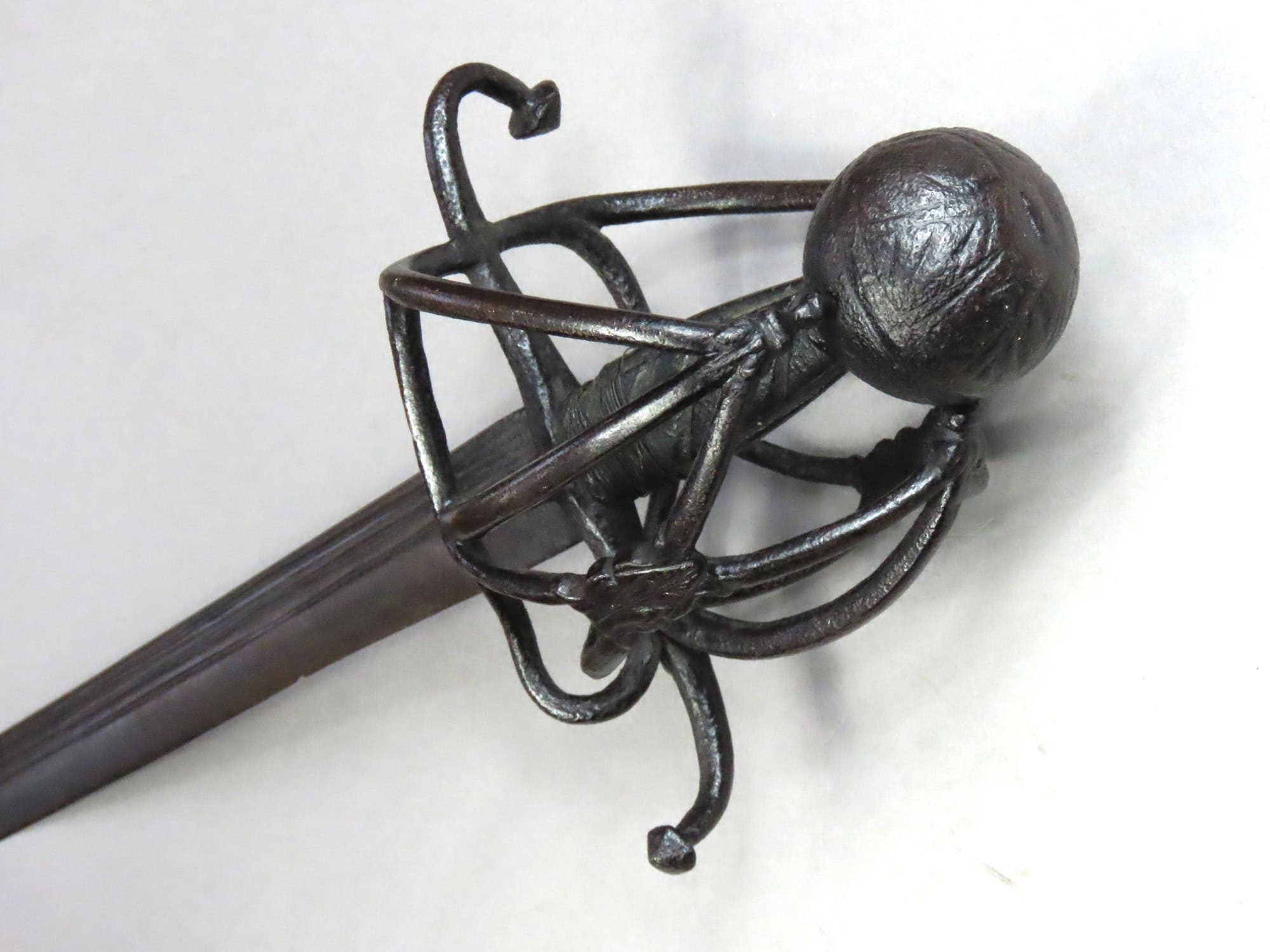
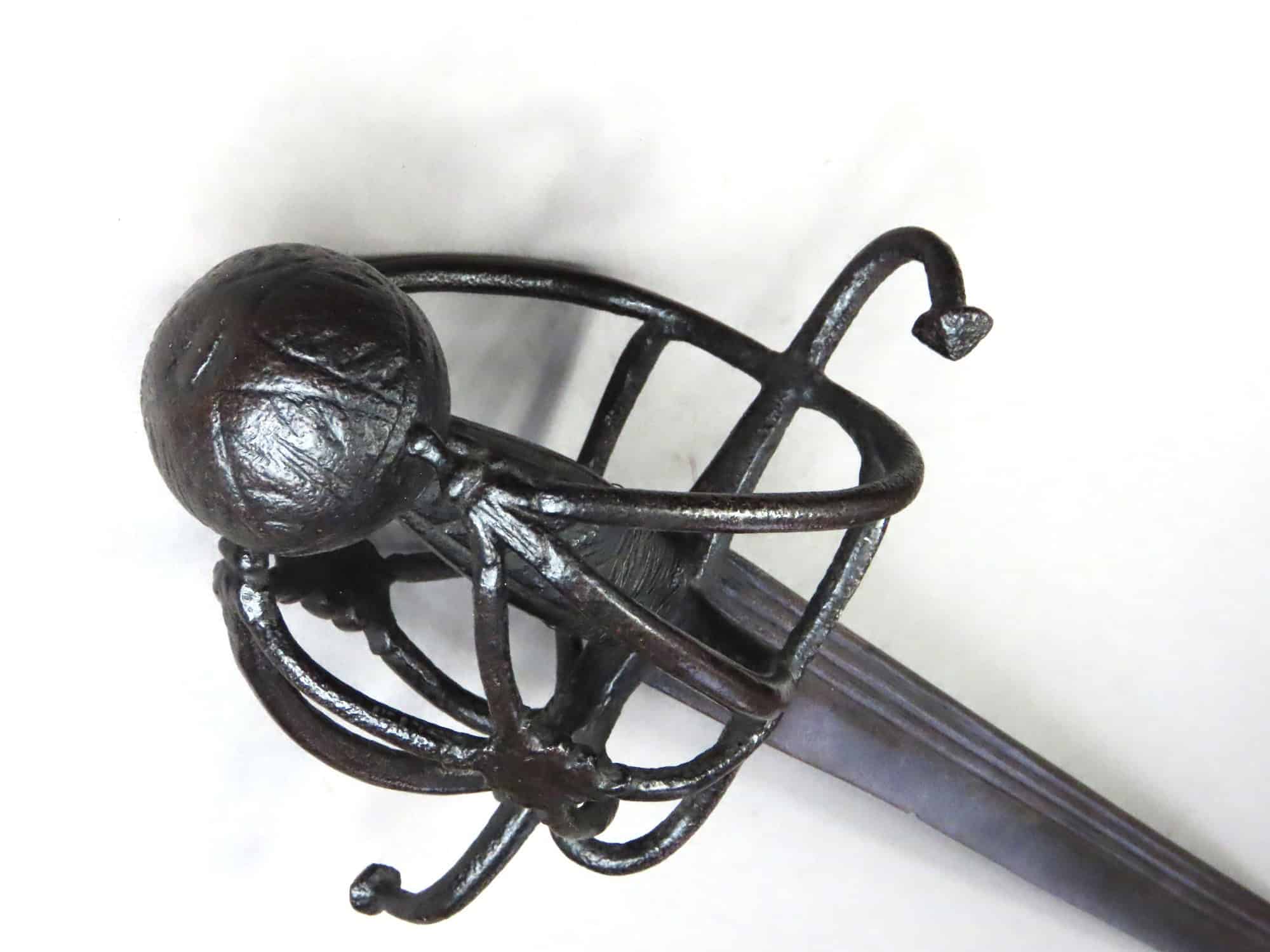
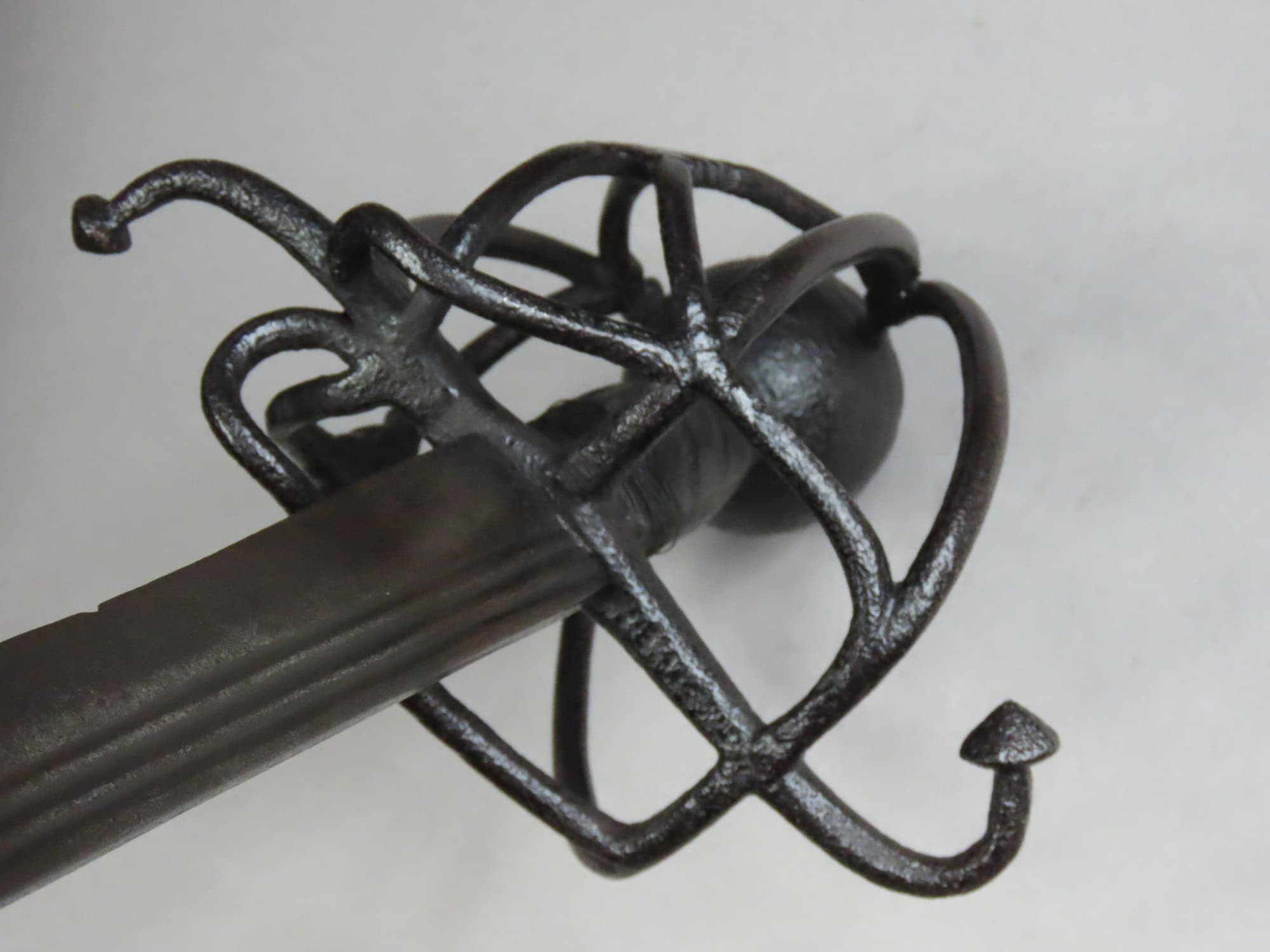
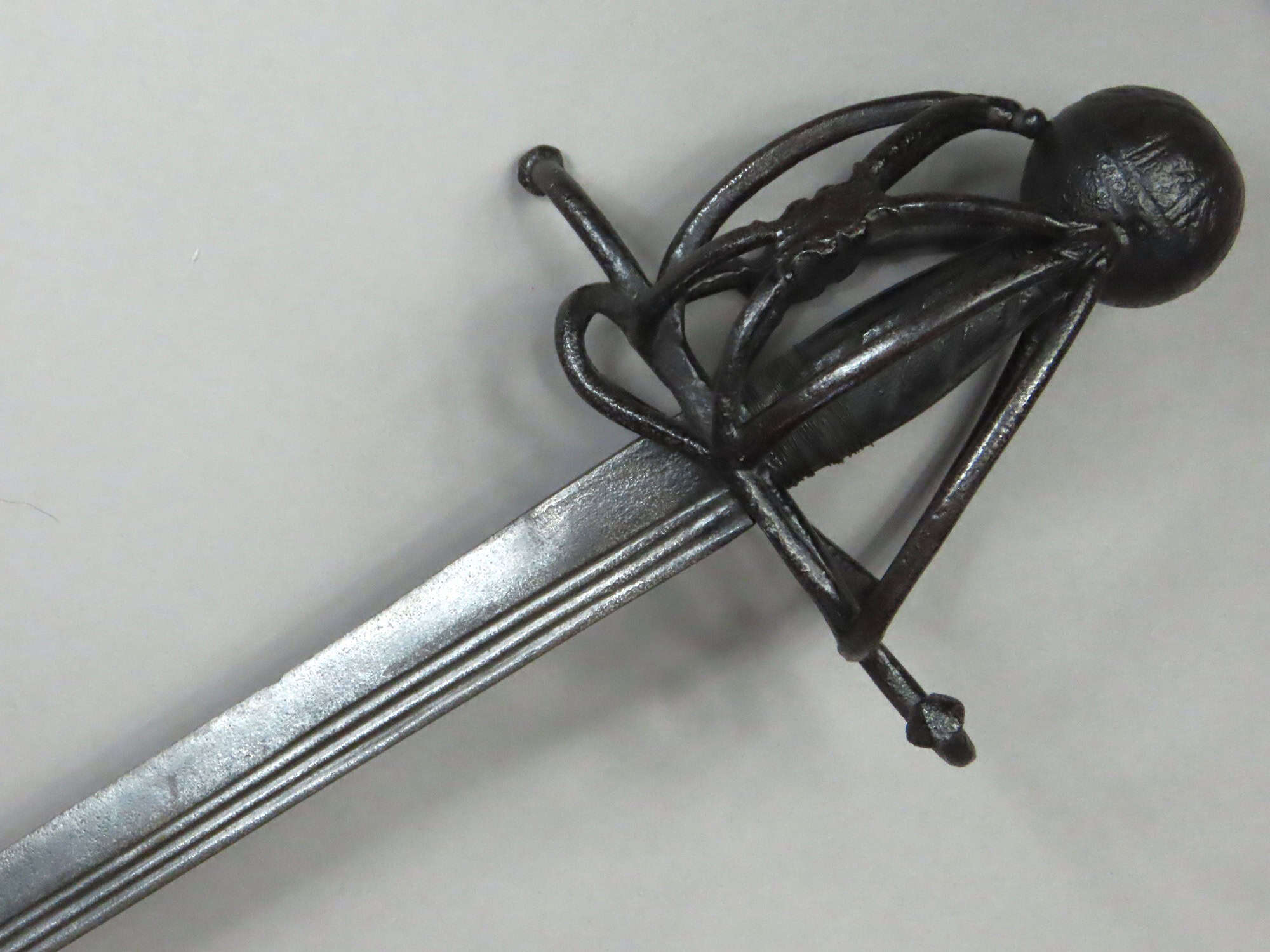
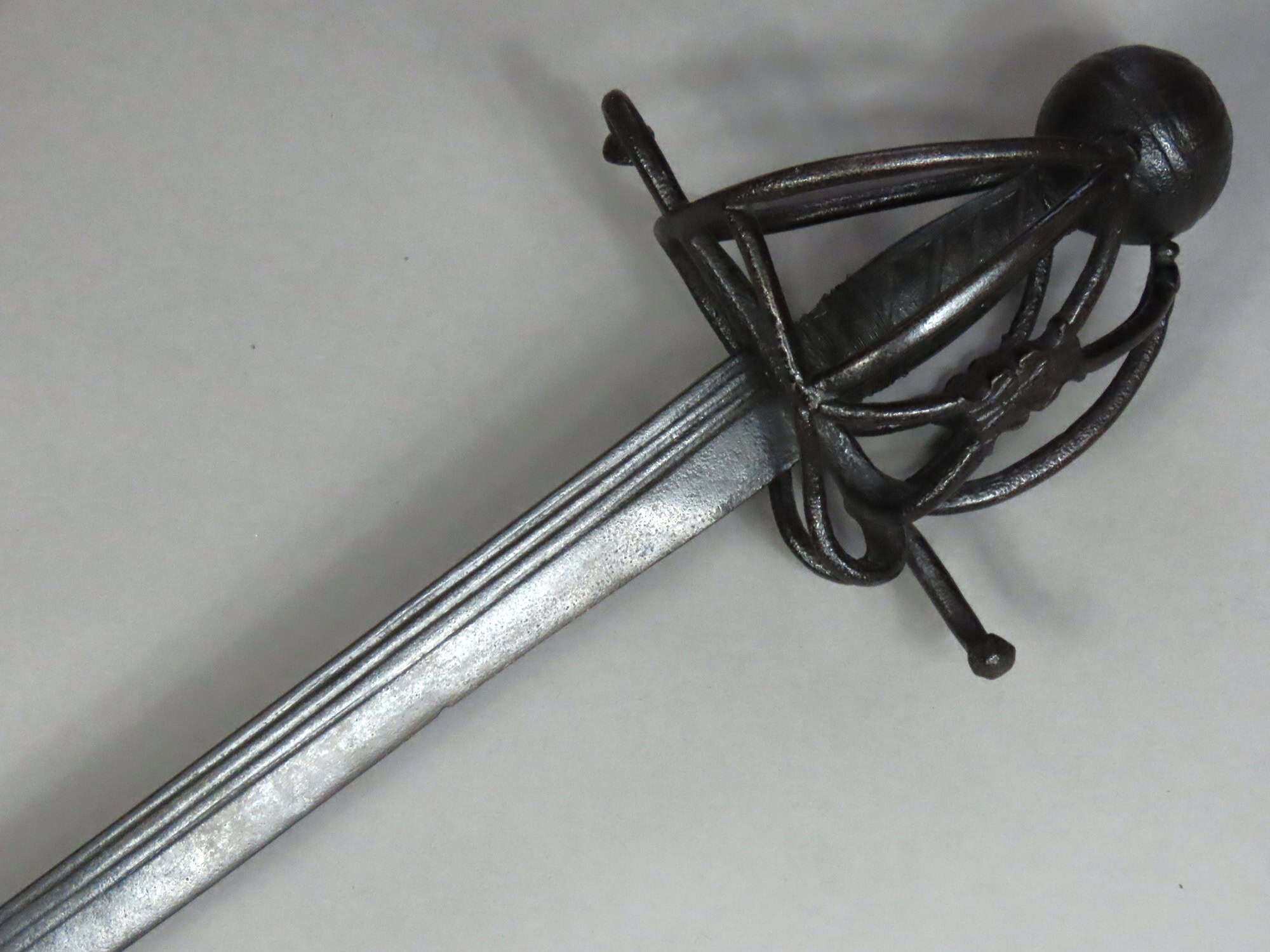
This is a fine example of the earliest form of Anglo-Scottish basket hilted sword and dates to the middle of the 16th century. The sword is part of a rare group which were the first to be formed with fully developed structurally symmetrical basket hilts. Few have survived to the present day and this example is unusual because of its wonderful original condition, even retaining its original grip, and a smooth aged dark undisturbed patination all over.
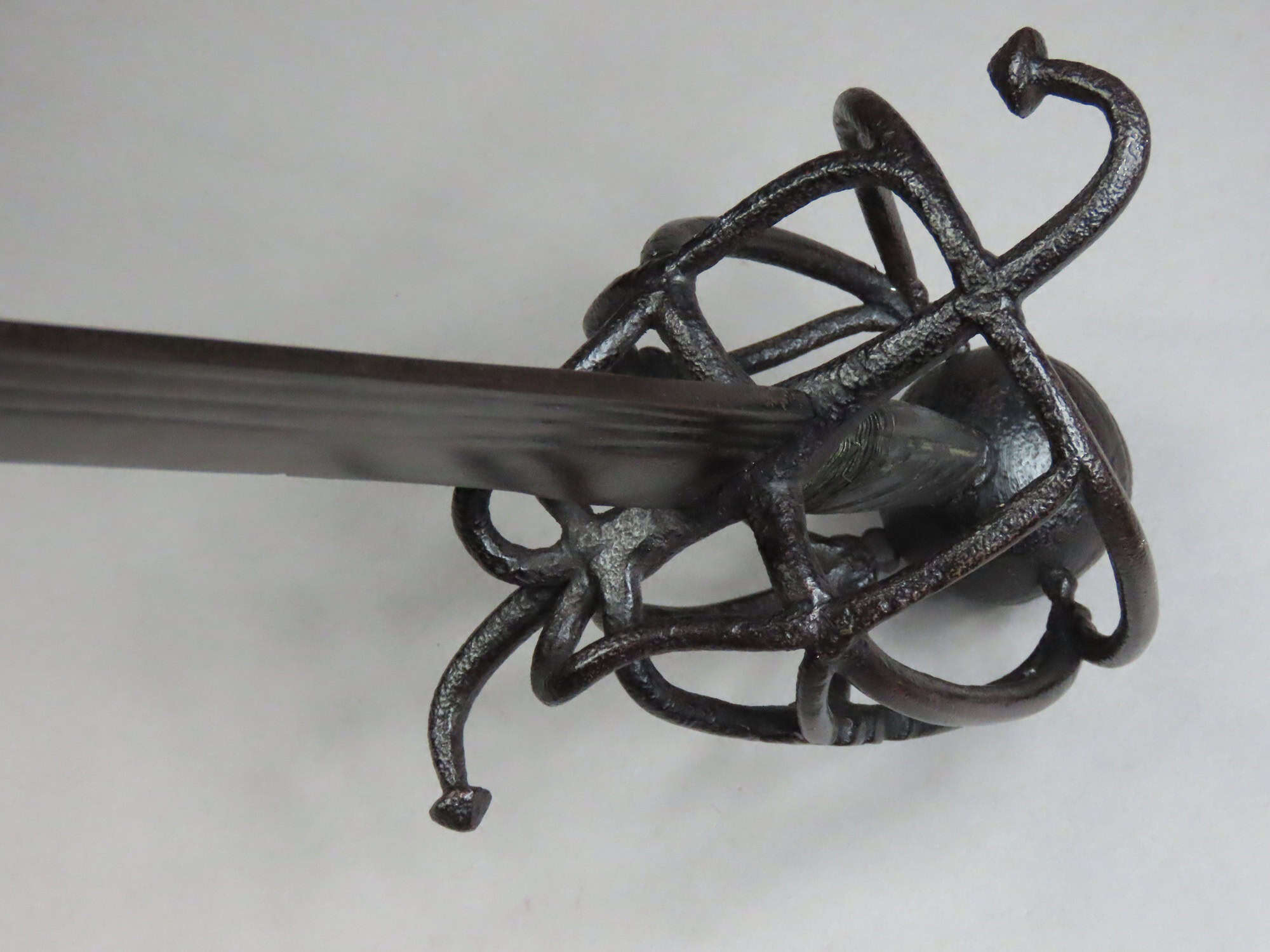
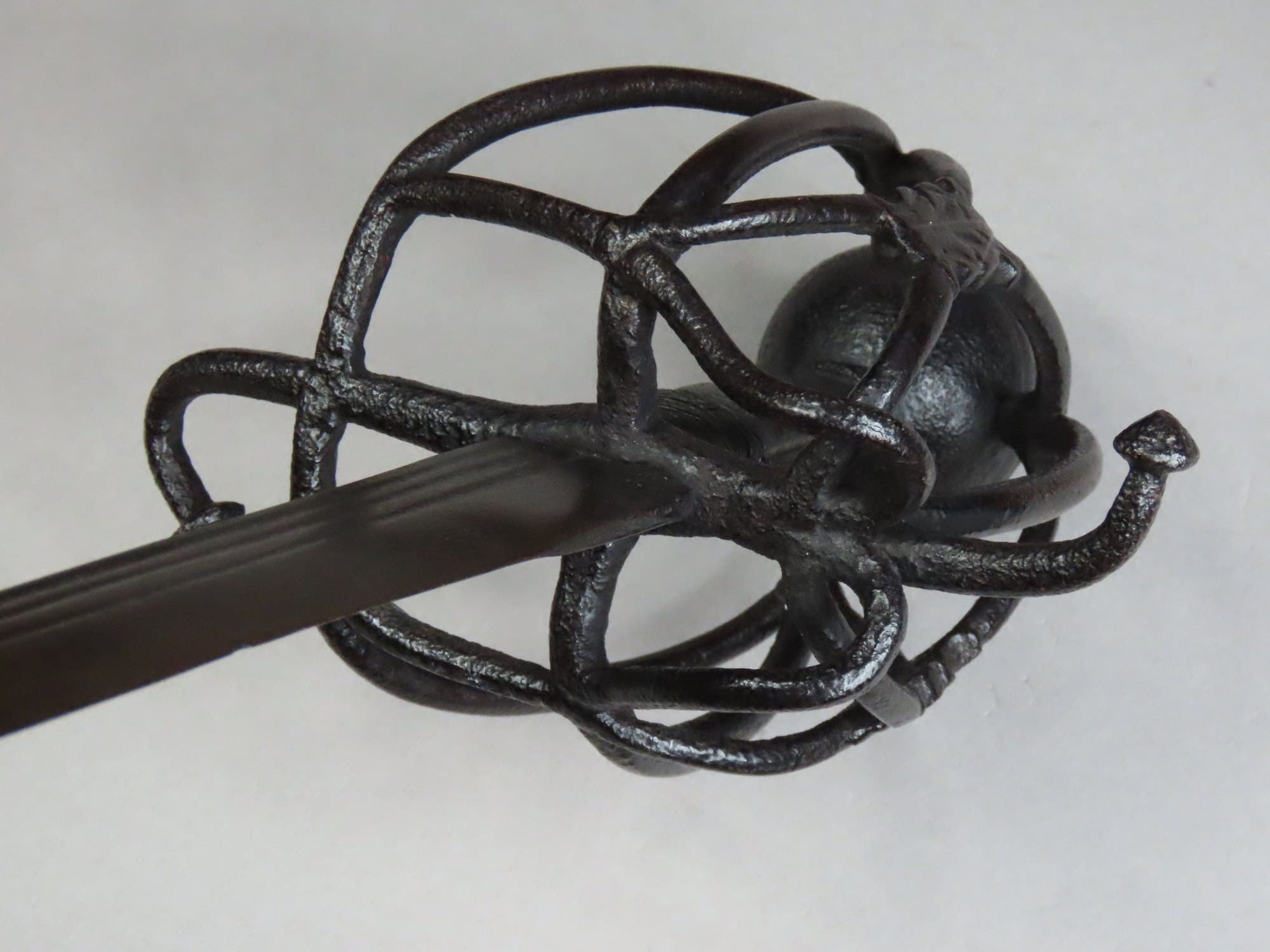
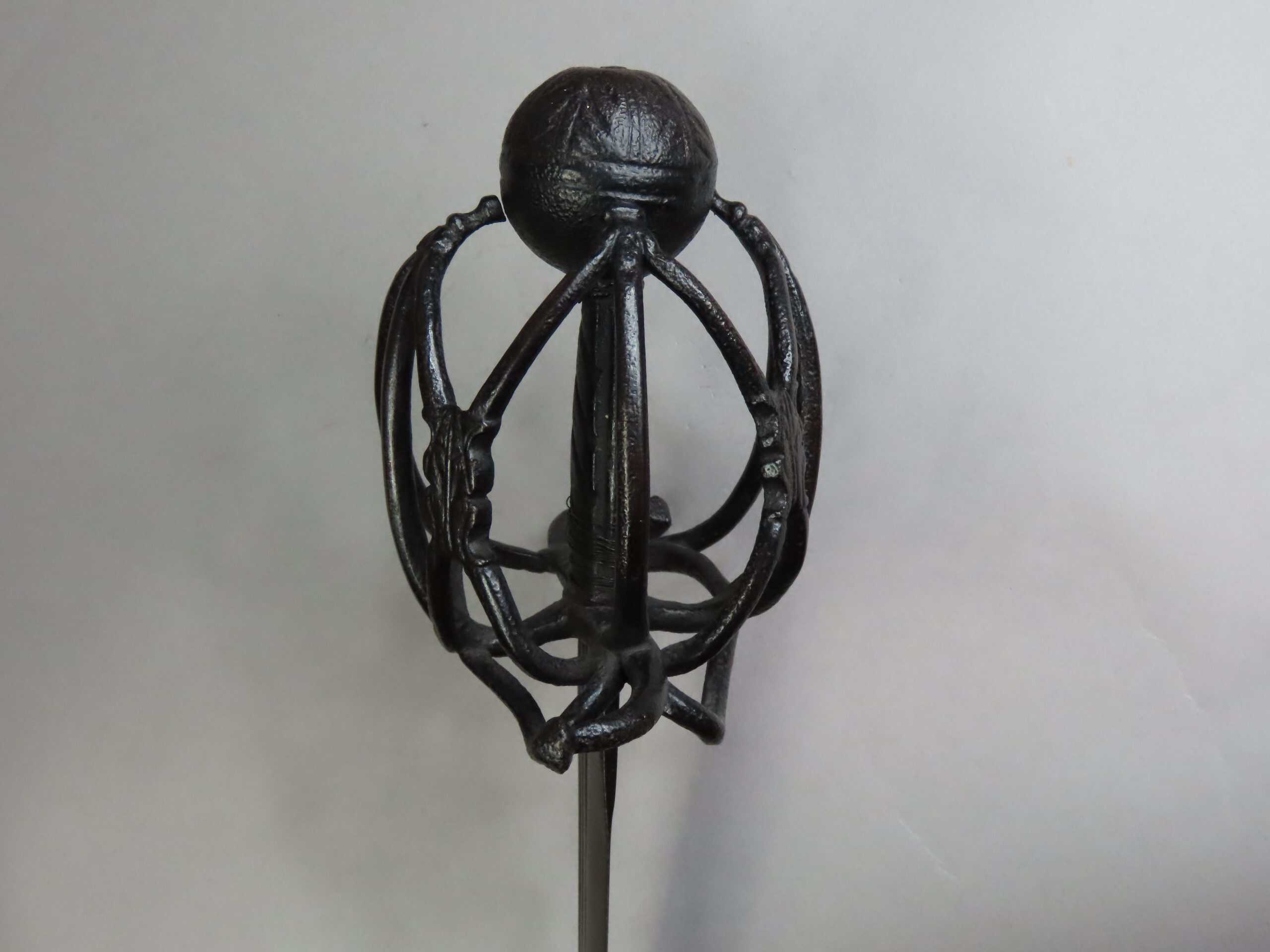
The knucklebow vertically bisects the hilt into two mirrored halves. As such this sword represents the end of asymmetrical basket hilt evolution in the late medieval period from earlier simple cruciform hilted swords and the beginning of the early modern era of the basket hilted sword. From this hilt structure the more typical English and Scottish basket hilts evolved in the later 16th century and thereafter.
For a full description of the evolution of this type of sword and for further examples see: The Baron of Earlshall “The Scottish Basket Hilted Sword Volume I c. 1450 to 1600”, Earlshall Publications, 2016.
This sword is described in pages 136 and 137 and extensively illustrated in plates 74 to 77. The sword is clearly one of the better examples of this rare type discussed in the book and is one of the best examples still in private ownership.
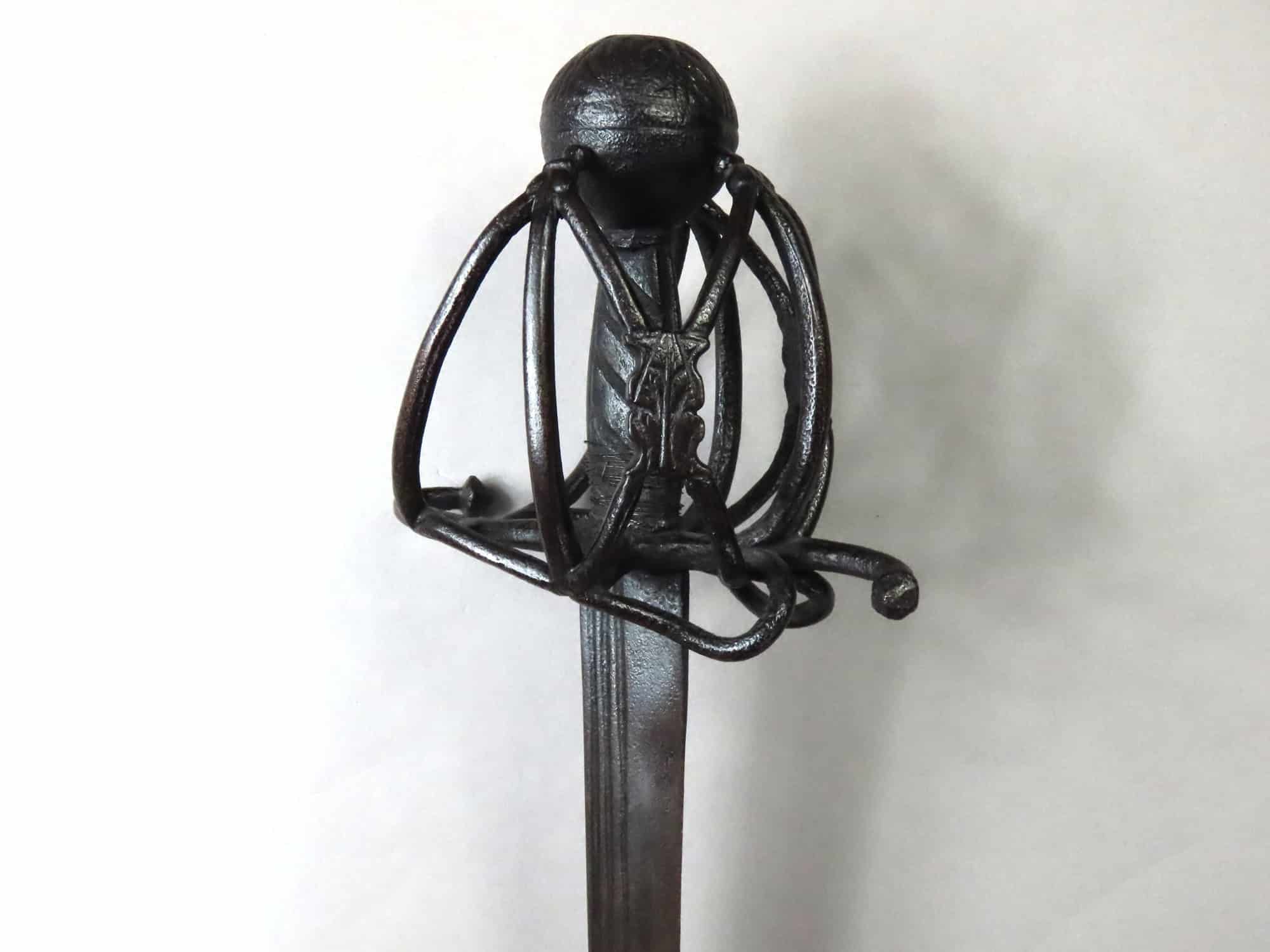
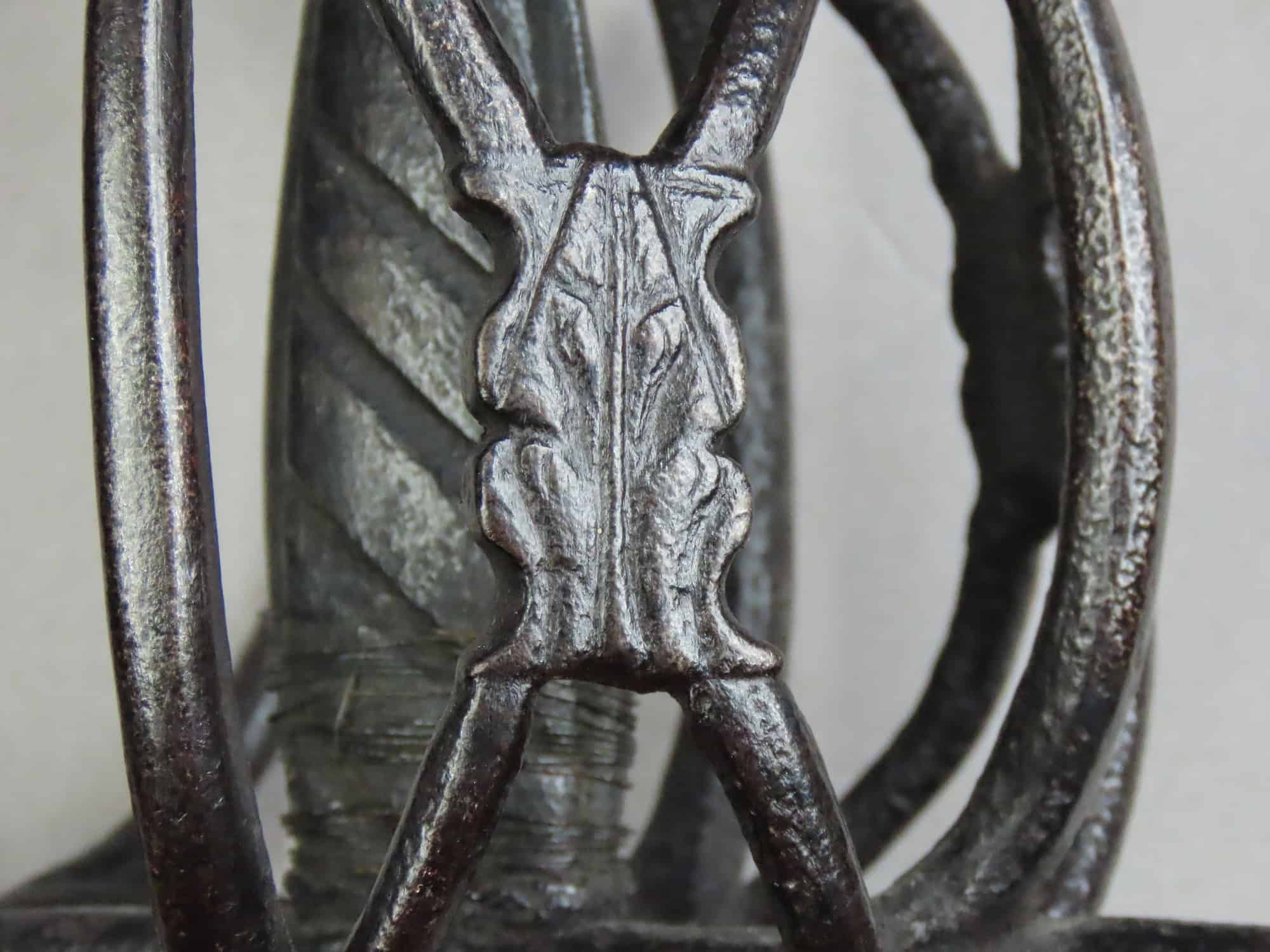
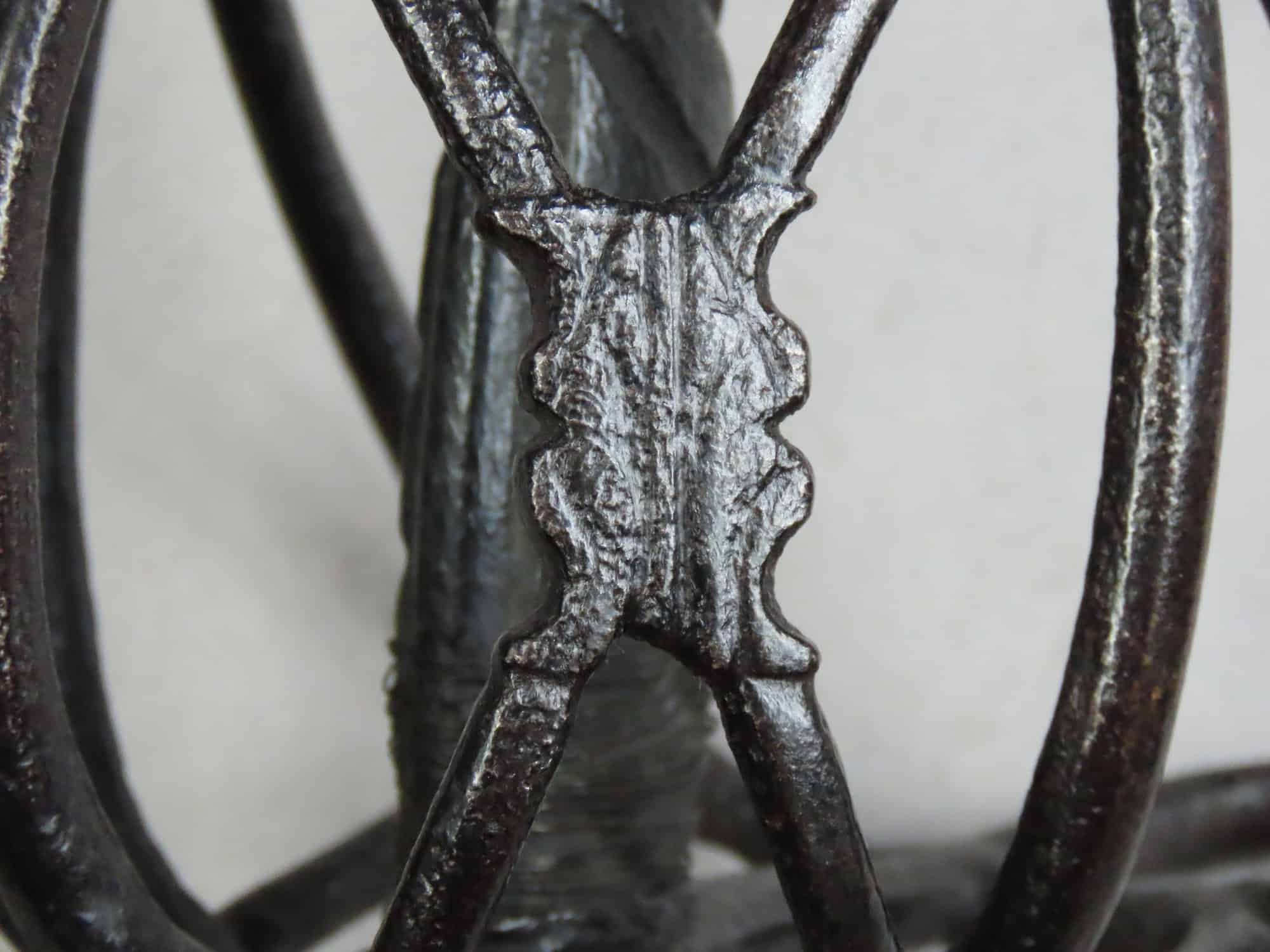
The blackened iron hilt consists of substantial rounded structural bars infilled with saltires between the knucklebow and each side guard bar centred with thickly forged cusped rectangular guard plates each chiselled with a raised foliate leaf. These small panels are clearly the evolutionary forerunner of the later more developed Scottish basket hilted swords forged with larger fretted guard plates on either side of the knucklebow. The guard plates increased in size throughout the 17th century.
The quillons are still fully formed and horizontally counter curved with faceted knopped terminals. These disappeared from basket hilt design by the end of the 16th century. The looped forward guards are fully developed and a feature which remained a salient facet of Scottish basket hilt design structure to the present day.
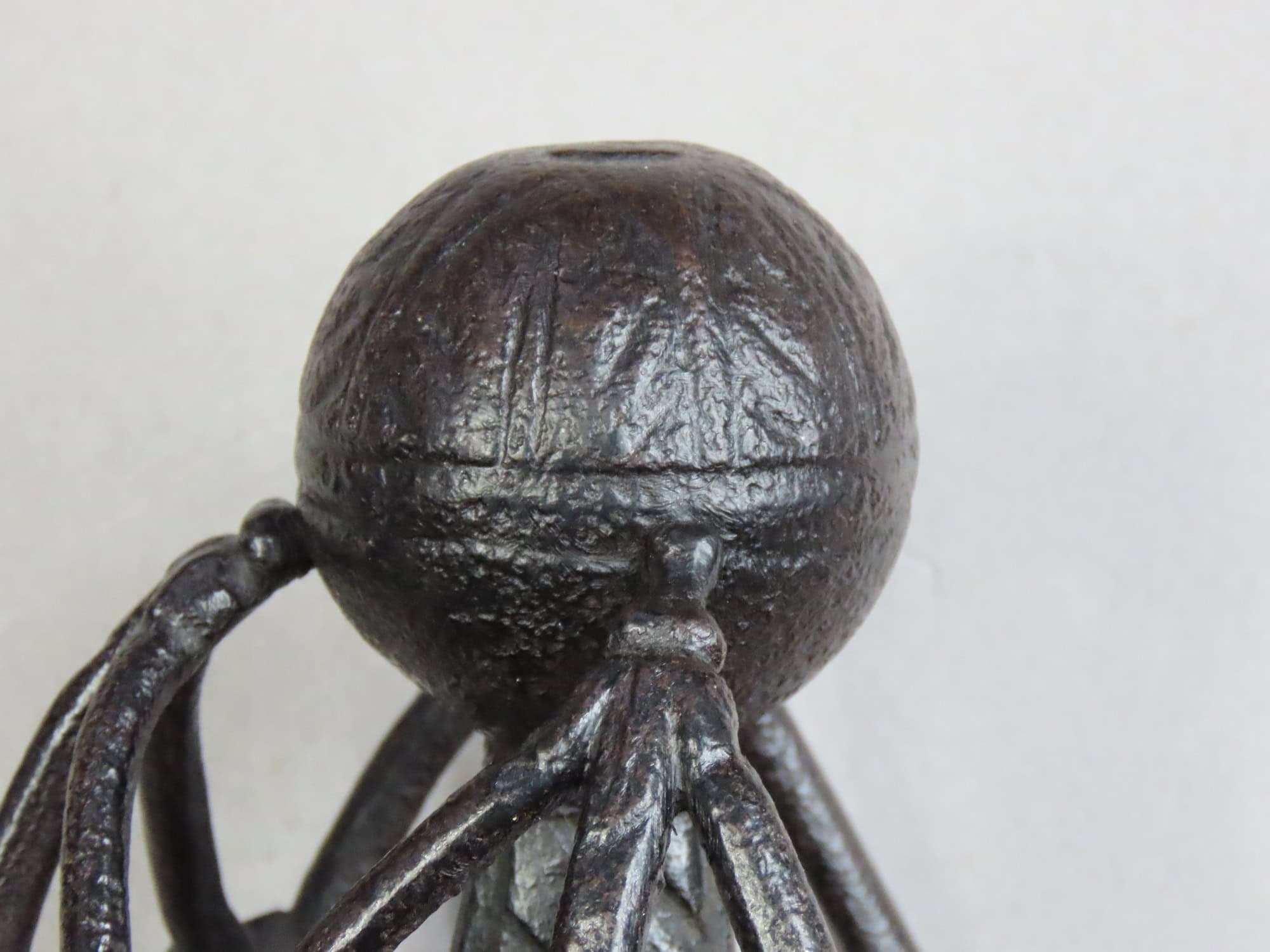
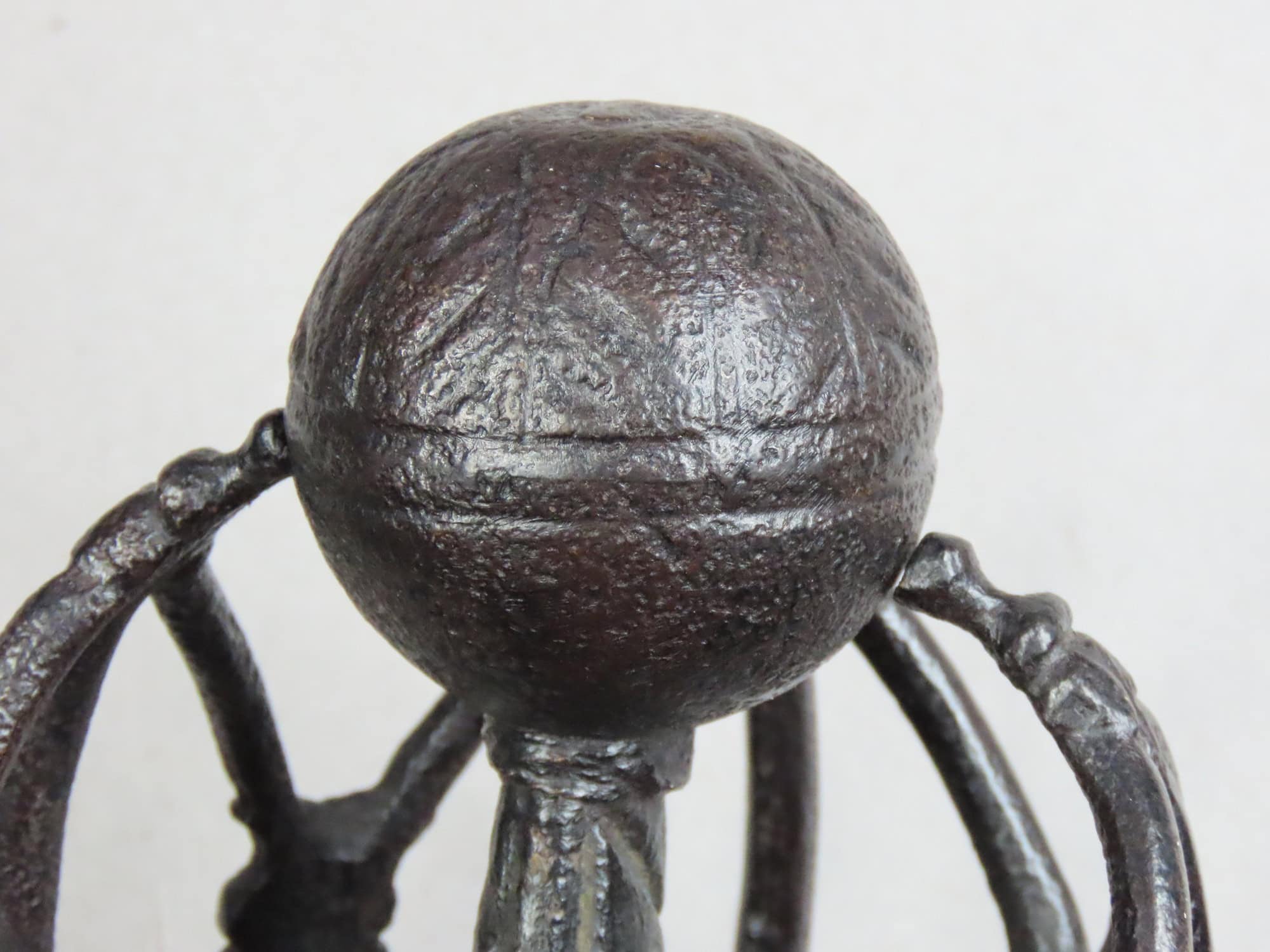
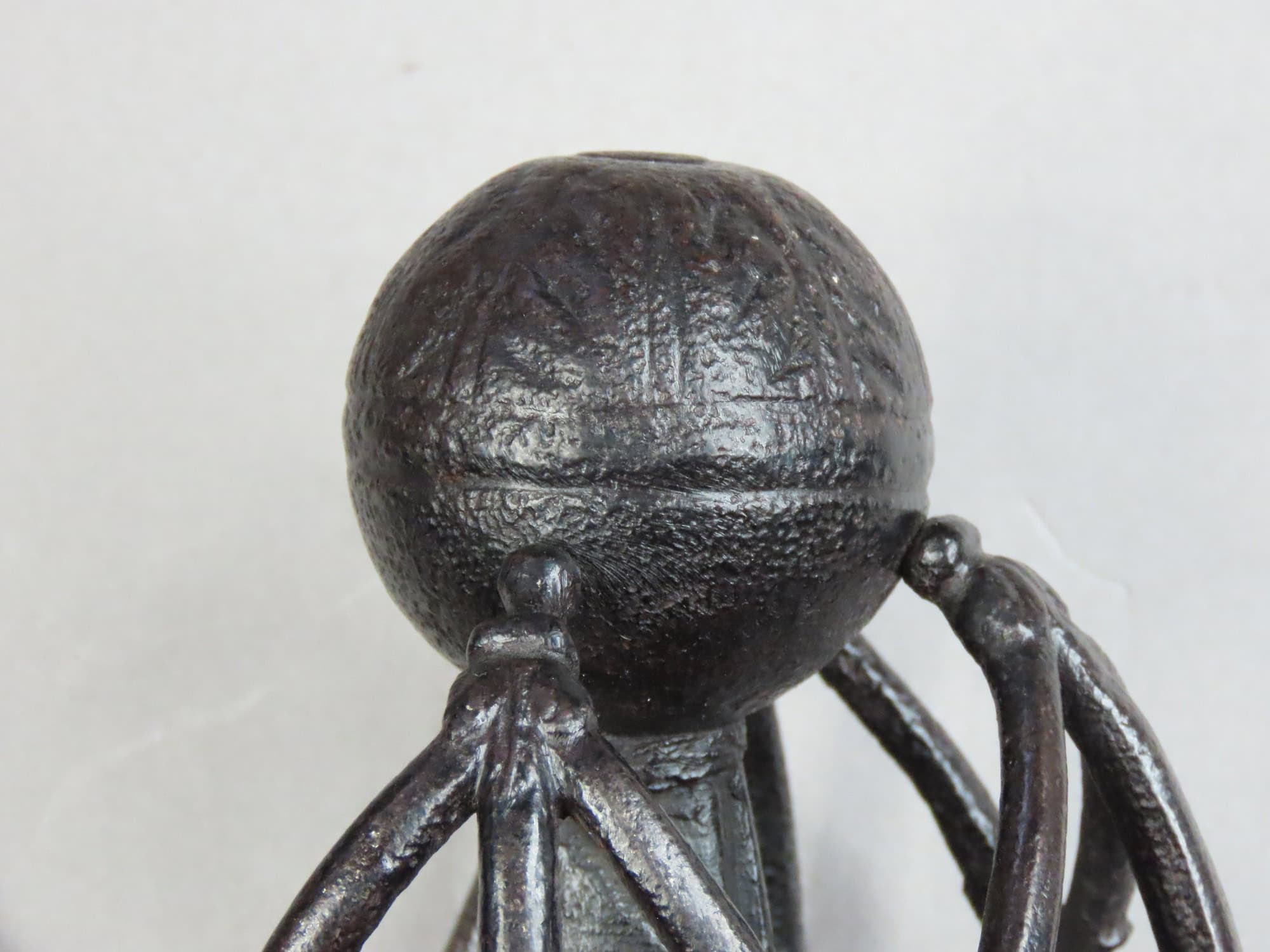
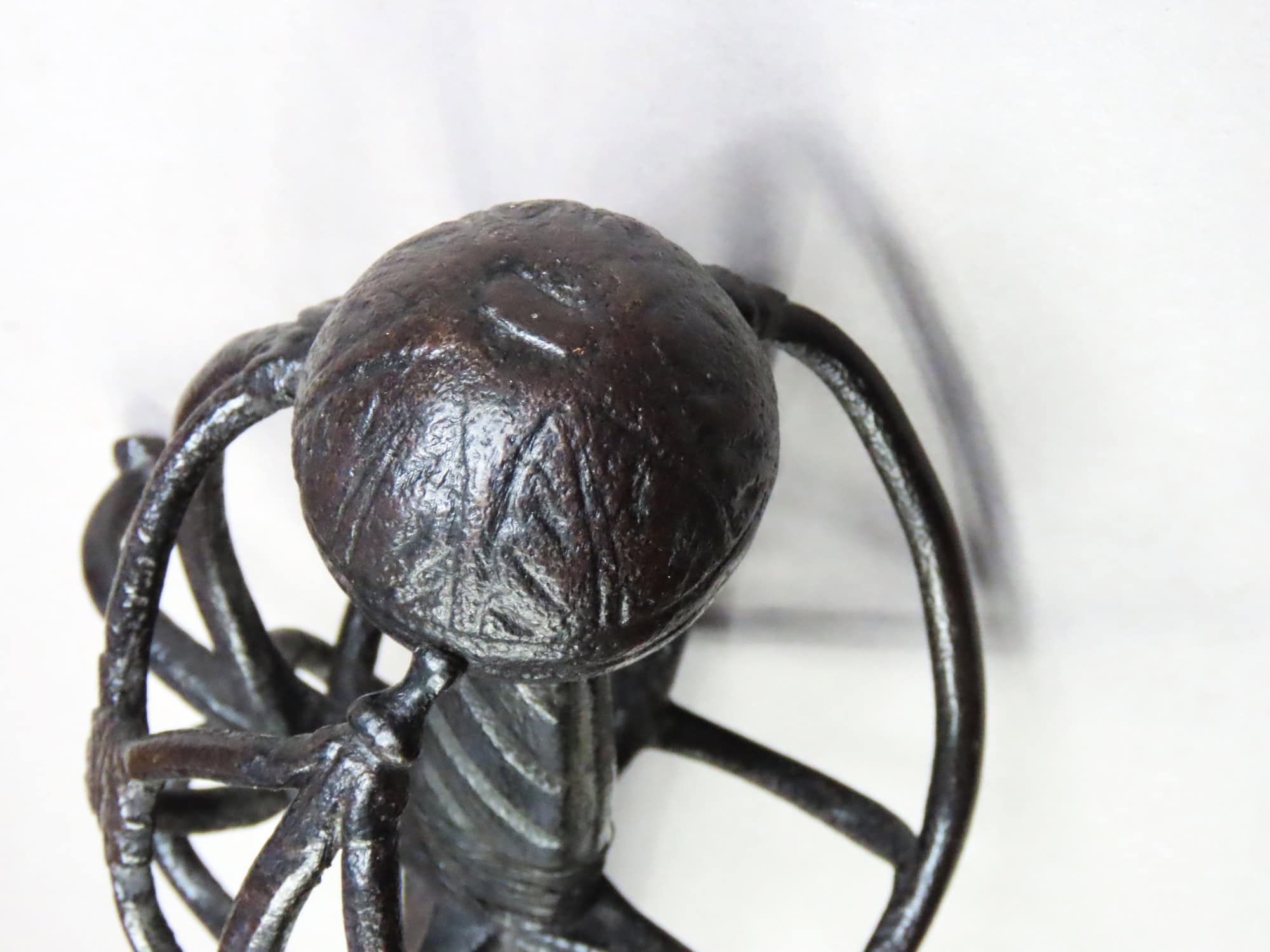
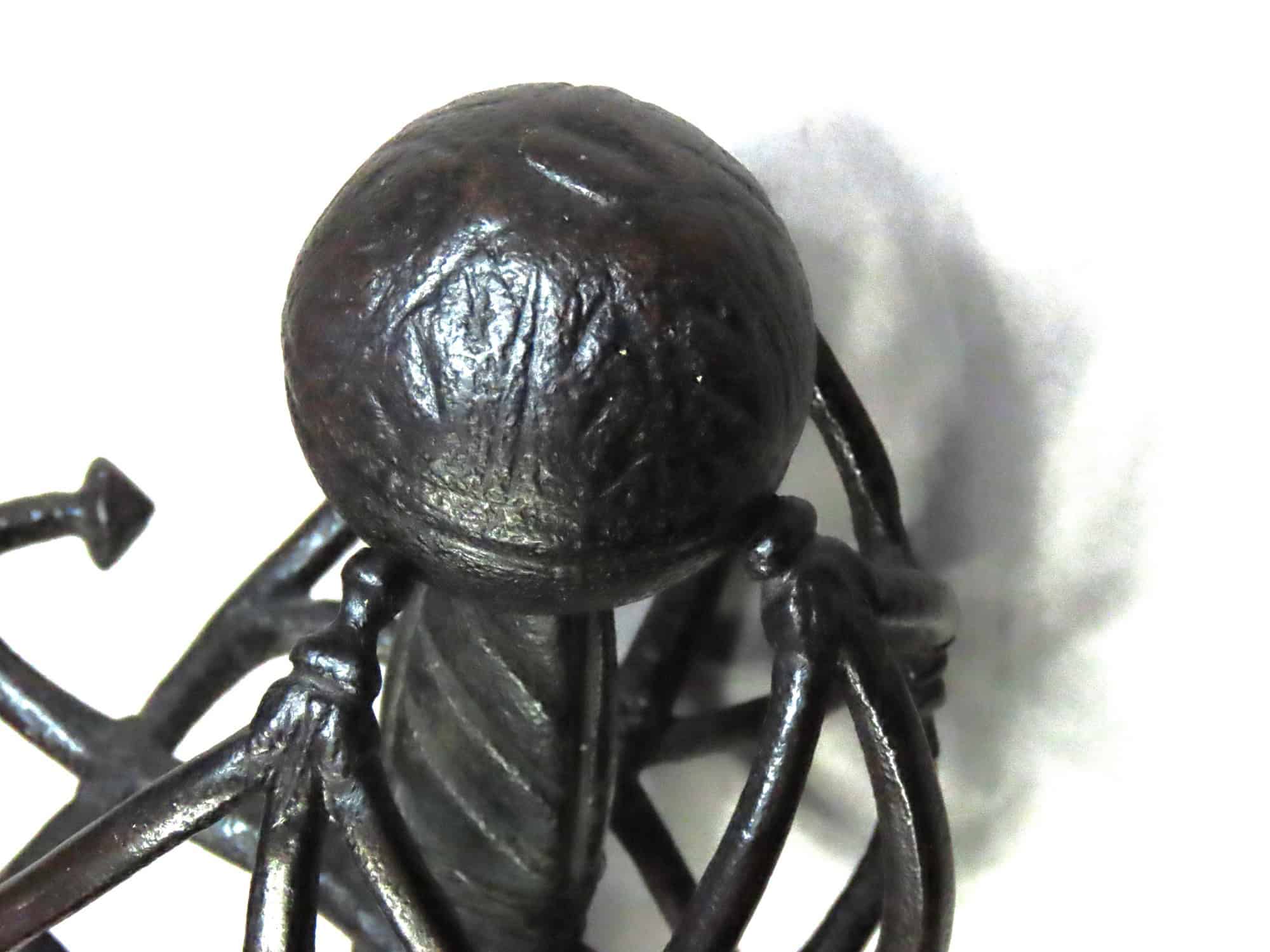
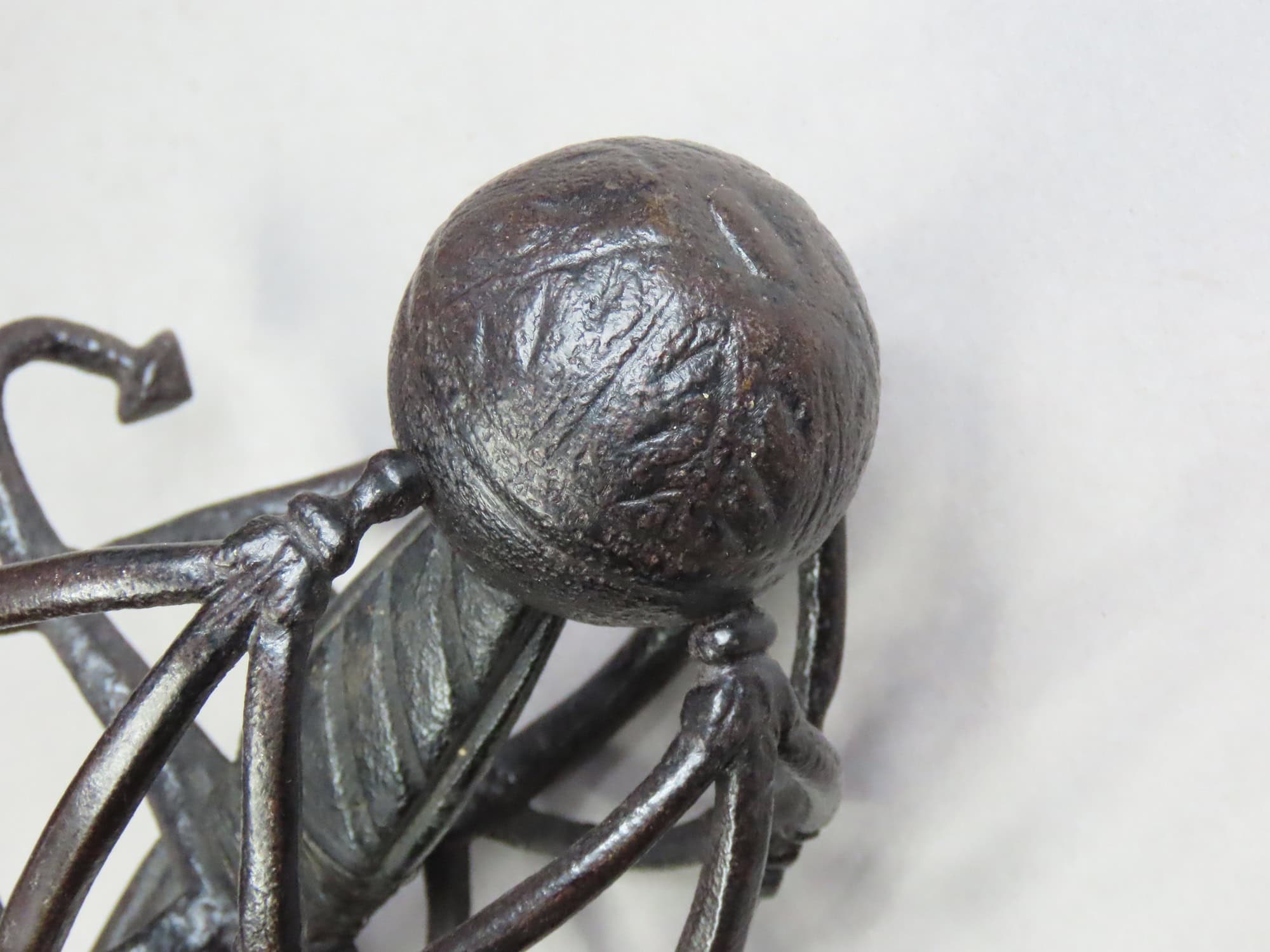
The large hollow spherical pommel is formed from two halves brazed together around the middle and has a pair of parallel lines extending around the equator. From the uppermost of these lines five panels formed as leaves extend point up towards the pommel in similar form to those present on the exterior of the guard plates. The tang is delicately peened over over the top of the pommel without the support of a button which is the usual method of securing the hilt parts for this early form of sword (for a further identical example of this technique see a sword of similar date once in the collection of Claude Blair in a paper by the same: “The Early Basket-Hilt in Britain” in “Scottish Weapons & Fortifications 1100-1800”, edited by David H Caldwell, John Donald Publishers, 1981, page 215.
The original diagonally fluted baluster shaped oval section wooden grip retains its wire woven Turks Heads and the remains of its wire binding.
Typical of this group of swords the long blade measures 37.7 inches (95.7 cm). It is of usual single edged form with a pronounced ricasso and a triple fuller running from the hilt underneath the spine for most of its length after which the blade becomes double edged to the tip. There is some minor lamination on one side in two of the fullers around two thirds of the way along. The overall length is 43.5 inches (110.5 cm).
Provenance: The Collection of Mr David A Oliver.