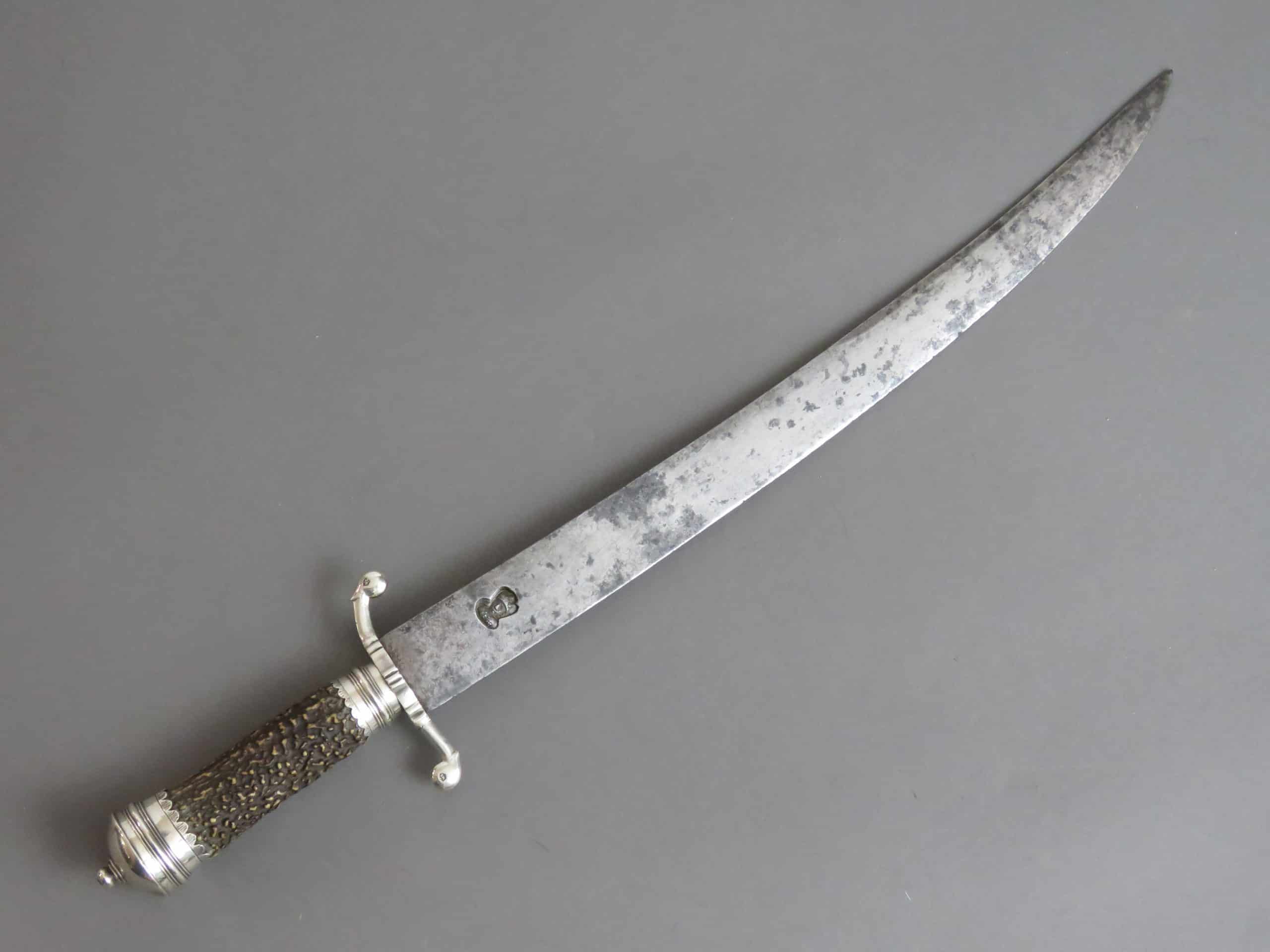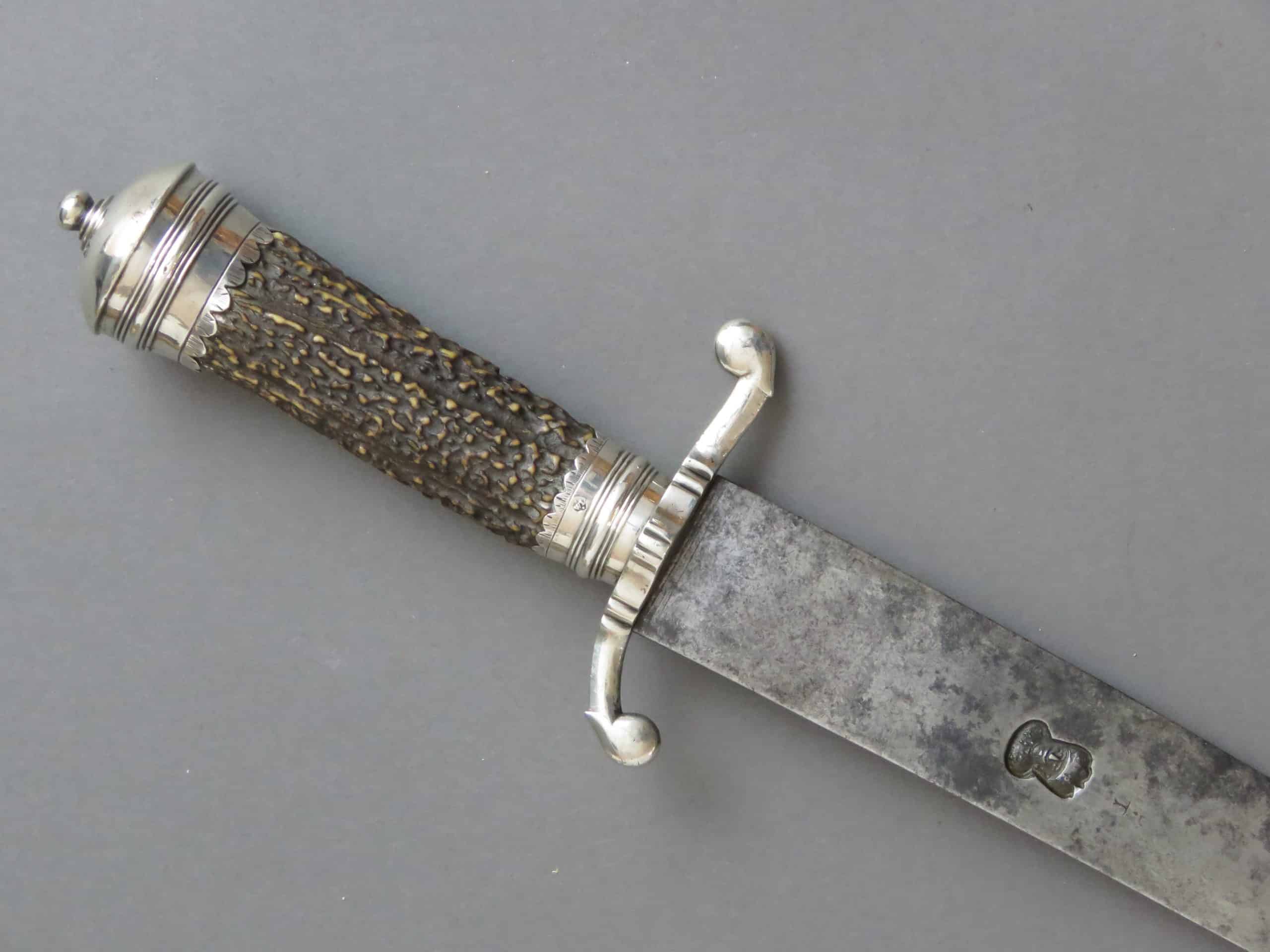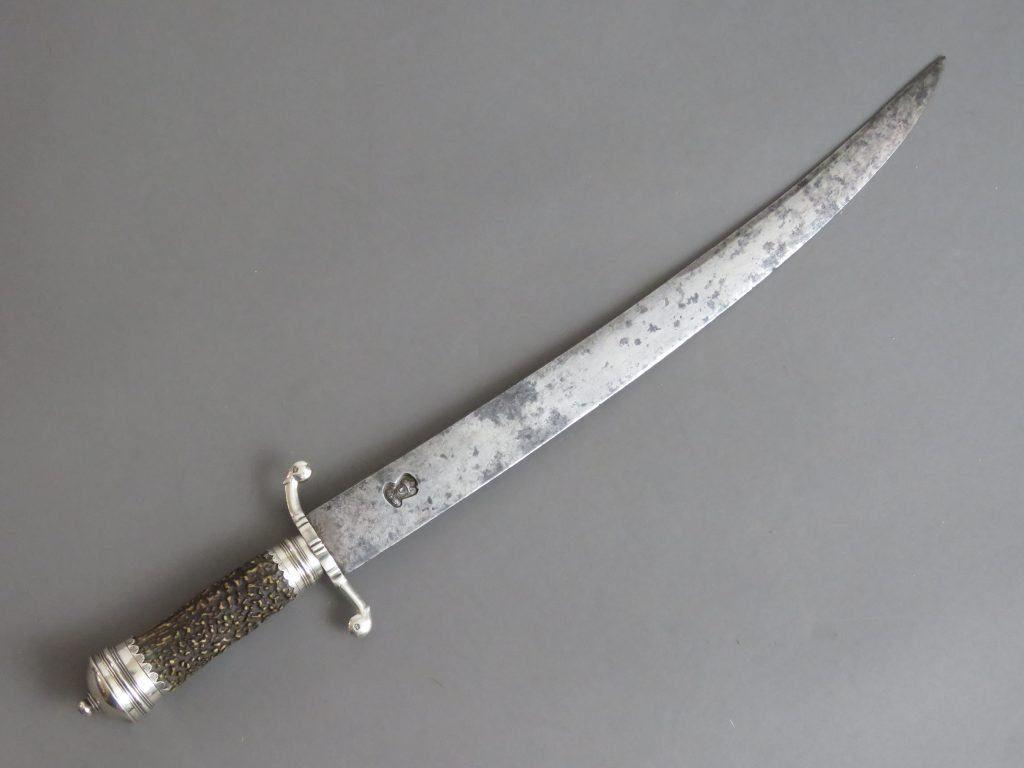
A fine late 17th century English Silver Mounted Hanger with the Maker’s Mark “WL” for William Lutwich of London
To enquire about this itemplease click here
Price: £1,875
Ref: 090.20
Item Description
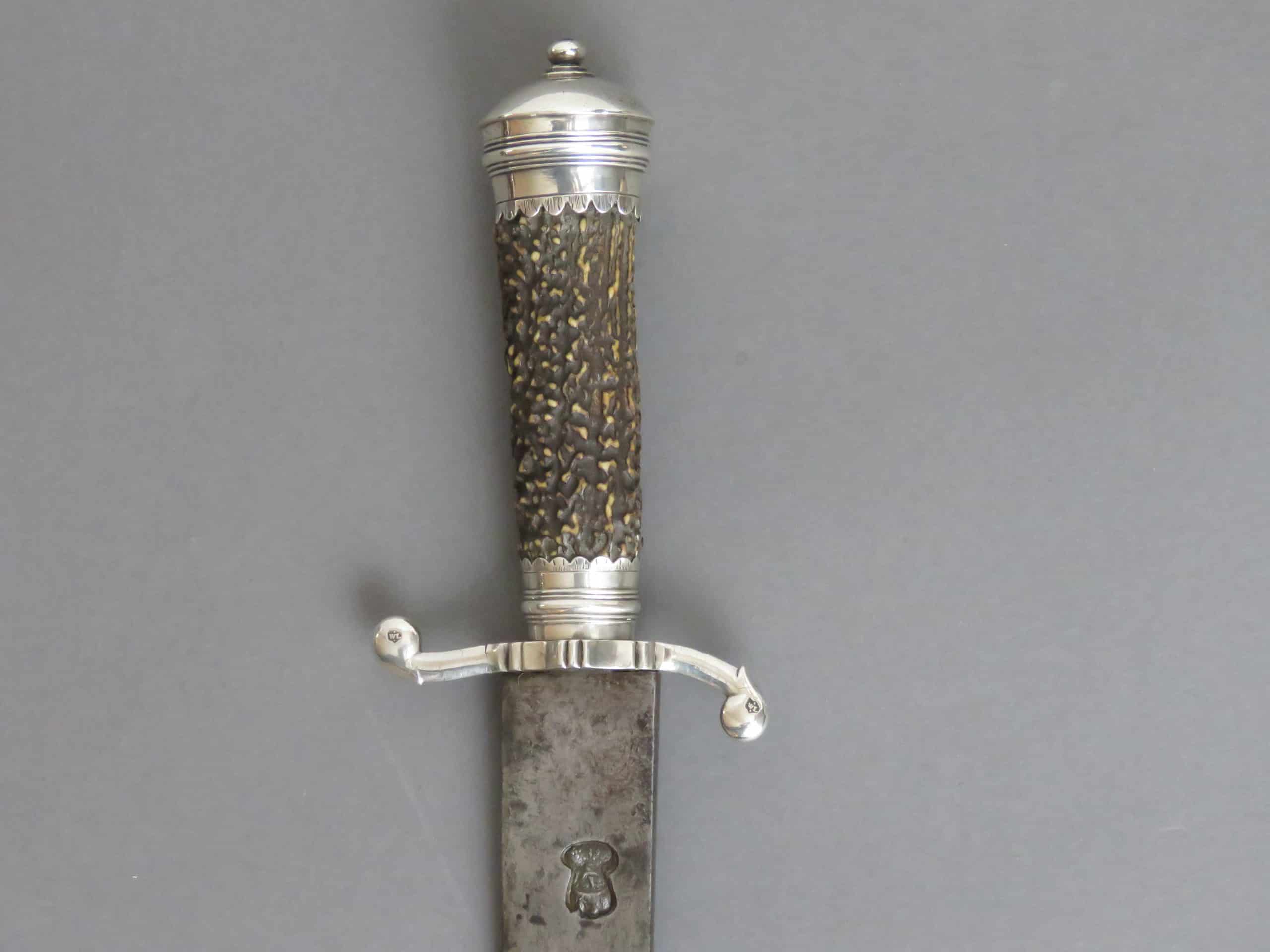
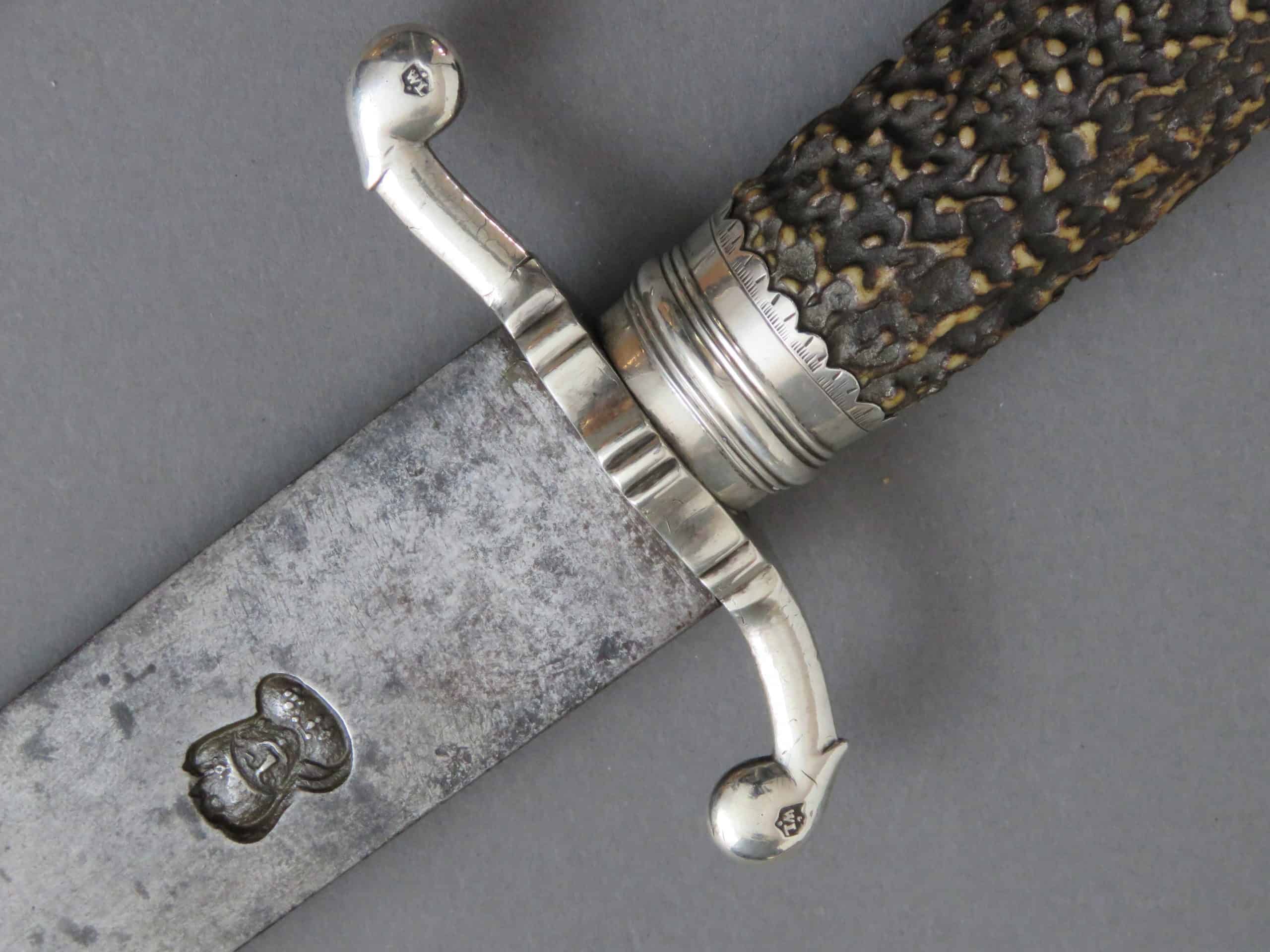
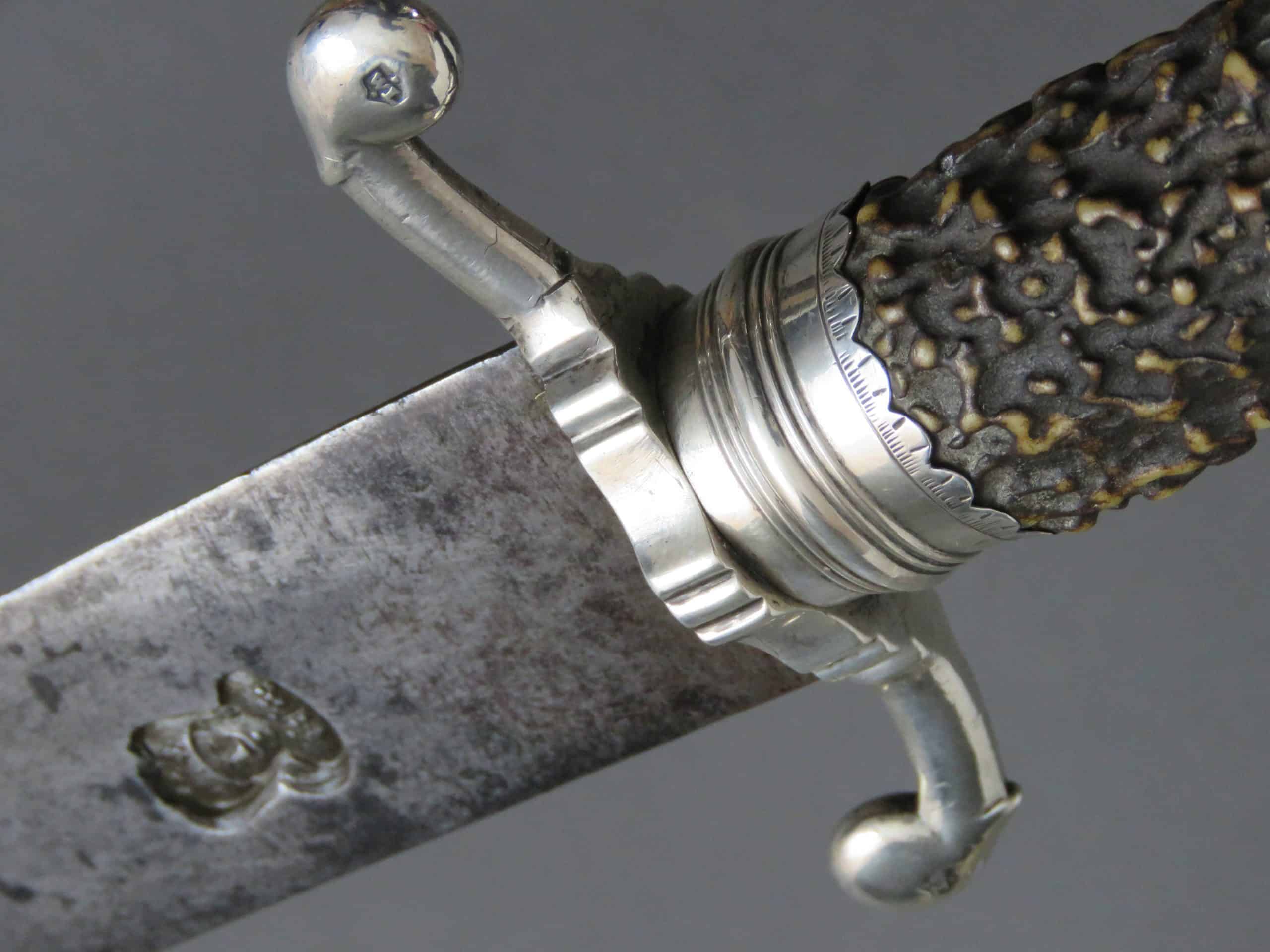
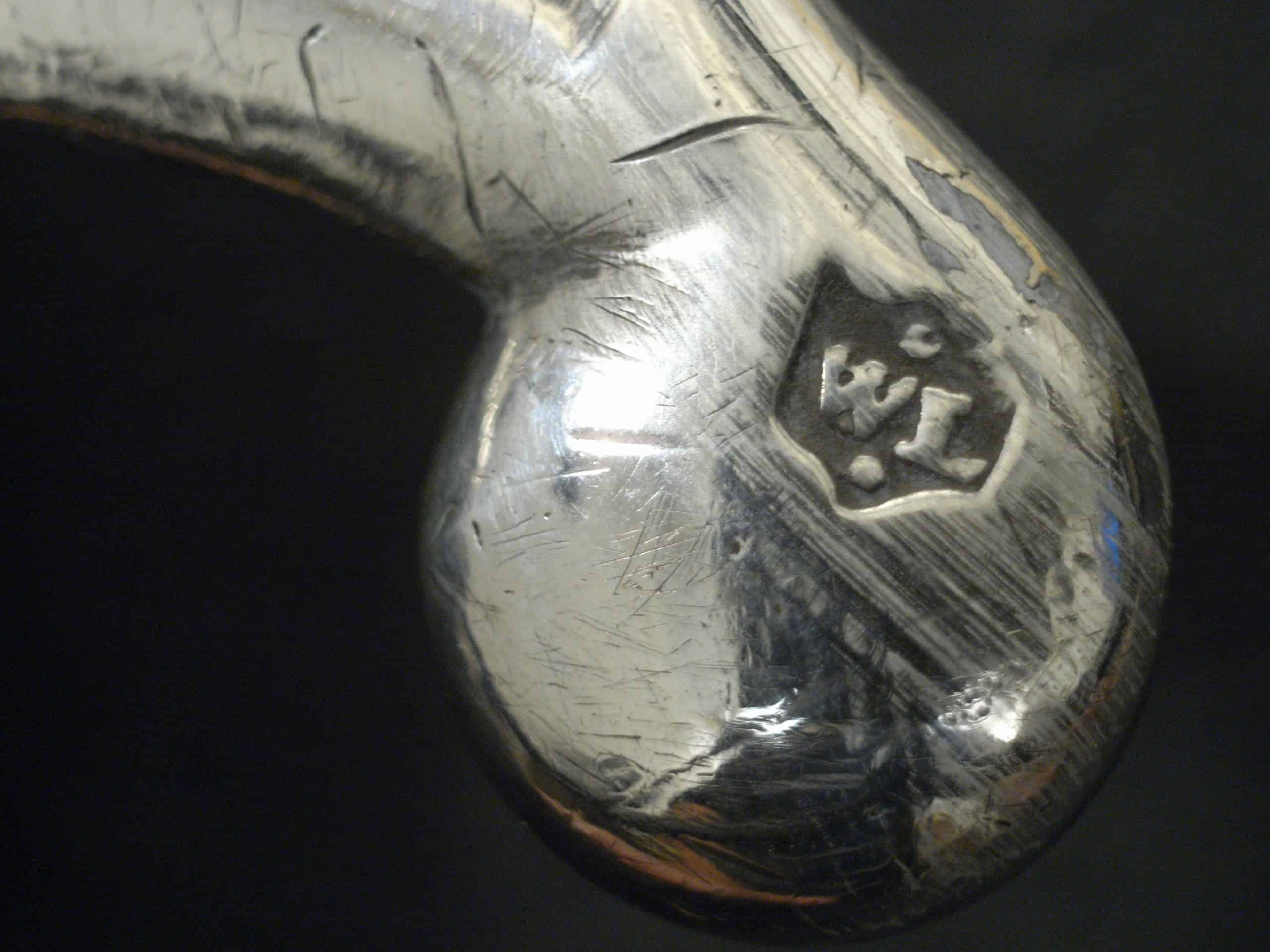
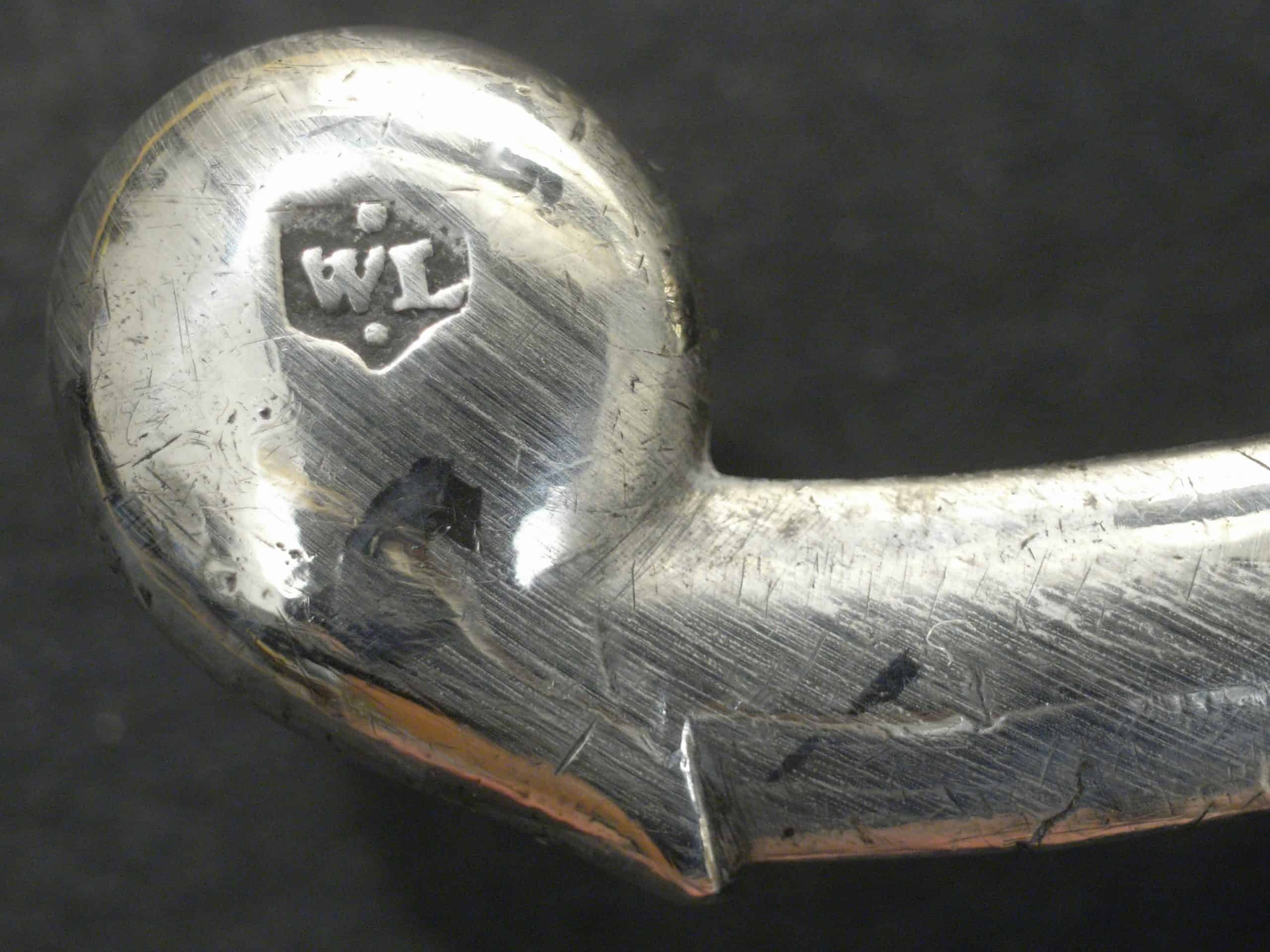
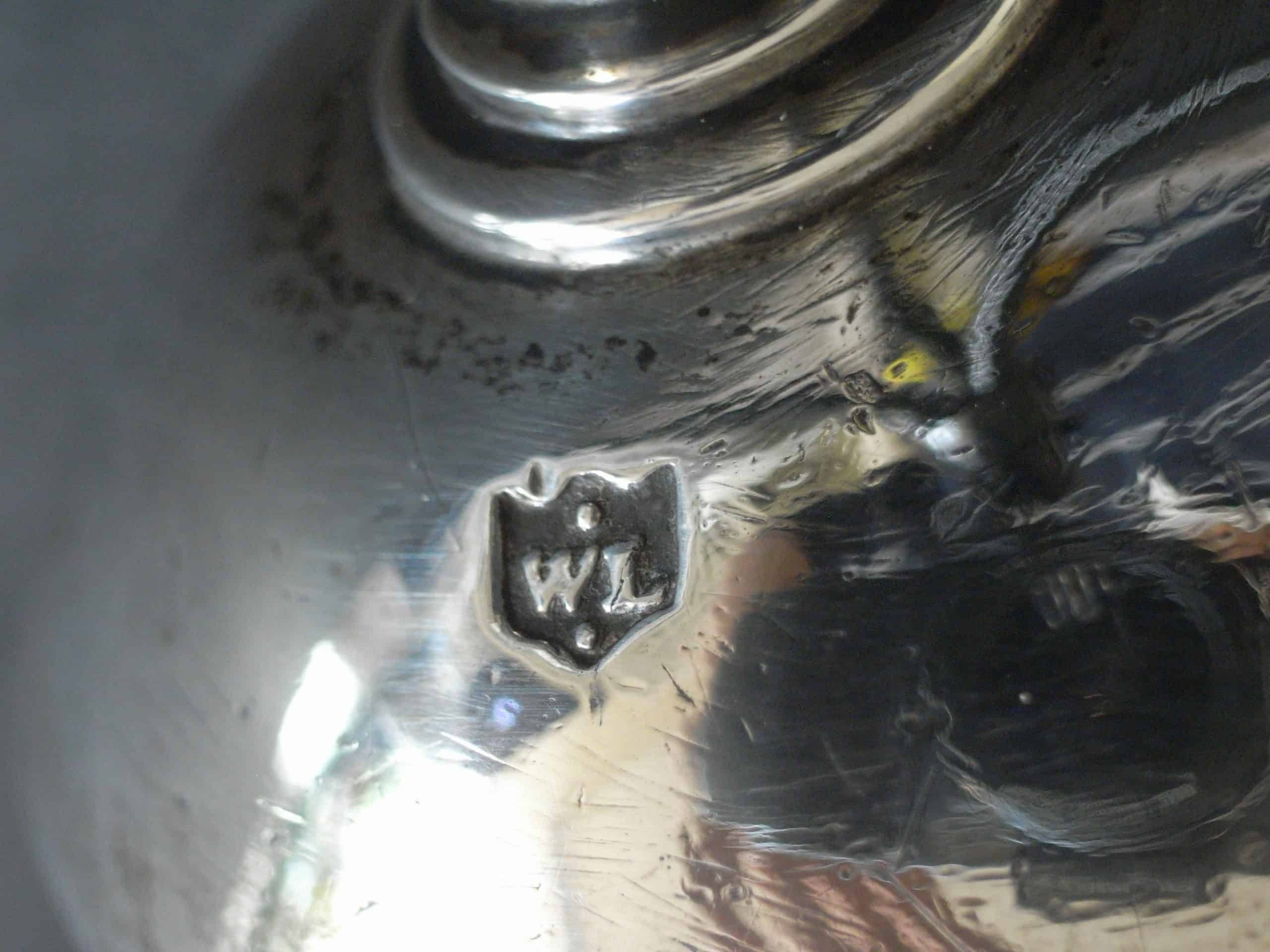
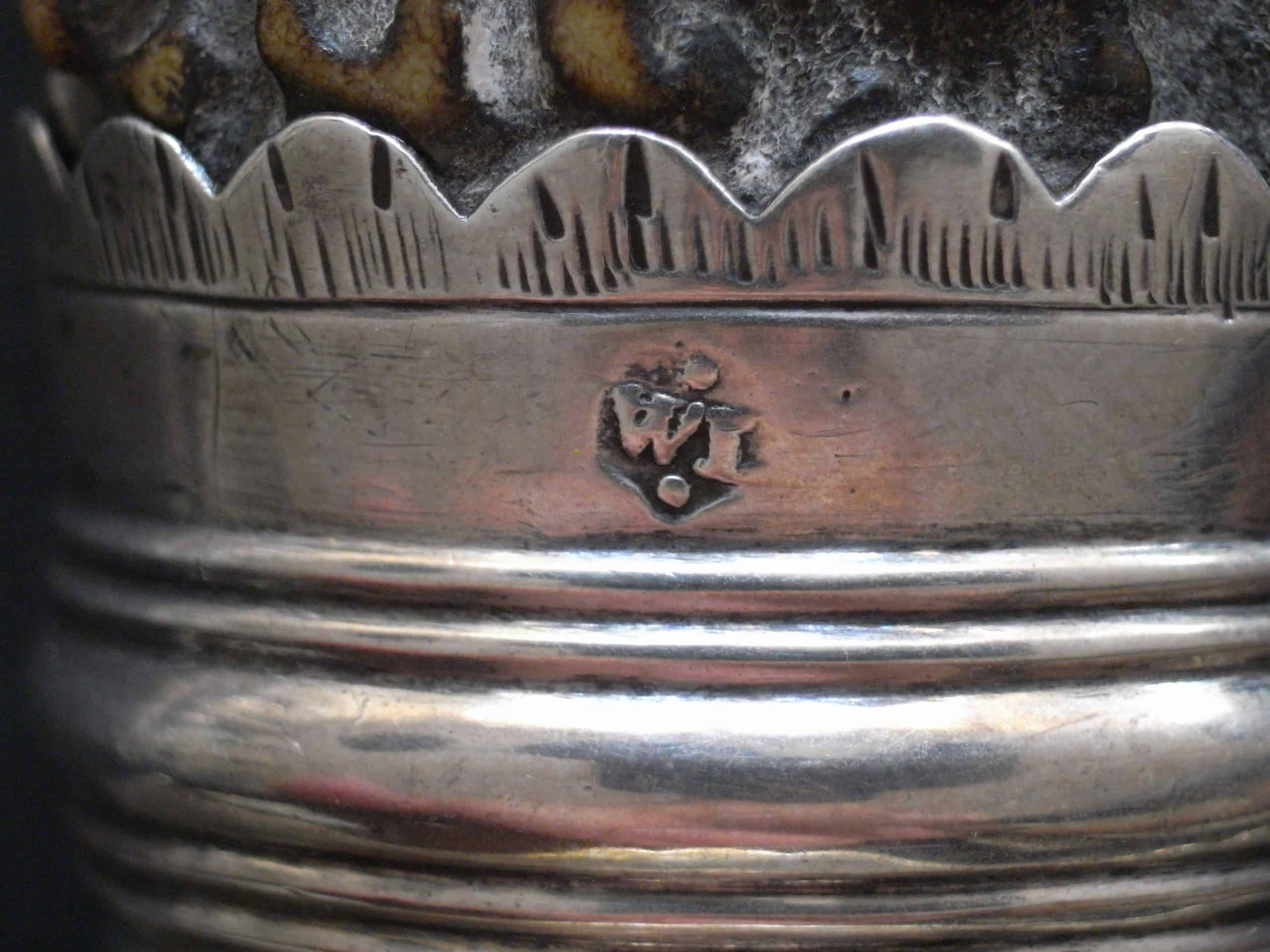
An English silver mounted hanger comprehensively stamped with the maker’s mark “WL” most likely for the silversmith William Lutwich of London. This is a fine example in unusually good condition. The small mark consists of the letters in raised relief inside a shield with a pellet above and below.
In the 17th and 18th centuries when swords were a popular weapon for gentlemen, hangers were a robust secondary side arm used for self defense when hunting and travelling. They were also used in parts of the British Army and Navy. Hangers appear in some military portraits of the time. Towards the end of their popular use, they were slimmed down and refined for wear as a gentleman’s fashion accessory. The high quality and expensive hanger described here, with its robust blade, was most likely a gentleman’s weapon made for use rather than decoration.
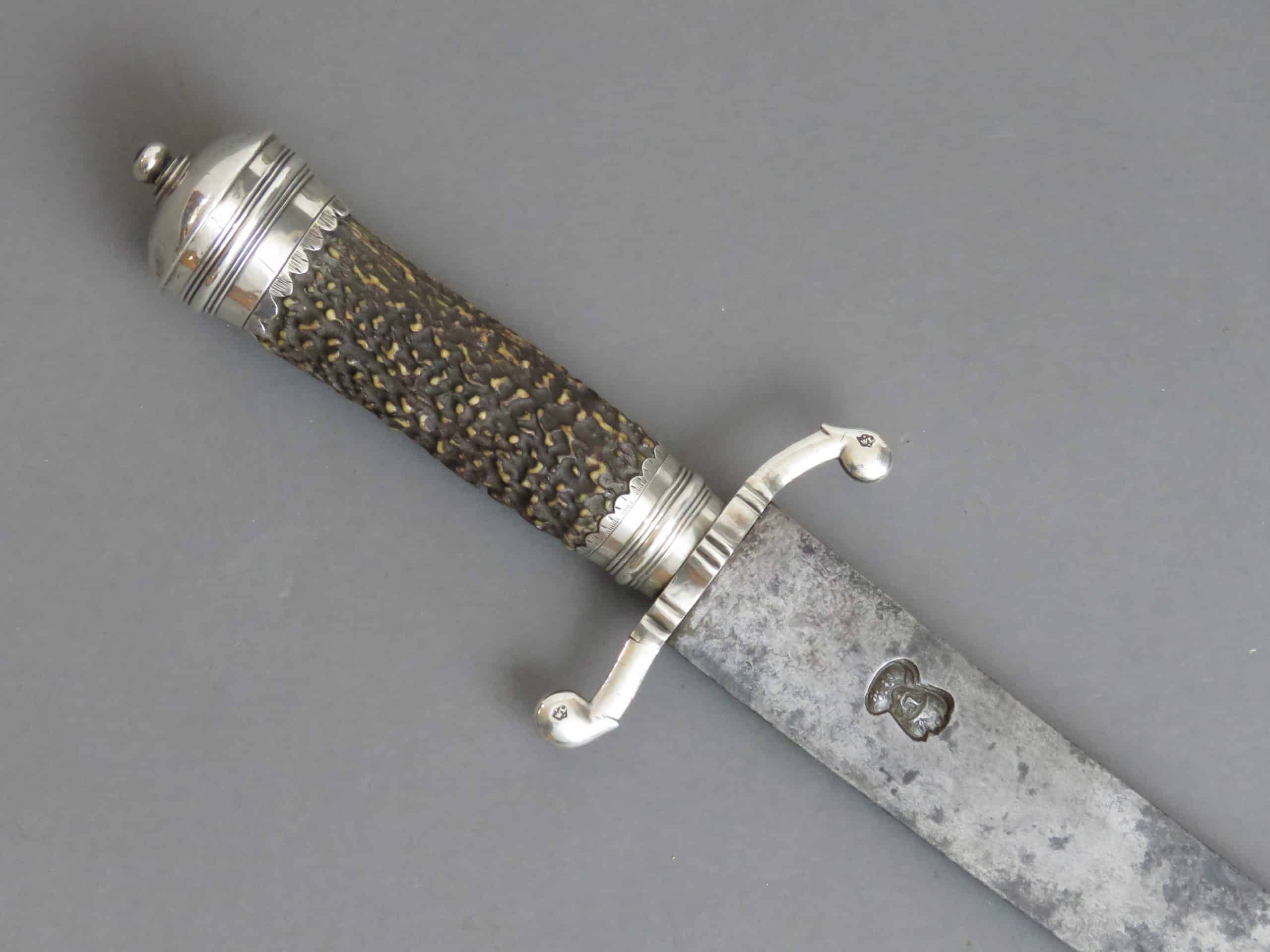
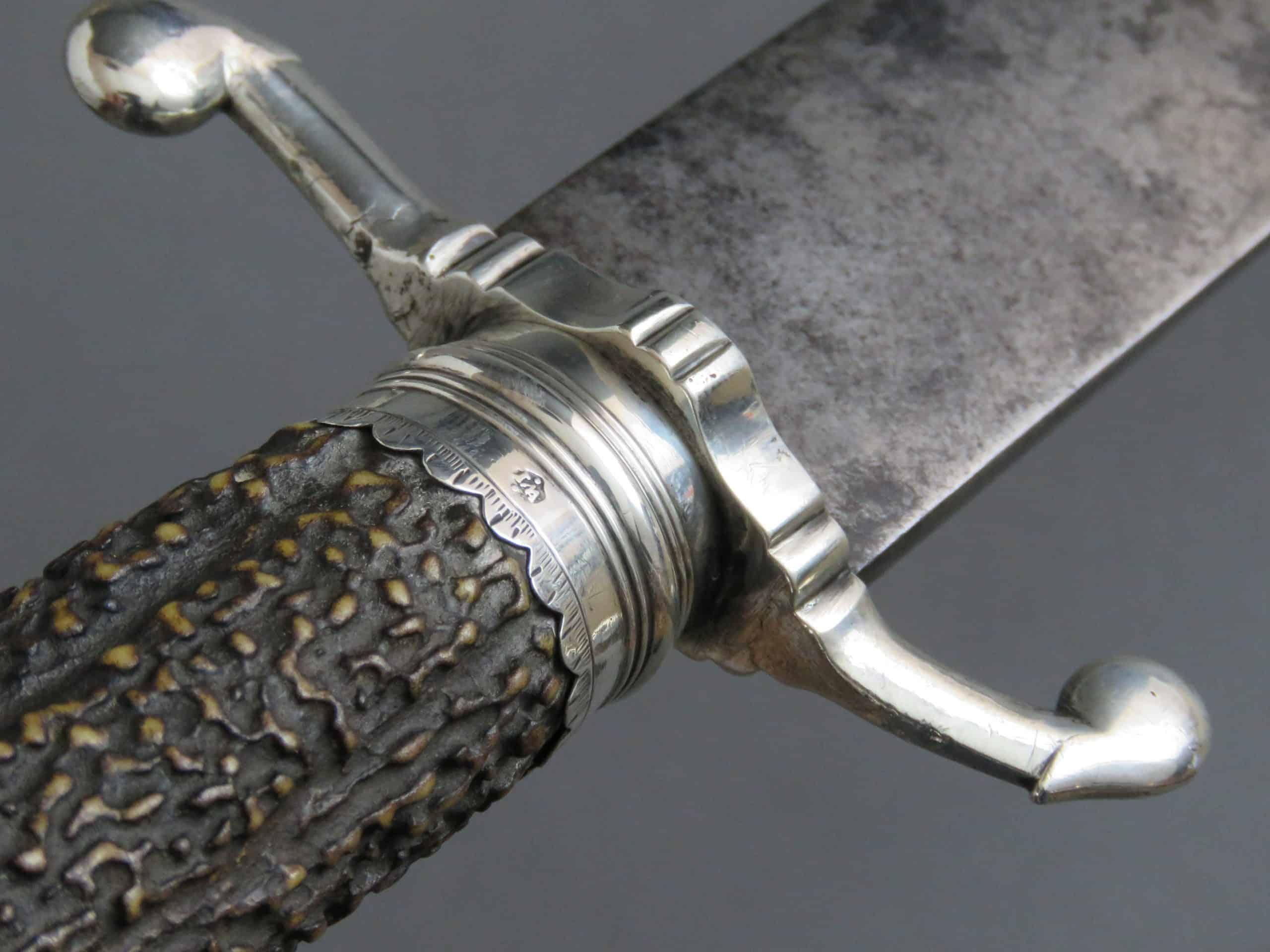
The hanger dates to between 1691, when Lutwich was “made free” of his guild and able to practice in his own right, and 1697, which is the date of the advent of the Higher, or “Britannia”, Standard for silver, when smiths were required to use a new stamp bearing the first two initials of their surnames. When the requirements for punch marks changed again in 1720 with the arrival of the Sterling Silver Standard, many makers reverted to recording their initials but in bolder type accompanied by date and hallmark stamps. By this date the styles adopted for hangers had changed so there no doubt that this hanger is a late 17th century example. On this hilt the quillon terminals are stamped as are the base ferrule to the grip and the pommel. This comprehensive marking was also a historic practice by the turn of the century.
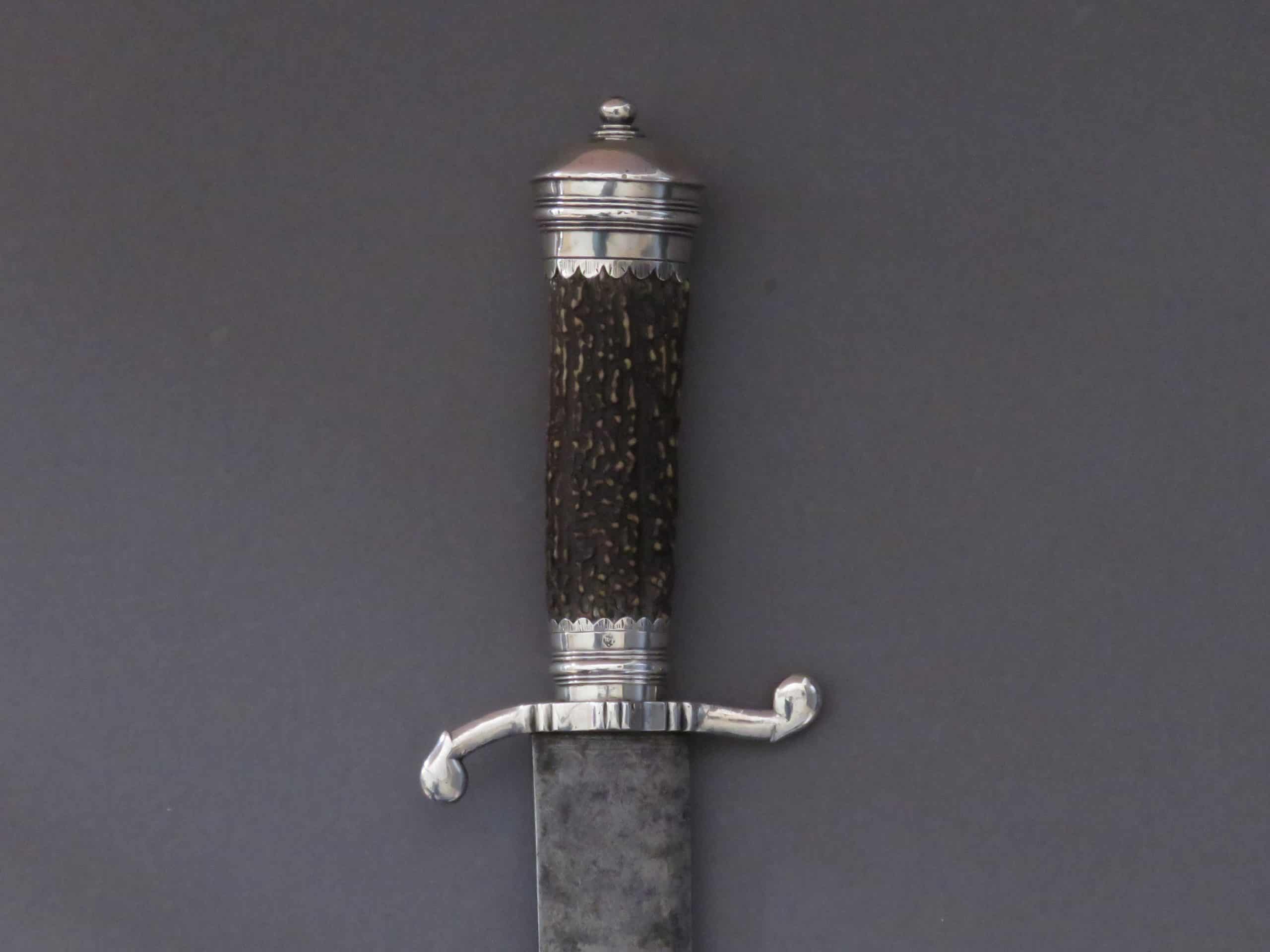
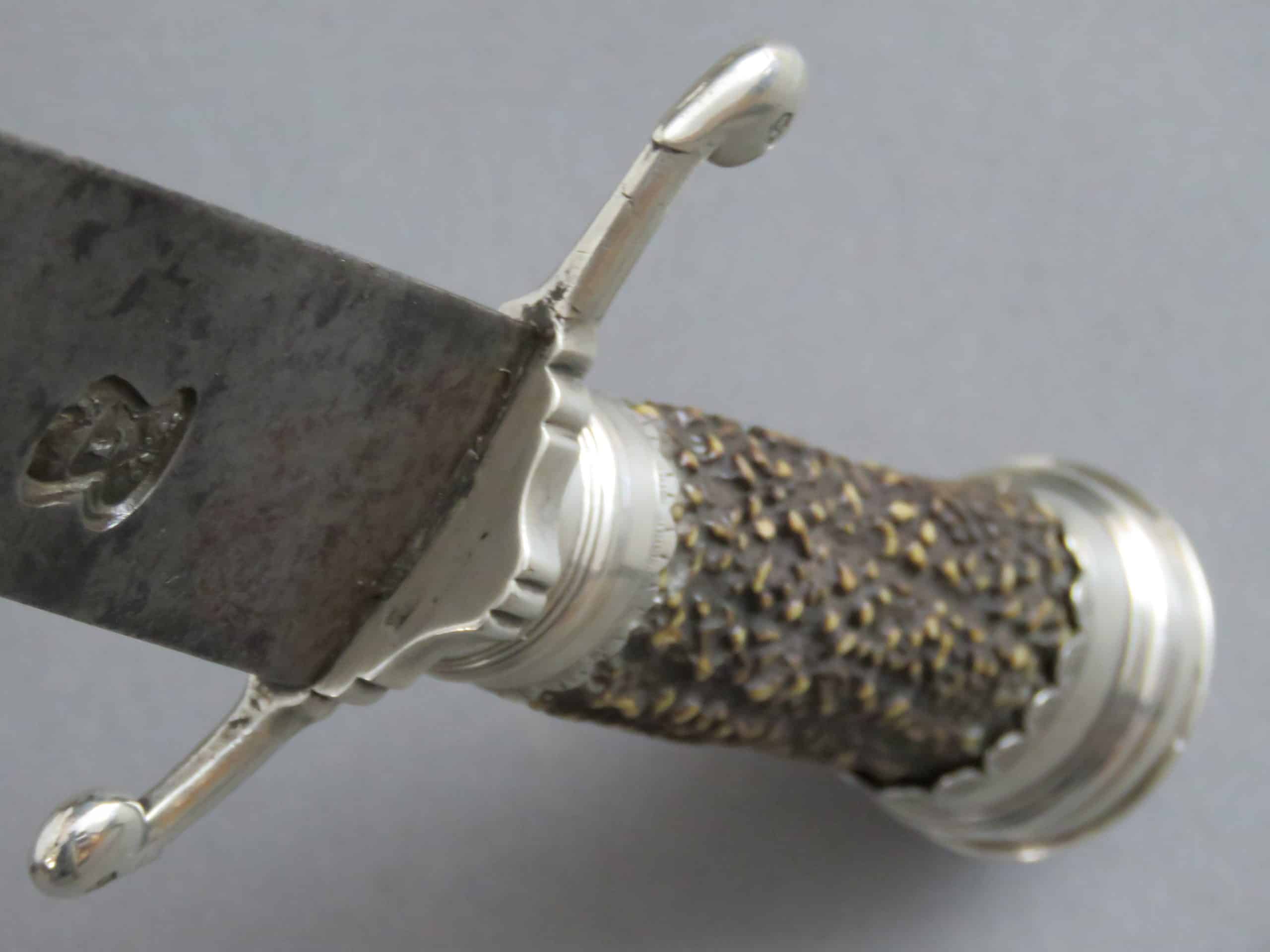
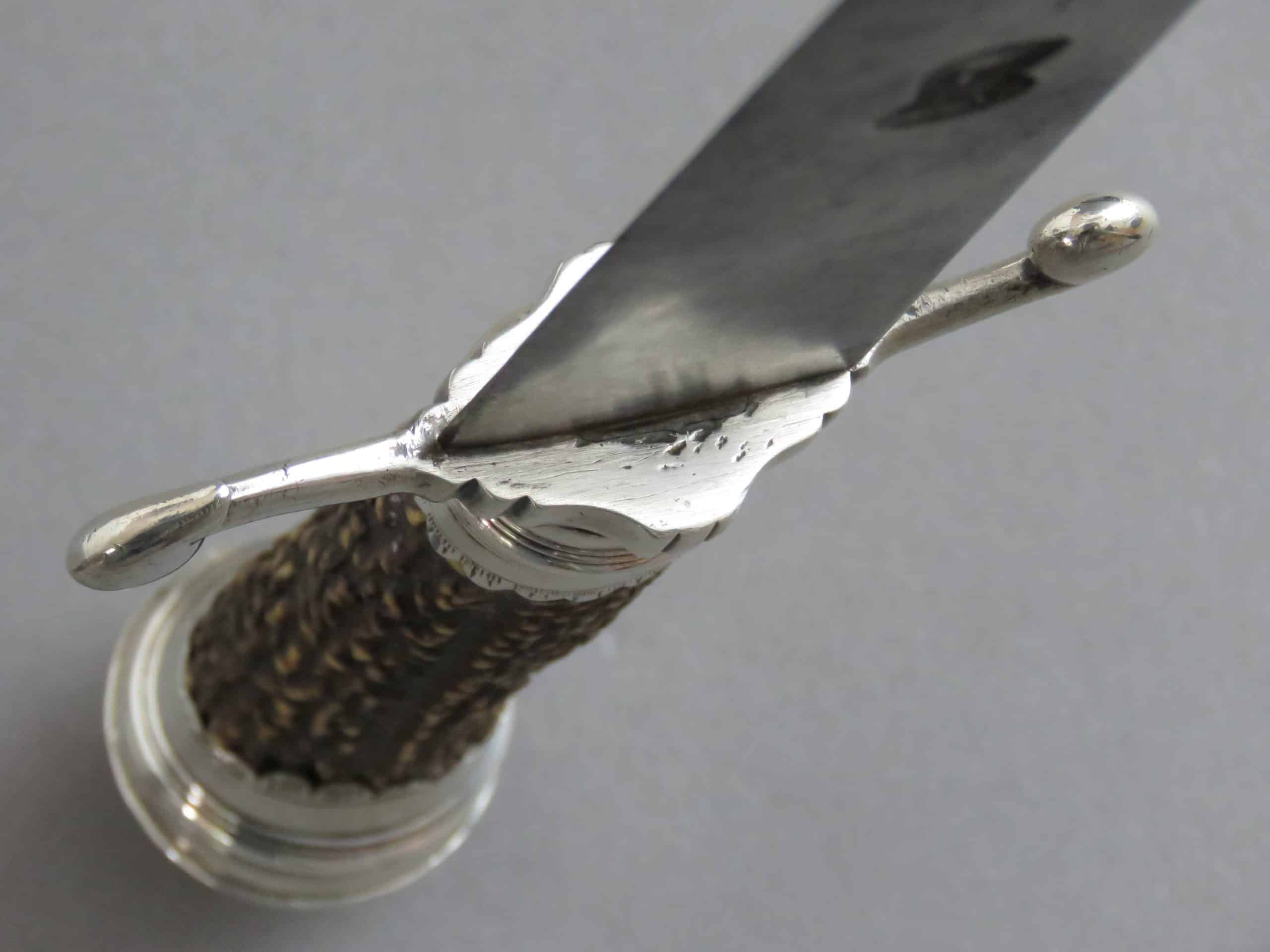
The cross guard of this sword is comprised of a bold faceted block with horizontal quillons swollen at the vertically counter curved terminals. The grip is of stag antler with a plain ribbed ferrule at its base and scalloped edge. The pommel cap has a ribbed neck beneath with scalloped edge formed in the same manner as the basal ferrule. The plain dome formed on top has a pronounced tang button in the centre.
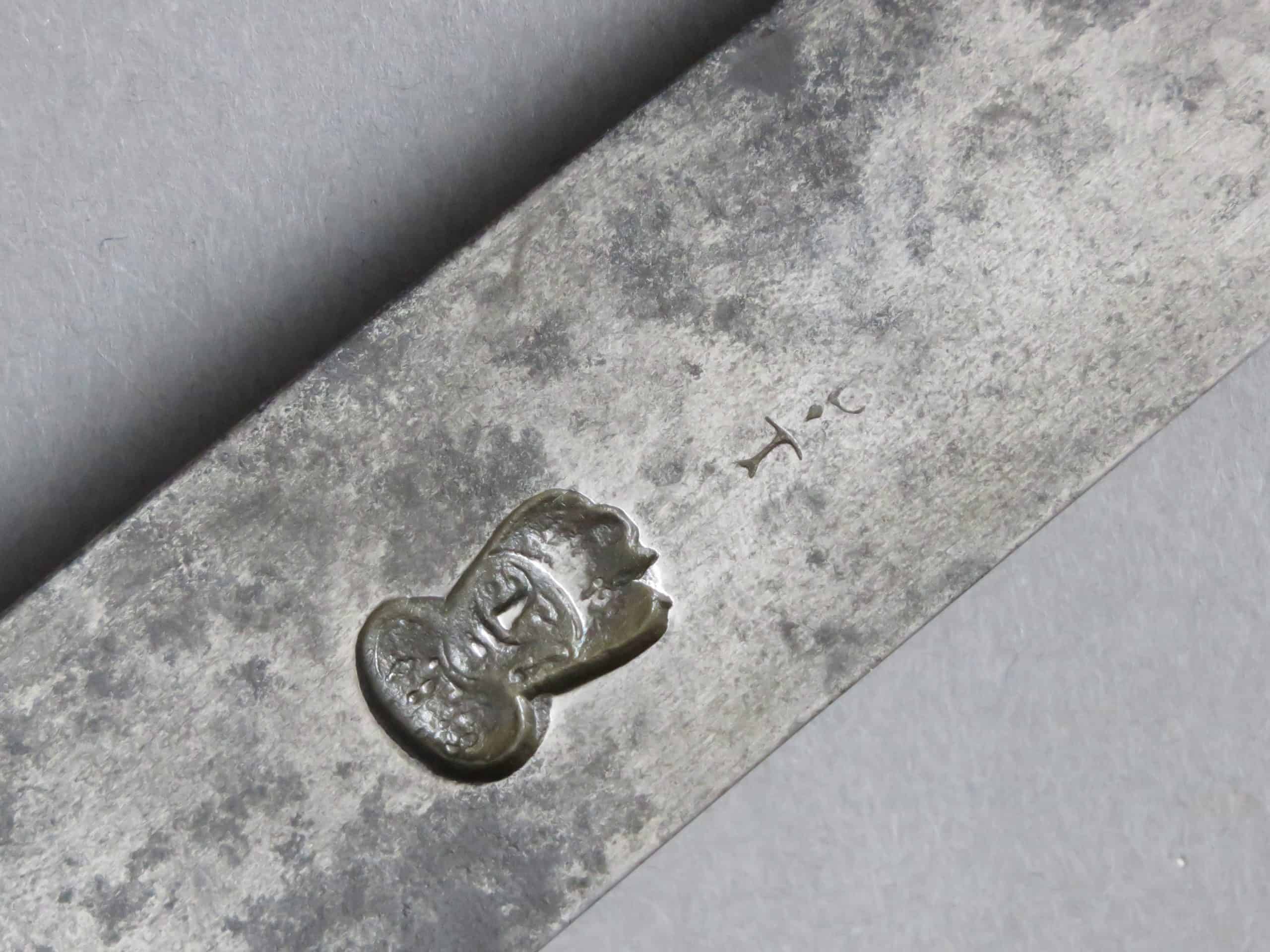
The slightly curved robust single edged blade is just over 16 inches long (40.5 cm). It becomes double edged from just over two thirds of the way along to the tip. The blade is deeply struck on both sides at the forte with a moustachioed King’s head mark on each side.
The full length of the hanger is just over 21.5 inches (54.5 cm) long. The hanger is in fine condition.
A stamp recorded by William Lutwich at Goldsmiths’ Hall is shown in Grimwade number 1967 page 144. This mark has the same shaped depressed shield and letters WL incuse as do the marks on our hanger. However, the stamp in Grimwade has a crown above the letters whereas the marks on our hanger have a pellet above and below. It is not known when the mark in Grimwade was recorded but smiths did use and record variants of their marks over time many of which are now lost.
For further information on English silver hilted swords and hangers see Leslie Southwick, “London Silver – Hilted Swords, Their makers, suppliers & allied traders, with directory”, 2001, Royal Armouries. For a very similar example with the maker’s mark of Richard Fuller, circa 1690, see the same publication page 277, plate 18.