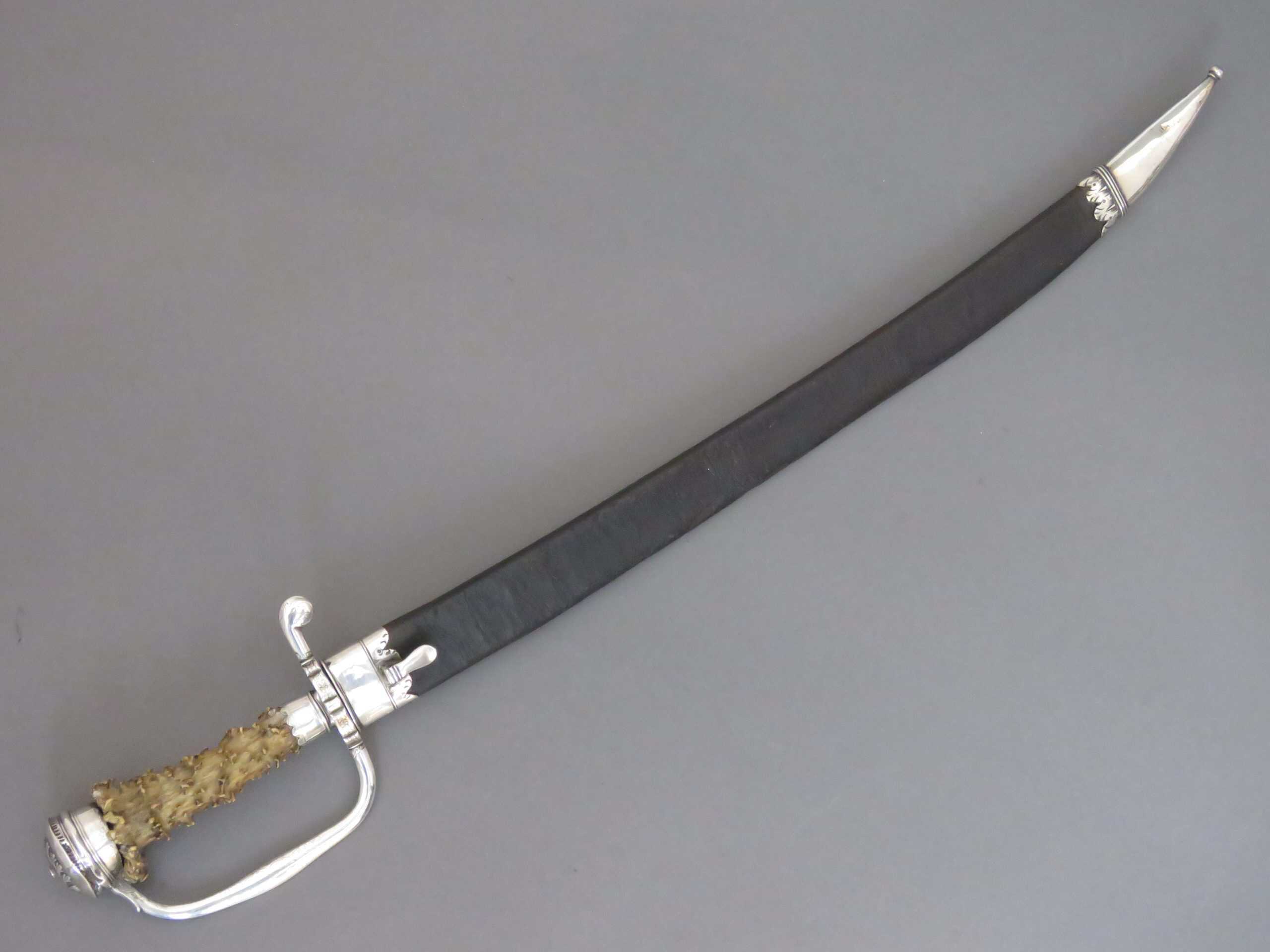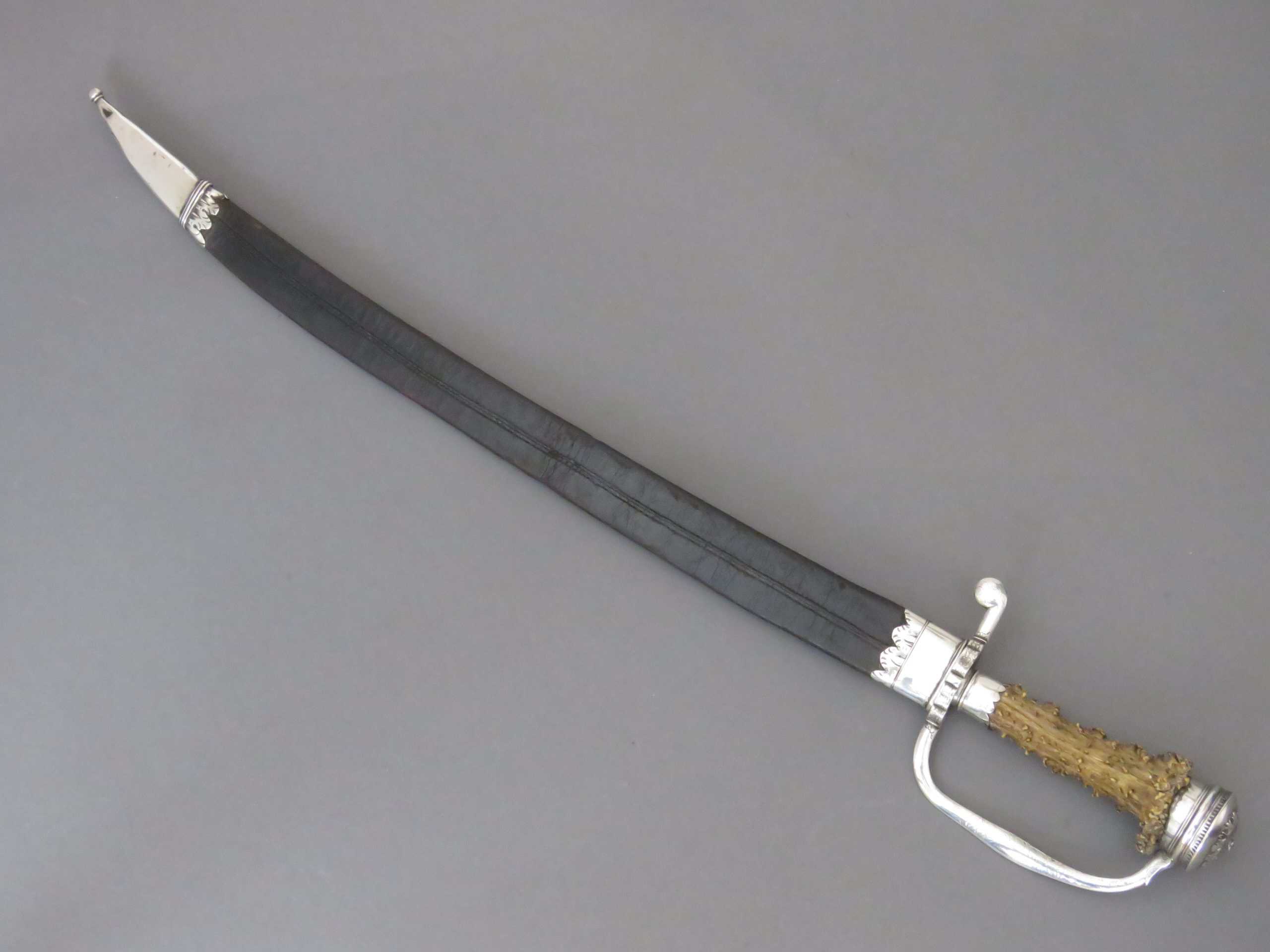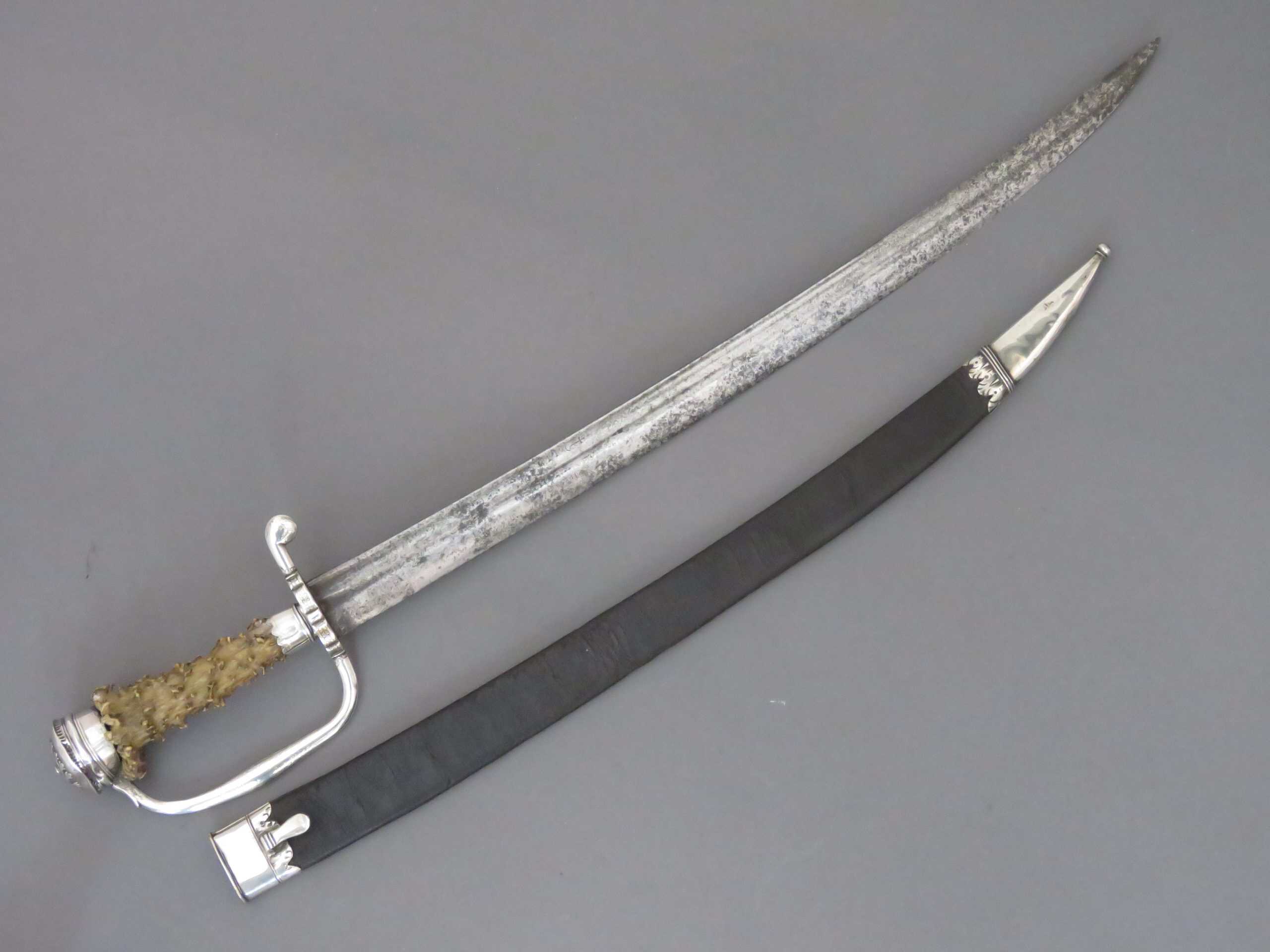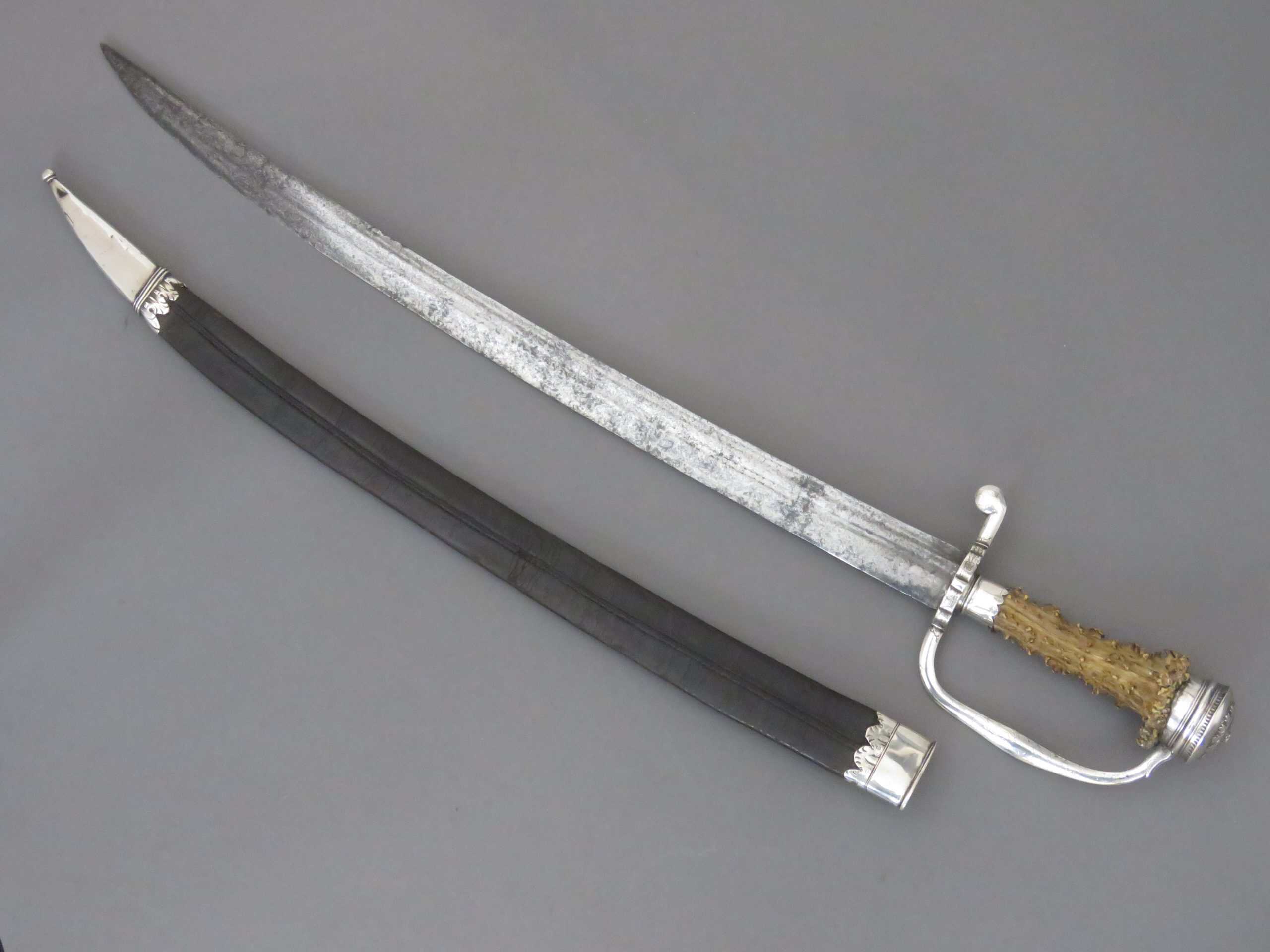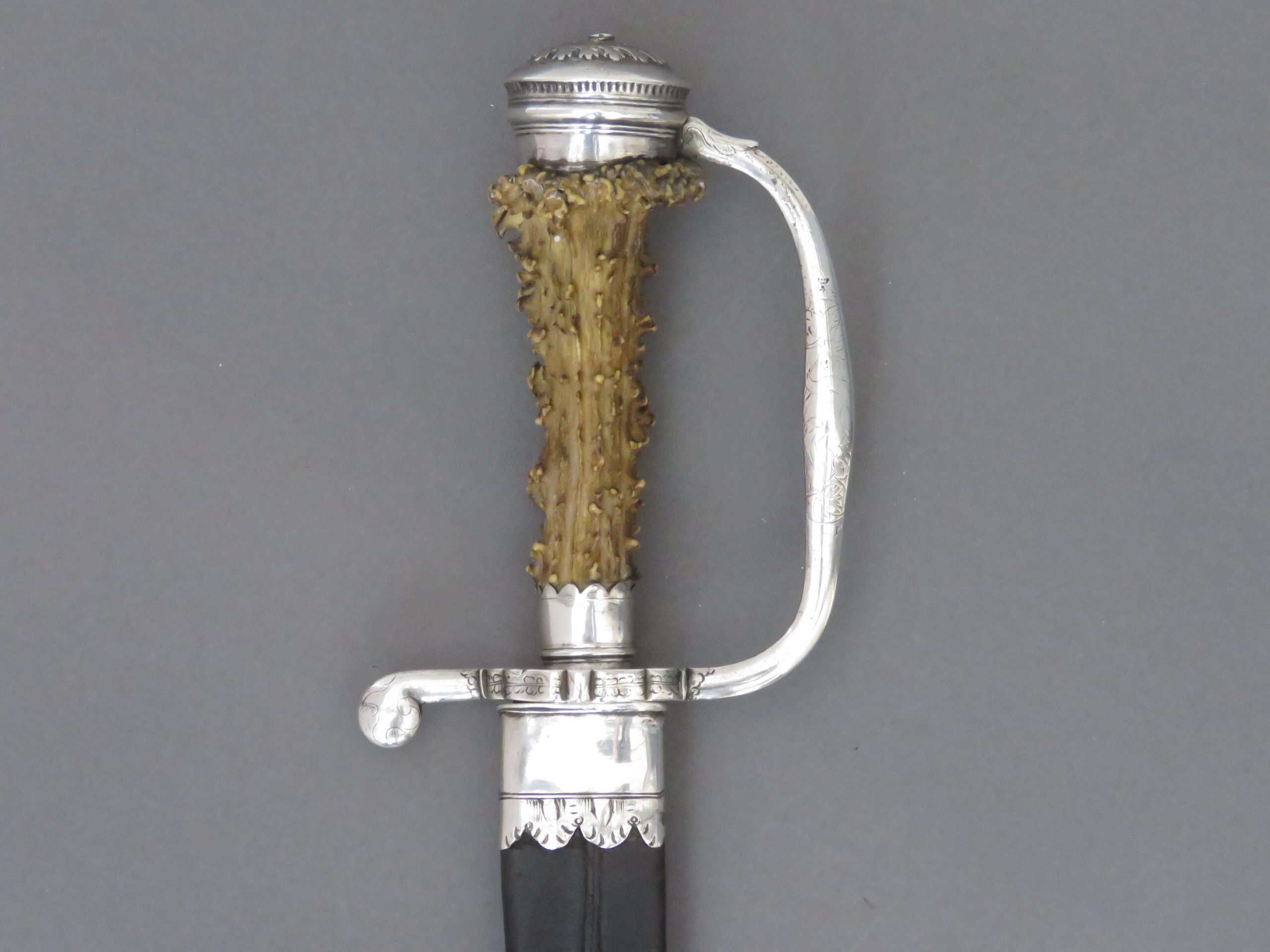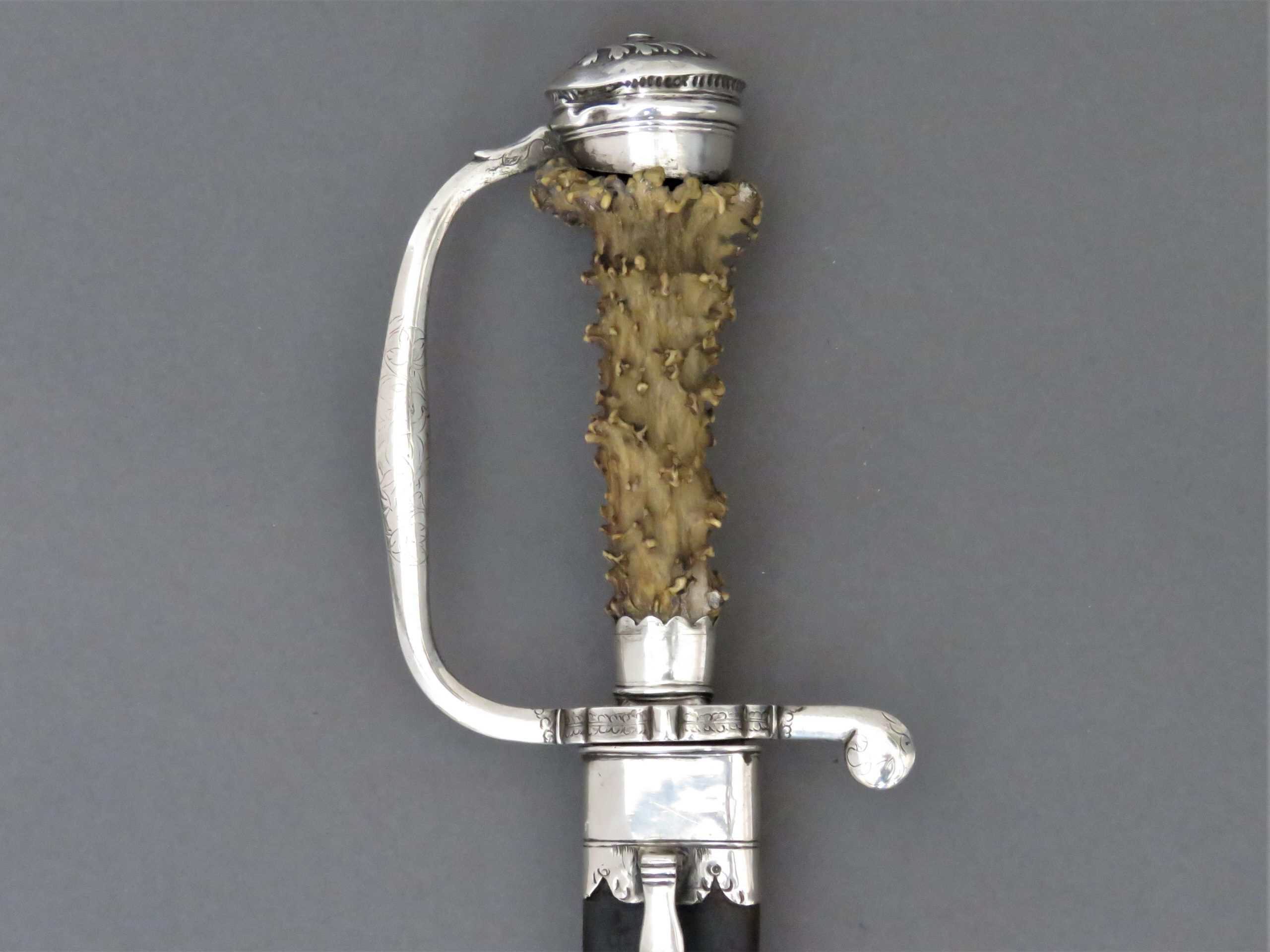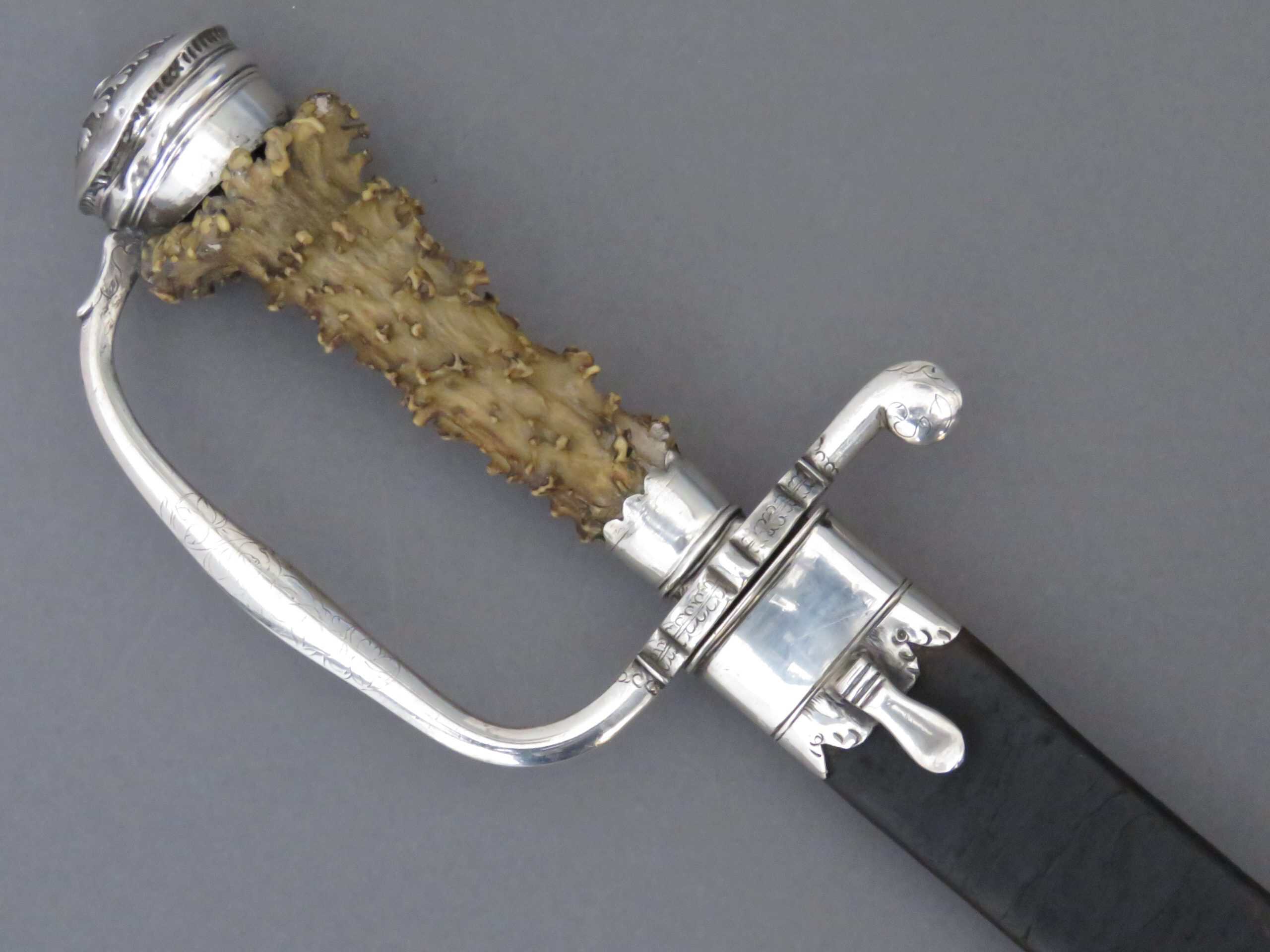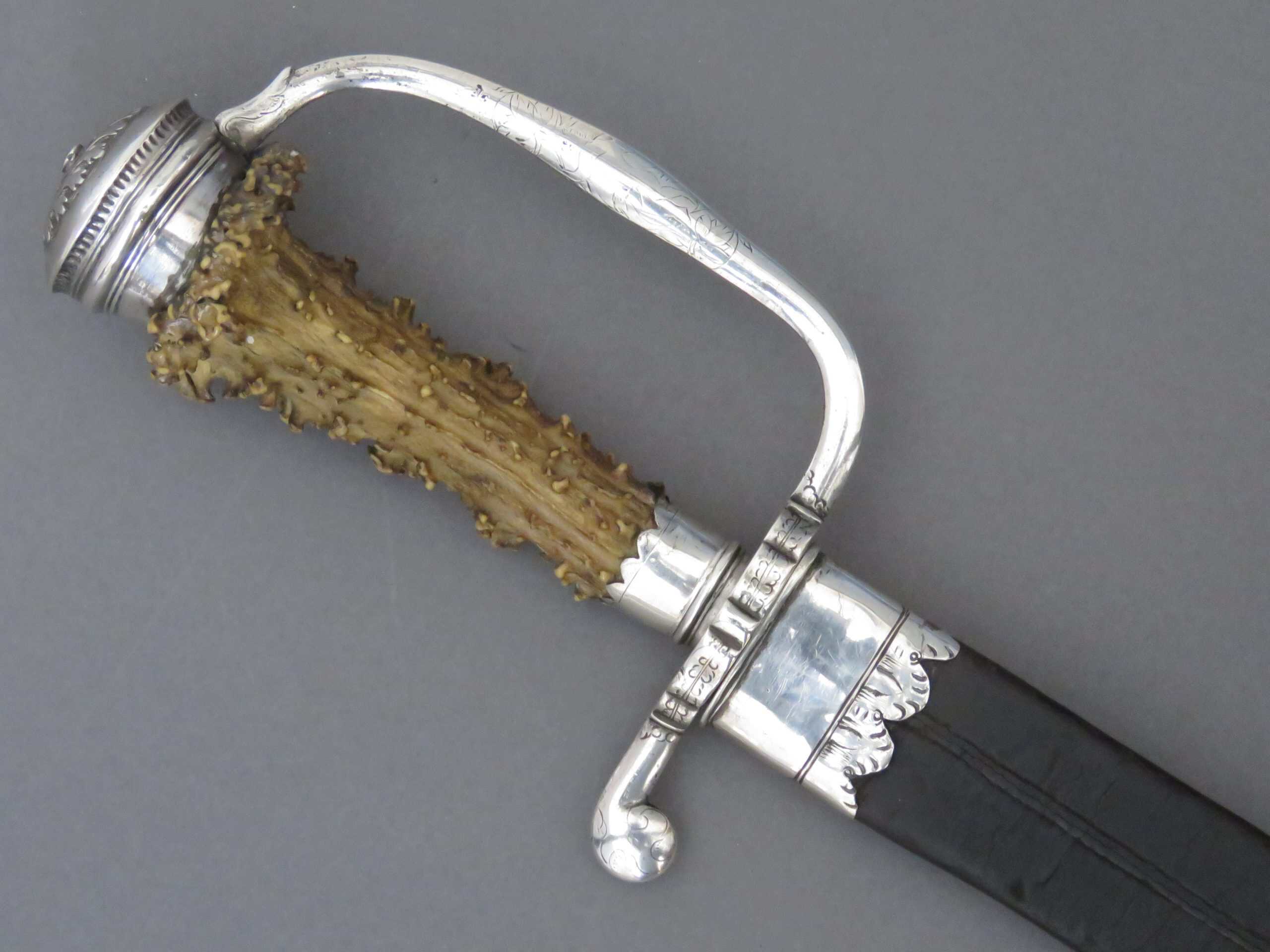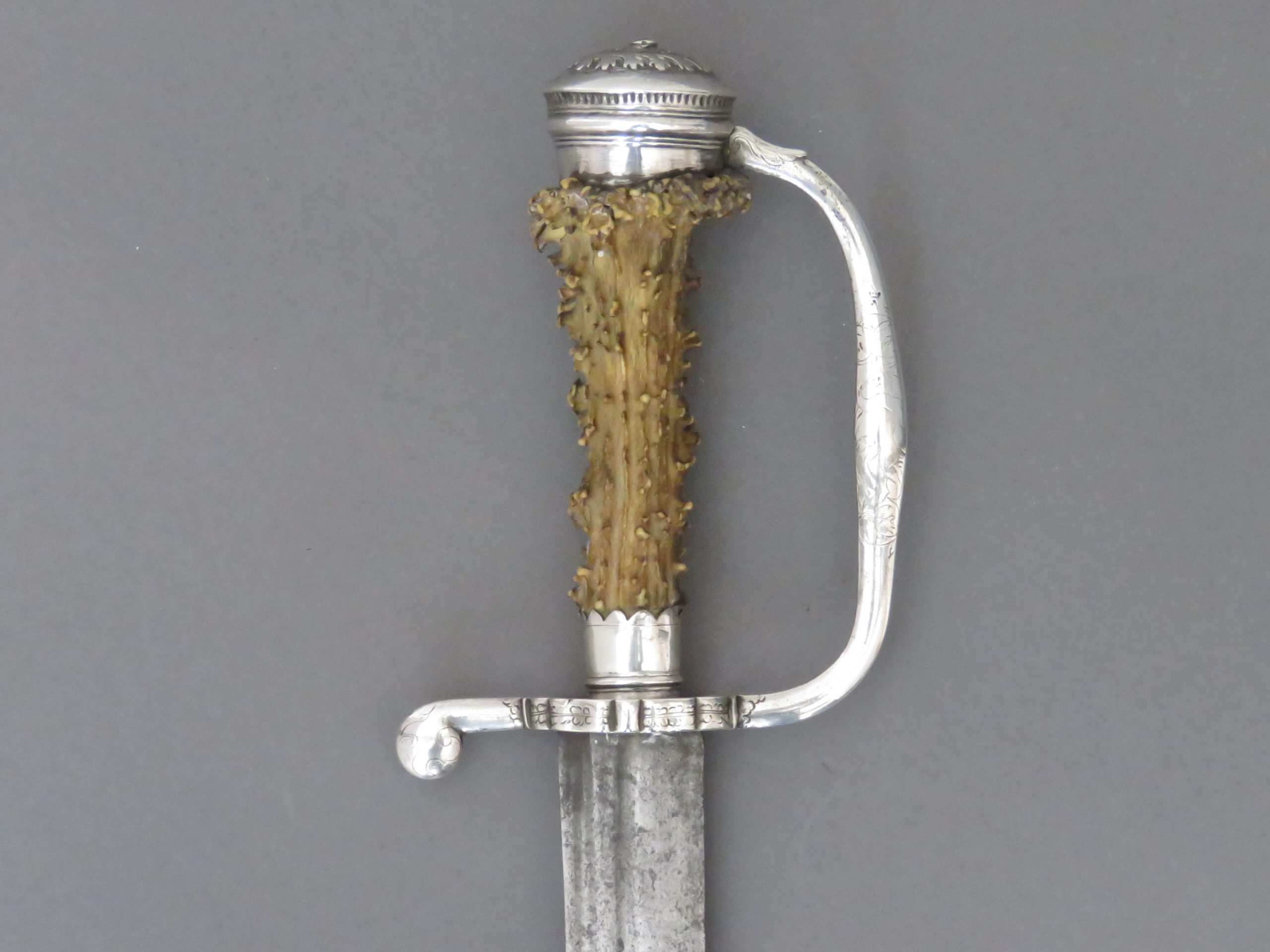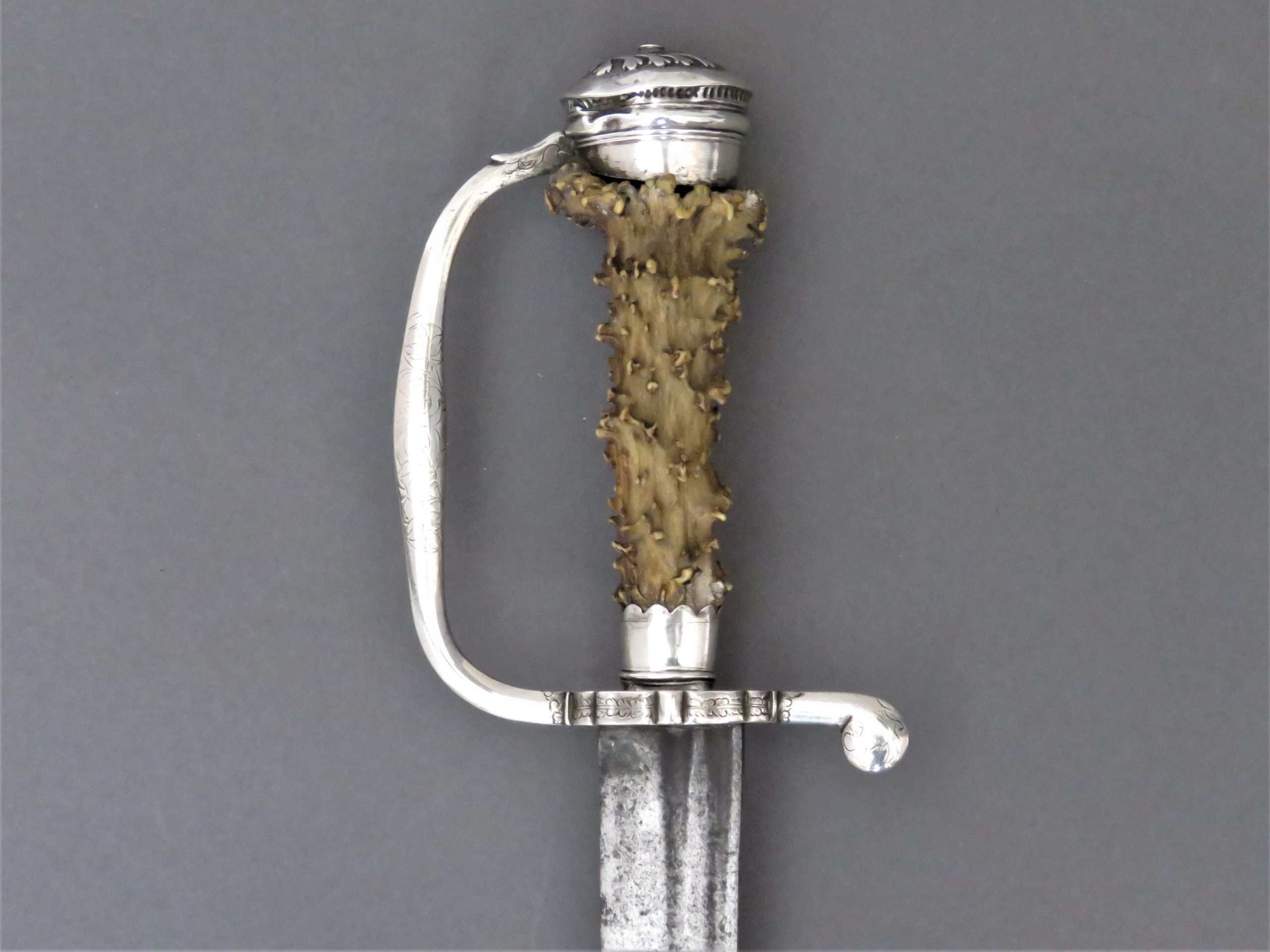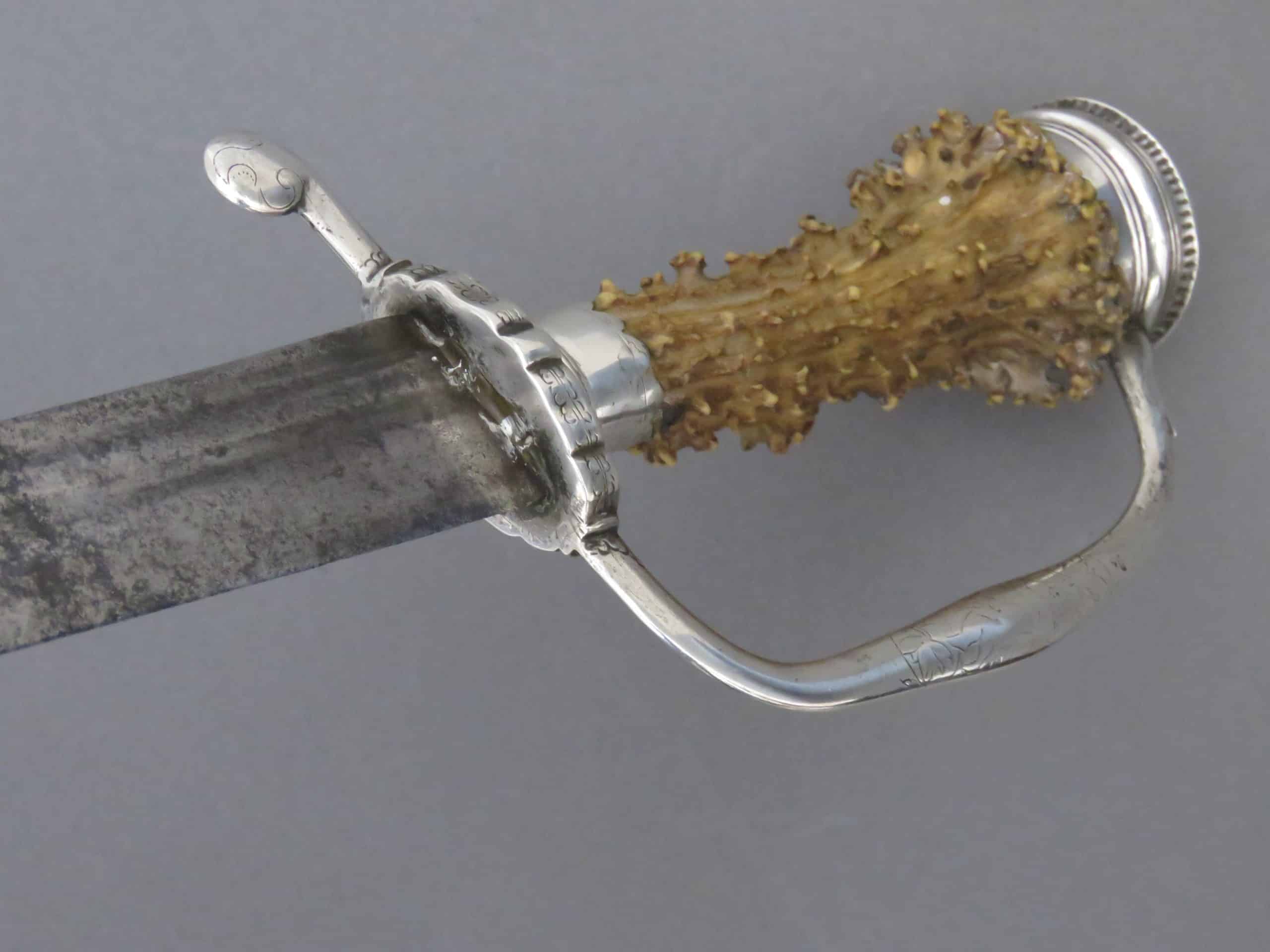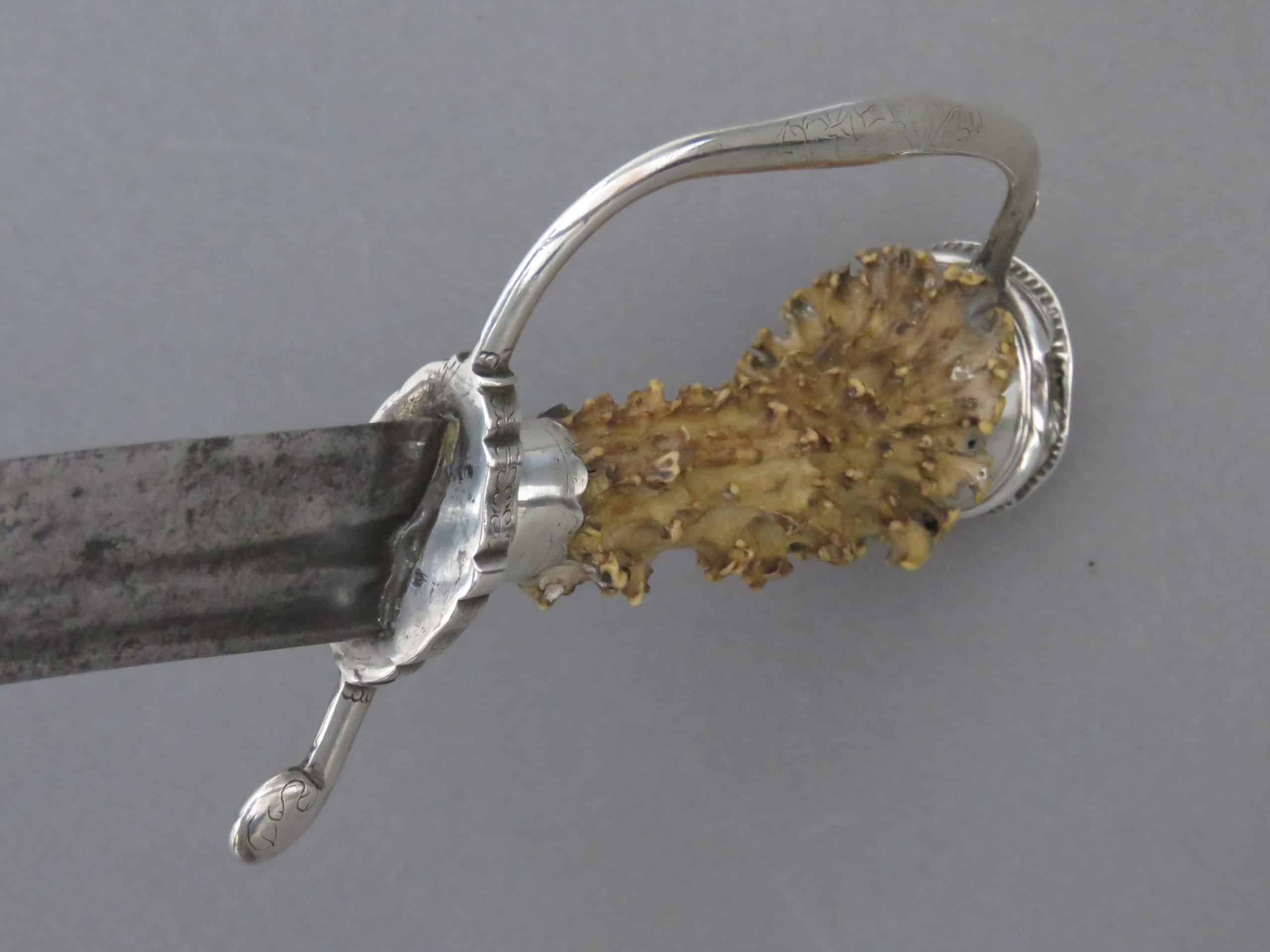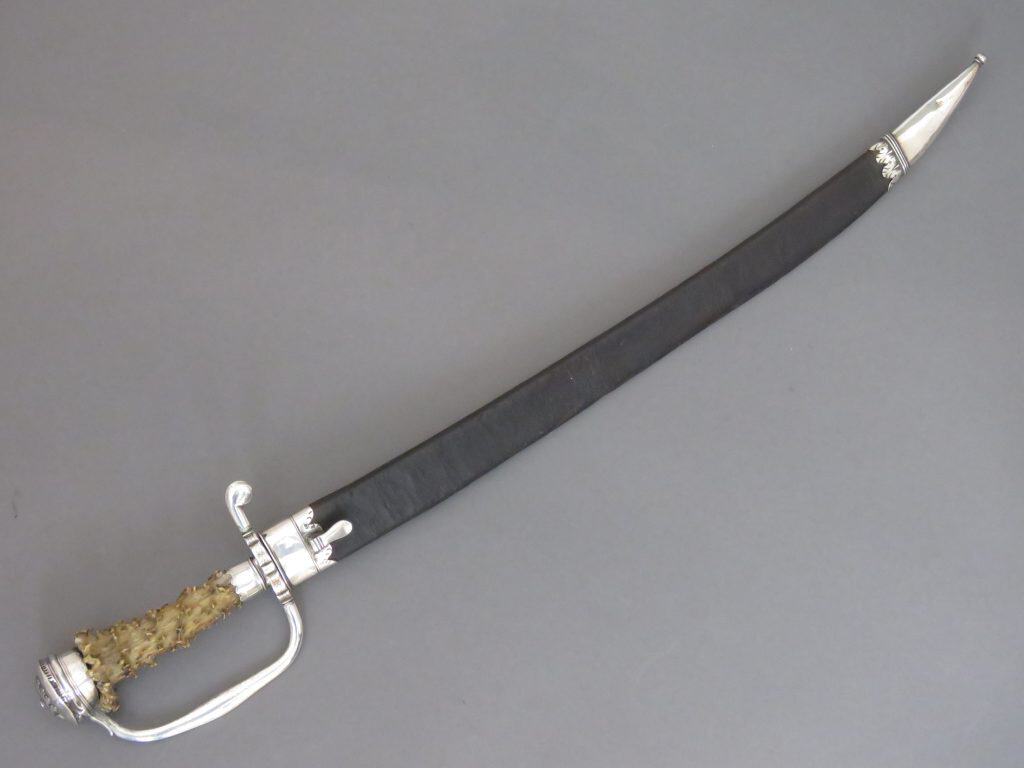
A Silver Hilted Hanger by Thomas Vicaridge of London dating to 1682 to 1697
To enquire about this itemplease click here
Price: £3,600
Ref: 62080700
Item Description
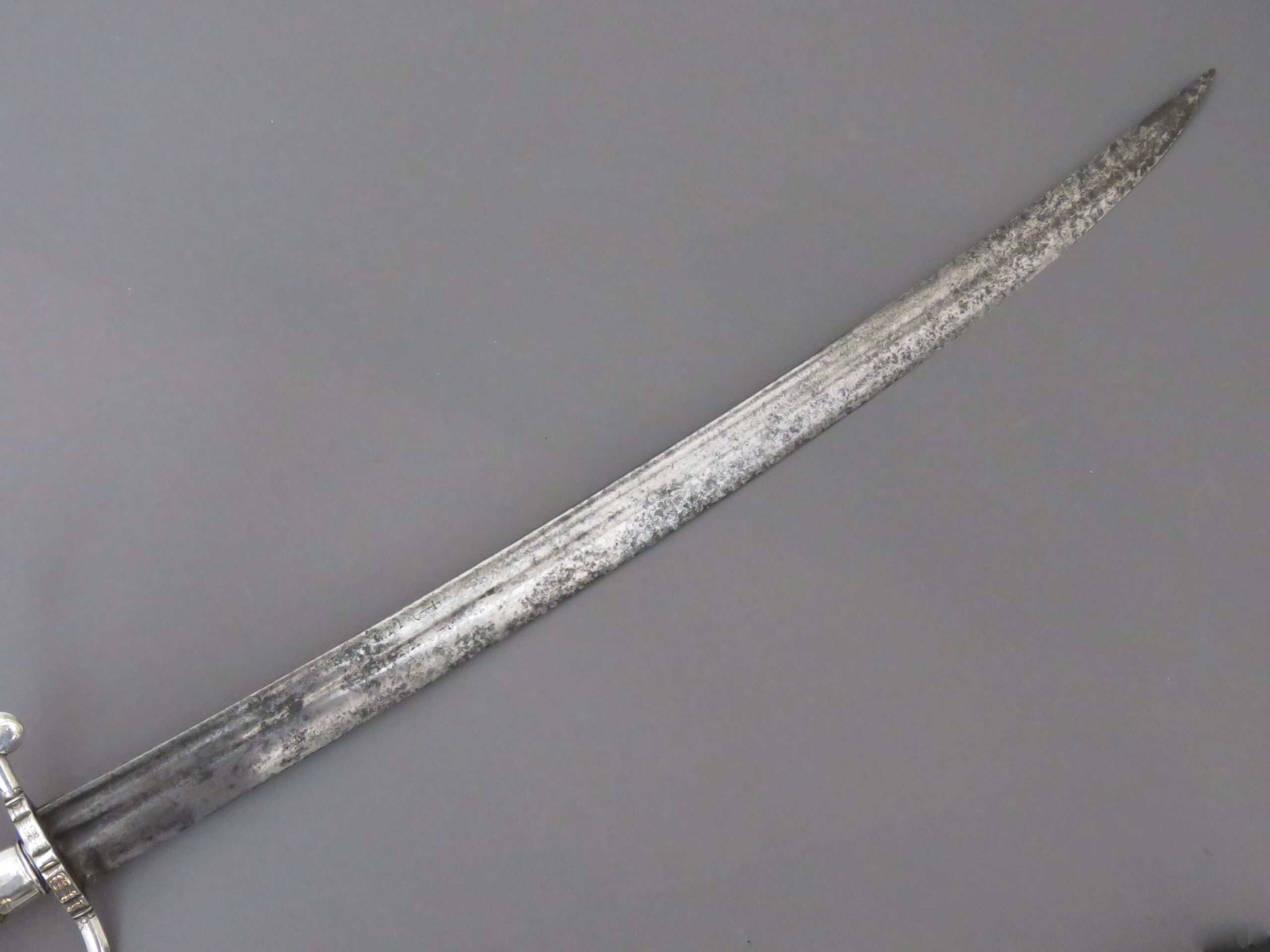
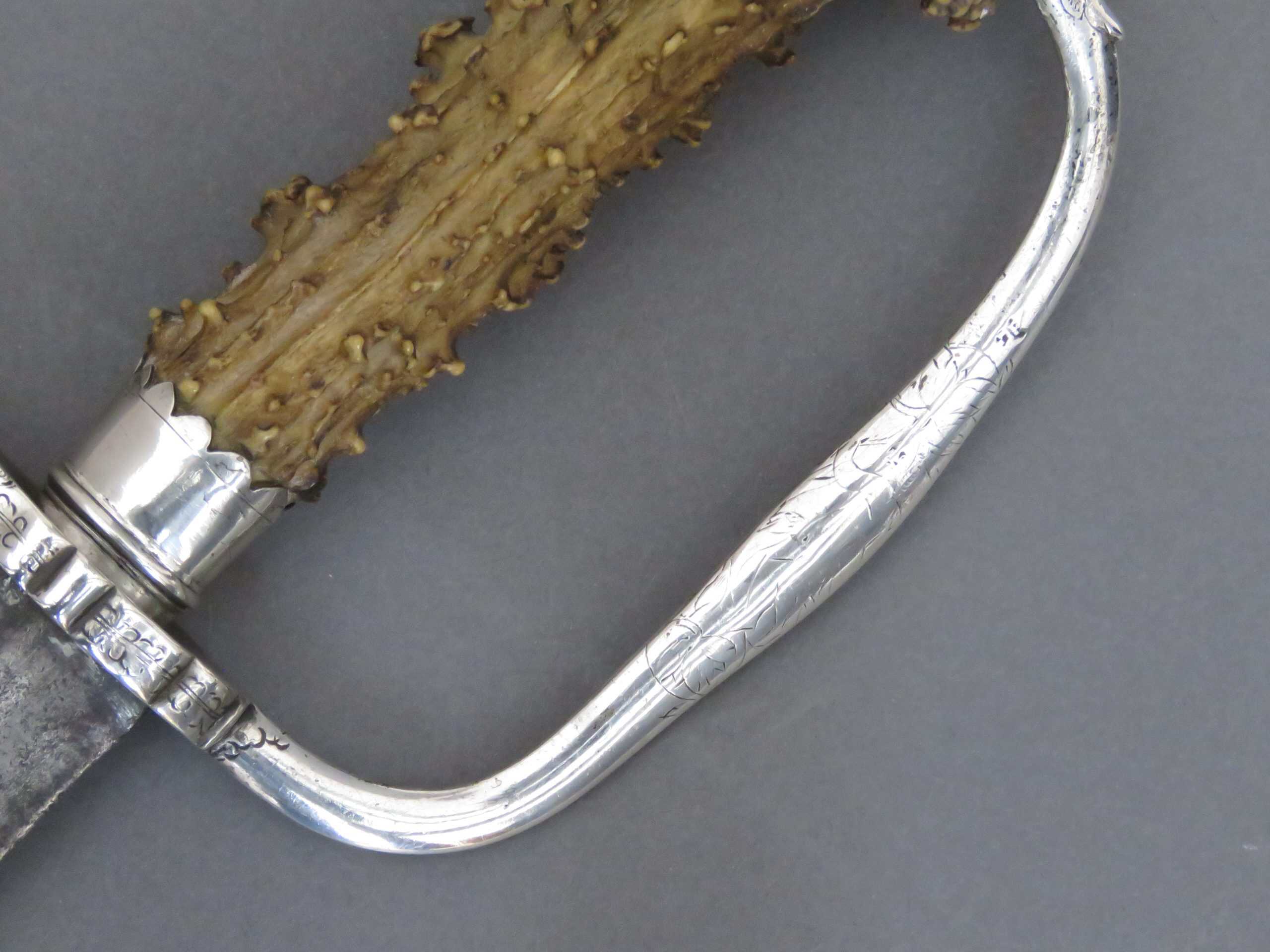
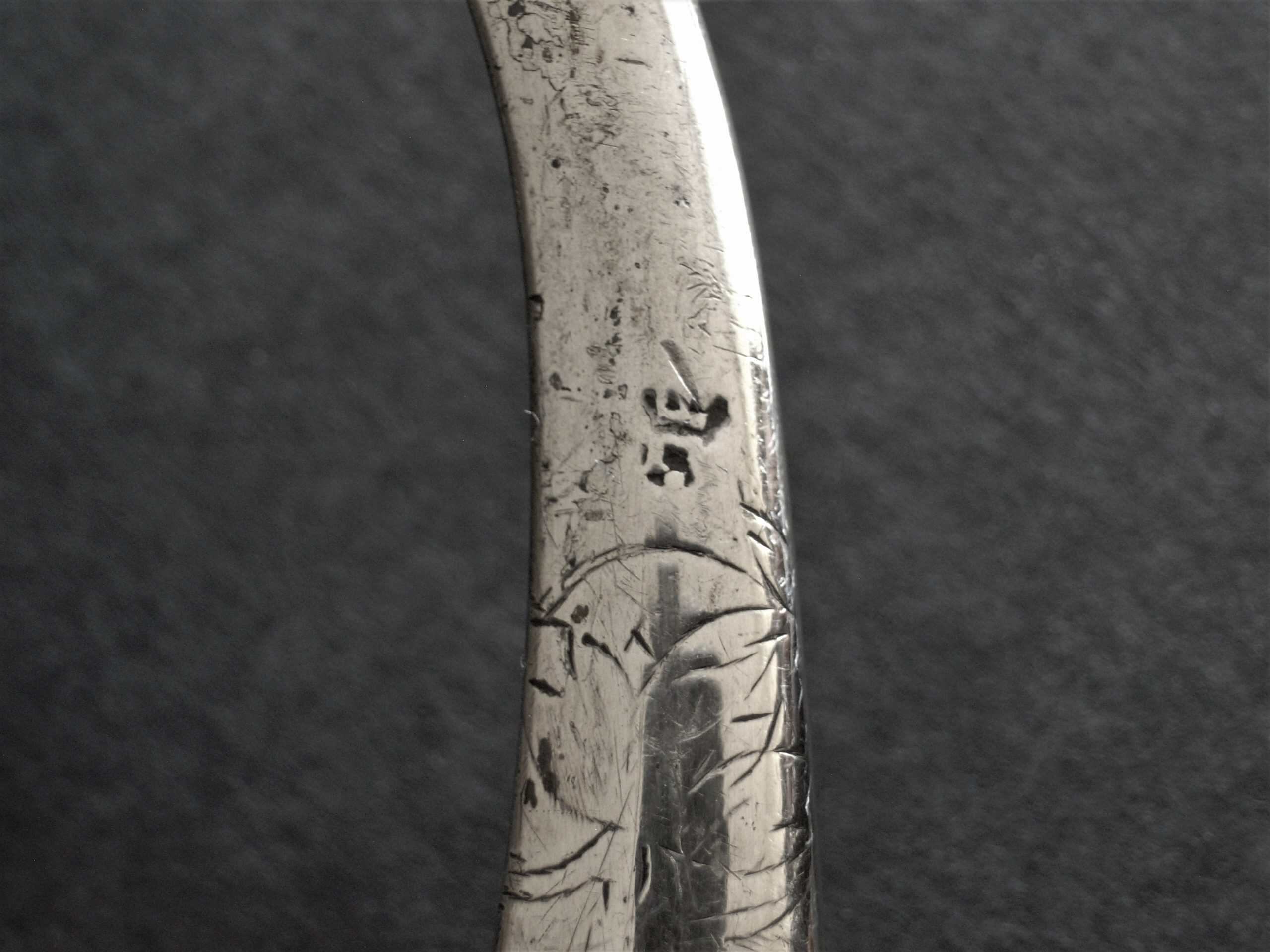
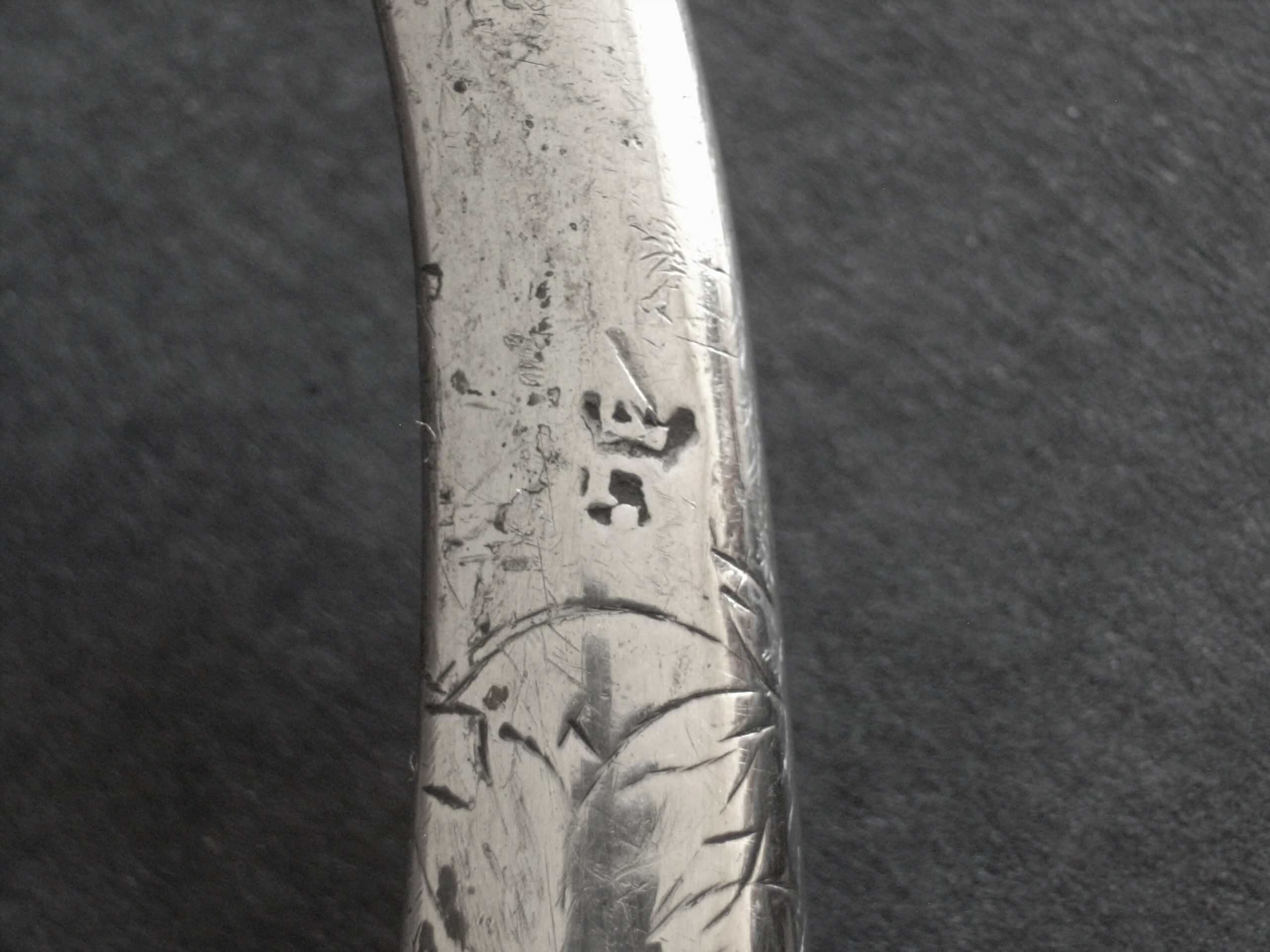
An English silver mounted Hanger made between 1682 and 1697 by the renowned silversmith and cutler Thomas Vicaridge of London. The knuckle bow is stamped with his first pre-Britannia maker’s mark of “T V” in raised relief inside a shield, with a crown above, and a pellet below. Surviving swords by Vicaridge are rare and do not often come to the market.
Thomas Vicaridge completed his apprenticeship to Joseph Jones, a London Cutler, on 25th April 1682 when he was sworn “Free” upon completion of his term of servitude at a well-attended meeting at Cutler’s Hall. Until 1697, along with other London silversmiths, Vicaridge used a mark consisting of his initials “TV”. Two examples of this mark are struck onto the copper registration plate still preserved at Goldsmith’s Hall in London. In 1697, with the advent of the Higher, or “Britannia”, Standard for silver, smiths were required to record a new mark bearing the first two initials of their surnames. As a result, Vicaridge recorded the mark “VI” with a crown above and pellet below inside a shield which he used from 1697 until his death in 1715. Consequently the sword discussed here can be seen to date to between 1682 and 1697.
In the 17th and 18th centuries when swords were a popular weapon for gentlemen, hangers were a robust secondary side arm used for self-defence when travelling. They were also used in parts of the British Army and Navy and appear in some military portraits of the time. The high quality and expensive hanger described here is a gentleman’s weapon.
Vicaridge lived in exciting times as London was remodelled after the turbulence of the Civil War period, the Great Plague of 1665 and the Great Fire of 1666. The city was more outward looking, international trade was growing, military success was being achieved abroad and more interest and investment was being expressed in art and culture. Vicaridge was one of the leading craftsmen of his day and the quality of his work represents the style and fashions of late 17th and early 18th century Baroque London.
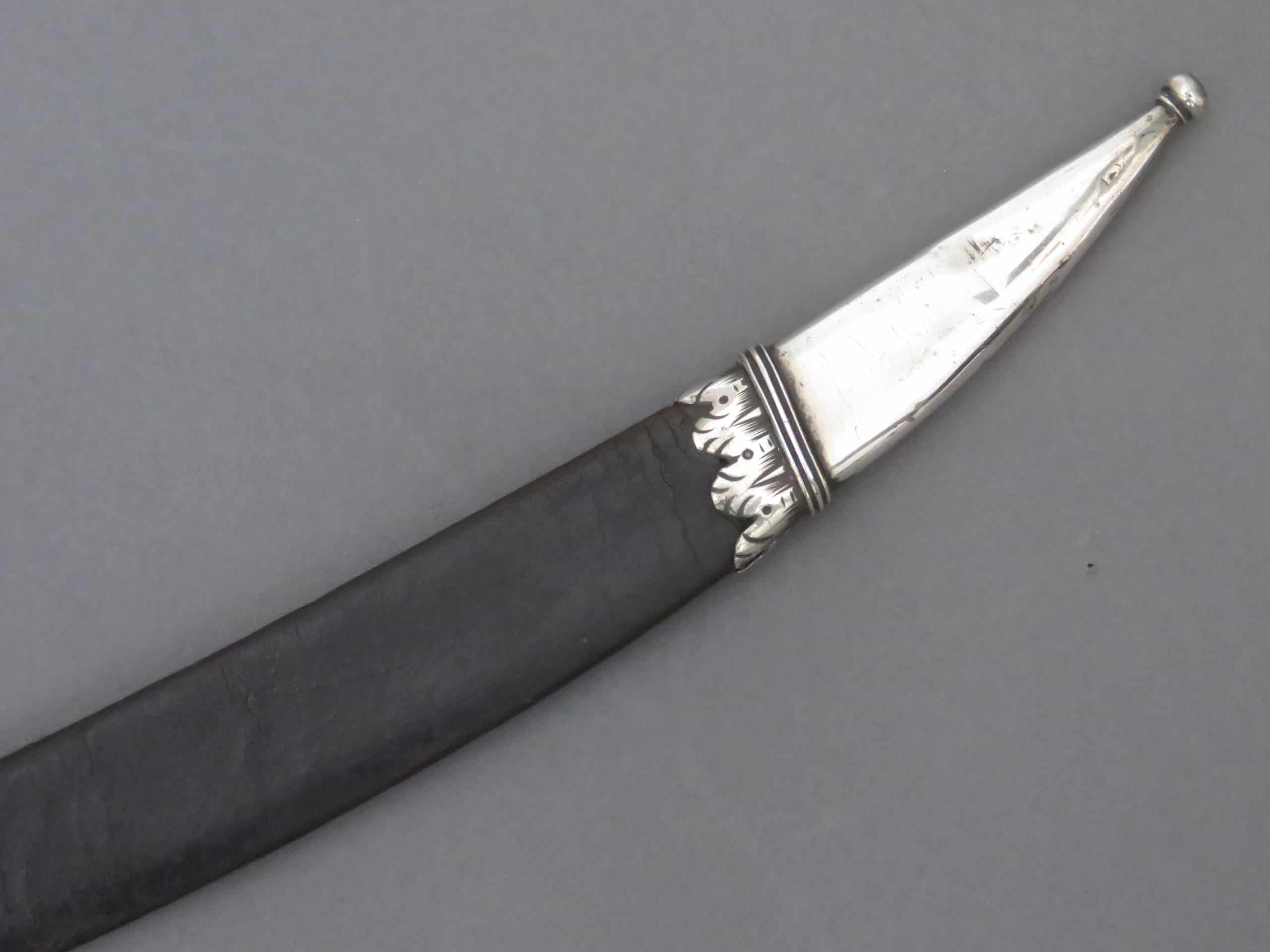
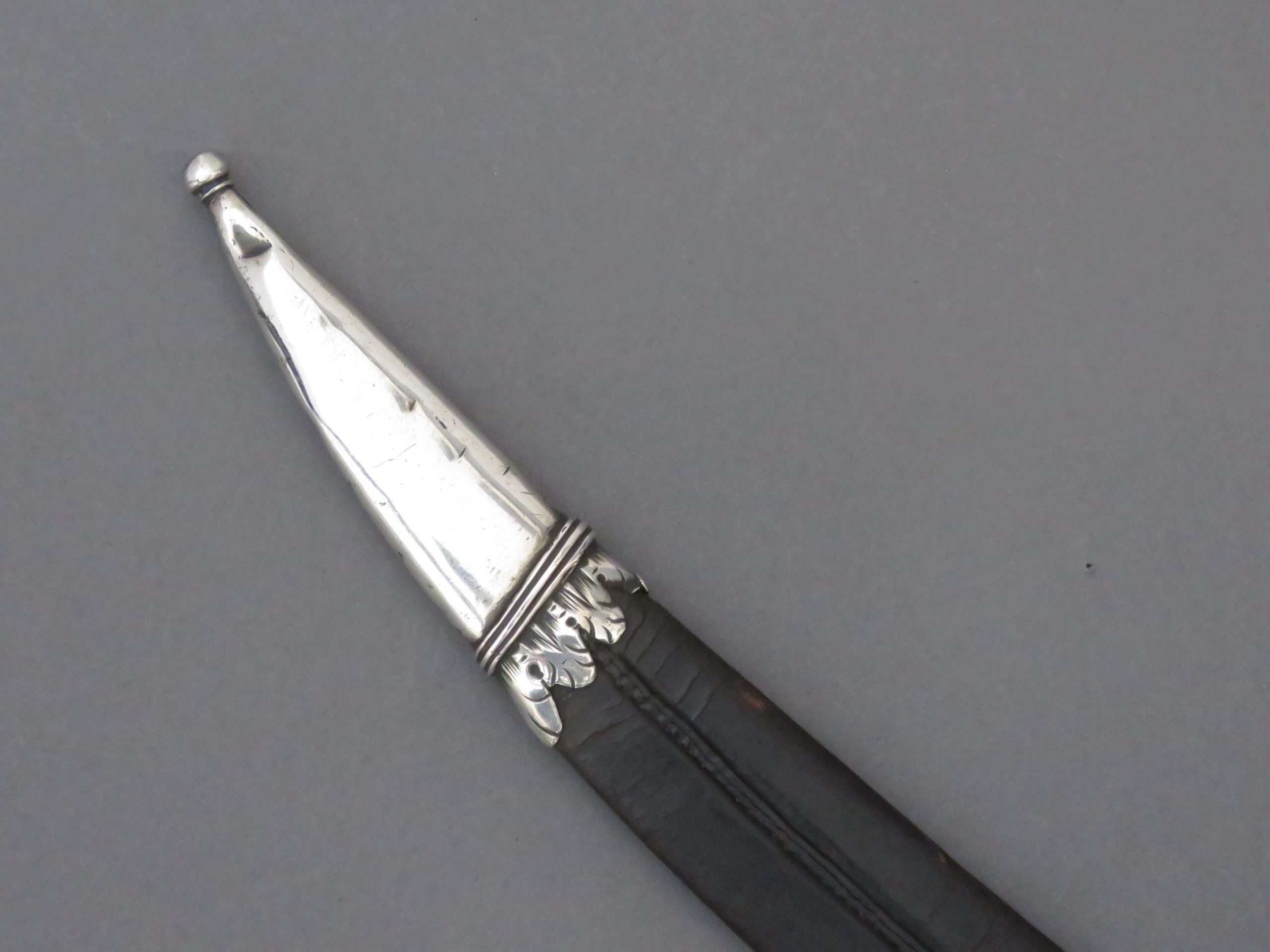
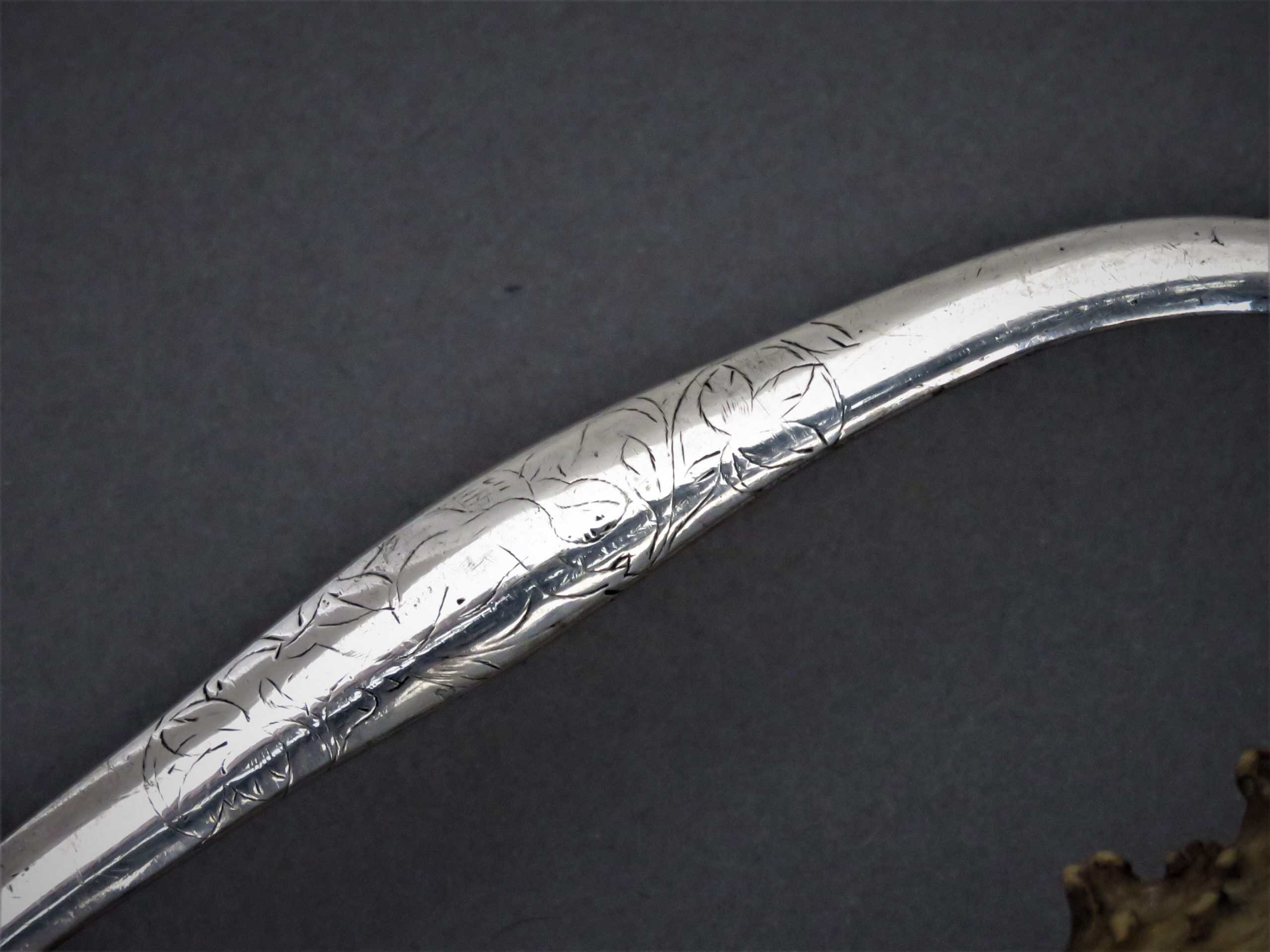
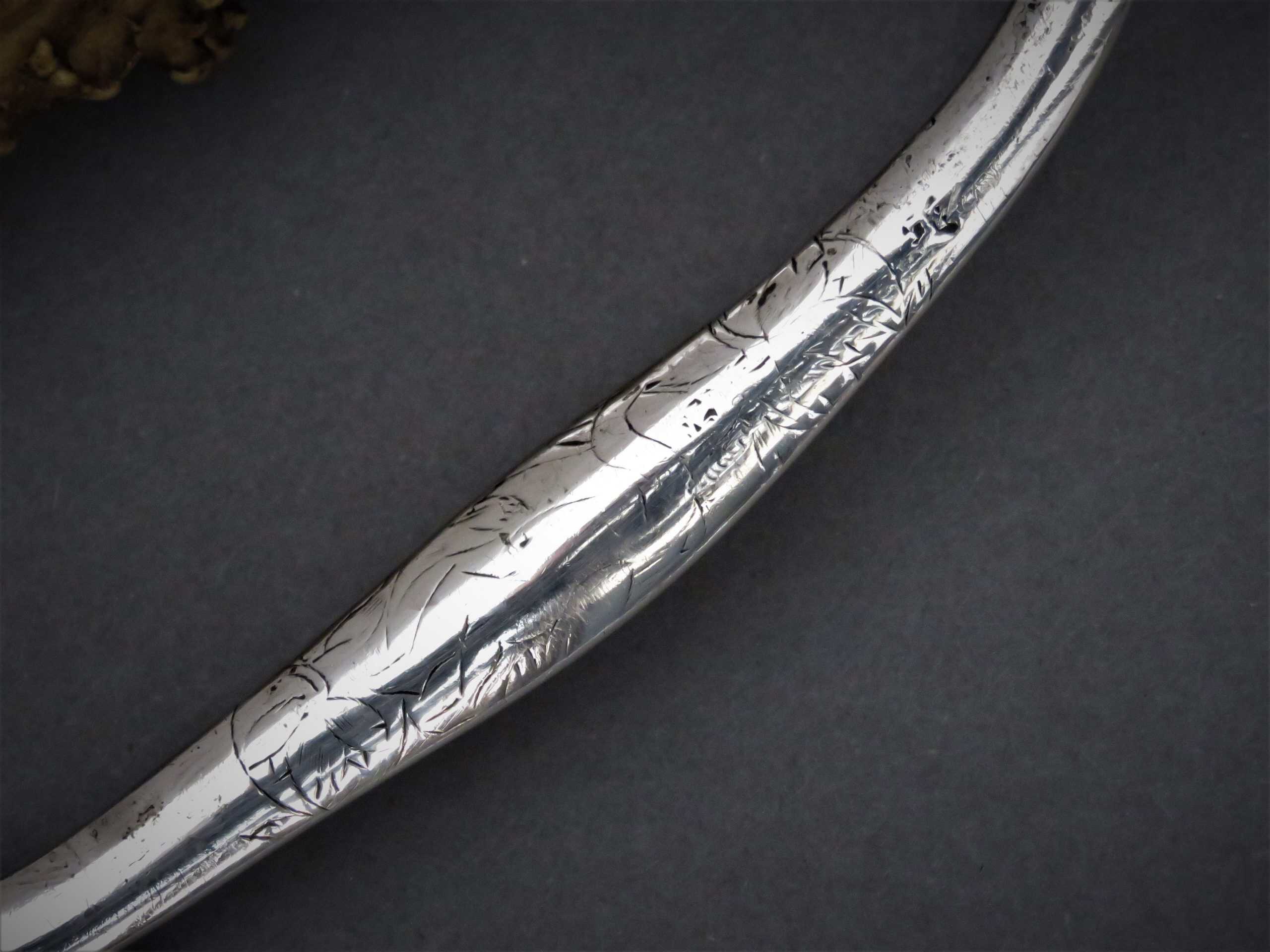
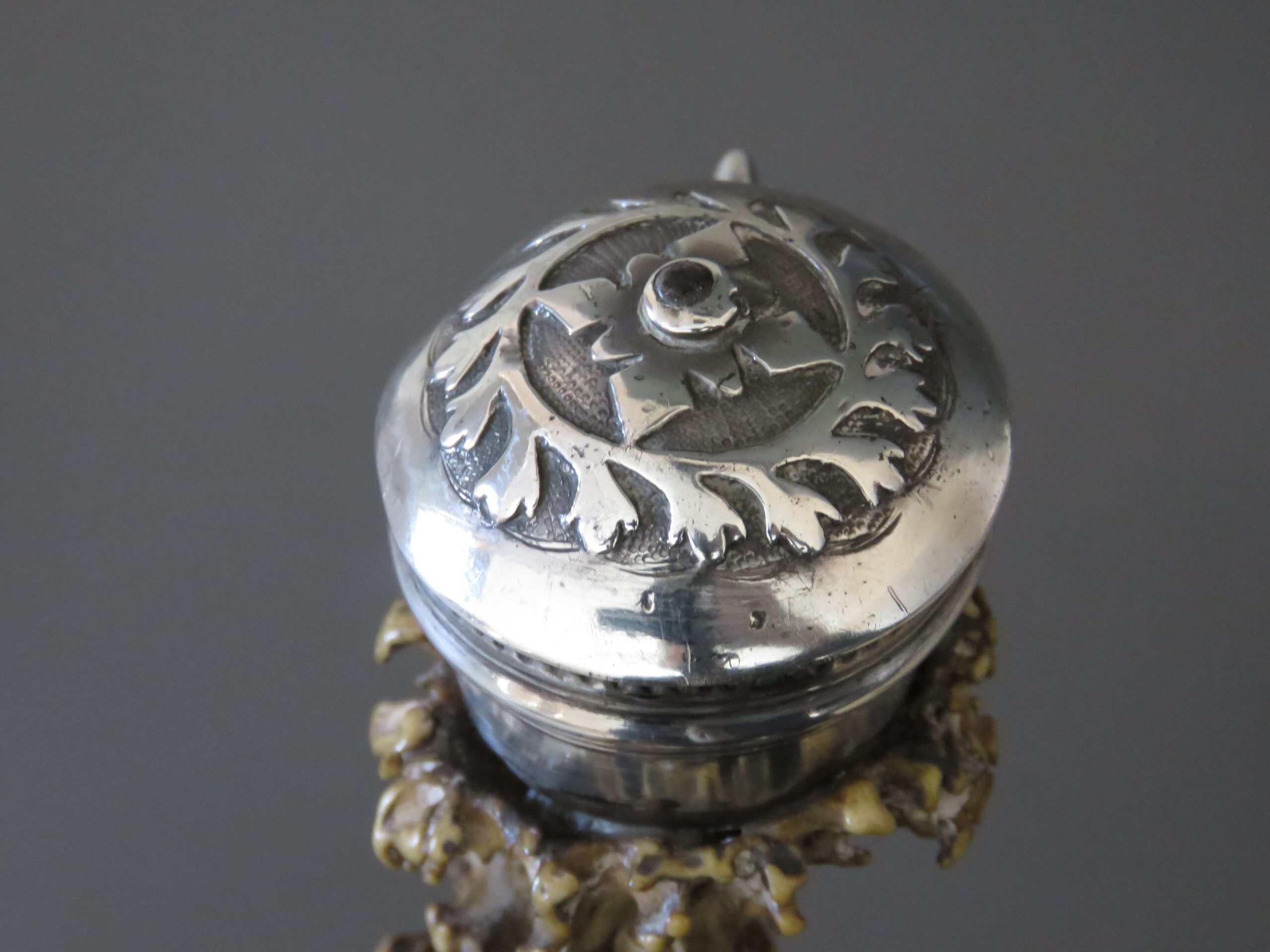
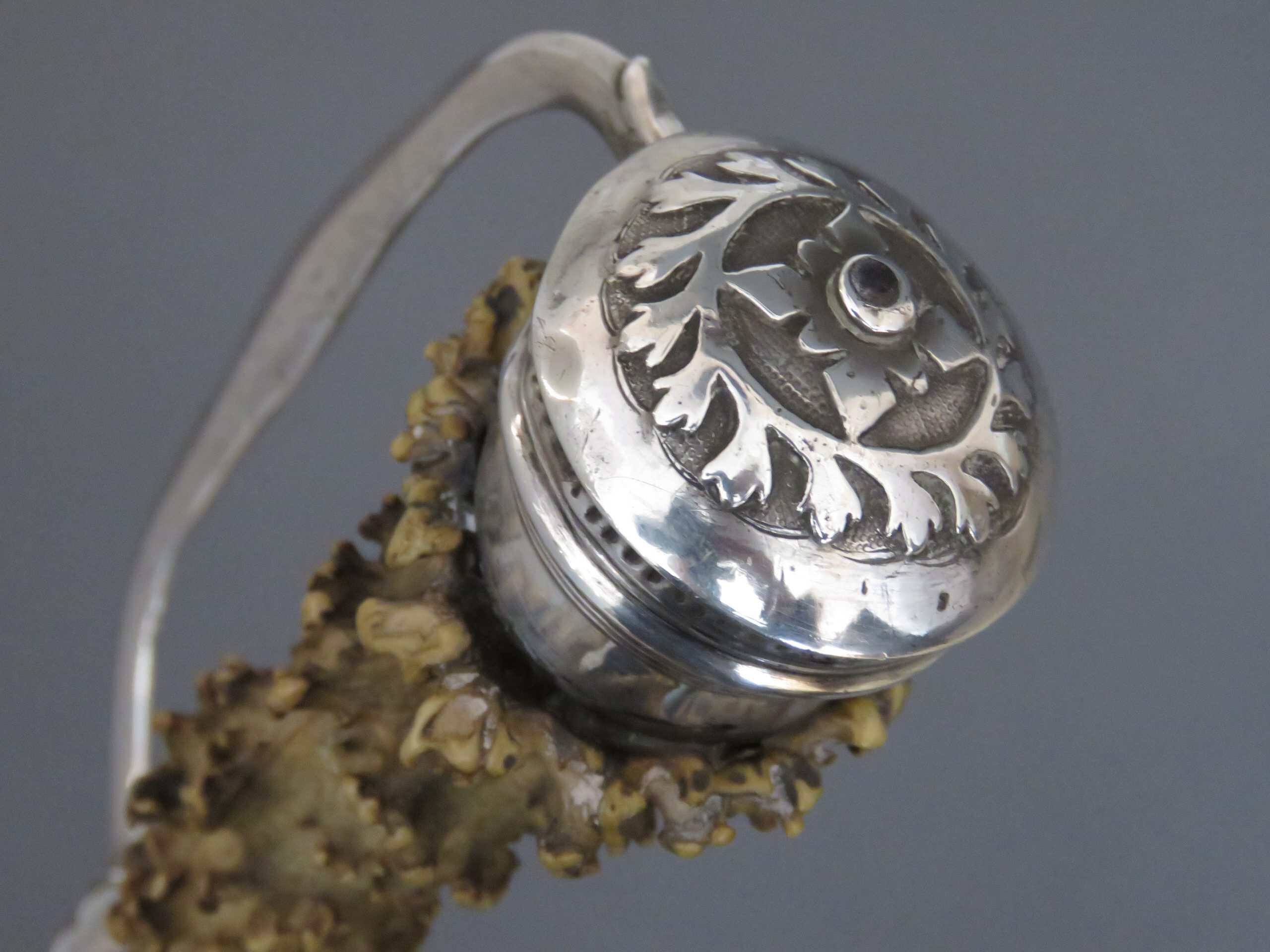
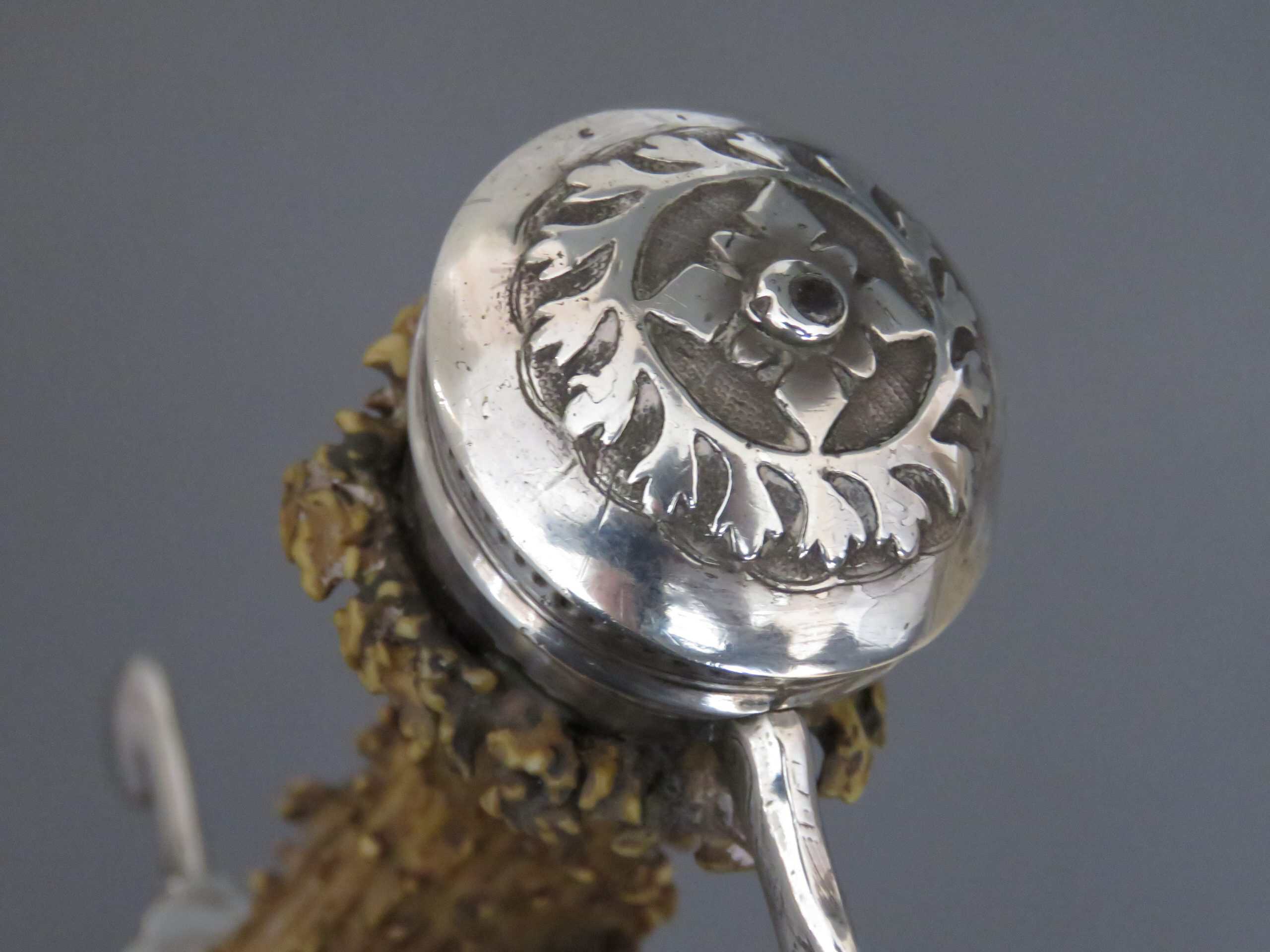
The hilt is comprised of a bold faceted quillon block, downward facing rear quillon, and a bold knuckle bow swollen in the middle, all lightly engraved with foliate designs and the figure of a naked woman between the foliage on each side of the knuckle bow. The pommel-cap is fluted around its folded edge and embossed on top in raised relief with a circular panel of foliage against a punched background. The natural roe buck antler grip has a silver base ferrule. The sword retains its black leather scabbard with its silver locket and frog loop plus its chape which has a button terminal. The edges of both mounts are moulded as scallops engraved with foliage.
Only a few surviving edged weapons by Vicaridge are known and all are of high quality. An article by Leslie Southwick published in the Royal Armouries Yearbook (Volume 5 in 2000) discusses Vicaridge’s life, his “pre” and “post” Britannia standard marks and illustrates examples of hangers by this maker which are housed in various national collections including the Victoria & Albert Museum and the National Maritime Museum.
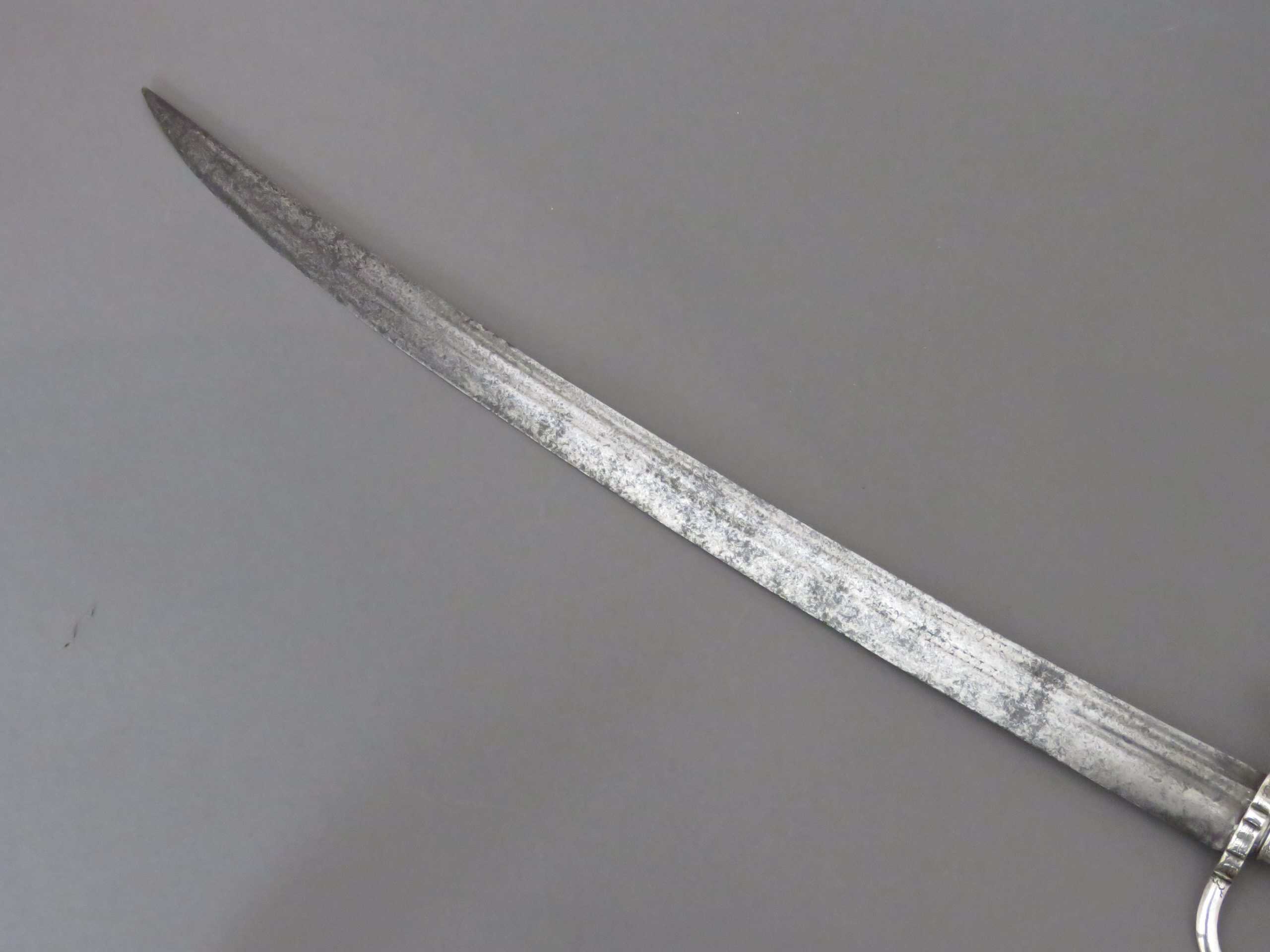
The slightly curved single edged blade is 19.5 inches long (just under 50 cm) and the sword is 25 inches long overall (just under 64 cm). It has a double fuller running underneath its spine from the hilt each incised with an indistinct inscription flanked by orb and cross marks which indicates that the blade was made in Solingen.
The lightly applied engraved decoration has survived the centuries well. The pommel has a small dent towards the front on one side but otherwise the hilt has retained its attractive original shape and contours. The blade has patches of blackened patination and light pitting. It is unusual for a hanger with its scabbard to survive in such good condition.
Provenance: The Per T. Norheim Collection sold at Bonhams in London, 29 April 2010, lot 41