A Rare English Proto-Mortuary Sword of the early 17th century
To enquire about this itemplease click here
Price: £4,000
Ref: 62040764
Item Description
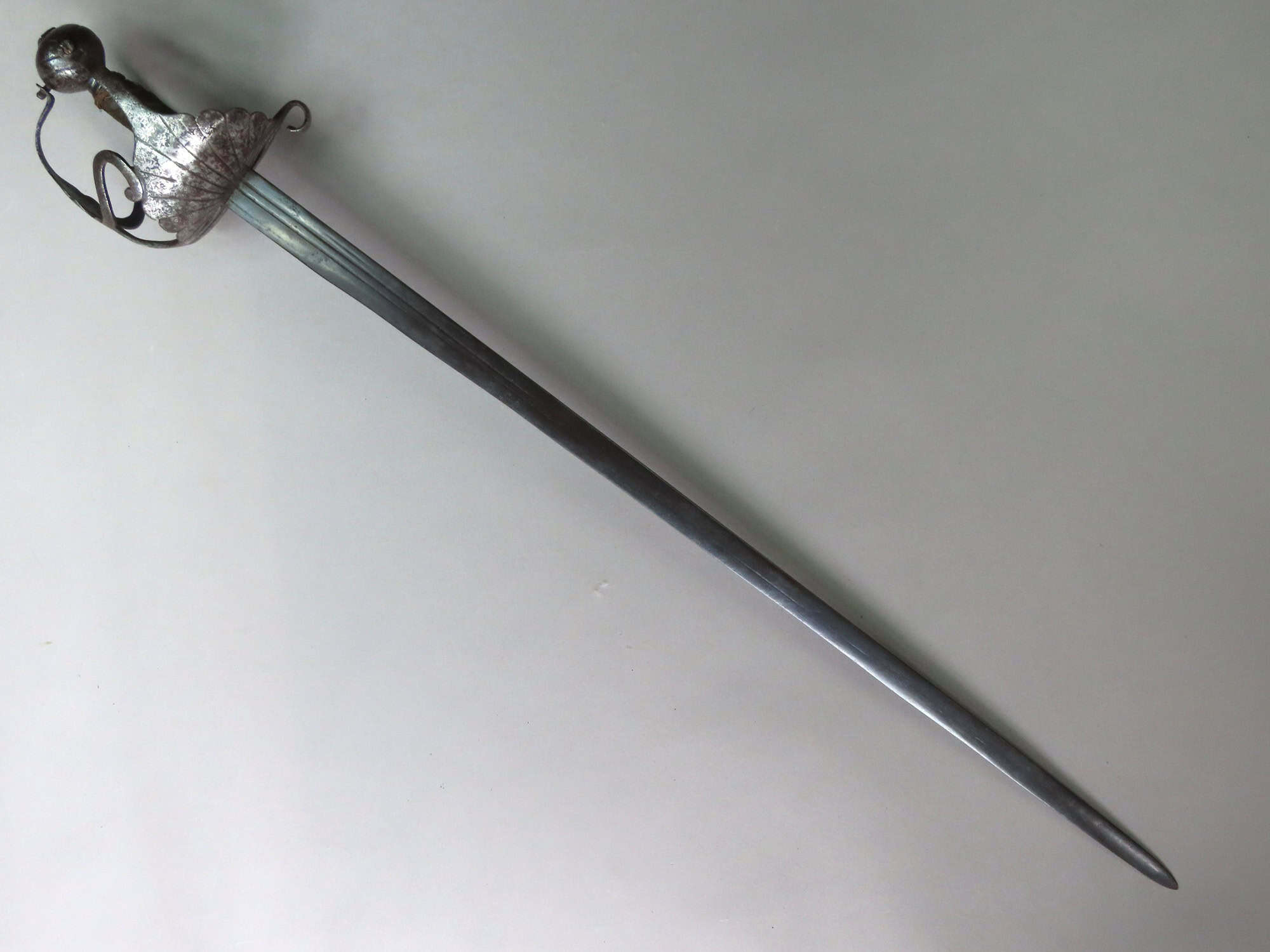
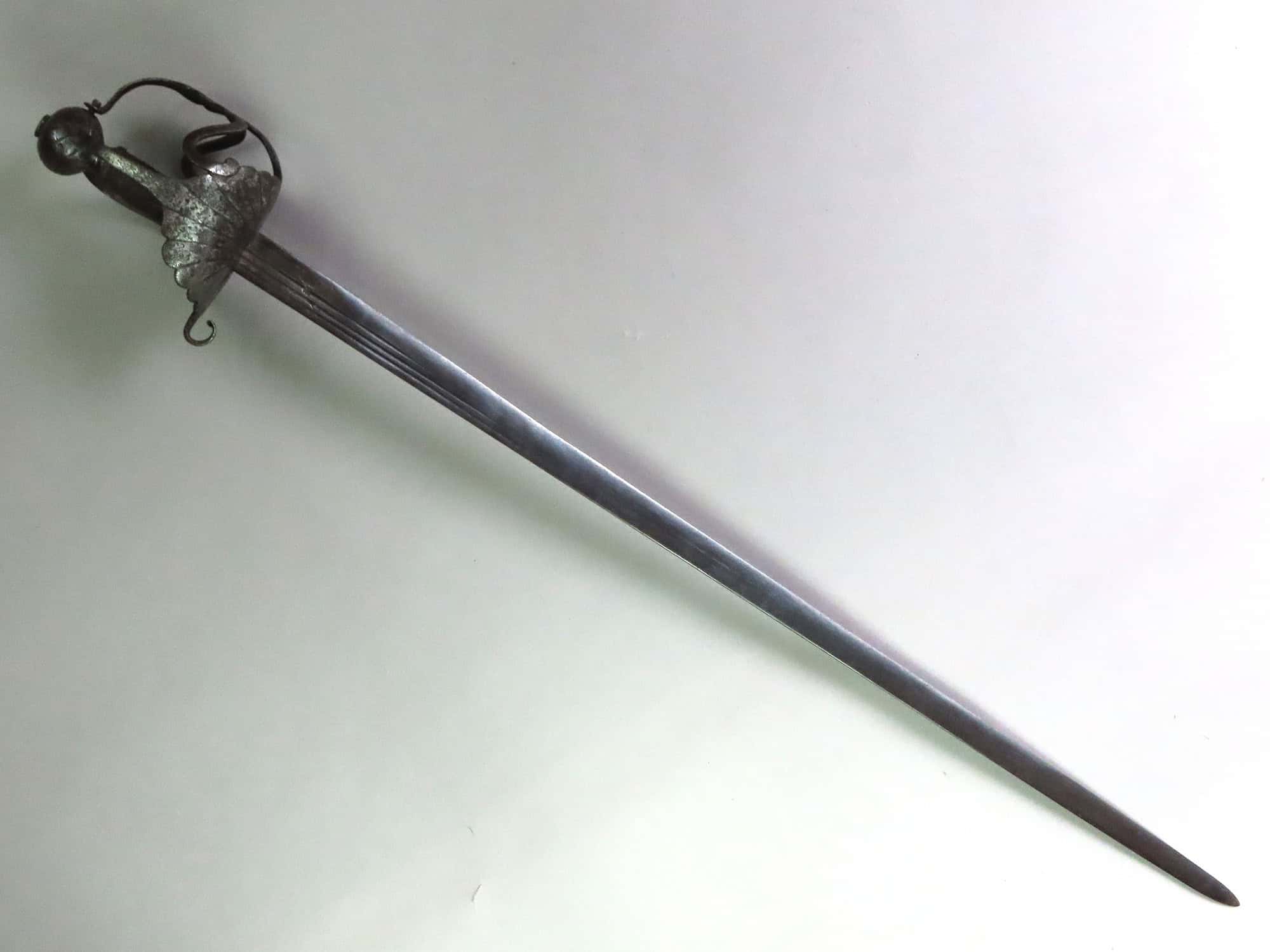
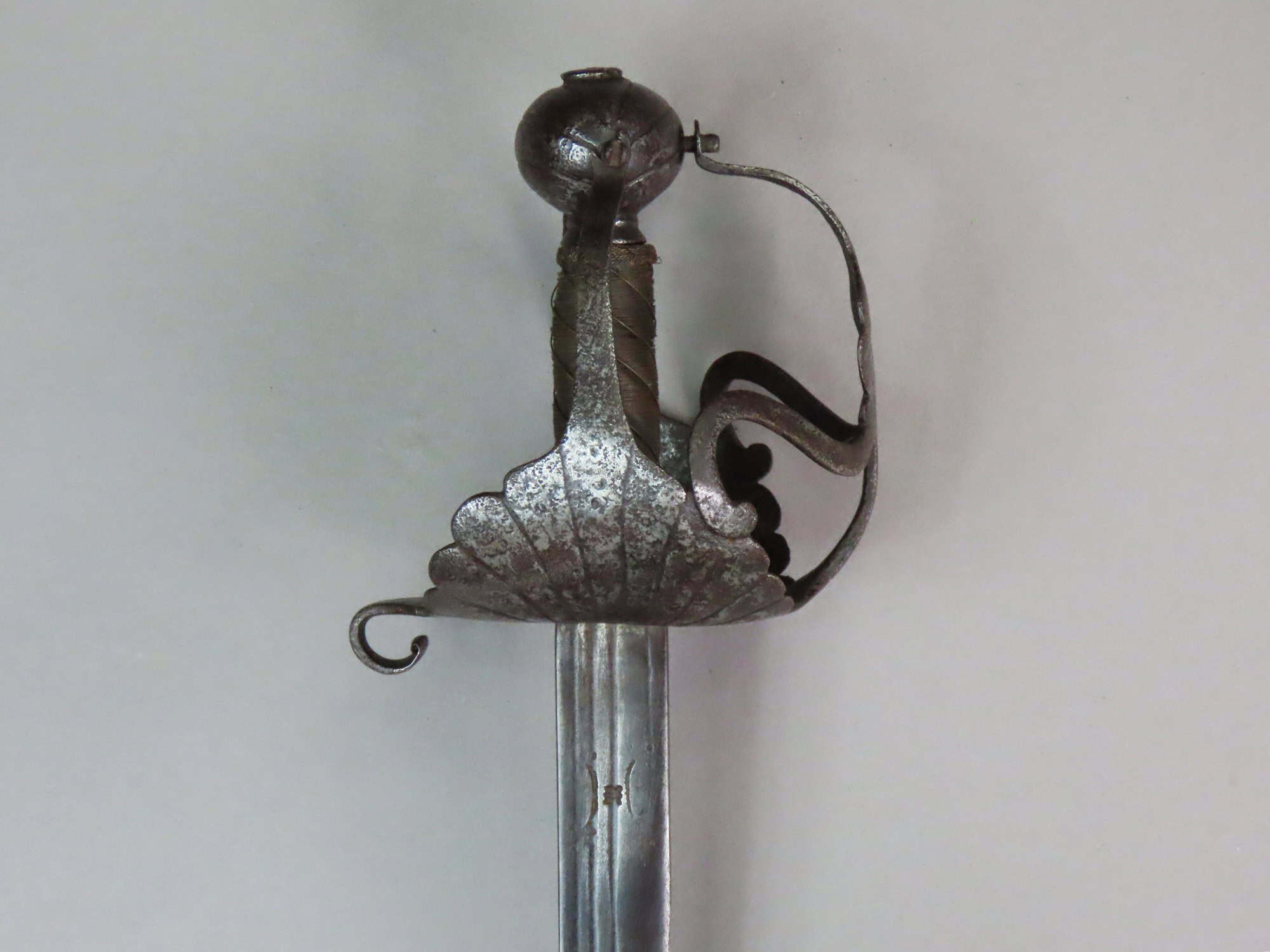
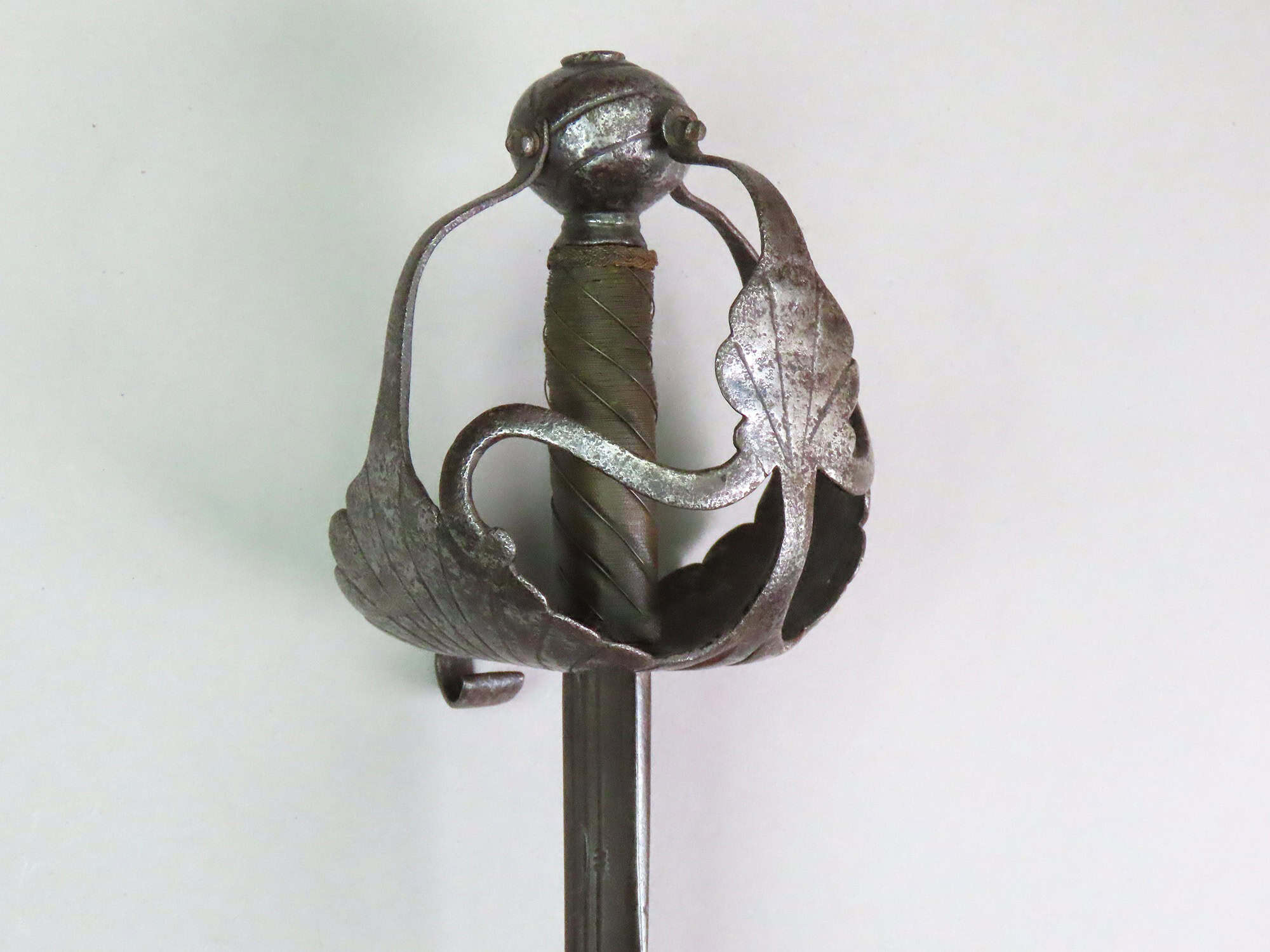
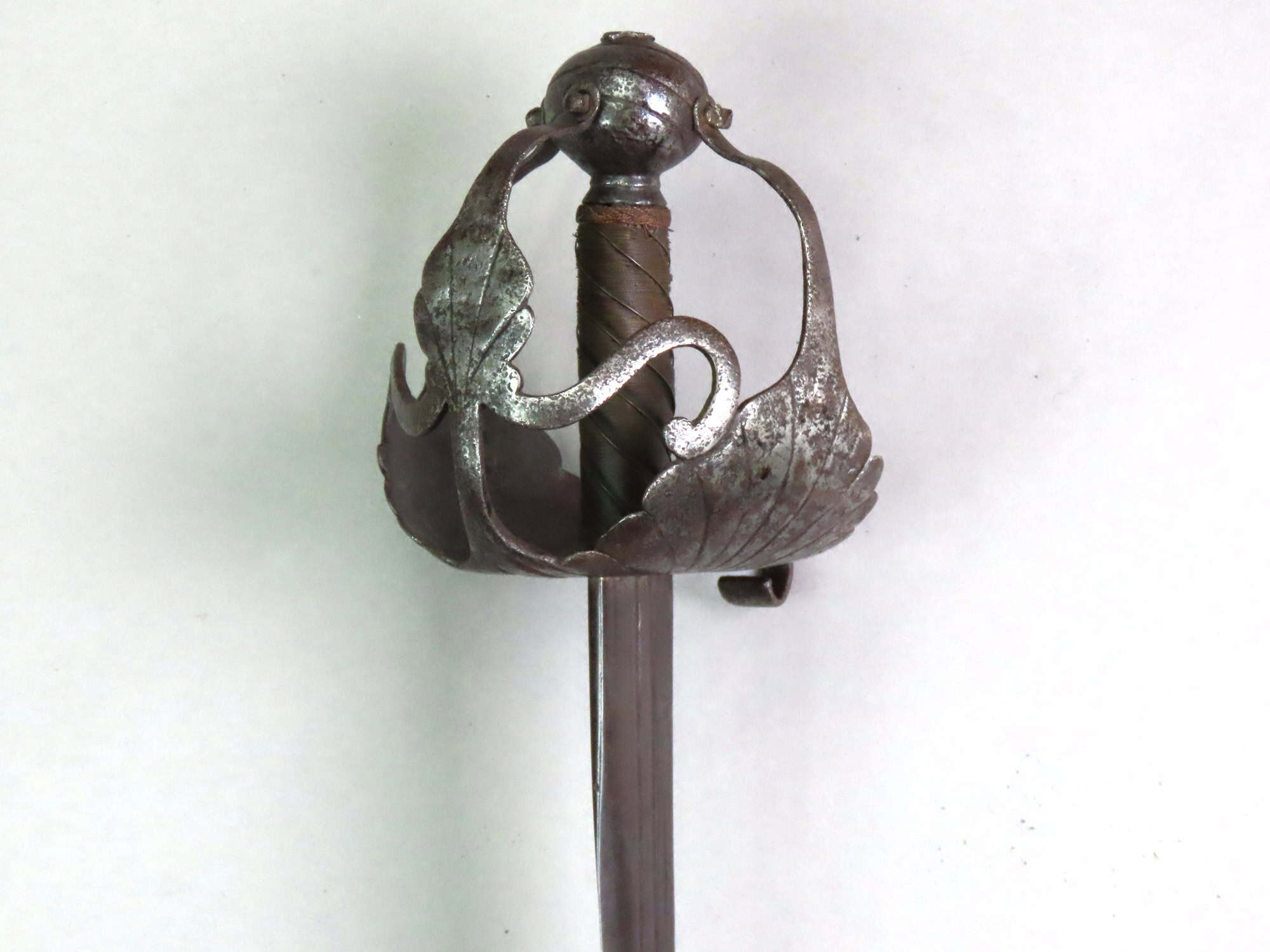
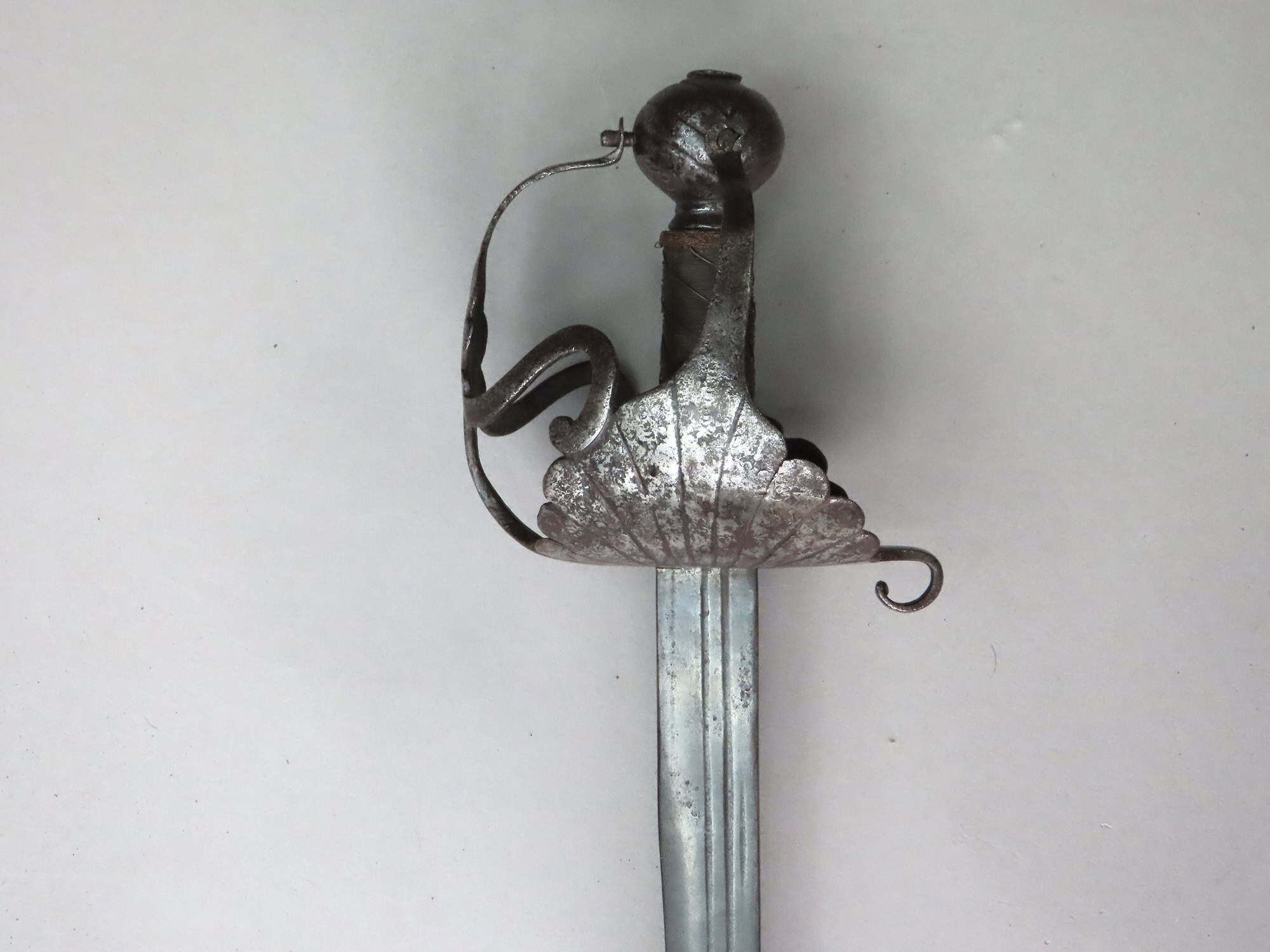
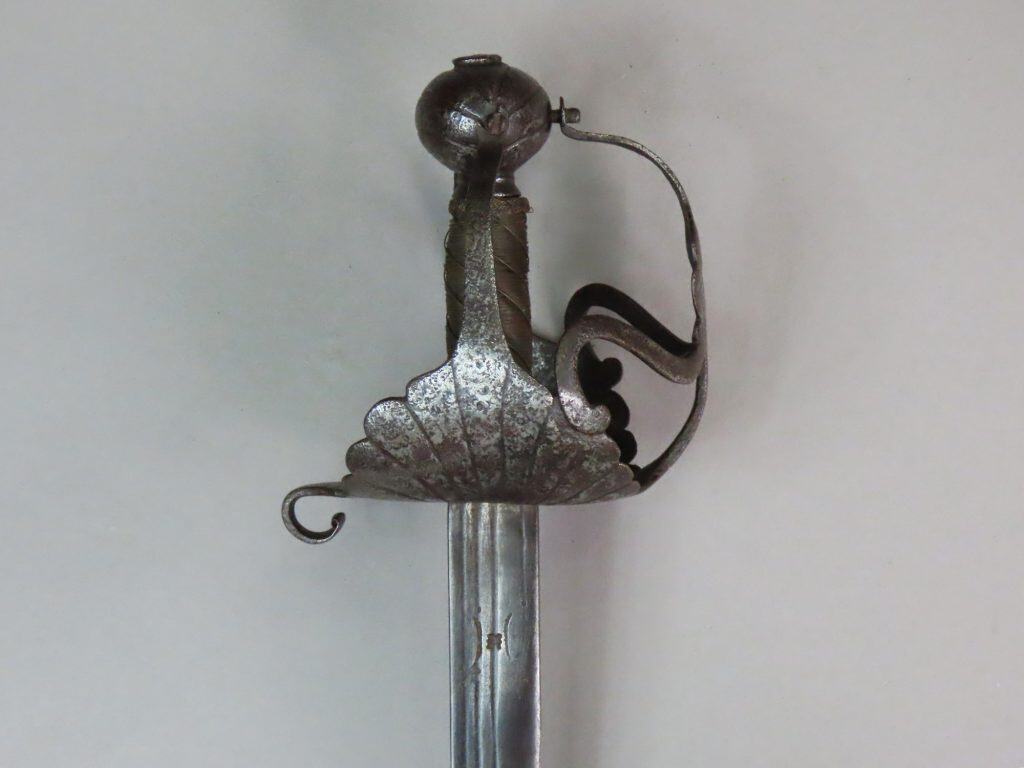
A rare English sword of “Proto-Mortuary” type dating to the first quarter of the 17th century. This is a good example mounted with a late 16th / early 17th century multi-fullered single edged blade. The sword is in fine patinated original condition. Meaty weapons like this were primarily manufactured as sidearms for Arquebusiers. As the name suggests, English “Mortuary” Swords, commonly associated with the English Civil War periods, evolved from this earlier sword type.
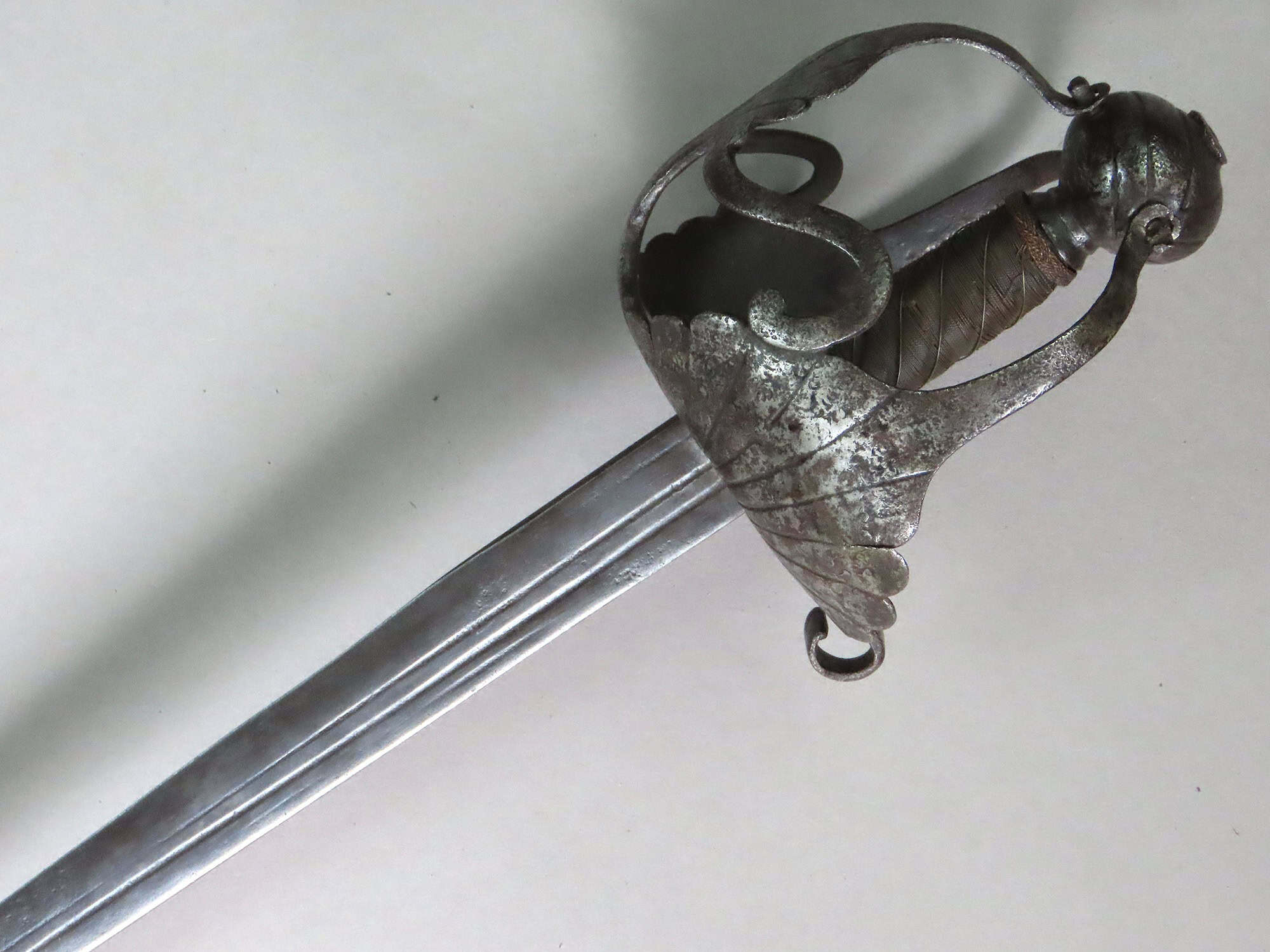
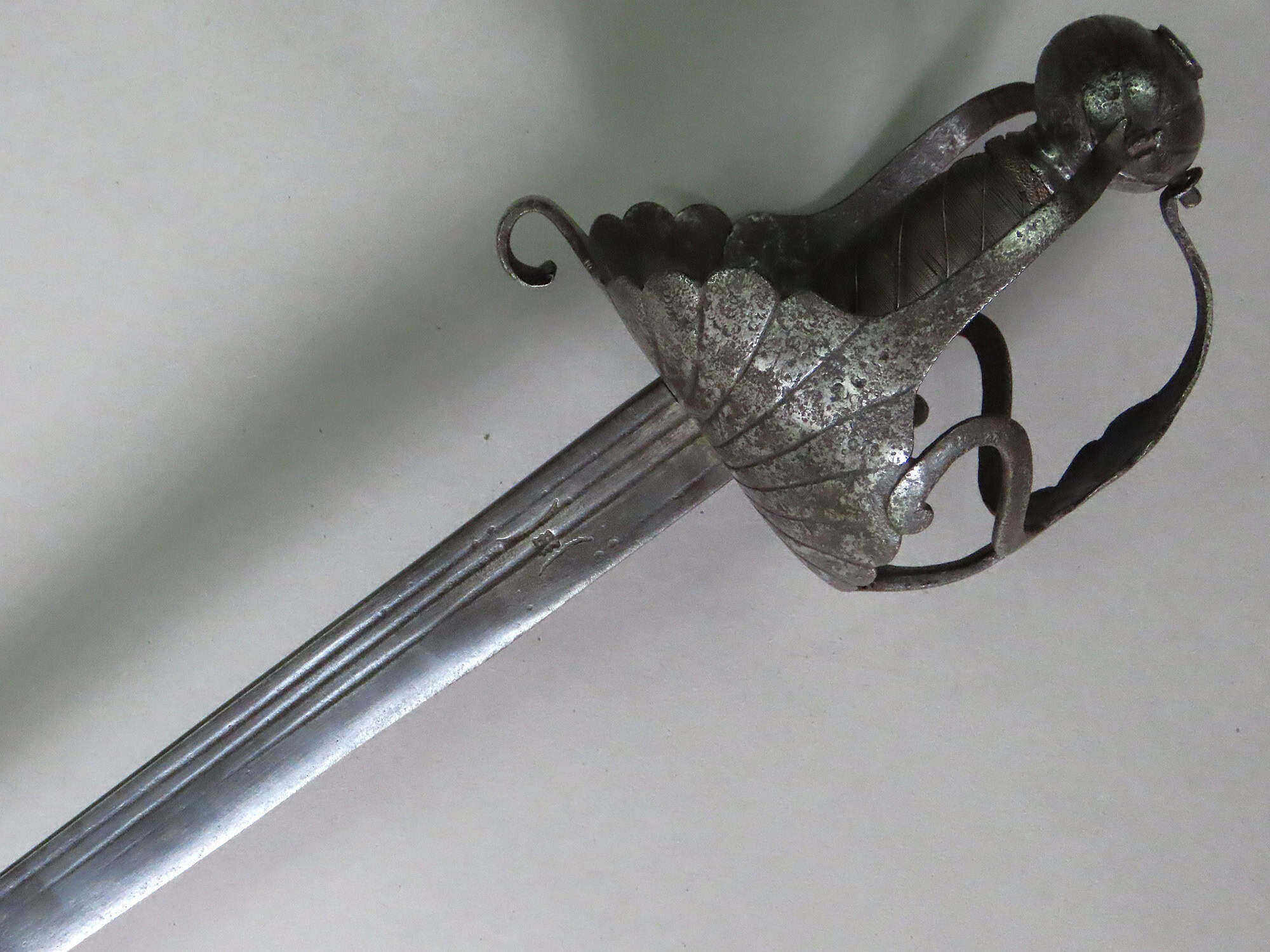
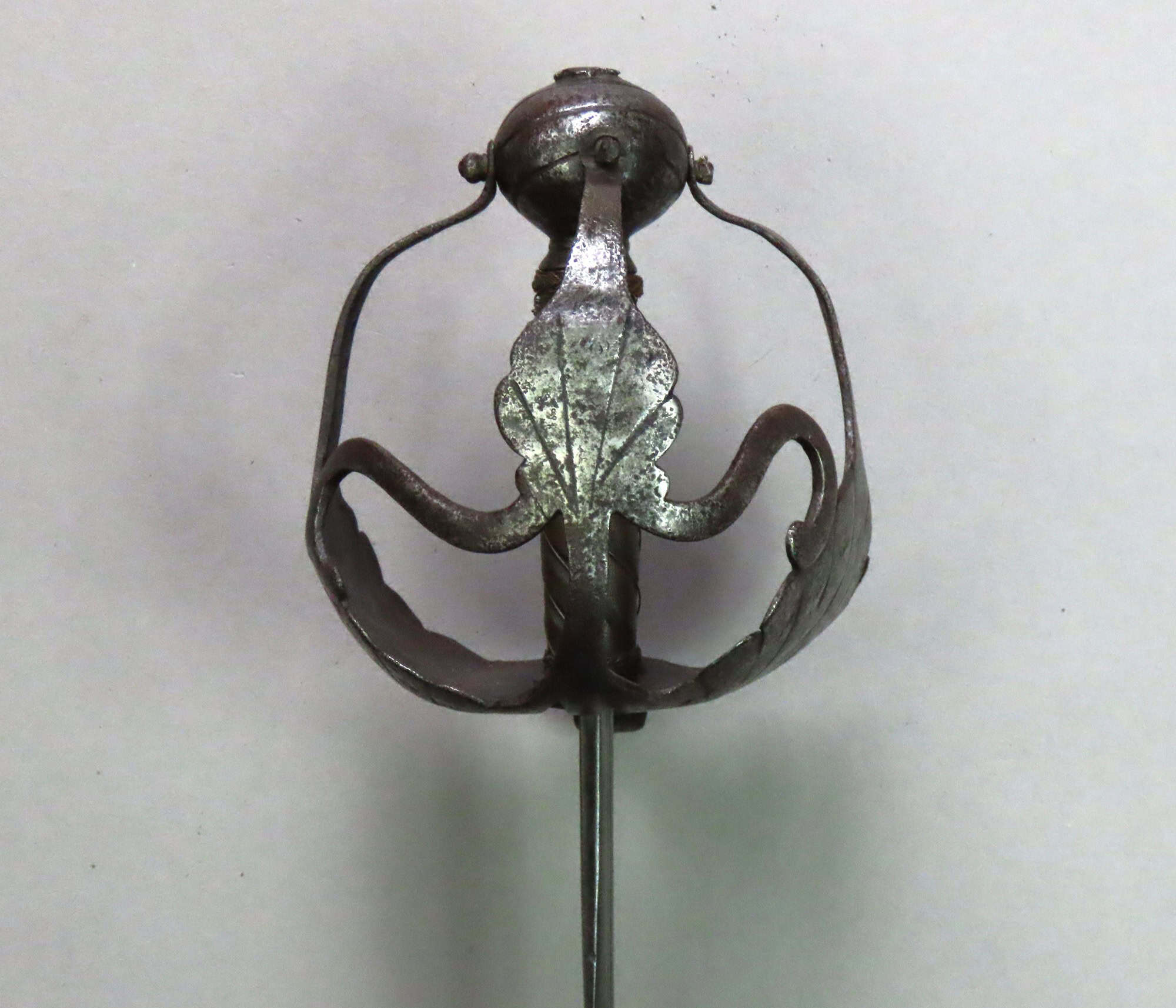
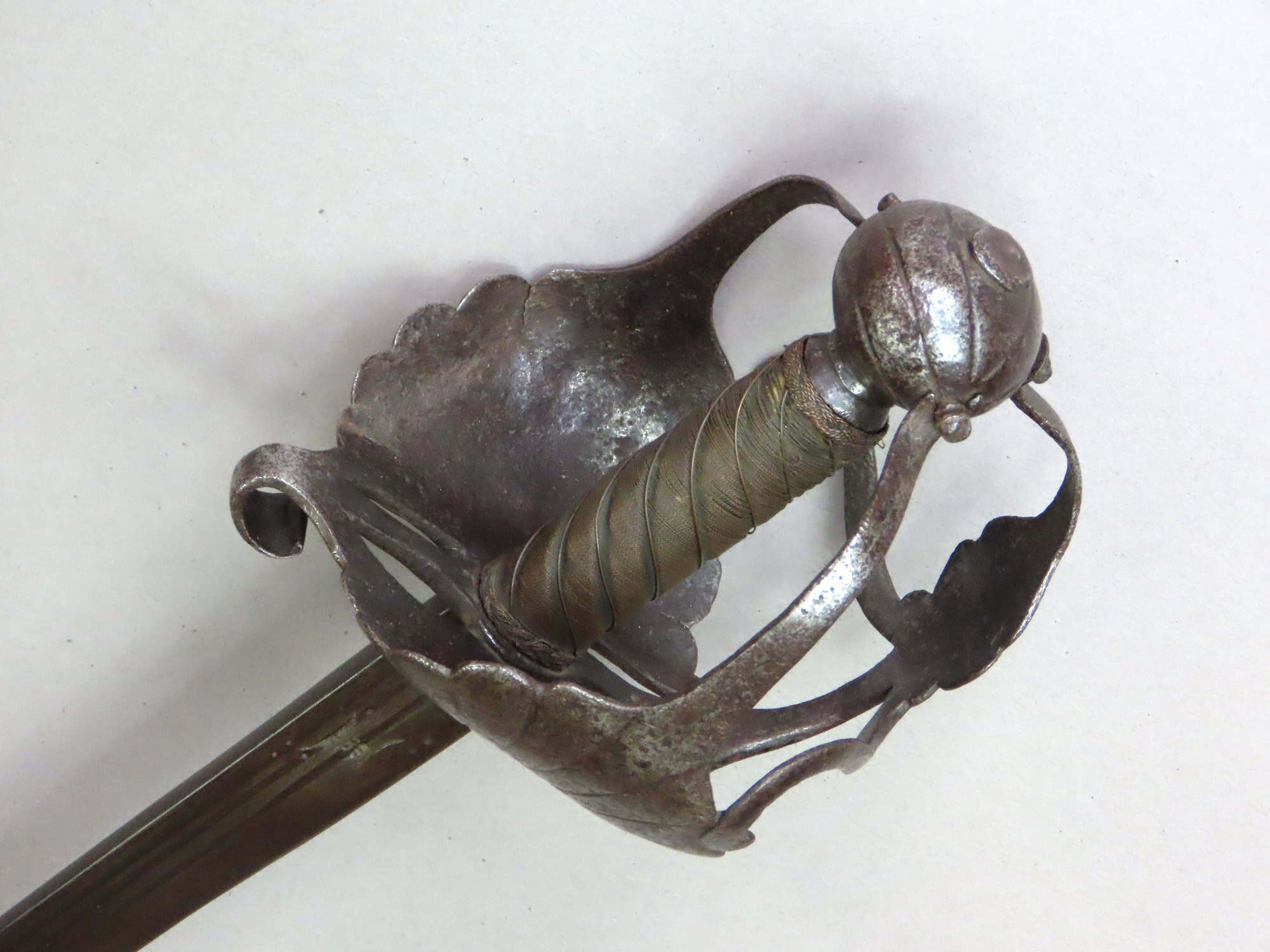
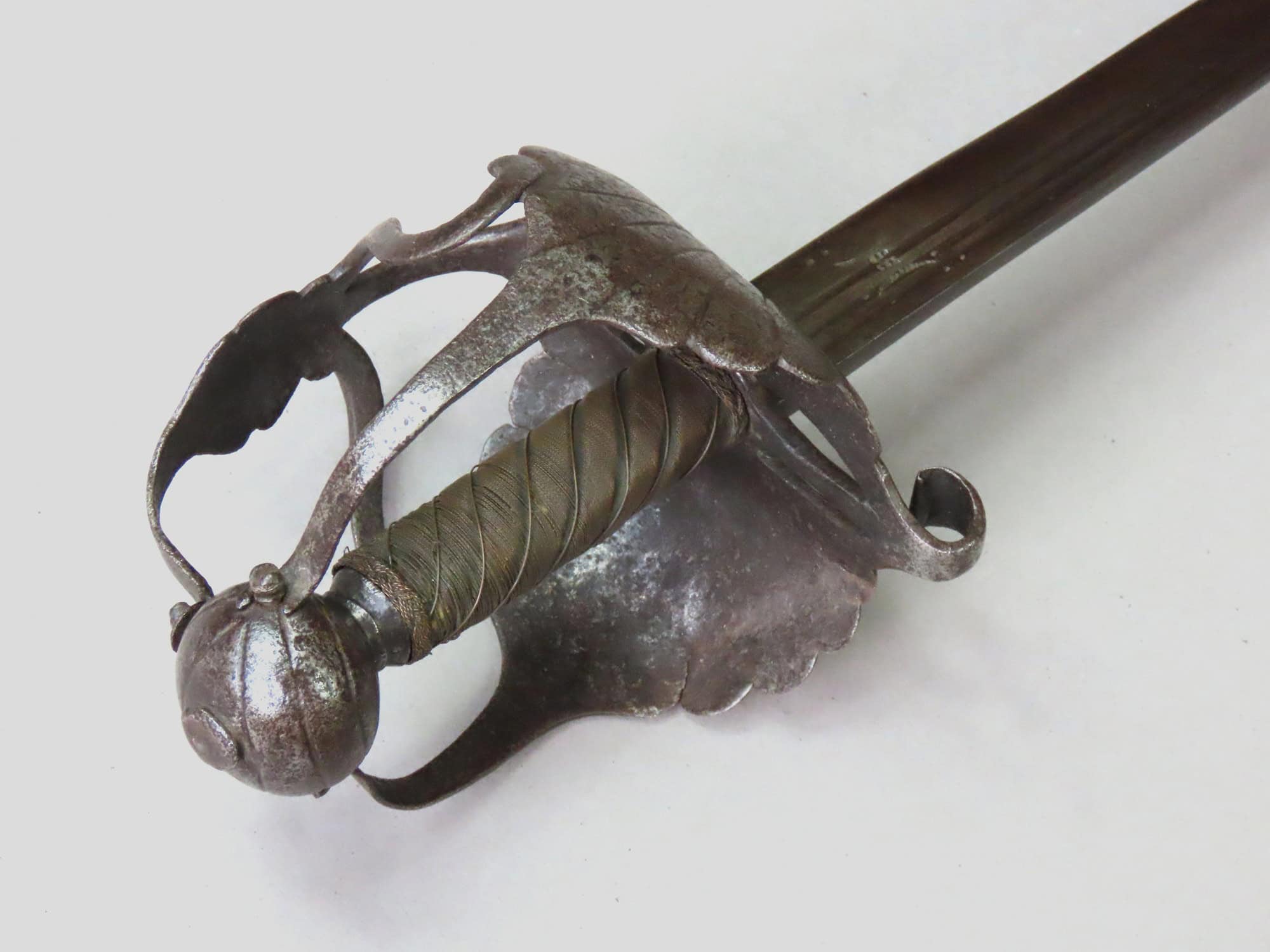
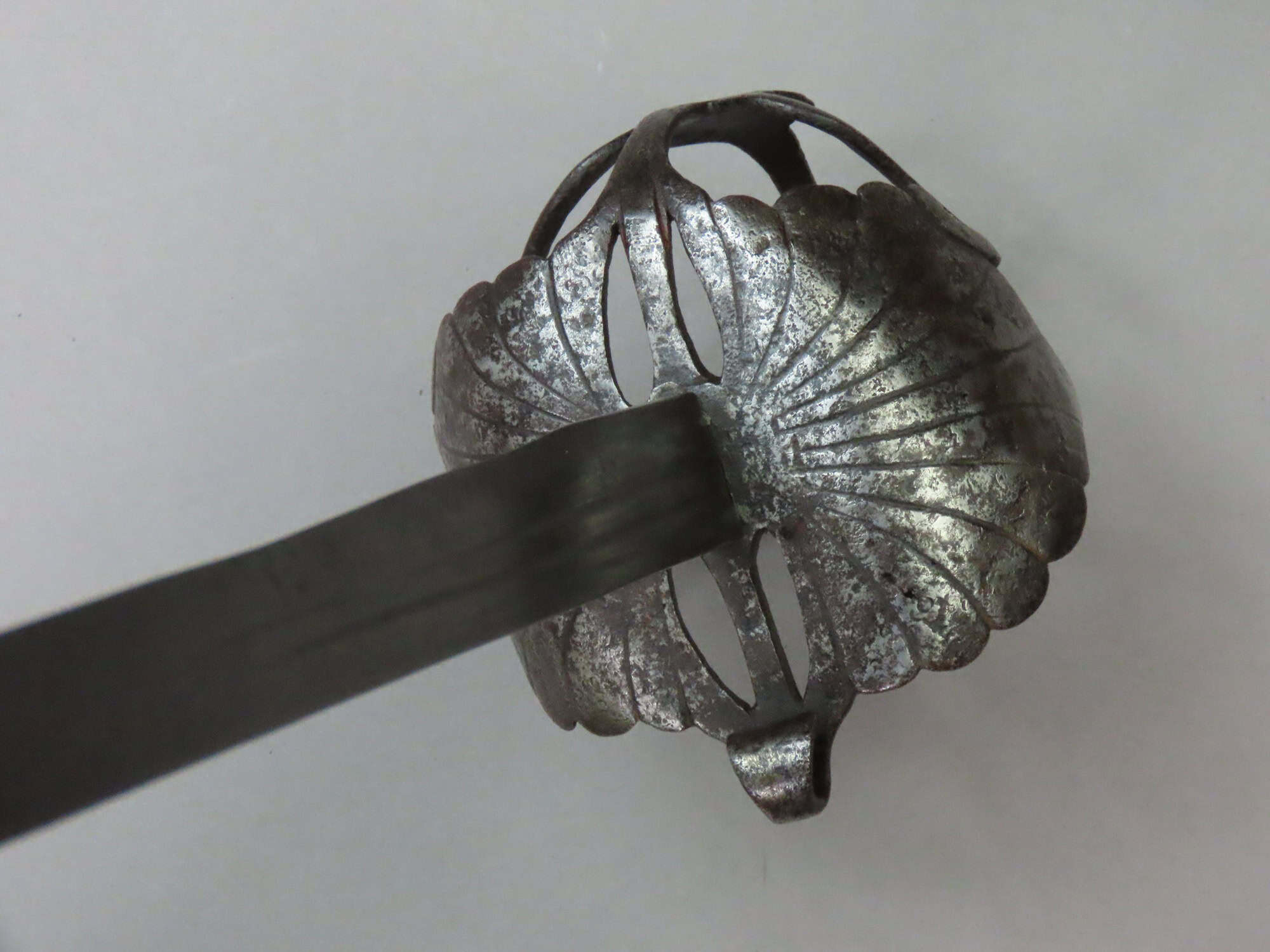
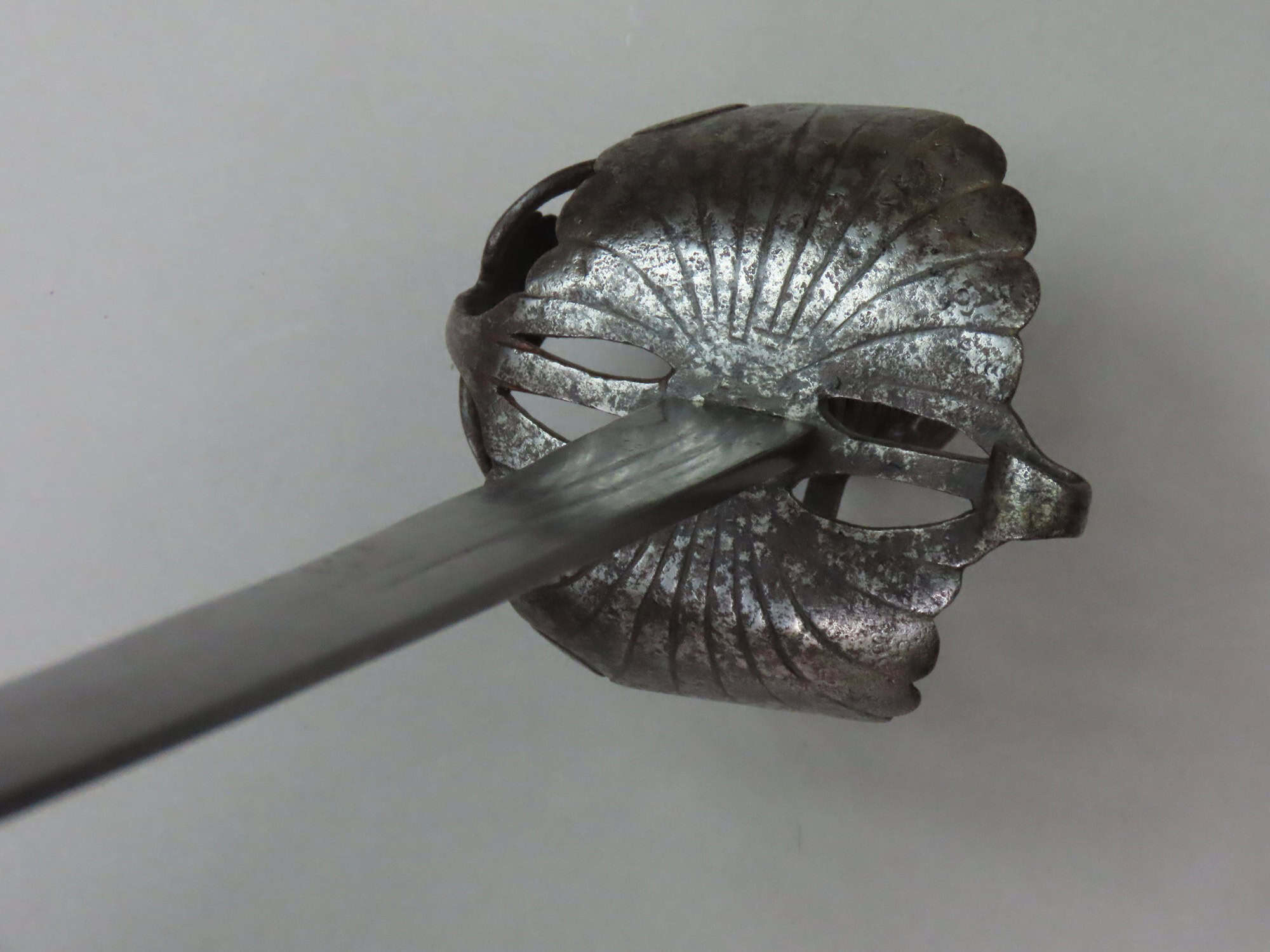
The hilt is typically simple, distinctive and “English” in form, forged from thick flattened iron parts. A broad cross guard is forged on top of a flat oval-shaped guard plate with upturned sides. The rear quillon is formed as a downwardly curled wristguard. Three main structural guard bars extend upwards from the plate, a knuckle bow to the front and two side guards, with flattened angled terminals screwed into the pommel at the top. Two further secondary curled bars emanate from the plate from between the main guard bars and are forged onto the swollen middle of the knuckle bow to strengthen the structure.
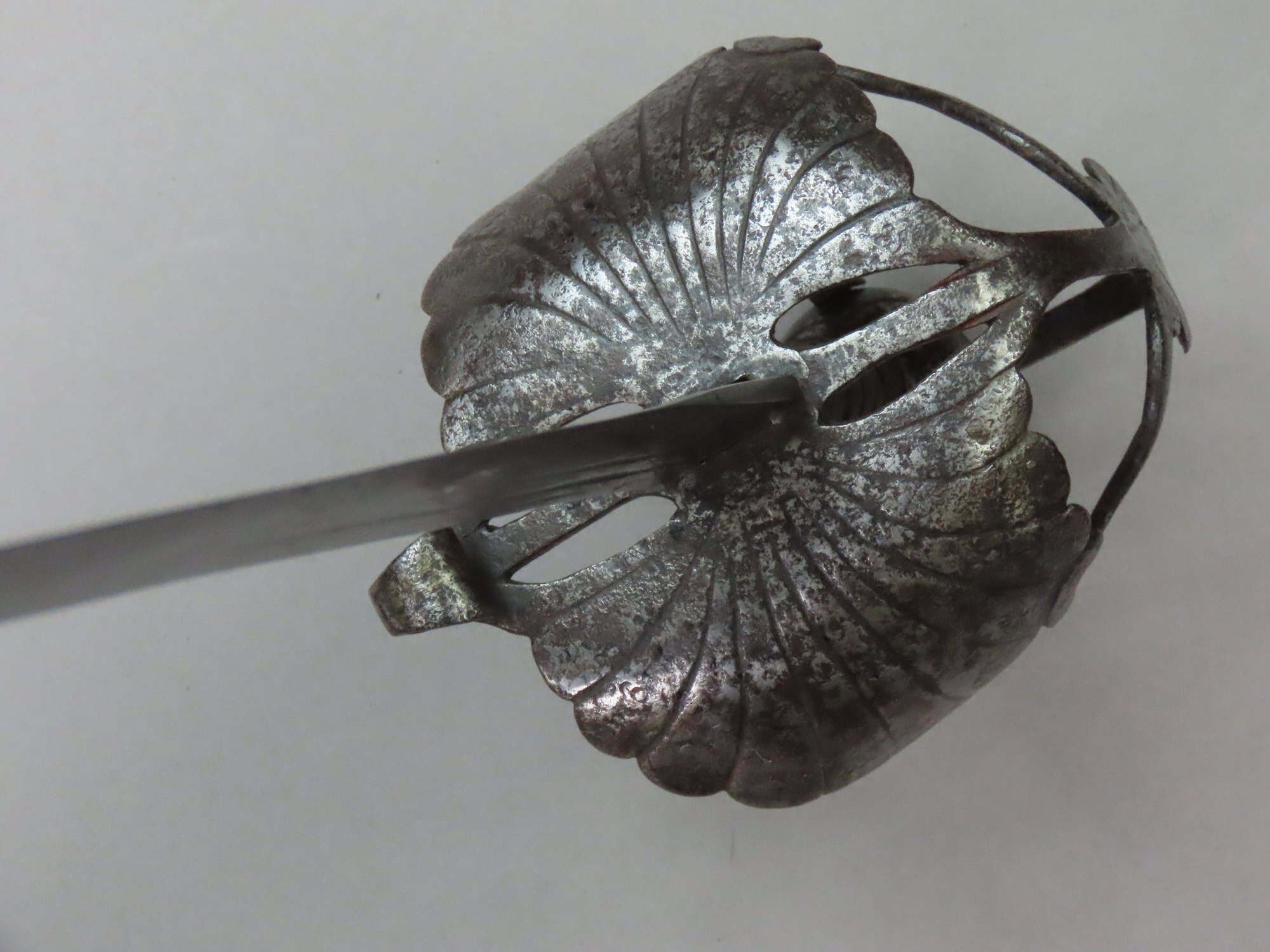
The guard plate is forged as two scallop shells attached to the cross piece at the middle and at each end where the shell edge meets the rear quillon at the wrist guard and the knucklebow base. The edge of the shell is cut with scallop shapes. From the tang aperture incised lines radiate towards to the rim terminating between the scallops giving a true shell like appearance. The swollen middle to the knuckle bow is finished in a similar manner.
The solid pommel is globular in shape and has an integral flat button on top and a pronounced flared neck beneath. The wooden grip is of oval section and spirally grooved bound with thin twisted copper wire and mounted with copper wire “Turks’ Heads” top and bottom.
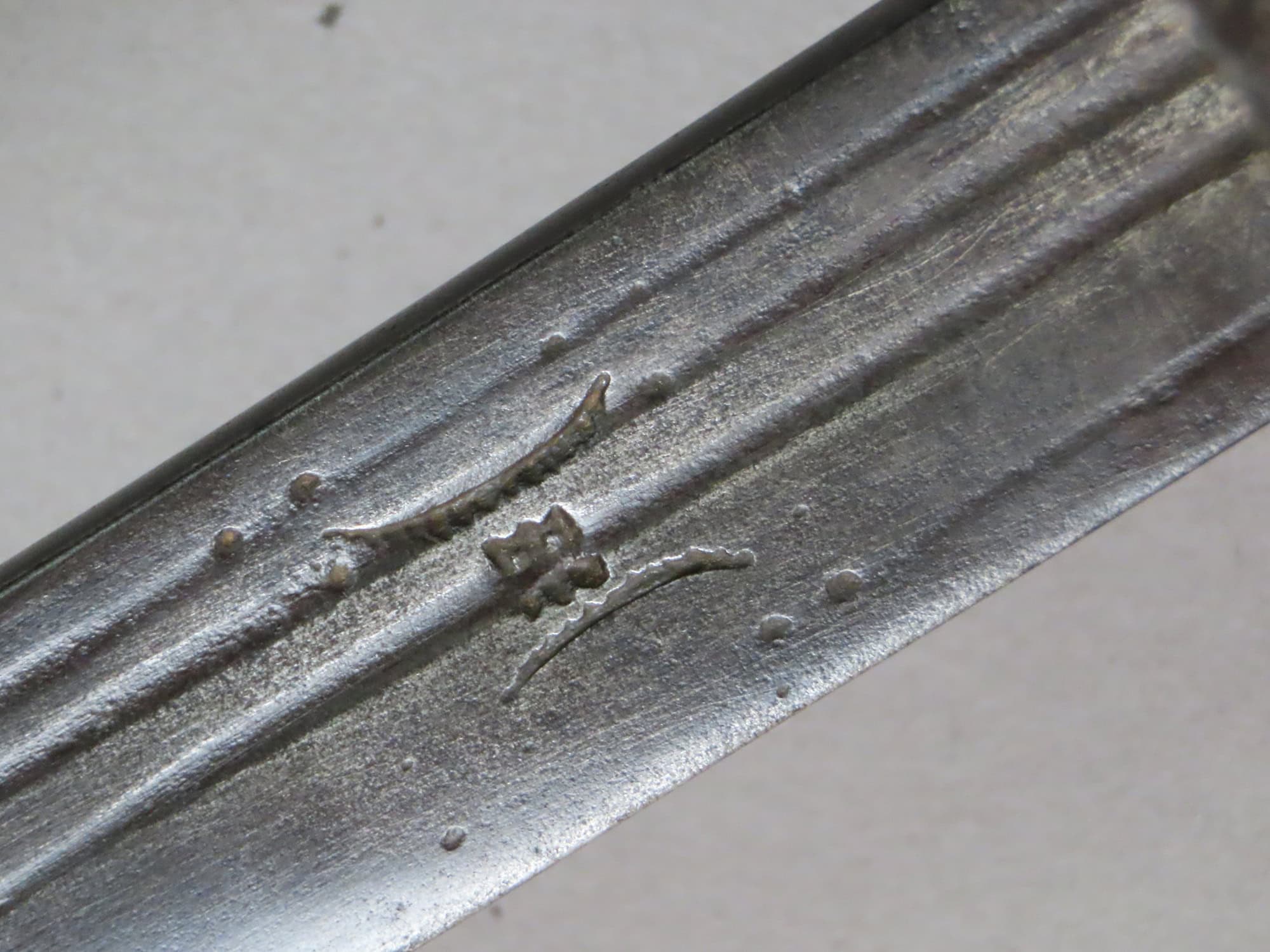
Underneath the spine of the blade four fullers extend from the hilt which are worn away in places. A single fuller extends from the hilt along the blunt edge of the ricasso to the front and terminates where the blade becomes sharp. On one side in the ricasso a blade maker’s mark in the form of two convex crescents facing each other with dots at each extreme is present with a further stamp imbetween.
The blade is 32.5 inches long (82.5 cm) and the overall length is 38 inches (96.5 cm). It has a ricasso extending for 2.5 inches (6.5 cm) from the blade.
For further examples of similar English swords see Stuart C Mowbray, British Military Swords 1600 to 1660, Mowbray Publishers, 2013, and the examples illustrated in pages 226 – 235. Most of the swords illustrated are similar, and some almost identical to our sword.