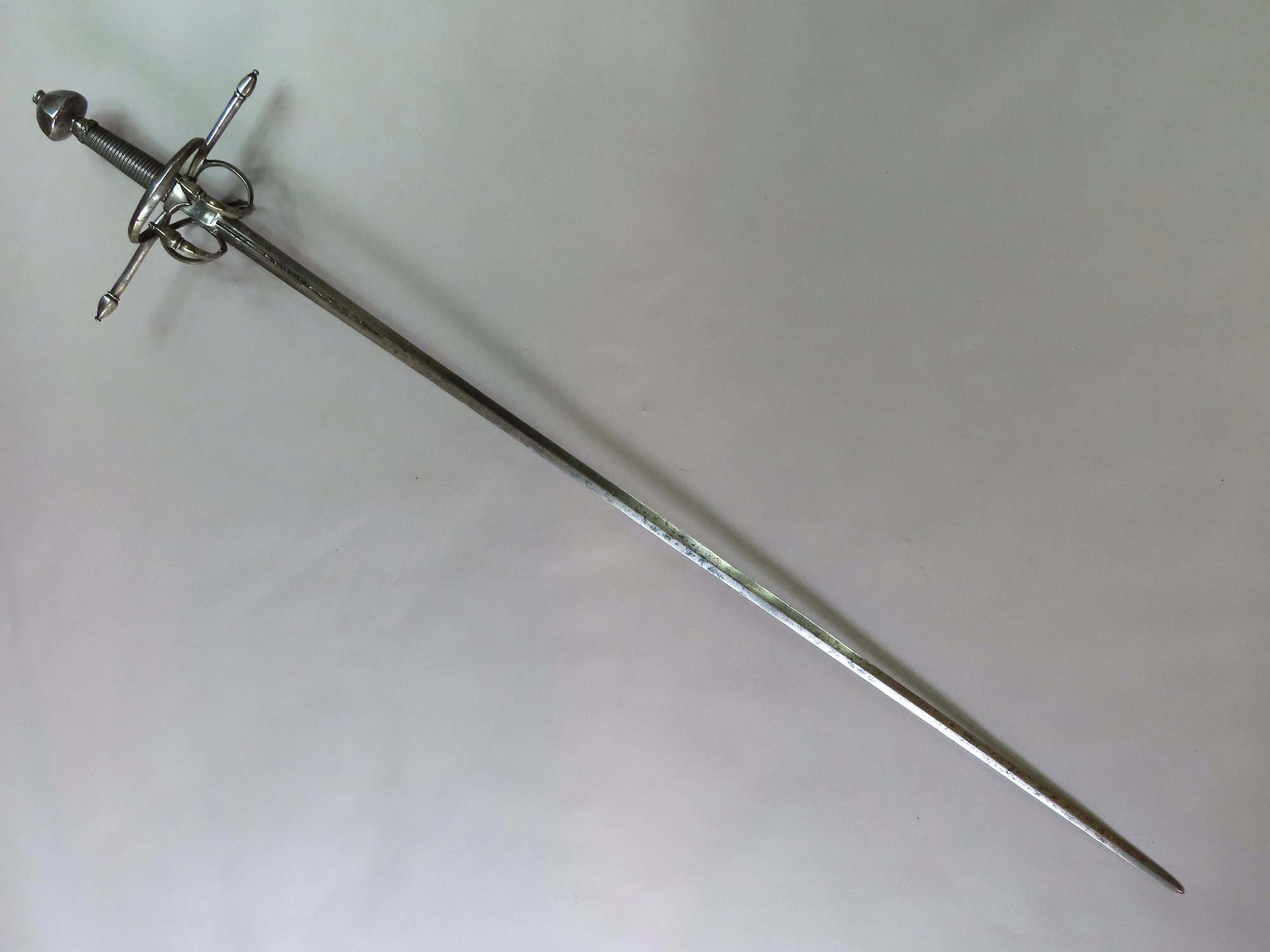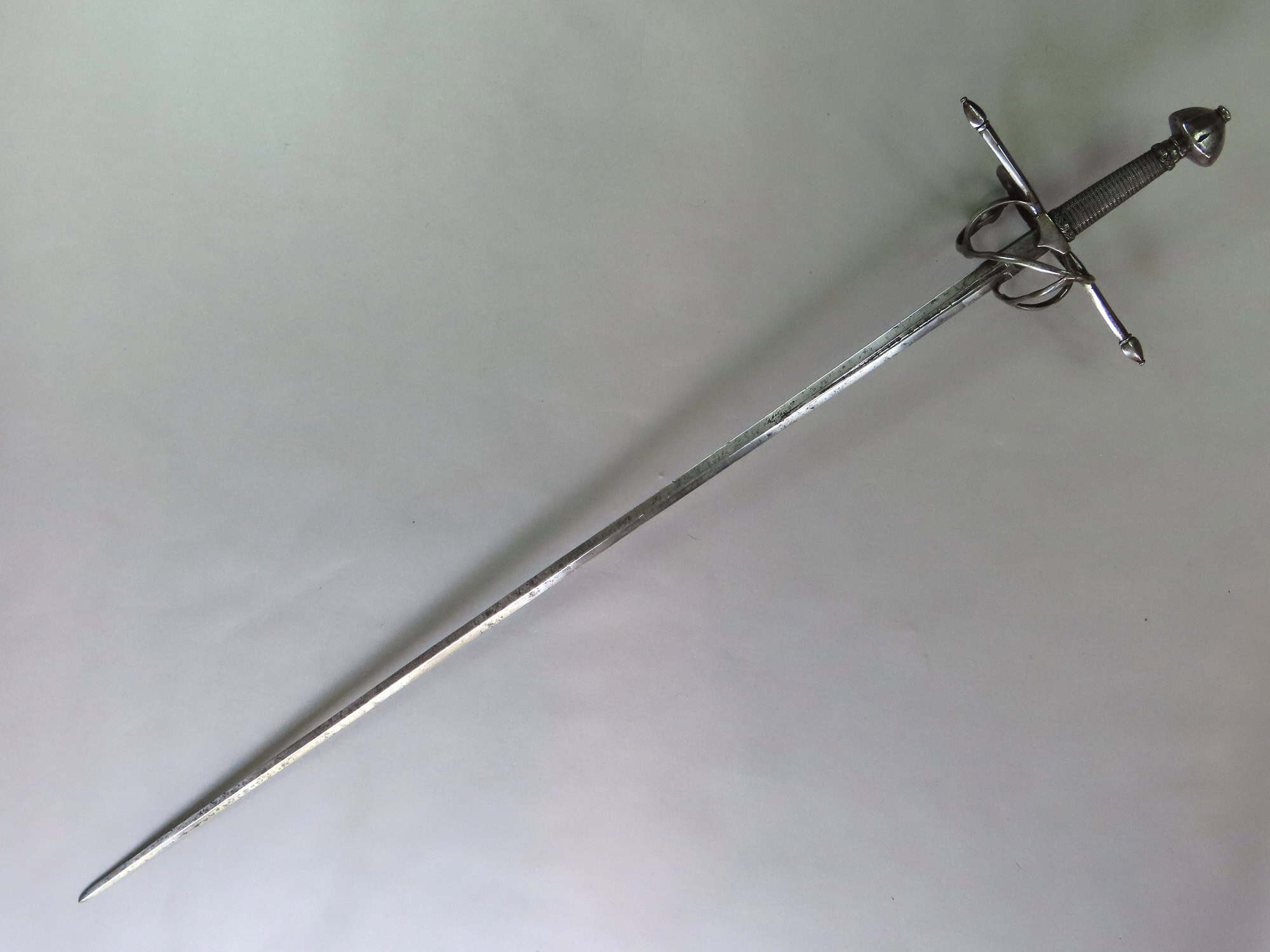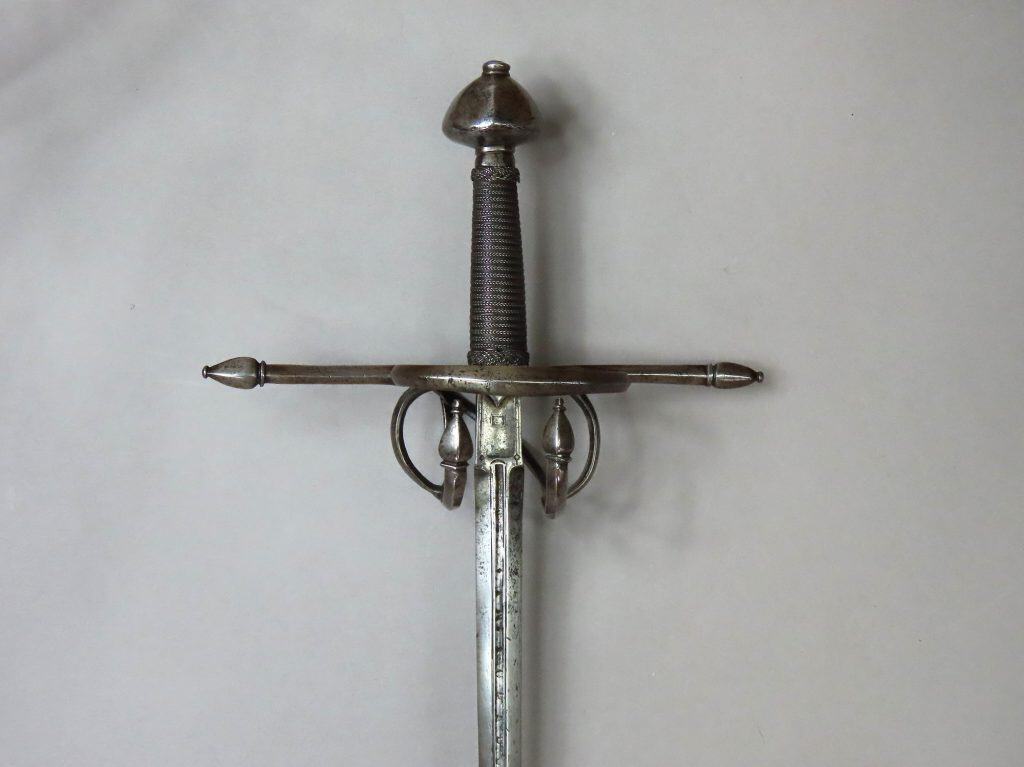
A fine North European, most likely Dutch, Sword of the mid 16th century
To enquire about this itemplease click here
Price: £7,500
Ref: 52112636
Item Description
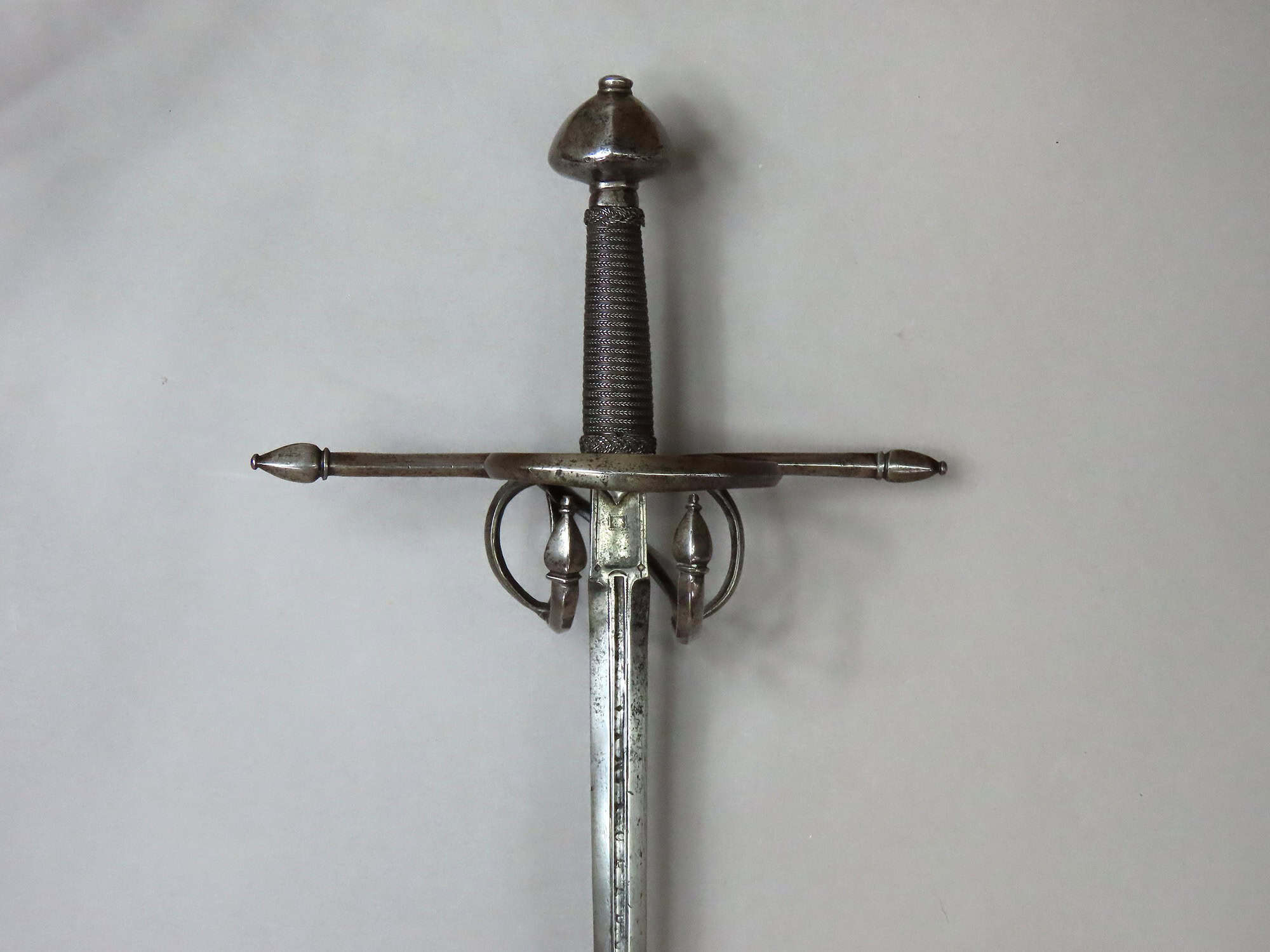
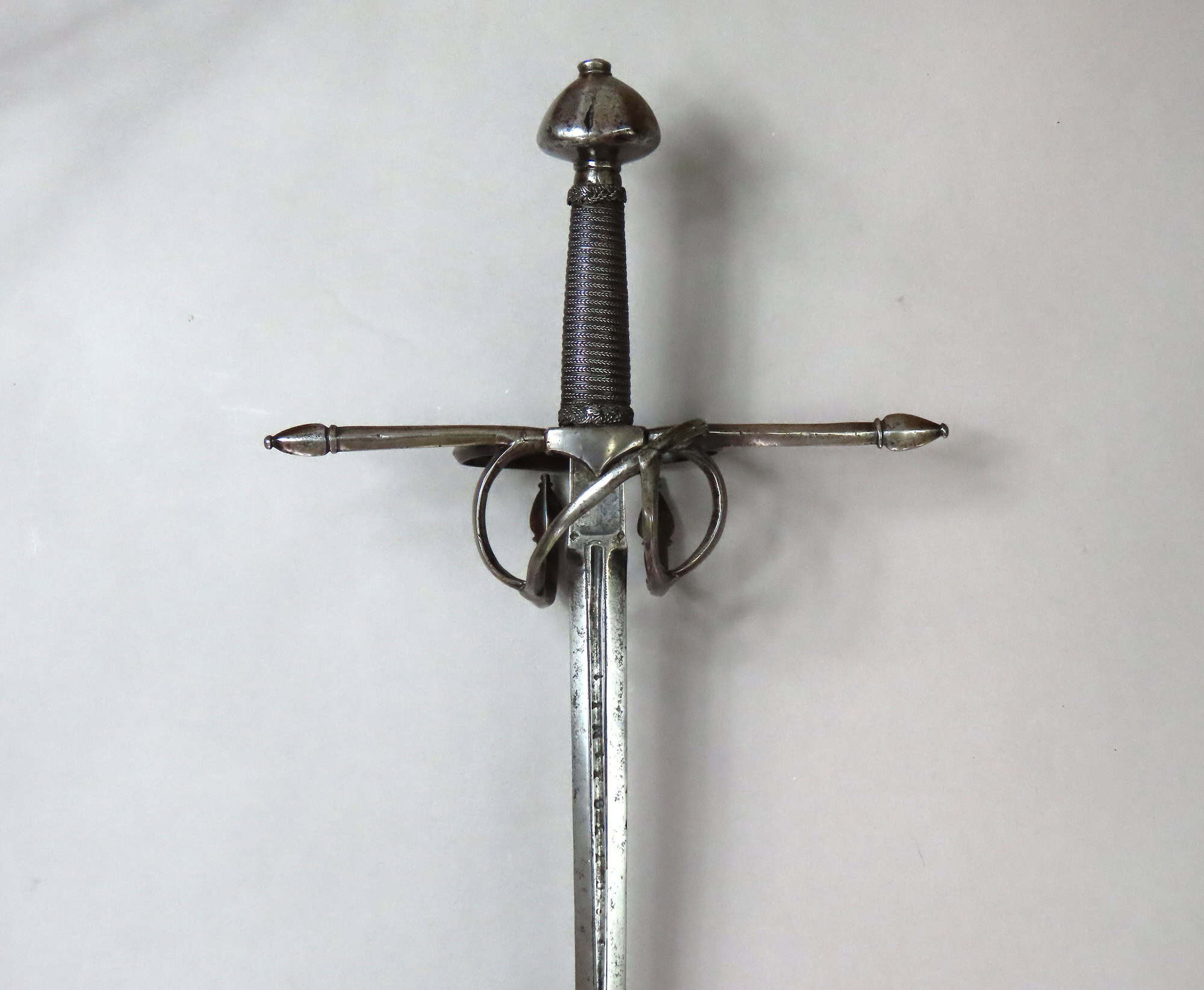
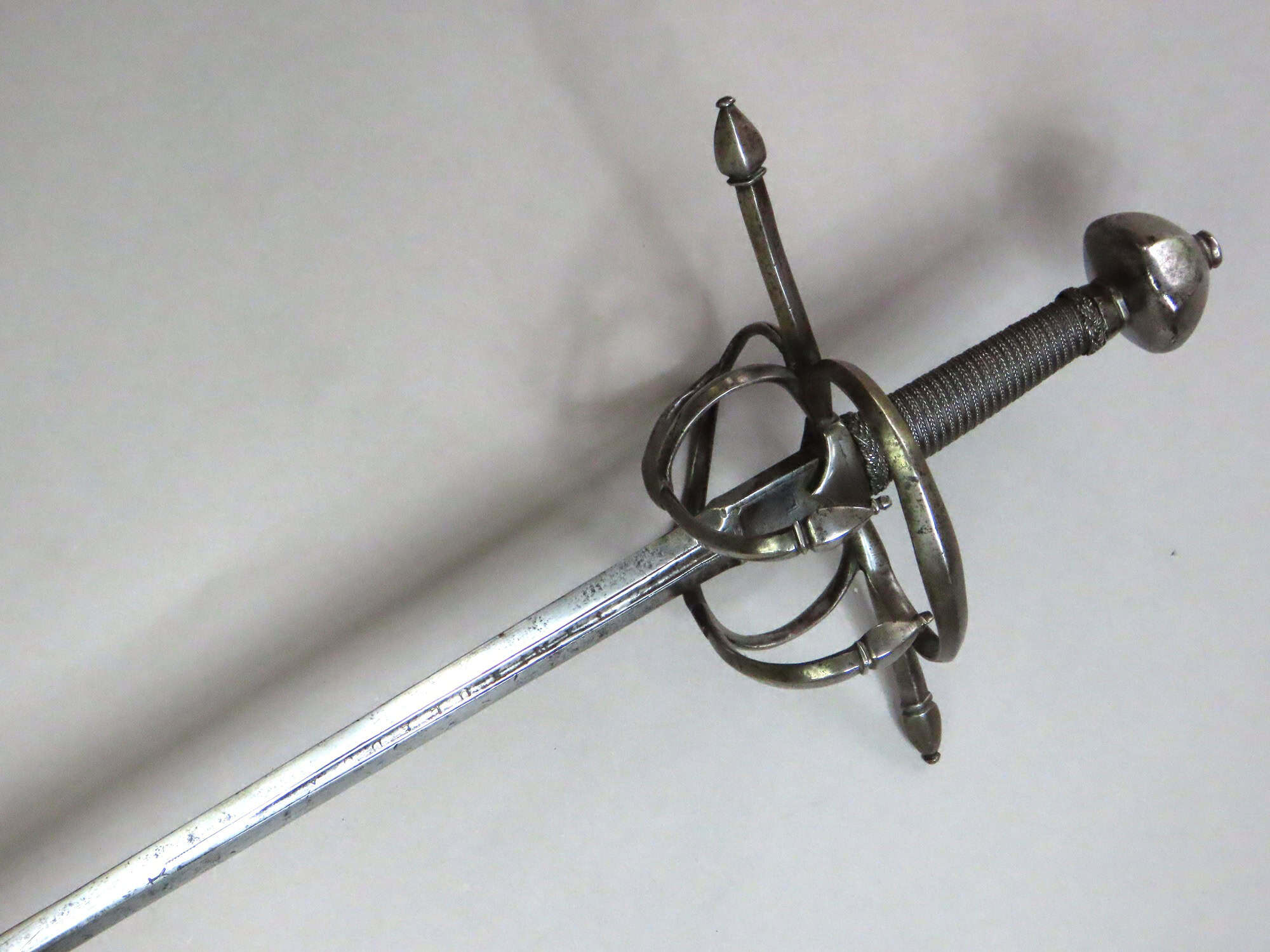
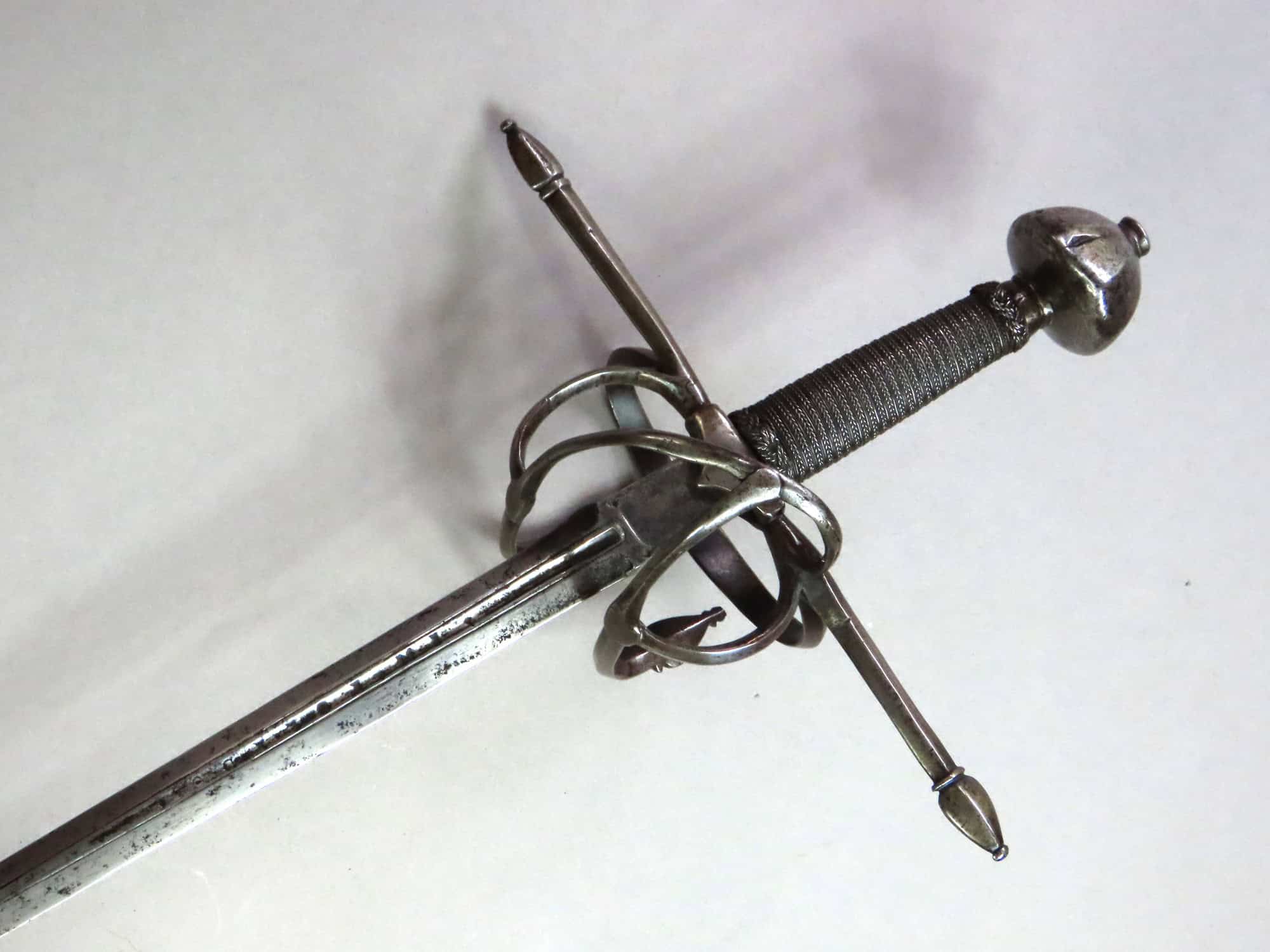
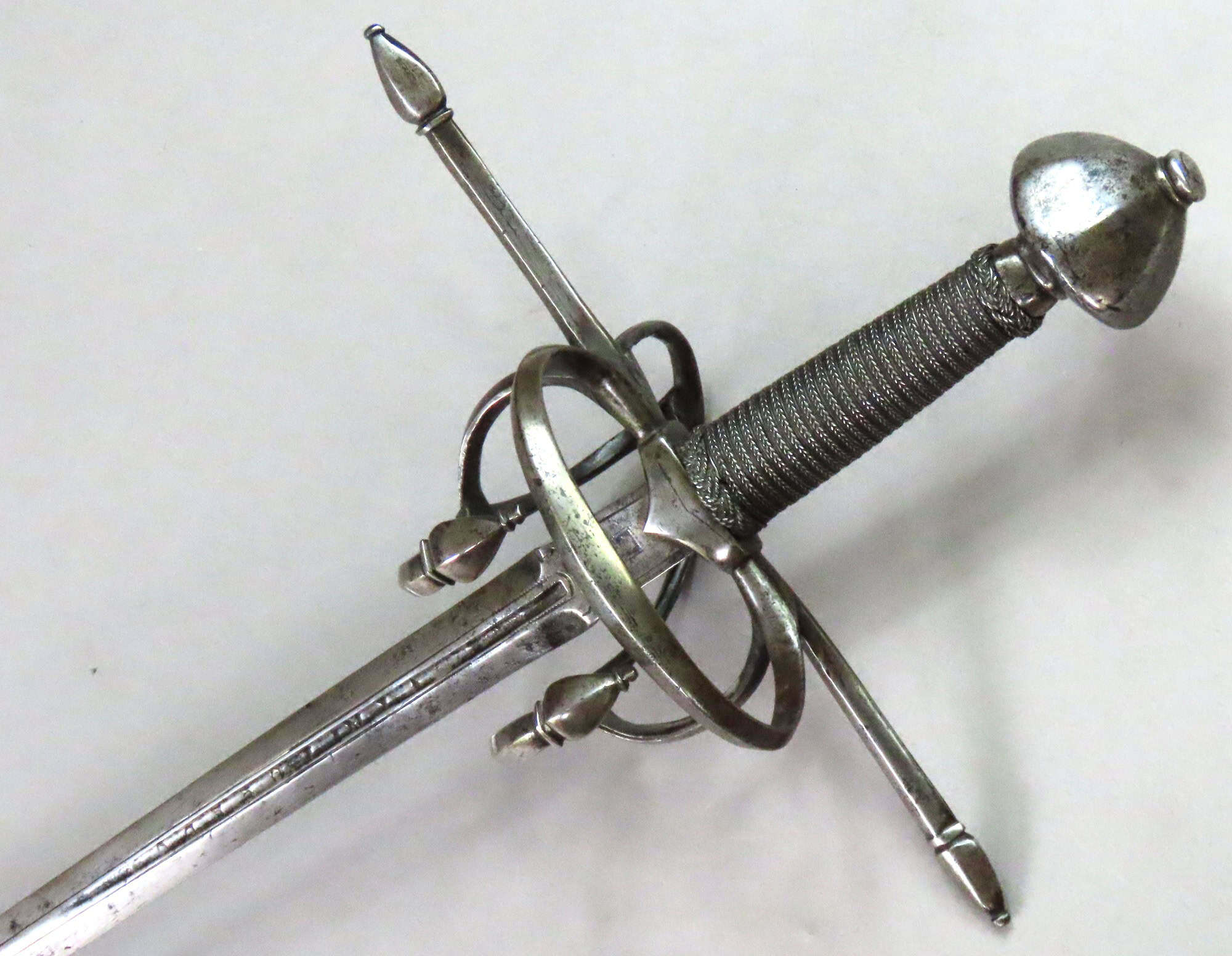
A fine and attractive North European, most likely Dutch, sword dating to the middle to third quarter of the 16th century. The guard has a distinct “front” and “back” but lacking a knuckle bow allows the user to turn the sword 180 degrees in hand in order to utilise each side of the blade as the forward cutting edge as required. The long stiff blade is sharp on both edges and has some old shallow nicks indicating the sword was made for double usage, for cutting and thrusting, rather than just for thrusting which was the primary purpose of contemporary rapiers with similar length blades at the time. A similarly proportioned sword is depicted being drawn from its scabbard in “The Triumph of Death”, an oil painting by the Dutch painter Pieter Bruegel the Elder painted in circa 1562, which has hung in the Museo del Prado in Madrid since 1827.
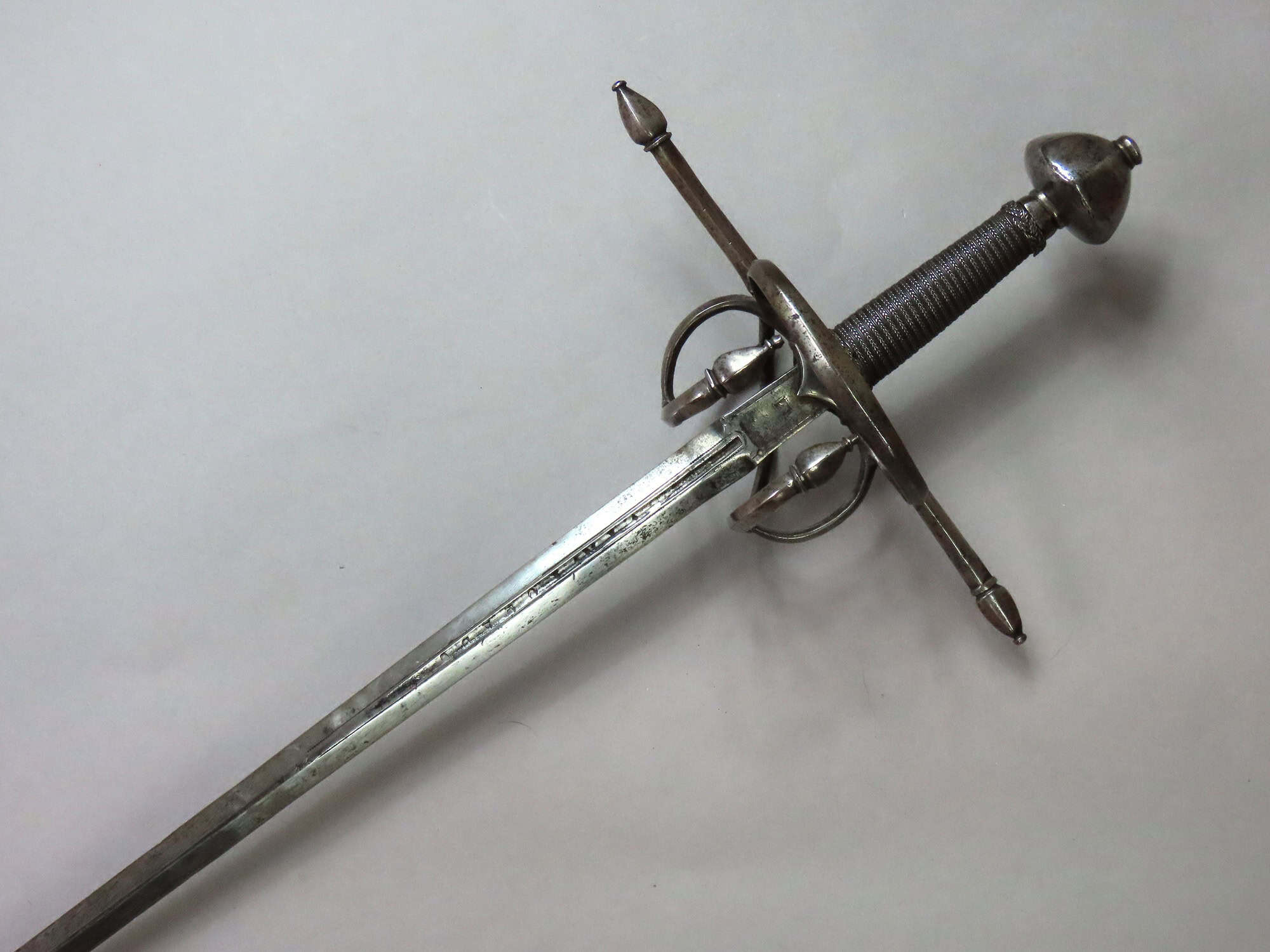
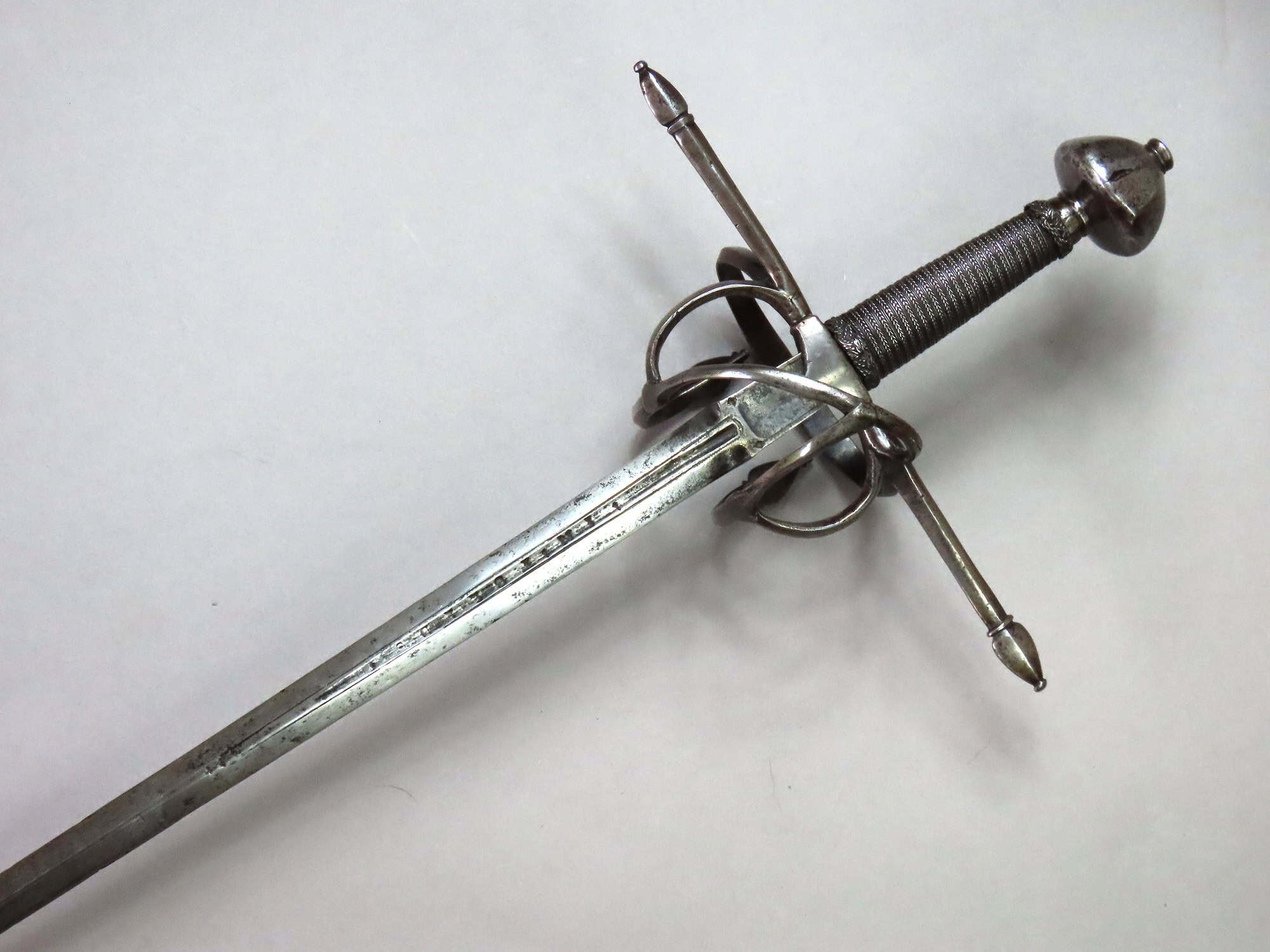
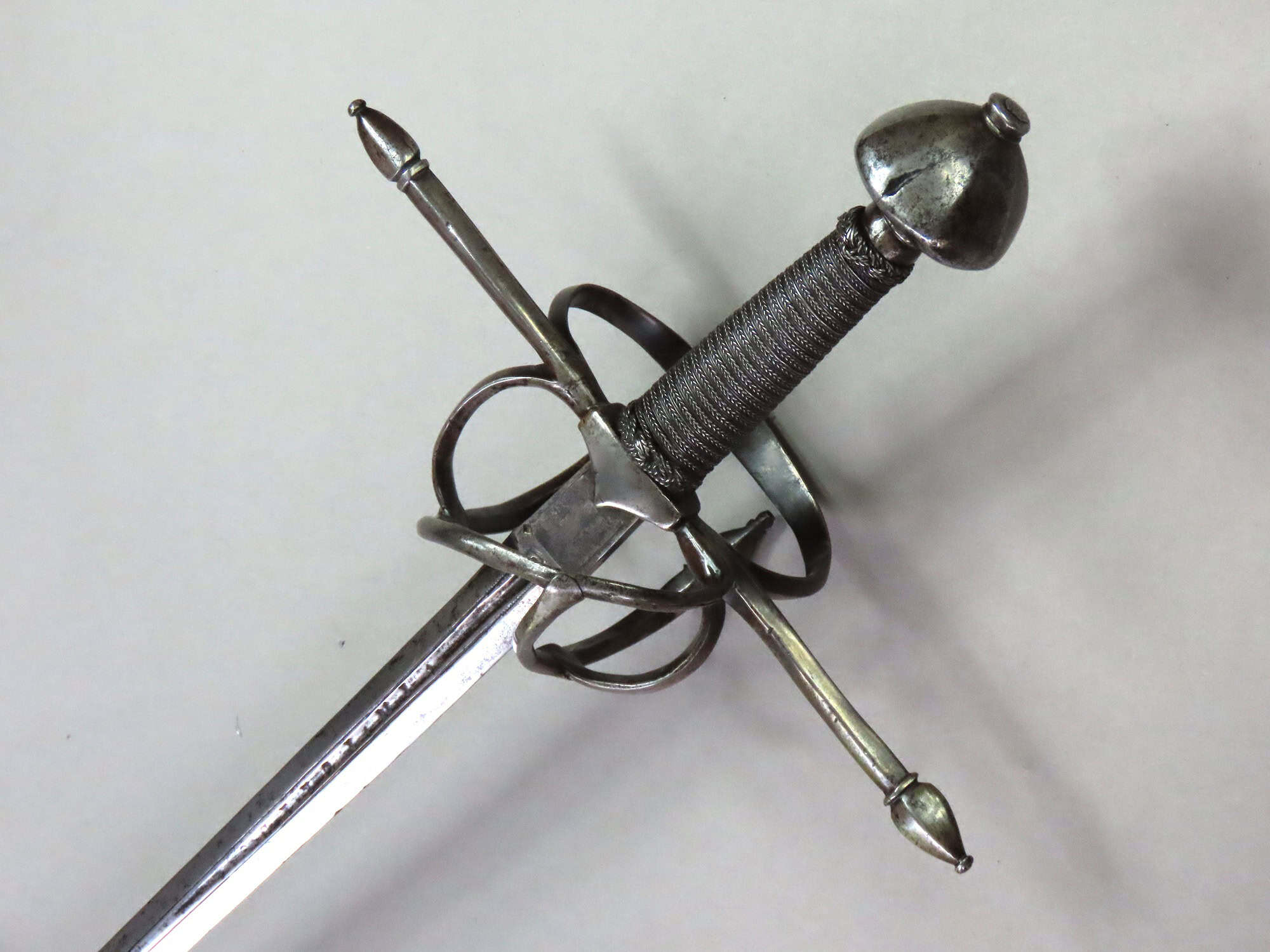
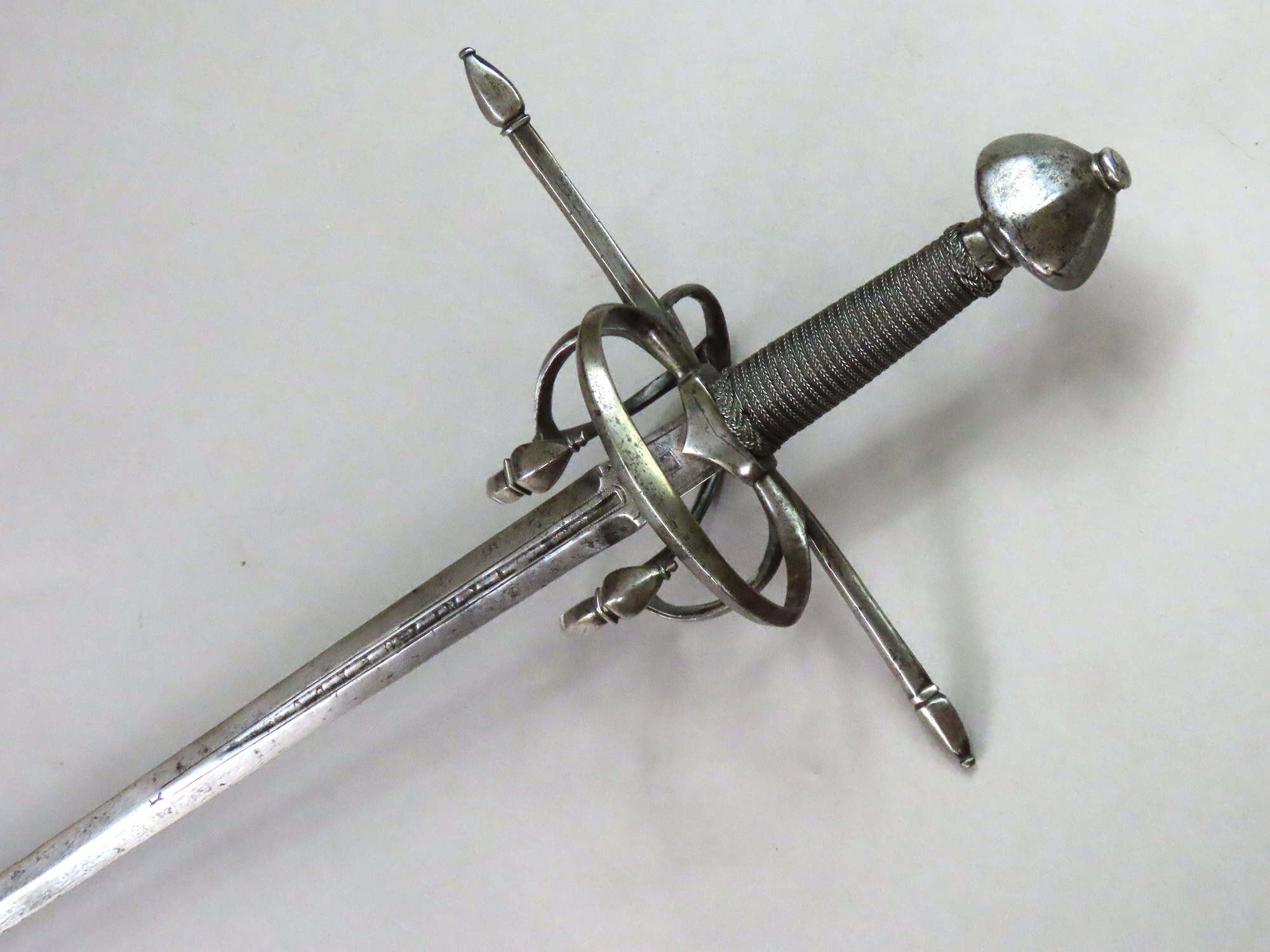
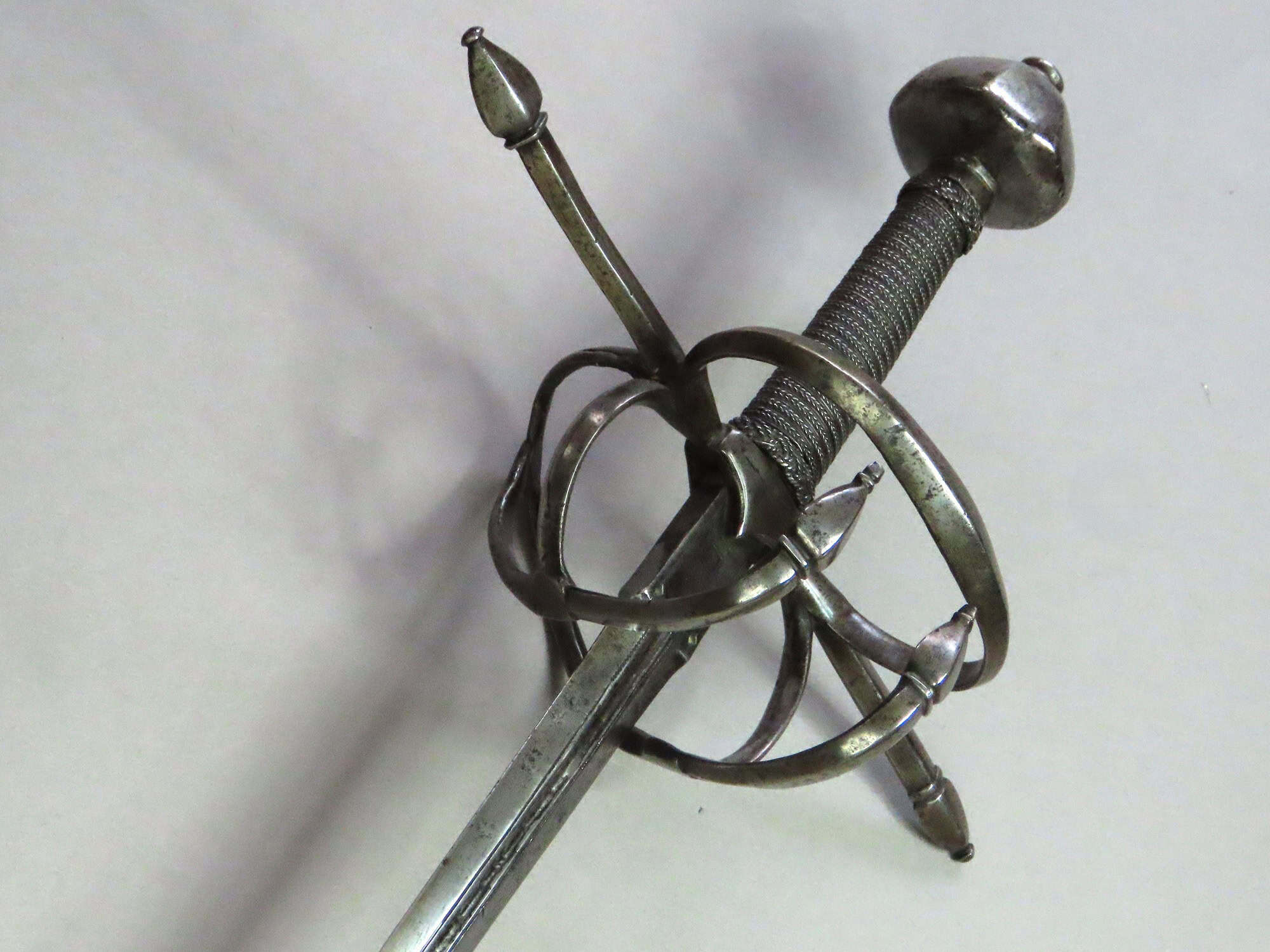
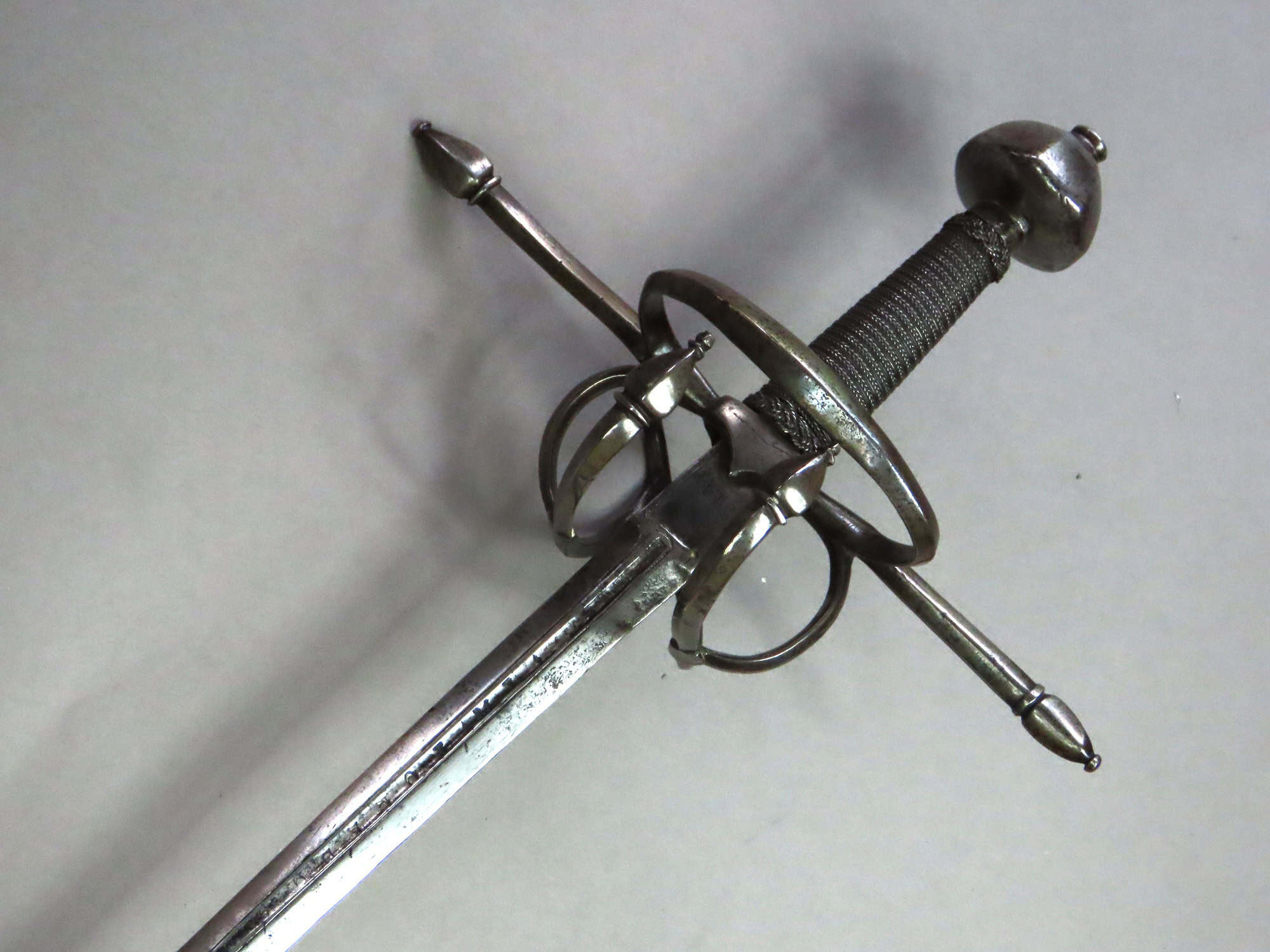
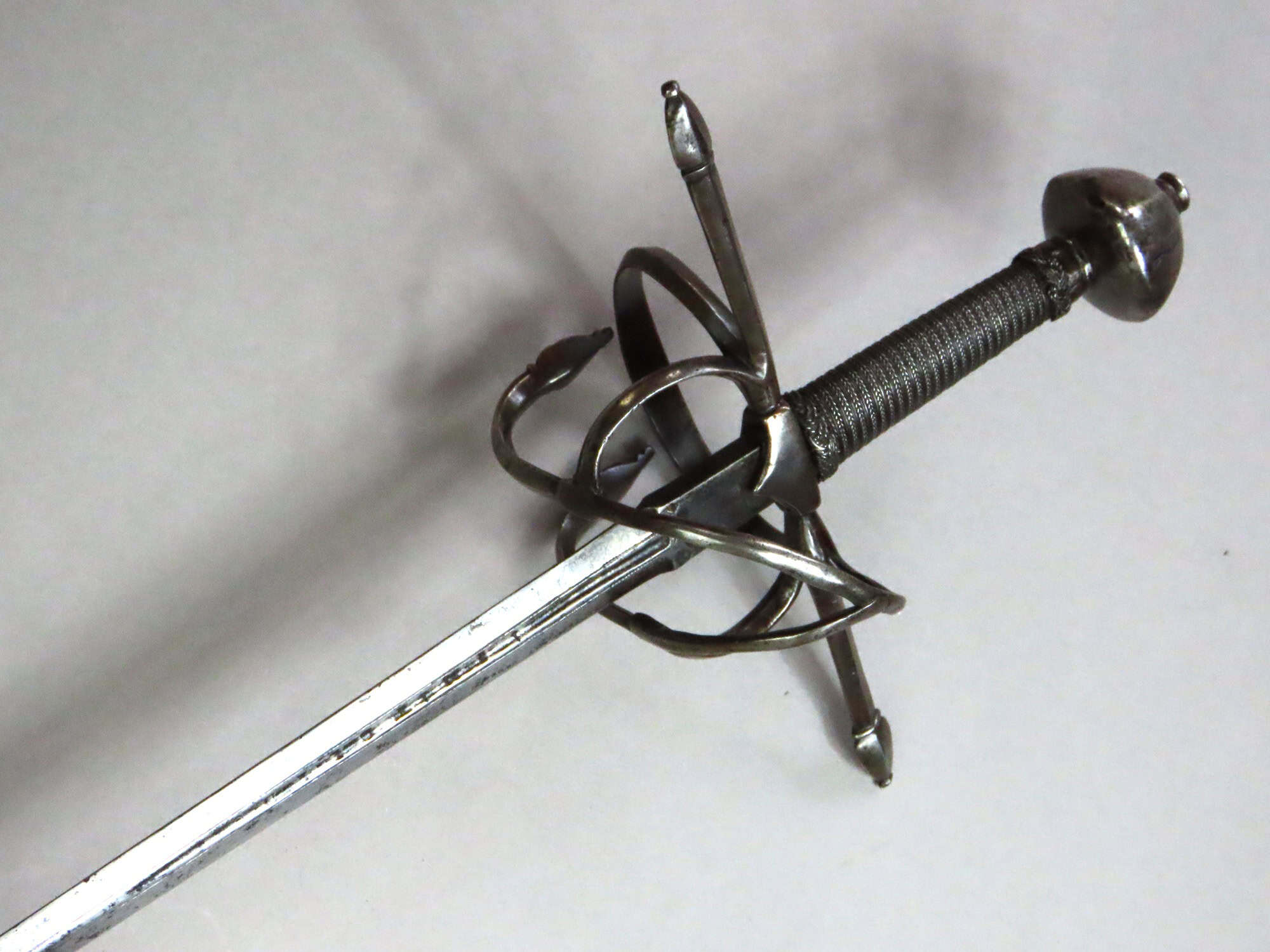
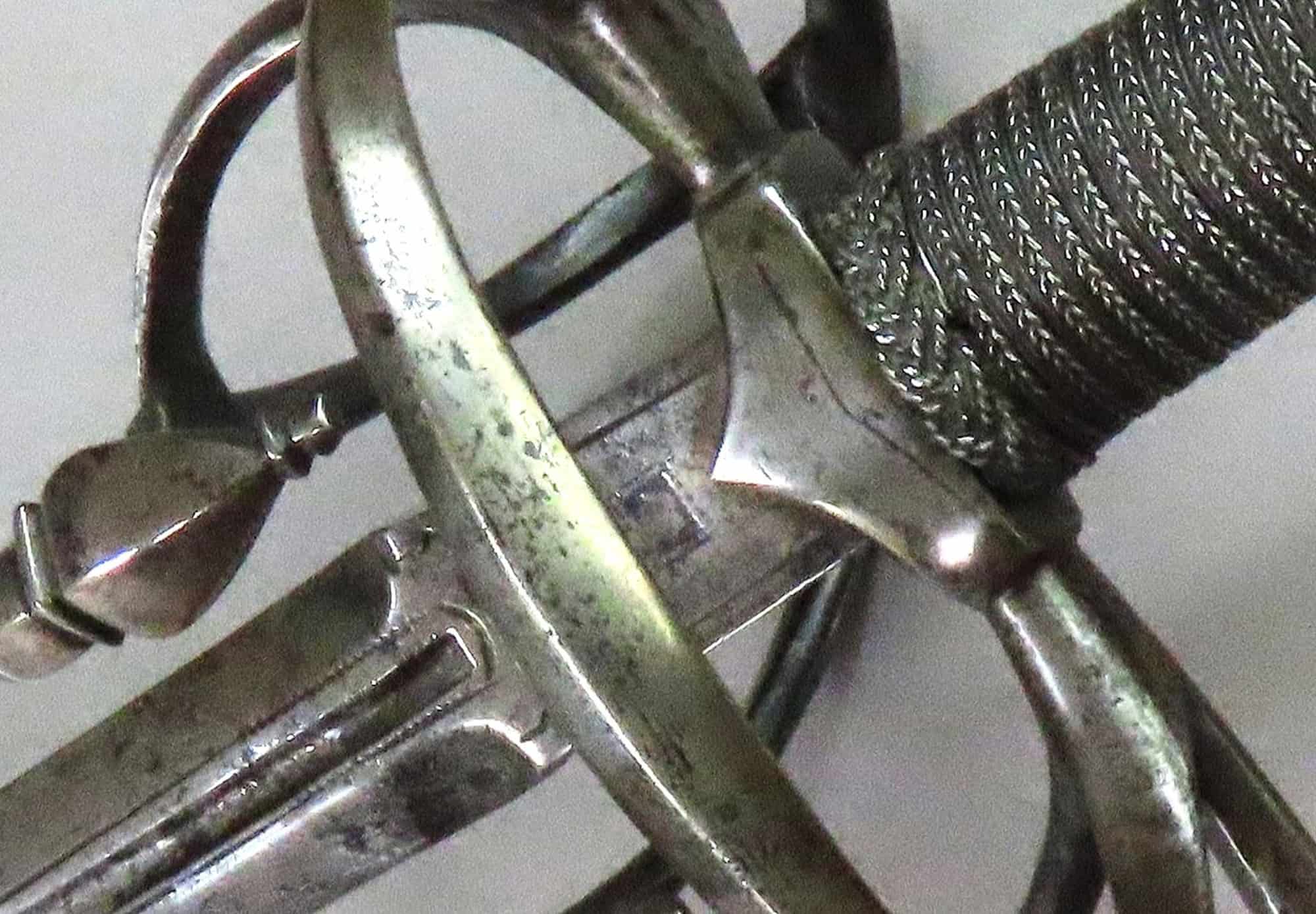
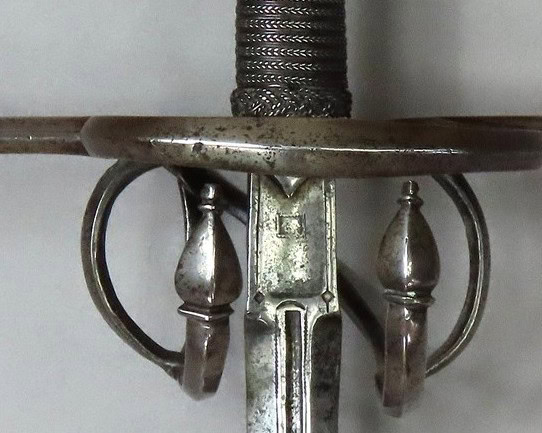
The hilt is formed with a bold rectangular quillon block with pointed langets beneath which grip the blade ricasso at the hilt. From each side two horizontal quillons of flattened diamond section emanate to terminate in swollen tulip bud shaped terminals with rims before and knops at the end. To the front a large guard ring of the same section, swollen in the middle, is mounted. Underneath two pas d’ ane rings join two parallel upwardly curled guard bars which terminate in buds similar to the those on the quillon terminals. These emanate from two rear guard bars slanted to accommodate the thumb.
Made for a right handed user the capacity to turn the hilt in hand to use the reverse side of the blade incorporates the rear guard bar structure as a secondary defence measure. This not only allows the user to utilise both sides of the blade but also at a push facilitates left handed use.
The faceted dome shaped pommel has a pronounced ribbed neck beneath and an integral waisted button on top. The oval section grip tapers slightly from top to bottom and is bound with contra-twisted double ropes of wire separated by thinner twisted wires. The grip has woven “Turks’ Heads” mounted top and bottom.
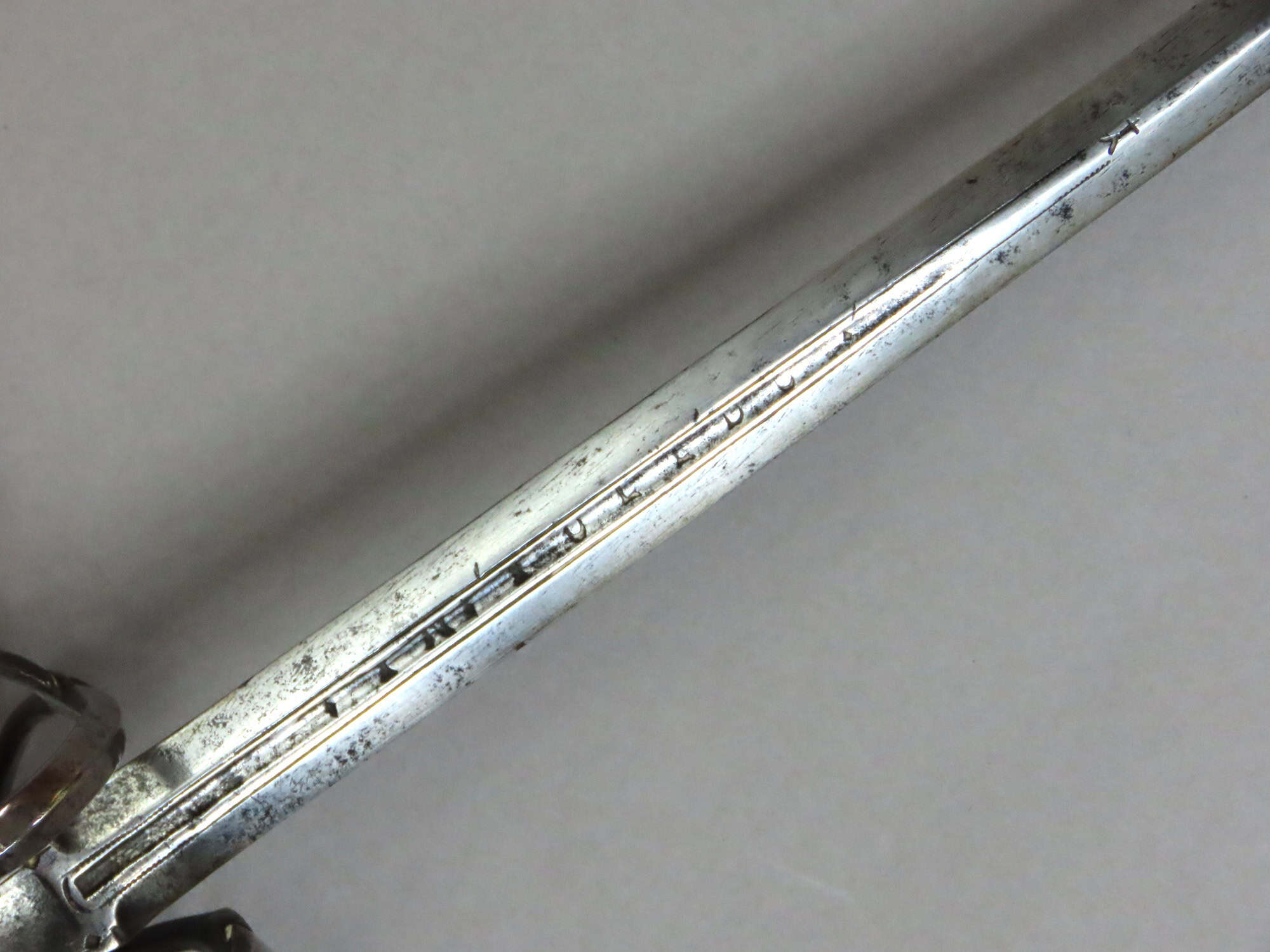
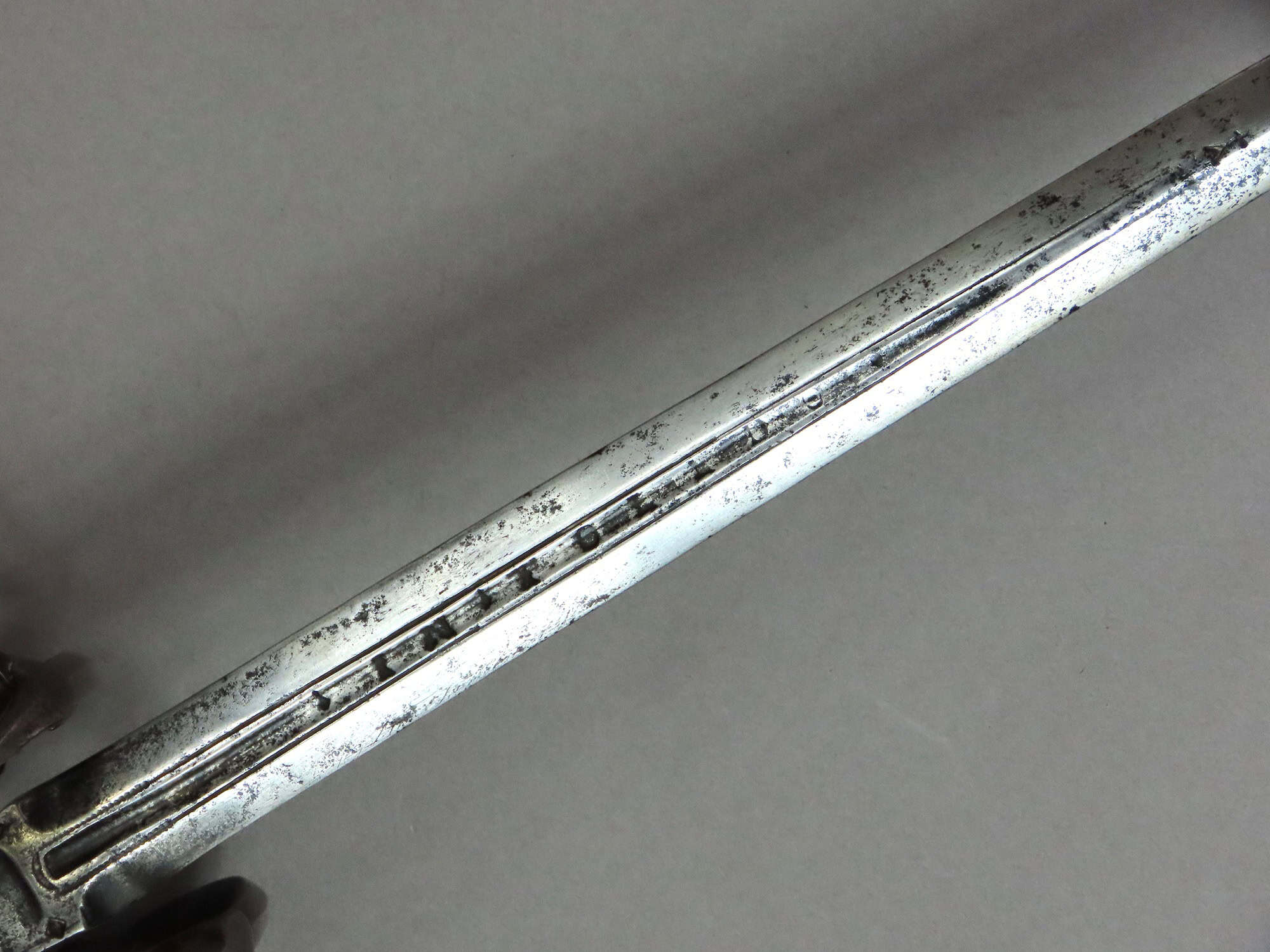
The fine quality blade is 42.25 inches (107.5 cm) long and is of flattened diamond section with a central medial ridge all along. It has a pronounced ricasso with squared edges and border lines between which on one side is a bladesmith’s mark of a crown inside an oblong shield centred on the thumb rest. From the ricasso a deep central fuller extends for 8 inches (20 cm) bordered by lines which converge and peter out to terminate in a small stylised cross on each side. The fuller is stamped with * IN * TOLEDO* on each side indicating a Spanish origin for the blade which is not surprising given that at this time Spain controlled the Netherlands under King Philip II. The overall length is just under 48.5 inches (122.75 cm).