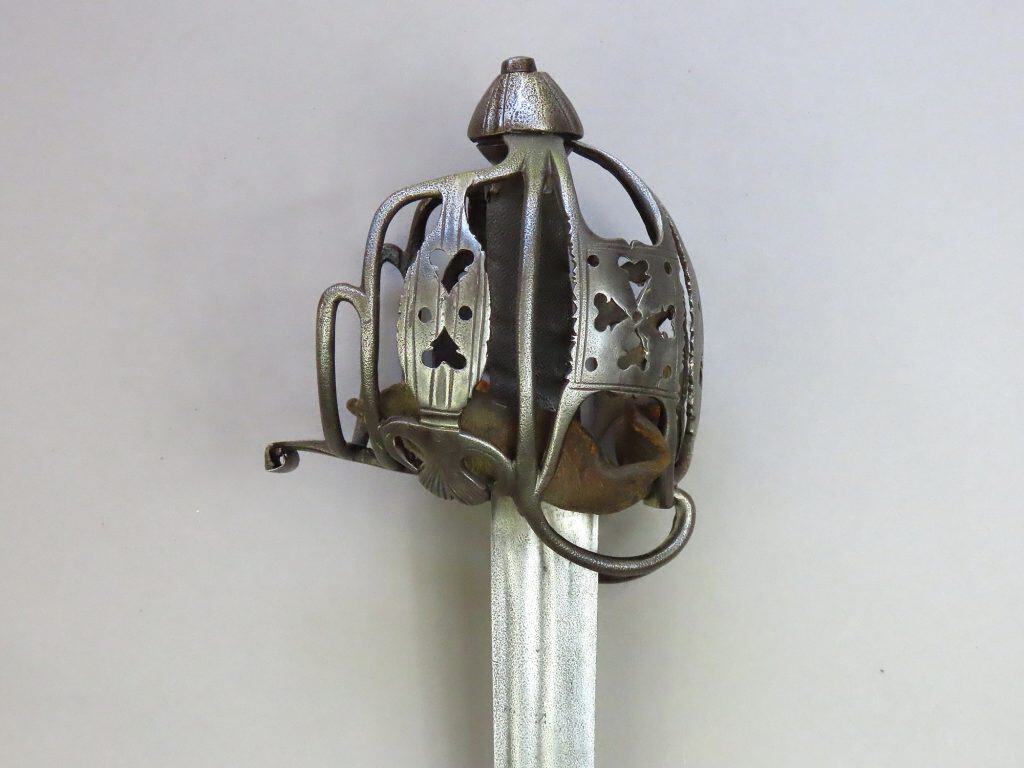
An early 18th century Scottish Basket Hilted Sword
To enquire about this itemplease click here
Price: £4,350
Ref: 62040756
Item Description
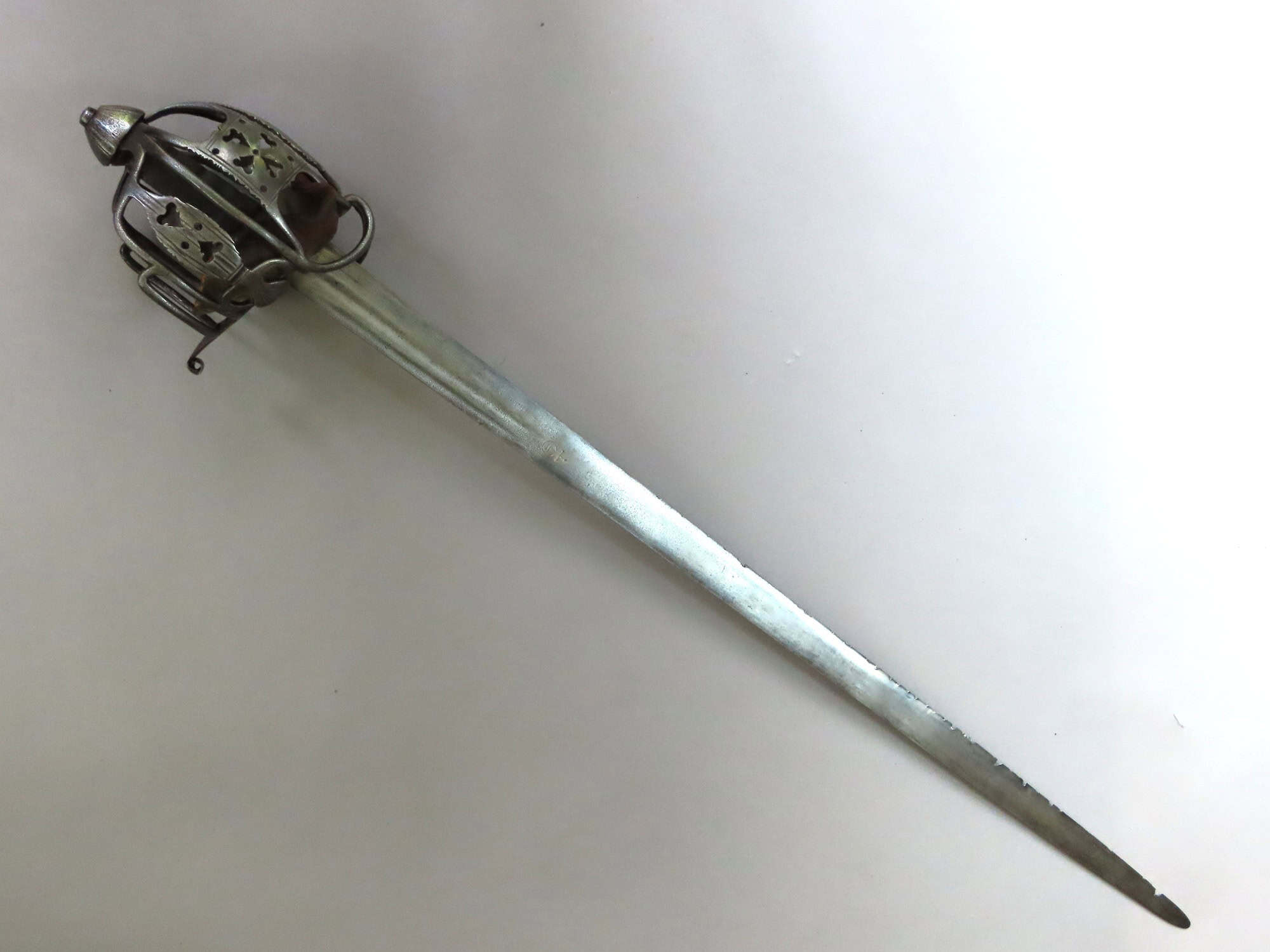
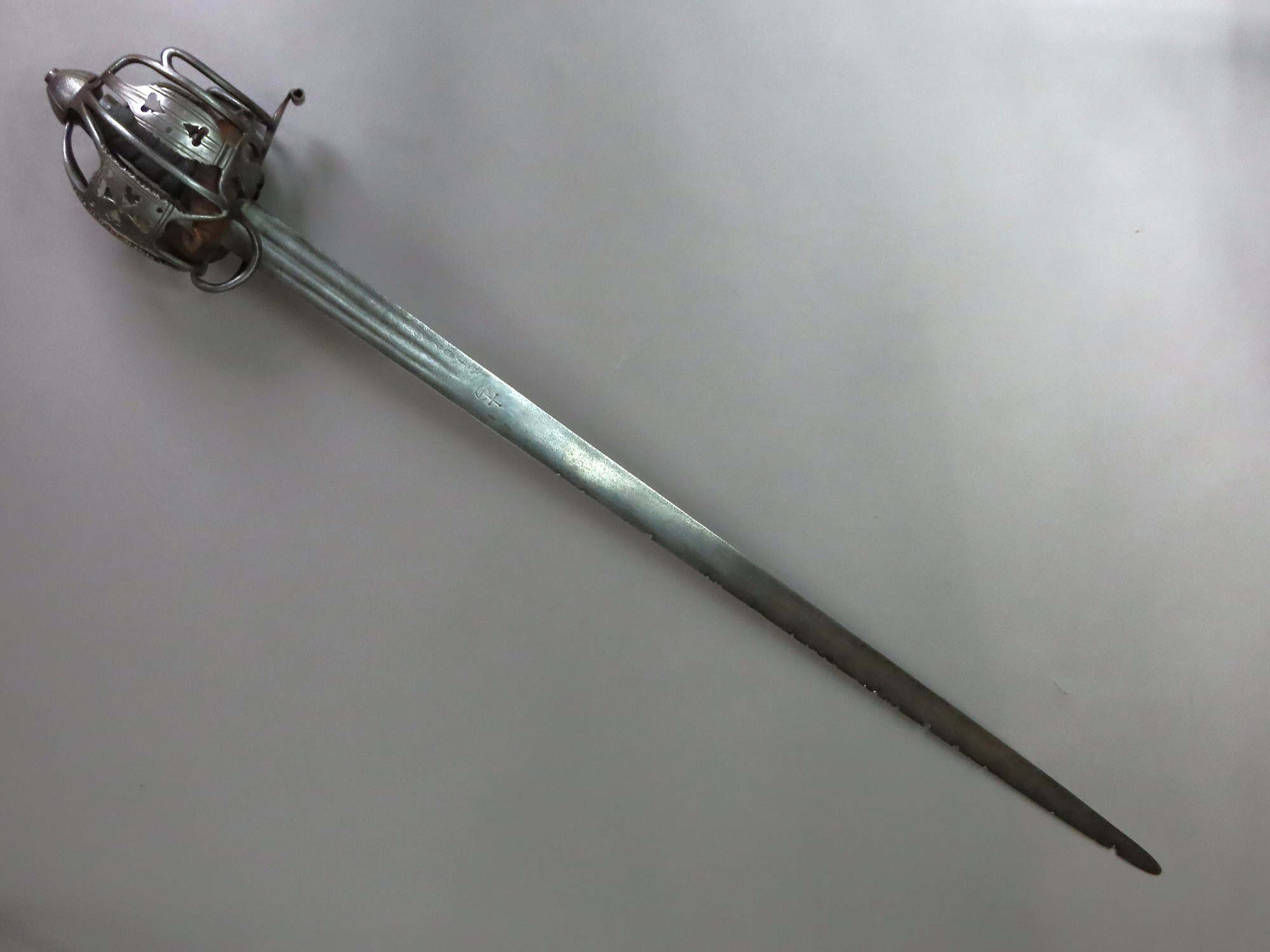
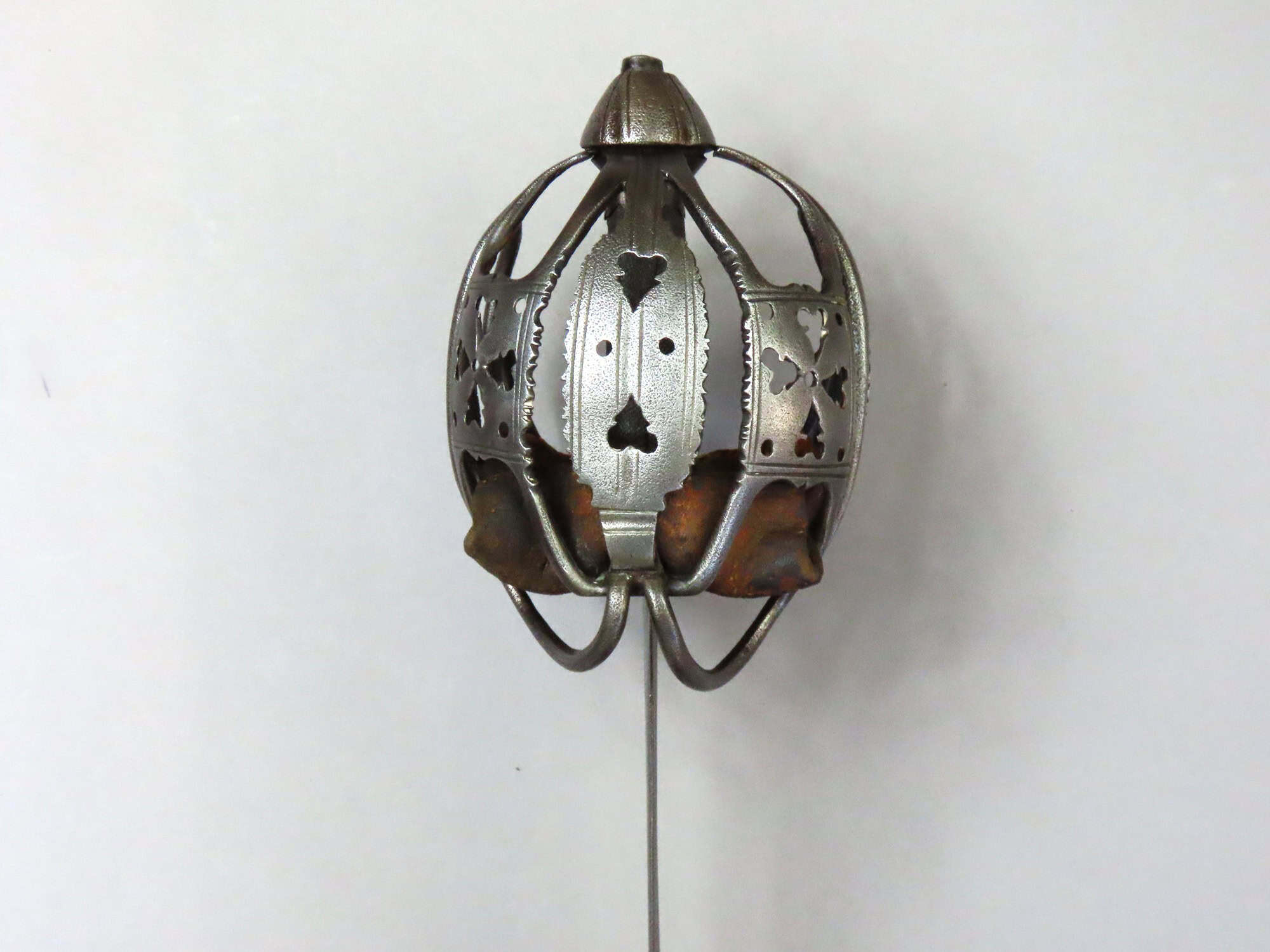
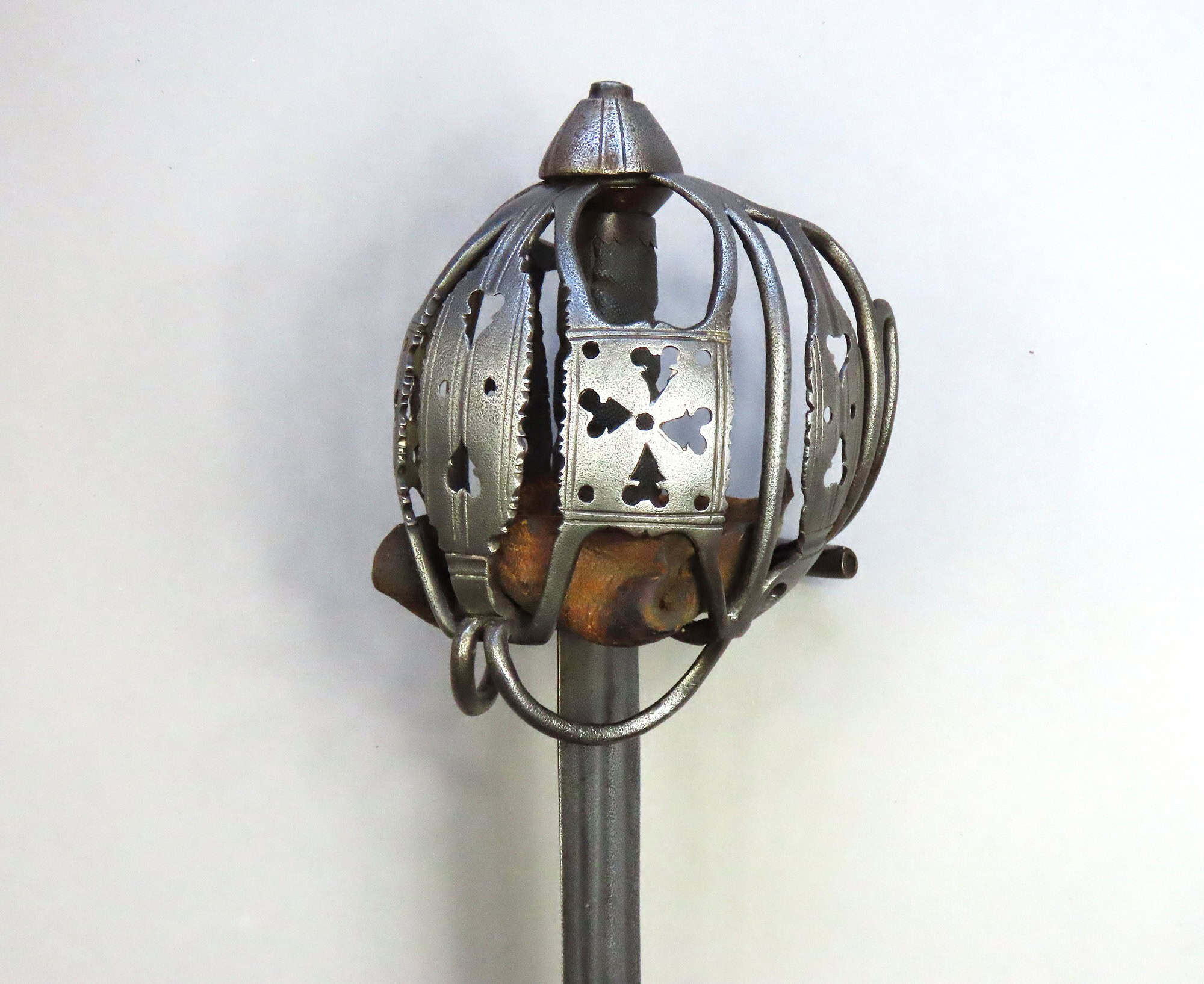
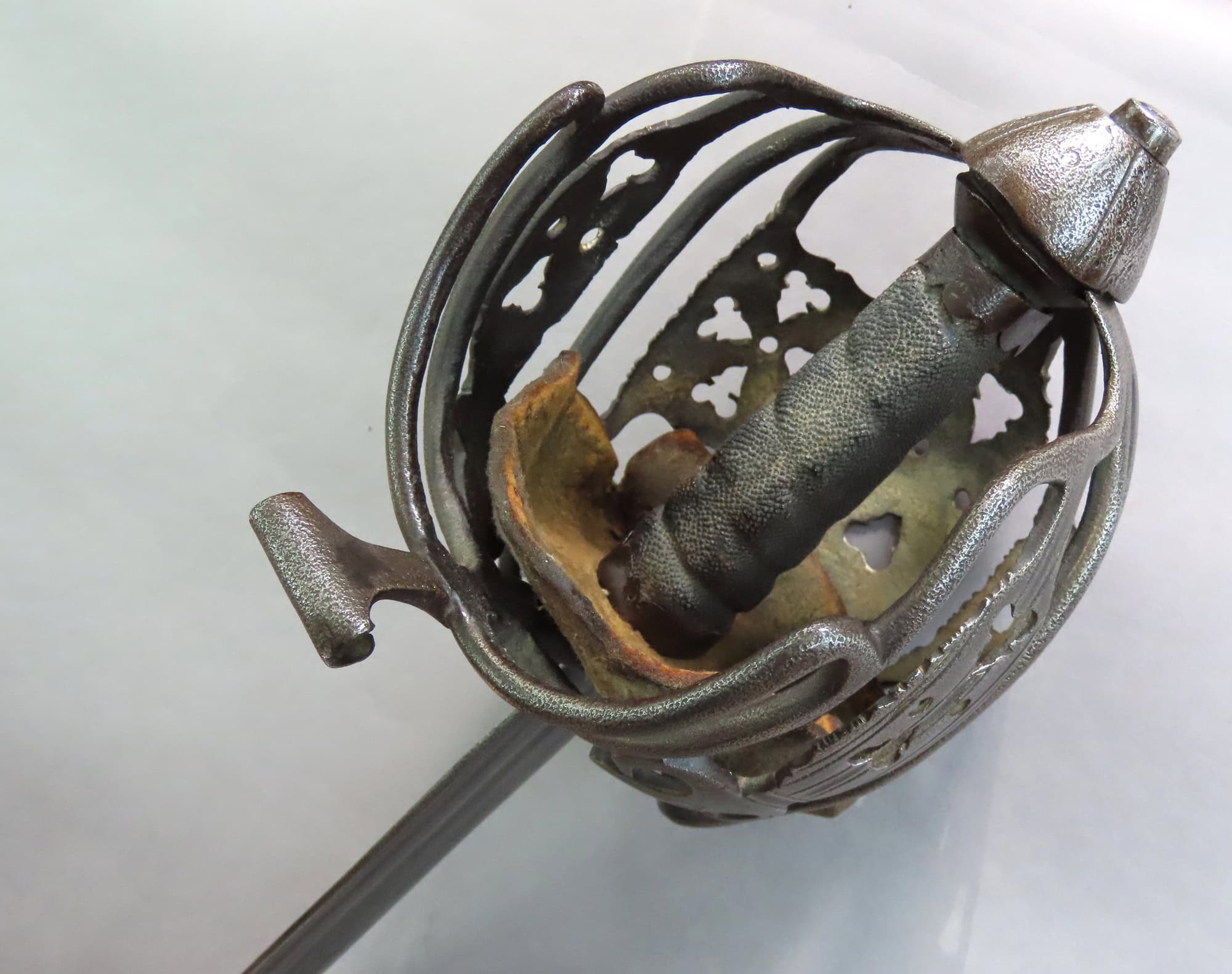
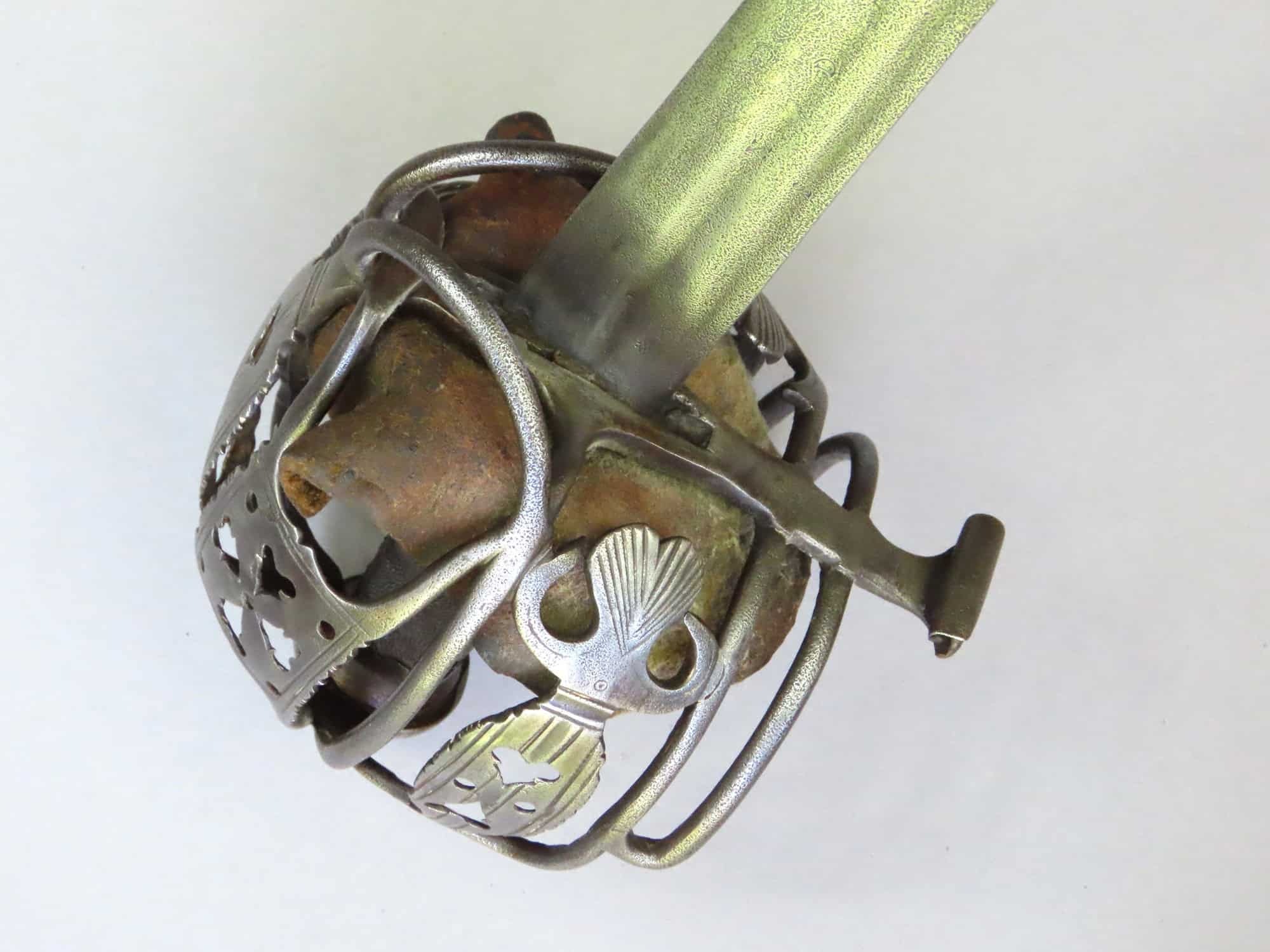
A robust and finely forged Scottish basket hilted sword dating to circa 1720 to 1730. The sword is of fine quality and was probably made for a middle ranking member of Scottish Highland clan society. The hilt is typical of those made in Scotland for Highlanders between the Jacobite Rebellions of 1715 / 1719 and that of 1745. As such it dates to the final years of independent clan social structure in the Highlands before it was dismantled by the British government after the failure of the 1745 Rebellion.
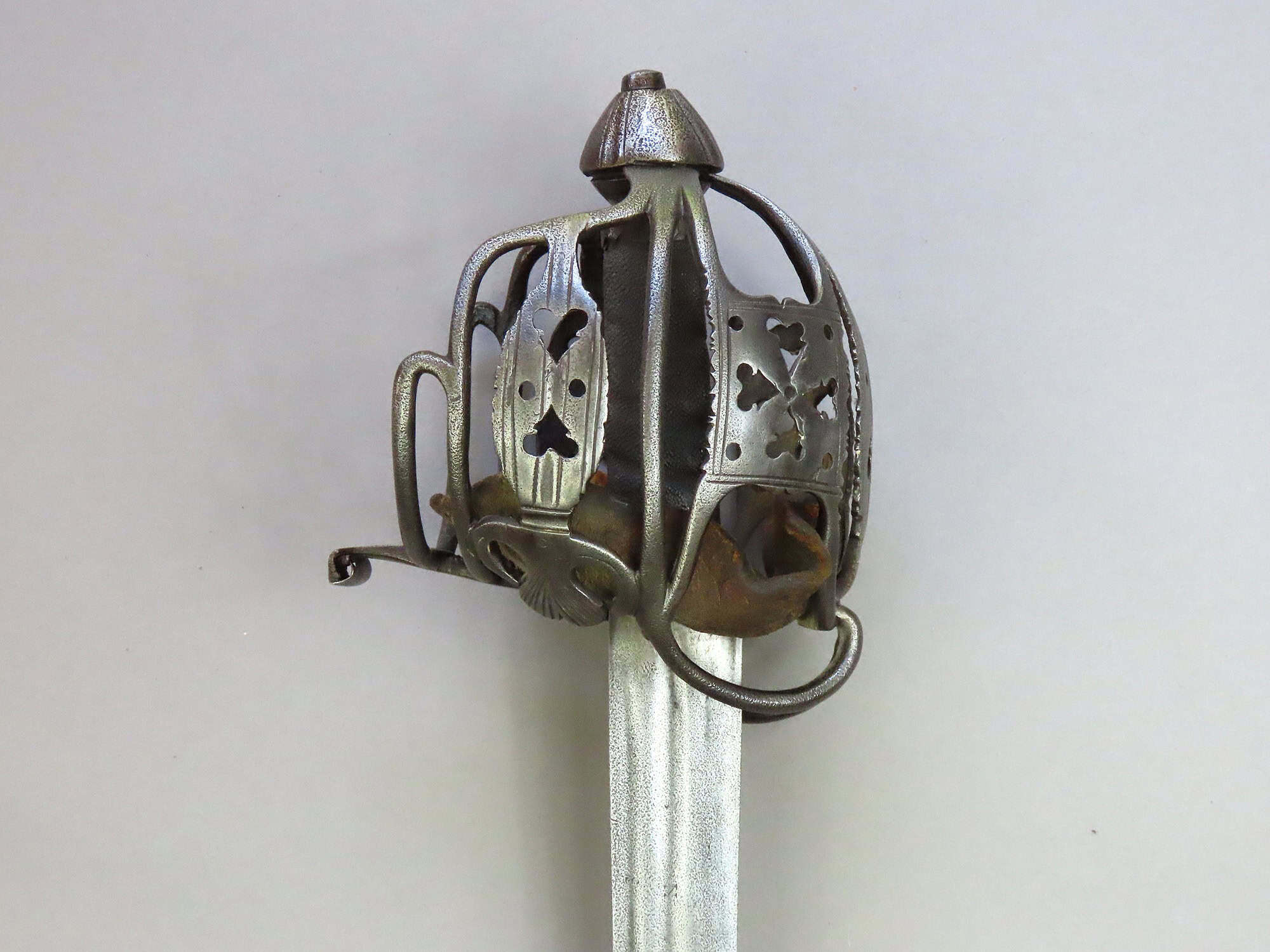
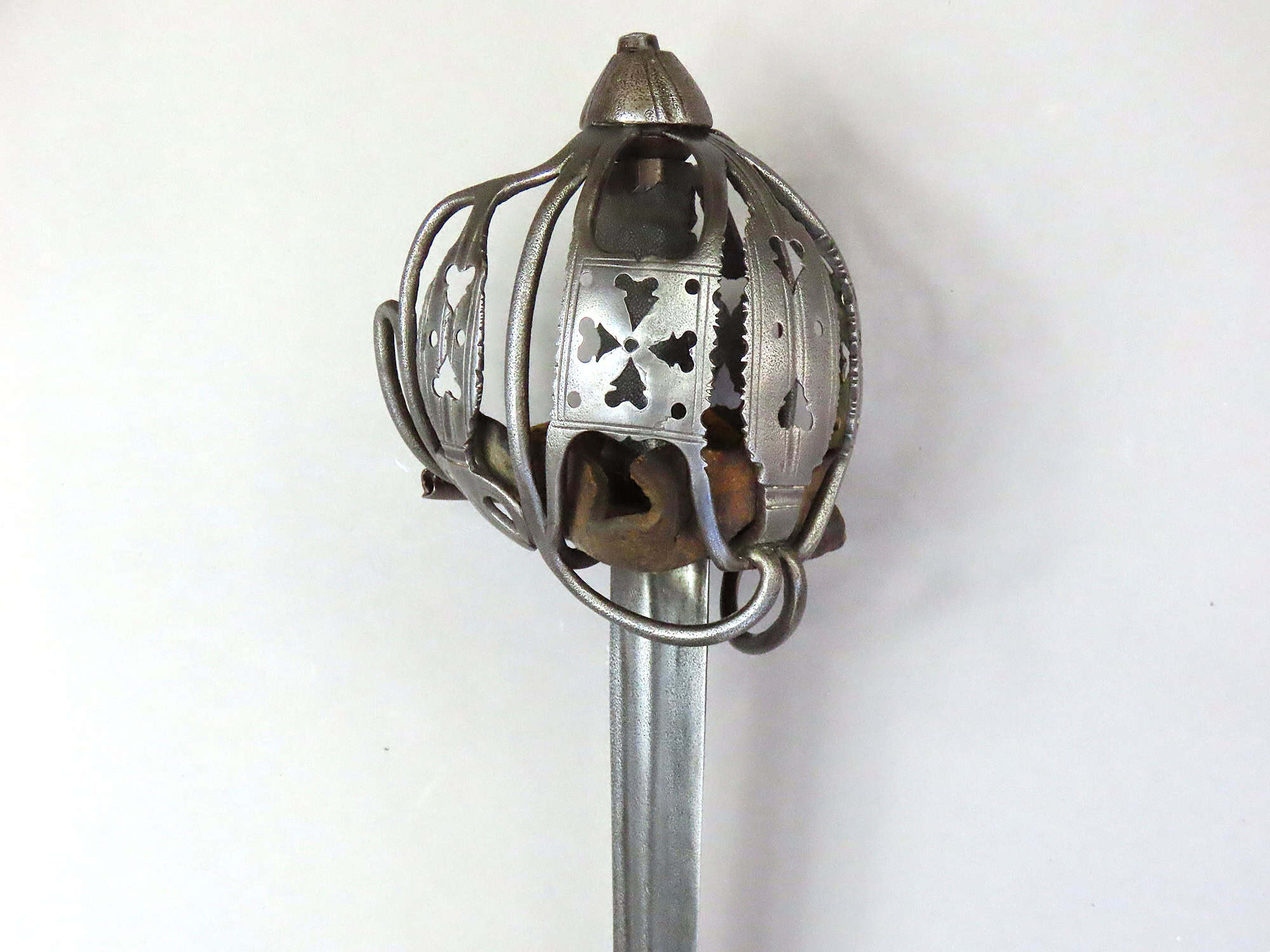
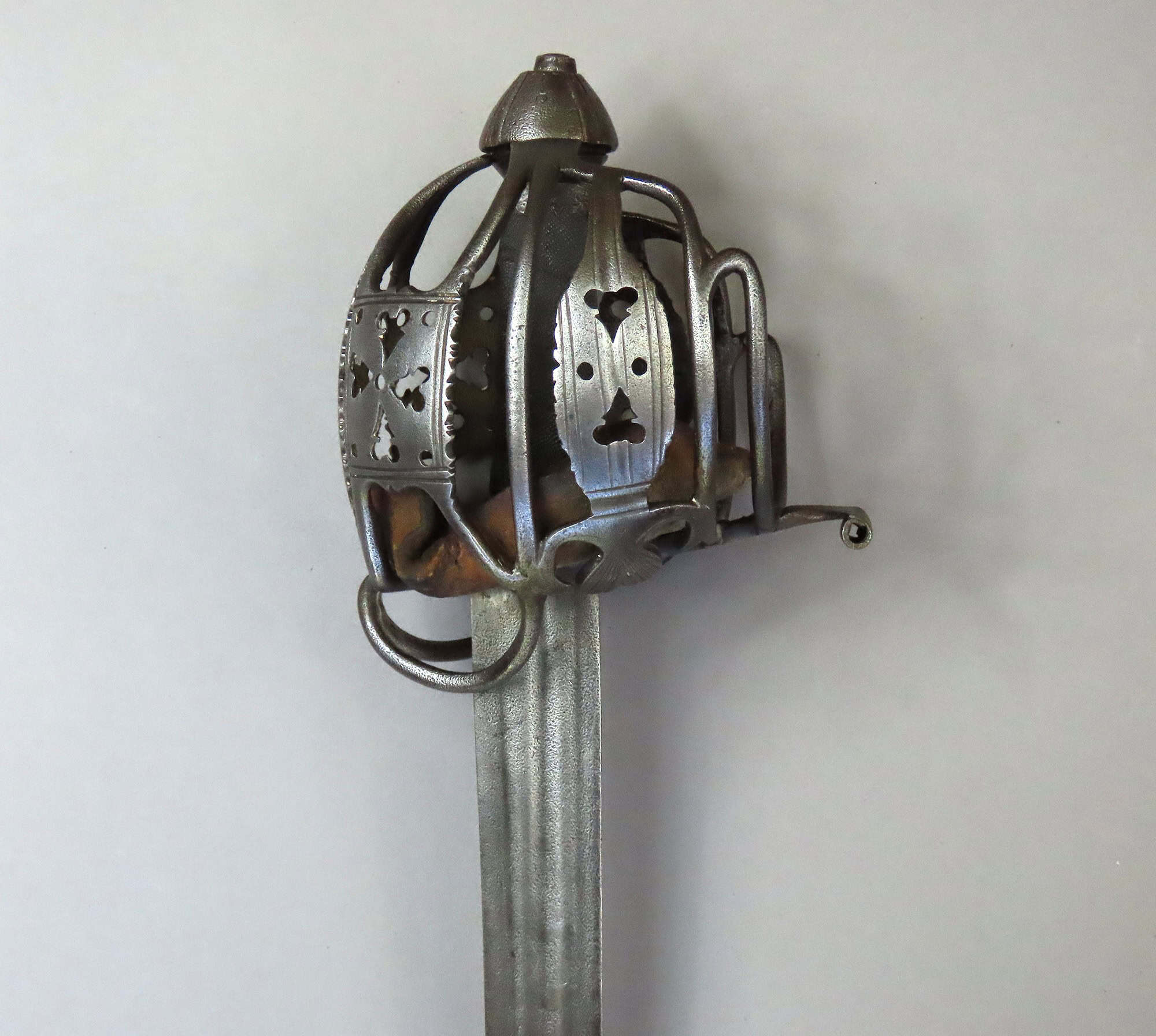
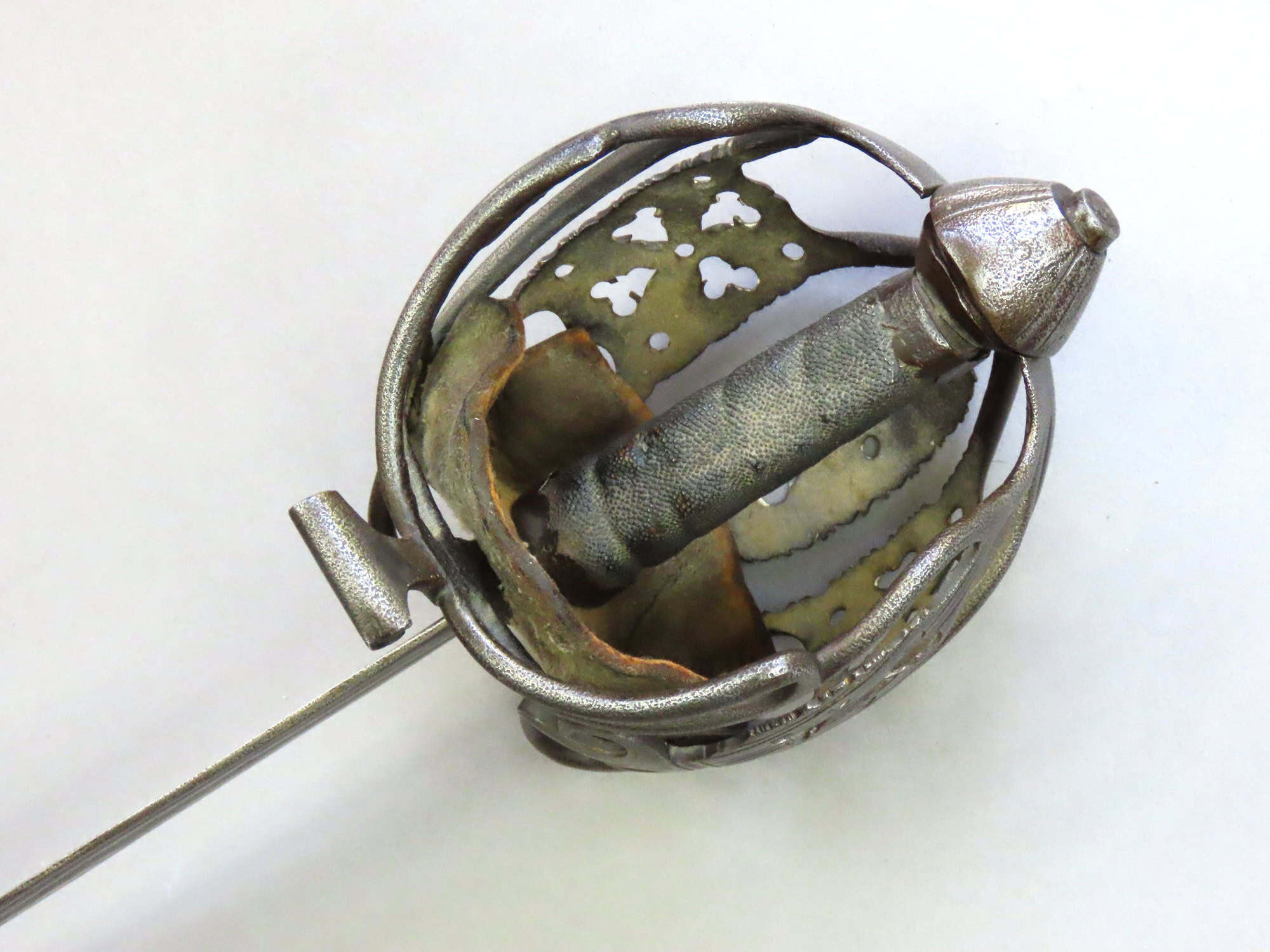
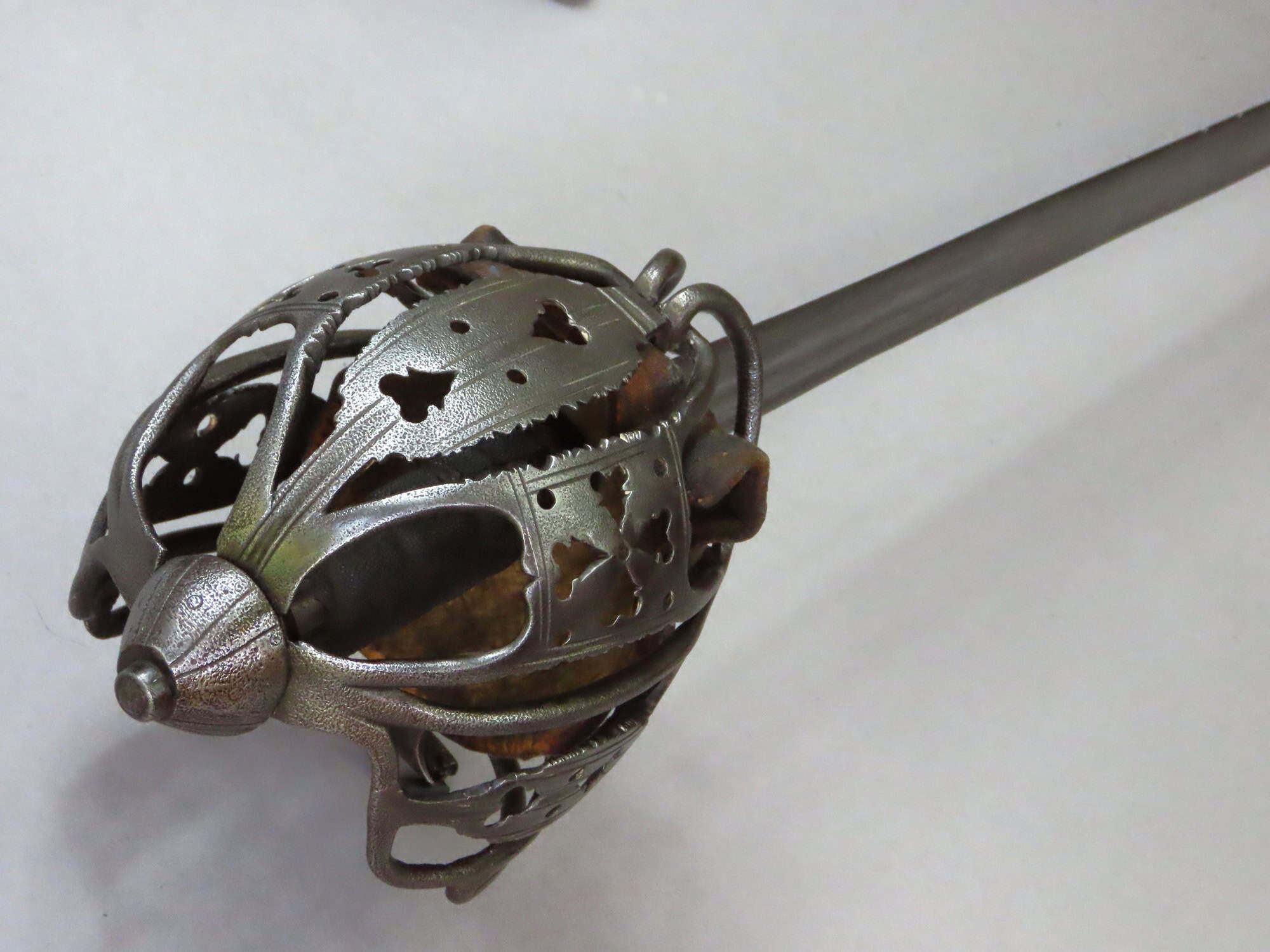
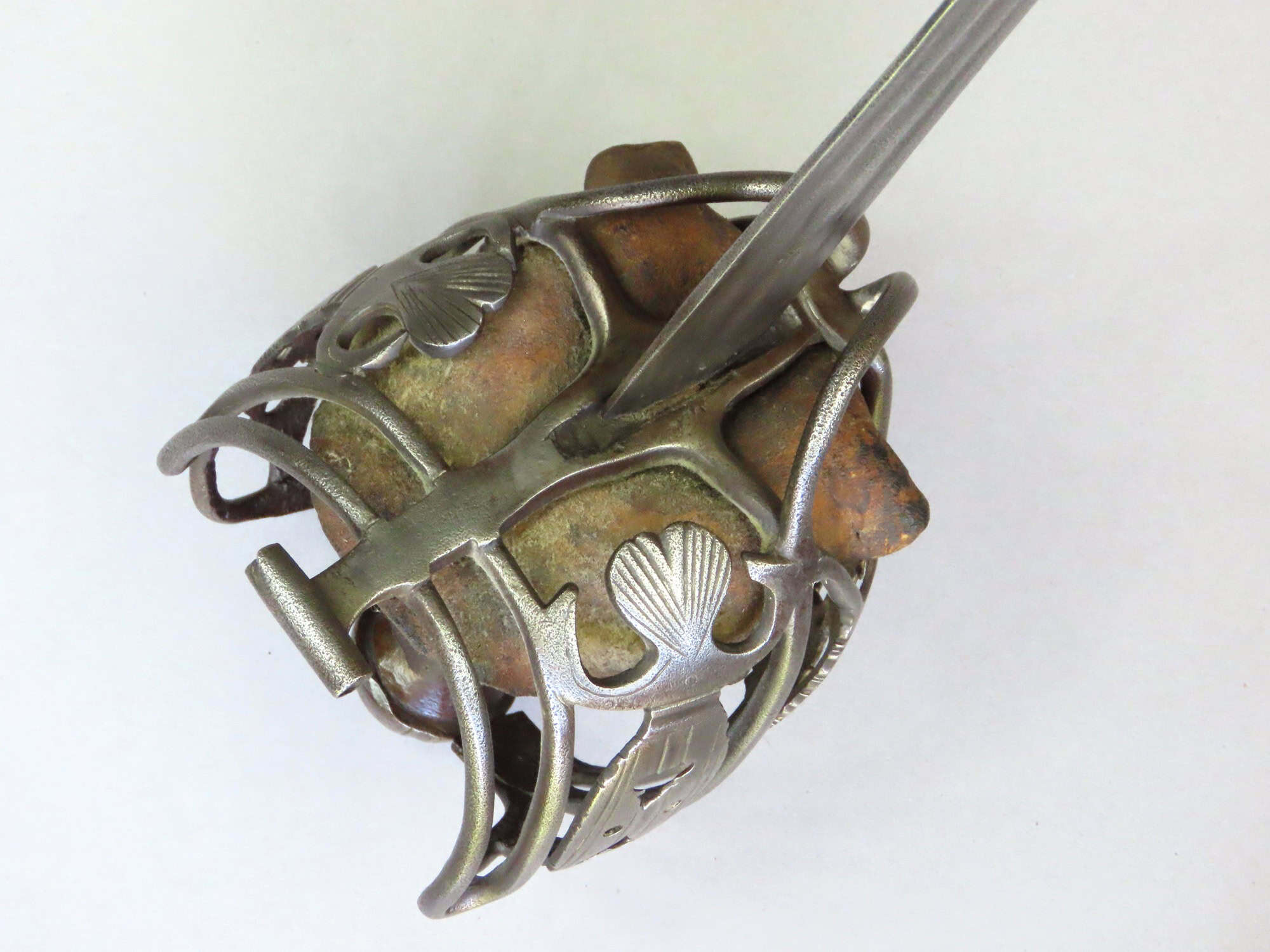
The fully developed iron basket guard is forged from robust rounded structural bars with the spaces between infilled with traditional pierced and engraved panels. The two main guard panels to the front are decorated with vertical and horizontal border lines incised into the exterior surfaces towards the panel edges to form squares. Inside these squares a circle is pierced into the centre surrounded by four pierced flanged hearts with circles in the corners. Each outside edge is symmetrically fretted to give a stylish decorative appearance.
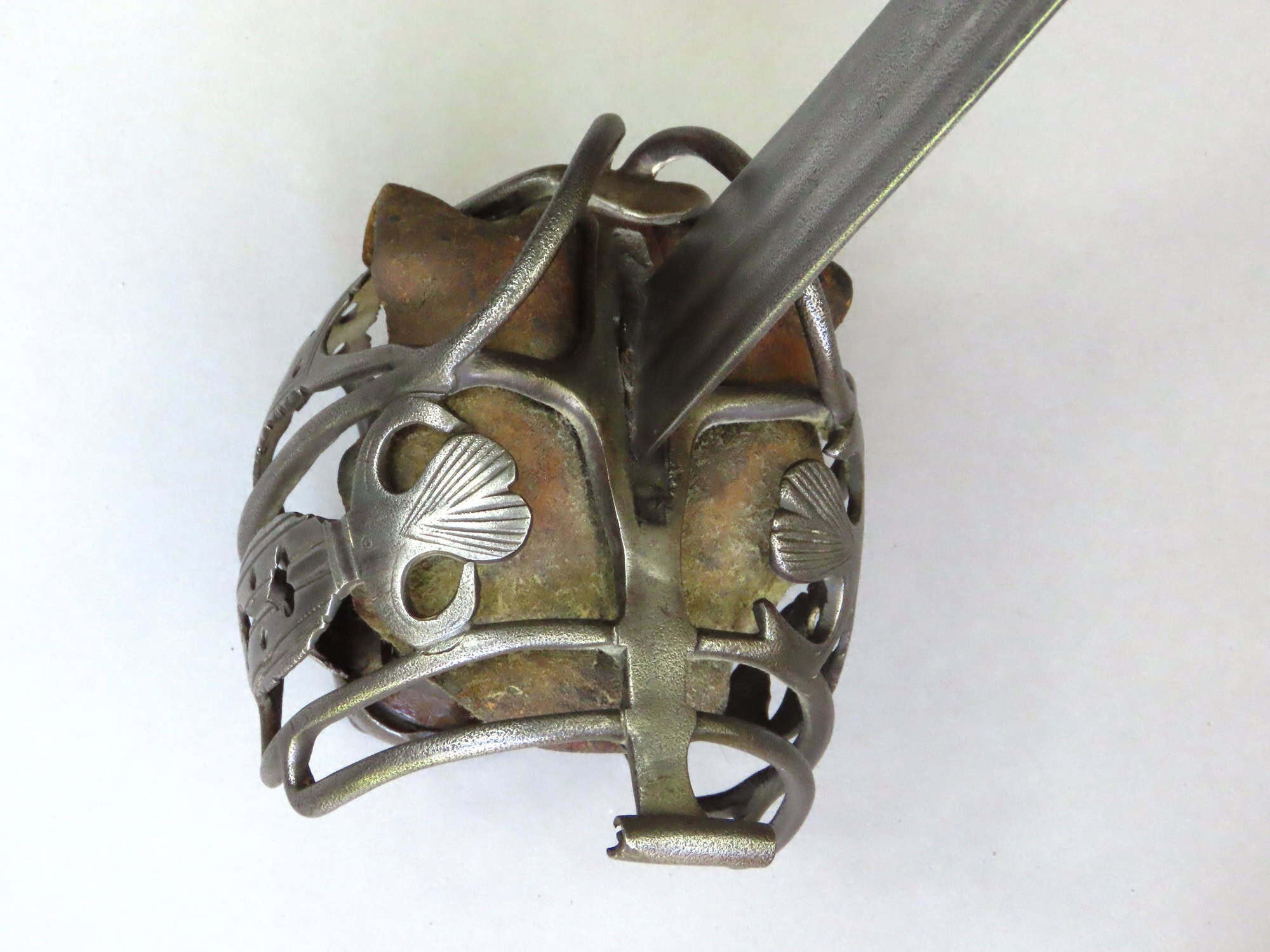
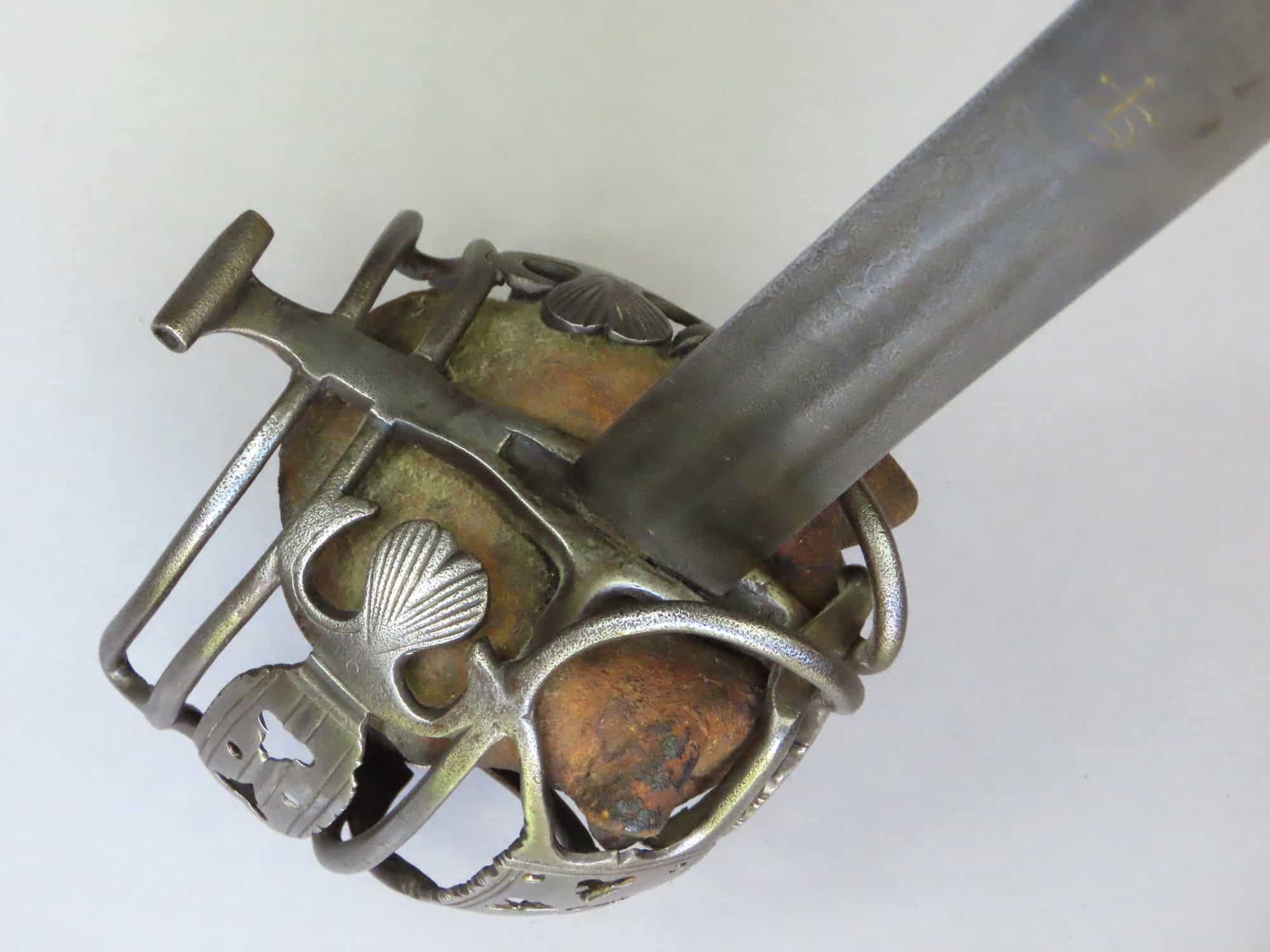
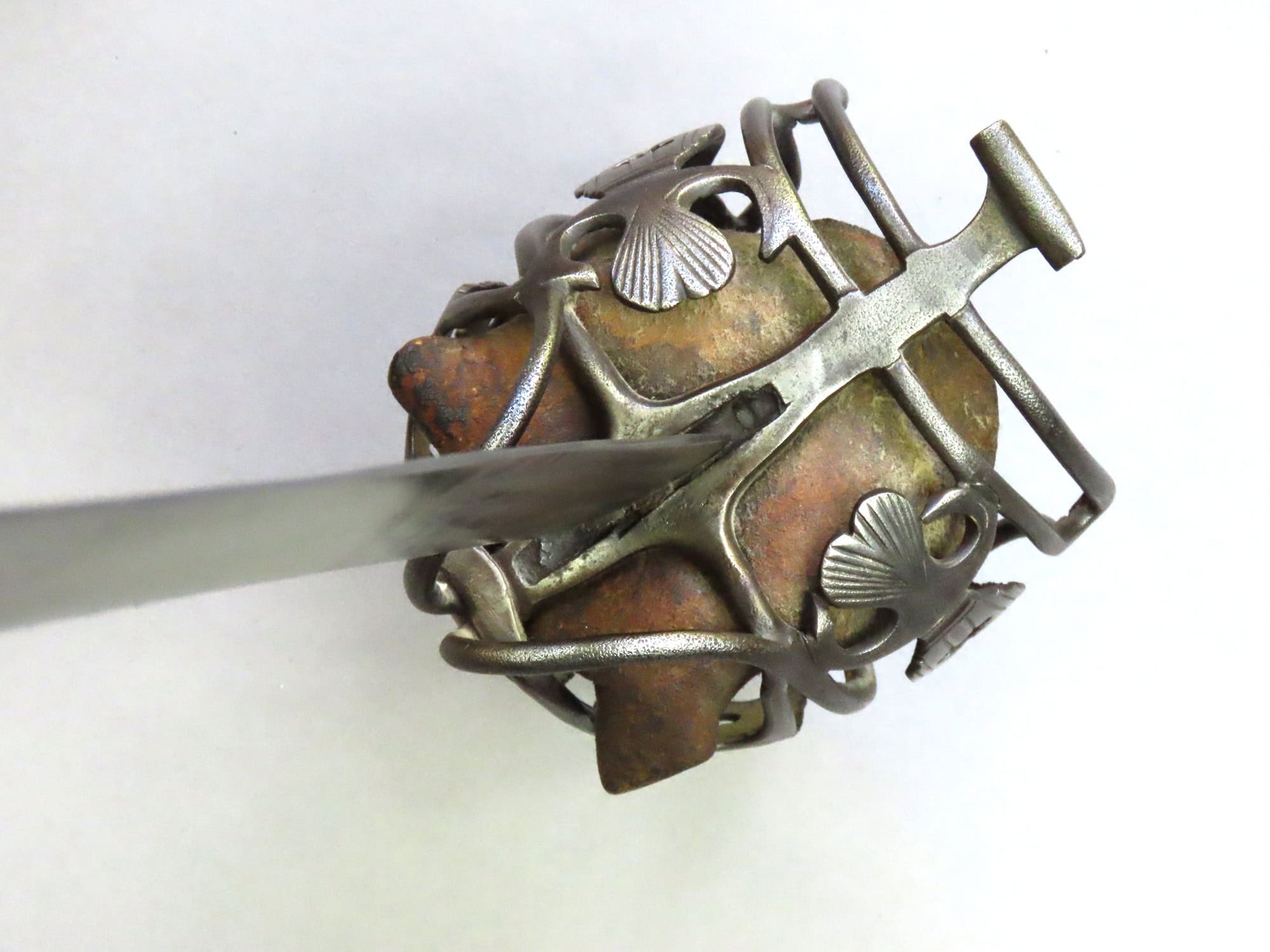
The more slender, secondary guard plates to the sides, and the knucklebow plate at the front, are decorated with two circles in the middle, with a flanged heart above and below, enhanced with decorative vertical lines, the central one being wider then the rest, and a lateral groove, flanked by thinner incised lines at the base. The outside edges are symmetrically fretted in a similar manner to the edges of the frontal panels. The hilt structure is strengthened by a merlon at the base of each side plate with a shaped middle finial decoratively grooved in a fan-like manner. The basket is mounted with looped guard bars to the front and a curled wrist guard emanates from the rear quillon.
The guard arms converge into three terminals at the top which fit into a chiselled groove which extends for the full circumference of the pommel just below its middle to secure the structure. The dome-shaped pommel has four sets of grooves which radiate from the pommel top to its edge each flanked by thinner incised lines. The middle groove is decorated with equally spaced dots.
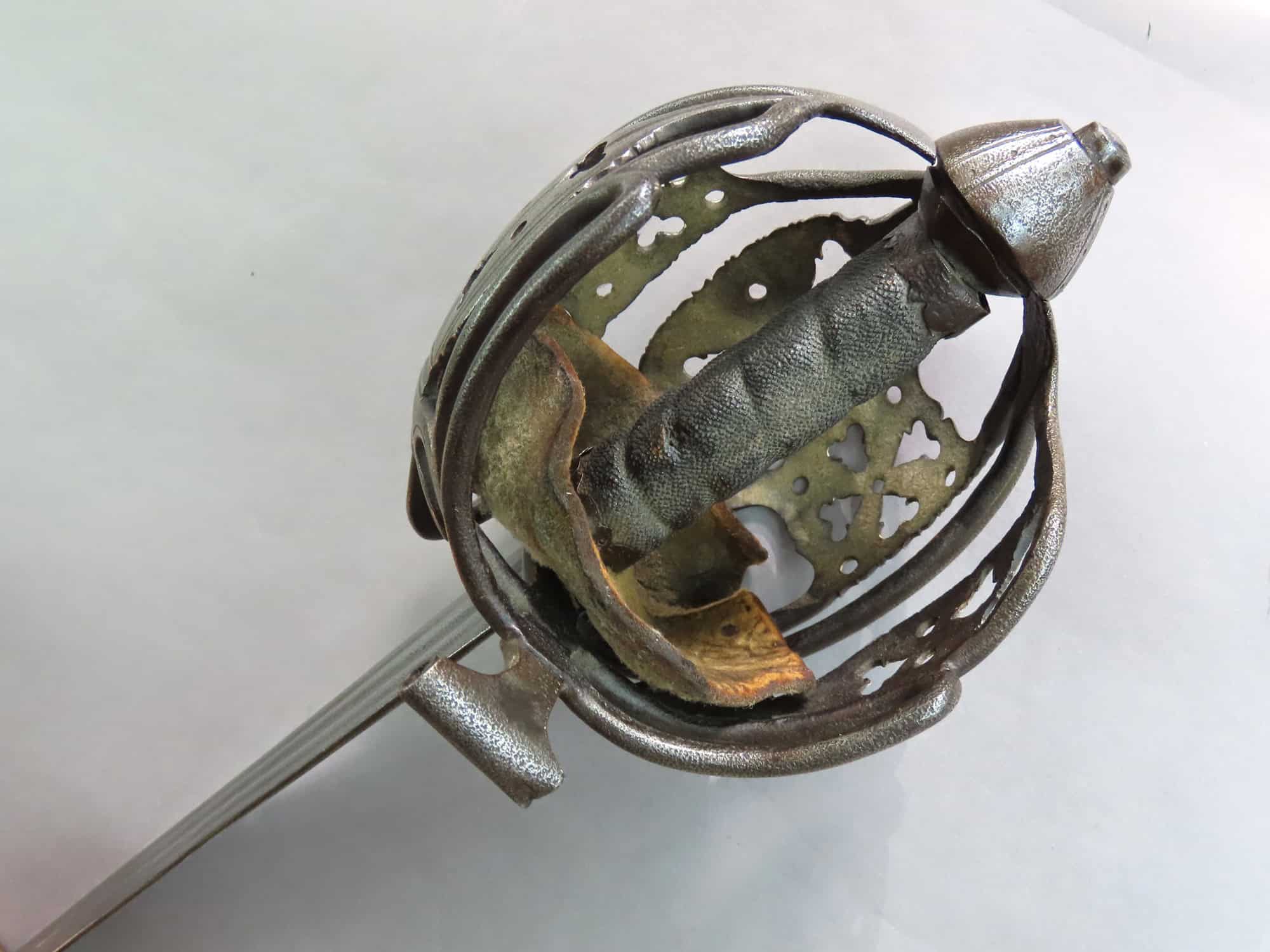
The spirally grooved wooden baluster shaped grip is of rounded rectangular section and covered with shagreen. It was once bound with twisted wire which is now missing but the imprint remains. The grip retains its iron ferrules top and bottom which are decoratively fretted on the inside edges in much the same manner as the guard plate edges. The hilt retains its thick leather liner.
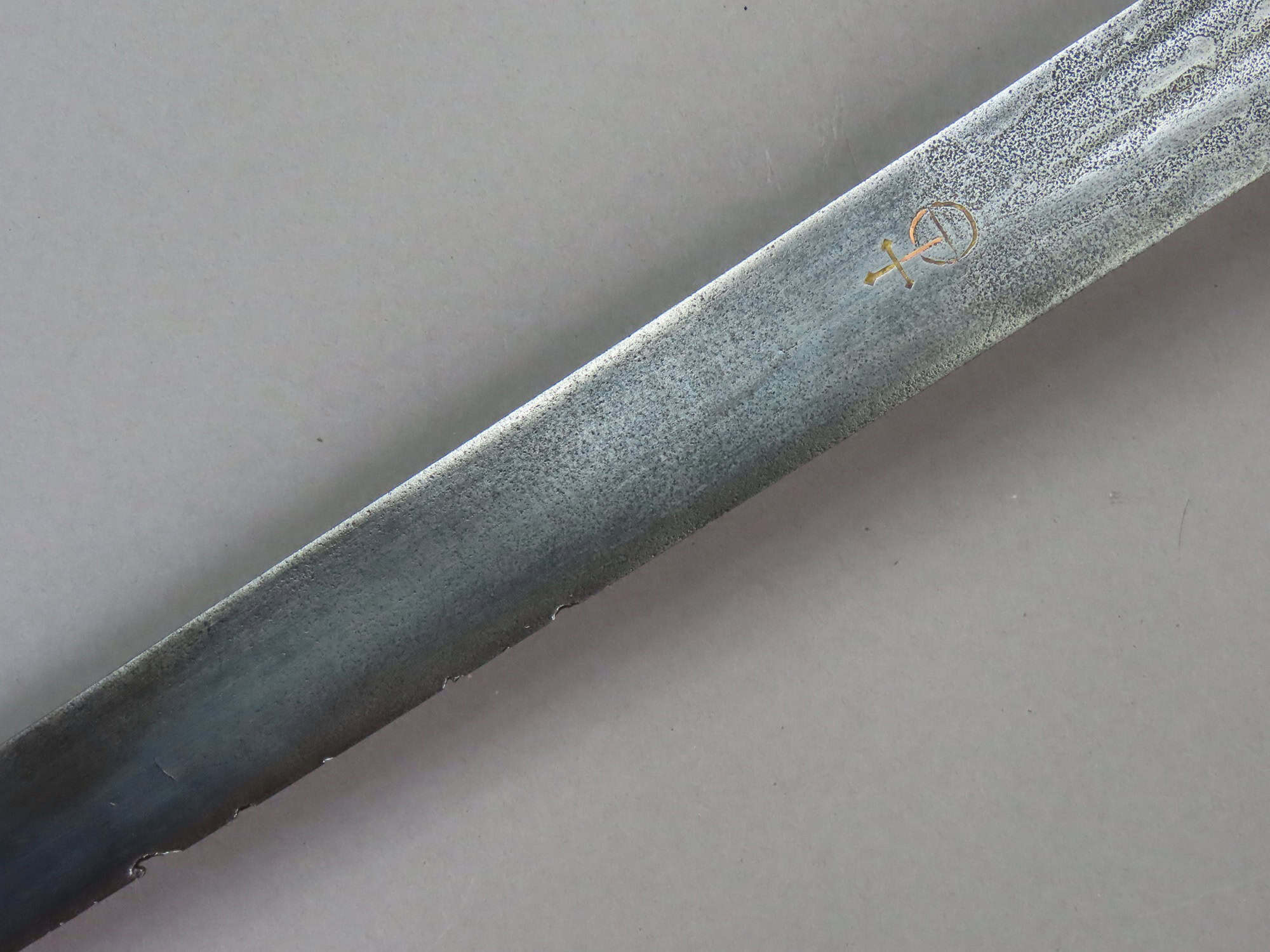
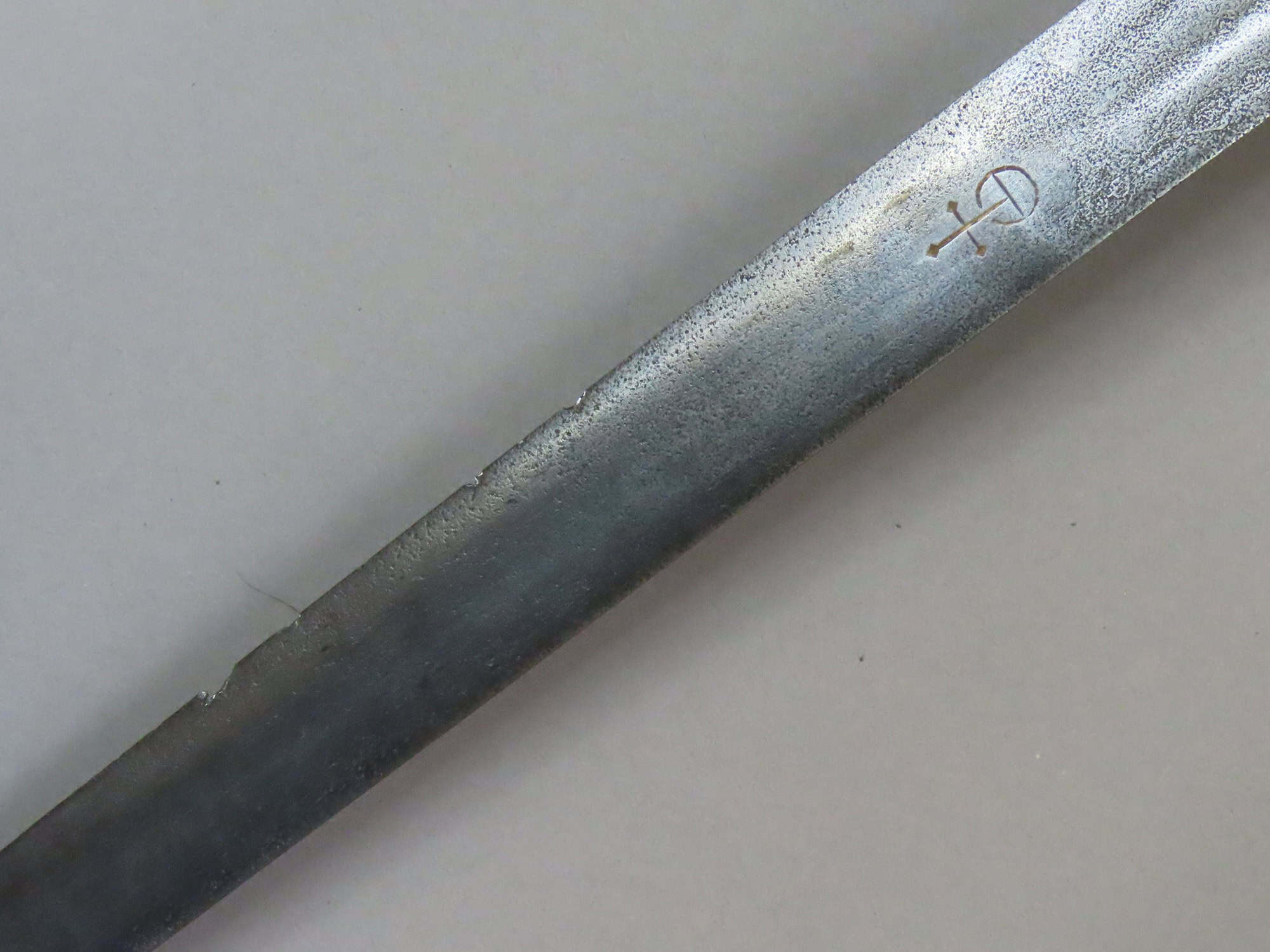
The tapering single edged blade has been fashioned from an earlier high quality broader triple fullered double edged 17th century blade. One of the edges has been reduced to create a back edge. This is not unusual and seems to have been a fashion in early 18th century Scotland to re-purpose earlier blades in this manner as back sword blades increased in popularity in both civilian and military circles. The blade retains a bladesmith’s mark of a copper inlaid orb and cross stamped on each side which indicates that the blade was made in the German blade making centre of Solingen.
The blade is 34 inches (84 cm) long. The fullers extend for circa 7 inches (18 cm) from the hilt. The overall length in 39.25 inches (99.5 cm).
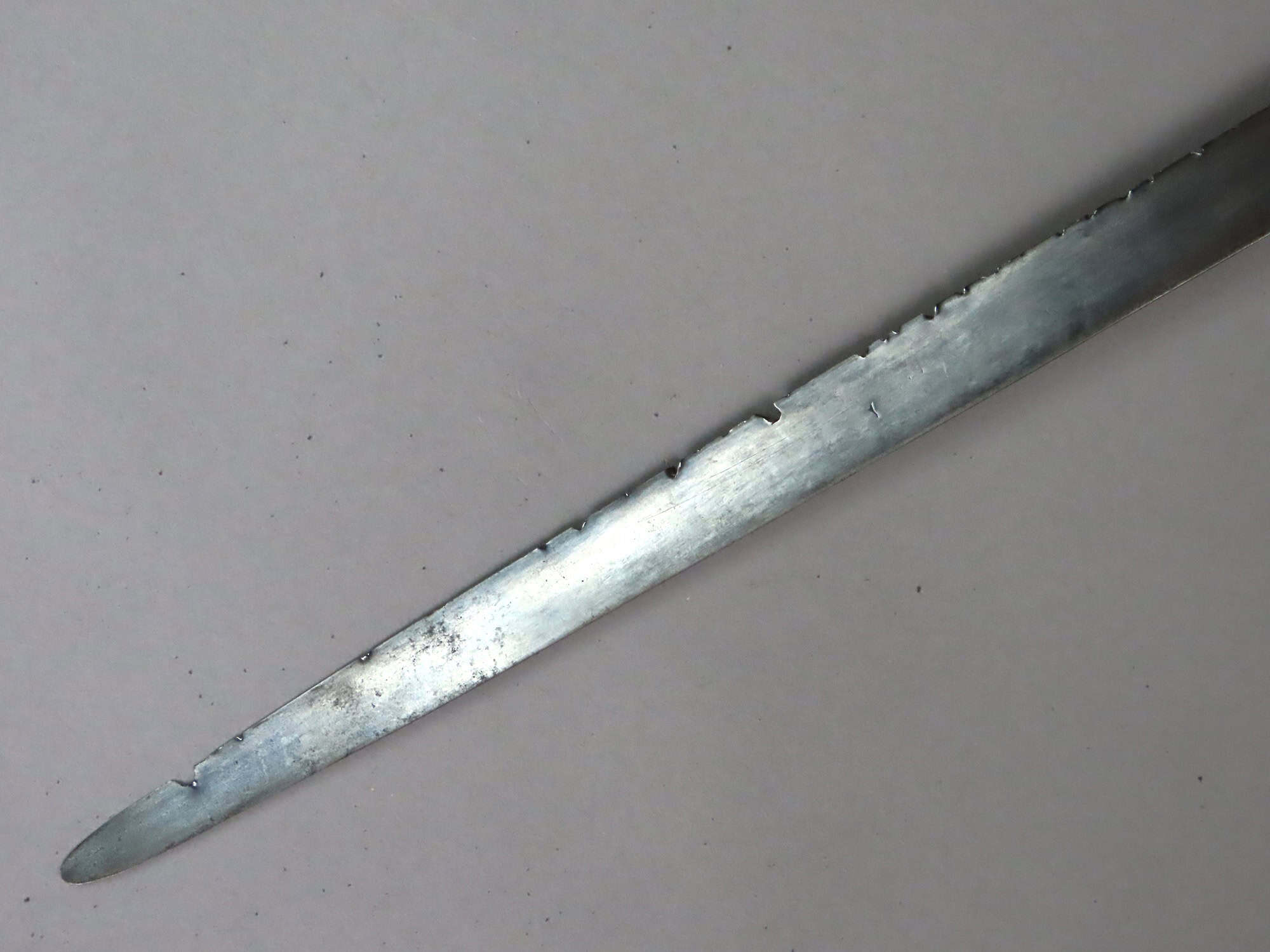
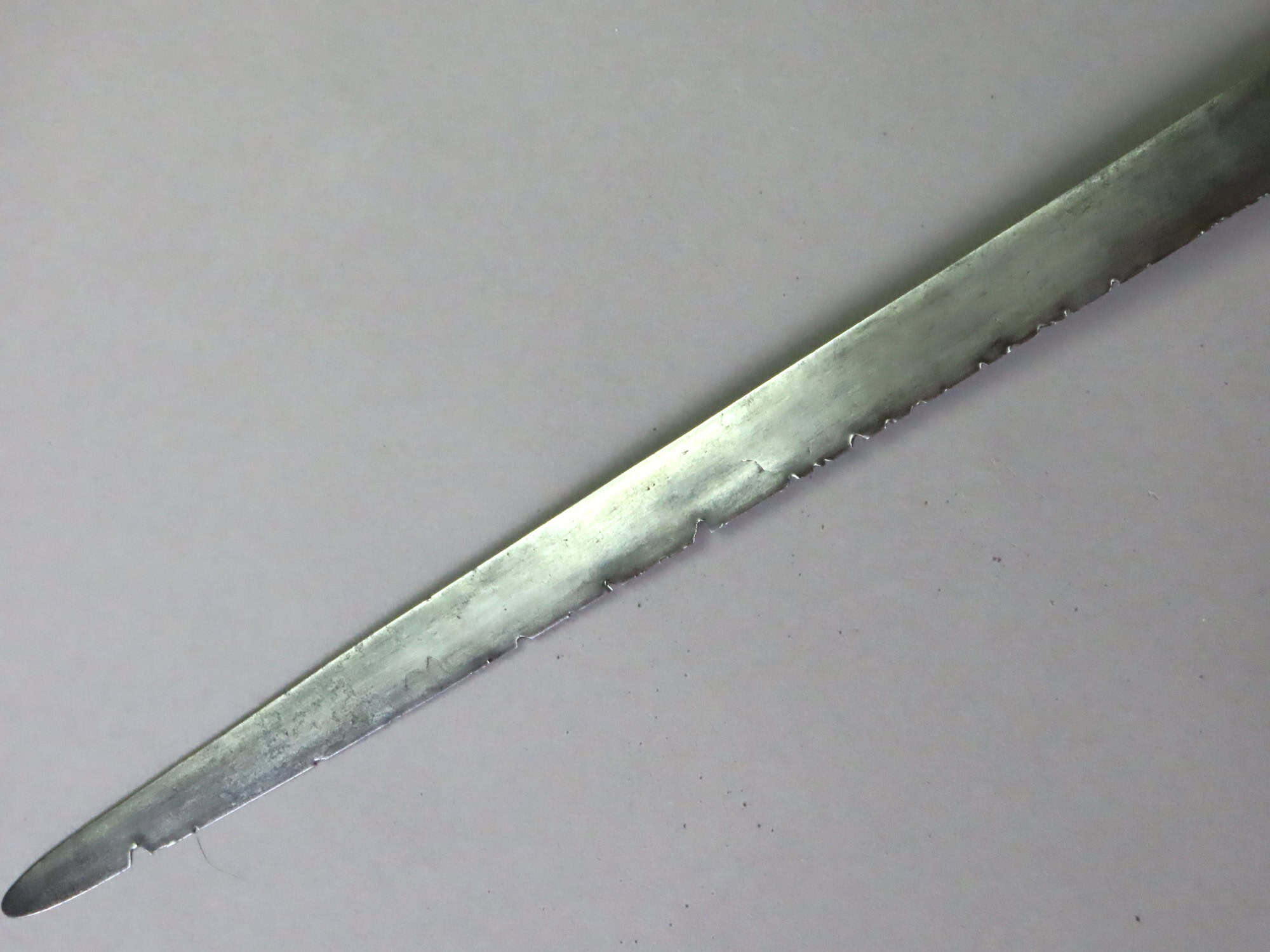
The sword is in original condition in that the hilt furniture of grip, liner and ferrules, are most likely those mounted onto the sword when it was first made. The age to the iron surface of the inside of the basket guard also shows original antiquity. It would appear that the sword acquired some surface rust over the years since it was laid away and the outside has been cleaned at some time leaving a “salt and pepper” lightly pitted texture to the surface. The deep nicks towards the end of the blade is evidence of intense combat use.
For similar contemporary swords see Cyril Mazansky, “British Basket-Hilted Swords”, The Boydell Press, 2005.