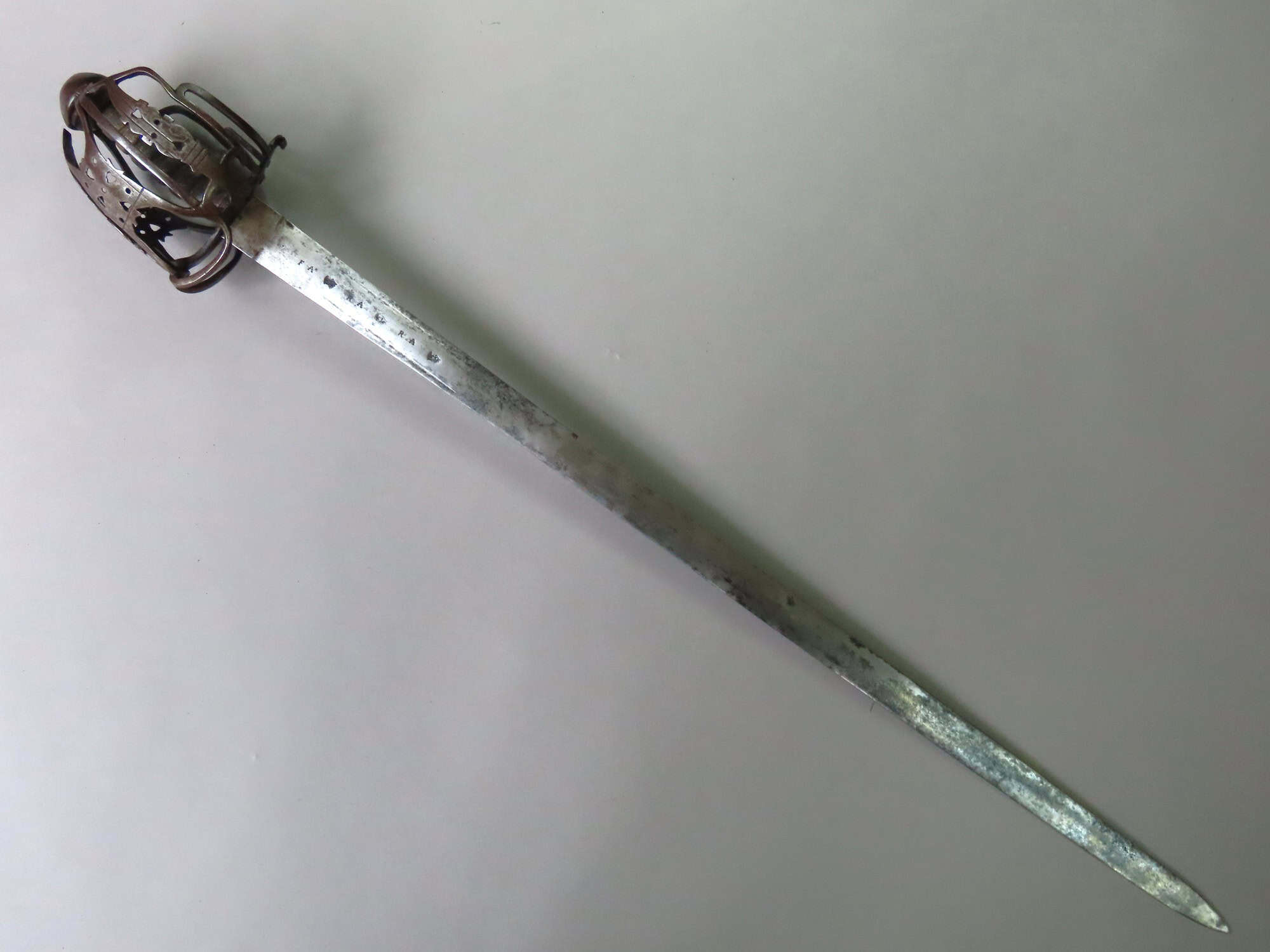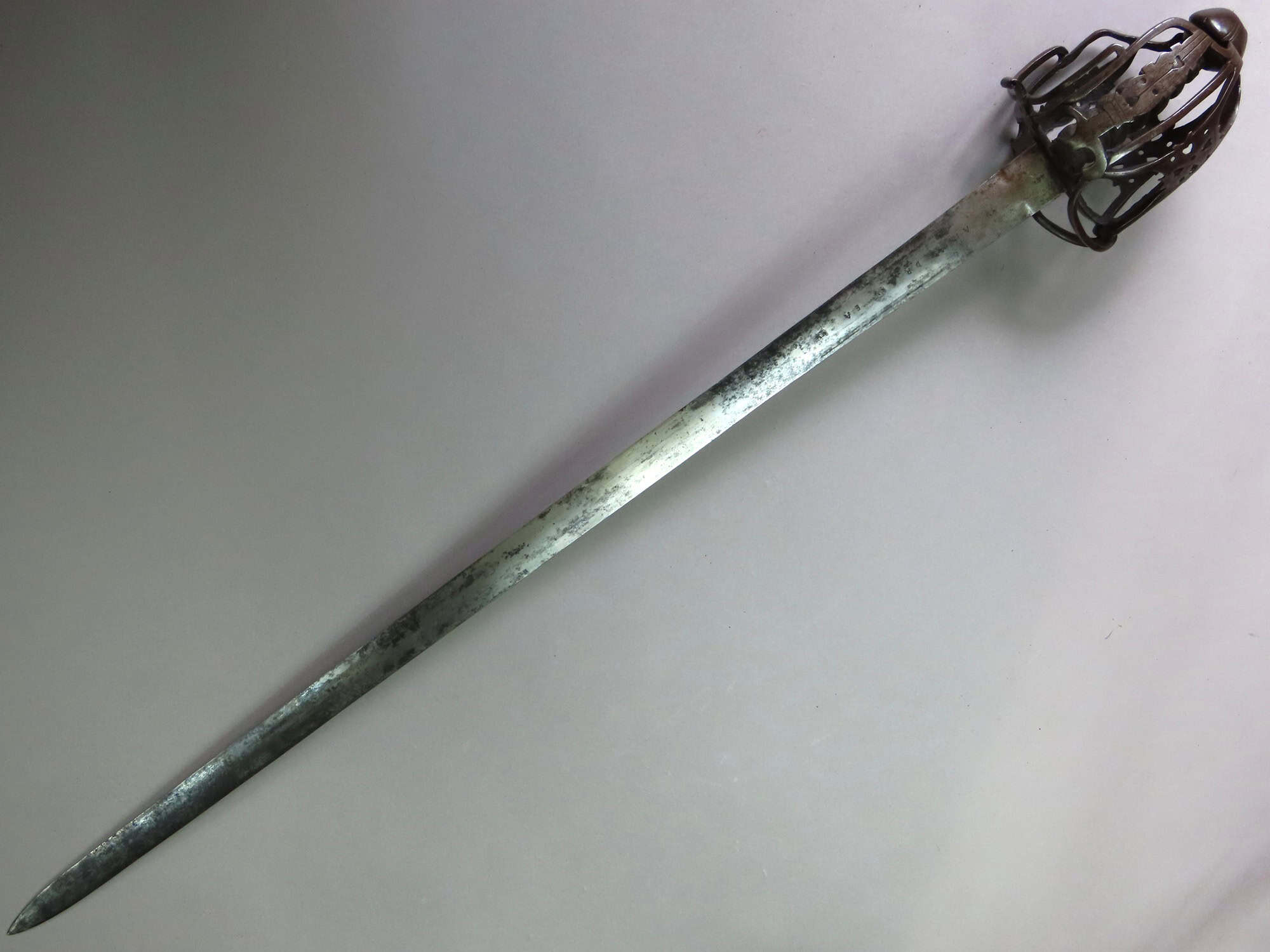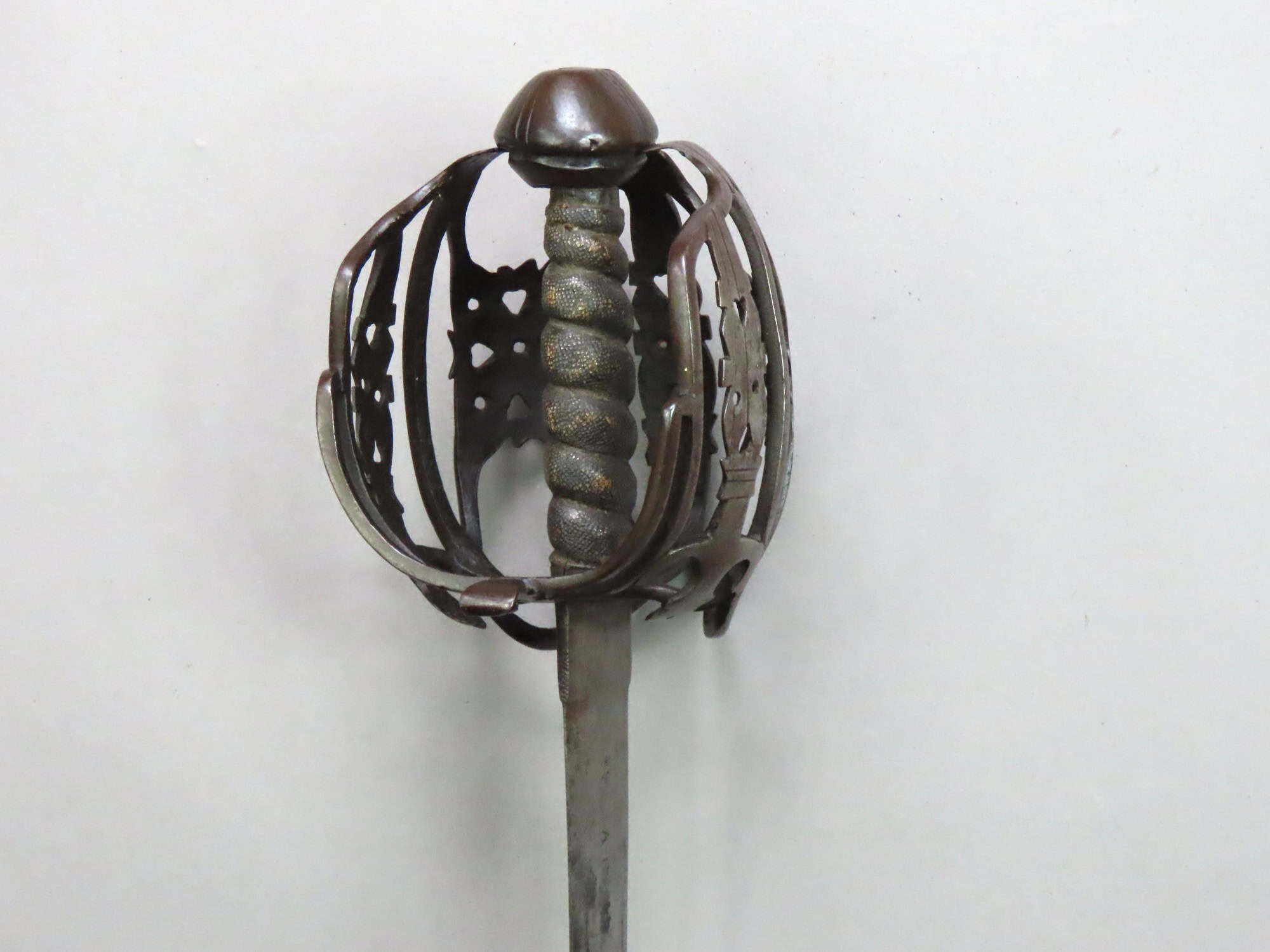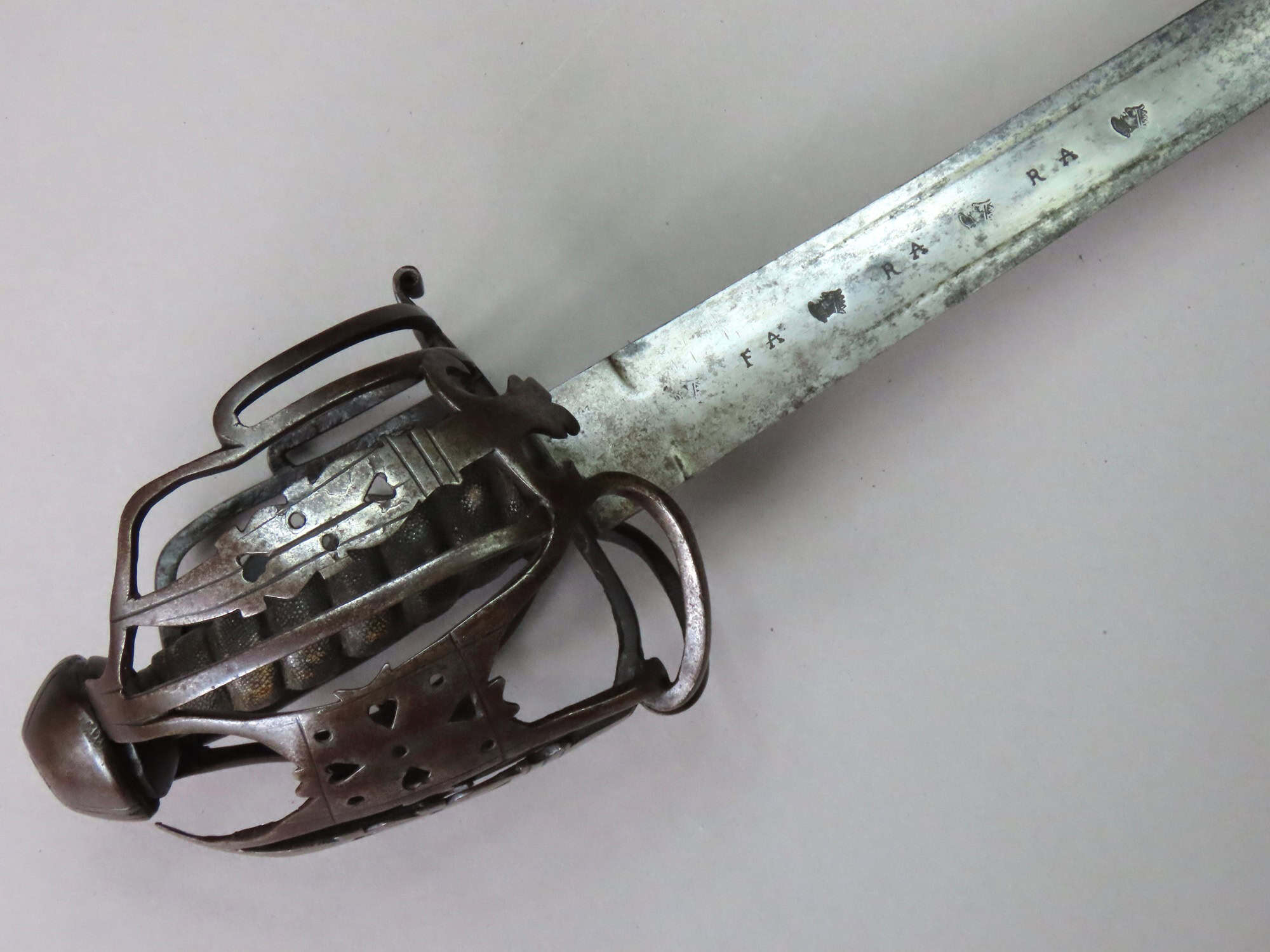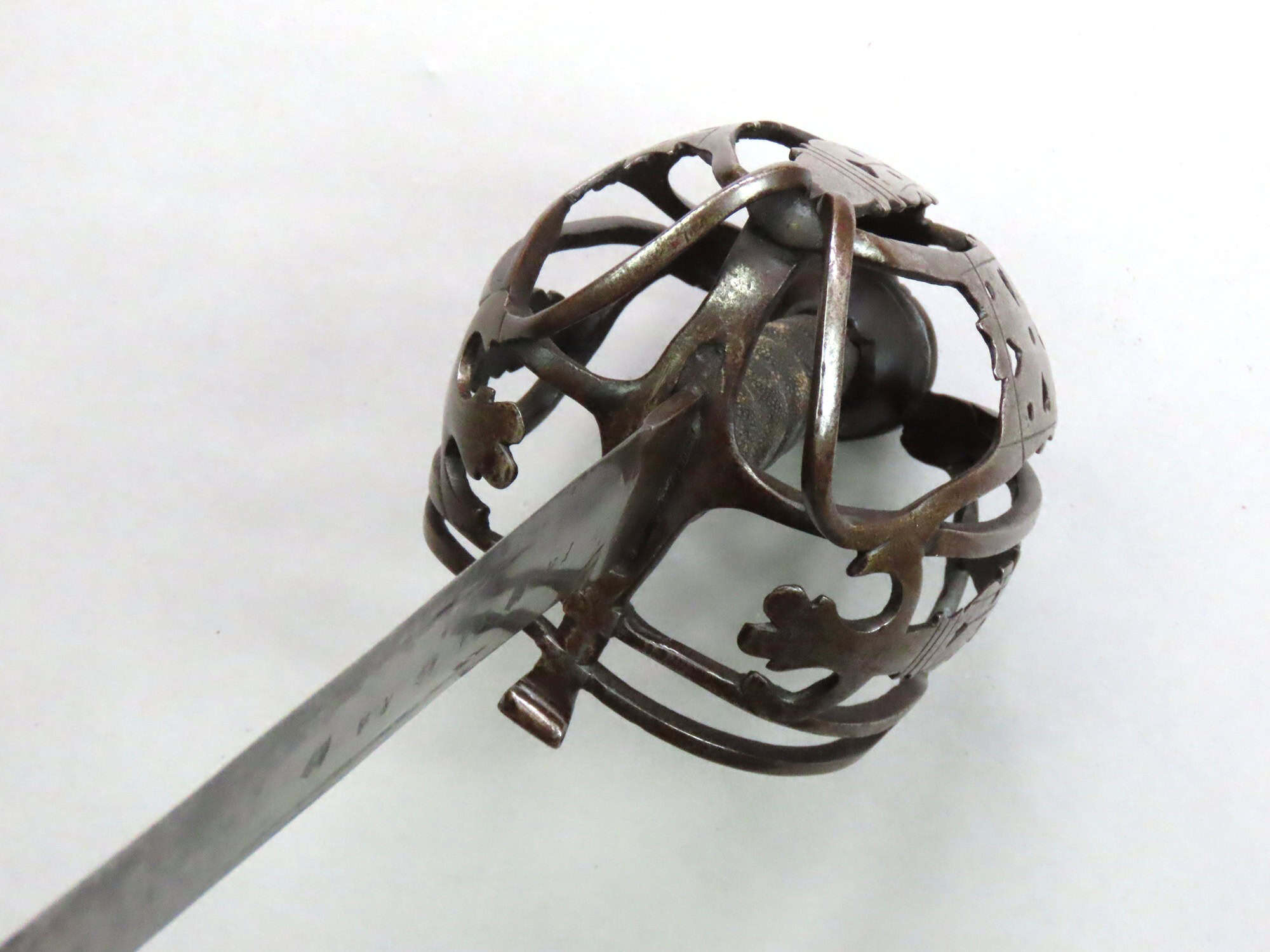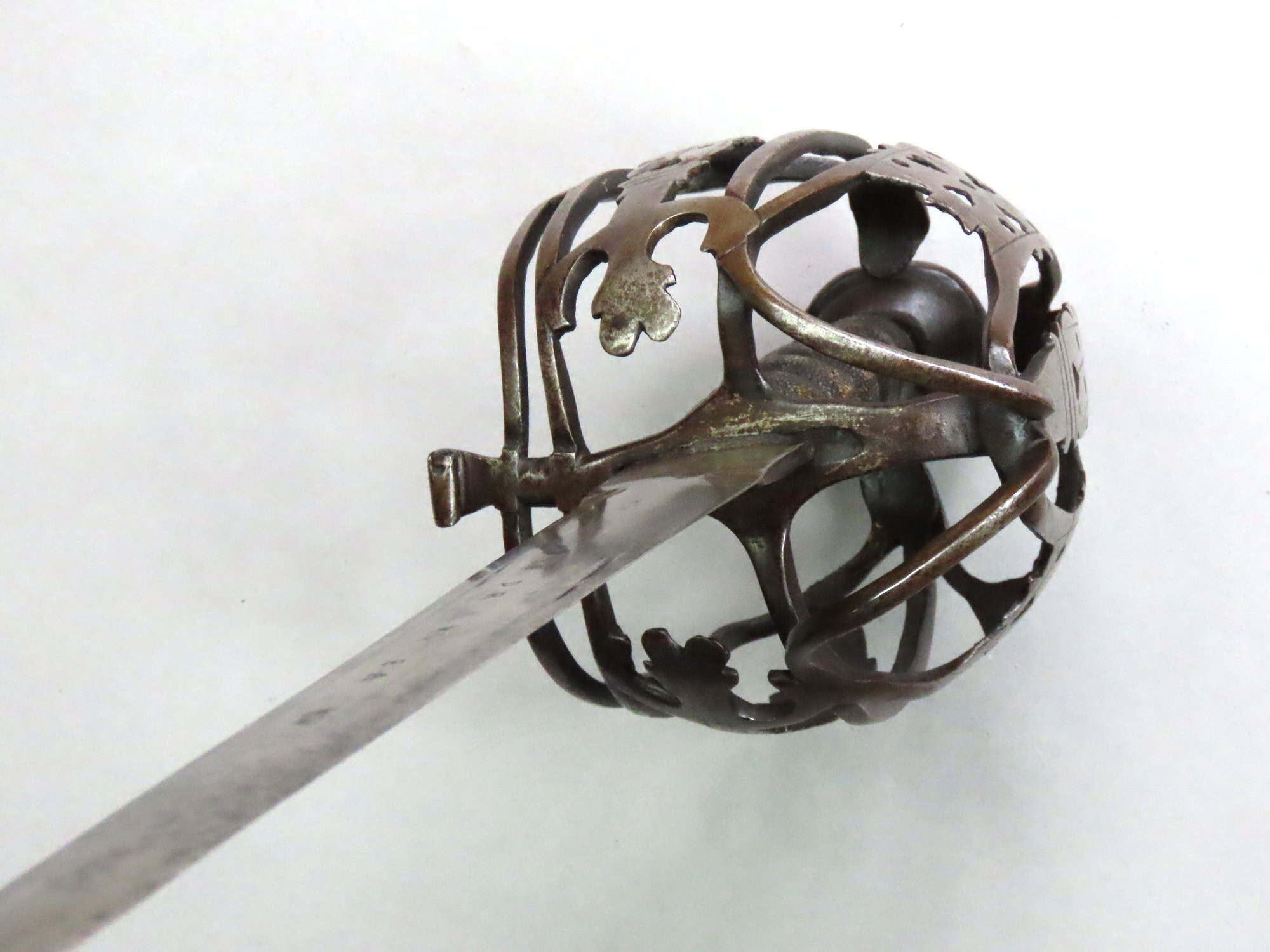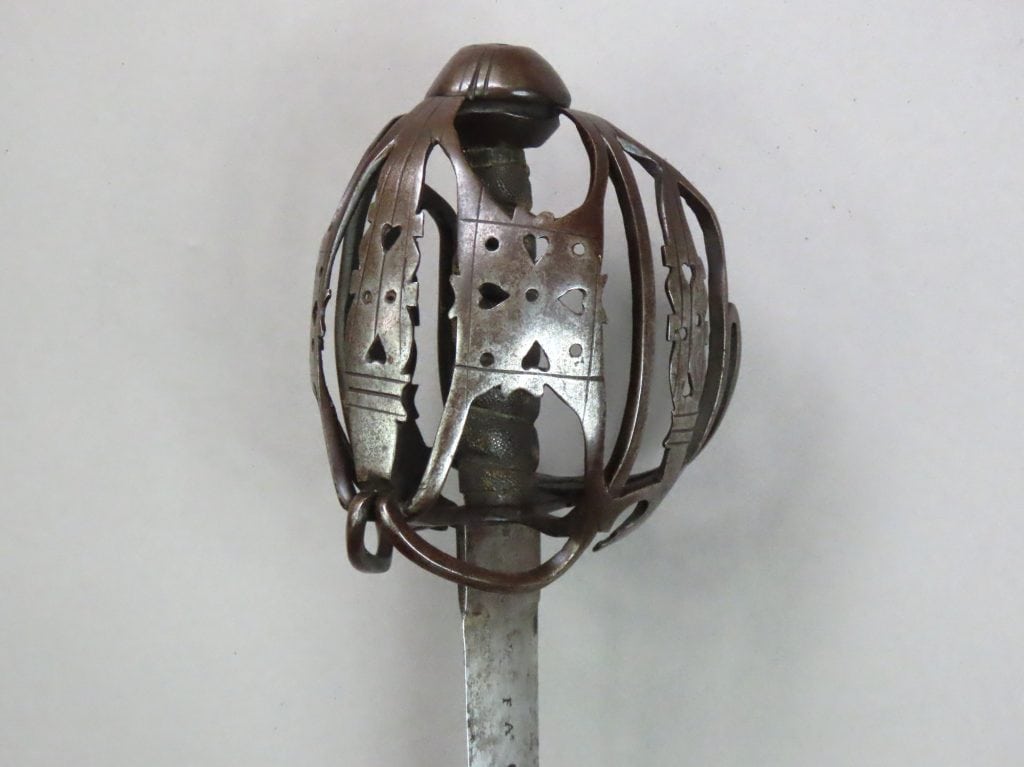
An early 18th century Scottish Basket Hilted Broad Sword mounted with an ANDREA FARARA marked blade
To enquire about this itemplease click here
Price: £3,750
Ref: 62061075
Item Description
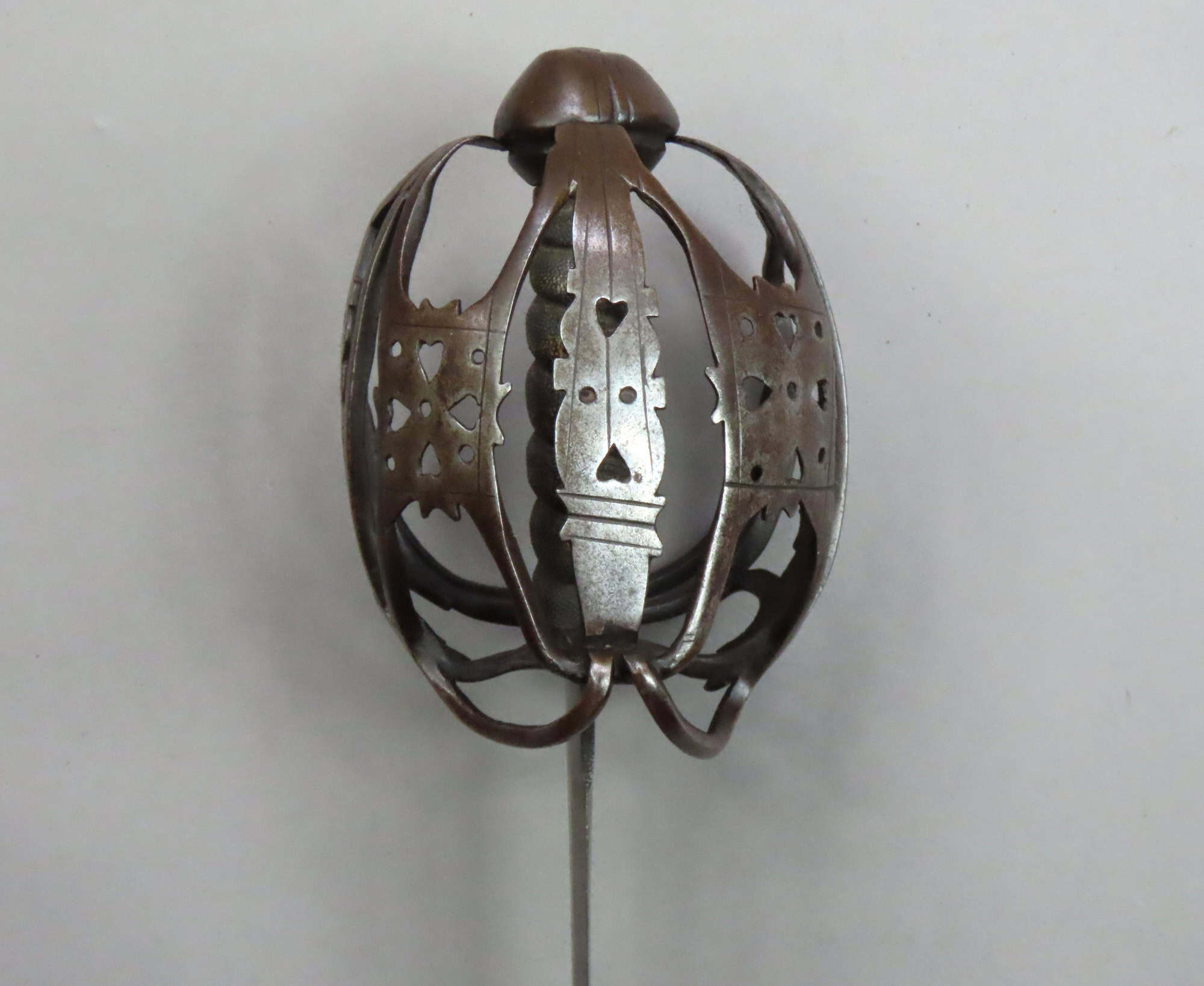
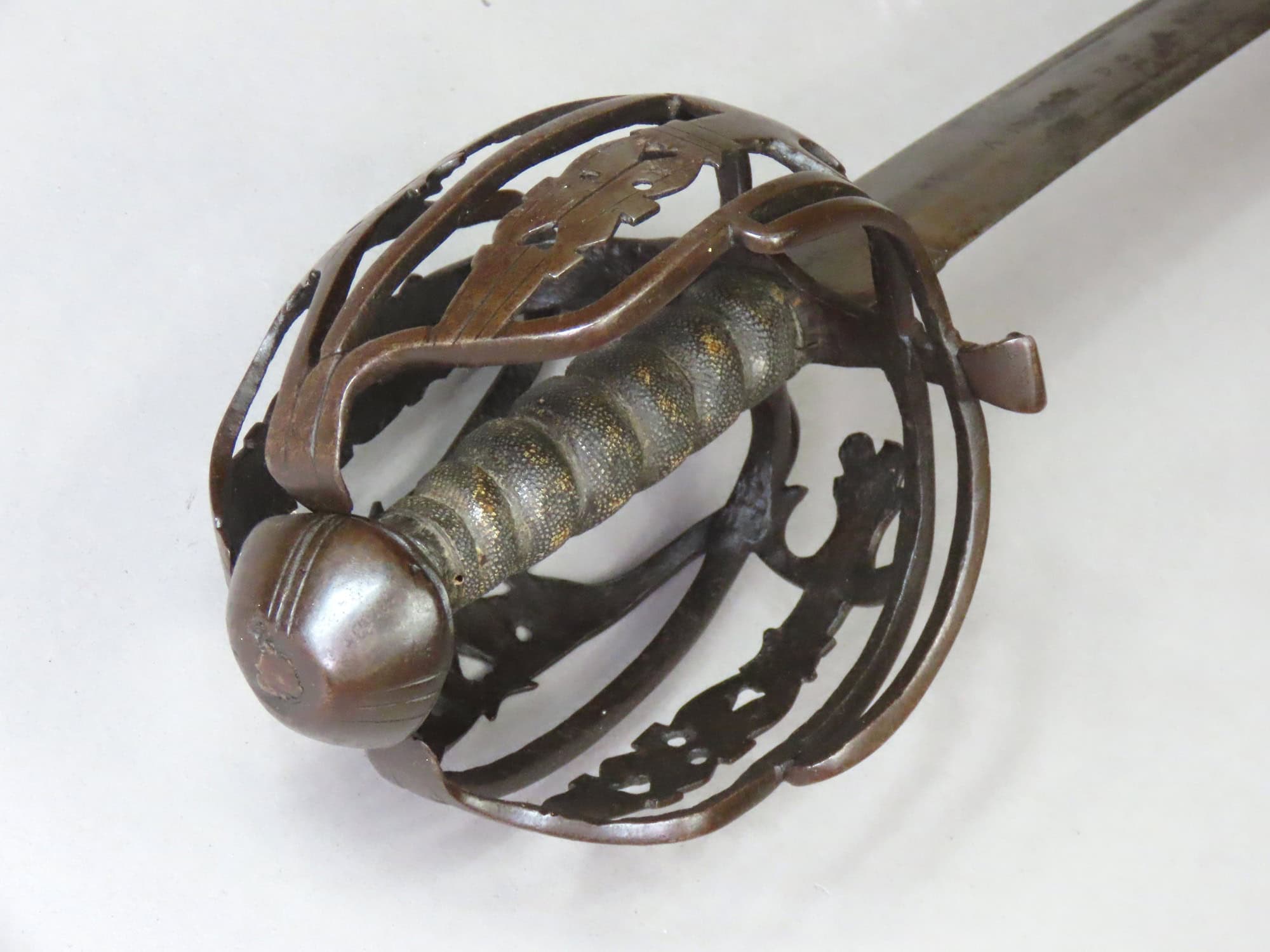
A robust and nicely patinated Scottish basket hilted sword dating to circa 1720 to 1740. The sword is an “attic find” having never been cleaned or restored since it was laid away probably centuries ago. It has a nice aged even patina all over. The hilt is typical of those made in Scotland for the Highland clans between the Jacobite Rebellions of 1715 / 1719 and that of 1745. As such it dates to the final years of the independent clan social structure in the Highlands before it was dismantled by the government after the failure of the 1745 Rebellion. The sword hilt is of functional quality and belonged to a front line clansman rather than a more senior member of clan hierarchy. The sword is mounted with a fine quality double edged blade stamped with kings head armourers marks.
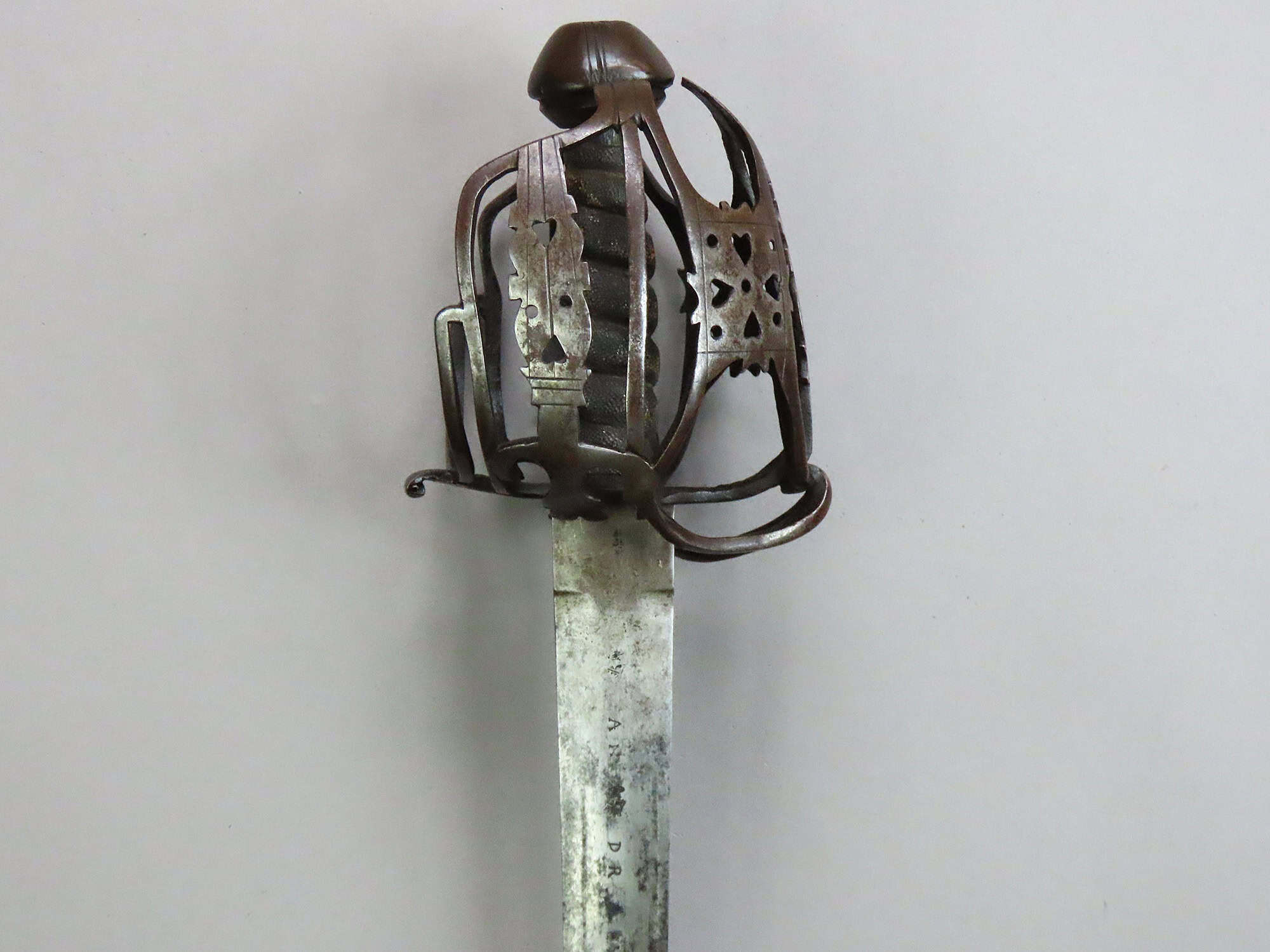
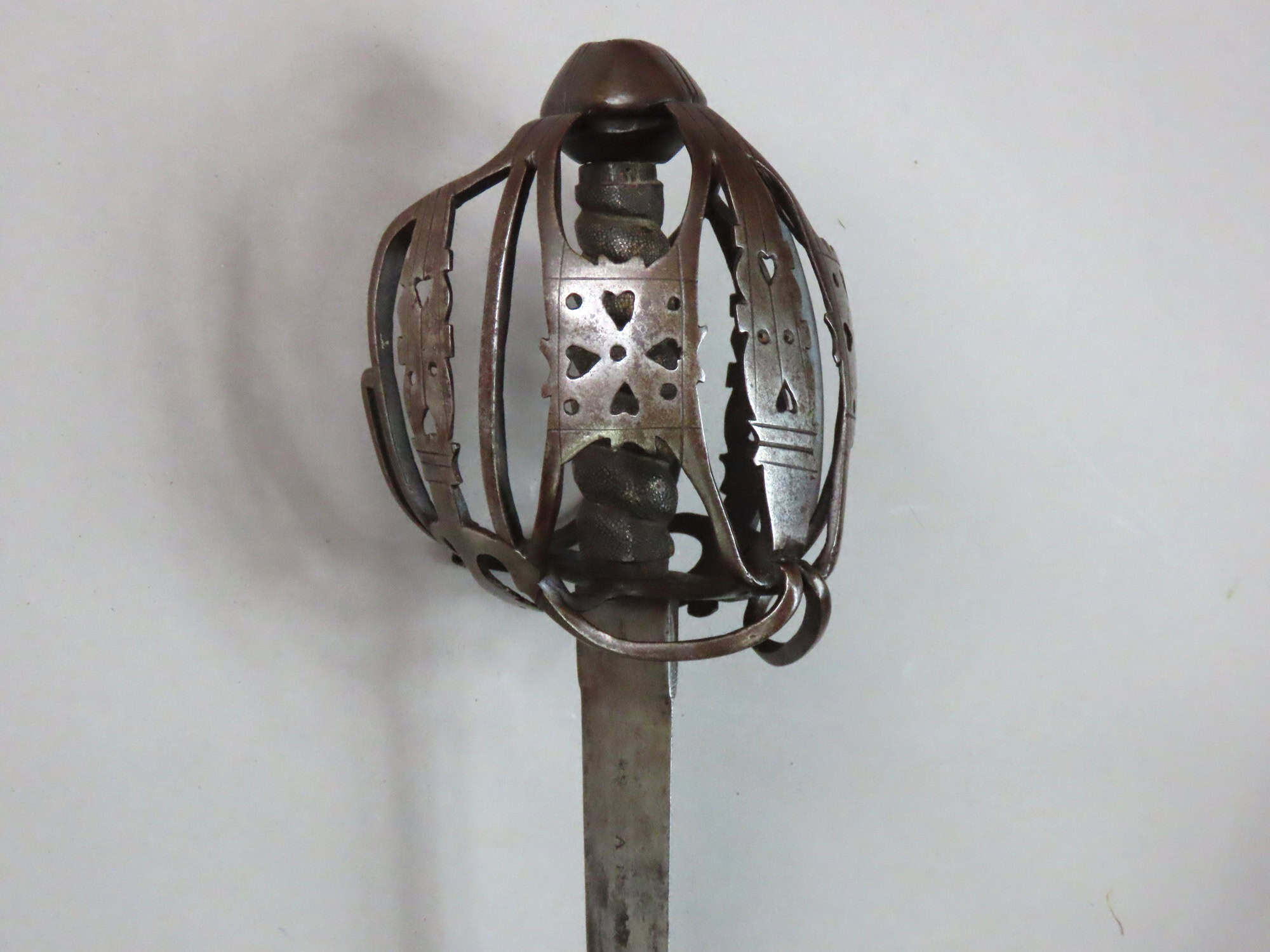
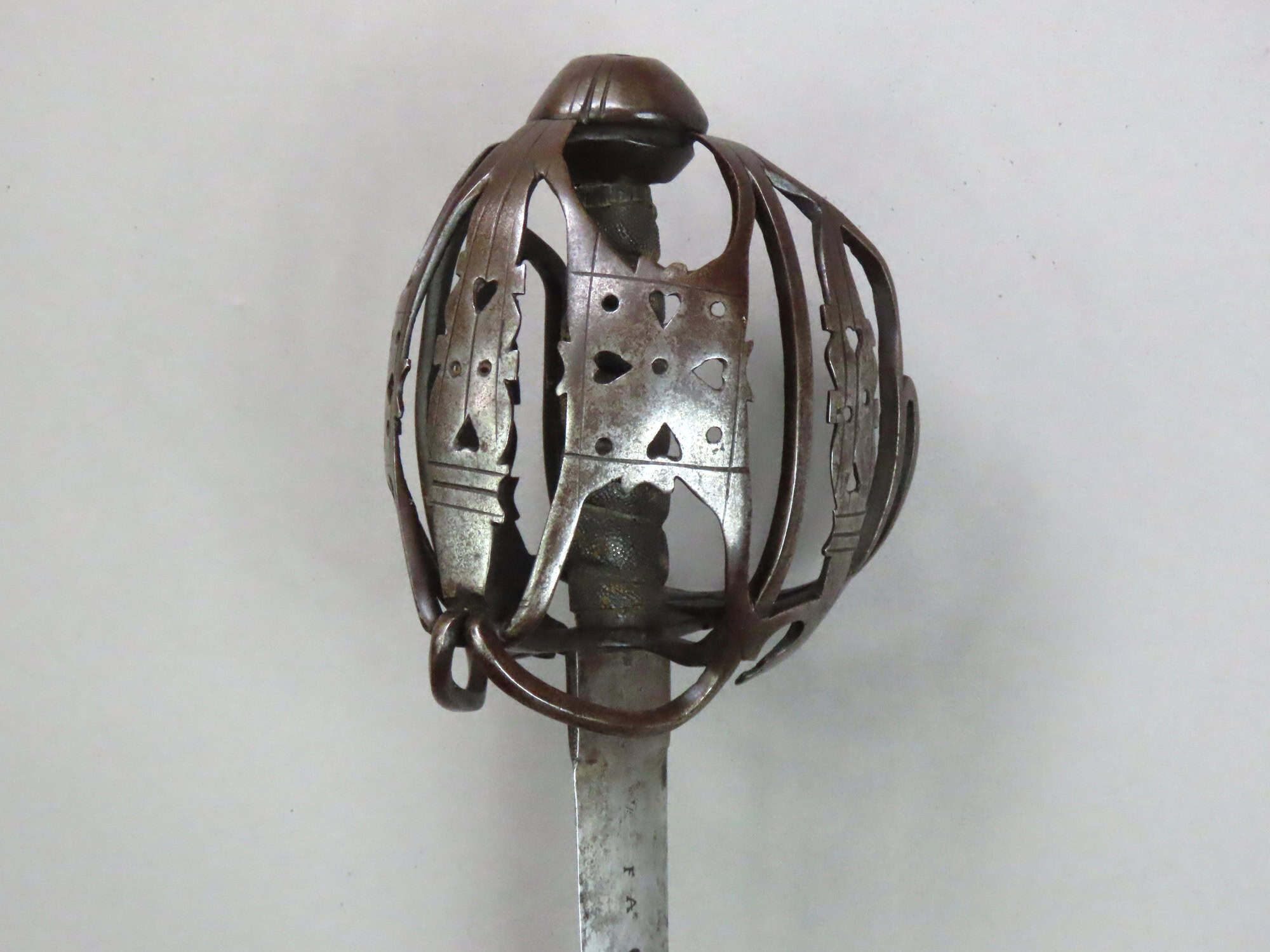
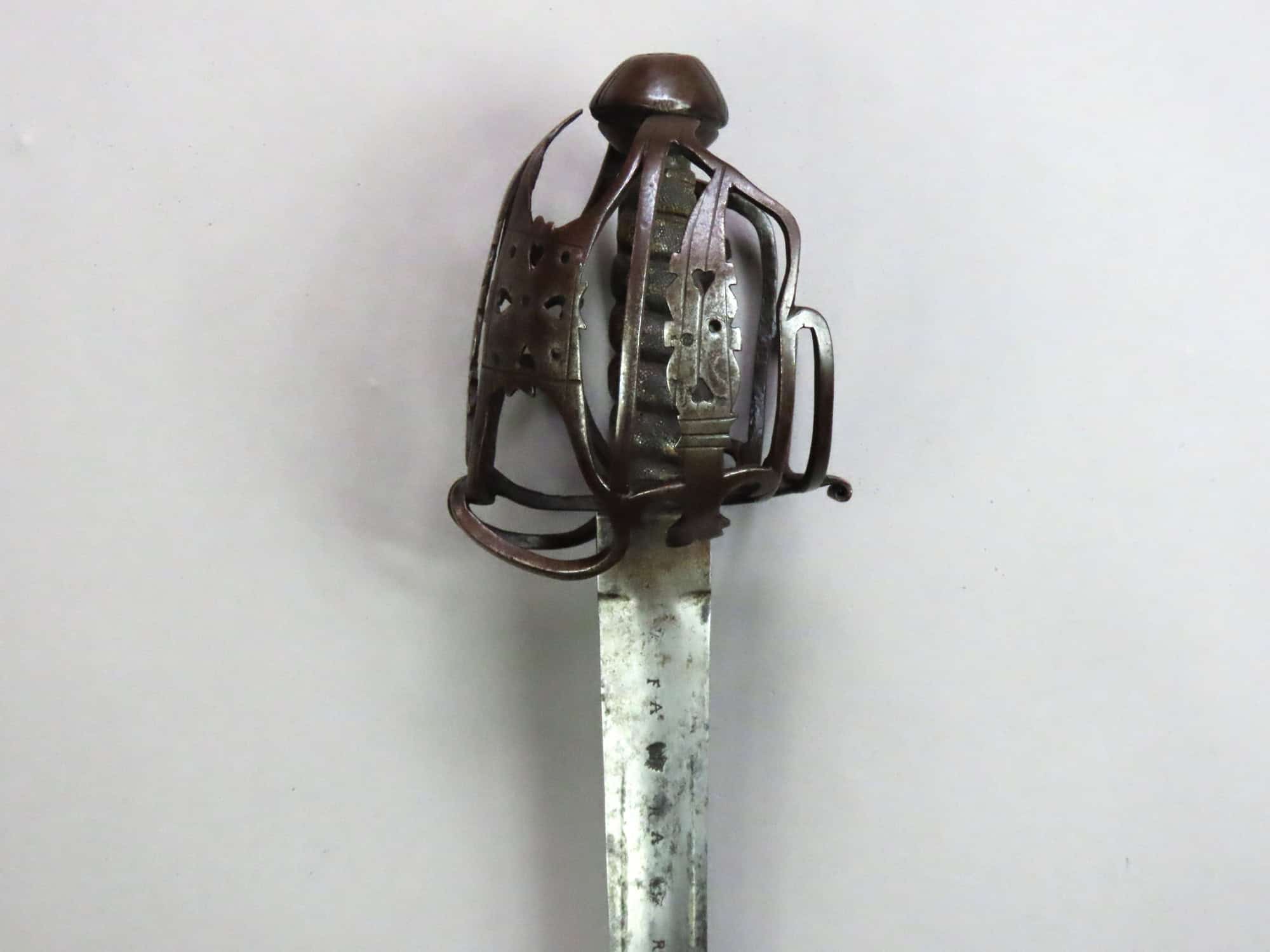
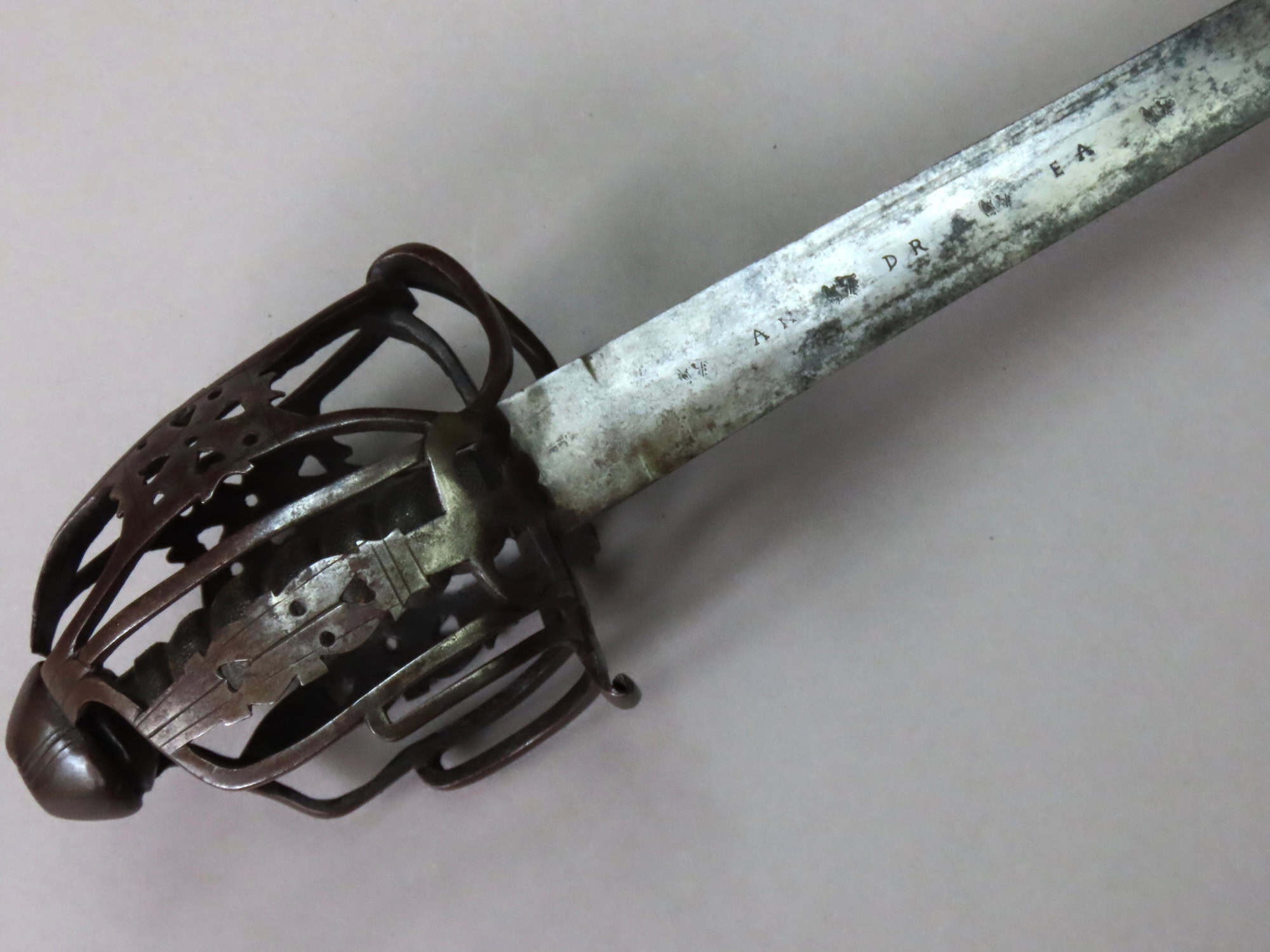
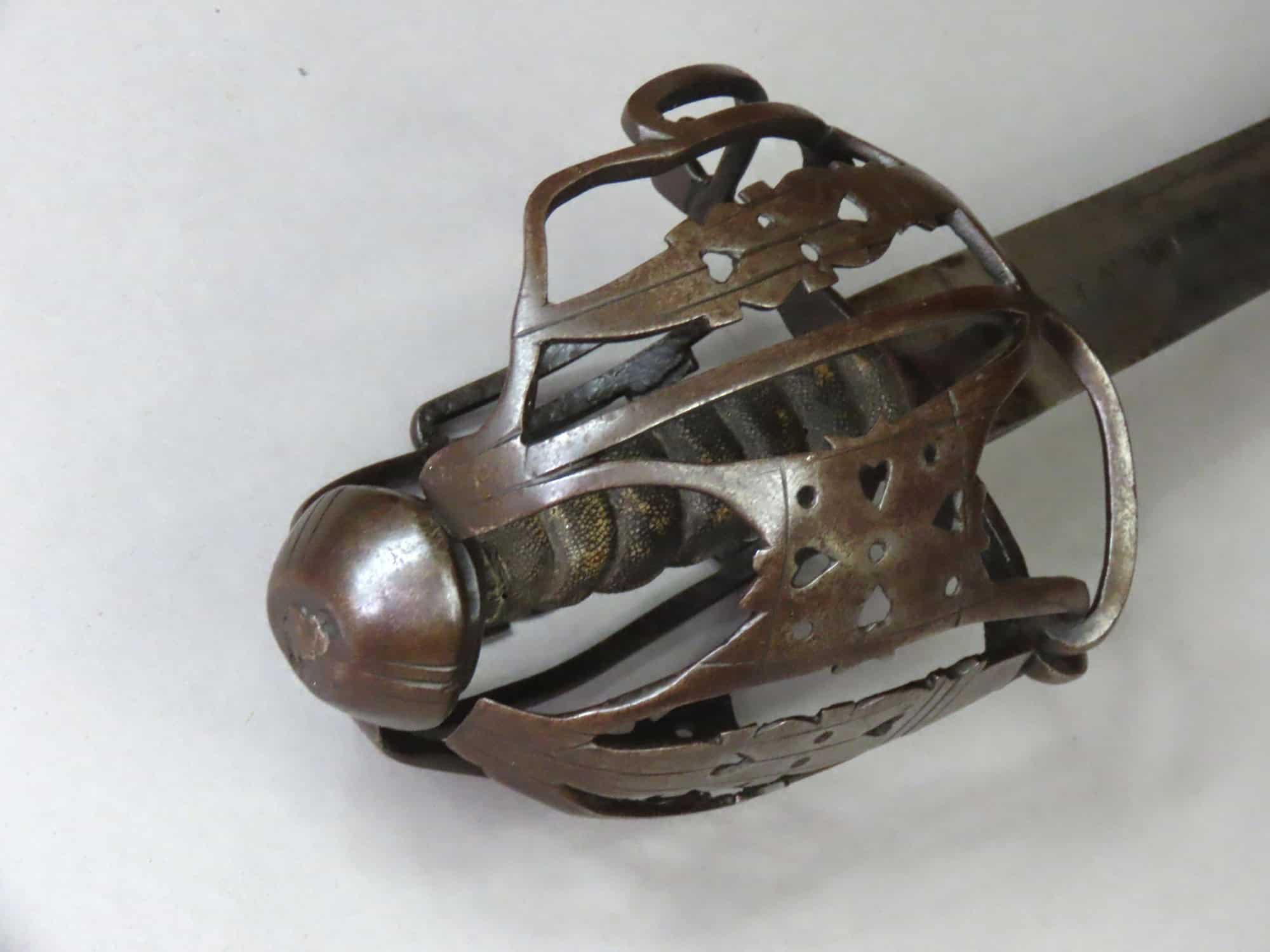
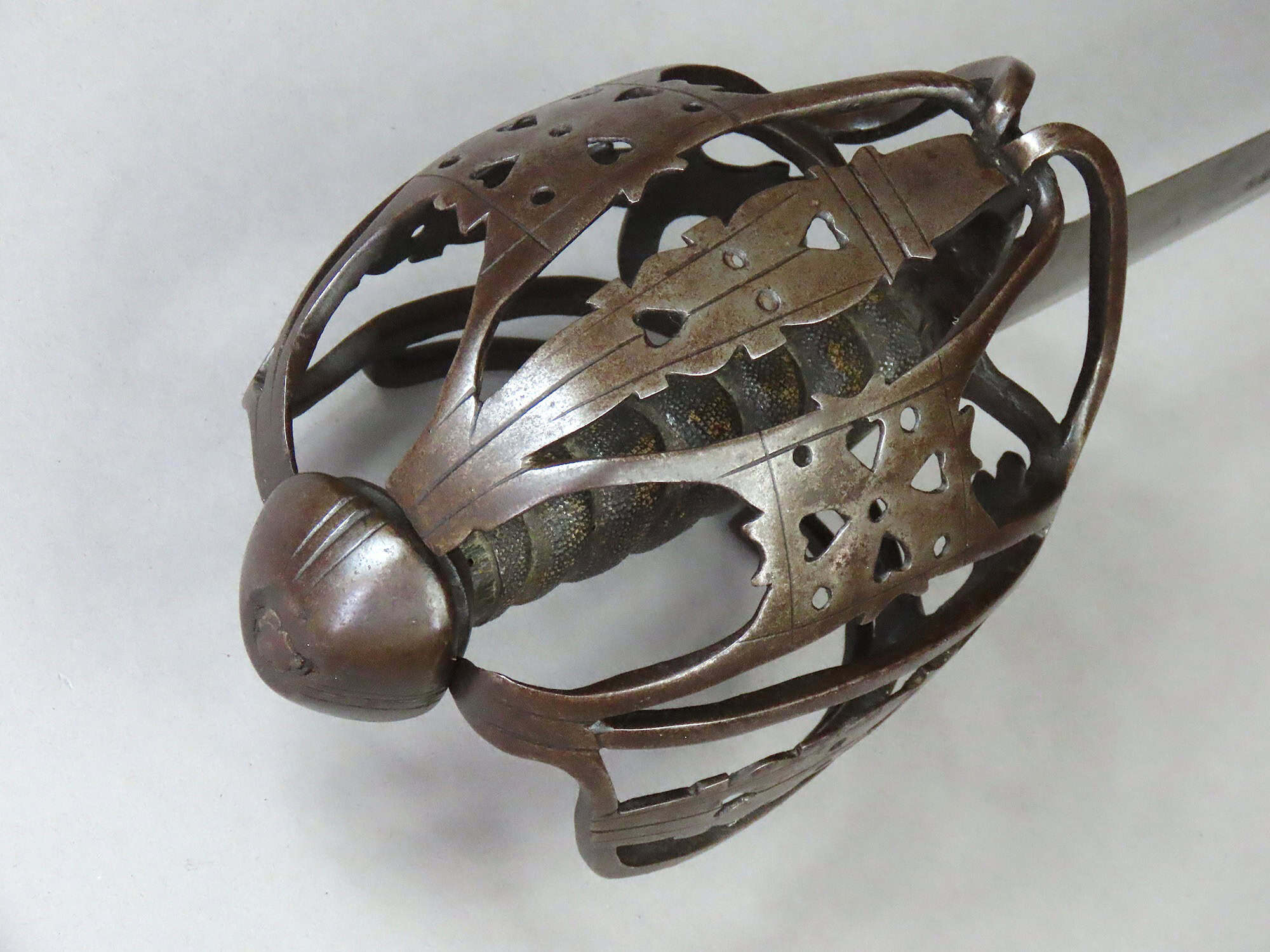
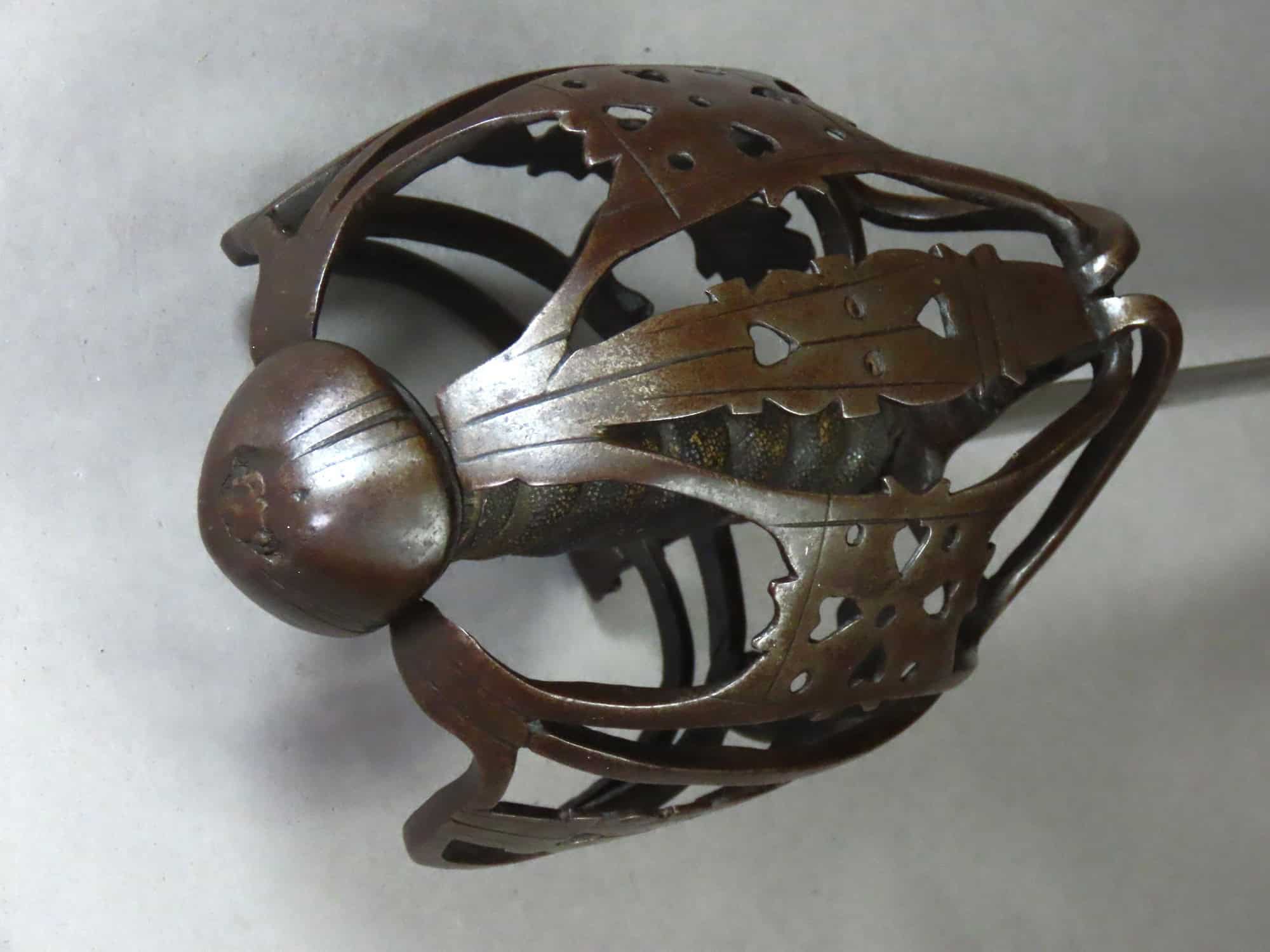
The fully developed iron basket guard is forged from robust rectangular structural bars with the spaces between infilled with traditional flat pierced and engraved panels. The two main guard panels to the front are decorated with vertical and horizontal border lines incised into the exterior surfaces towards the panel edges to form squares. Inside these squares a circle is pierced into the centre surrounded by four pierced hearts and circles in the corners. Each outside edge is decoratively fretted with a merlon in the middle.
The more slender, secondary guard plates to the sides, and the knucklebow plate at the front, are decorated with two circles in the middle, with a heart above and below, enhanced with three decorative vertical lines and lateral lines at the base in each case. The outside edges are fretted with dome and square shapes. The hilt structure is strengthened by a merlon at the base of each side plate with a shaped middle finial. The basket is mounted with looped guard bars to the front and a small curled wrist guard emanates from the rear quillon.
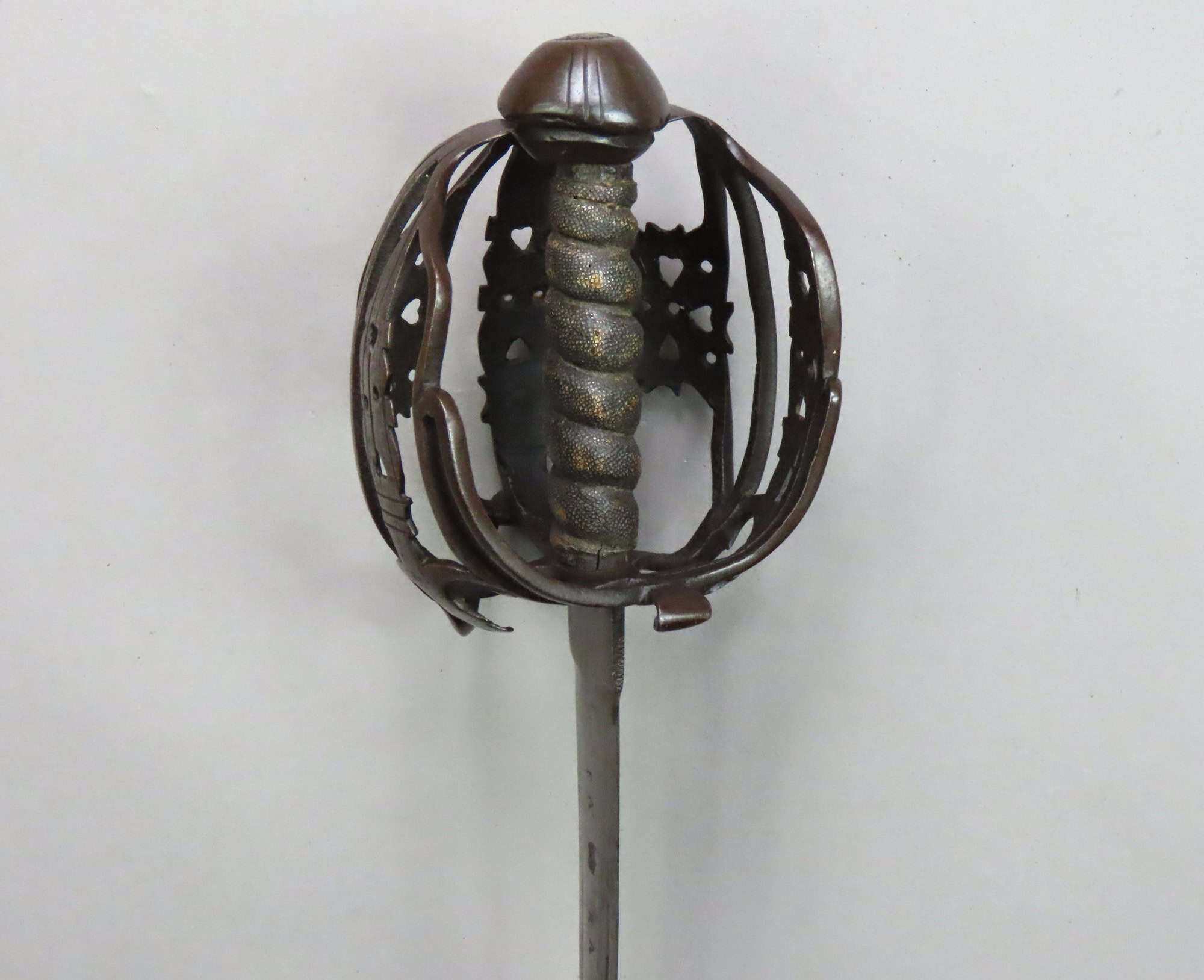
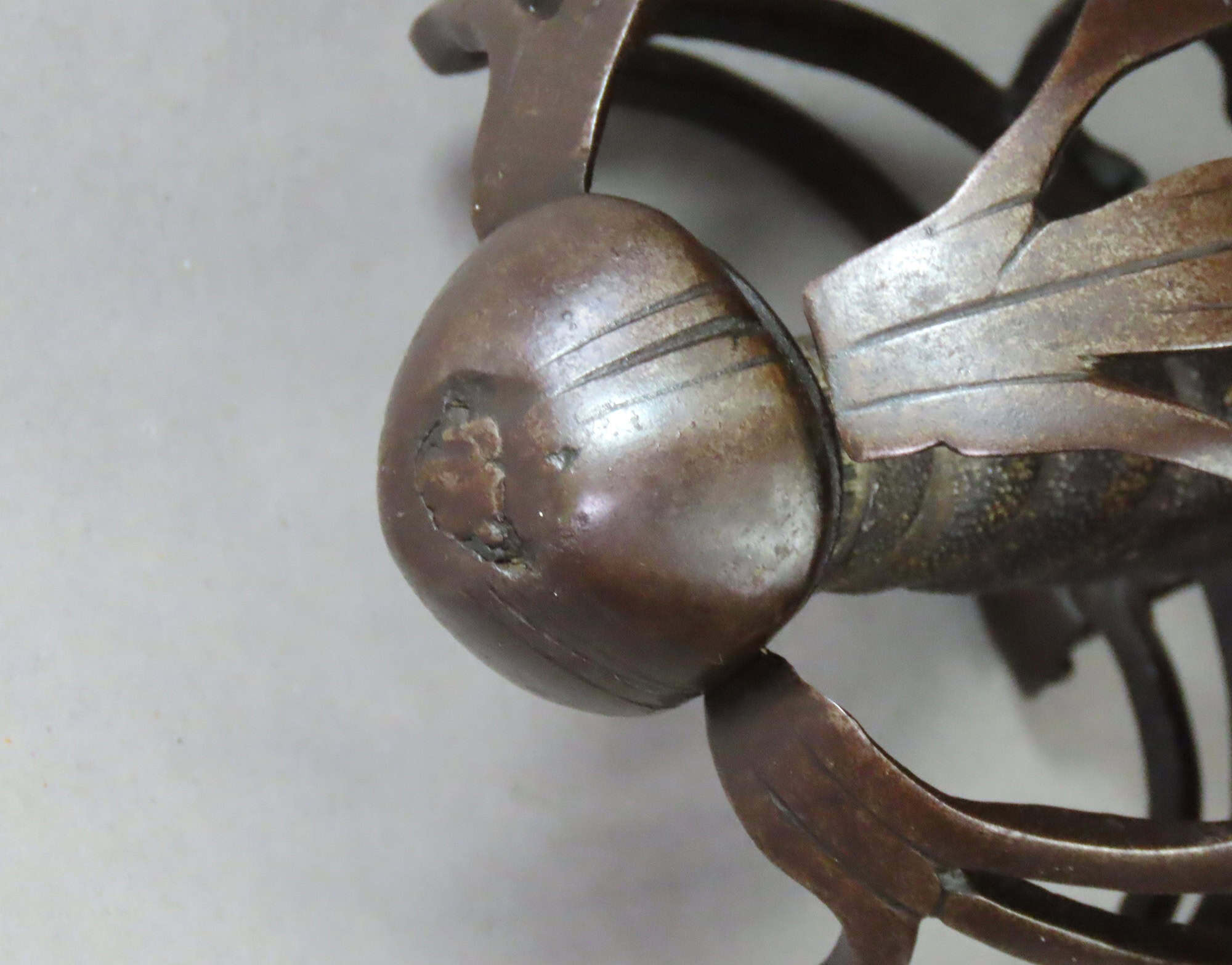
The upper guard arms converge into three terminals at the front and sides which fit into a chiselled groove which extends for the full circumference of the pommel just below its middle to secure the structure. One of the guard arm tops is bent slightly out of shape as it meets the pommel groove. The dome-shaped pommel has three sets of triple grooves which radiate from the pommel top.
The spirally grooved wooden baluster shaped grip is covered with shagreen. It was once bound with twisted wire rope and mounted with decorative metal ferrules, or woven wire Turks’ Heads top and bottom, which are now missing but the imprint remains.
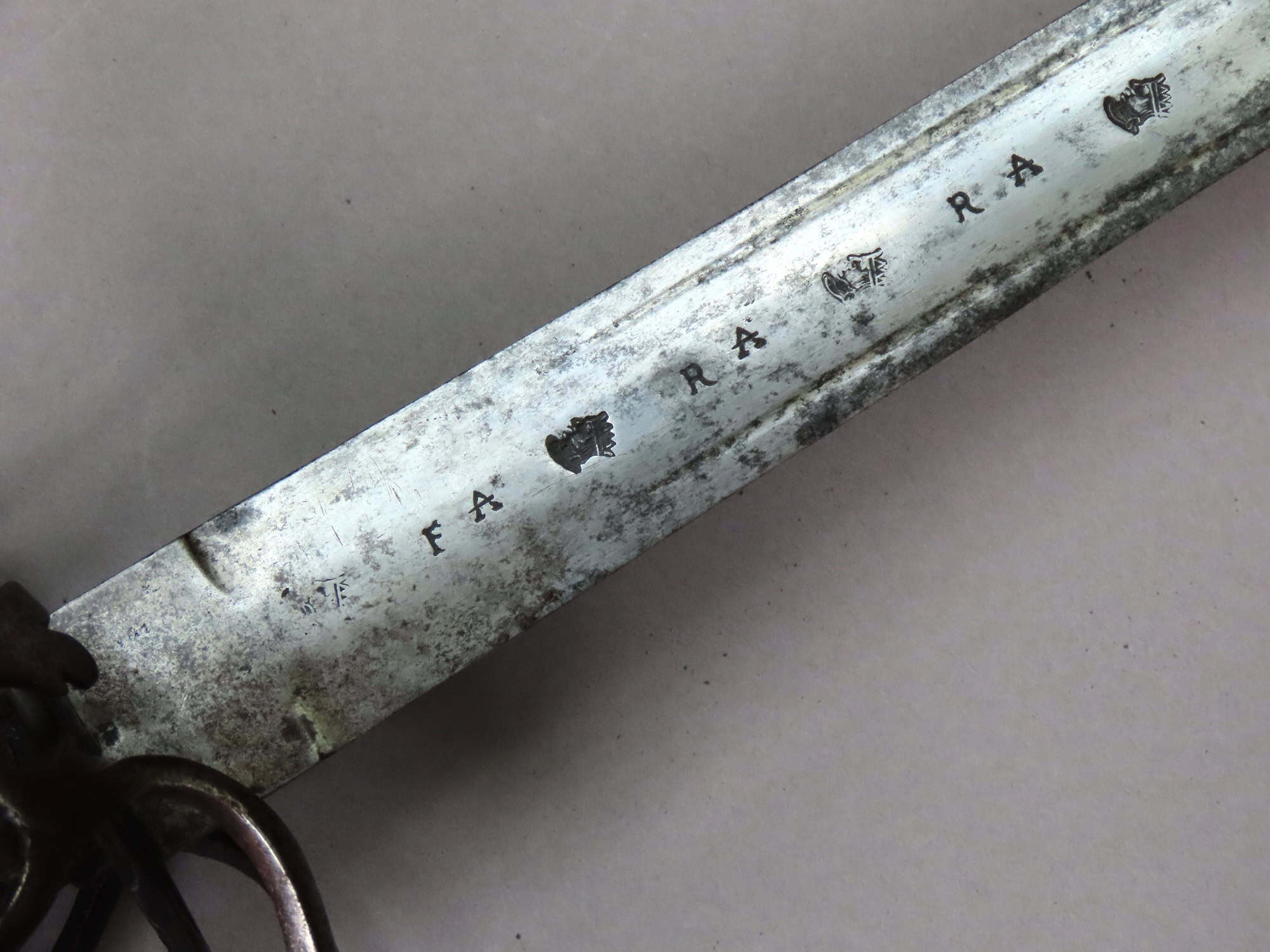
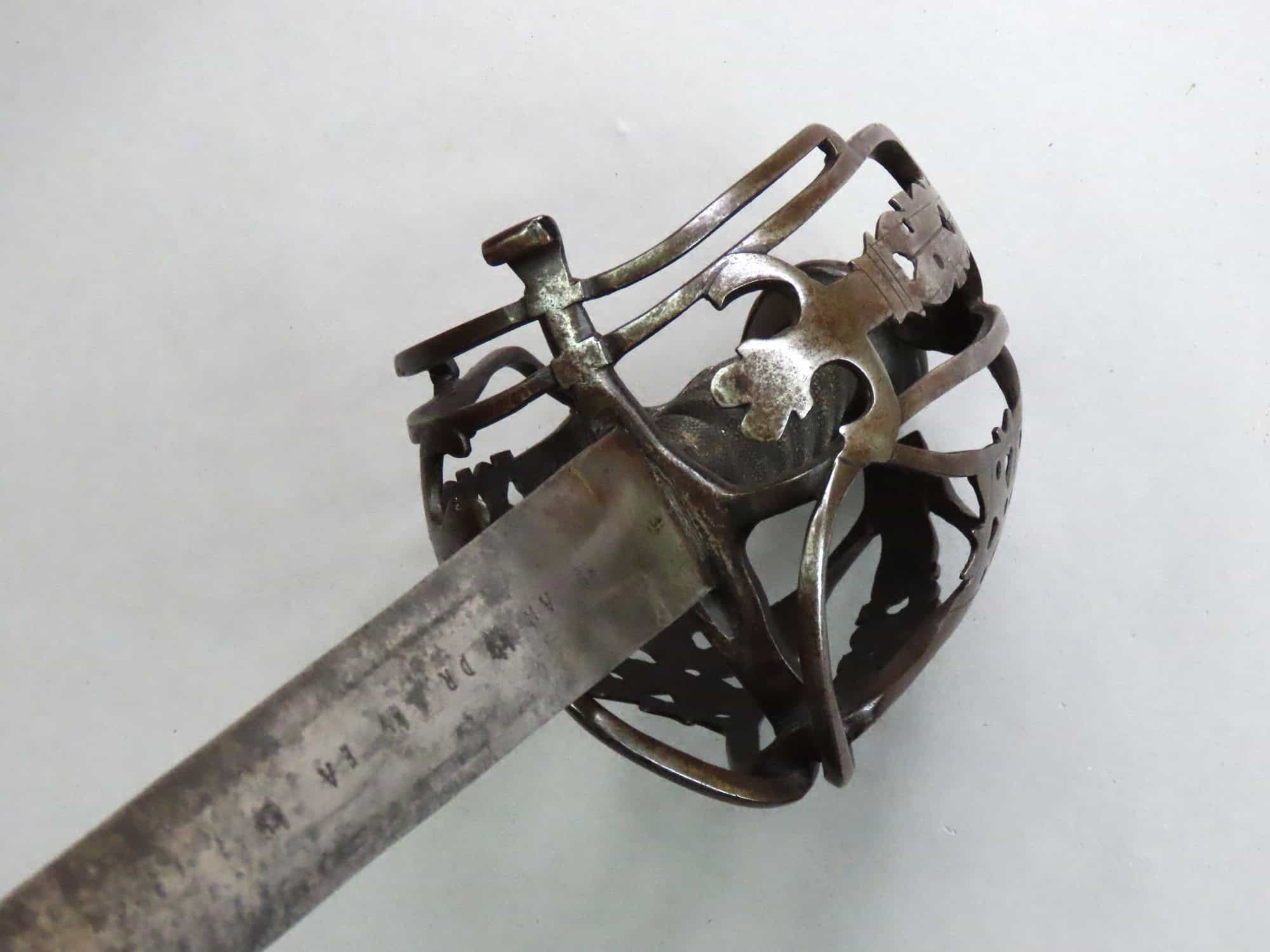
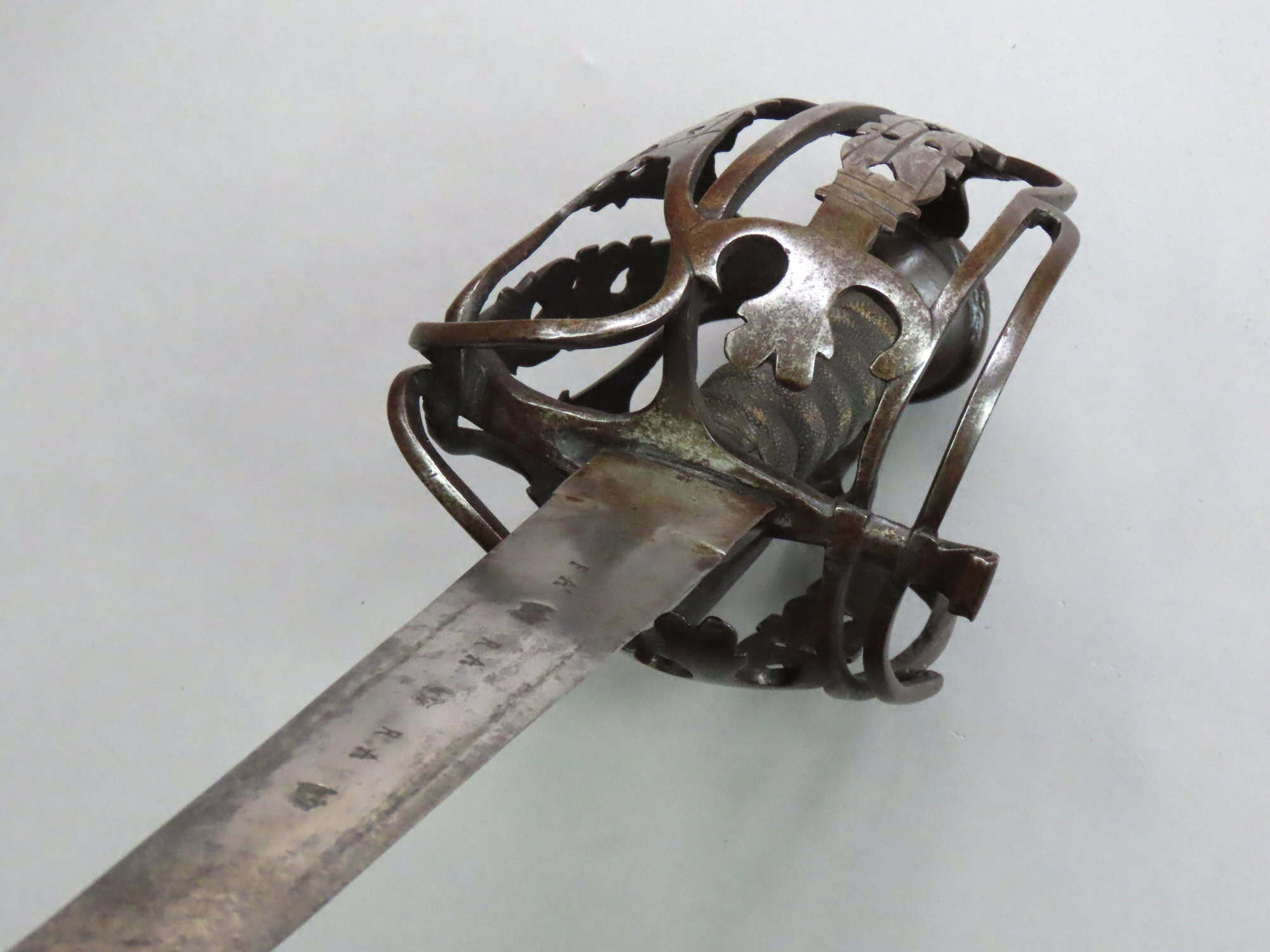
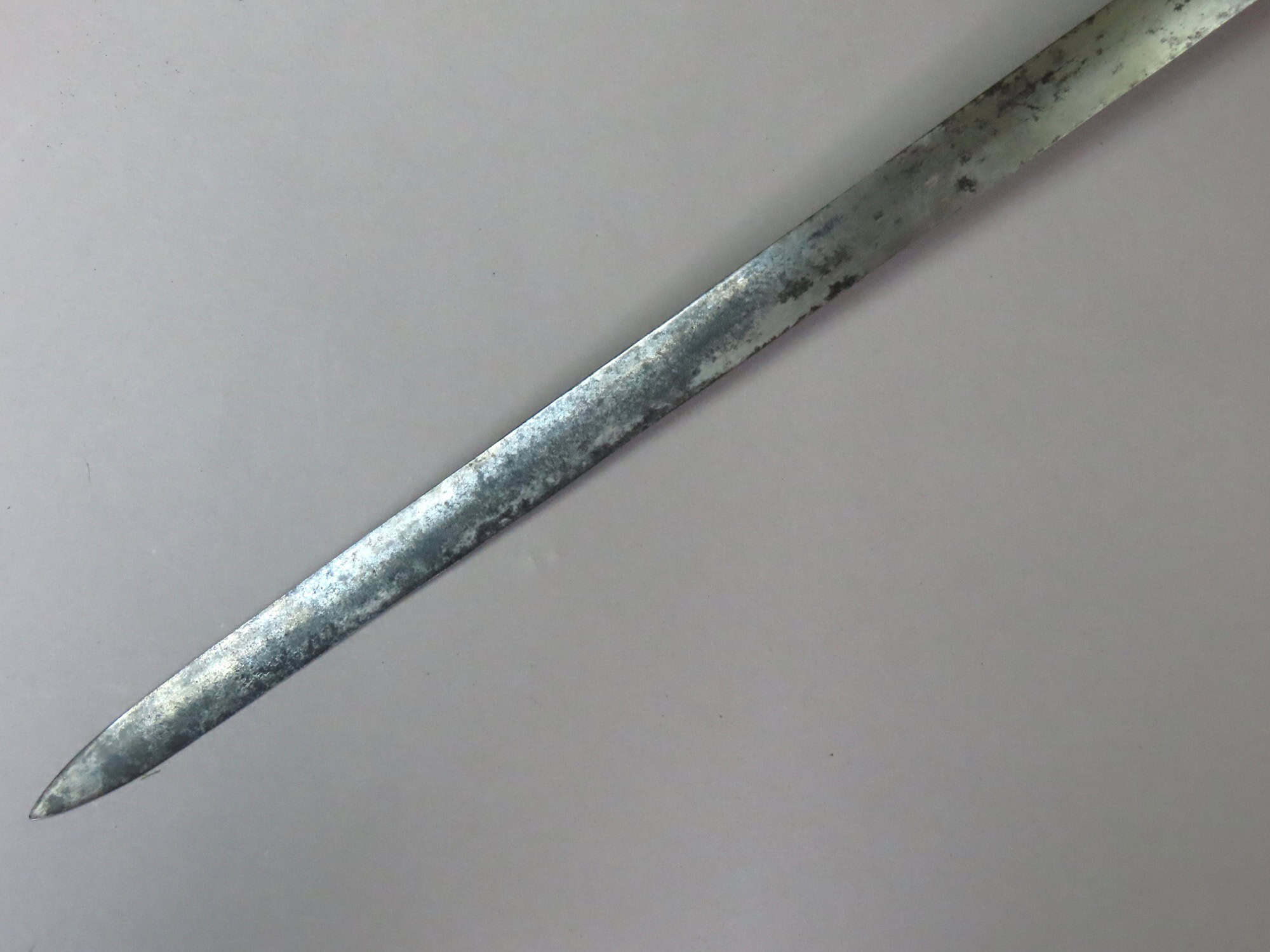
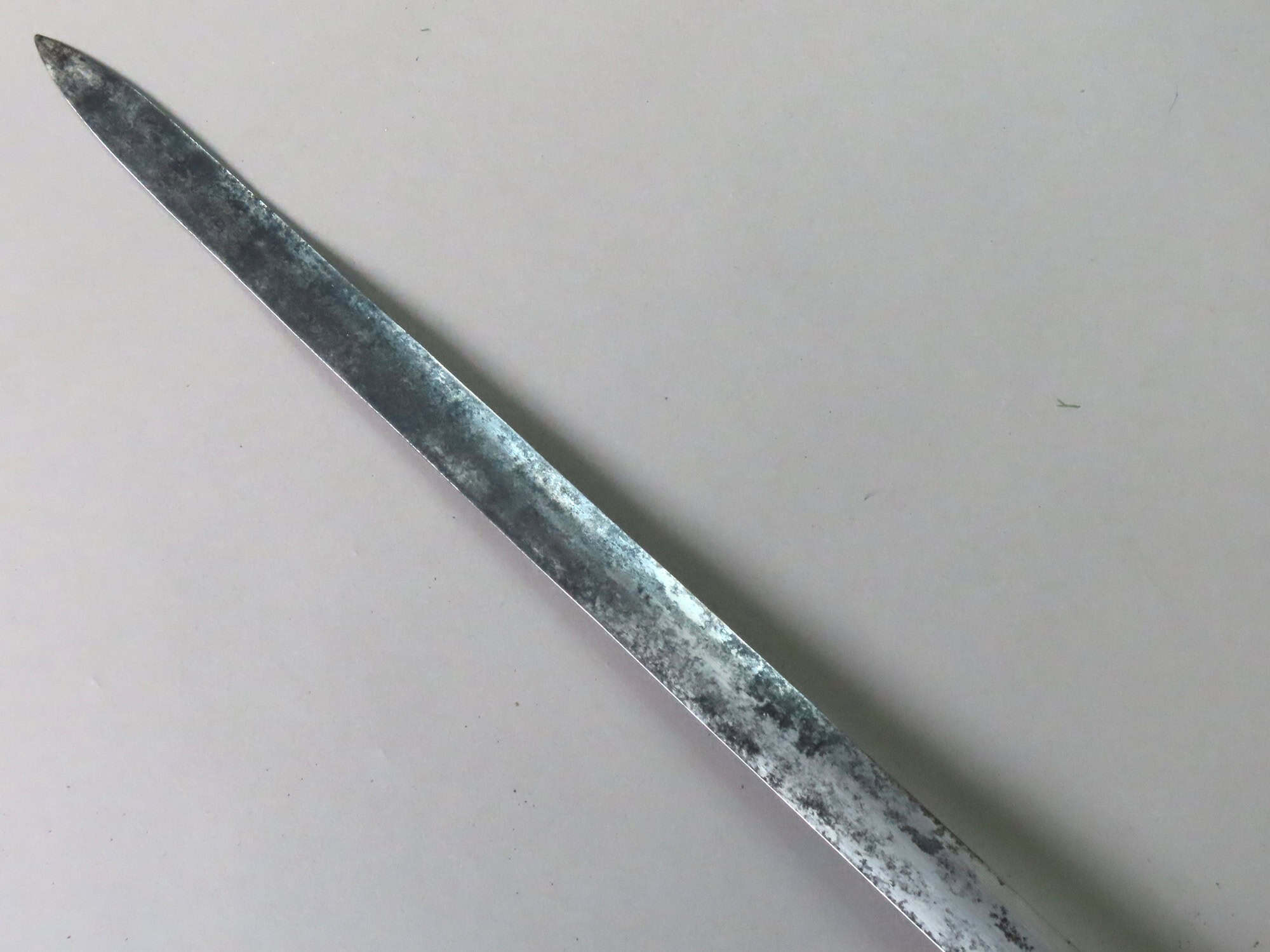
The fine quality double edged tapering German-made blade is most likely of Solingen manufacture. It has a pronounced ricasso which extends for one inch (2.5 cm) from the hilt which has a worn armourers’ mark on one side in the form of a cross inside a panel and the remnant of a second mark on the reverse side partly obscured by the hilt. From the end of the ricasso the blade is of hexagonal section for a few inches then becomes lenticular in section to the tip.
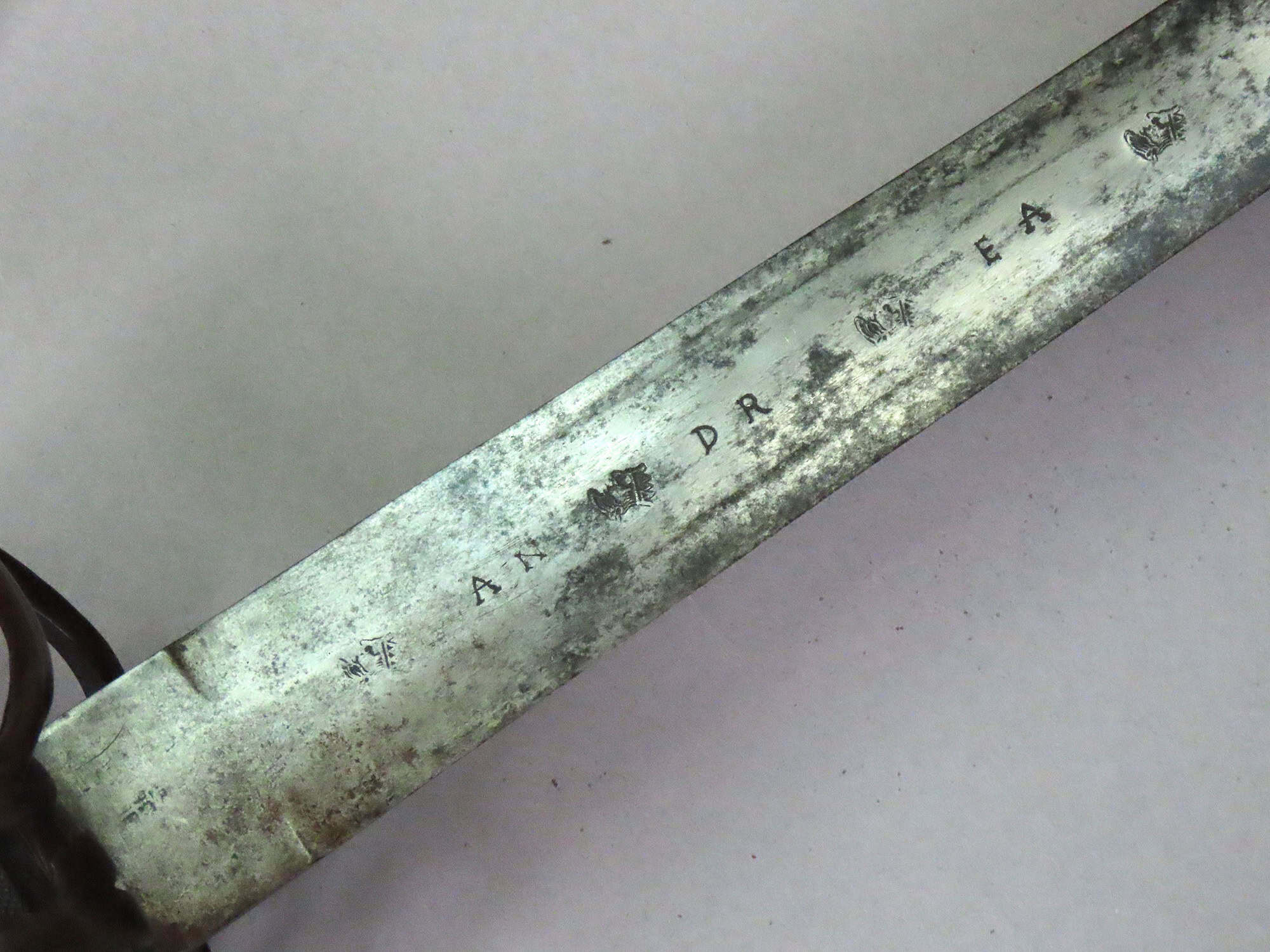
A short fuller on each side starts a few inches beyond the ricasso and runs underneath each cutting edge for 4.25 inches (11 cm). The blade is stamped with letters between the fullers along the middle to create the blade maker’s mark “ANDREA” on one side and “FARARA” on the other with the letters spaced by four stamped Kings Head marks. These marks are often associated with the Wundes The blade shoulders sit in a chiselled groove cut into the cross guard bar in the Scottish manner. The blade length is 33.5 inches (85 cm) and overall the sword is 39.25 inches (99.5 cm) long.
The hilt is in original condition with an even patination all over. The blade is also in fine condition with patches of age staining along its length.
For similar contemporary swords see Cyril Mazansky, “British Basket-Hilted Swords”, The Boydell Press, 2005.