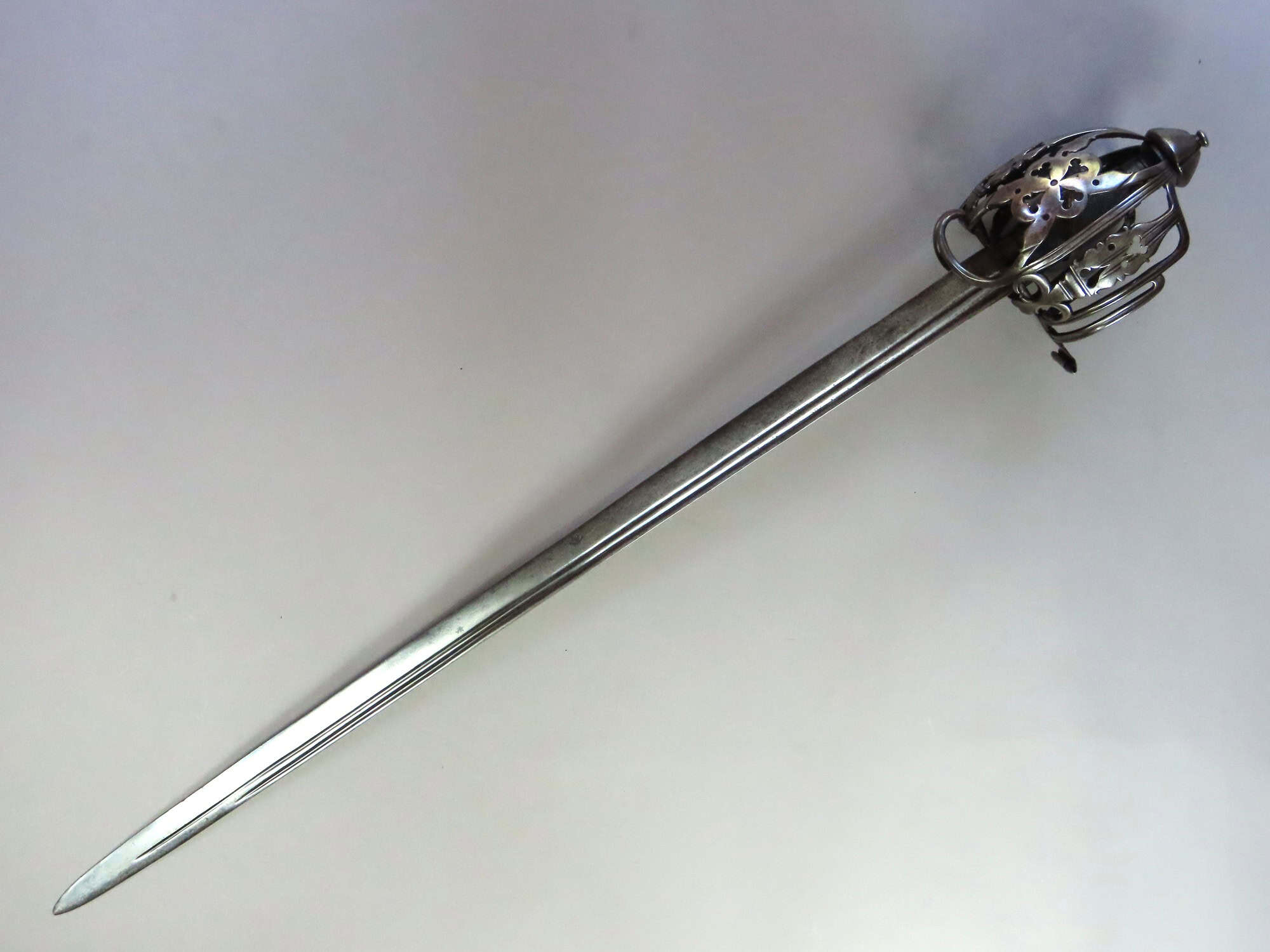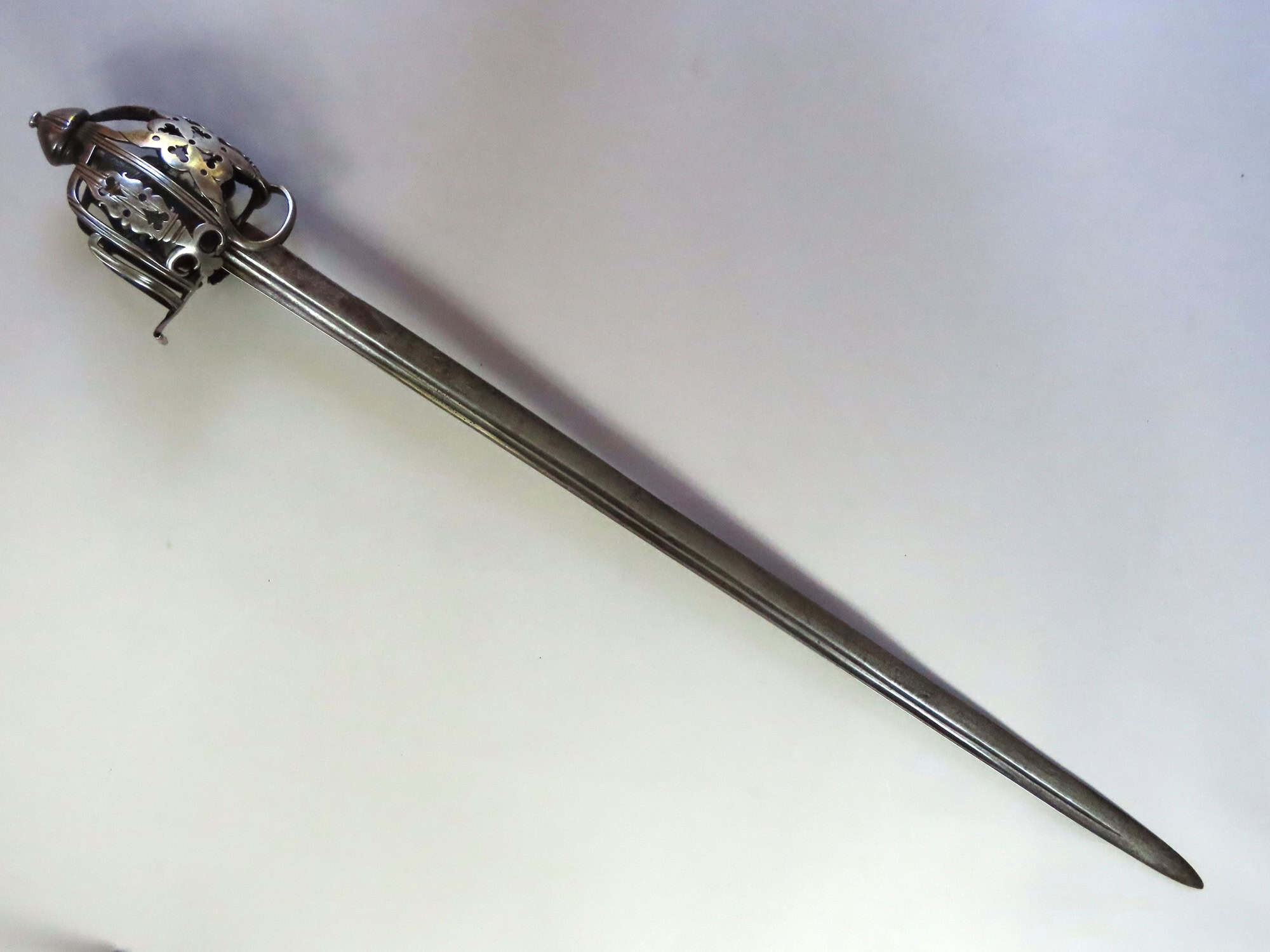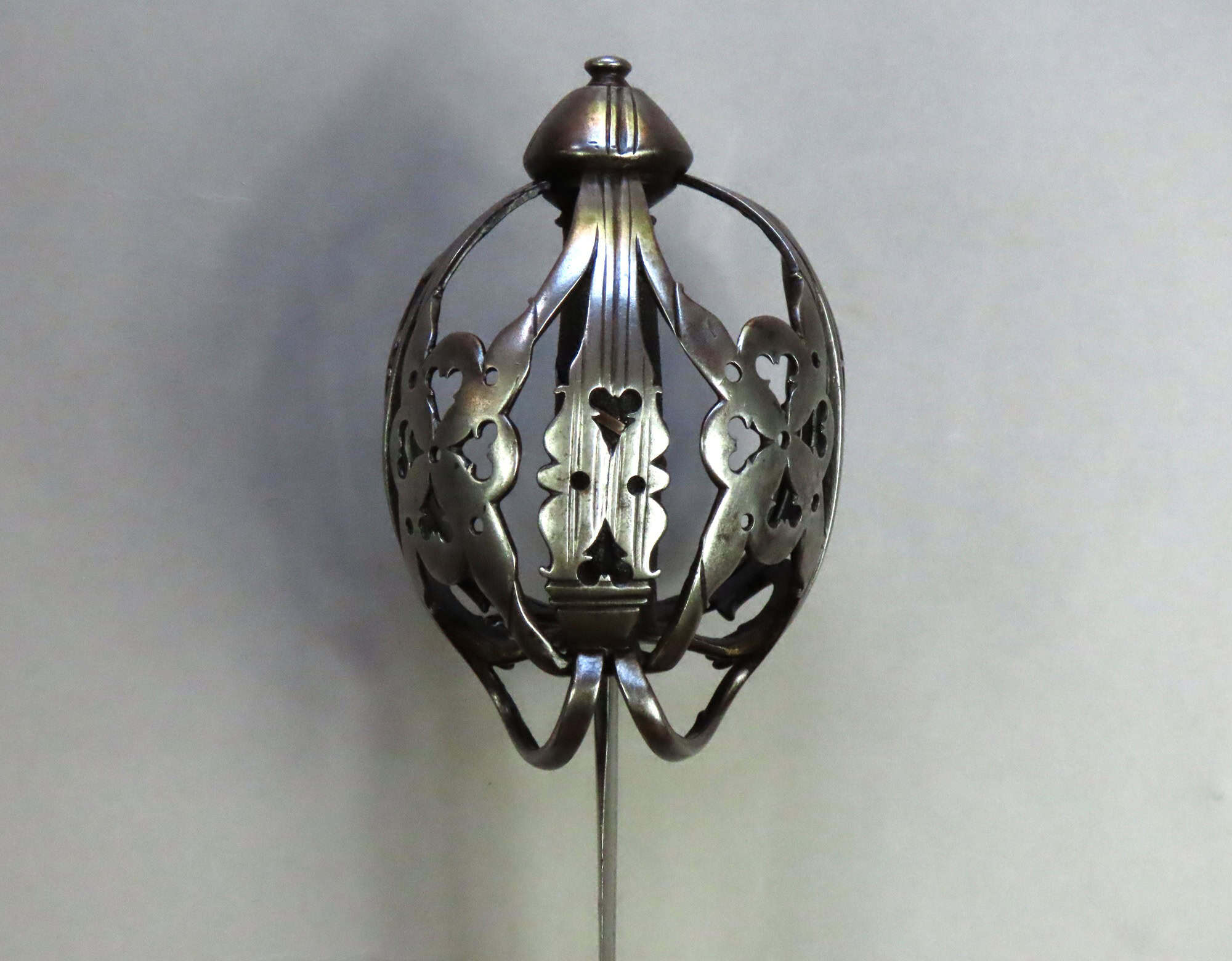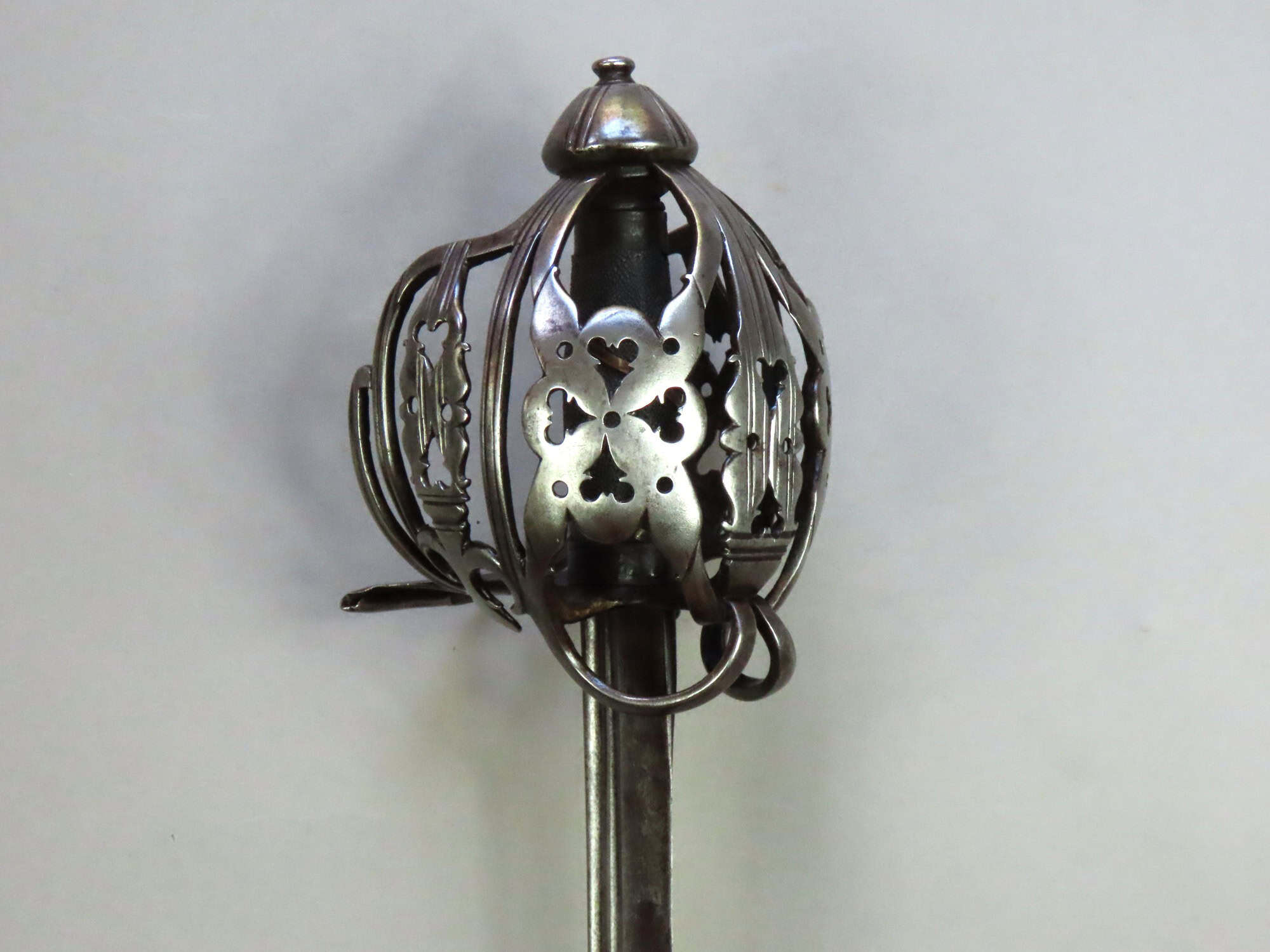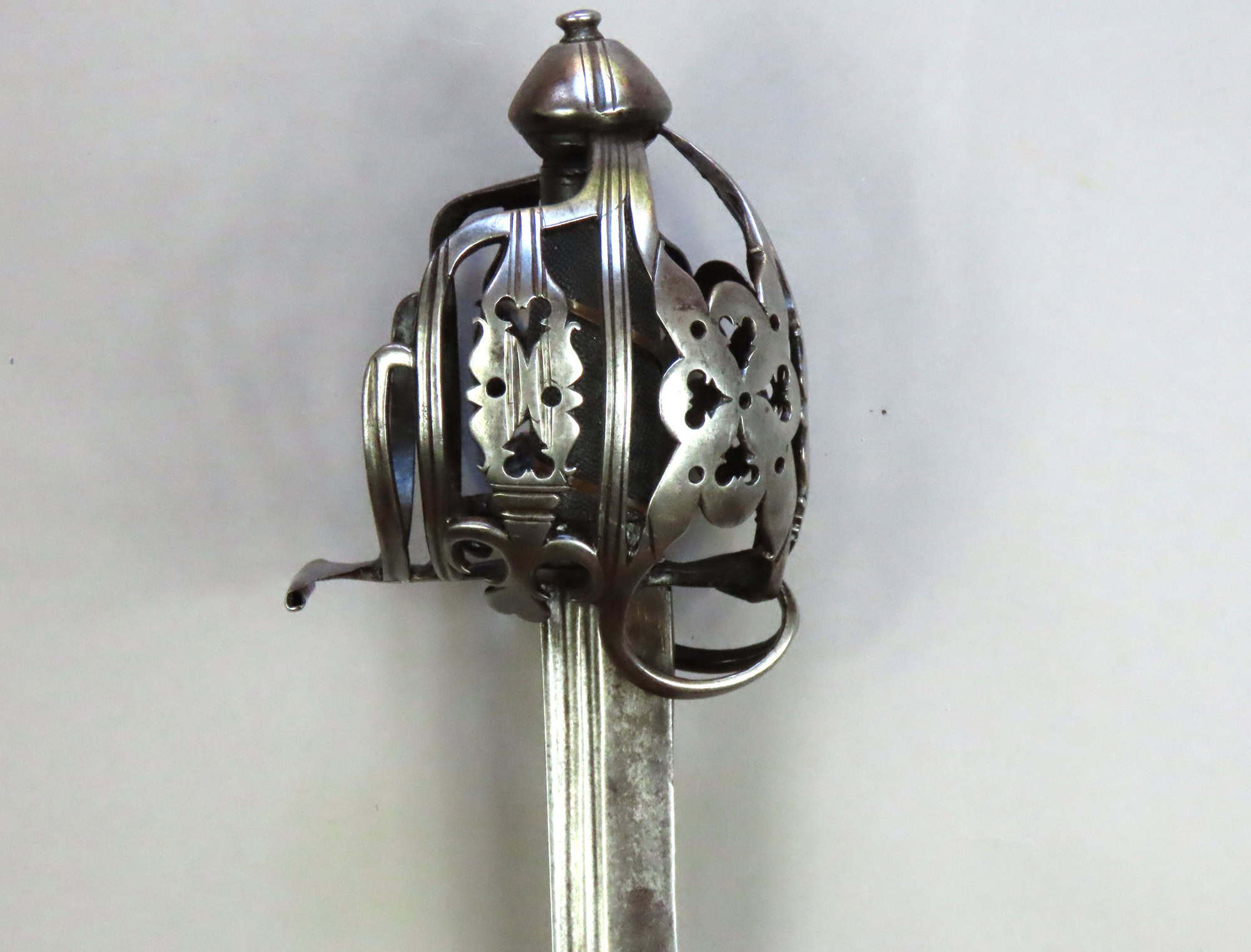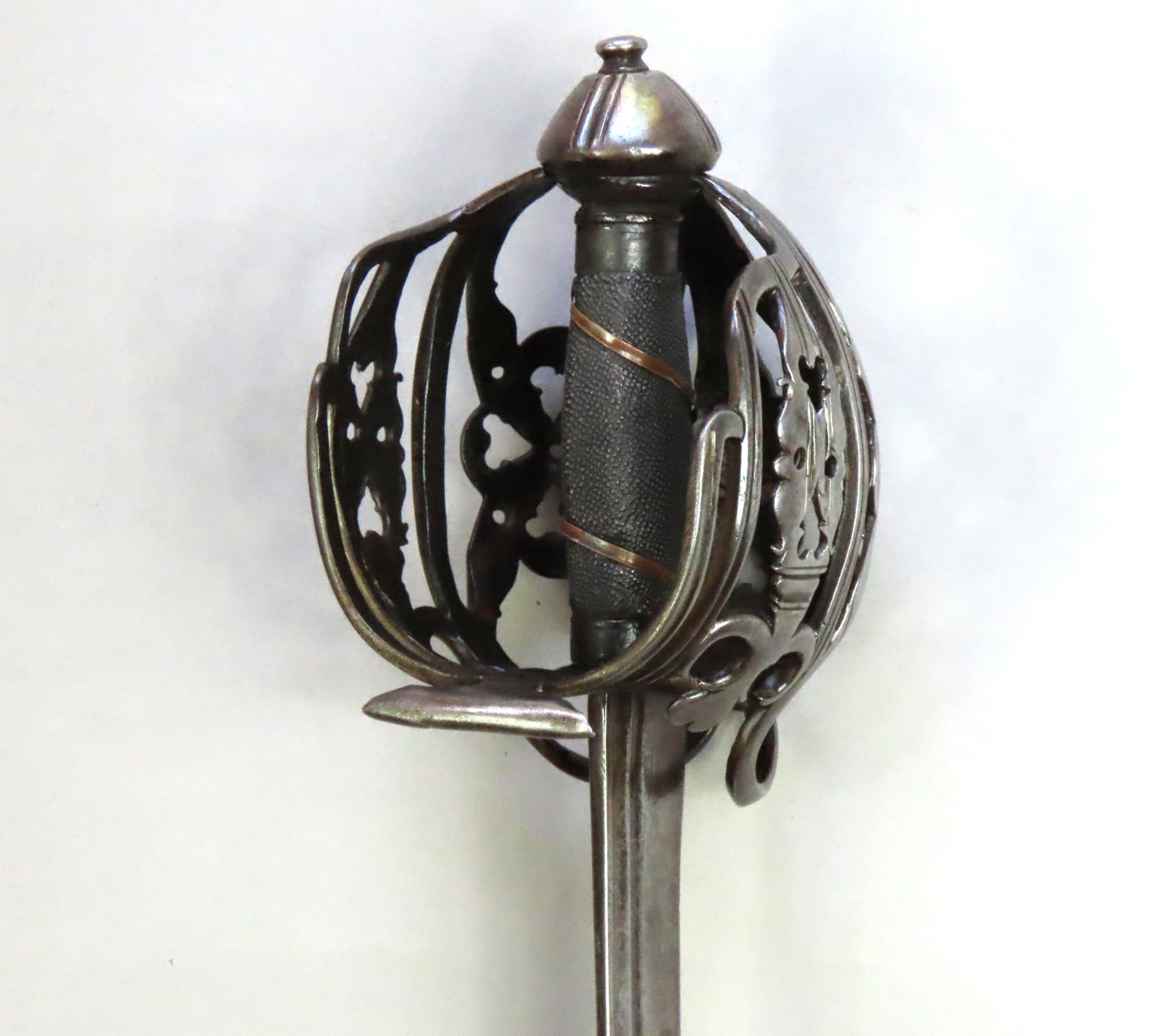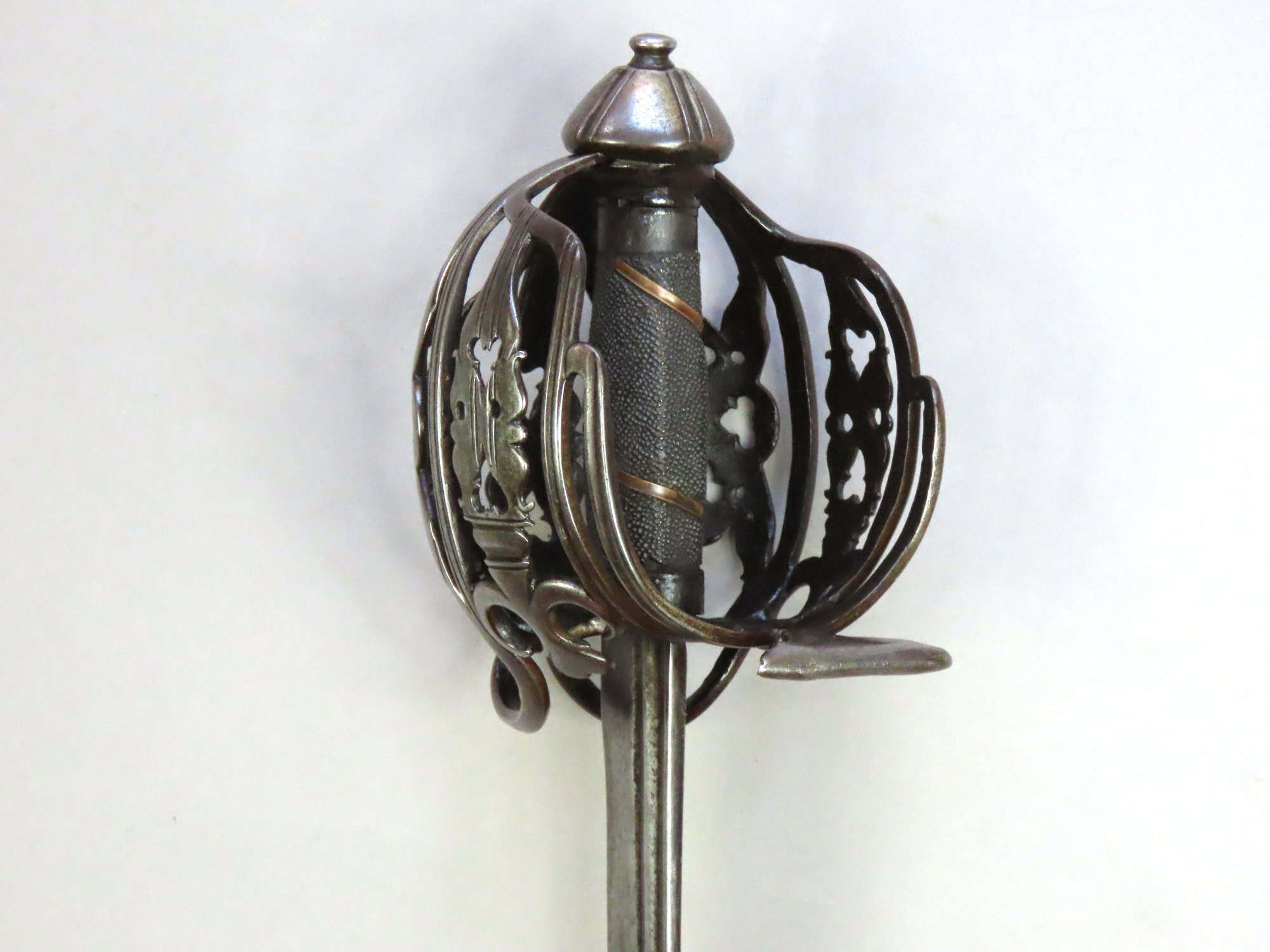
A Very Fine Scottish Basket Hilted Sword dating to circa 1730 to 1740
To enquire about this itemplease click here
Price: £12,500
Ref: 62052779
Item Description
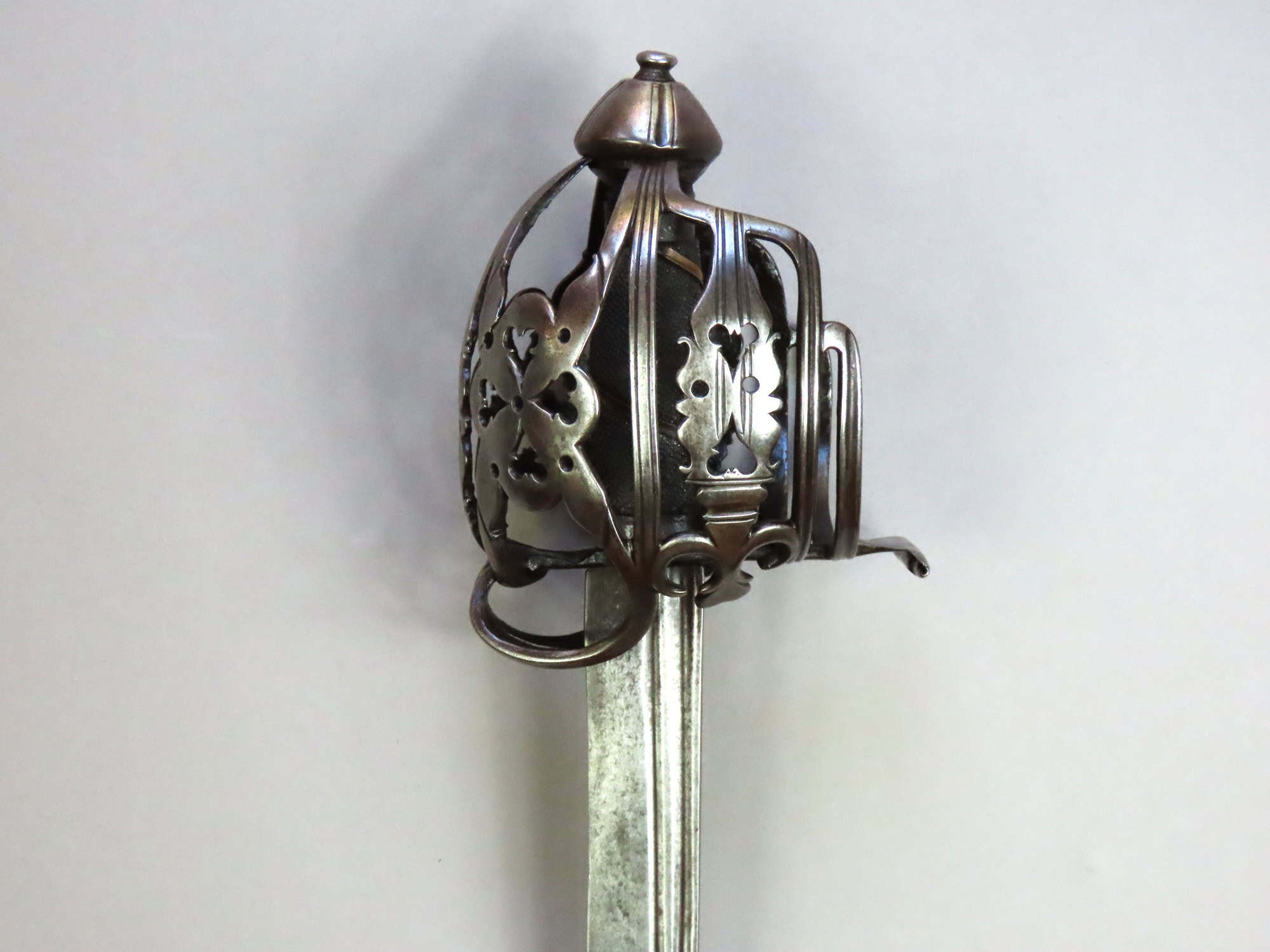
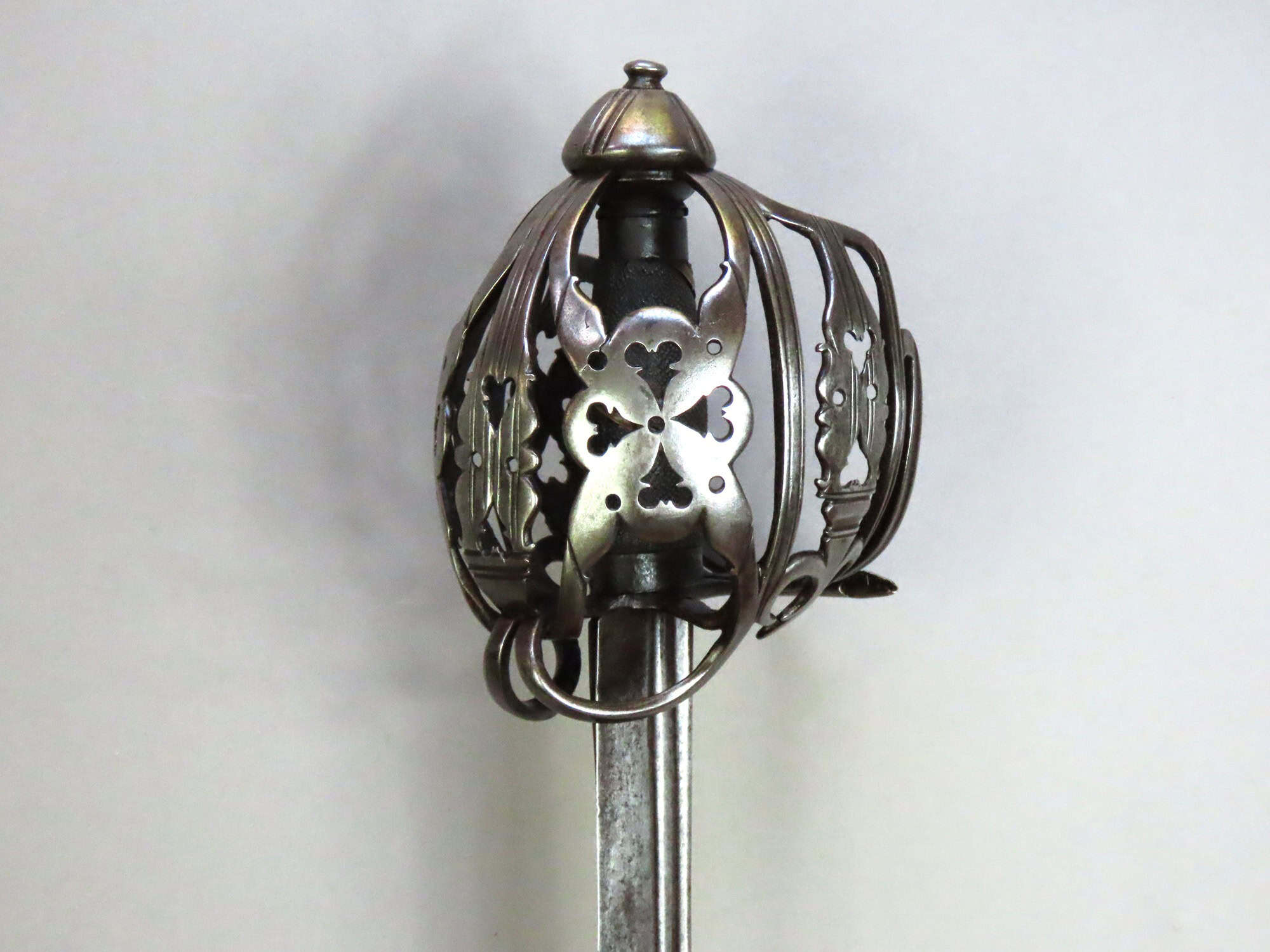
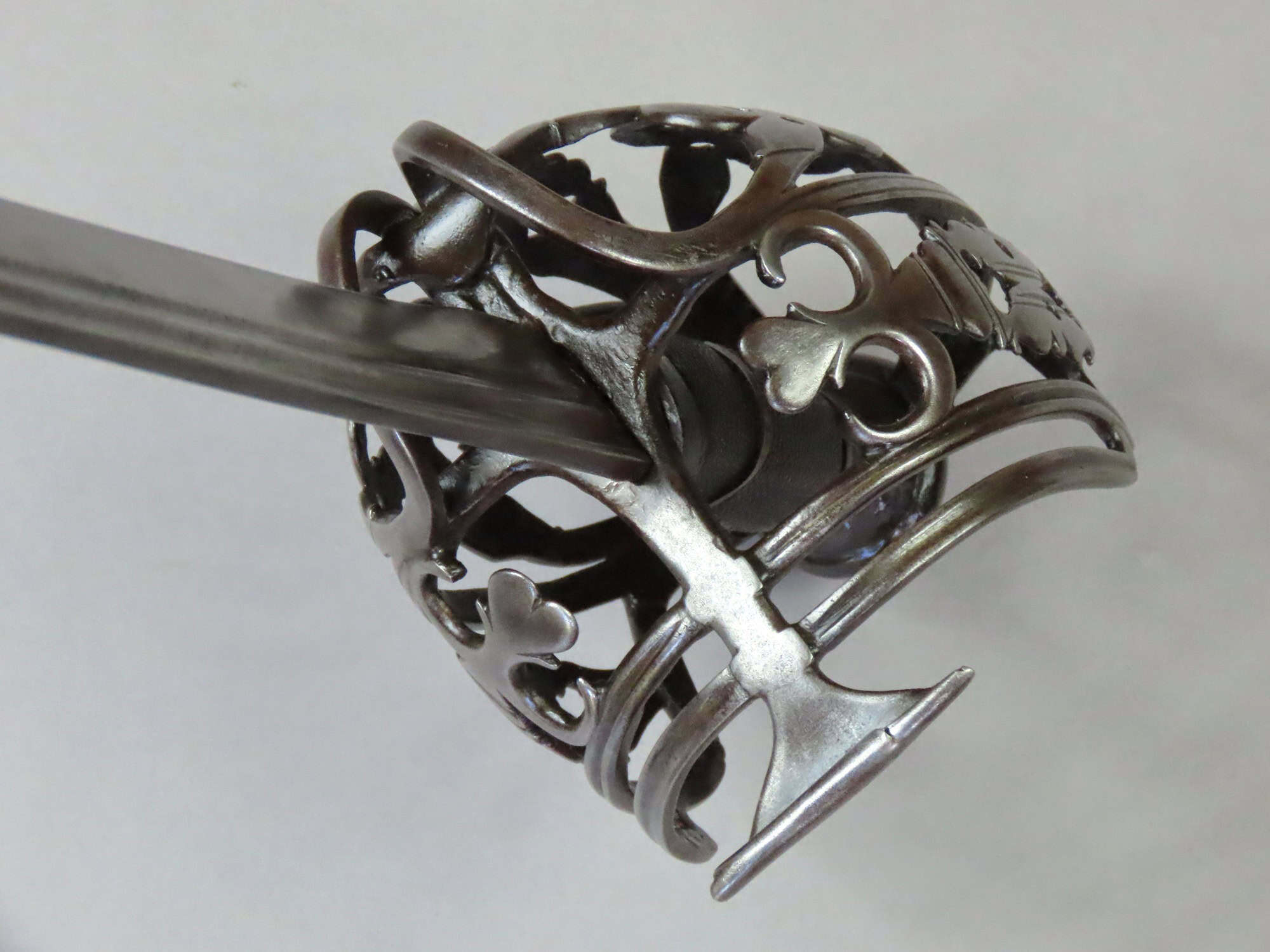
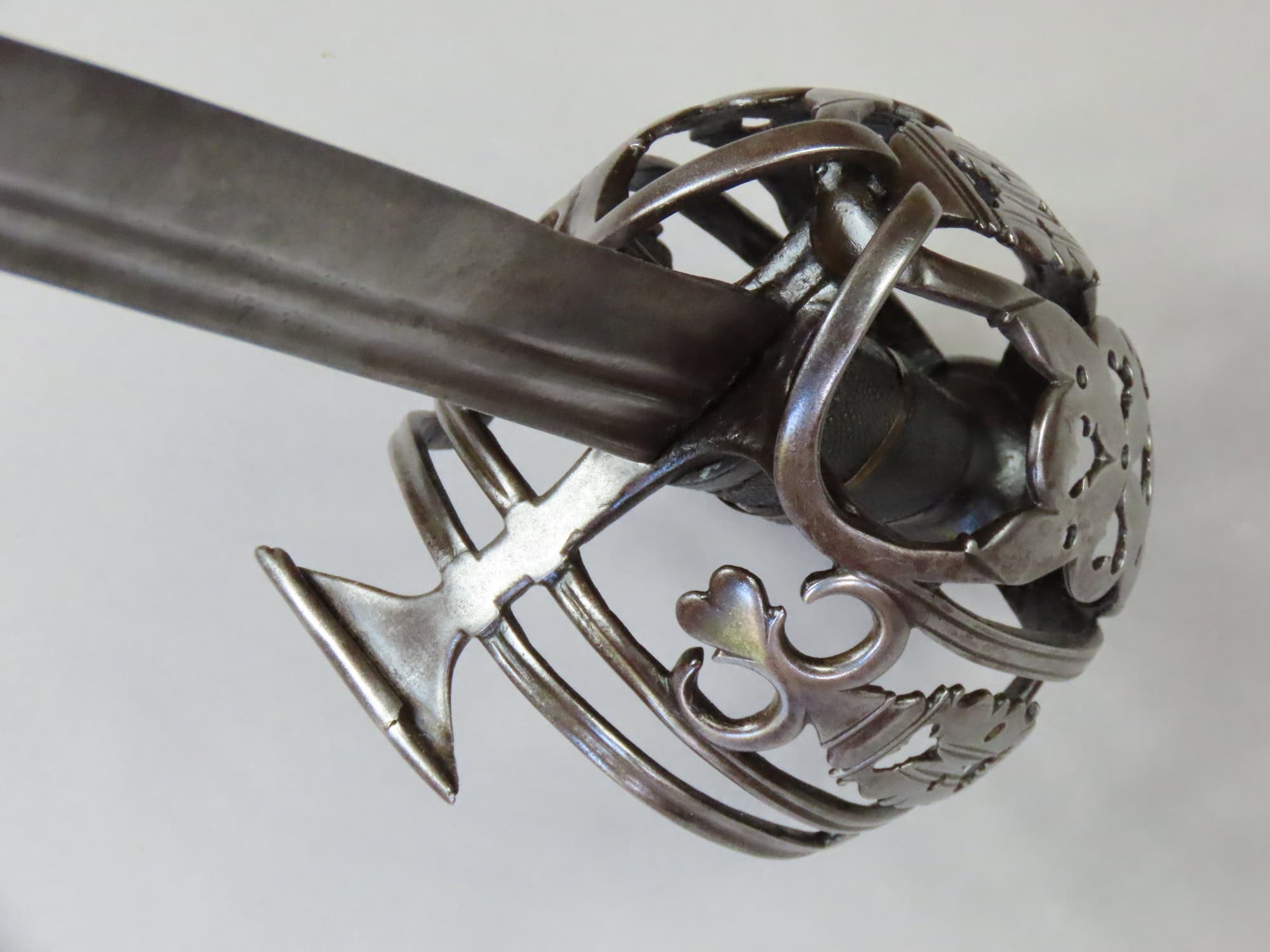
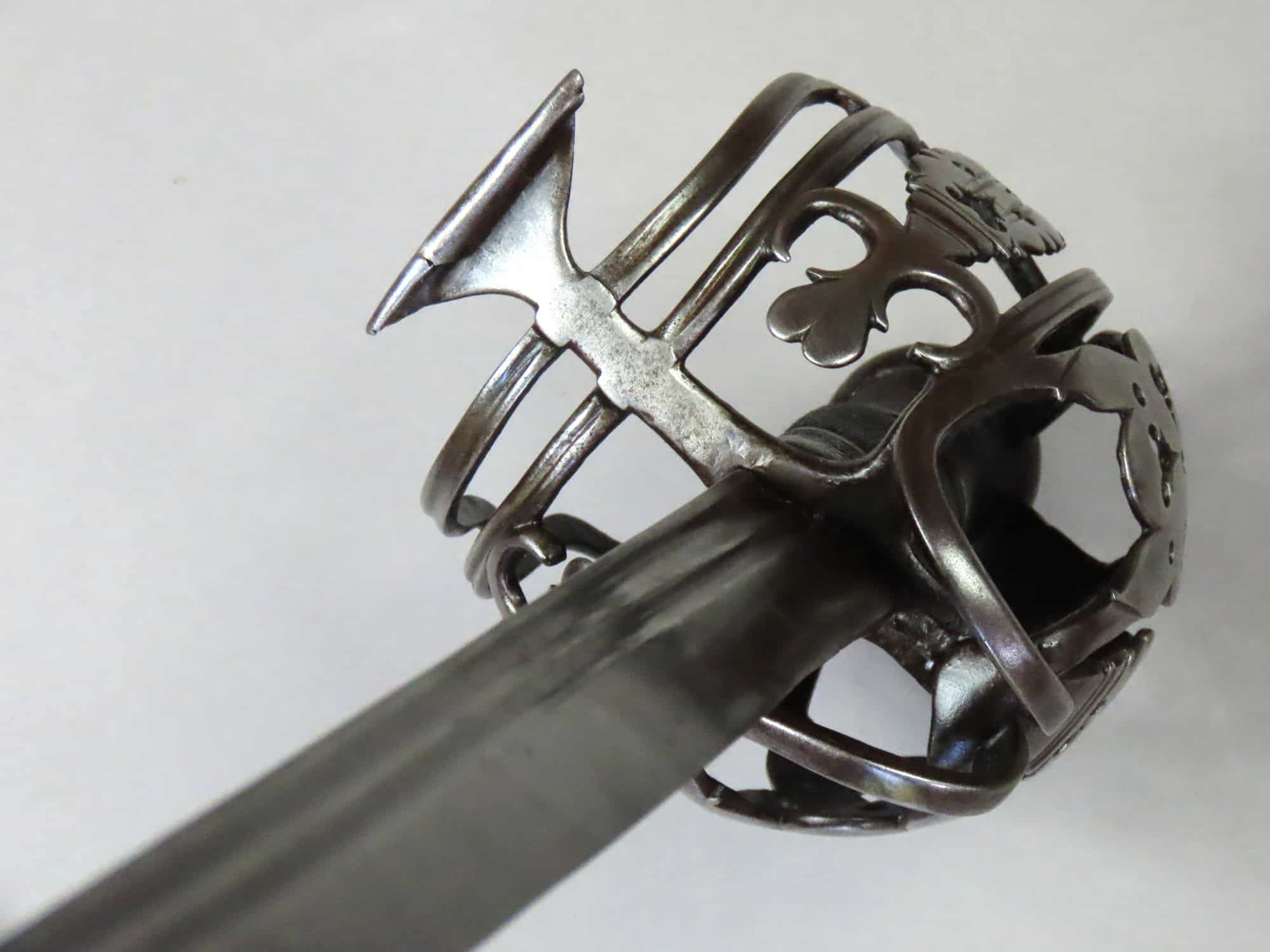
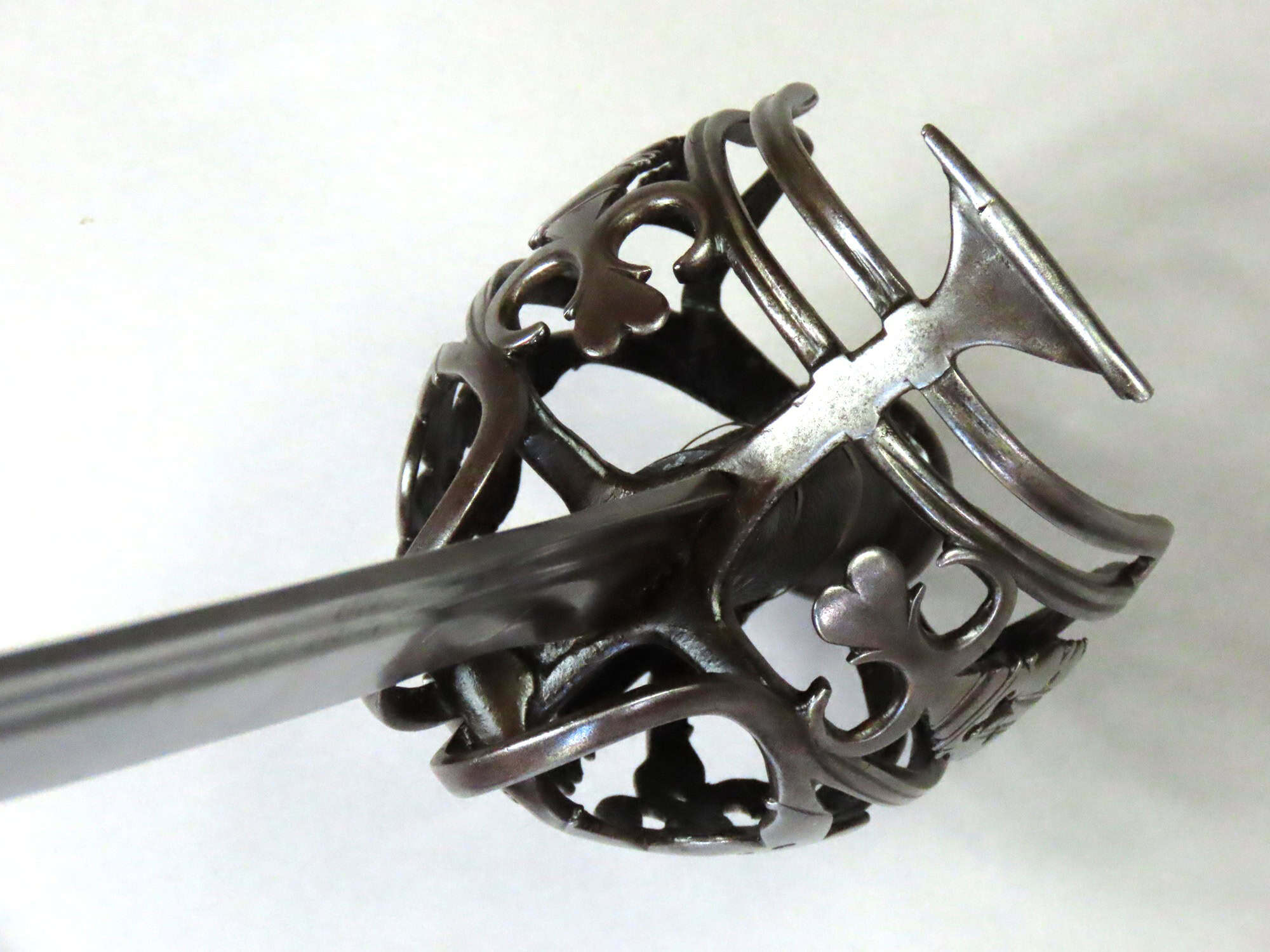
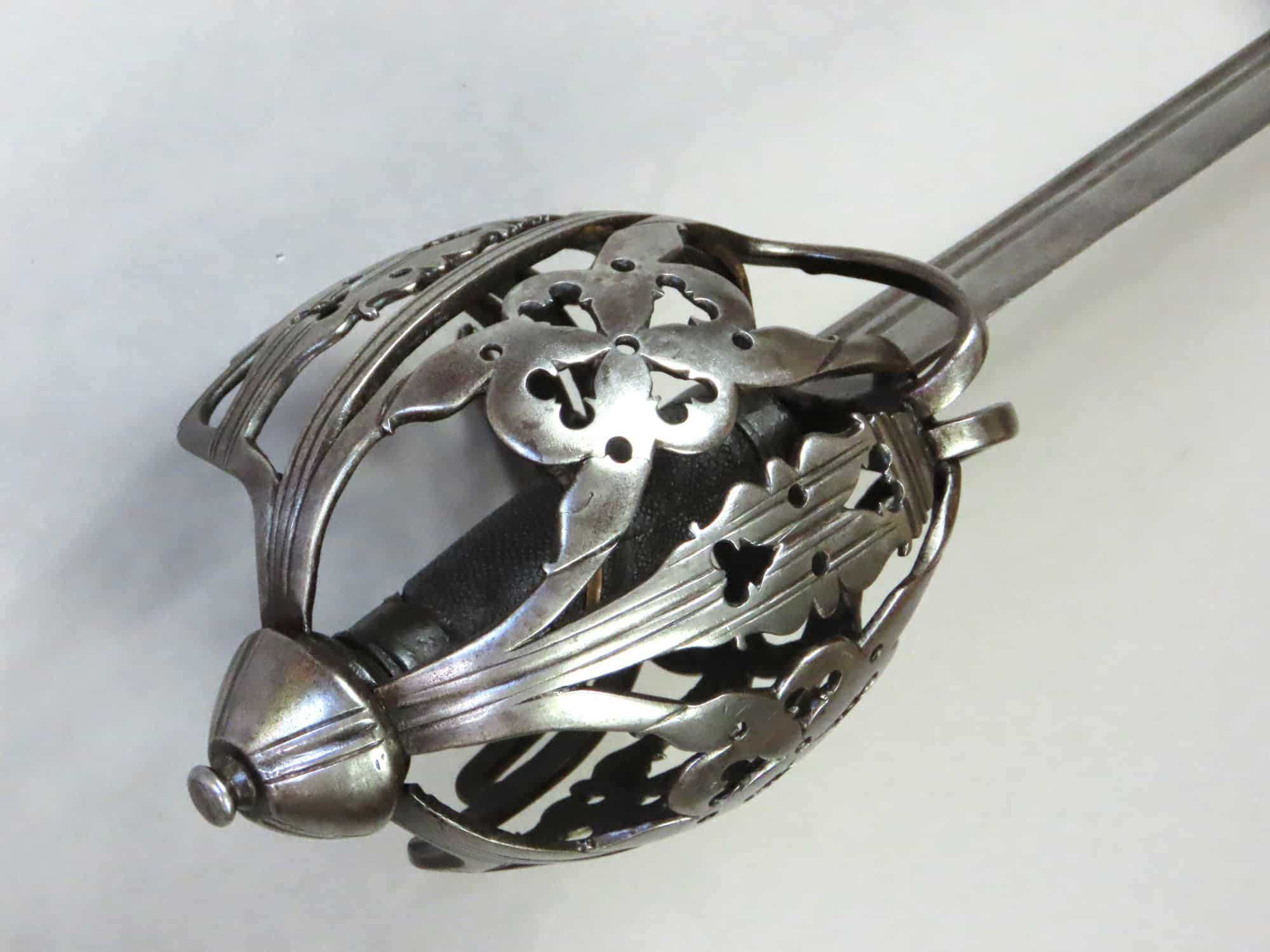
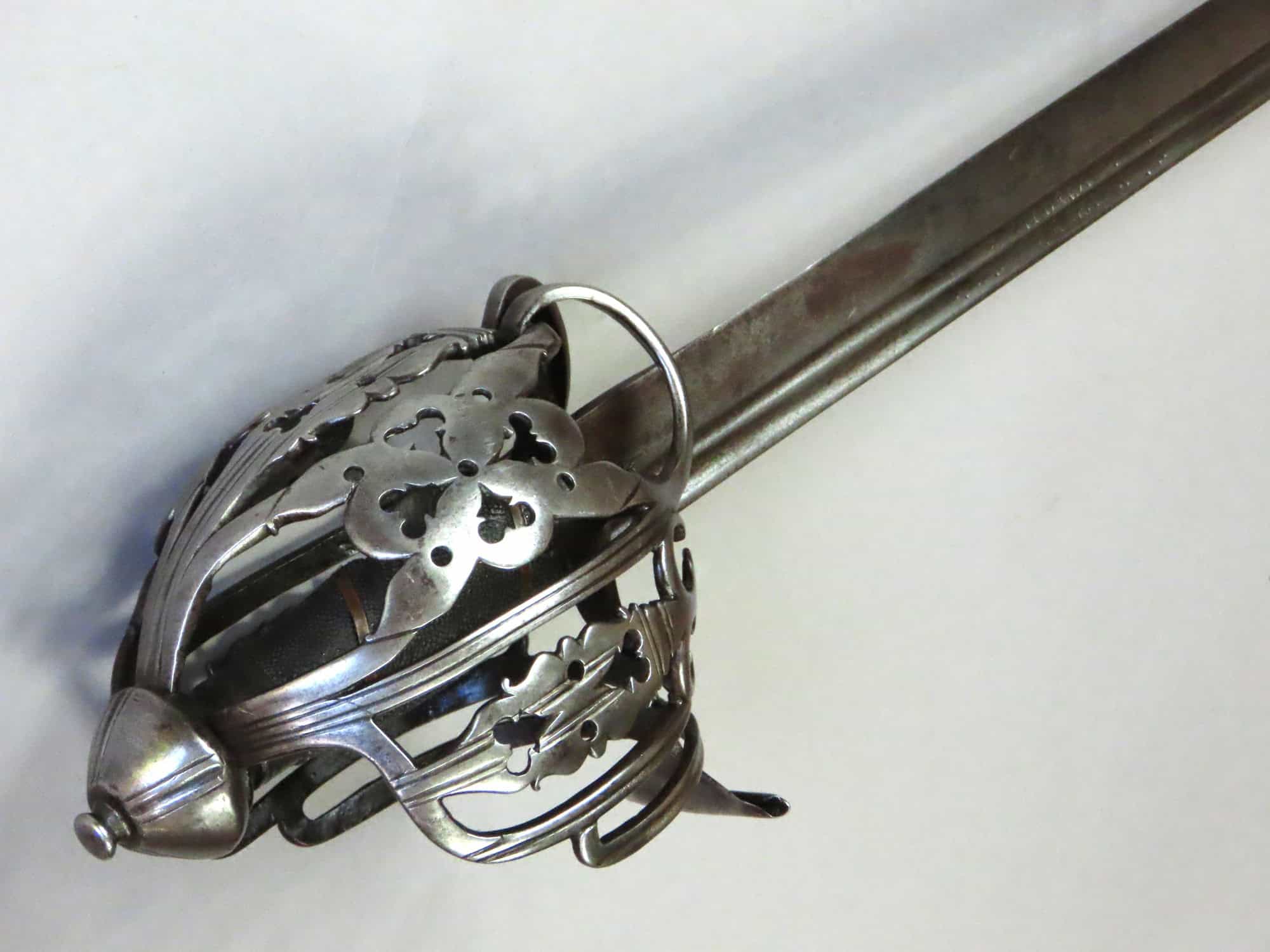
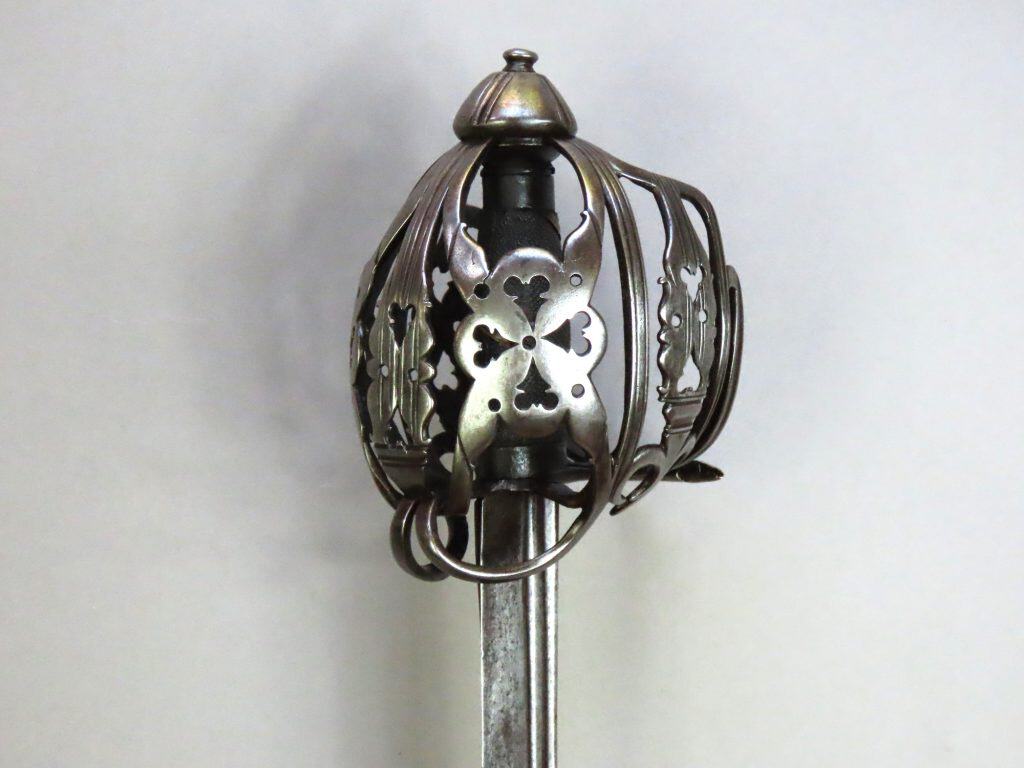
An exceptional Scottish Basket Hilted Sword dating to the second quarter of the 18th century. The hilt is of particularly high quality workmanship and belongs to a small group of swords of this type. Its distinguishing and rare feature is the design of the primary frontal guard panels which are formed as quatrefoils with rounded edges. The flowing contours are matched by the knuckle bow and side guard plates which are formed with curves, waves and crescents to the edges giving an overall elegance to the hilt to a greater degree than is usual. The sword is in excellent and original condition.
All of the swords in this small group are of the highest quality of execution, worked from thick iron to create a delicate and flowing aesthetic appearance contrasted by the robust construction. Two of these swords are illustrated in Cyril Mazansky’s “British Basket-Hilted Swords”, Boydell Press, 2005. The first on page 138, Ref G1c, shows a hilt with a horseman’s oval housed in the National Museums of Scotland in Edinburgh. The second on page 139, Ref G1cJA, also in the NMS Edinburgh, is stamped with the initials of the hilt maker John Allan of Stirling. Mazansky comments on two other swords of this group which were once housed in the Earlshall Castle Collection in Fife in Scotland. Our sword is one of these. The whereabouts of the other is unknown. We are further aware of two others in private collections which tentatively means that the presently known group consists of six examples.
Our sword is very similar in profile to that made by John Allan mentioned above. It also possesses more advanced decorative features with “Glasgow” style fluting applied to the guard bars which is absent on the signed hilt. Presumably the sword is from the workshop of John Allan but for some reason was not signed by the maker. It also further represents the continued ingenuity of this family of sword makers to experiment with different designs of hilt towards the end of the “high” period of Scottish hilt making in the middle of the 18th century.
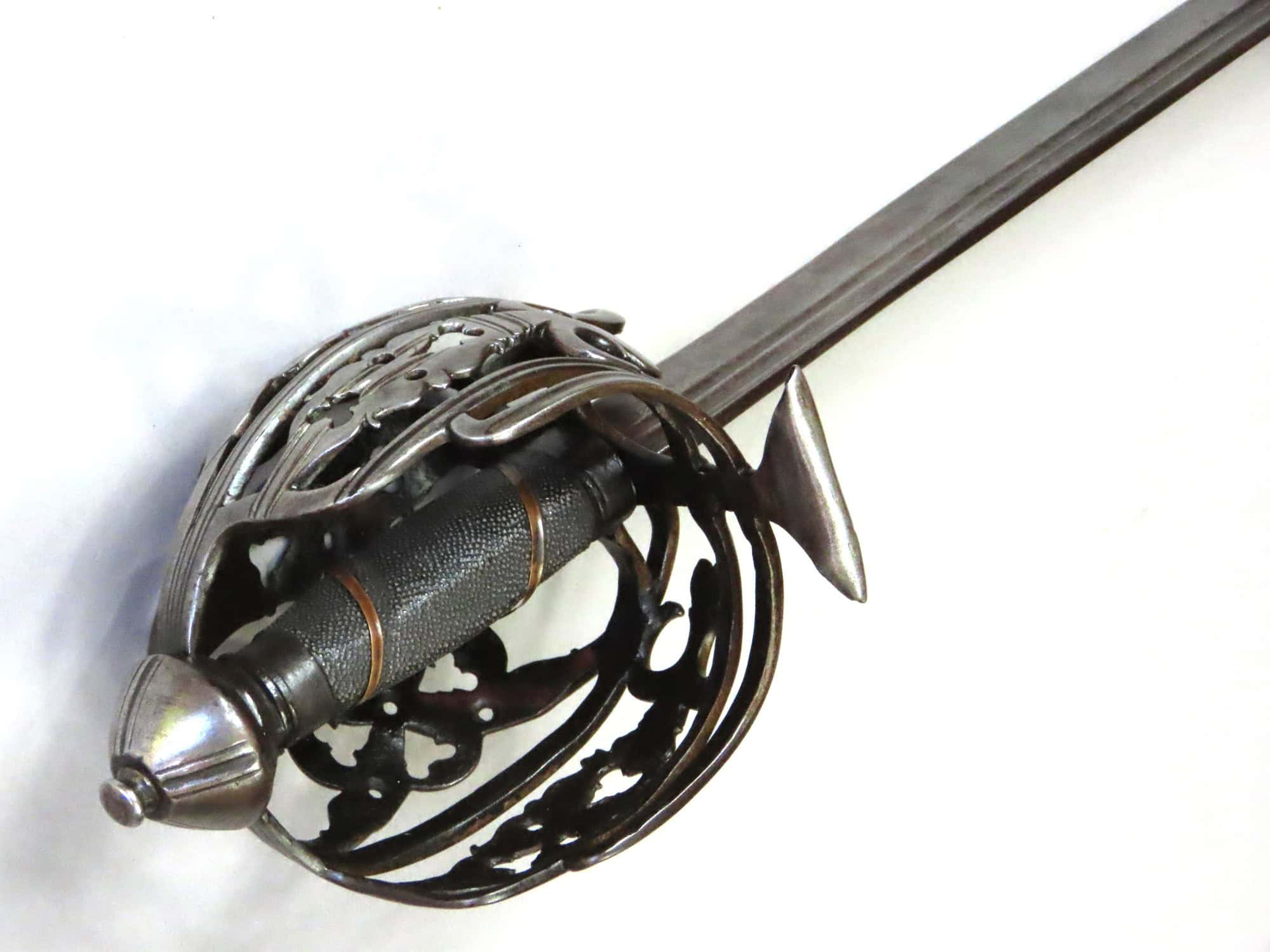
The hilt is well formed from rectangular section bars with rounded edges. The main and secondary guard panels are pierced with larger than usual heart shapes (a further feature of these swords commented on by Mazansky). The cone shaped pommel has a cut groove extending around its circumference just below its equator into which the ends of the guard arms are tucked to secure the hilt. The pommel is decorated with four sets of filed grooves flanked with narrower incised lines which radiate from the pommel top upon which a pronounced ribbed button is mounted. The spirally grooved wooden grip retains its original shagreen covering bound with copper strip and metal ferrules top and bottom.
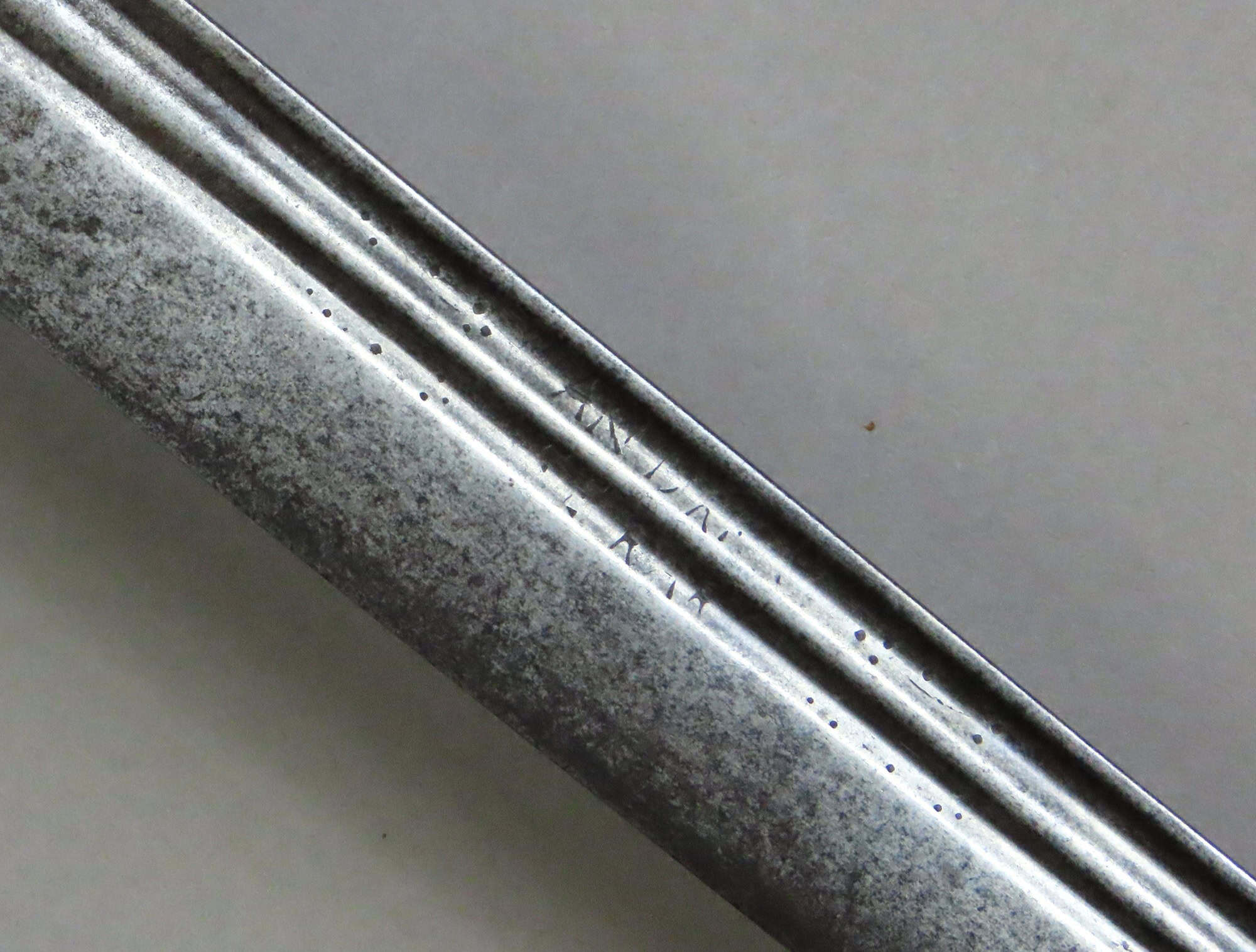
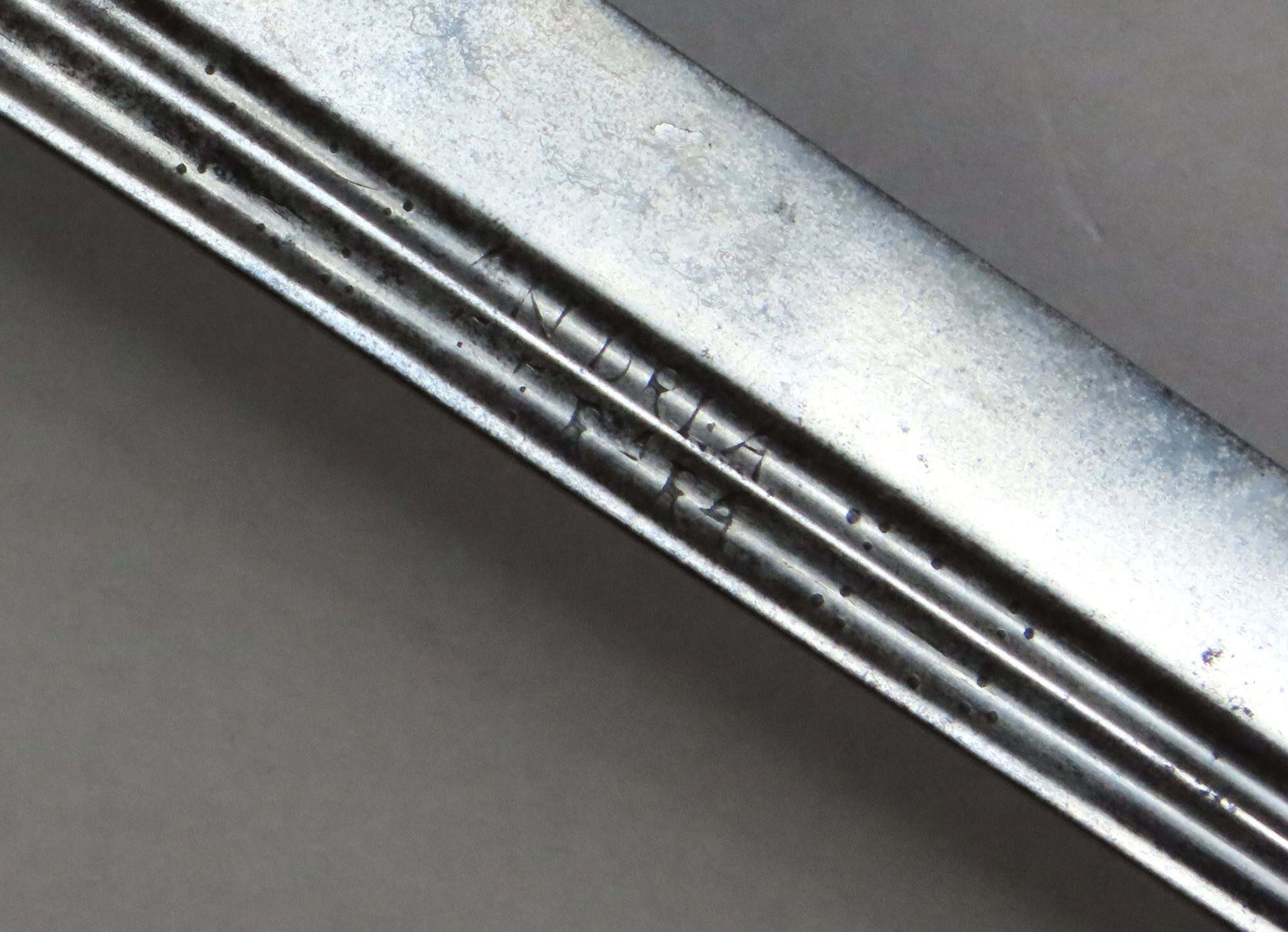
The single edged tapering blade is 32.25 inches long (81.5 cm). Underneath the back blunt edge a bold fuller extends from the hilt to terminate 6.5 inches (16.5 cm) from the blade tip after which the blade is double edged. Beneath this first fuller a second extends from the hilt to terminate 3.5 inches (9 cm) nearer to the tip than the first. Each side one fuller is marked “ANDRIA” with “FERARA” in the second fuller underneath with trefoils of dots either side.
Condition: The metal is in original and excellent condition for its age. The sword is uncleaned with some age staining and possesses an attractive grey patina consistent over all parts. There is a small crack to one upper guard bar which supports one of the frontal guard panels. The hilt is firm in hand, well balanced and retains its shape.
Provenance: Earlshall Castle Collection until 1995 then John M Kauffmann of Maine until 2016 when the sword was sold to a private collector in the USA.