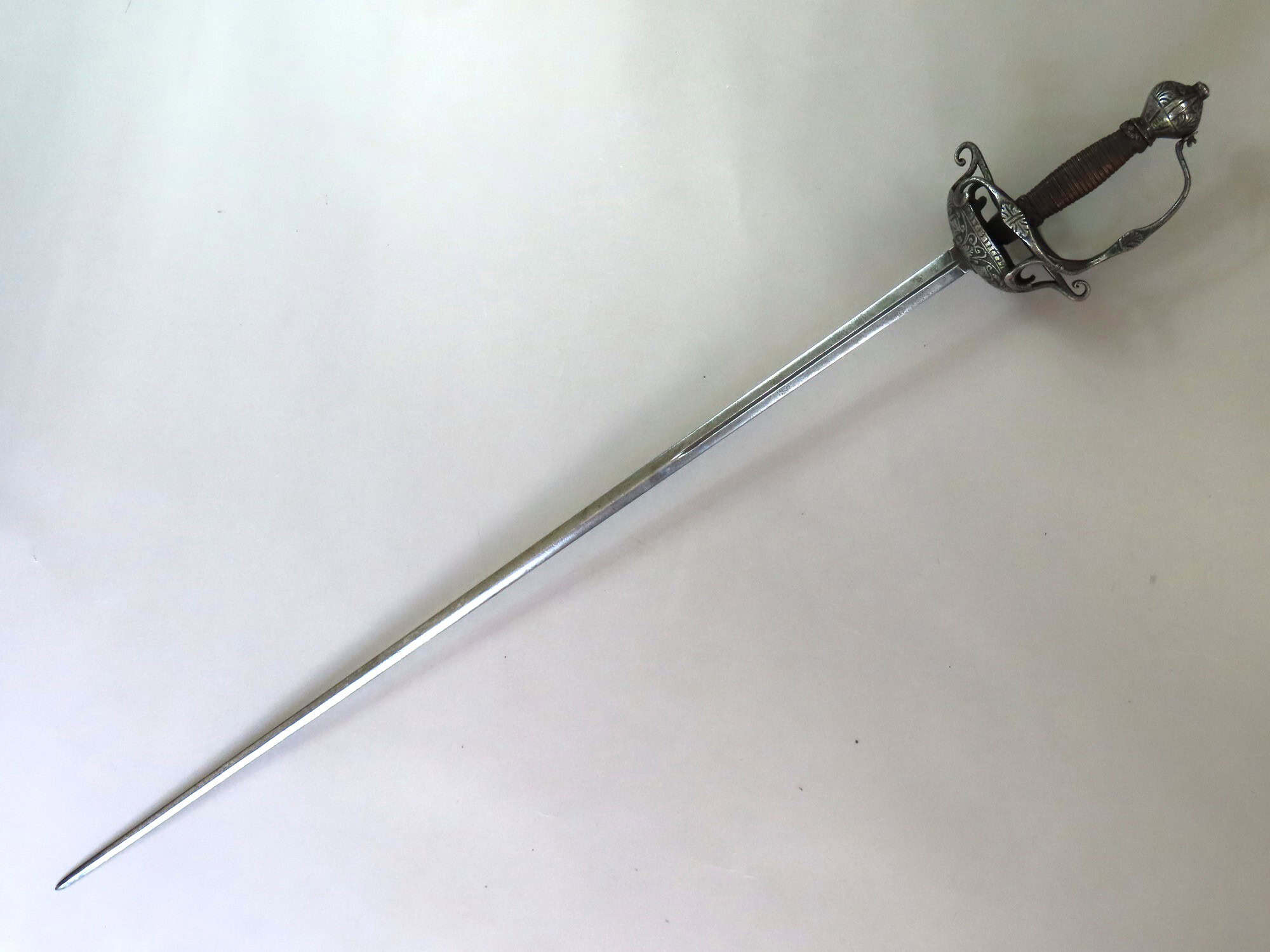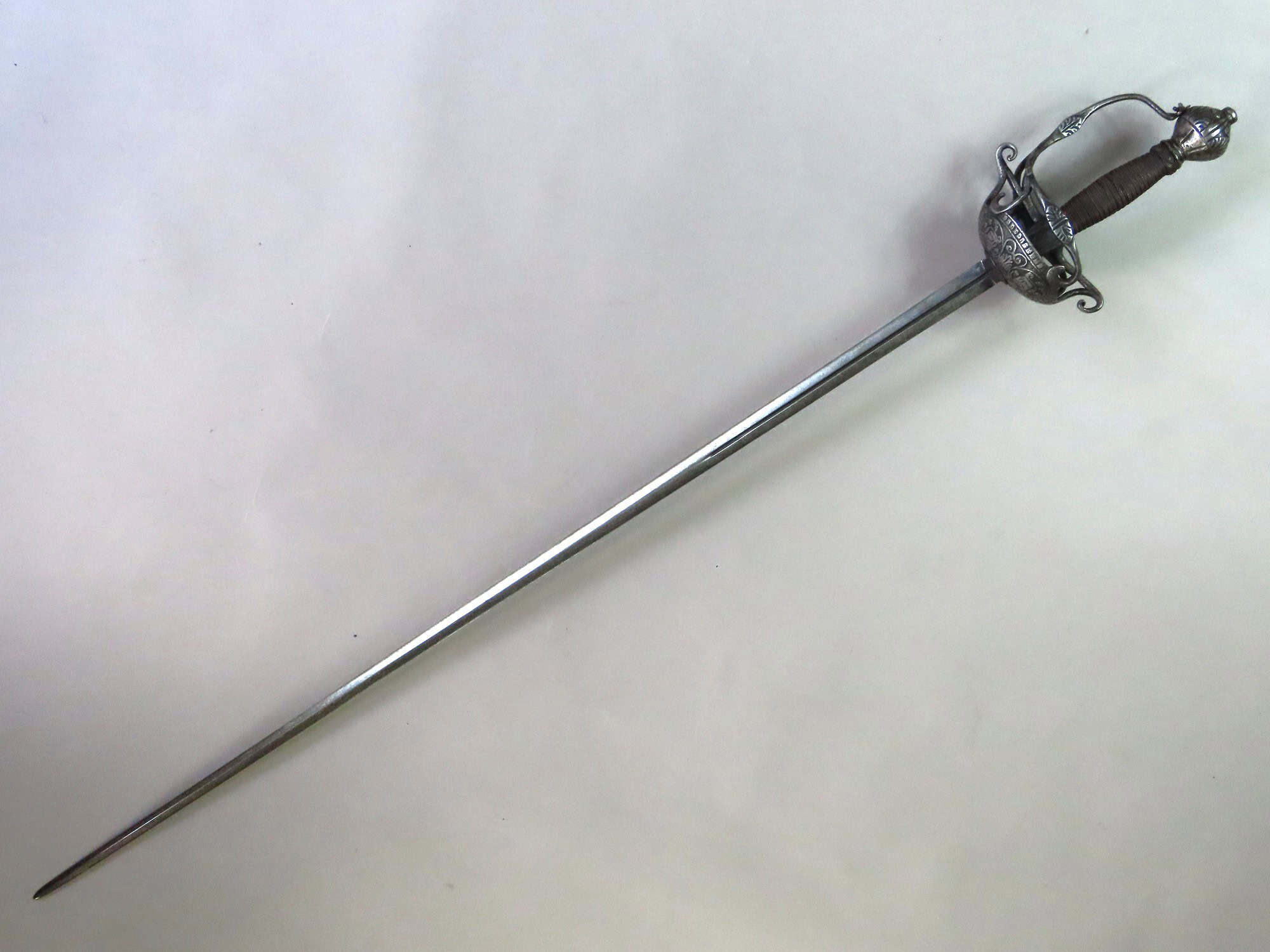
An English Civil War Period Dish Hilted Military Officer’s Raper dating to 1620 to 1650
To enquire about this itemplease click here
Price: £4,800
Ref: 62040757
Item Description
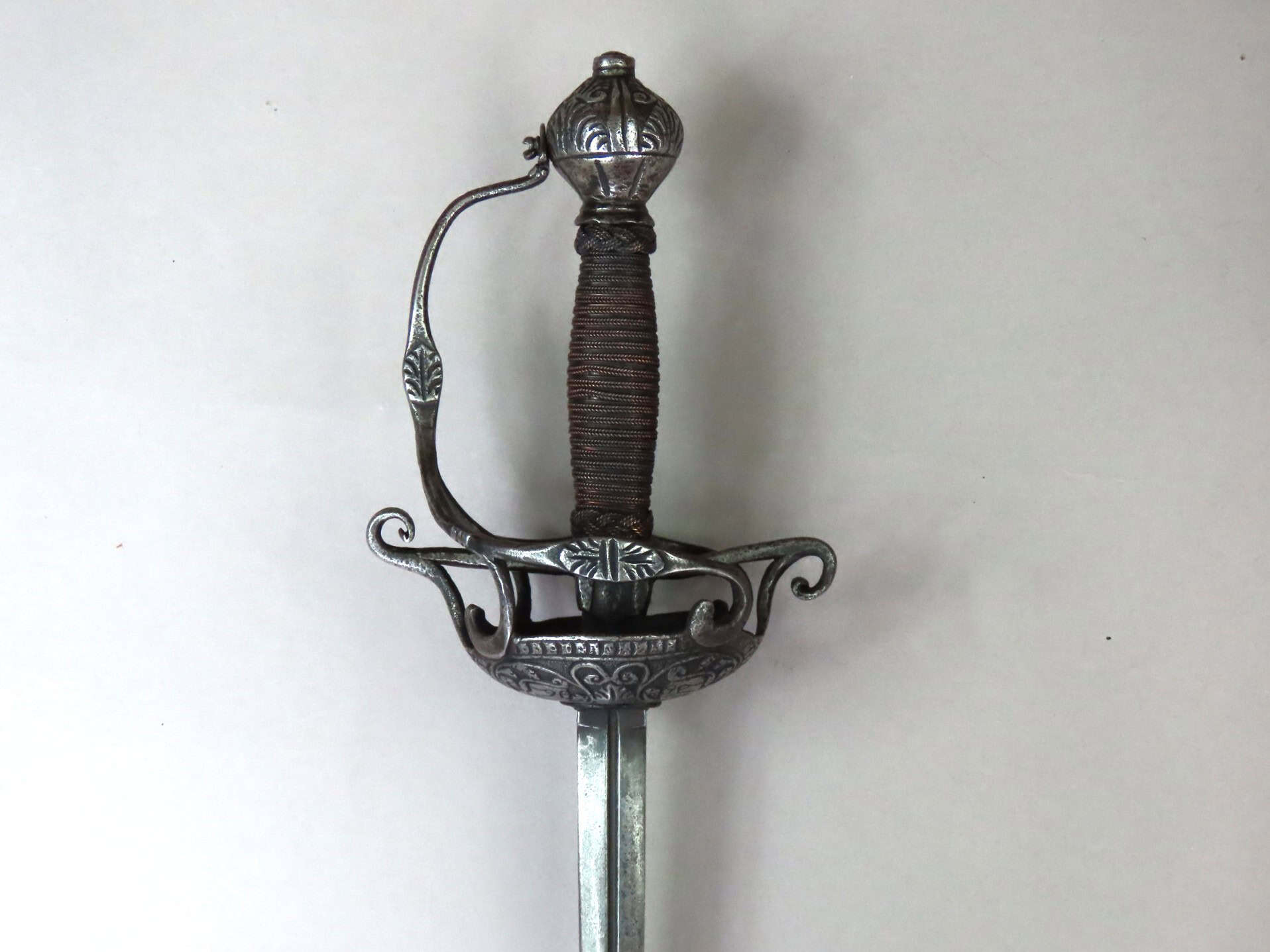
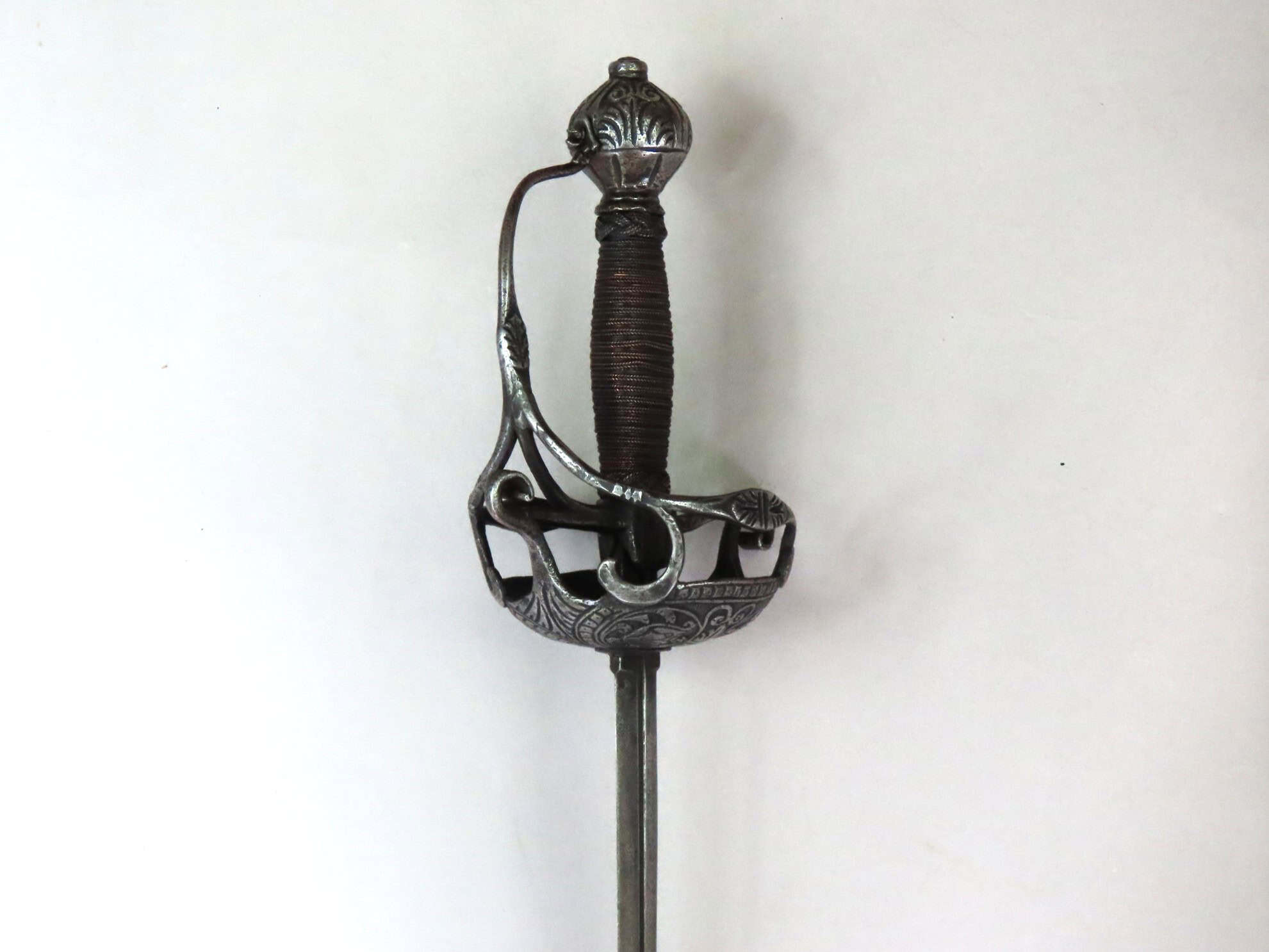
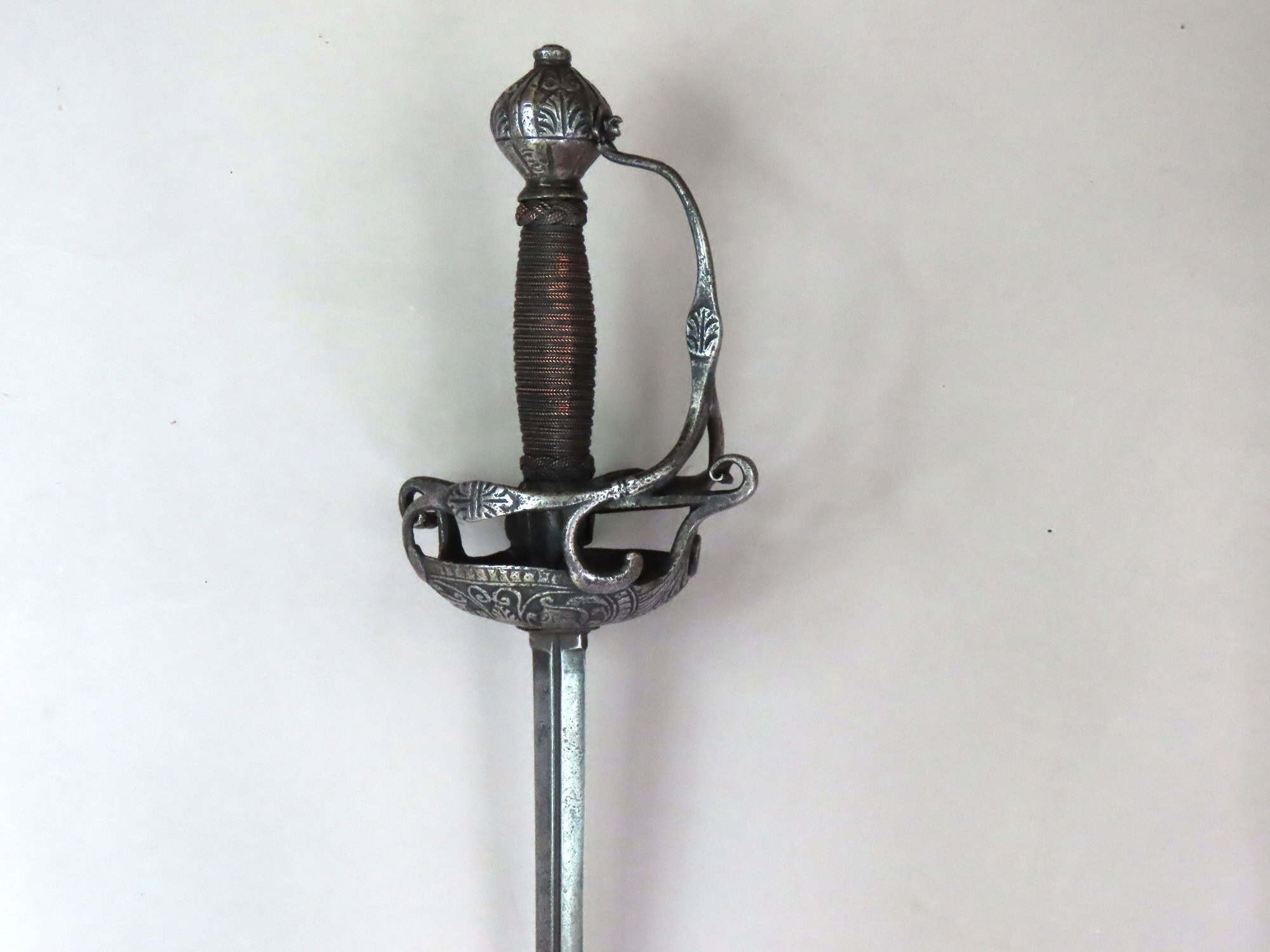
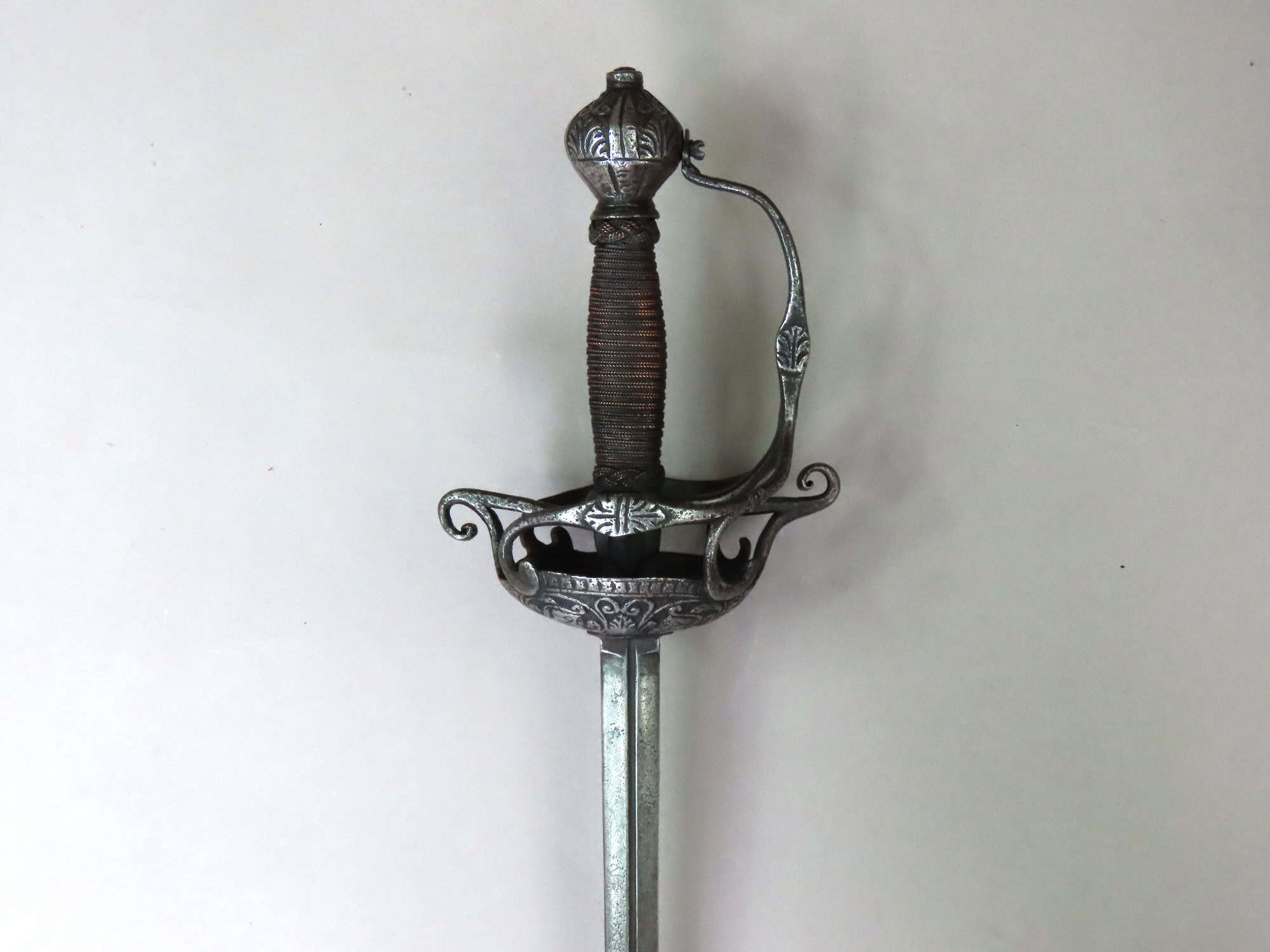
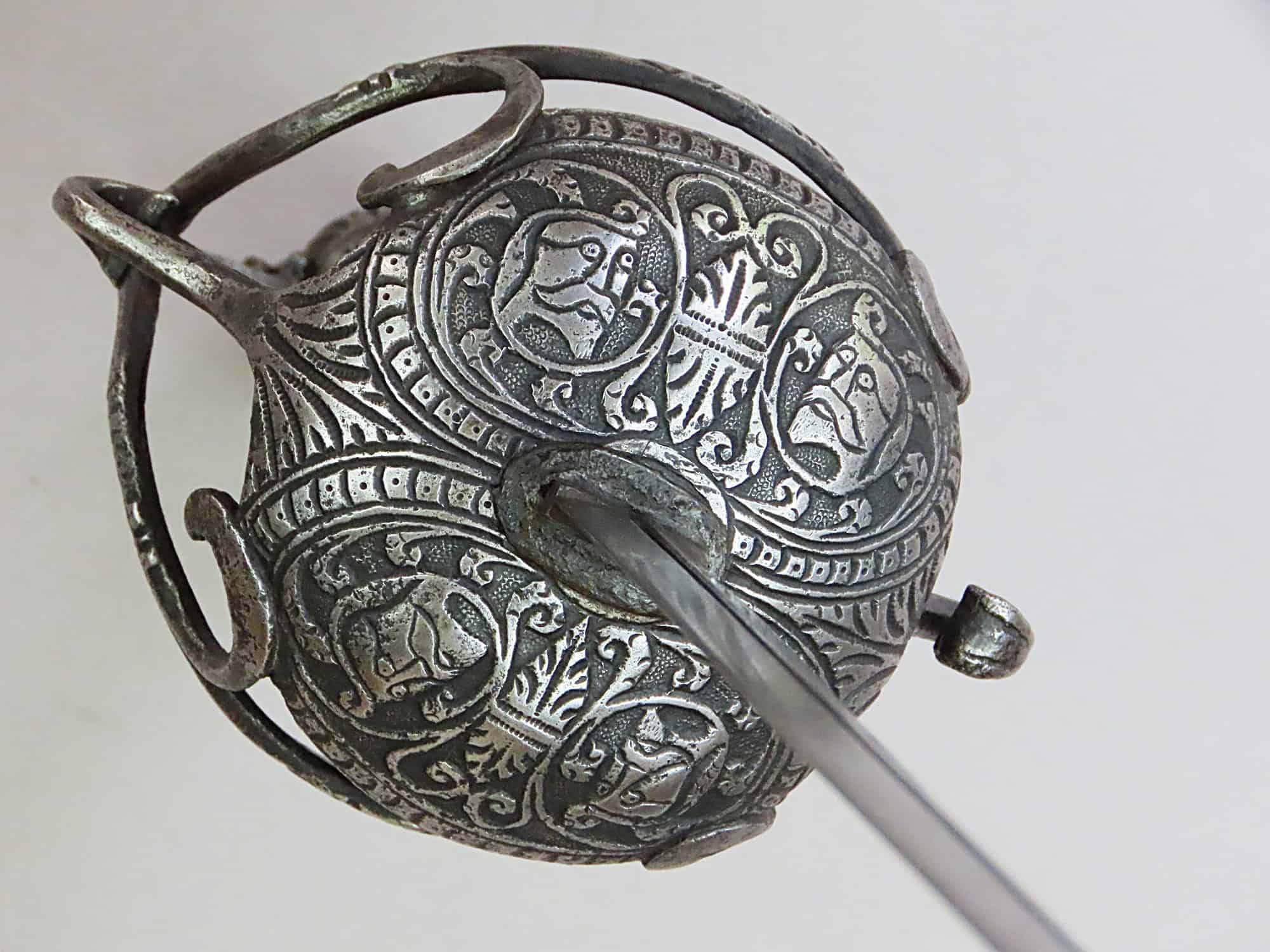
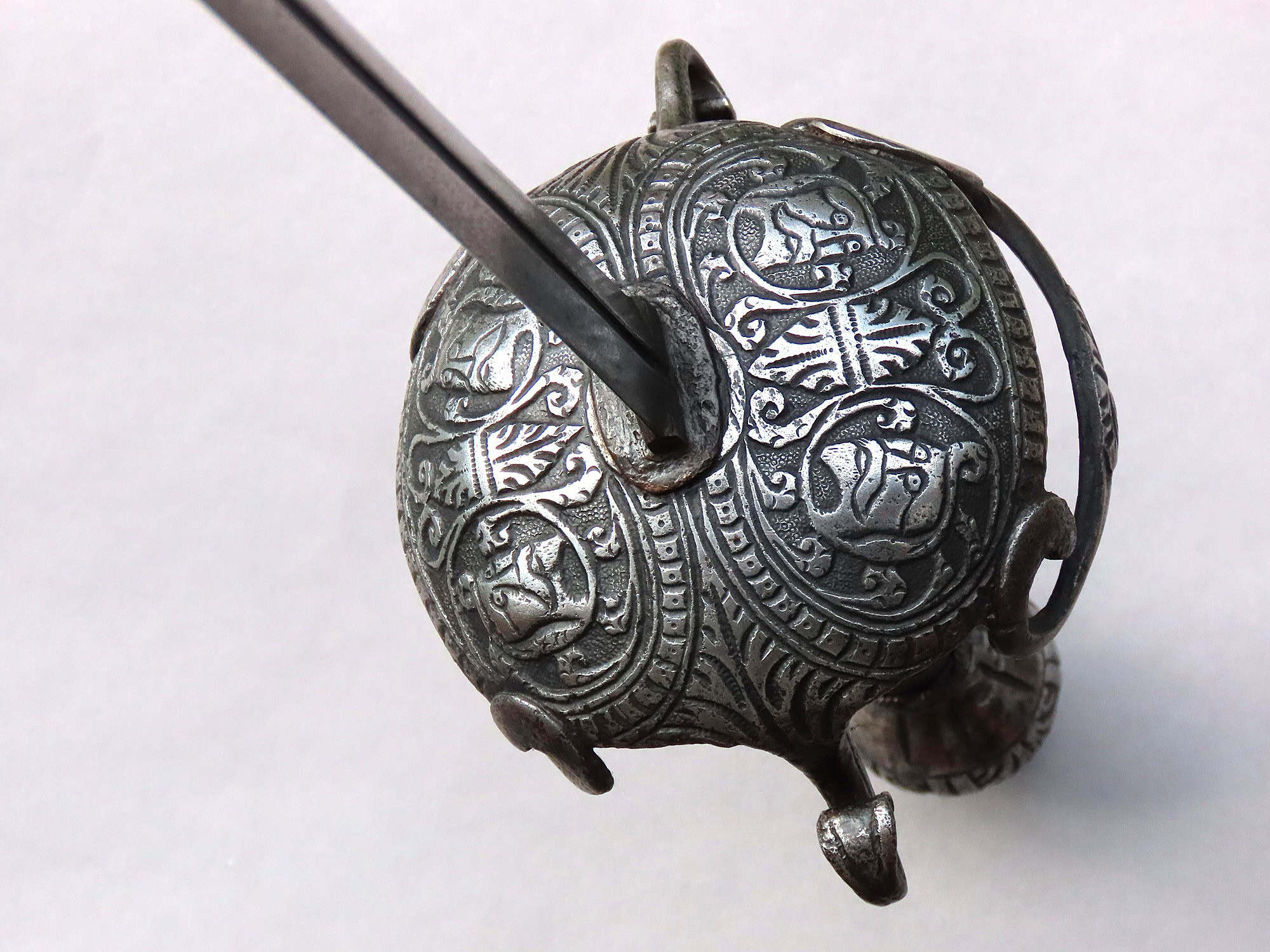
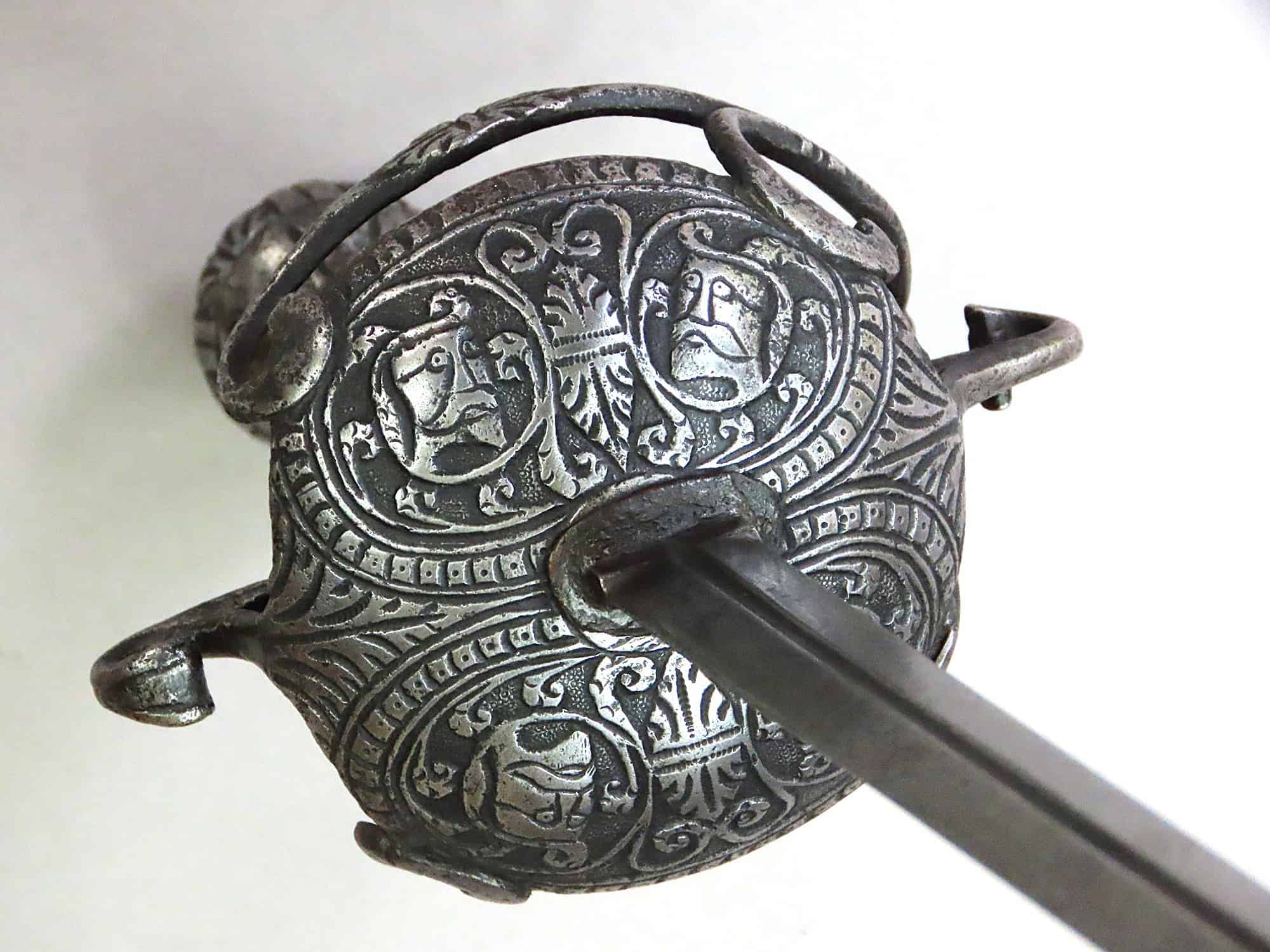
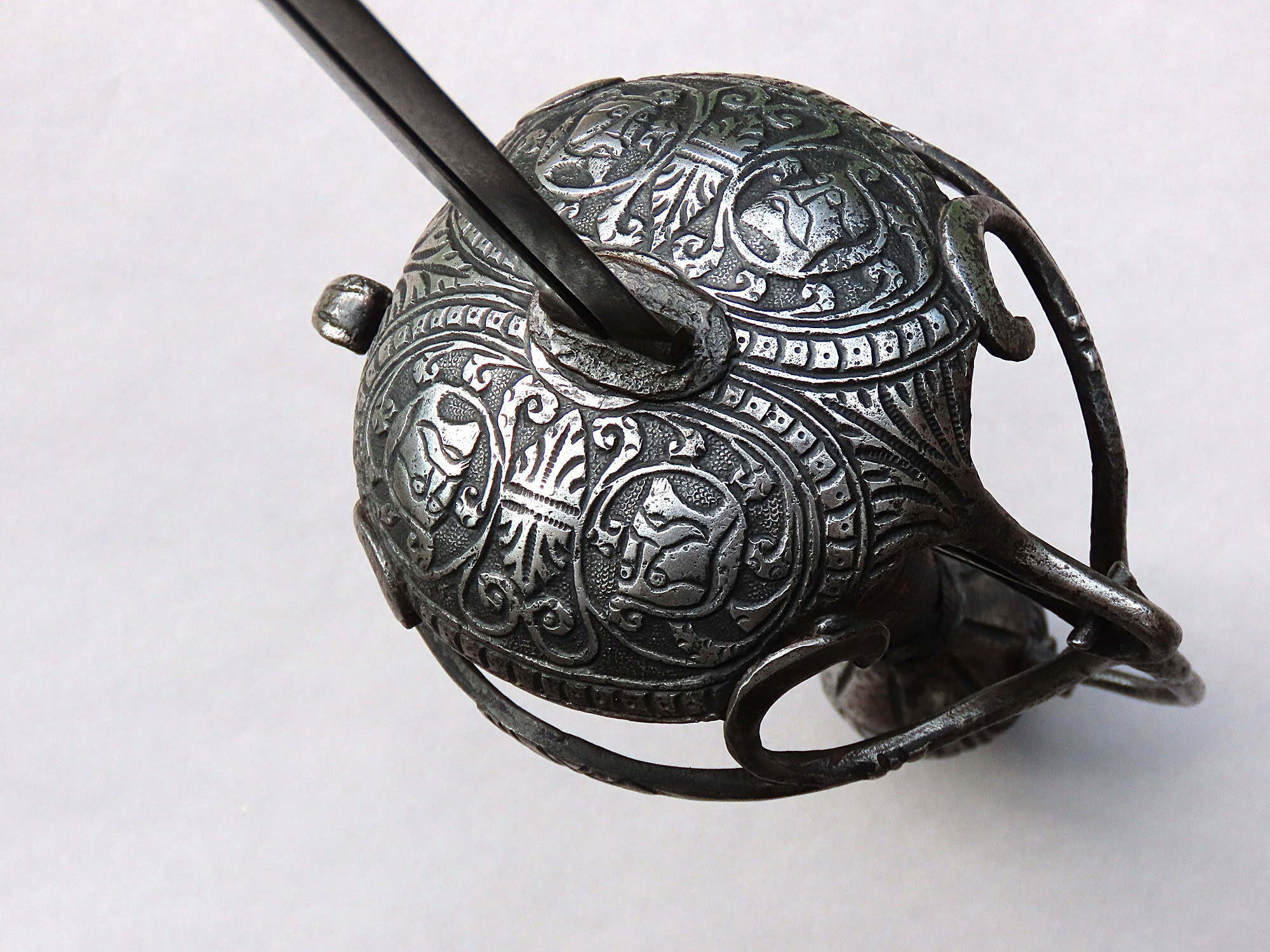
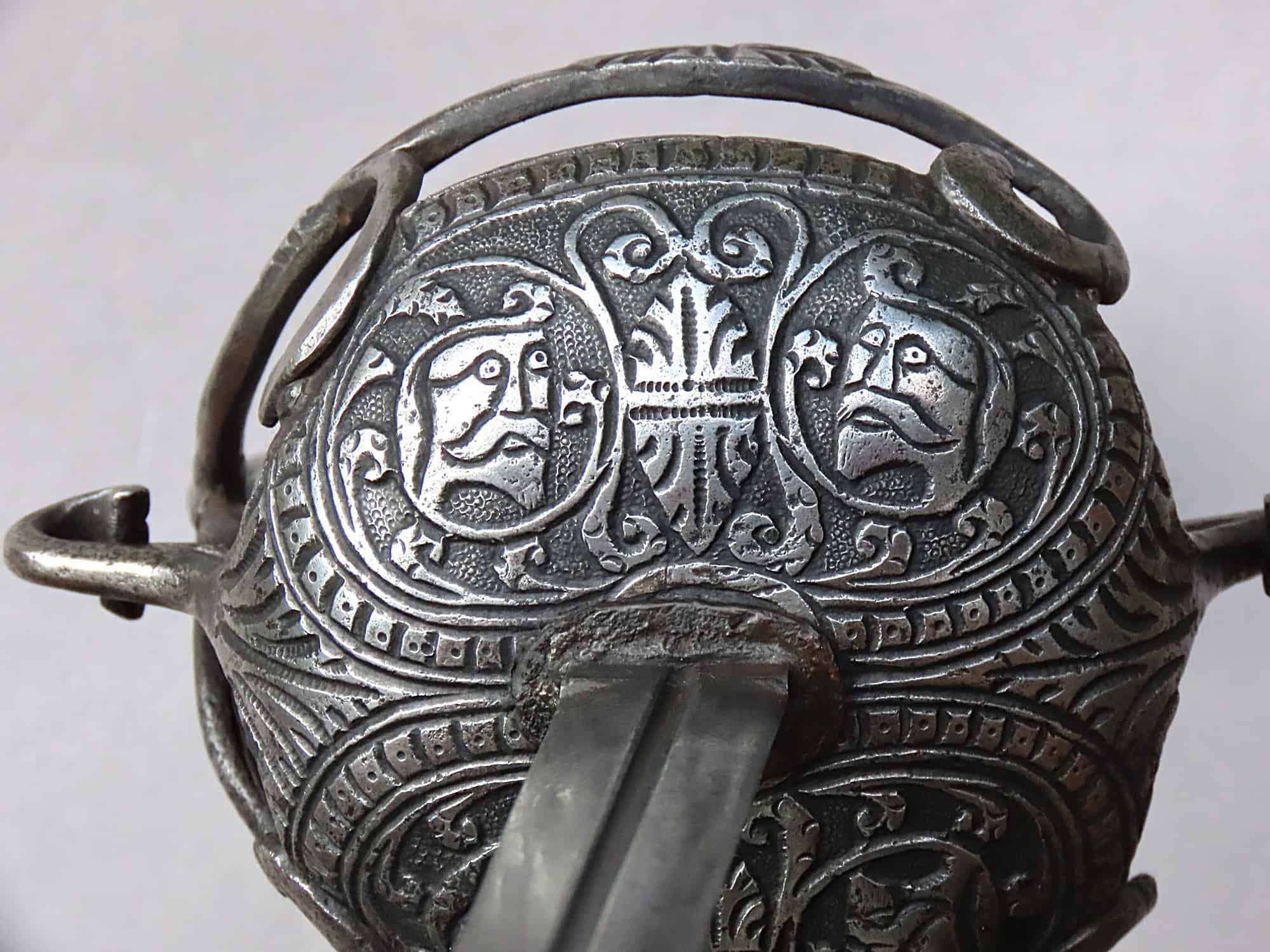
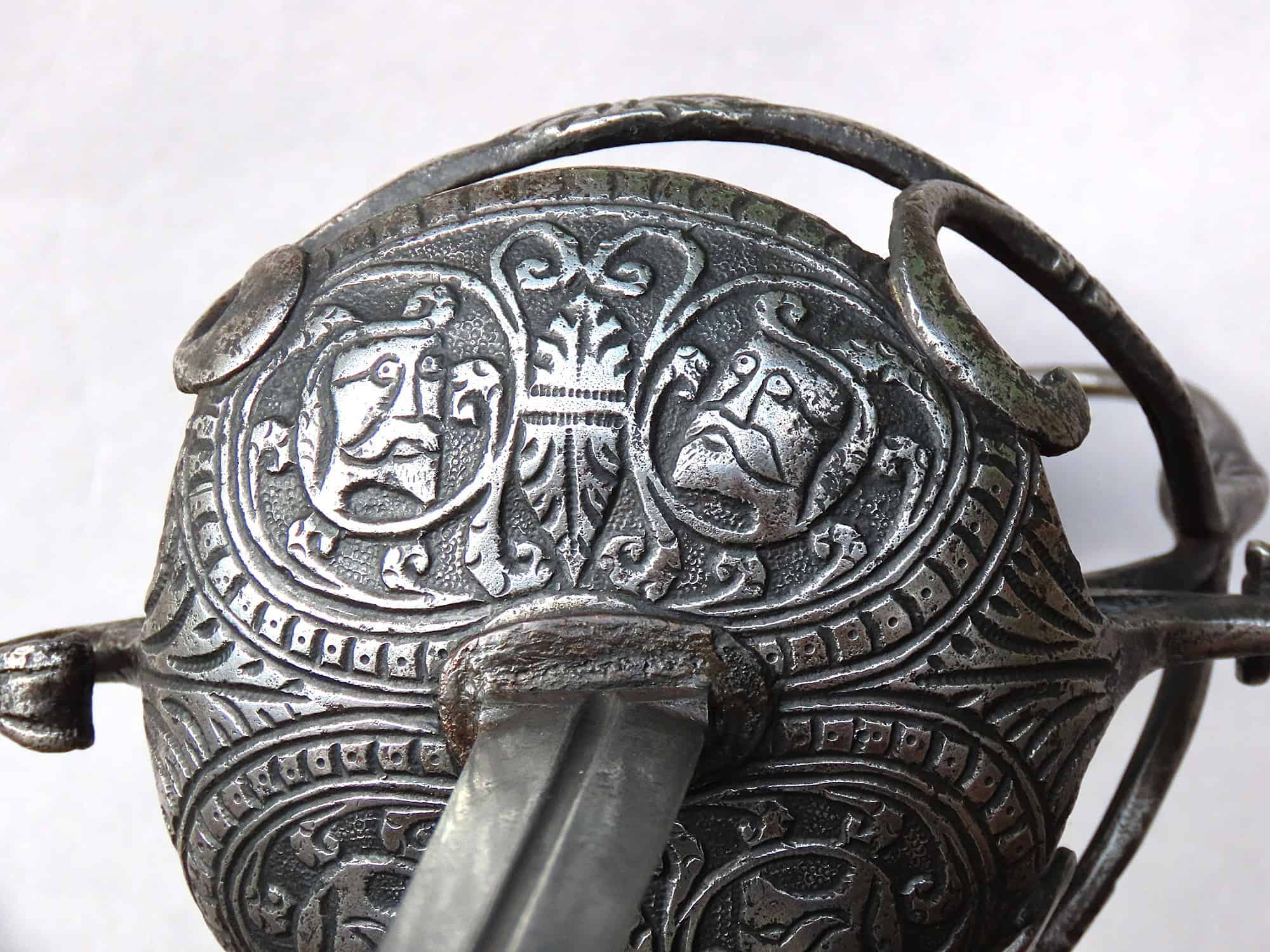
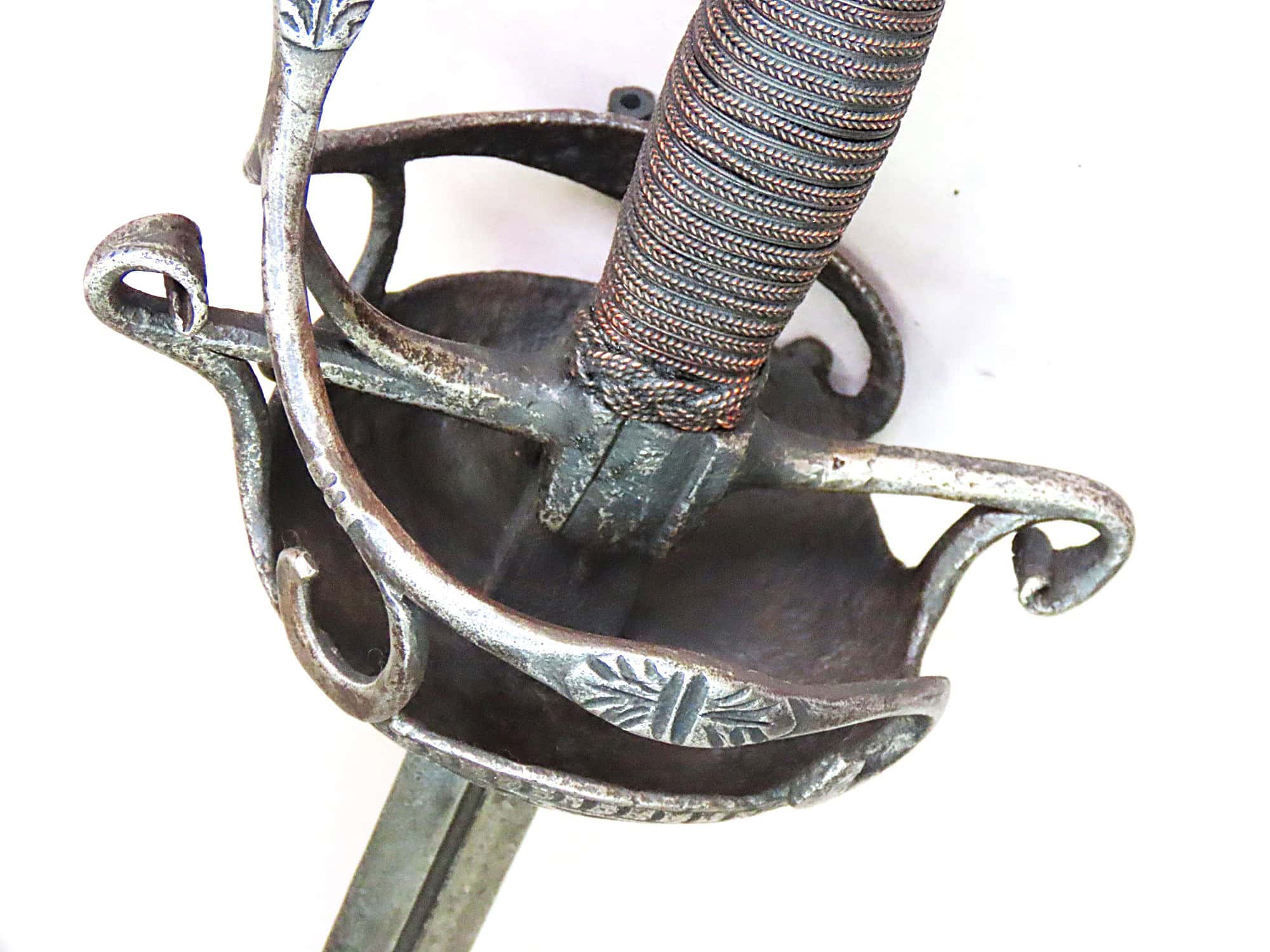
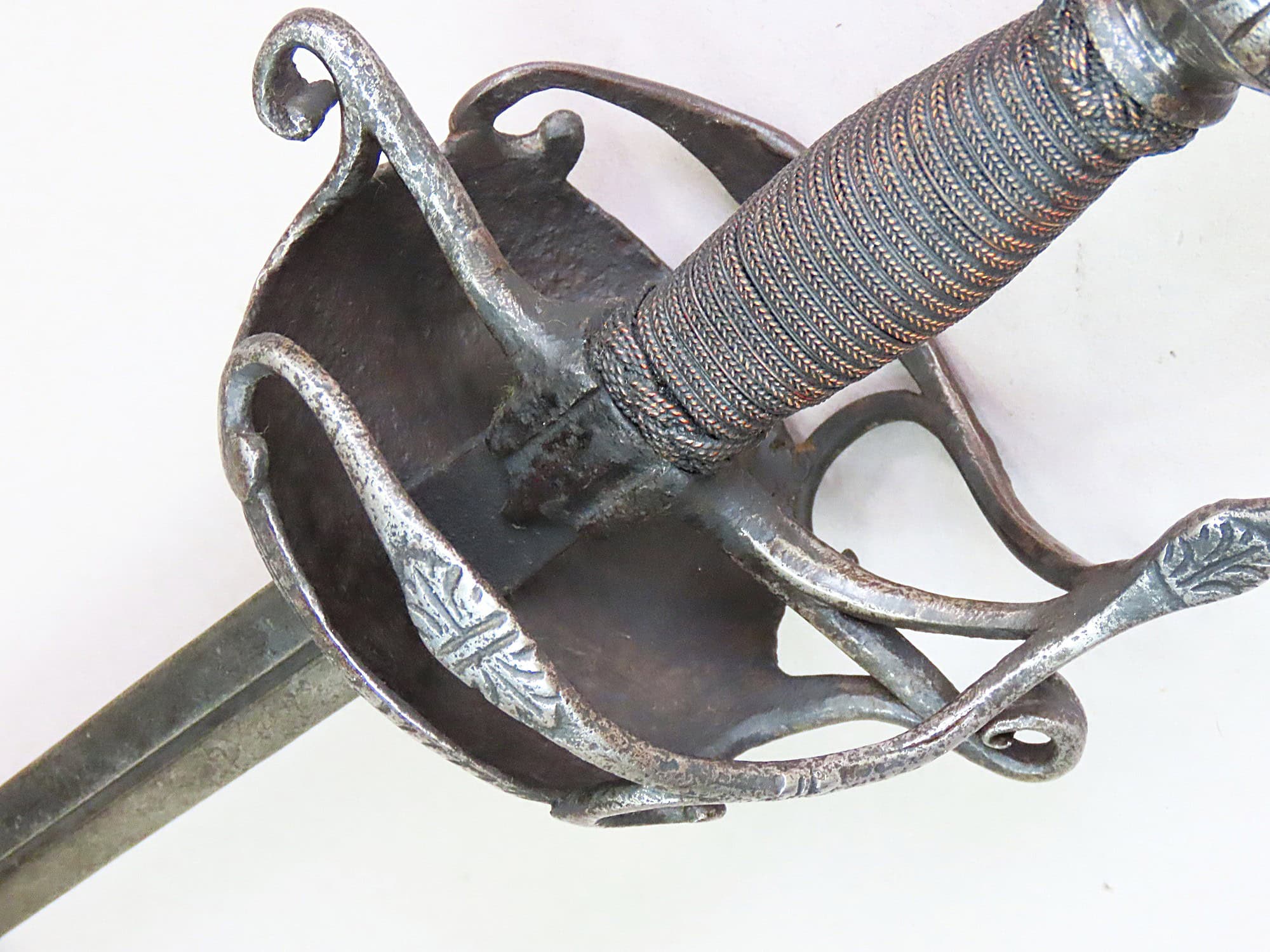
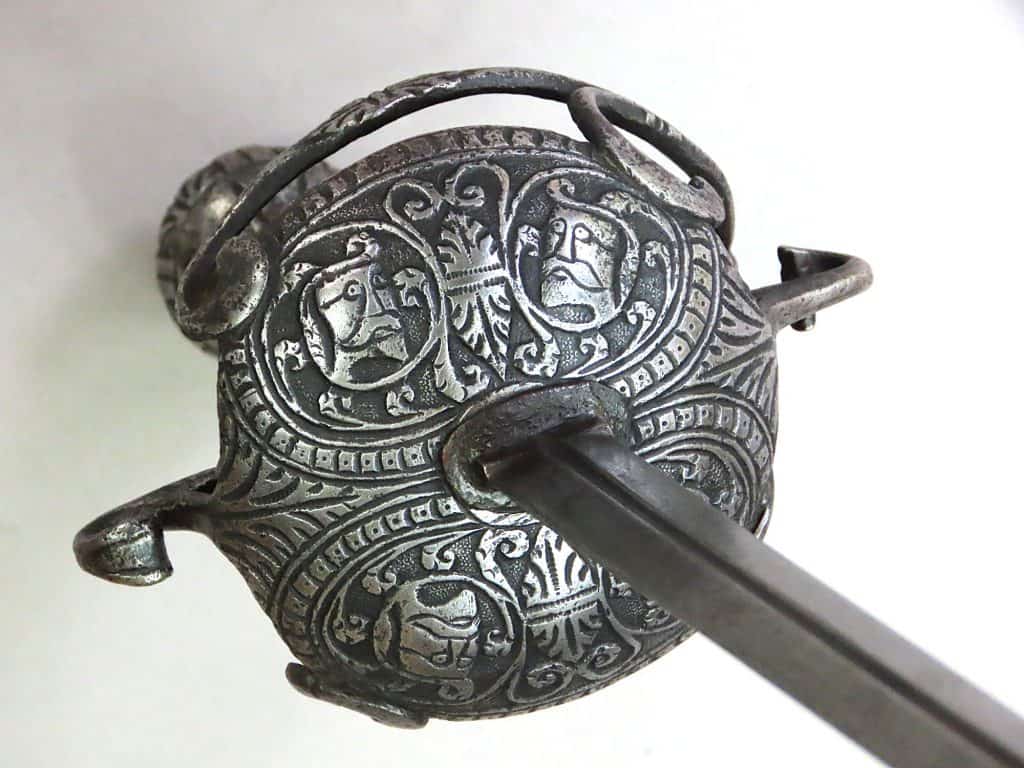
A beautifully chiselled English Dish Hilted Rapier dating to the second quarter of the 17th century and the early period of the English Civil War. The double-edged blade is intended for thrusting and cutting, which suggests the rapier was made for generalist military use rather than as a specialist duelling weapon which required a longer blade. The hilt is made in the traditional English manner boldly chiselled with panels of scrolls, foliage and human faces.
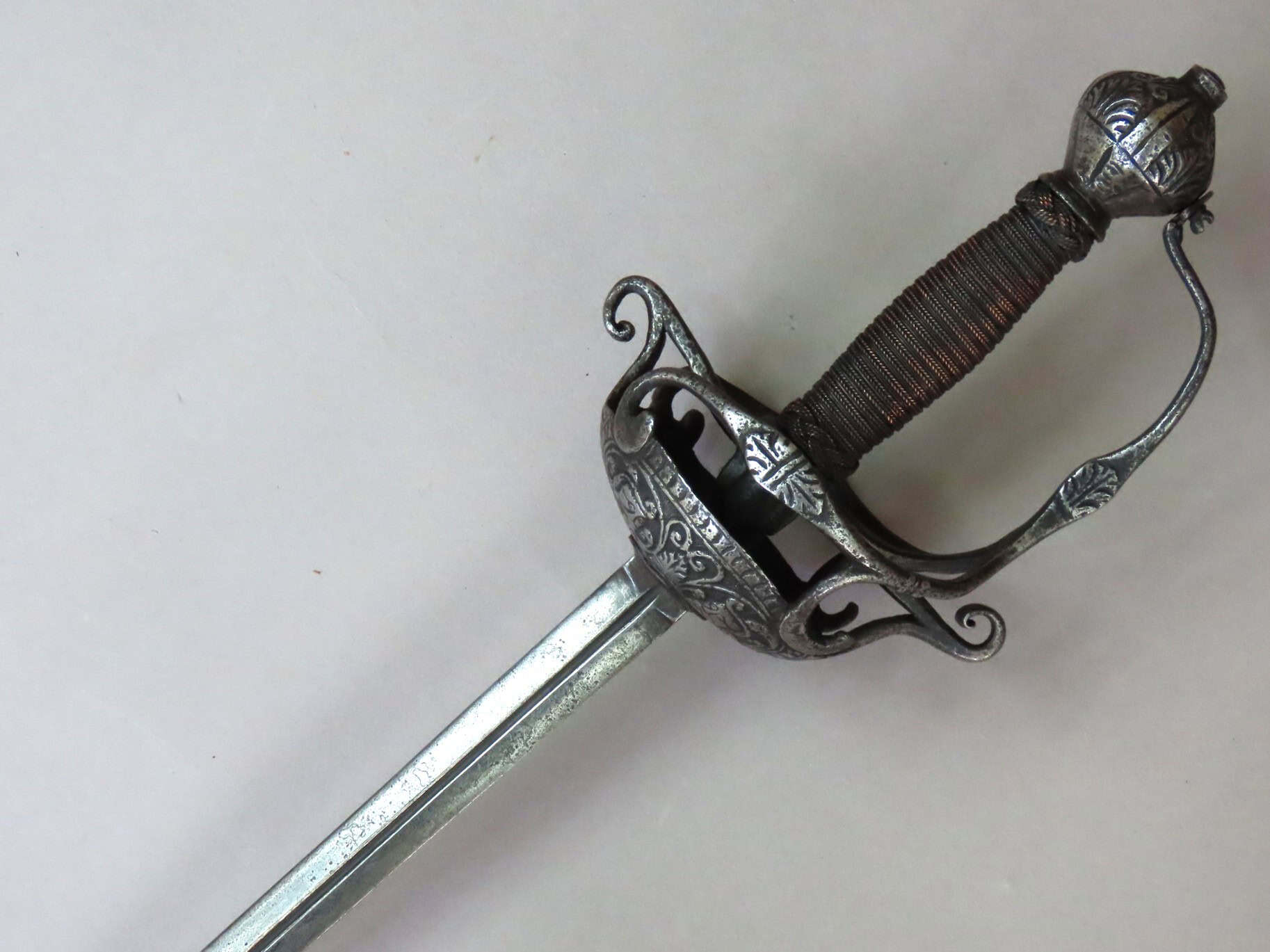
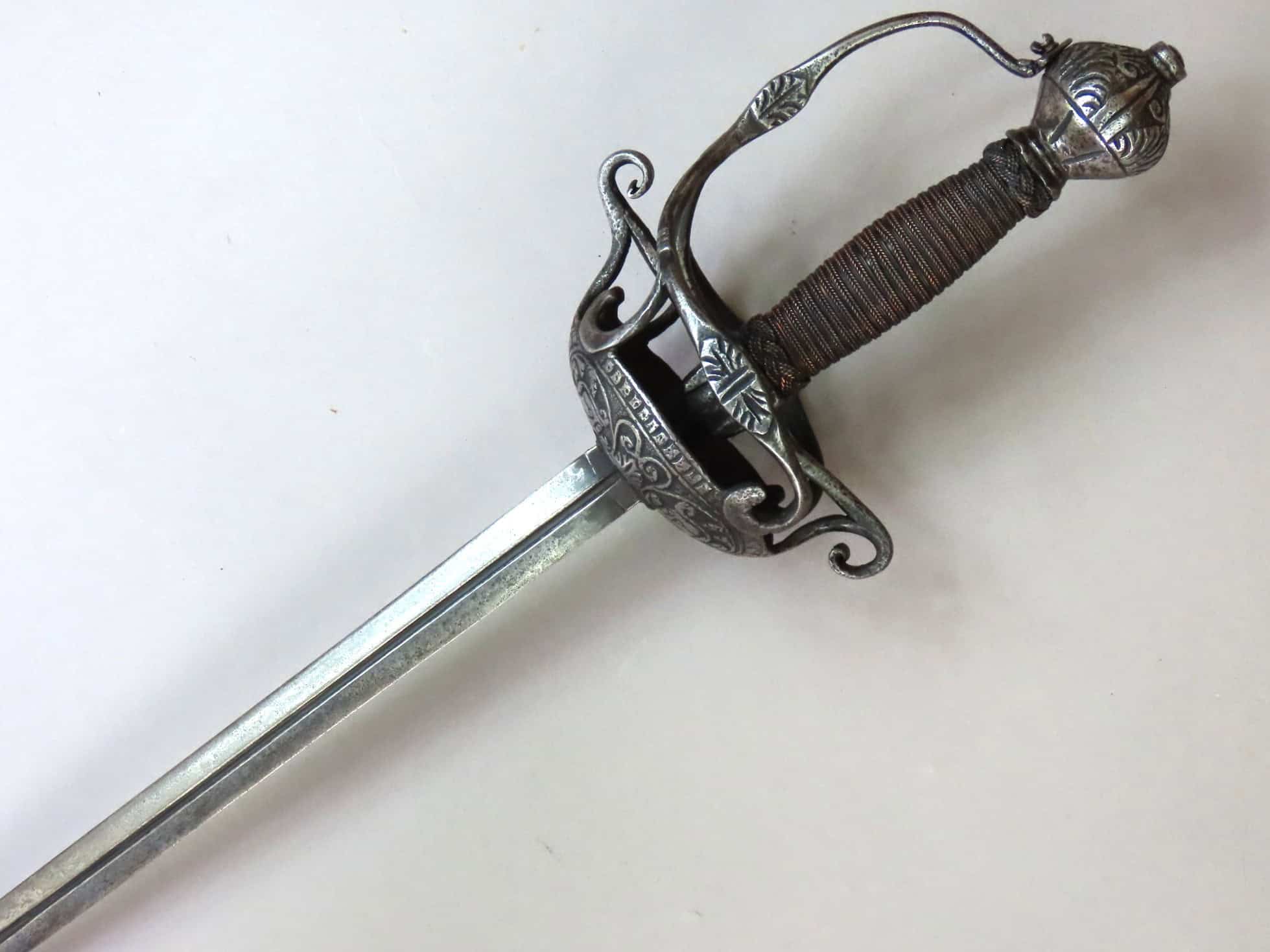
The hilt is mounted with a convex dish shaped guard. The outside is superbly chiselled in raised relief. Each half is cut as an oval shield joined at the tang aperture. The spaces between the shields are decorated with fern-like shapes. The edges of the shields are bordered with a frame of dotted squares inside a lined border. To the left and right inside each shield two male heads with mustaches and pointed beards obliquely face each other separated by a further fern-like panel. Each head is surrounded by foliate tendrils.
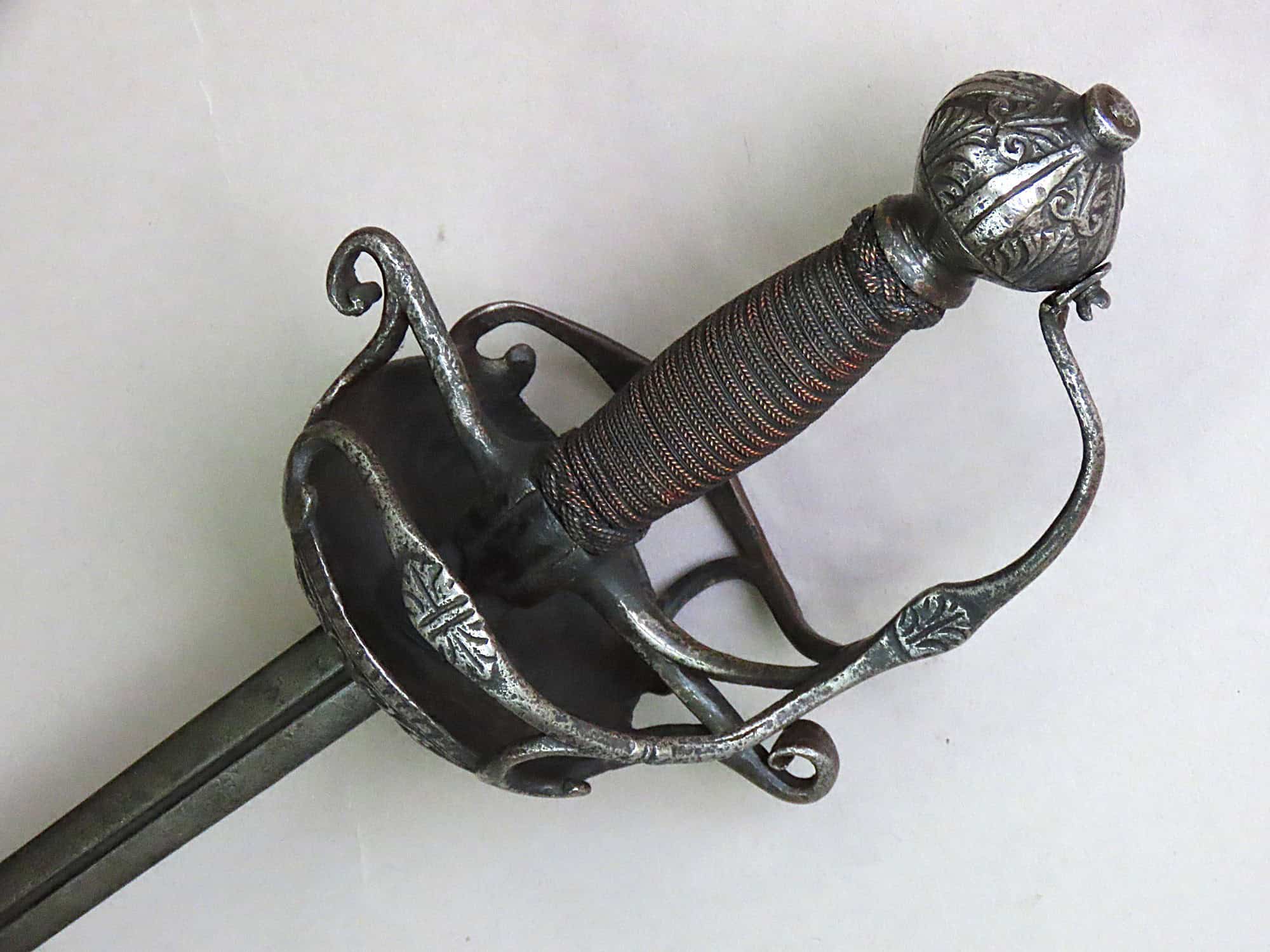
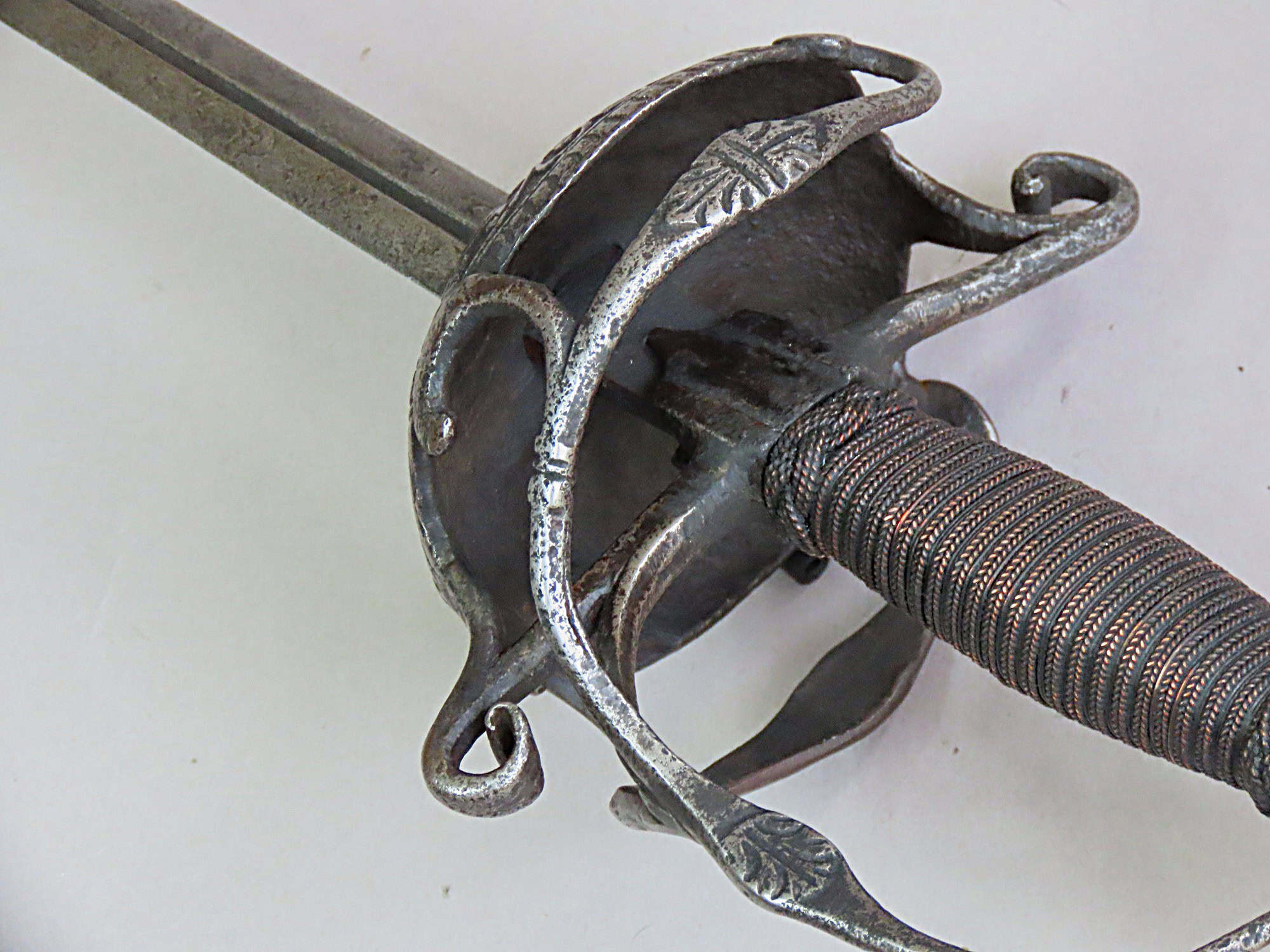
The blade ricasso is secured in a rectangular solid quillon block decorated with vertical grooves and pointed langets at the base. Two boldly formed quillons emanate front and back and terminate in vertically counter-curved flattened terminals strengthened by secondary bars which extend from the brim of the dish guard beneath.
The knucklebow emerges horizontally from the quillon block above the front quillon and extends upwards in a bold curve which terminates in a flattened triangular section bent to the vertical, pierced and screwed to the pommel. The knucklebow is flatly swollen in the middle with a fern-like feature on each side.
Two horizontal side guard bars are attached to the brim by two short curled bars and extend upwards to join the knuckle bow just below the middle swelling to strengthen the hilt structure. These side bars are also swollen in the middle with fern-like features similar to those on the knucklebow.
The solid pear-shaped pommel has an integral flared neck beneath and a ribbed button on top from which cut lines extend to below the middle of the pommel and section the surface into four quarters each infilled with further fern-like designs. The underside is decorated with incised lines which radiate upwards from the neck.
The wooden grip is of baluster shape and of rounded oval cross section, tightly bound with twisted counter-curved copper wire ropes with thinner threads between. Woven copper wire “Turks’ Heads” are mounted top and bottom.
A tightly fitting rectangular aperture in the centre of the dish guard accommodates the blade ricasso. Part of the ricasso protrudes through after which the tapering blade is of double edged lenticular section to the tip. It has a pronounced central fuller extending from the hilt for 10 inches (25.5 cm) from the hilt on each side.
The blade is 35.75 inches (91 cm) long and overall the rapier is 43.25 inches (110 cm) long.
Whilst conforming to common styles, compared to other contemporary types of English sword, English rapiers show more variety of form and the many surviving examples are to varying degrees unique. Some similar examples to this rapier are illustrated in Stuart Mowbray’s “British Military Swords – Volume One: 1600 to 1660”, Mowbray Publishing, 2013, pages 254 to 282. See particularly page 260, 262, 263, 264, 266 and 267
This is a pleasing example of an English rapier. It has a fine grey “salt and pepper” aged condition and is finely balanced in hand.