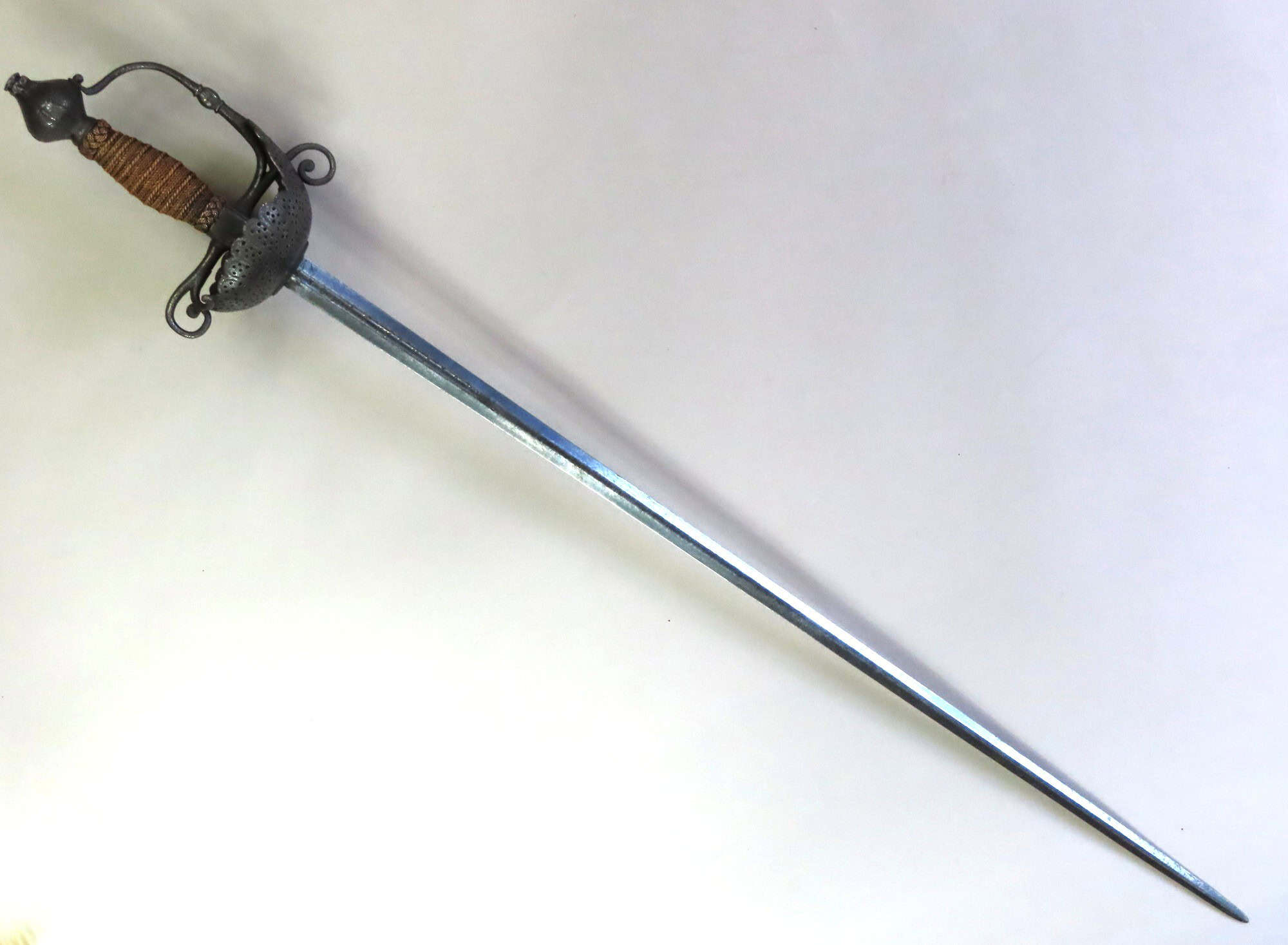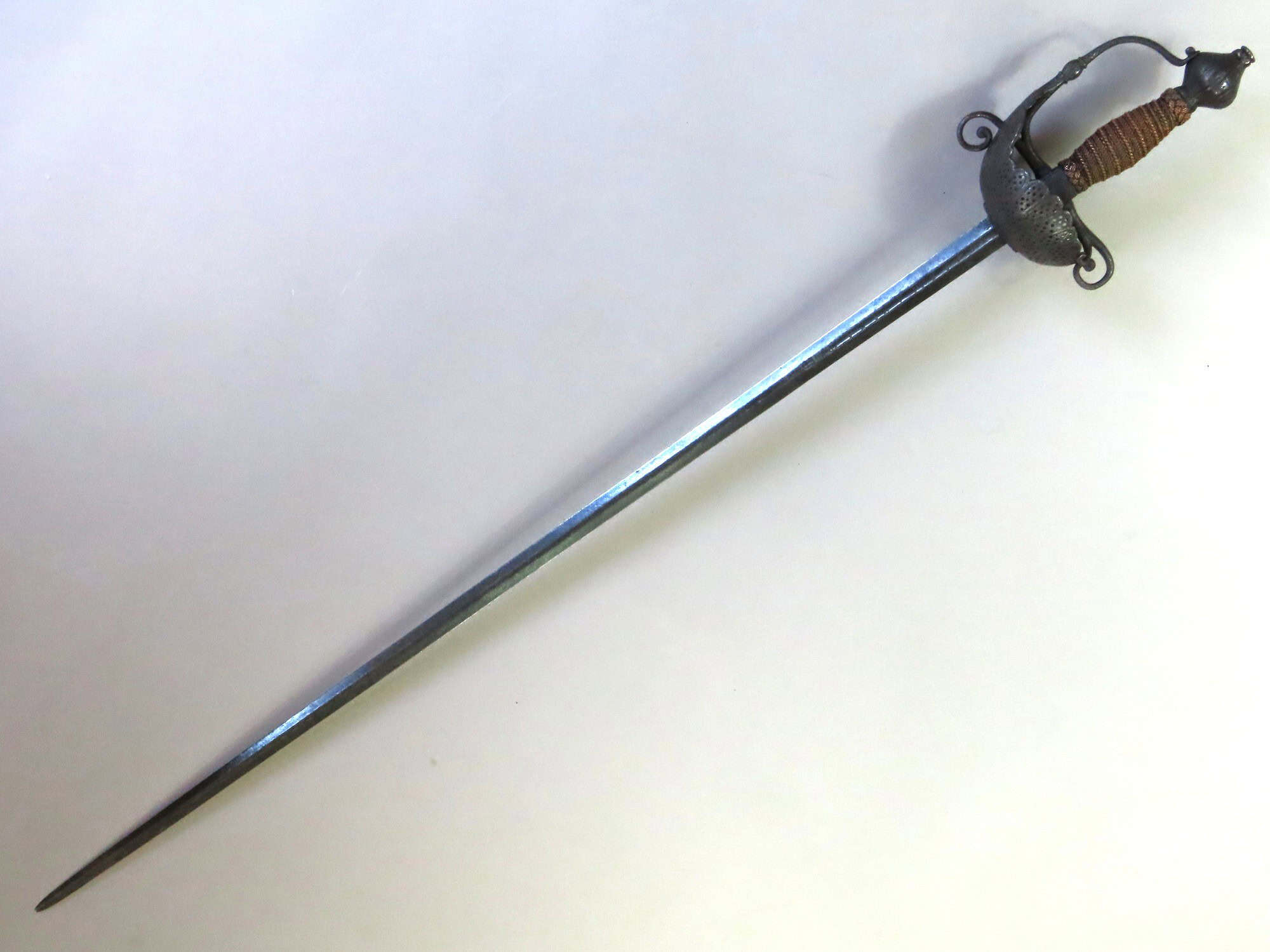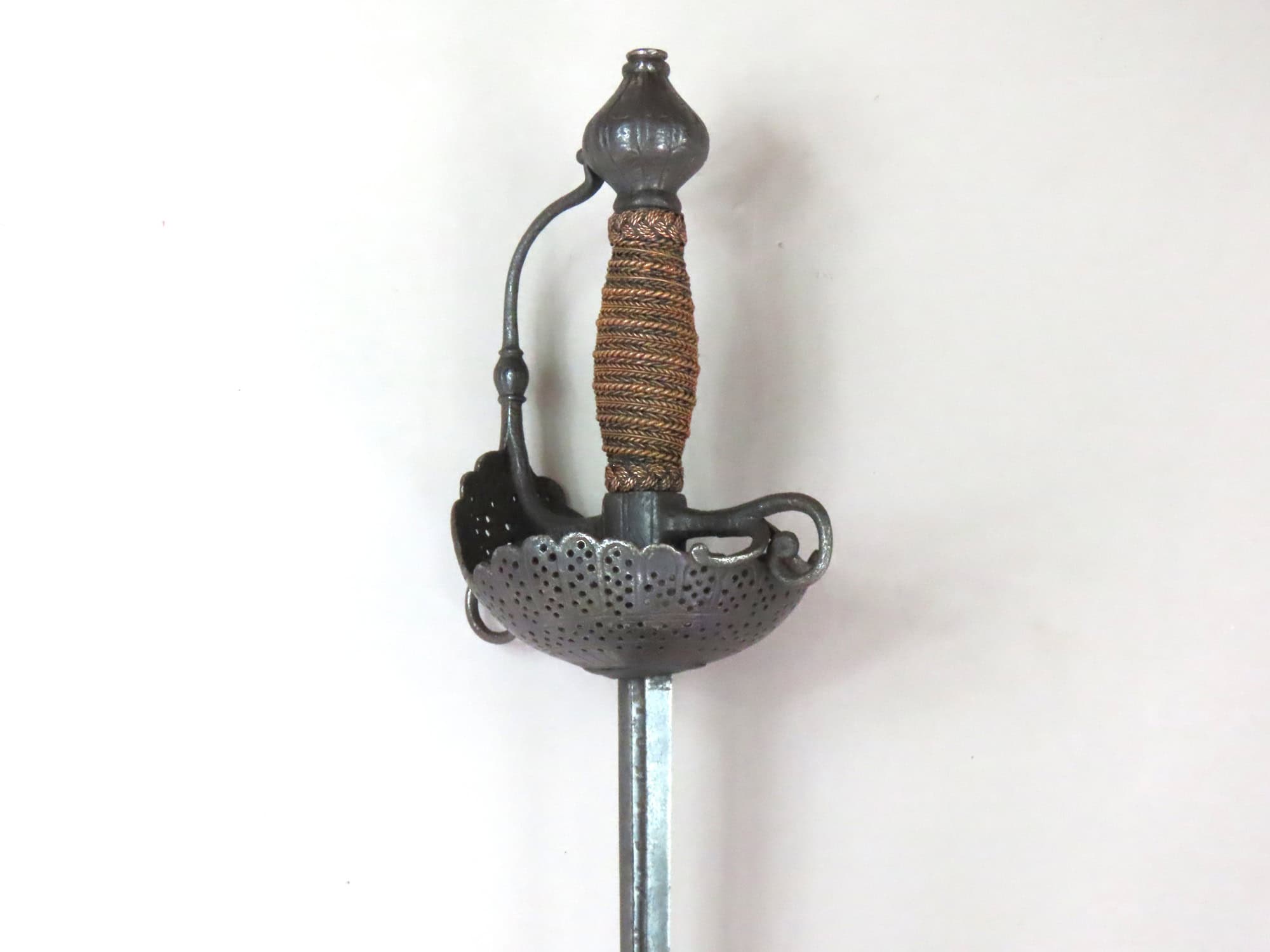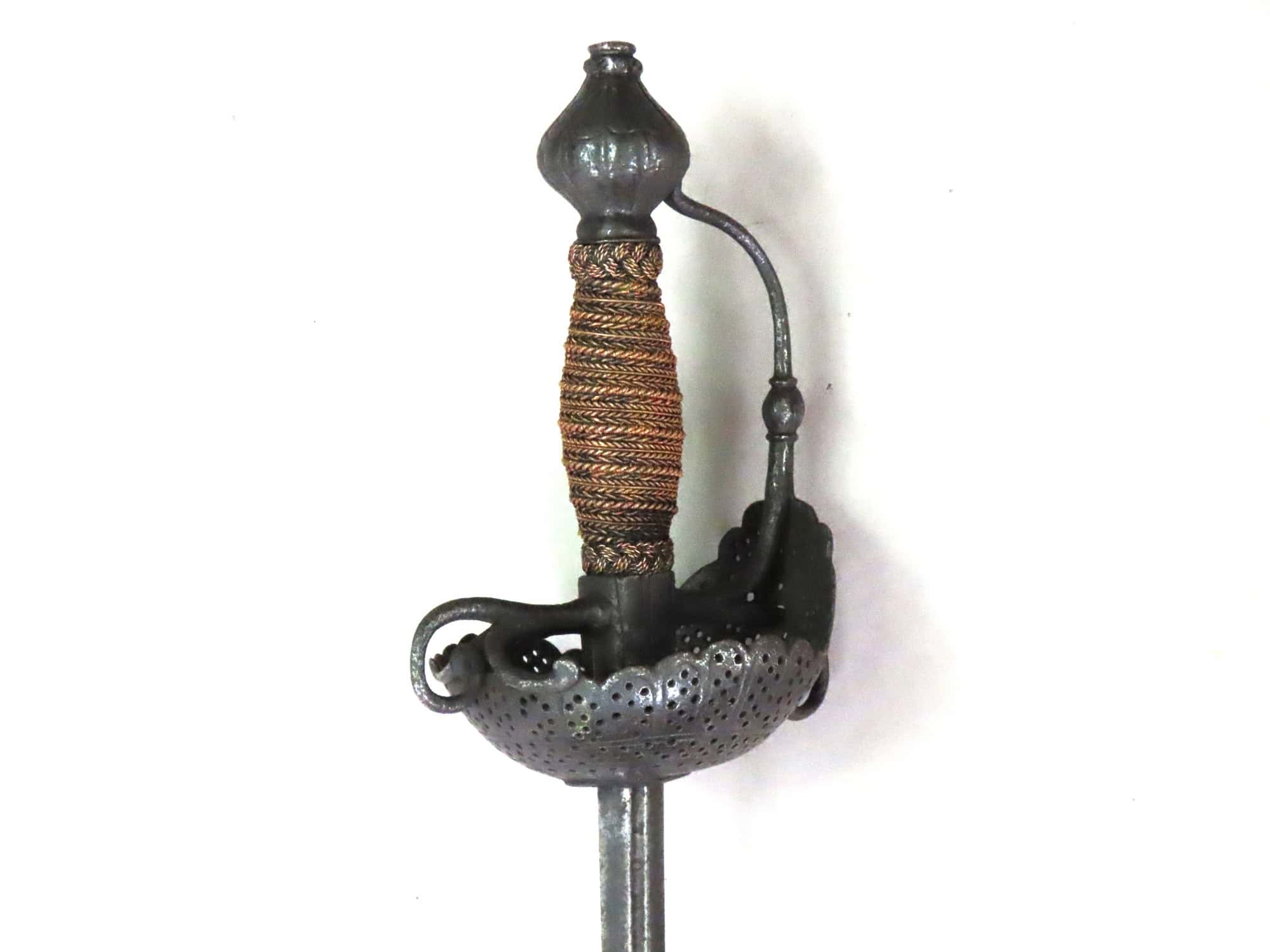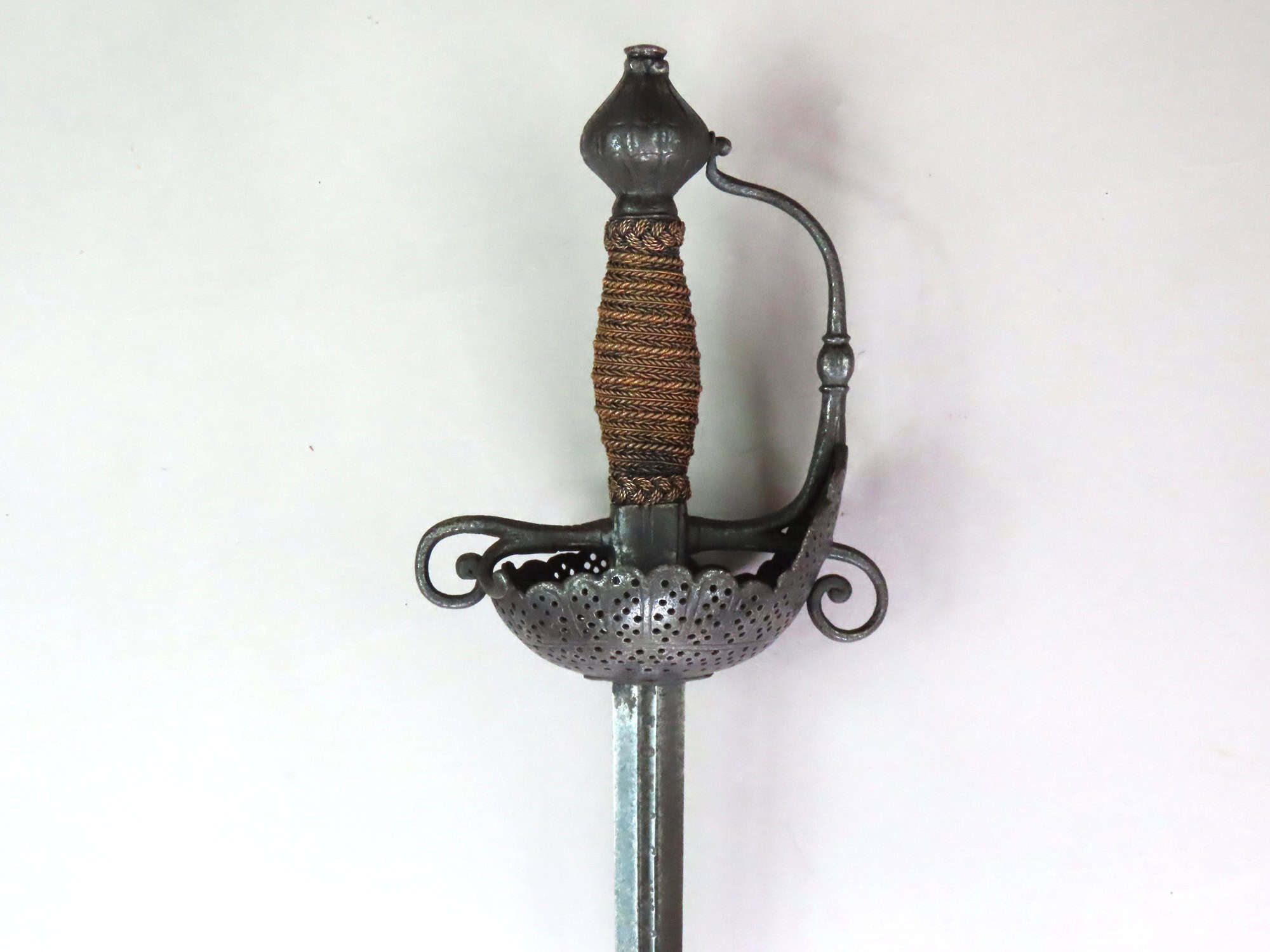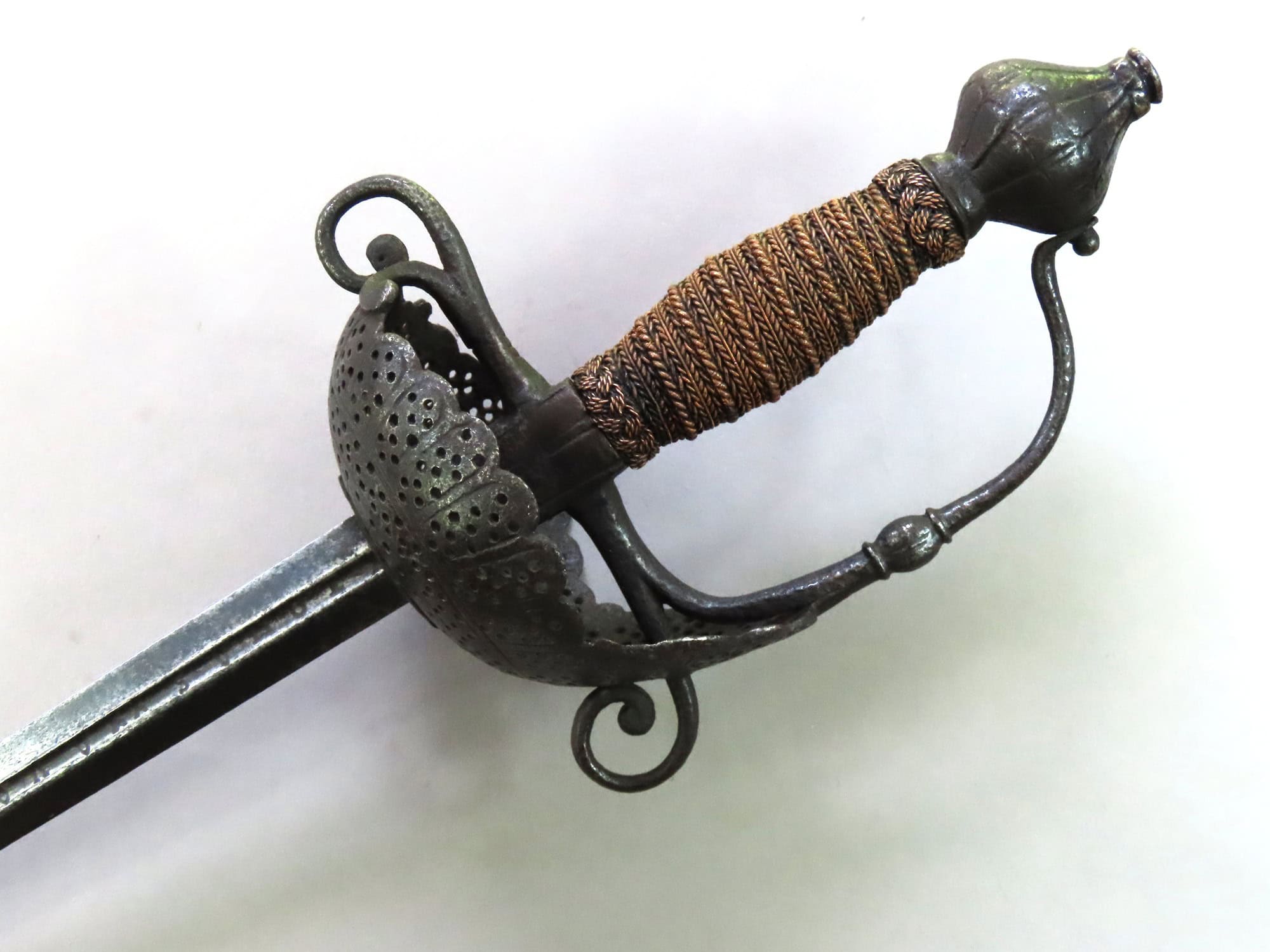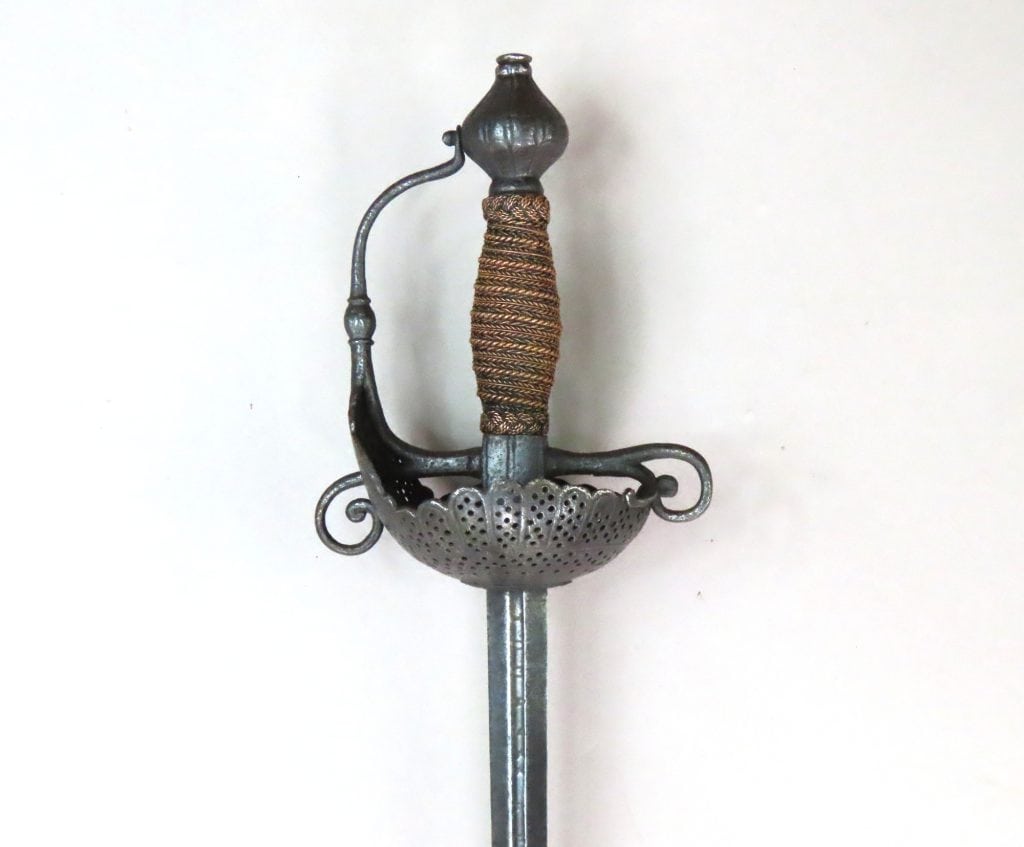
An English early 17th century Military Officers’ Rapier mounted with a Boat Shell Guard and Tomas Ayala Blade
To enquire about this itemplease click here
Price: £3,850
Ref: 62080723
Item Description
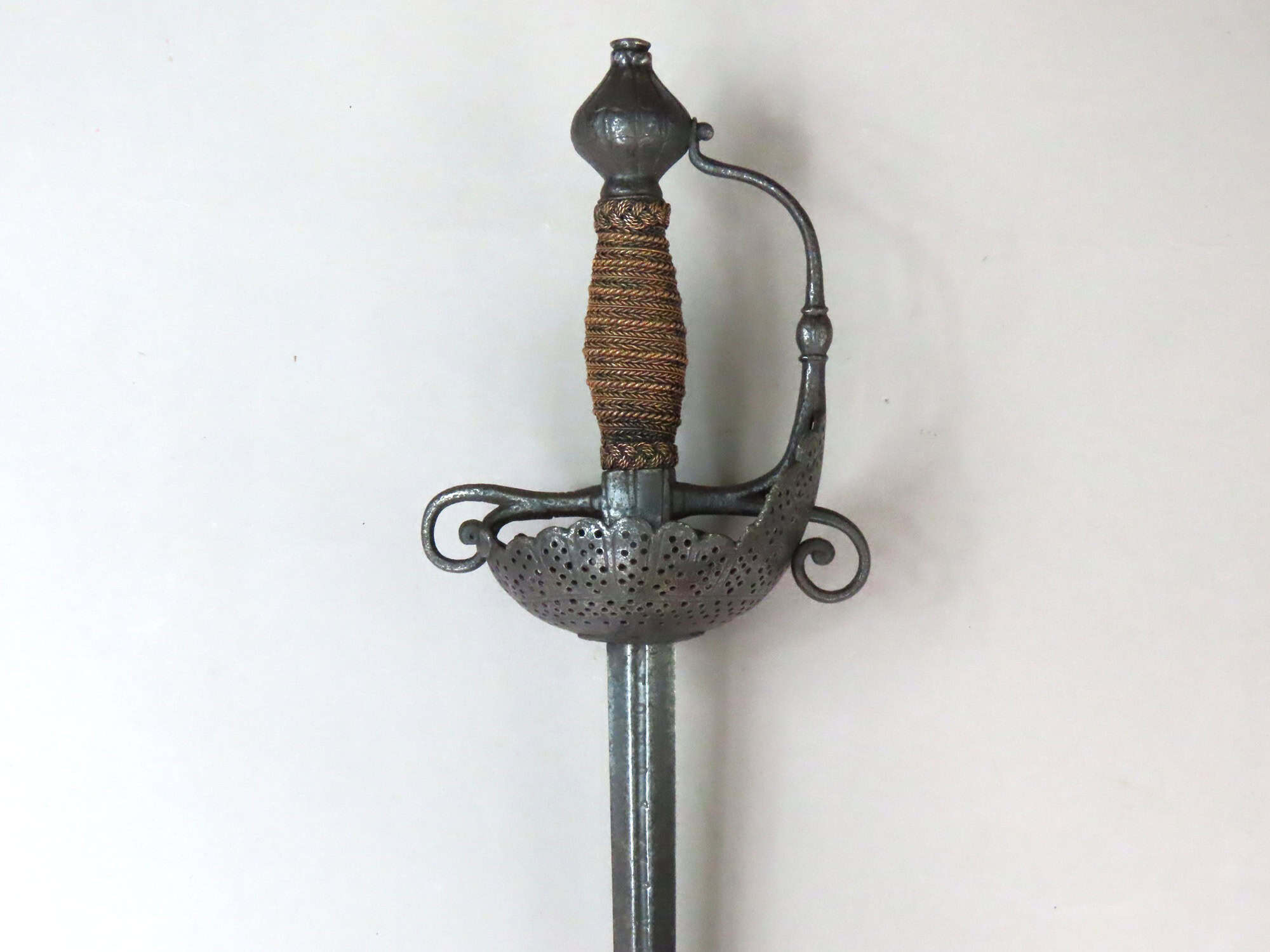
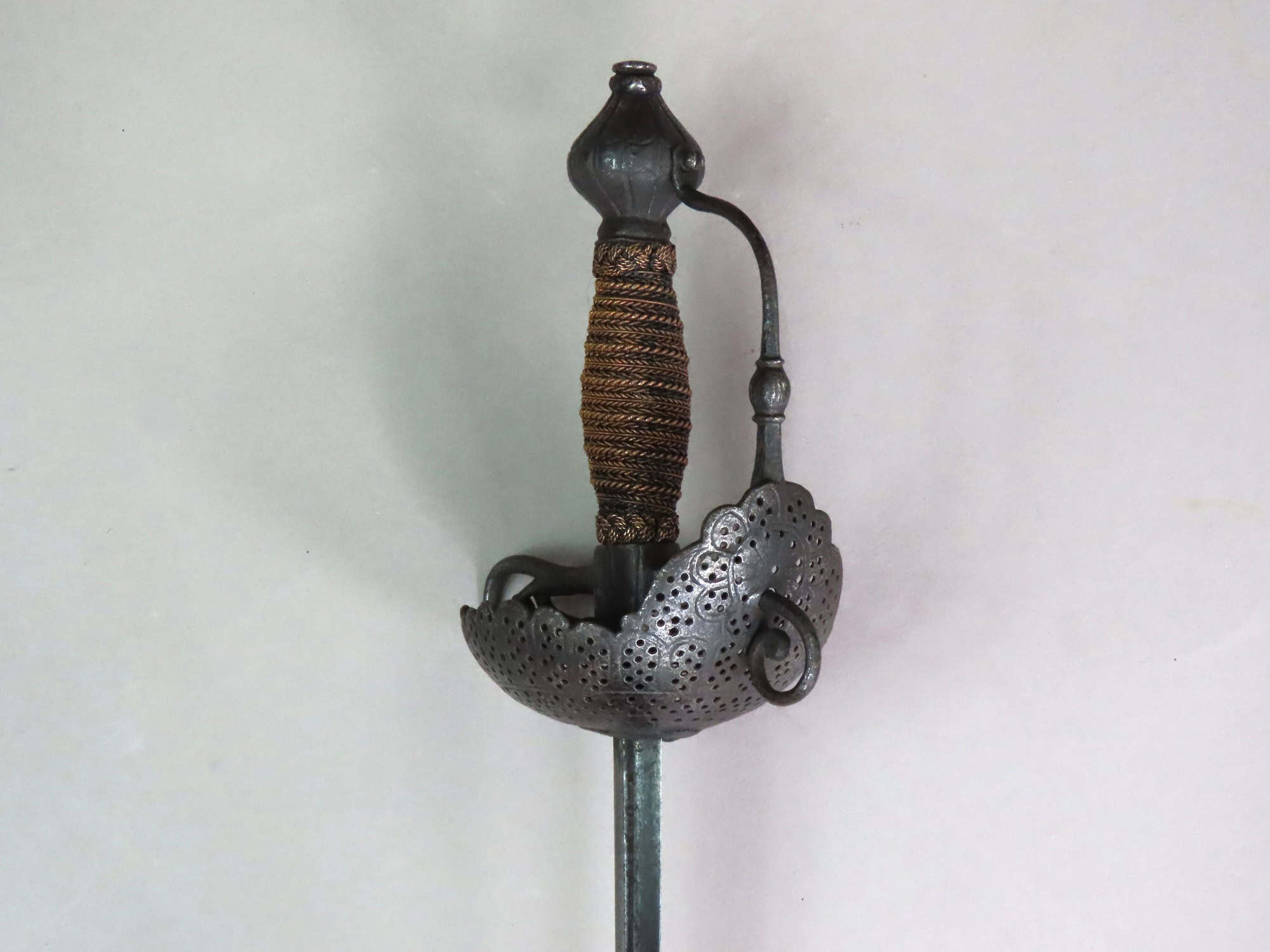
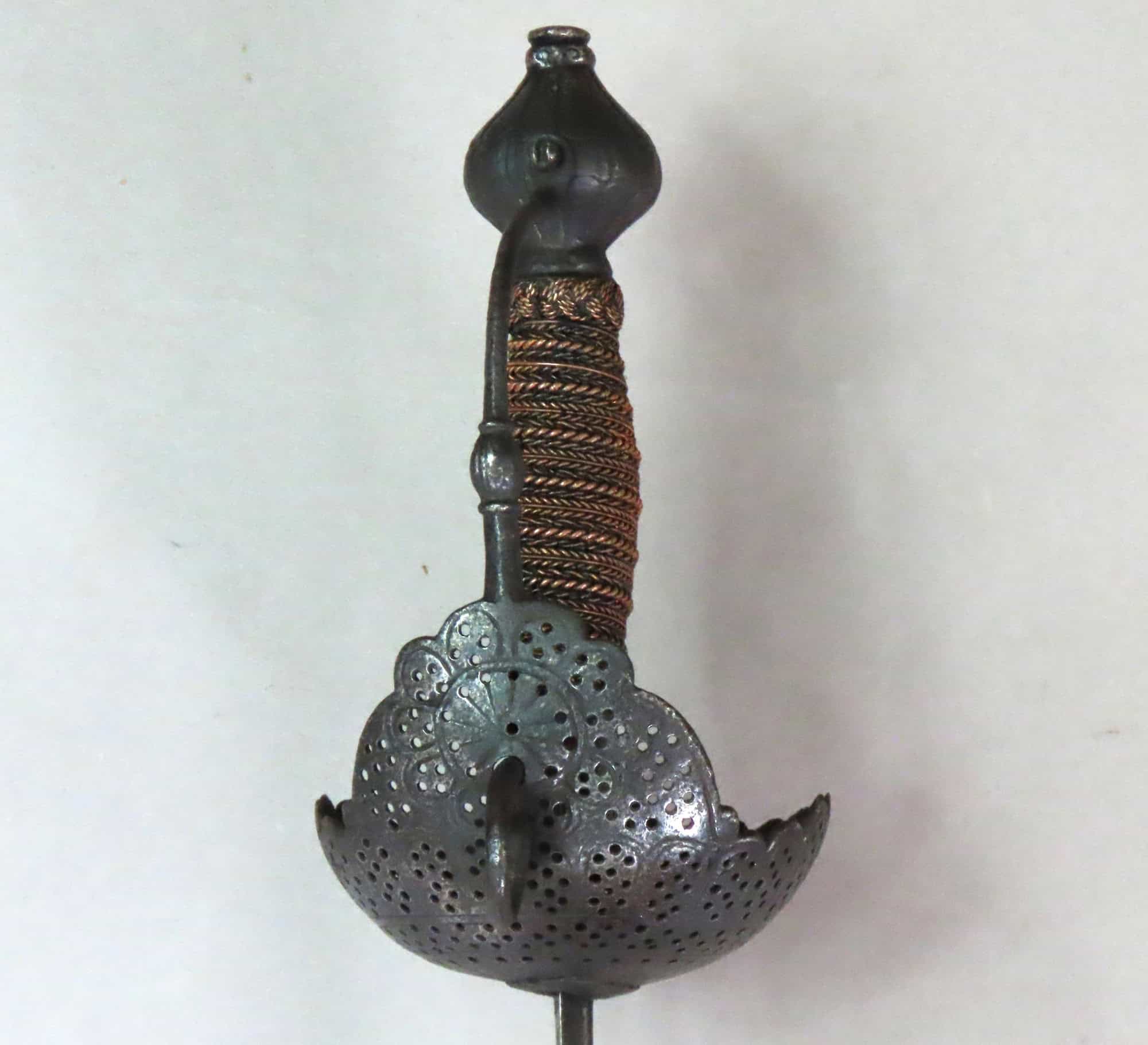
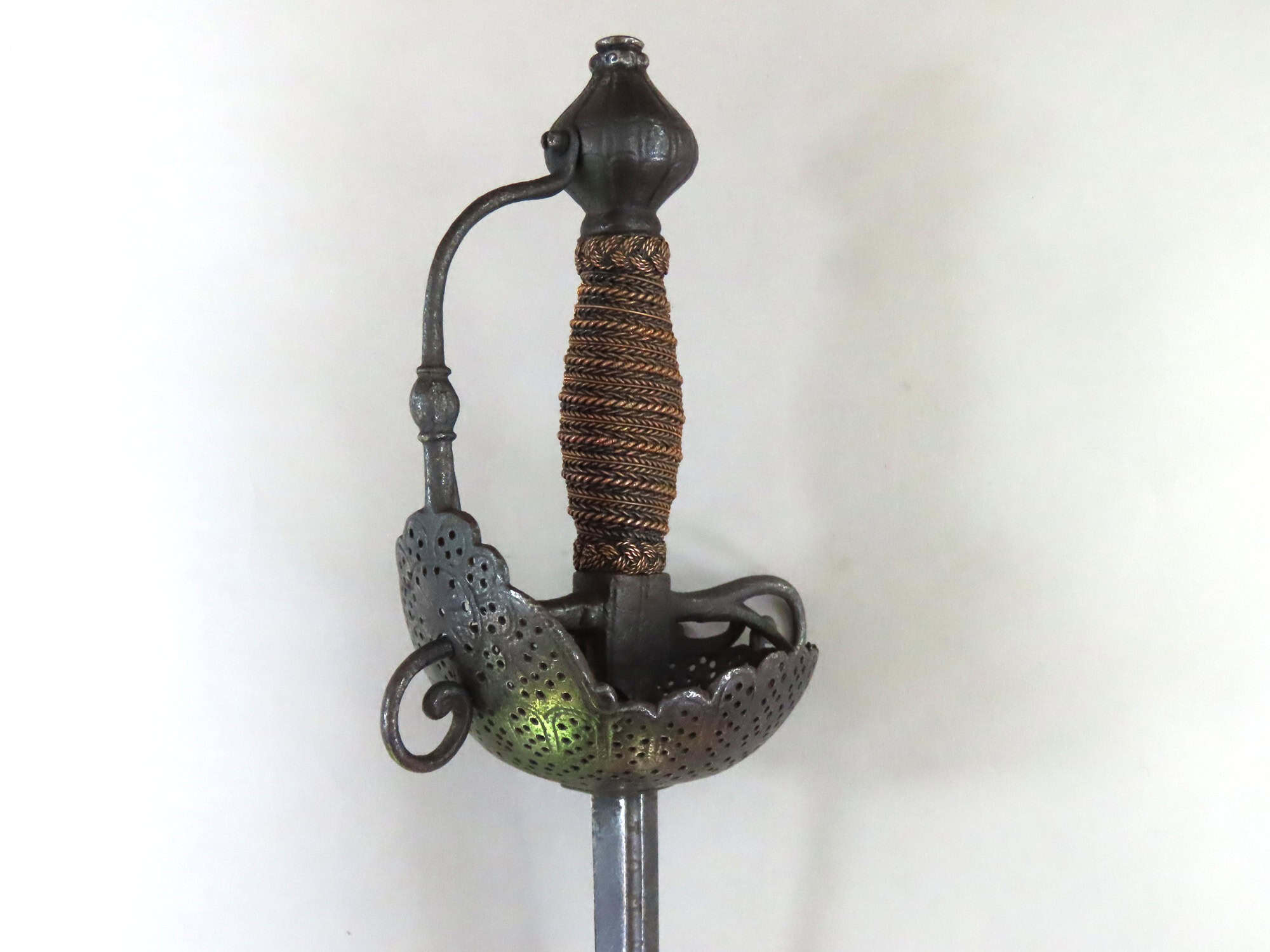
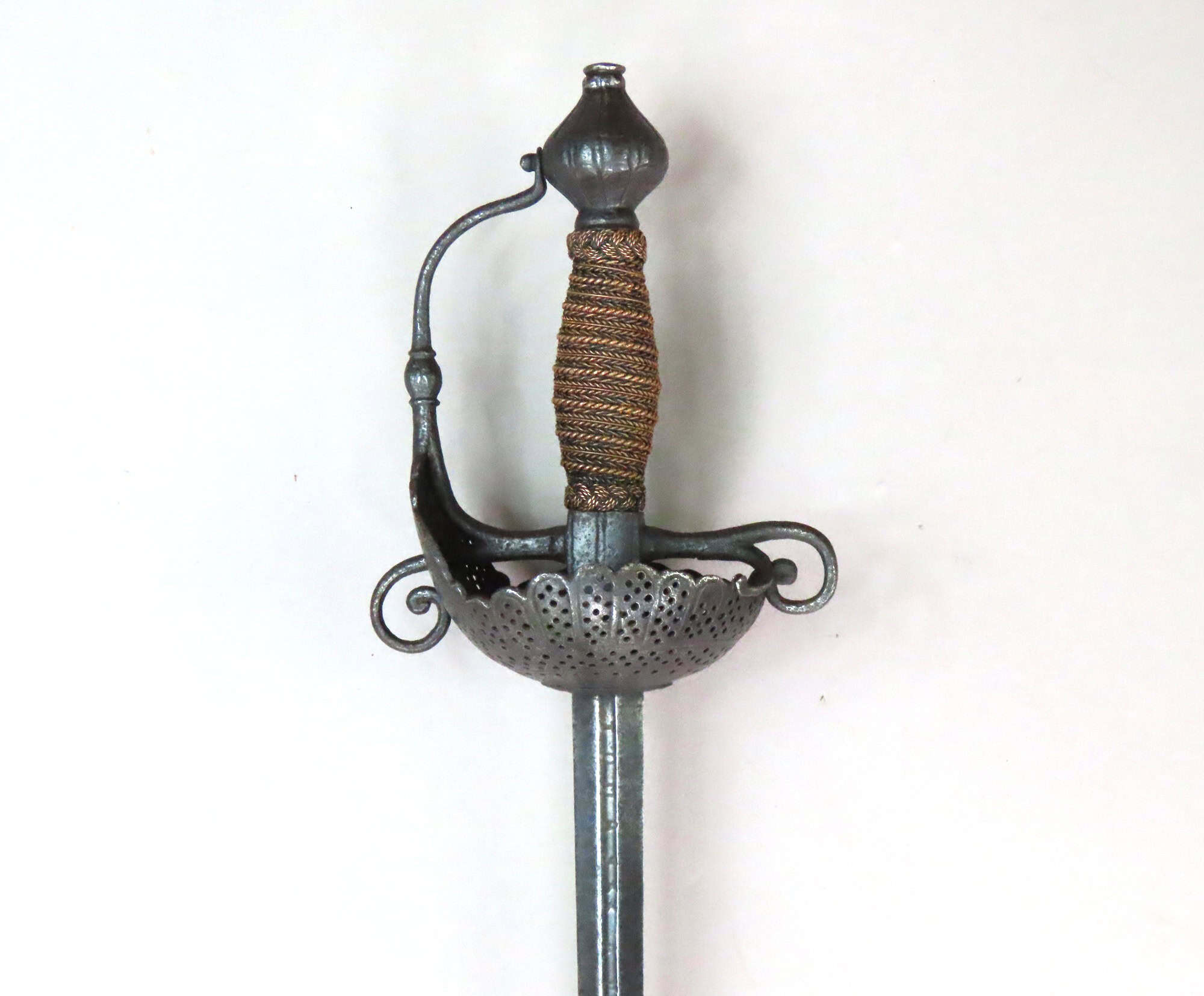
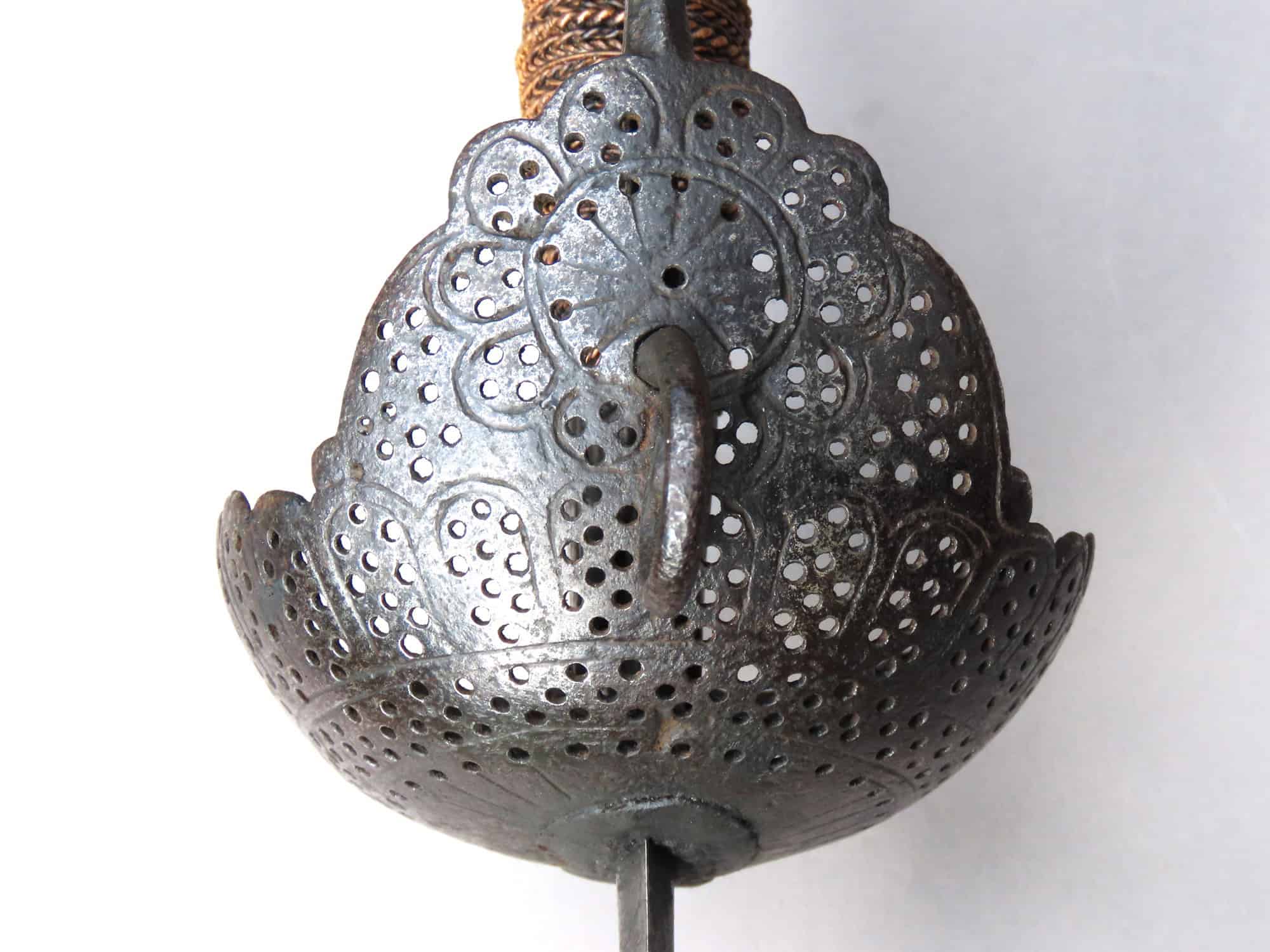
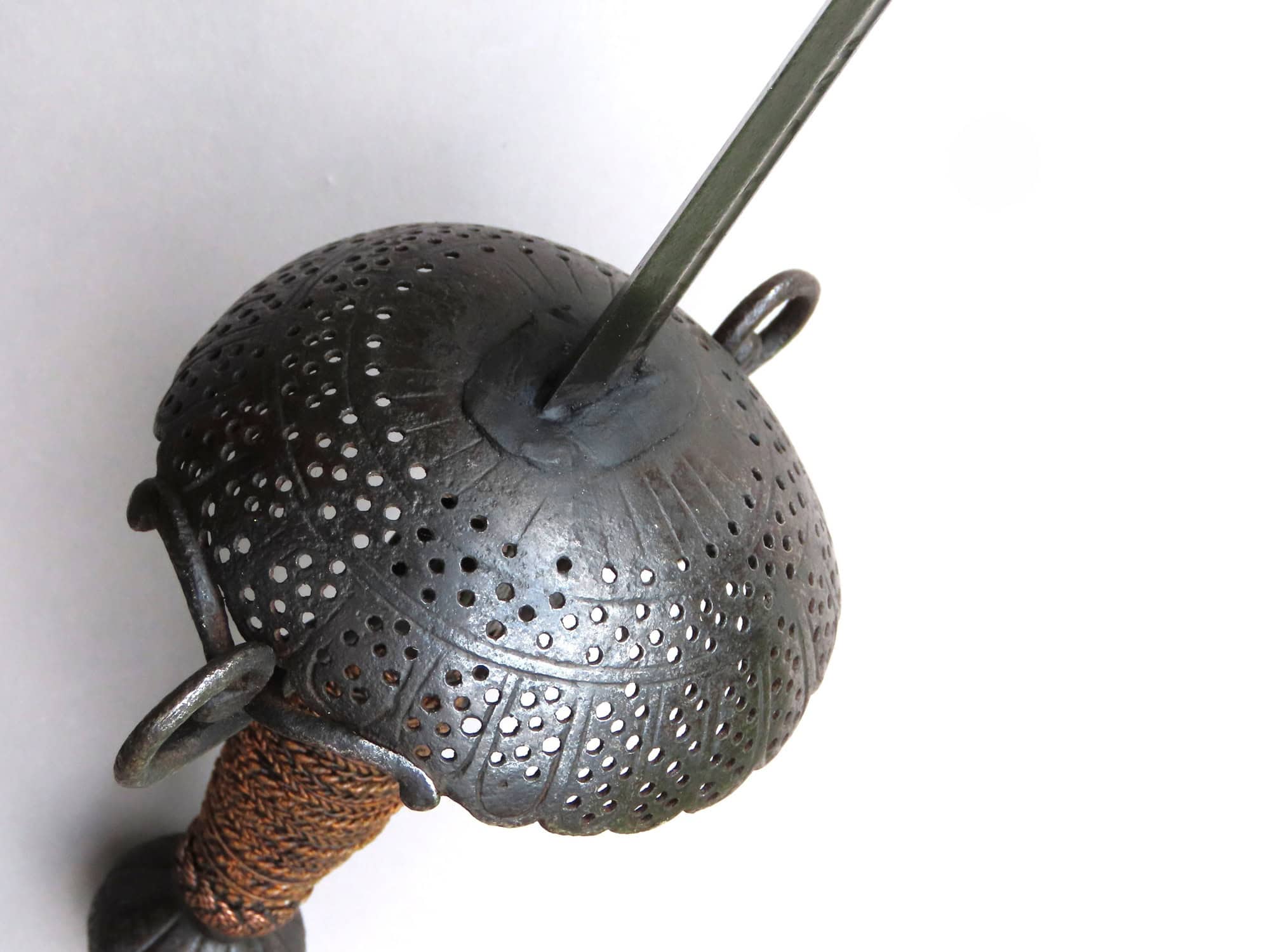
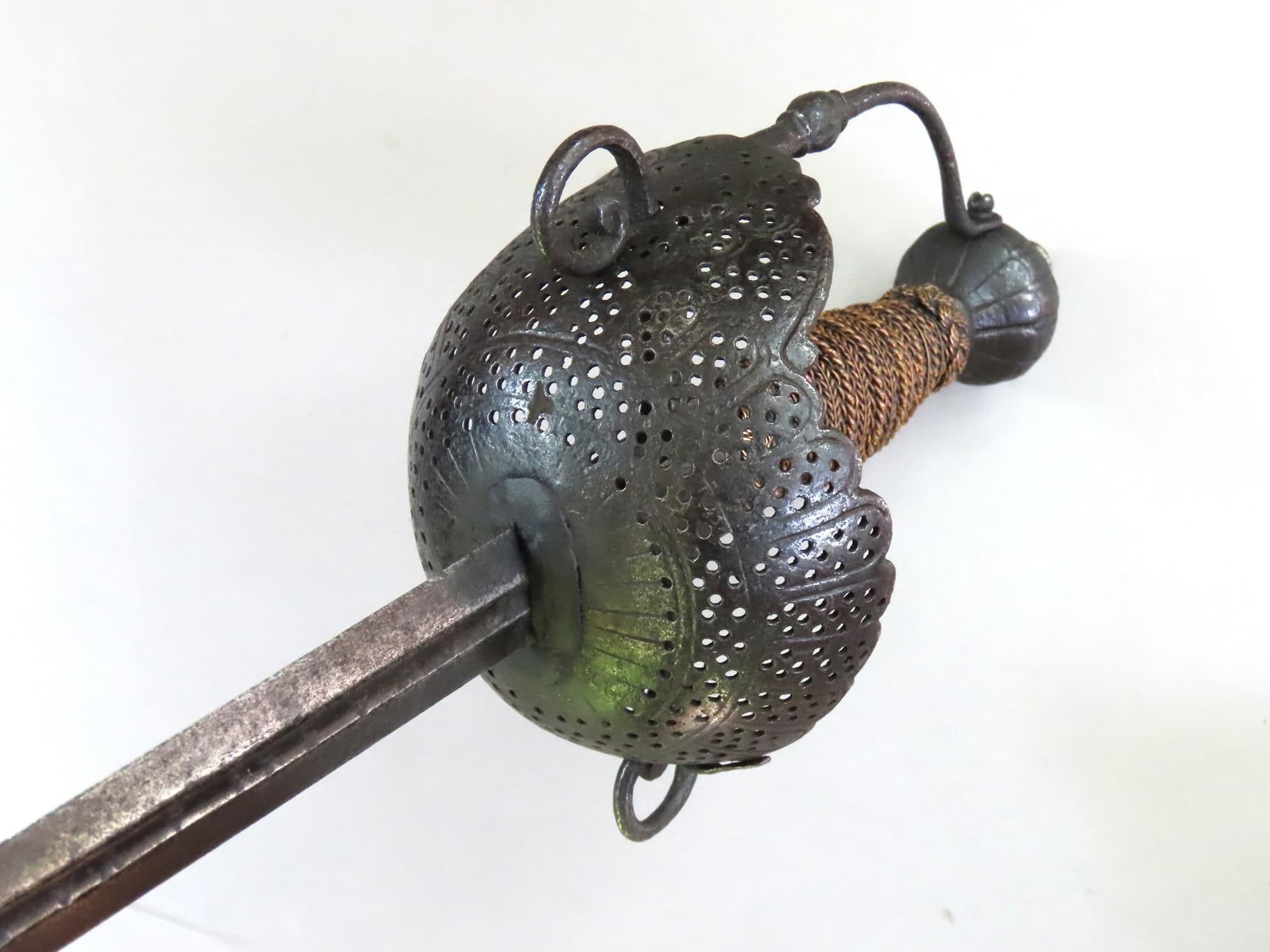
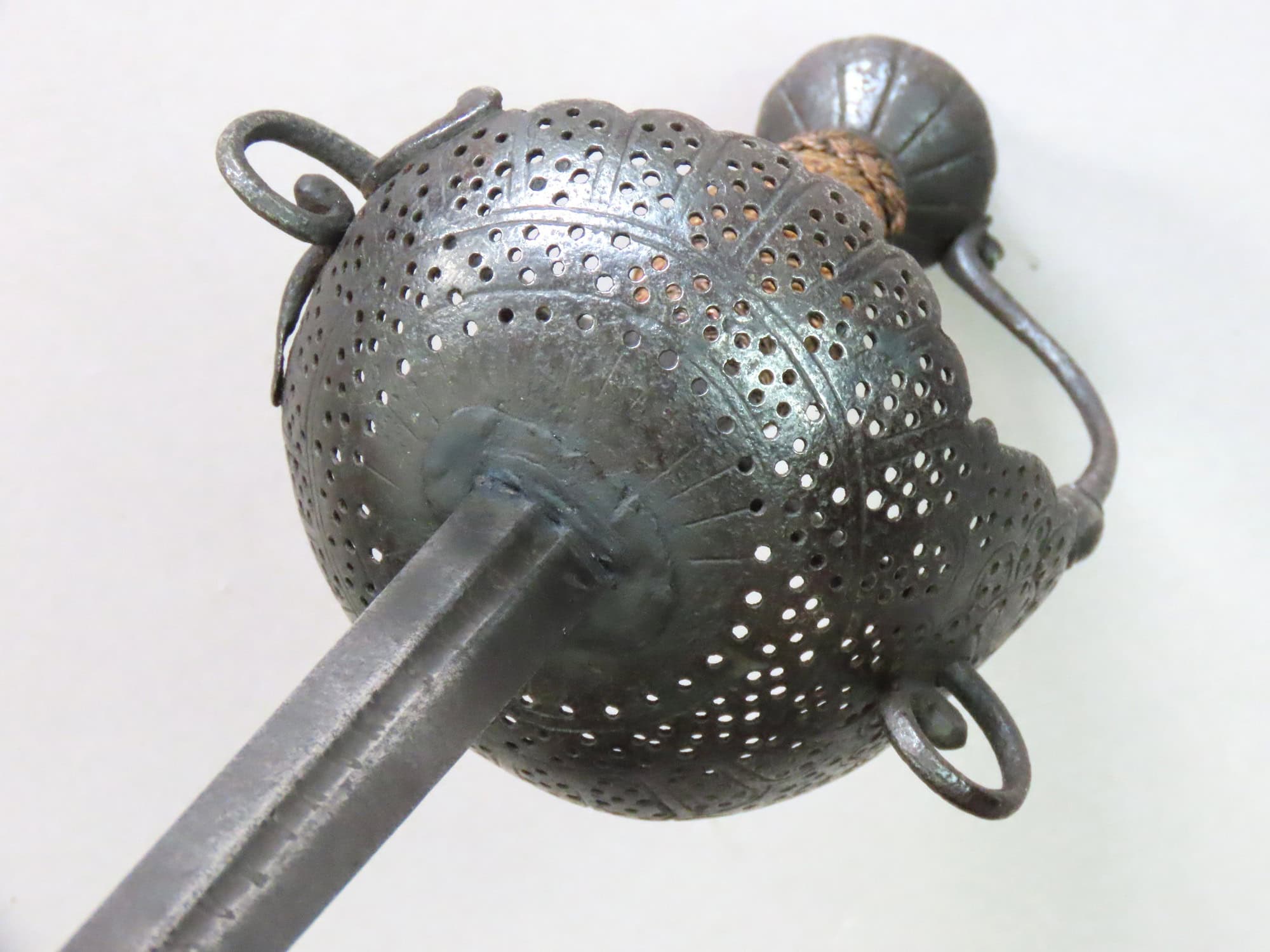
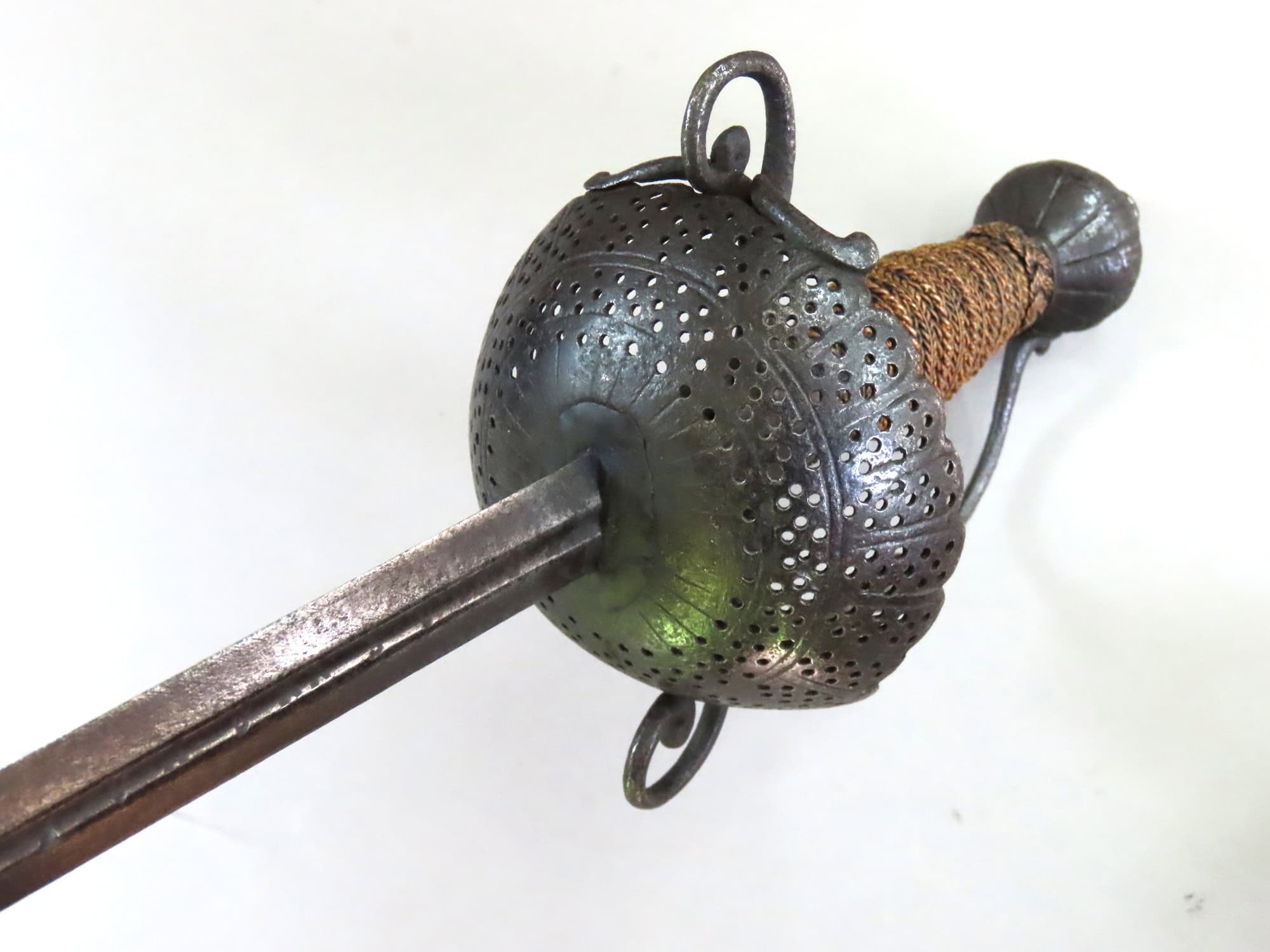
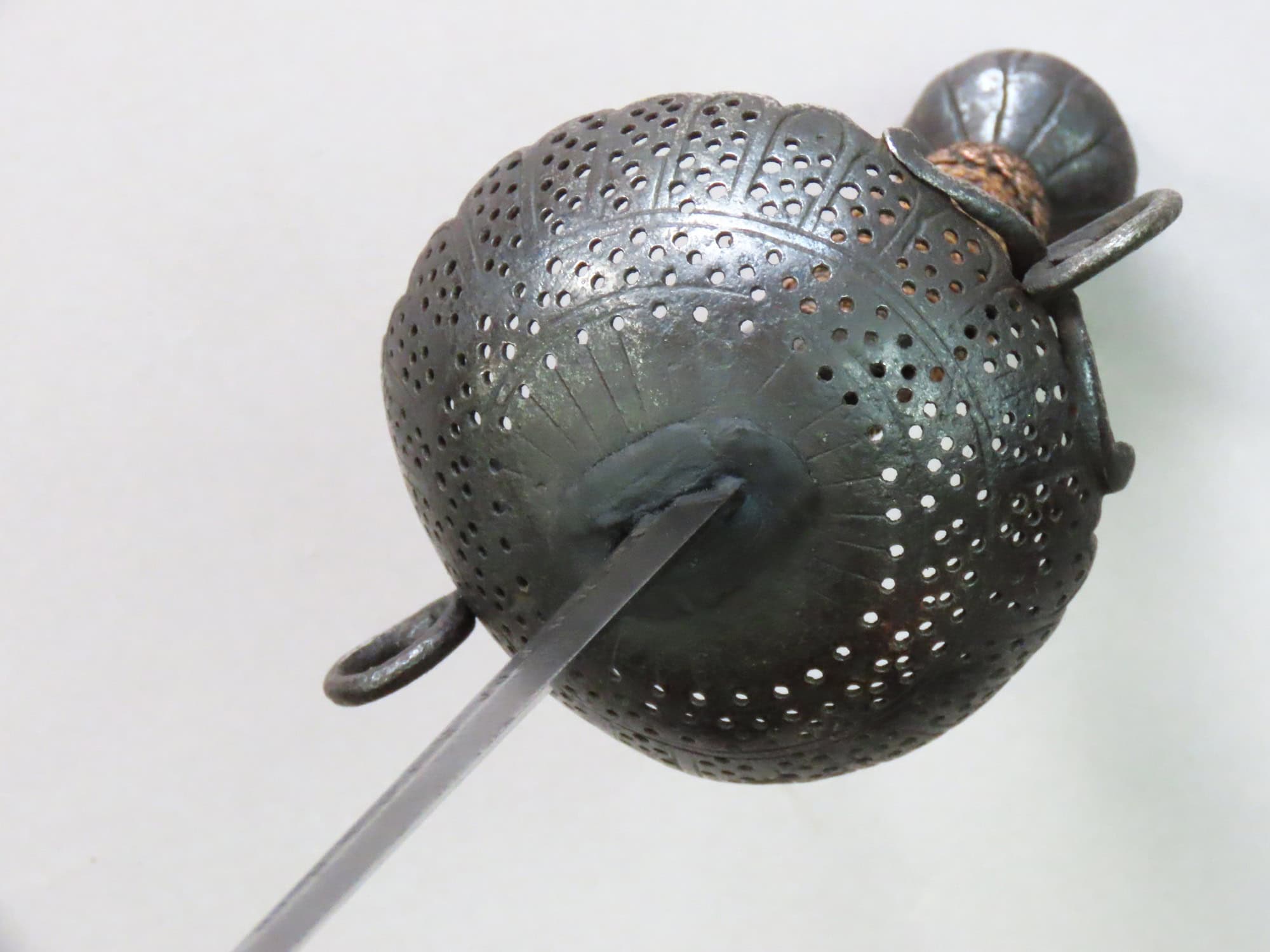
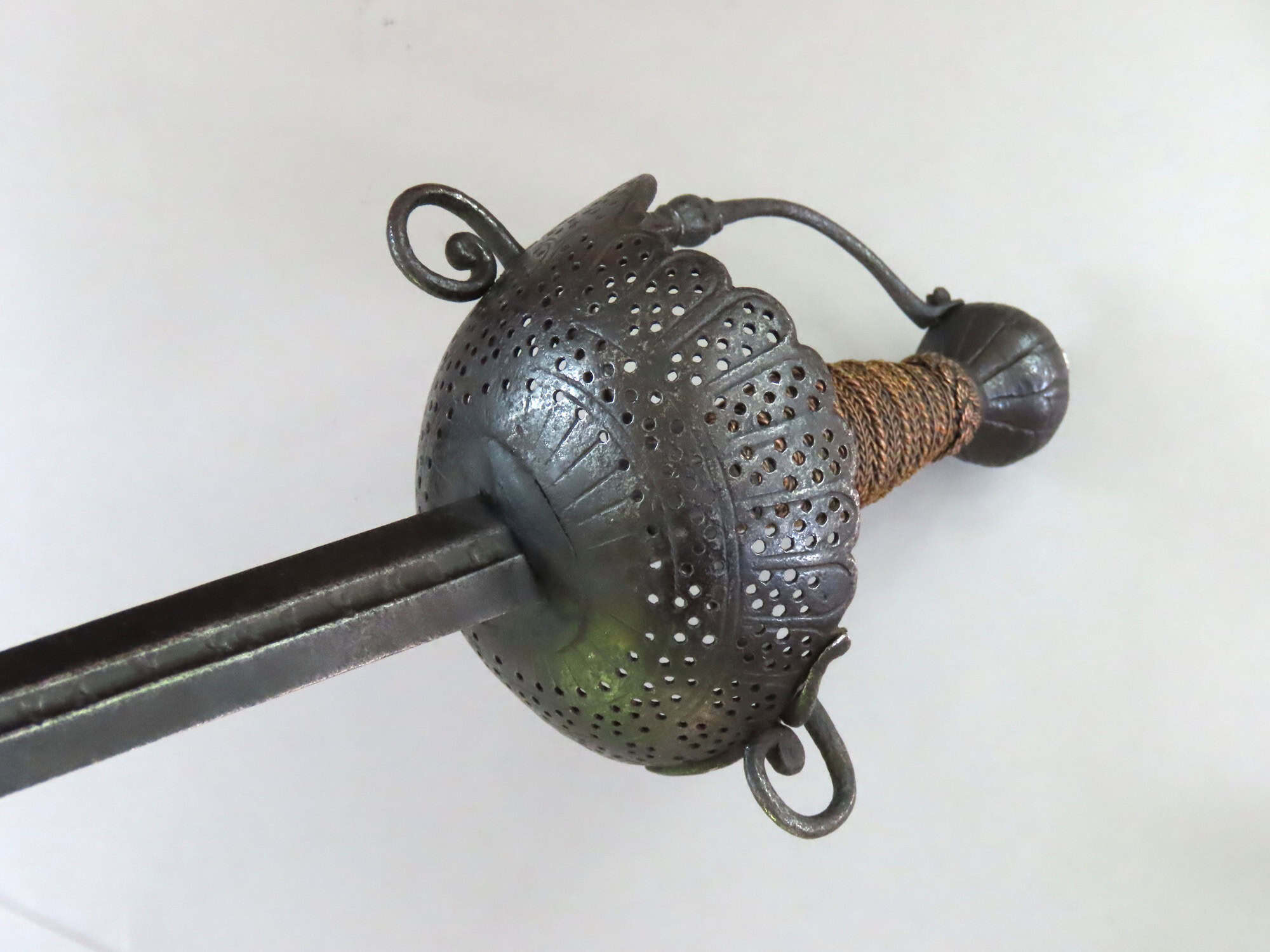
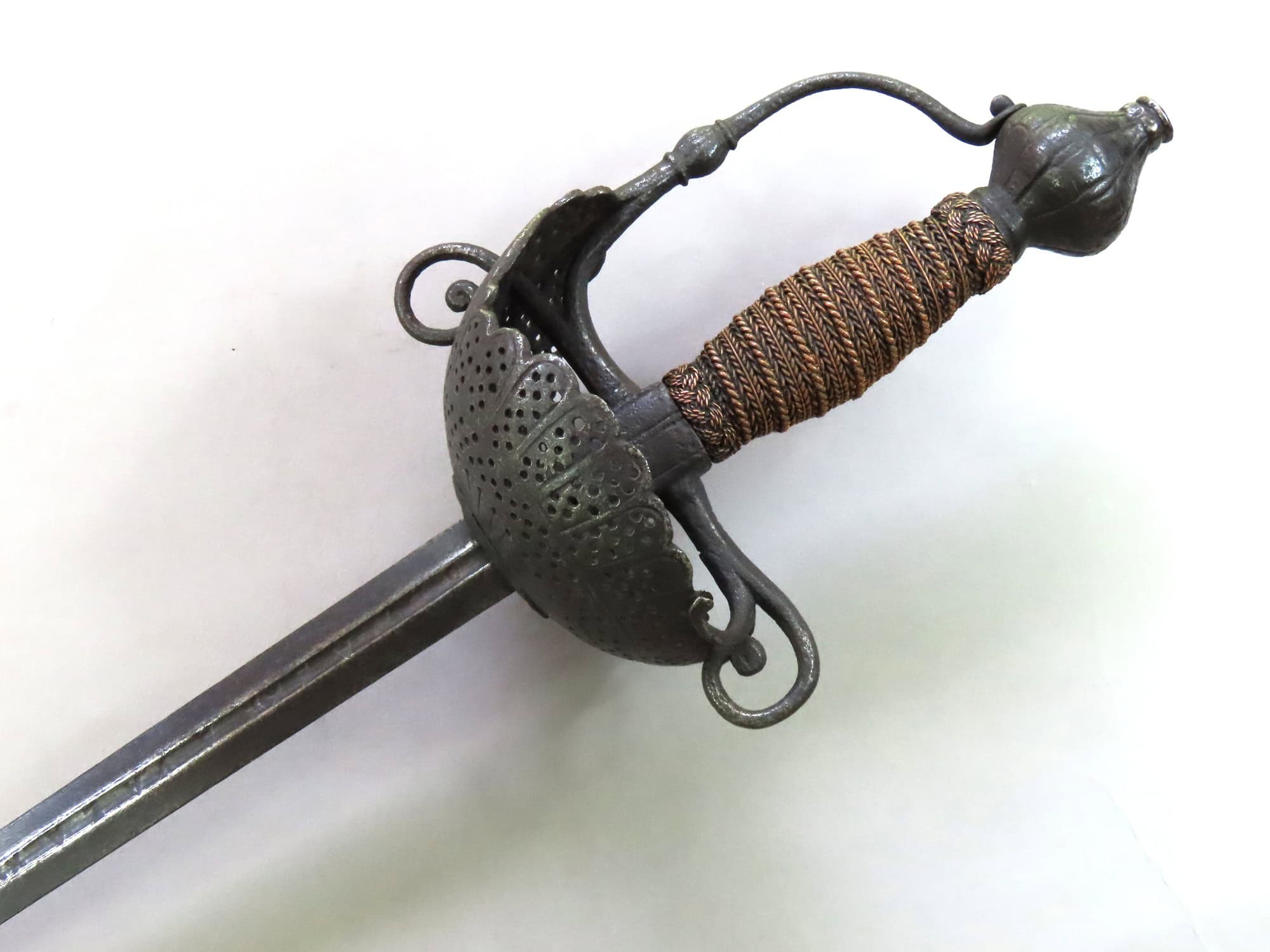
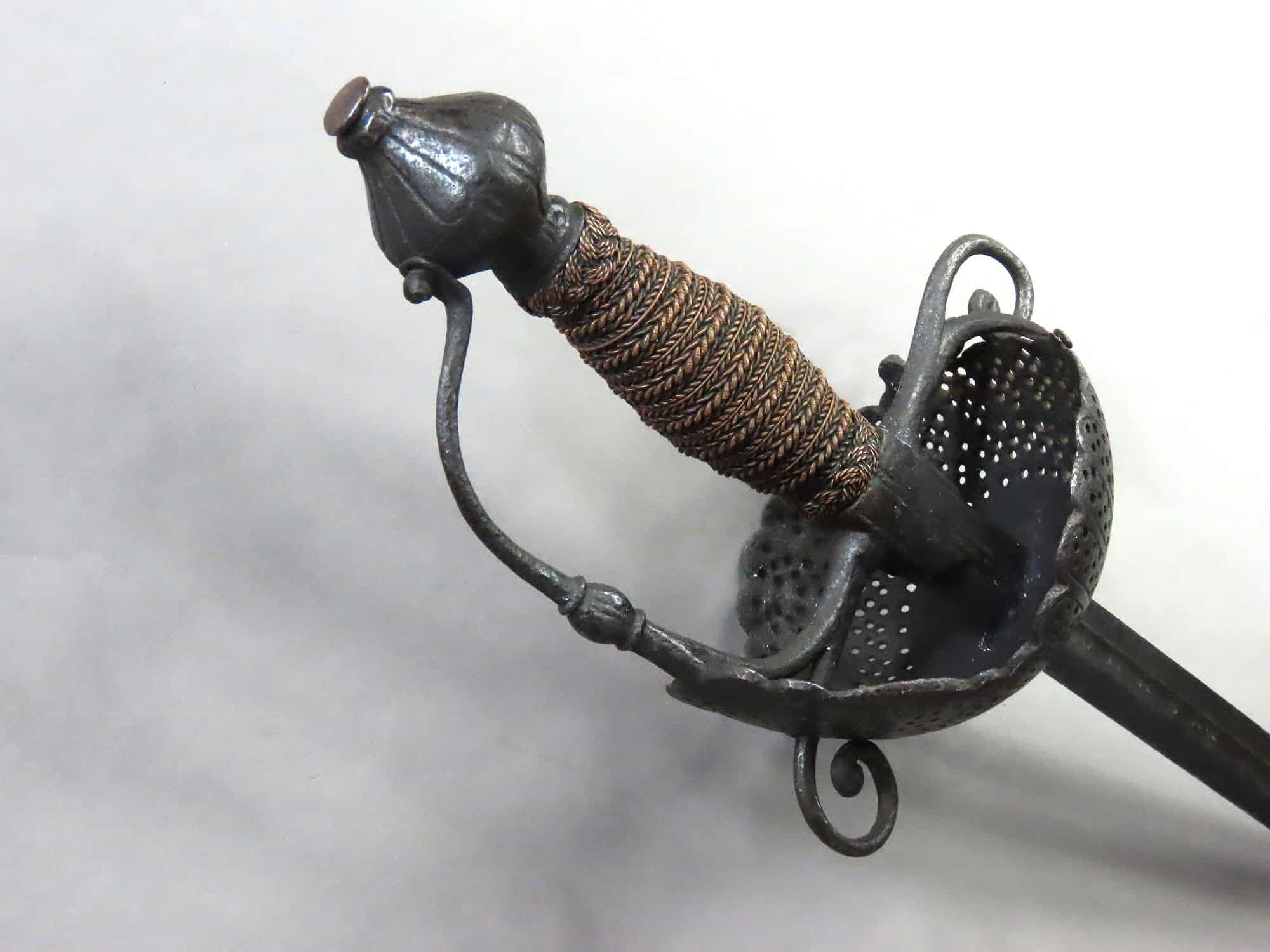
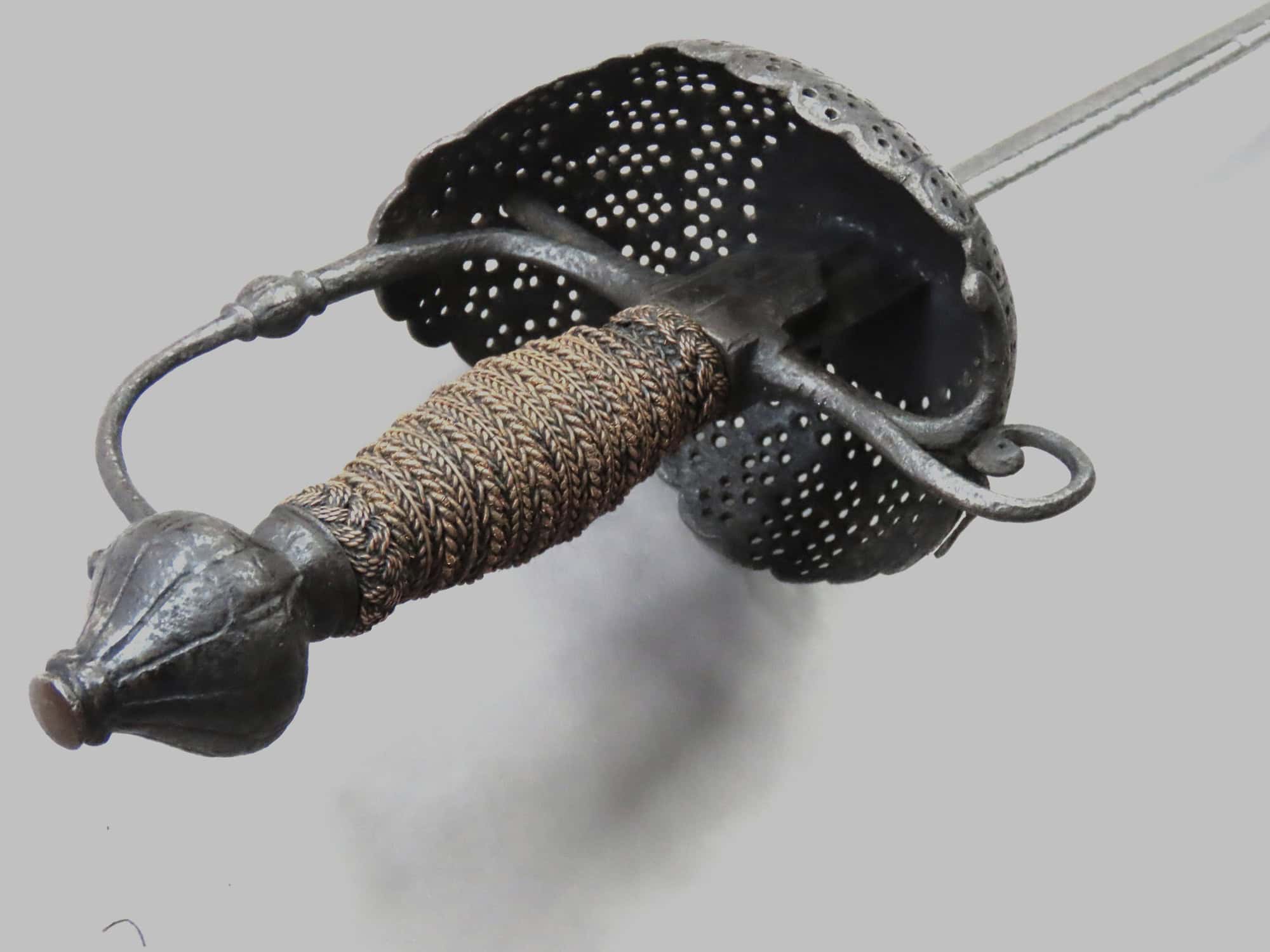
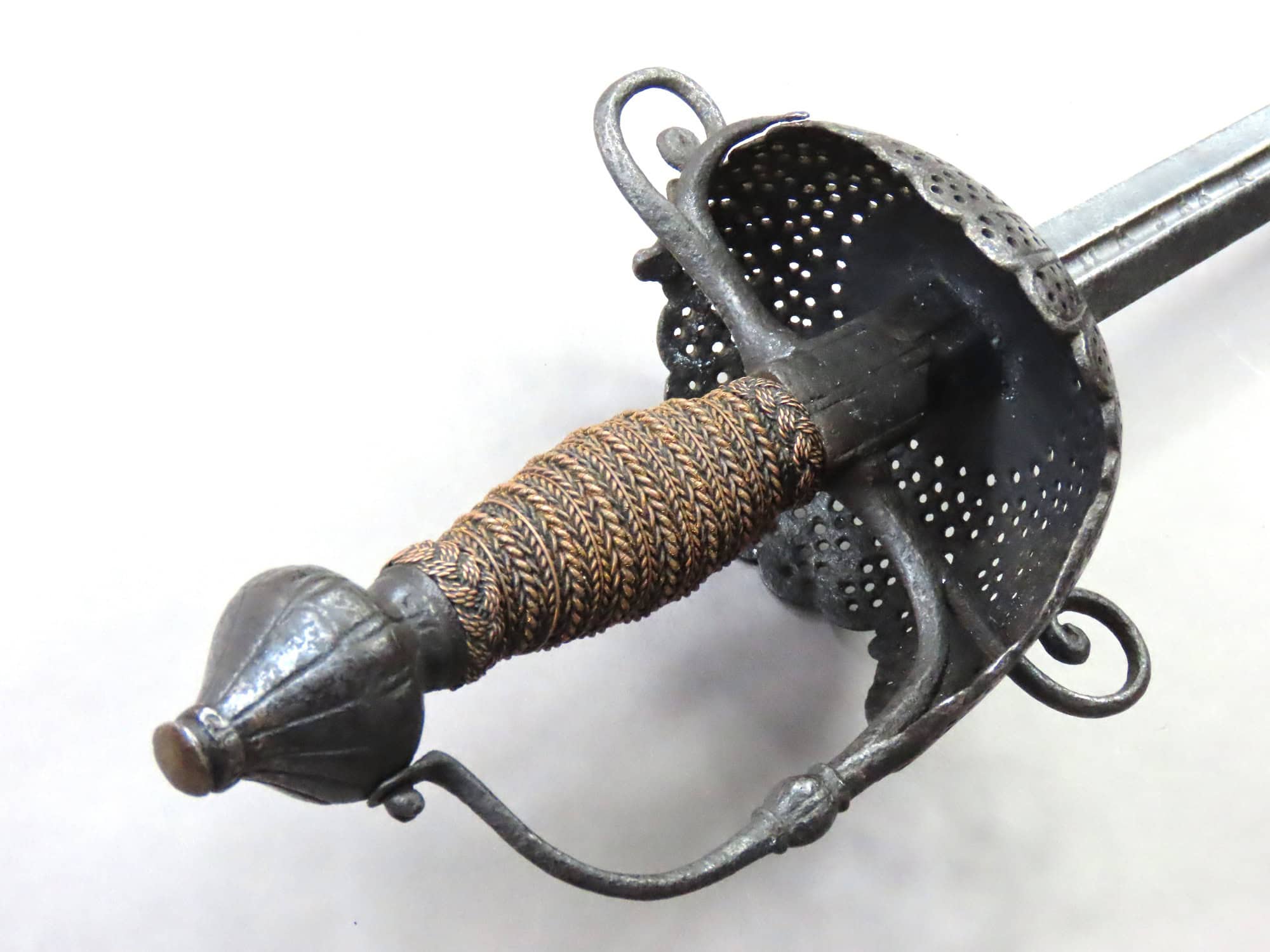
An English Military Officers’ Rapier dating to 1625 to 1650 and the early period of the English Civil War. The fine quality double edged blade is designed for cutting as well as thrusting in general and military use rather than for the more specialist function of dueling which utilised longer thrusting blades. The boat shell hilt is intricately chiselled and pierced with floral fan shapes in the English style.
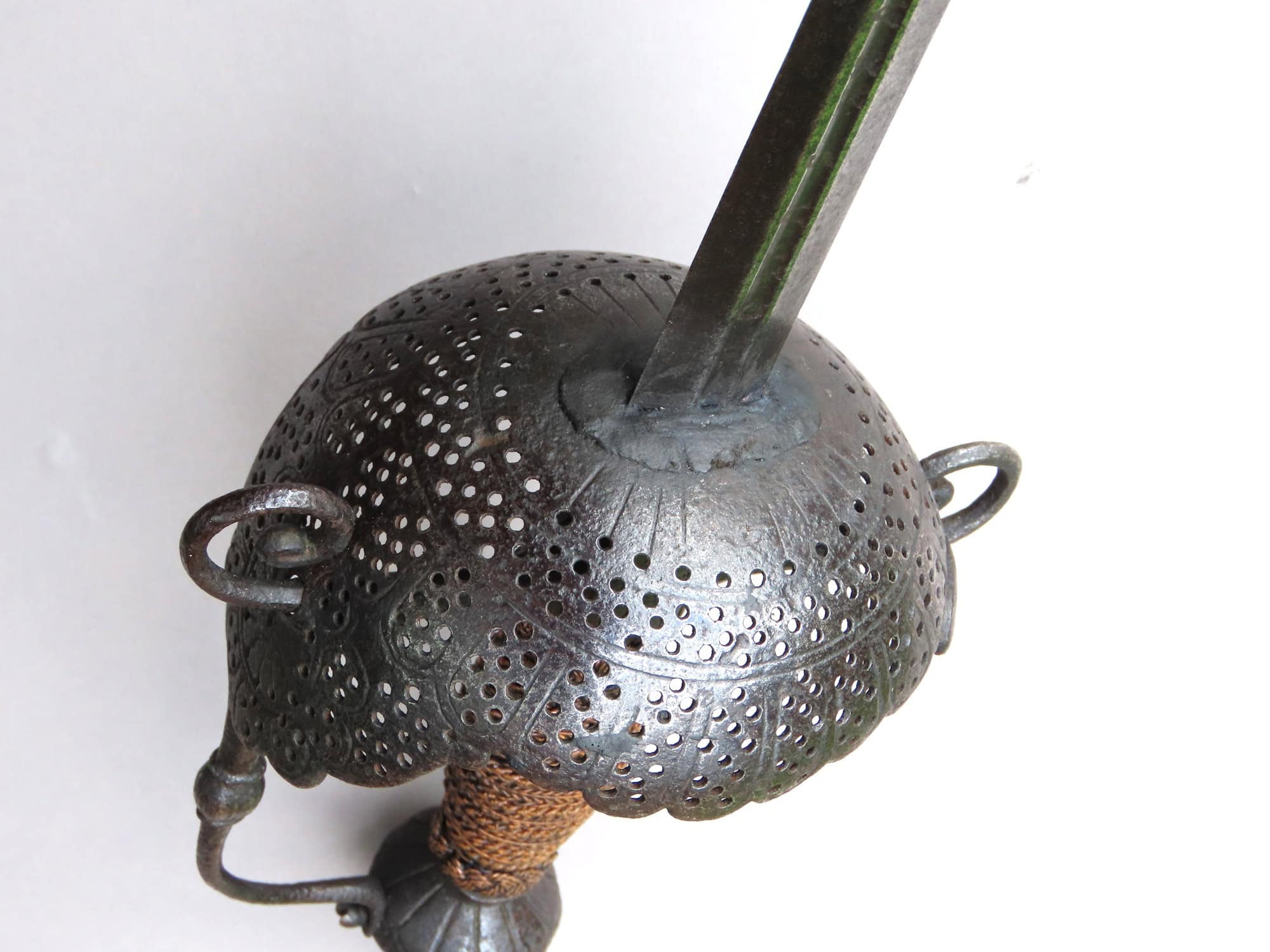
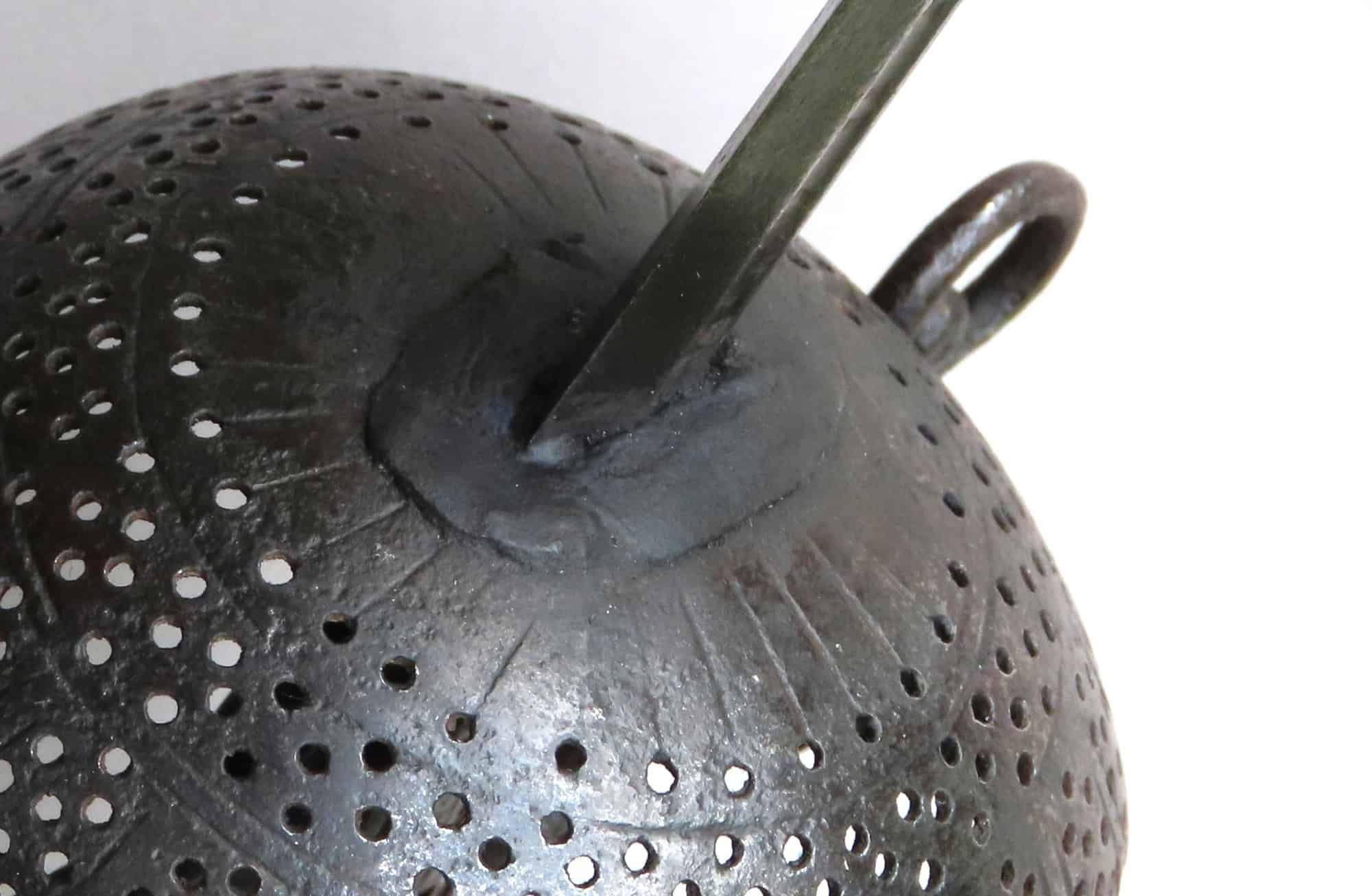
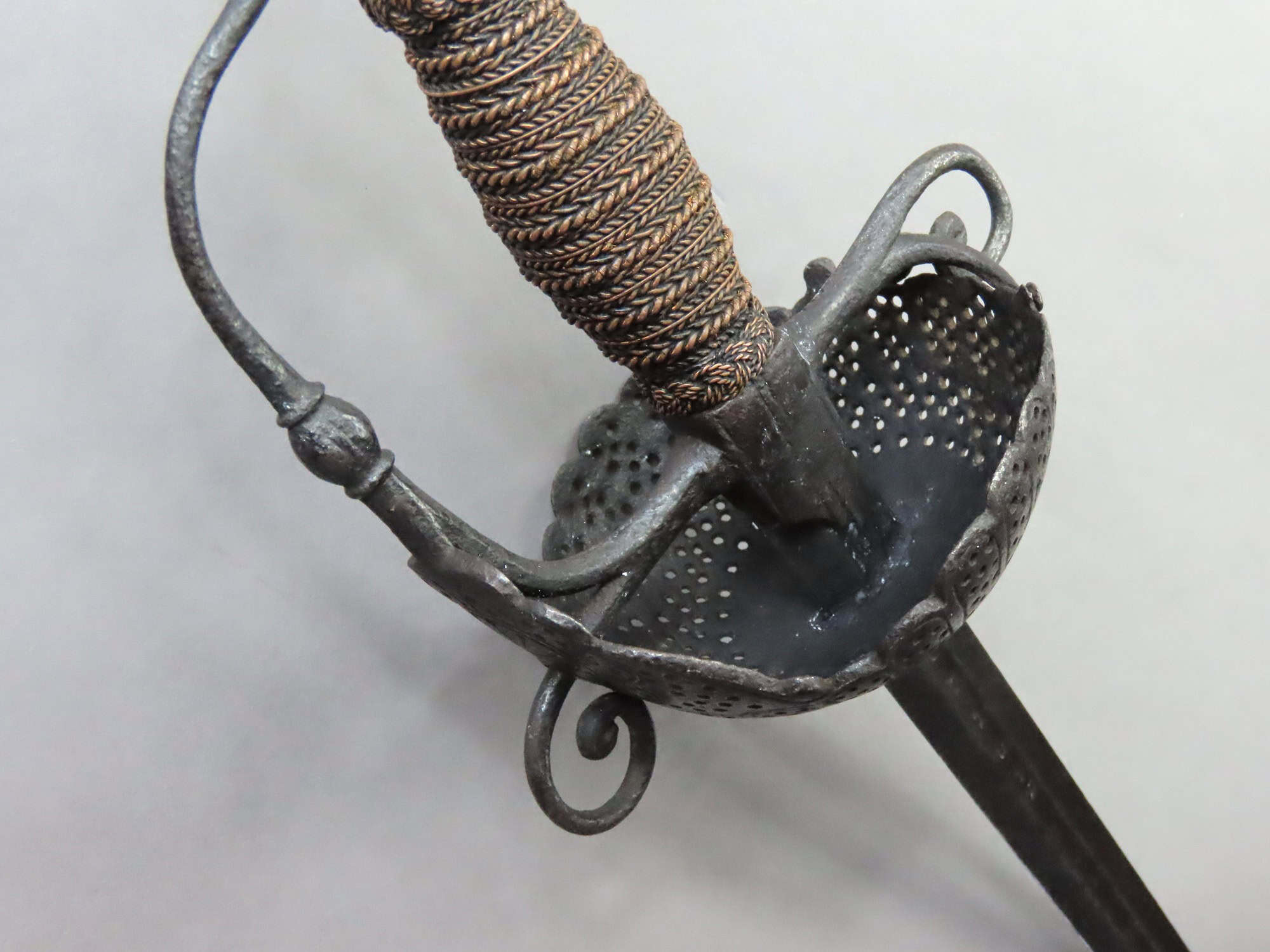
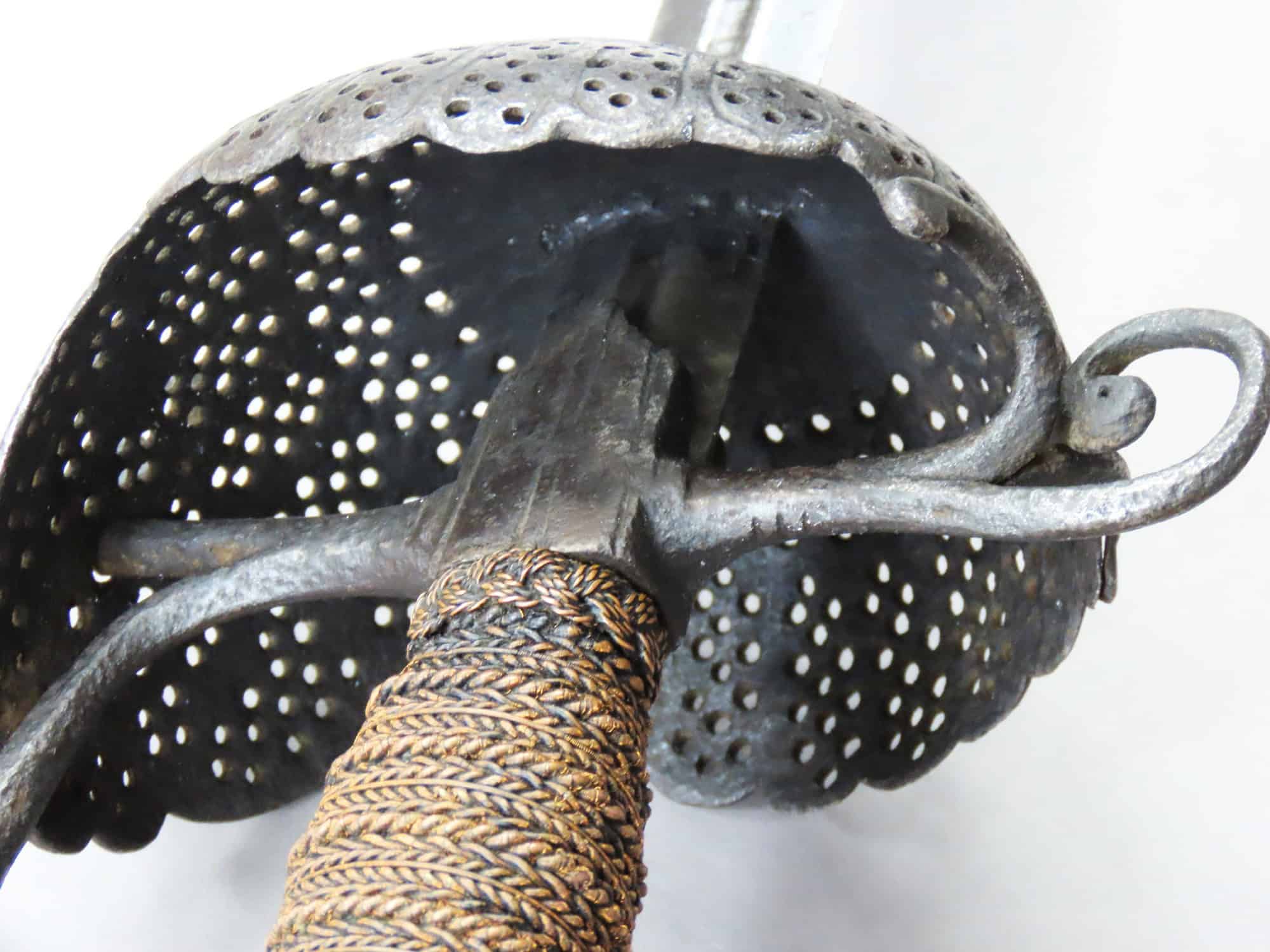
The dish guard is forged in one piece from beaten iron with an upturned prow at the front in boat shell shape. The aperture for the blade is surrounded by a double lined circle inside which incised lines radiate from the aperture. Another circle is cut slightly further out with the space between the two circles filled with delicately bored patterns of small holes which are also applied to the rest of the hilt. Outside this second circle connected double lined arches radiate outwards to create a crescented edge to the guard, corresponding to the shaped tops of the outermost arches. At the front the prow extends above the front quillon and is decorated with a further floral shape with radiating arches, the tops of which create the same crescented edge.
The rectangular section quillon block is decorated on each side with lines at the side and pairs of lines which extend along the middle to the tips of the pointed langets. Front and back quillons emanate from the block and terminate in downward scrolls with swollen terminals. The rear quillon is forged onto the guard rim with a short curled bar on each side. The front quillon passes through the upturned prow. A leather washer is present between the shoulders of the blade and the hilt aperture.
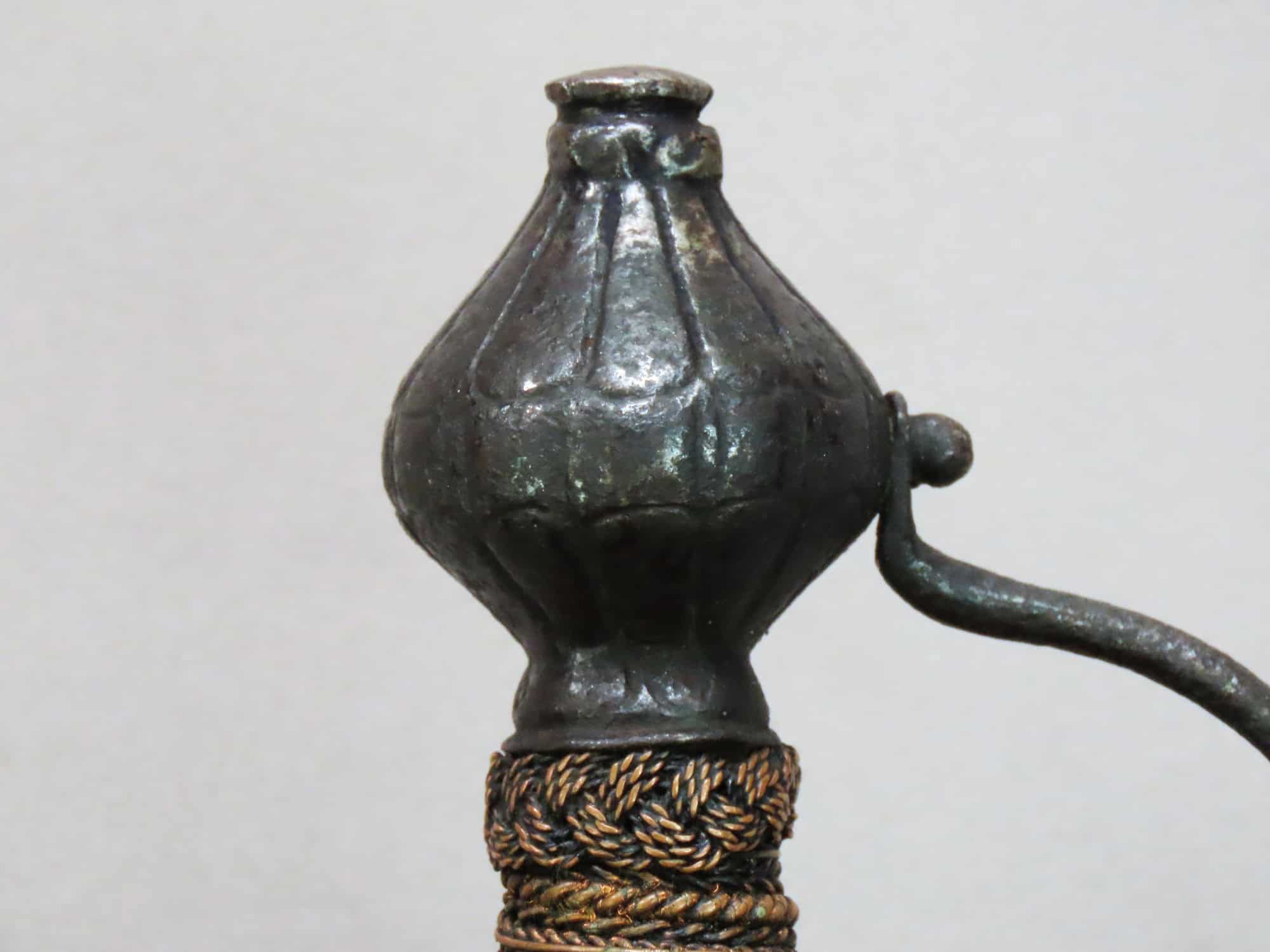
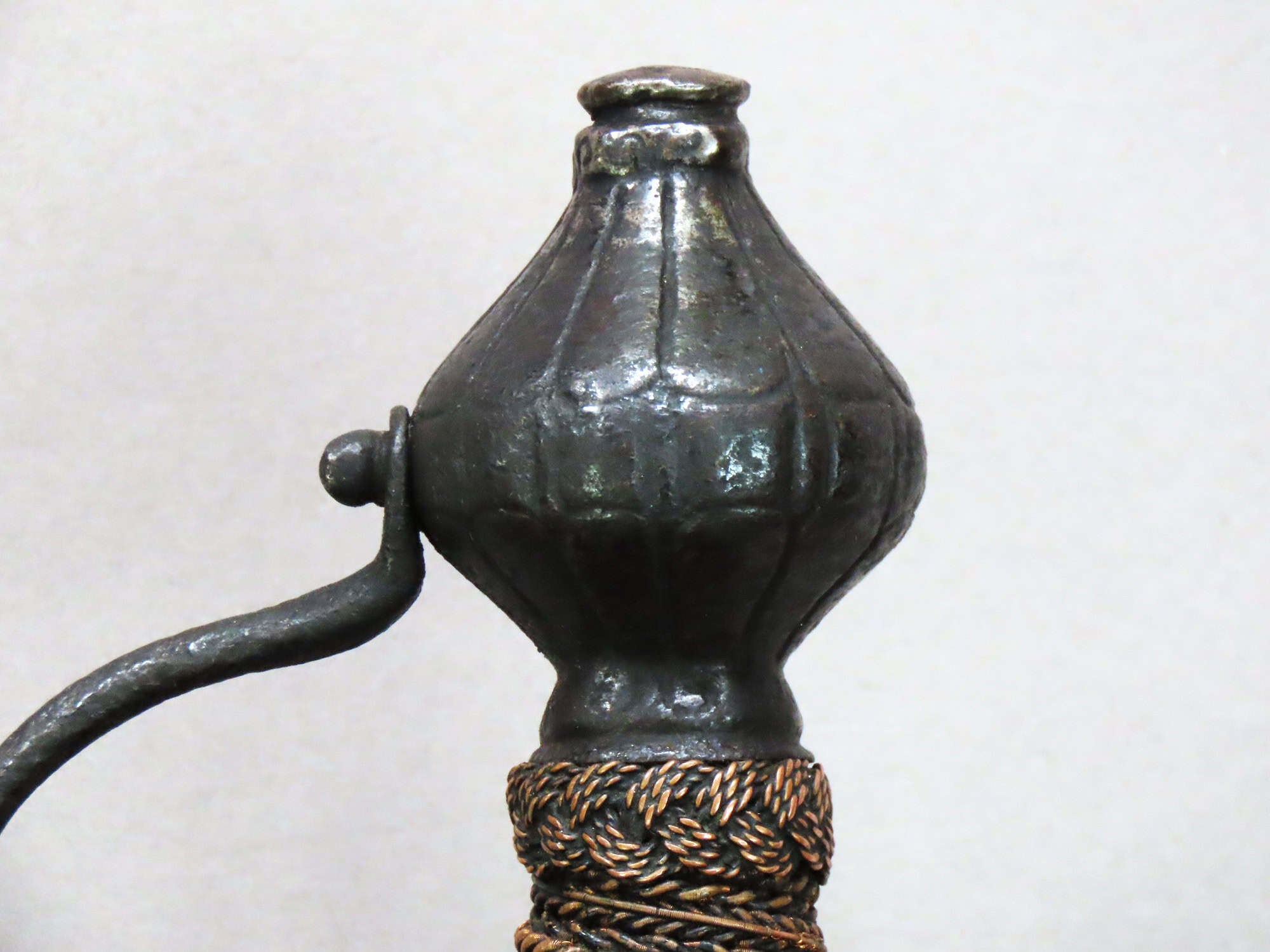
From the front a slender knuckle bow emanates from the top of the front quillon near the block and is attached to the top of the prow. It is swollen with a ribbed knop in the middle, tapers and terminates in a flattened angled aperture which is screwed into the pommel front. The solid onion shaped pommel has an integral waisted neck beneath and a raised ribbed button on top. It is decorated with chiselled crescents which radiate downwards from the button and upwards from the neck in similar style to the hilt.
The baluster shaped grip is of rounded rectangular section spirally bound with different thicknesses of counter-curved copper wire and with woven copper “Turks’ Heads” mounted top and bottom.
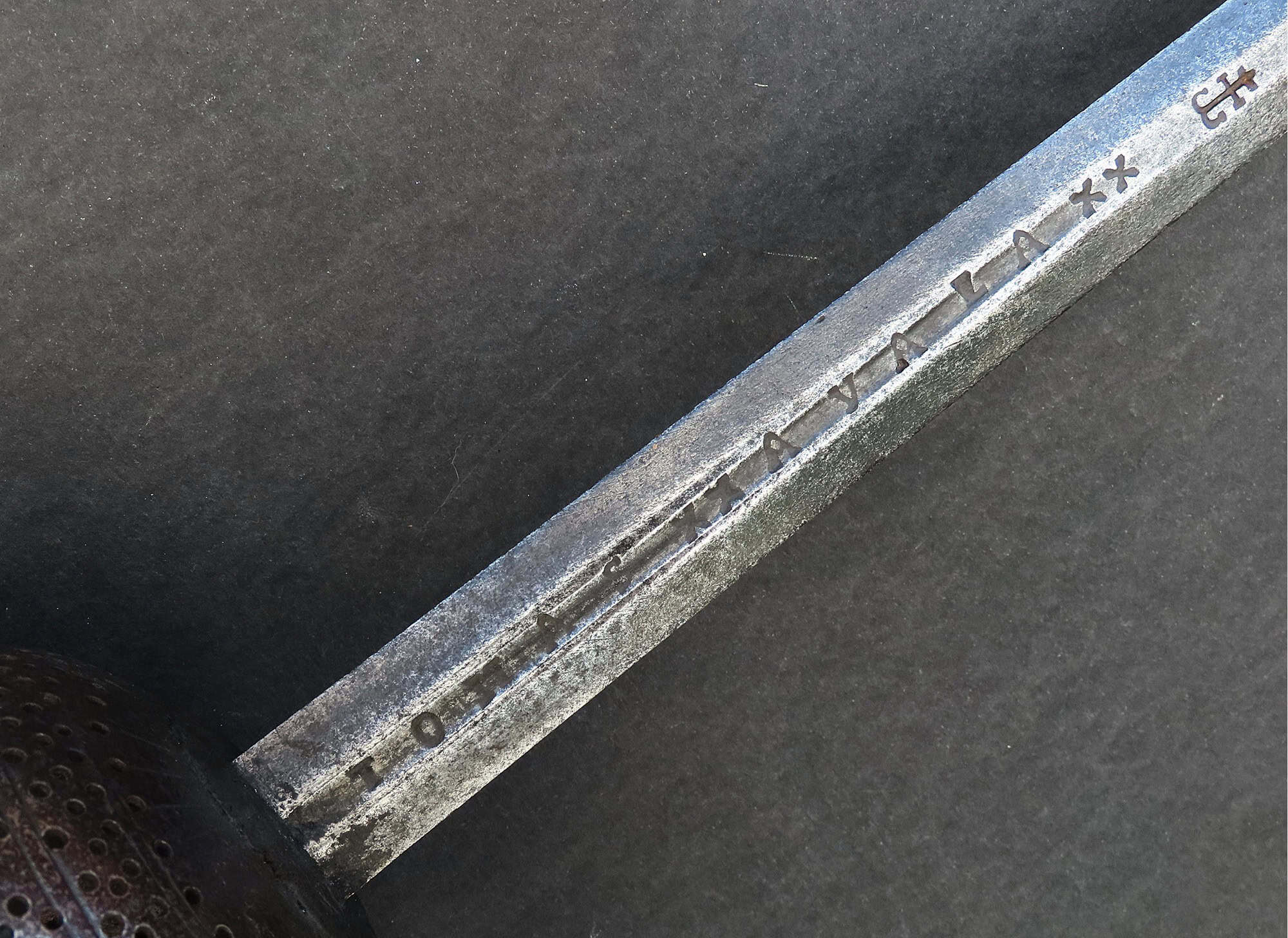
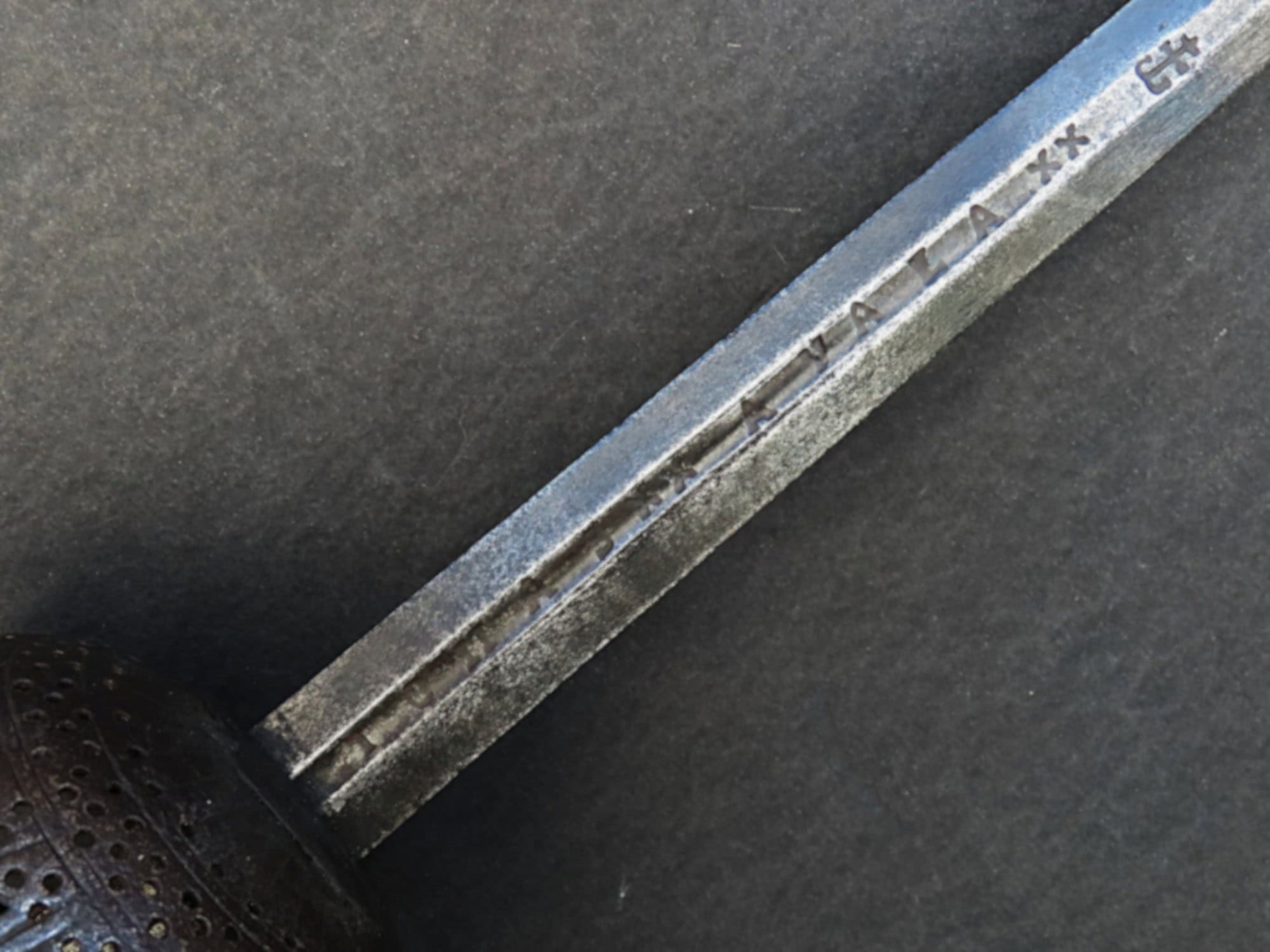
The tapering double edged blade is of stiff hexagonal section and 33 inches (84 cm) long. It has a deeply cut fuller which tapers from the hilt to its end for 5.5 inches (14 cm). Inside the fuller on each side the name of the blade maker TOMAS AYALA is stamped along with cross marks. Just past the end of the fuller a stylised cross is also stamped. Tomas Ayala was a famous sword maker based in Toledo in Spain who made swords for Spanish royalty. His work was of such high quality that other smiths particularly in Solingen copied his mark as a spurious sign of quality.
The rapier has an even patination all over its iron and steel parts. The hilt retains its pleasing original profile without damage or repairs. The overall length of the rapier is 40.75 inches (103.5 cm).
English rapiers of this date exhibit a broadly common form and style, however, there are many variations under this umbrella. Many are seemingly unique like our example discussed here. For examples of the different styles and types of English military rapiers see Stuart C Mowbray, “British Military Swords”, 2013, Andrew Mowbray Publishers, Volume One, 1600 to 1660, pages 254 to 281, and particularly pages 262, 263, 264, 265 and 266 for hilts with similar pierced and crescented decoration to ours.