An Exceptional Scottish Basket Hilted Sword of “Glasgow” Style dating to the beginning of the 18th century
To enquire about this itemplease click here
Price: £17,000
Ref: 62080722
Item Description
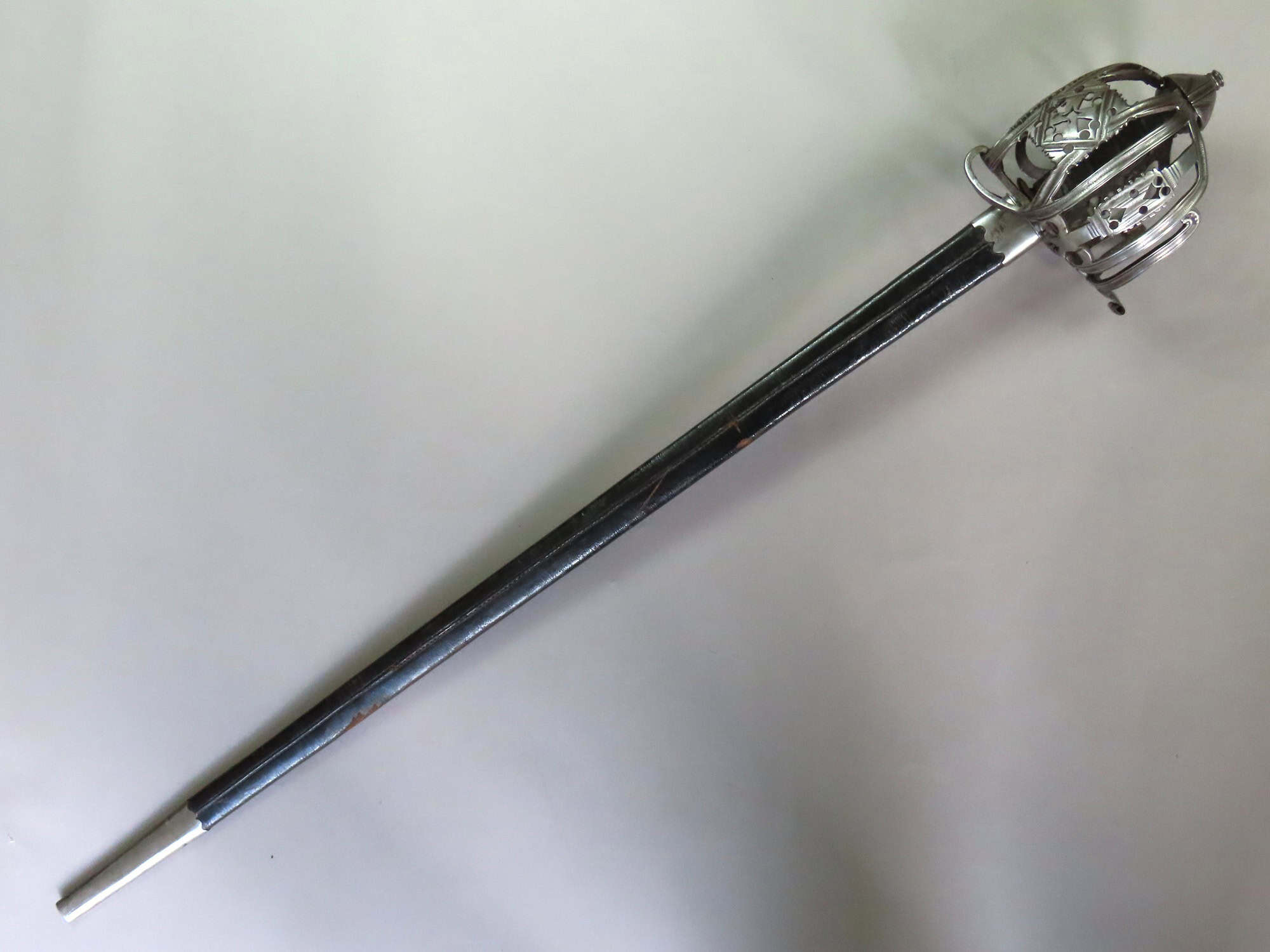
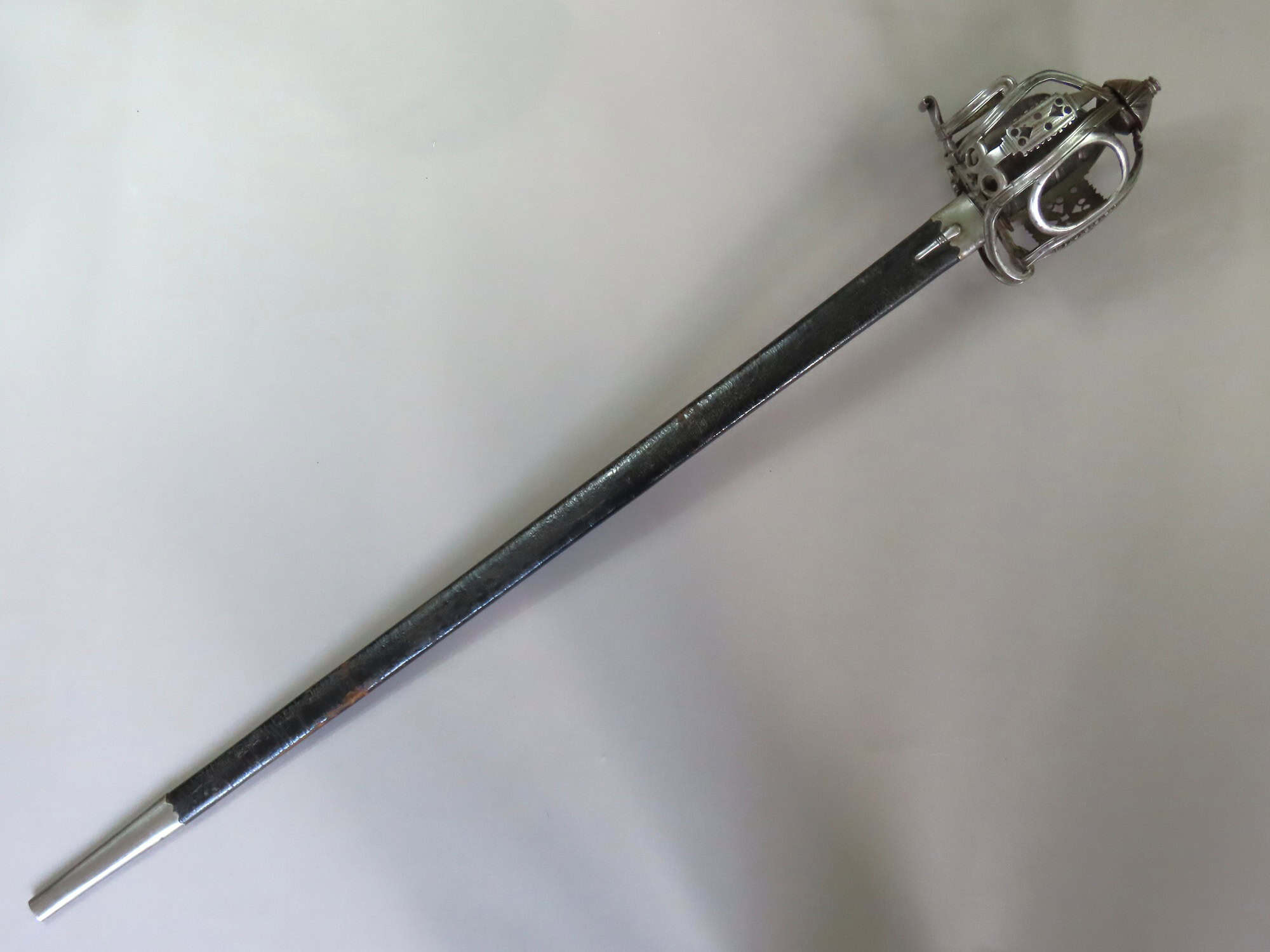
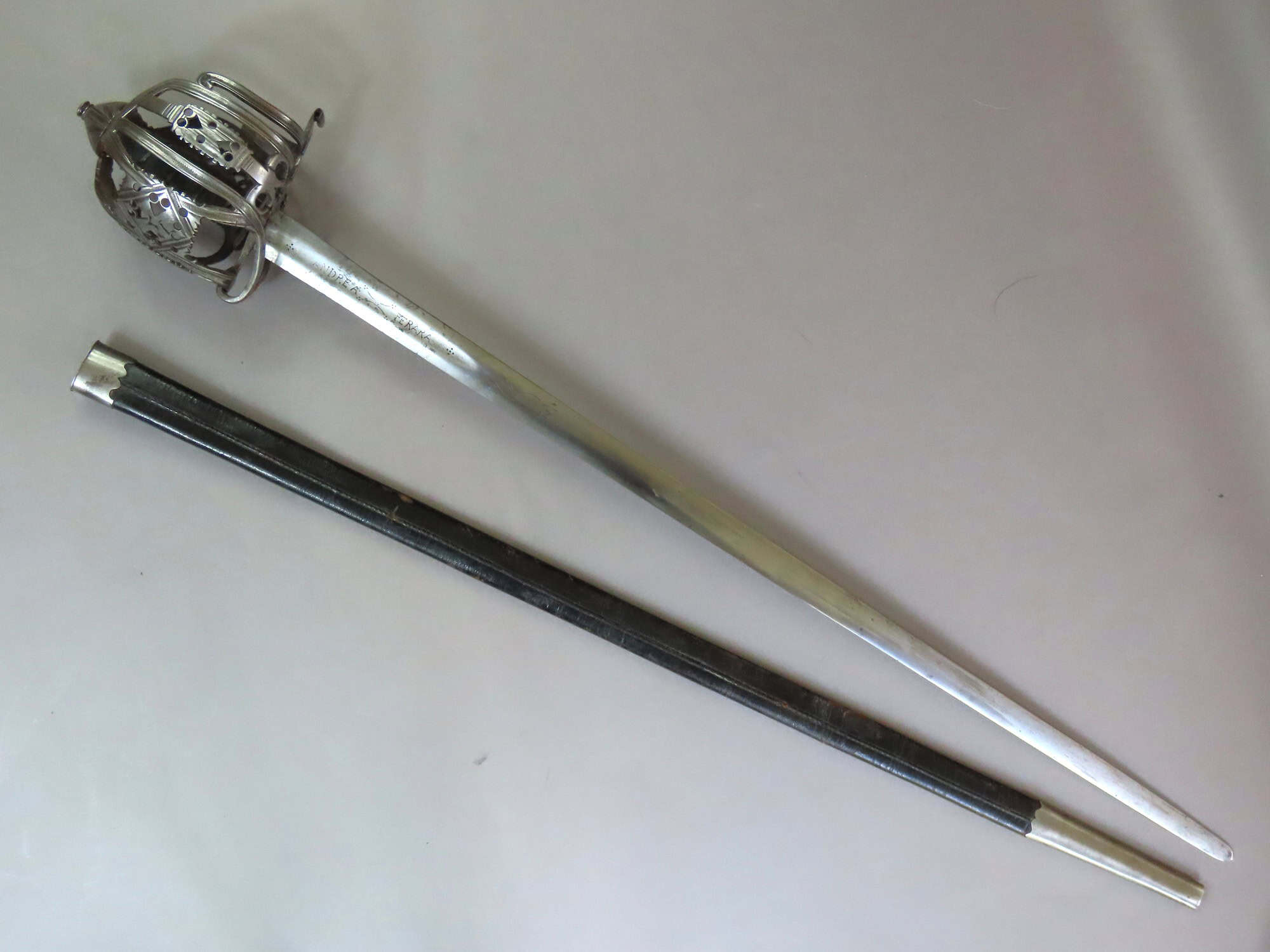
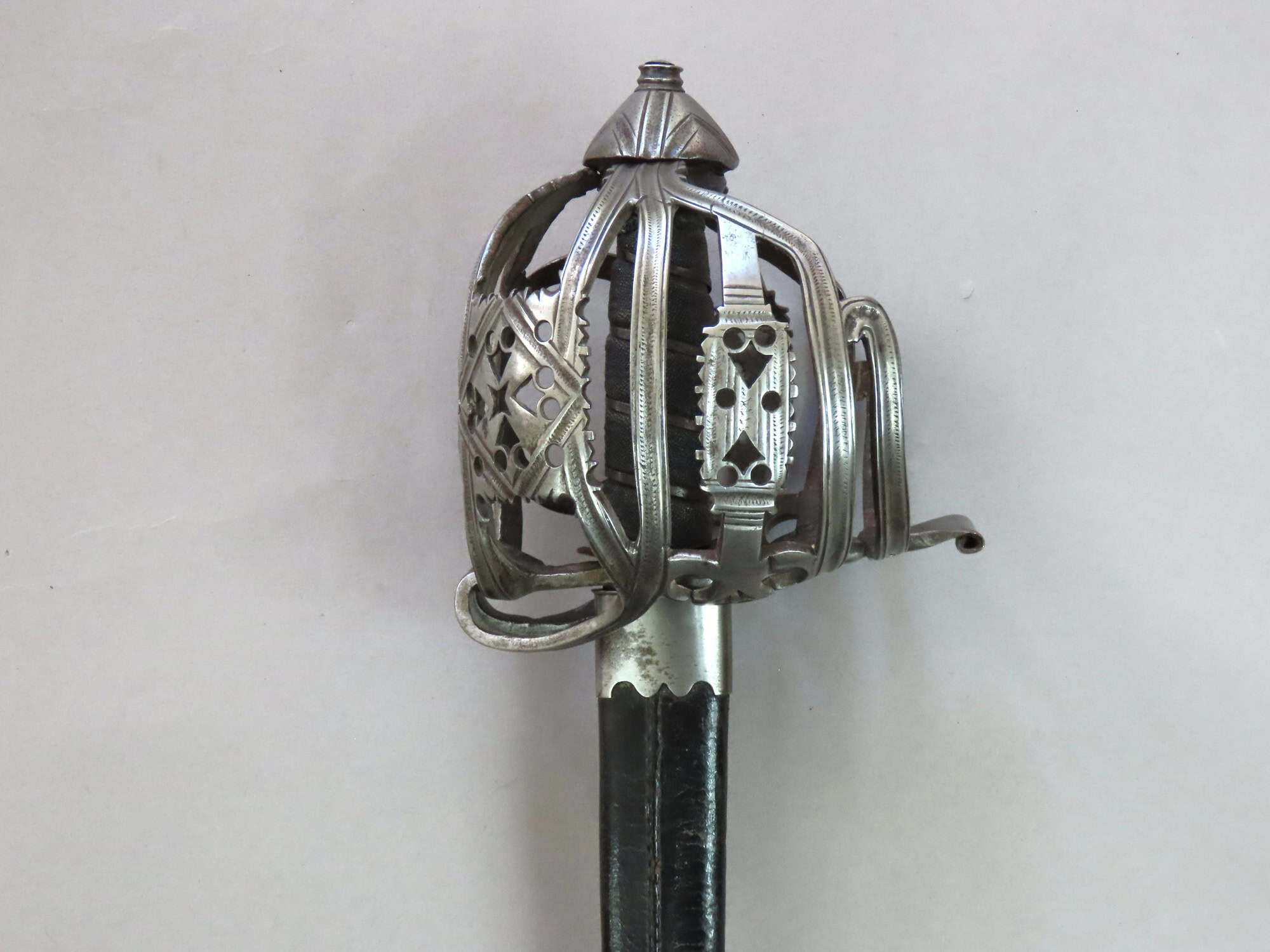
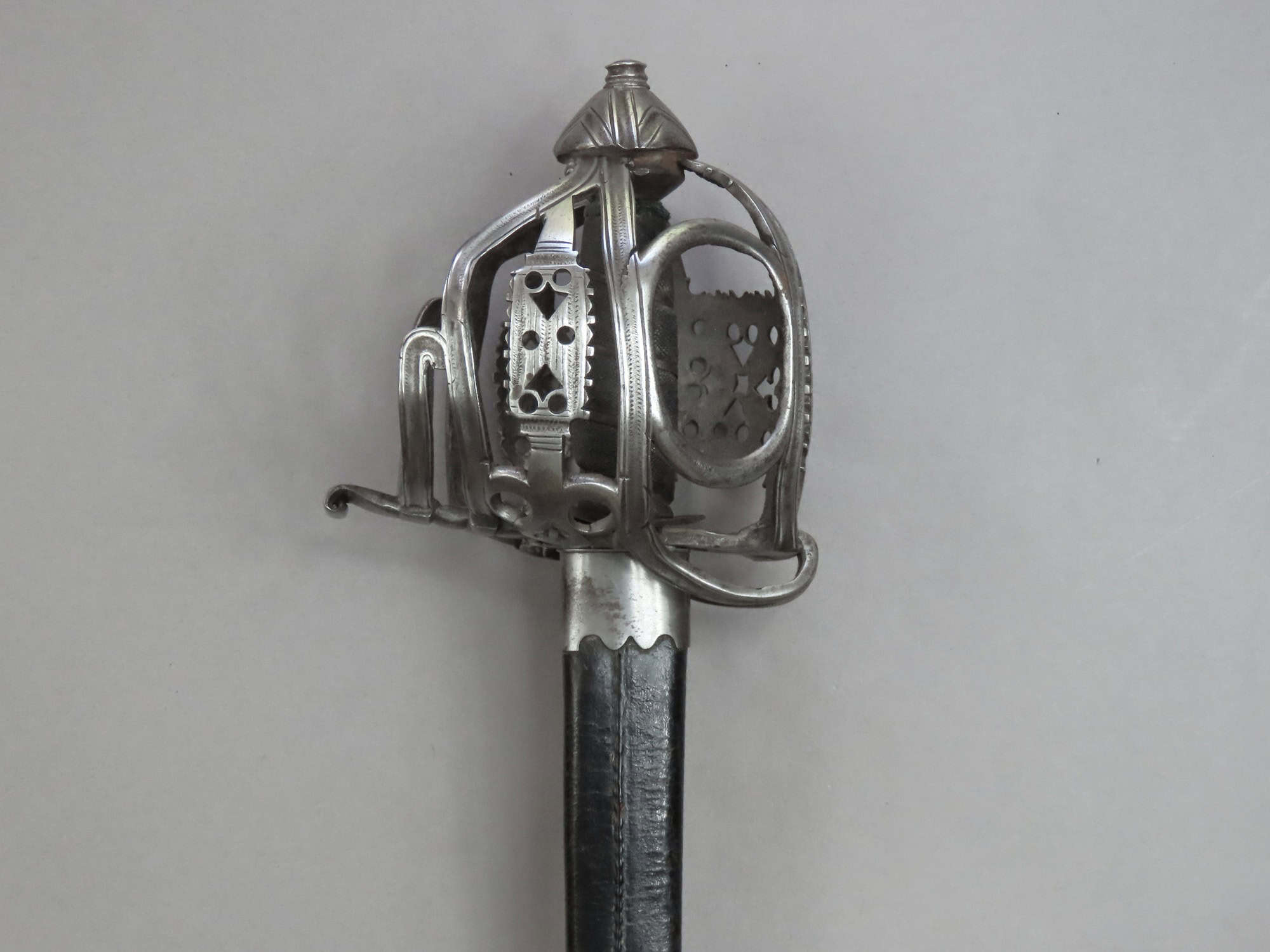
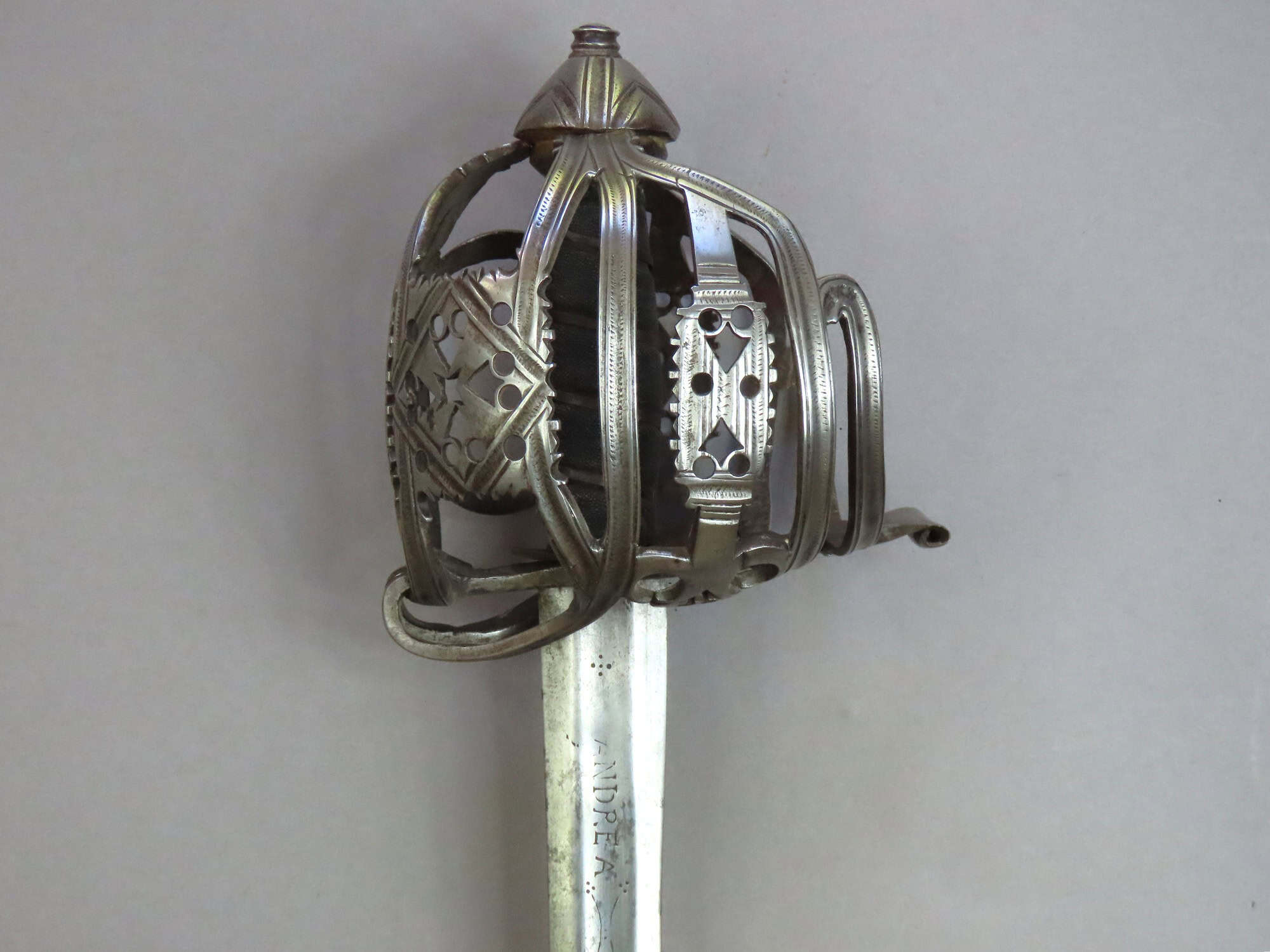
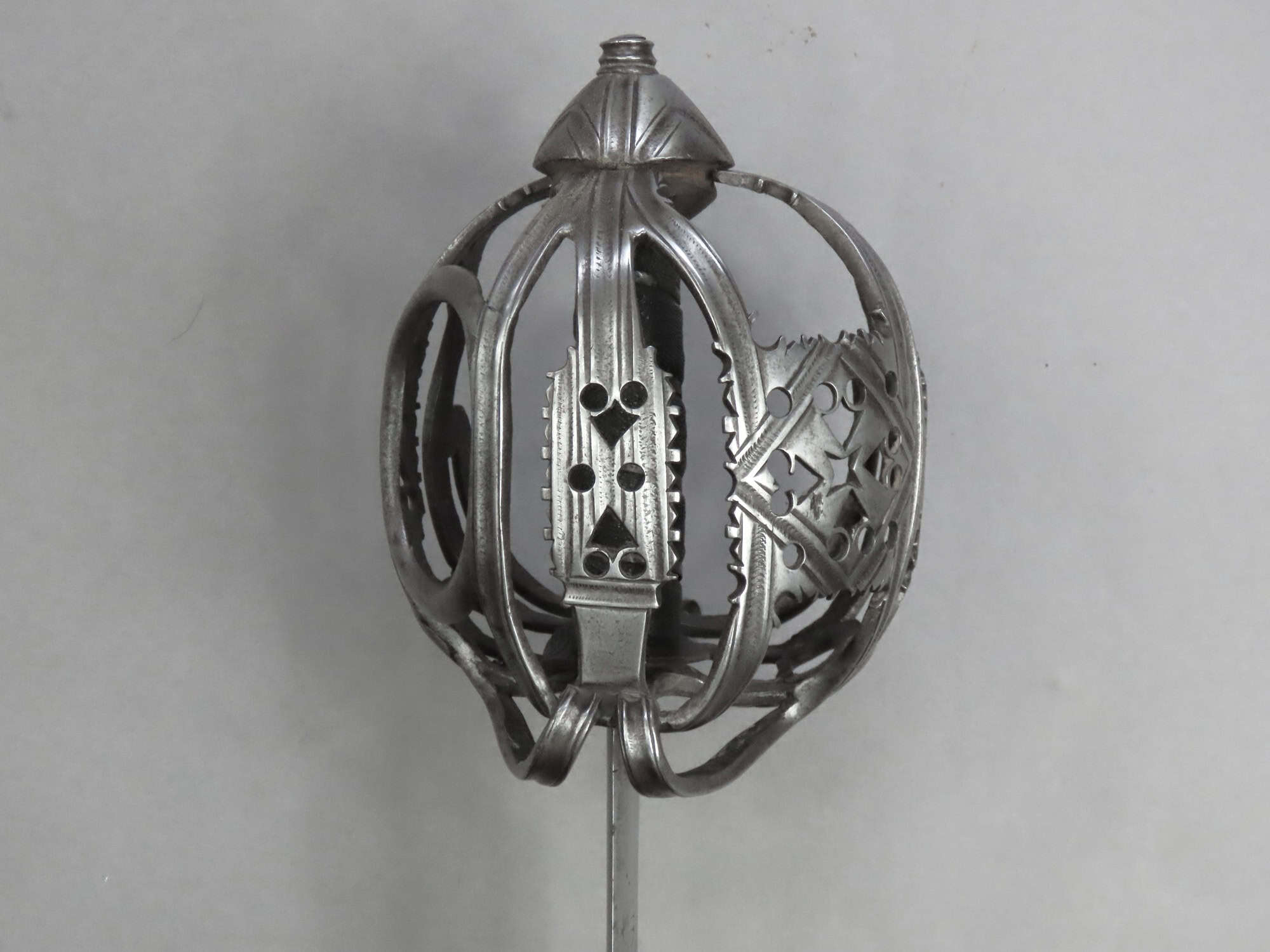
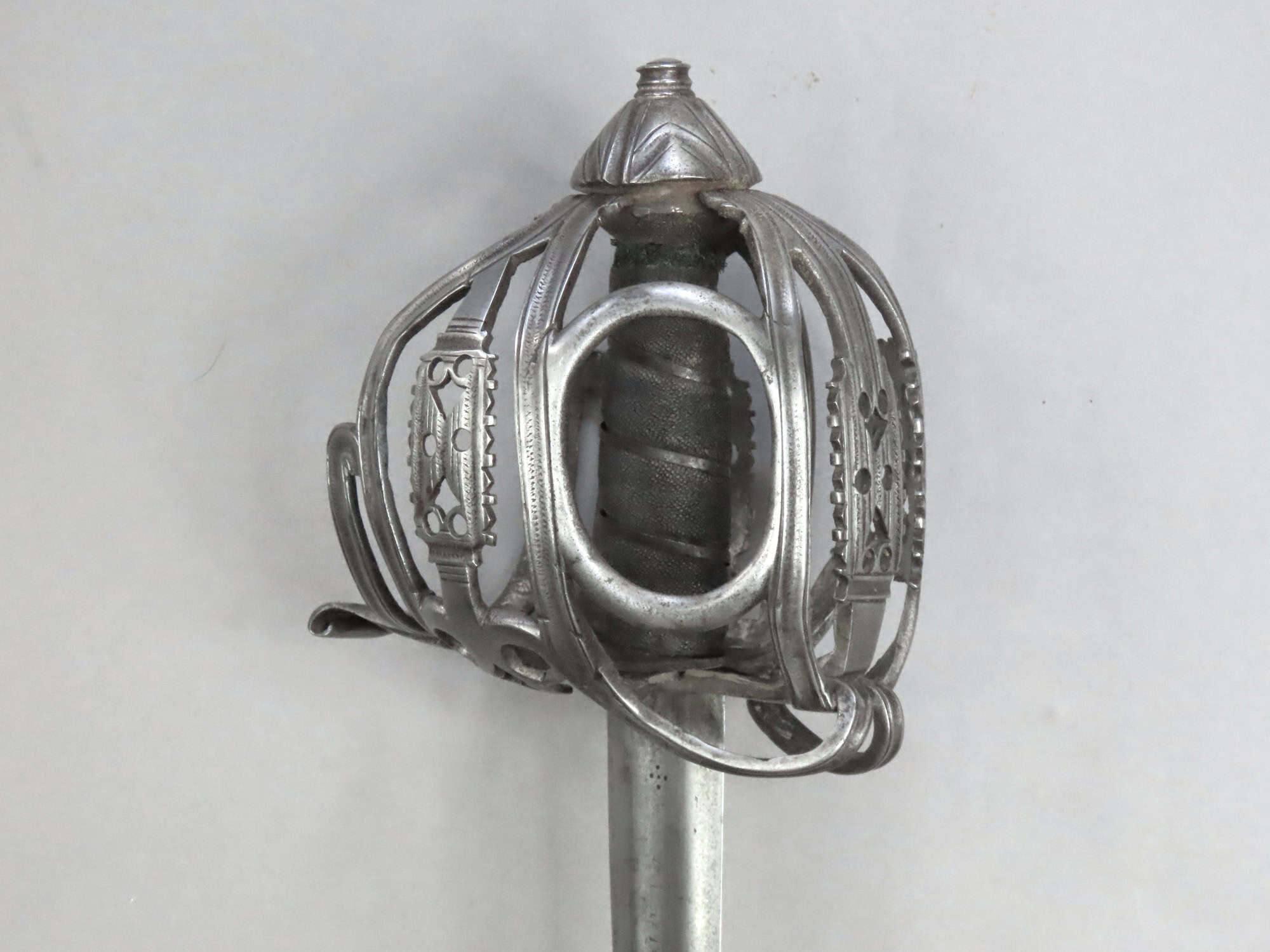
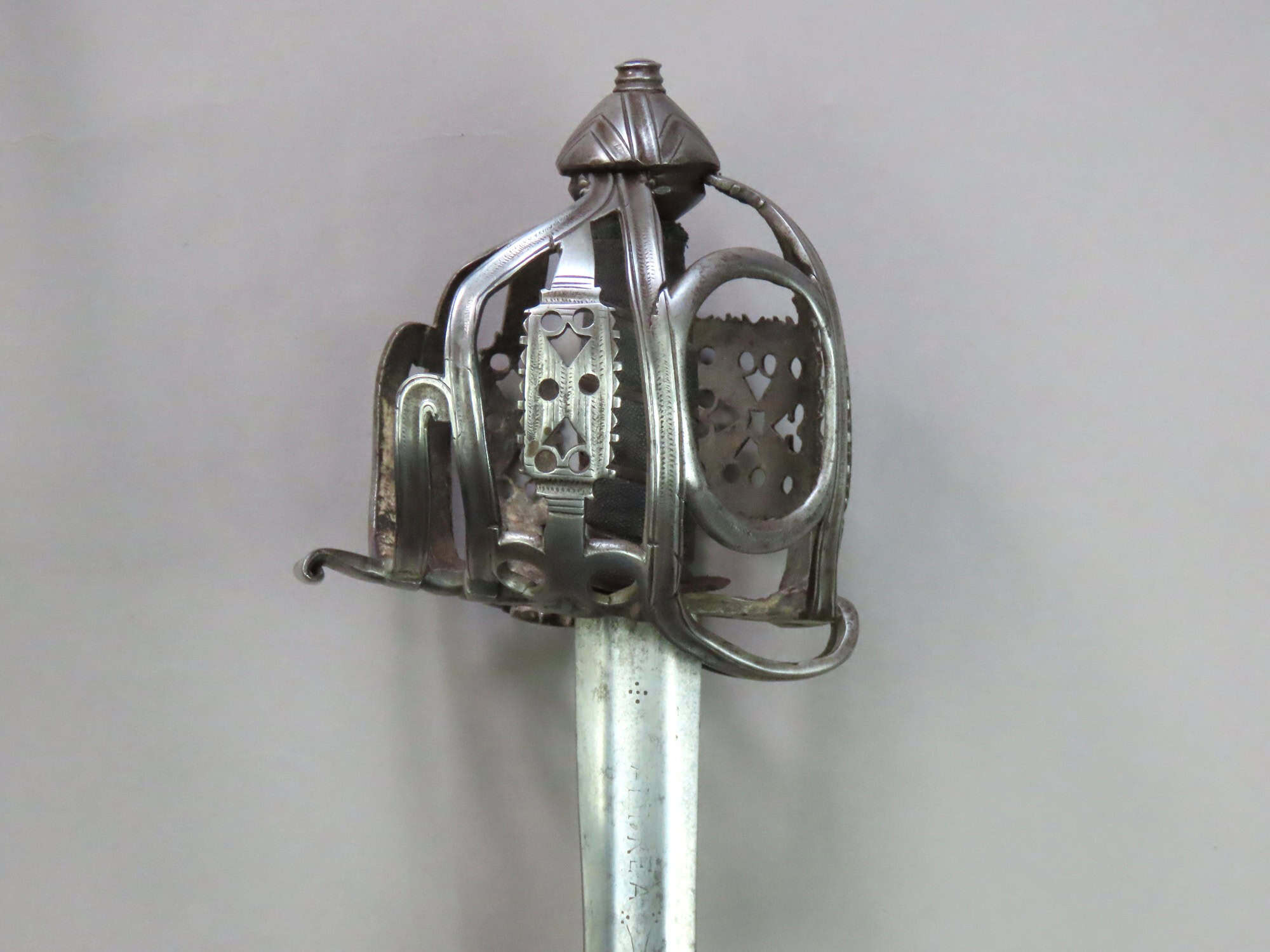
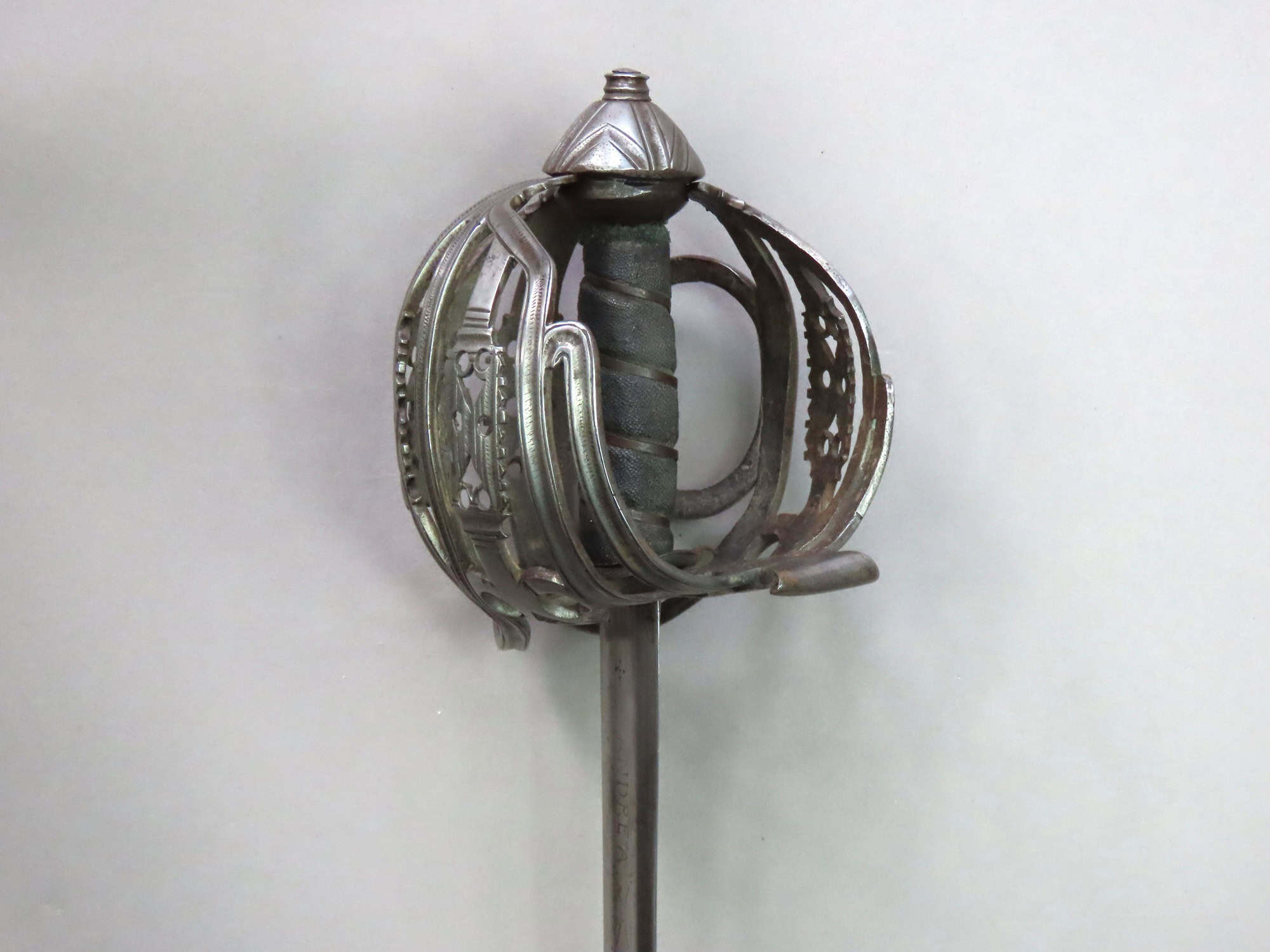
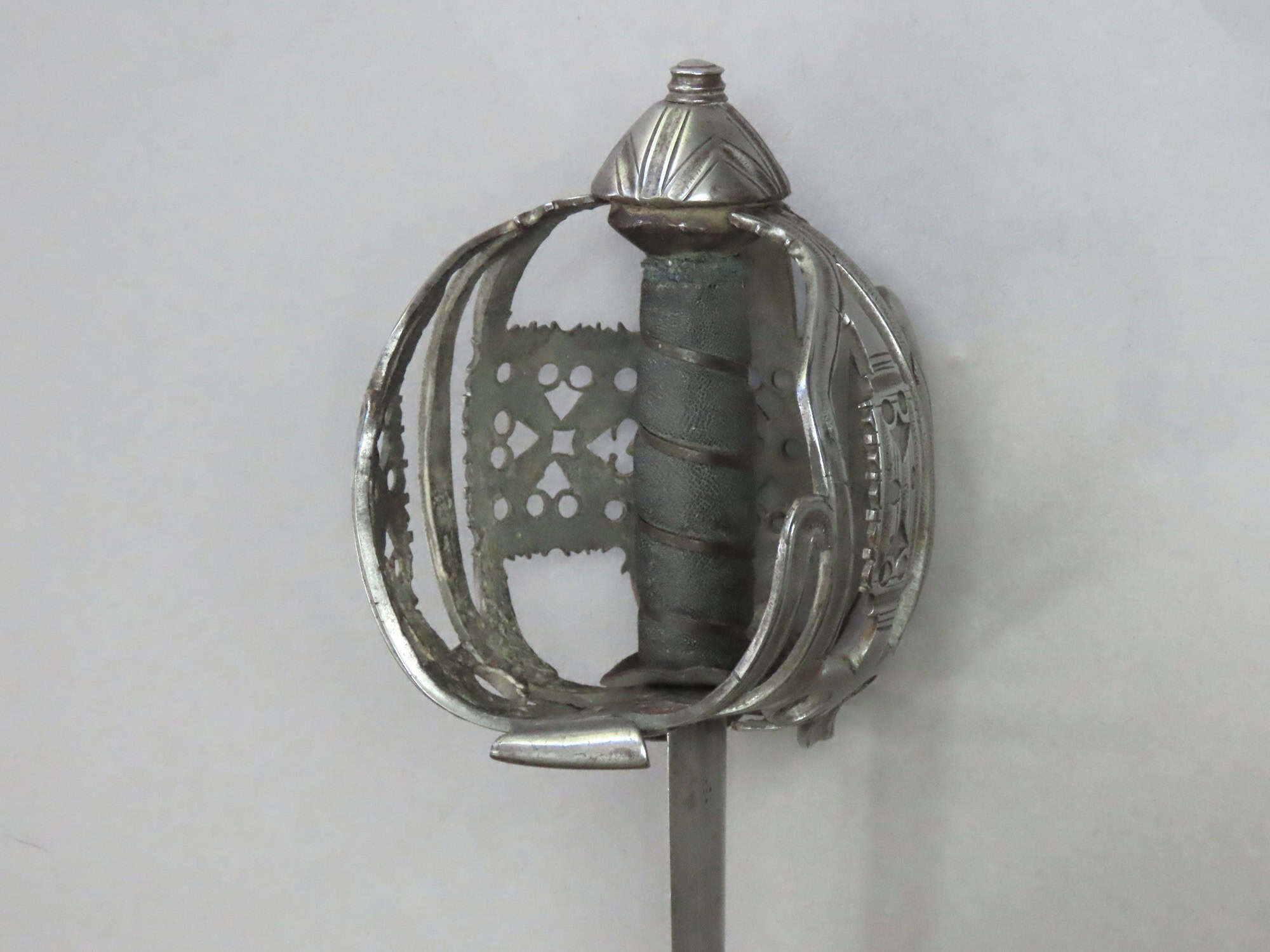
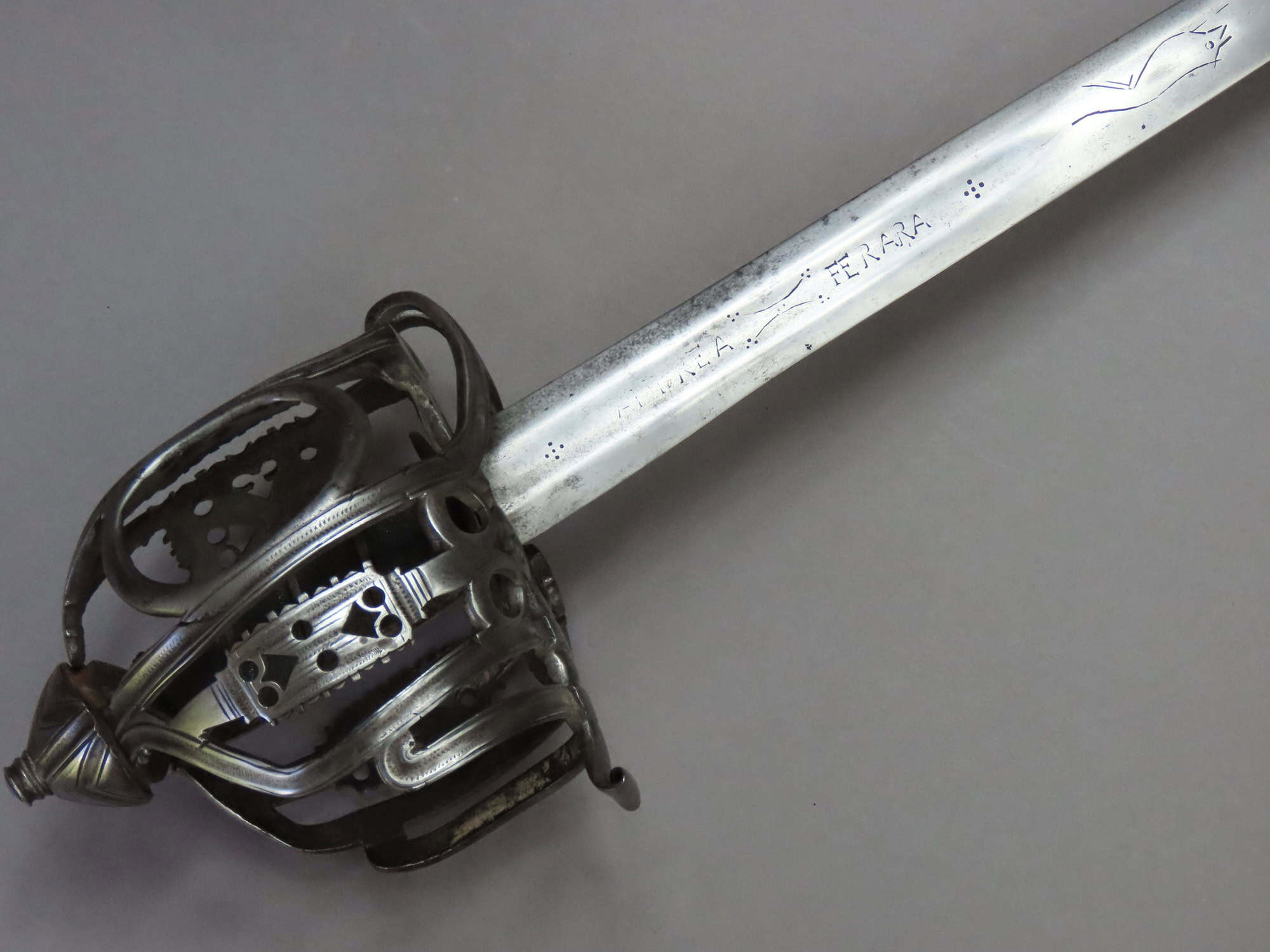
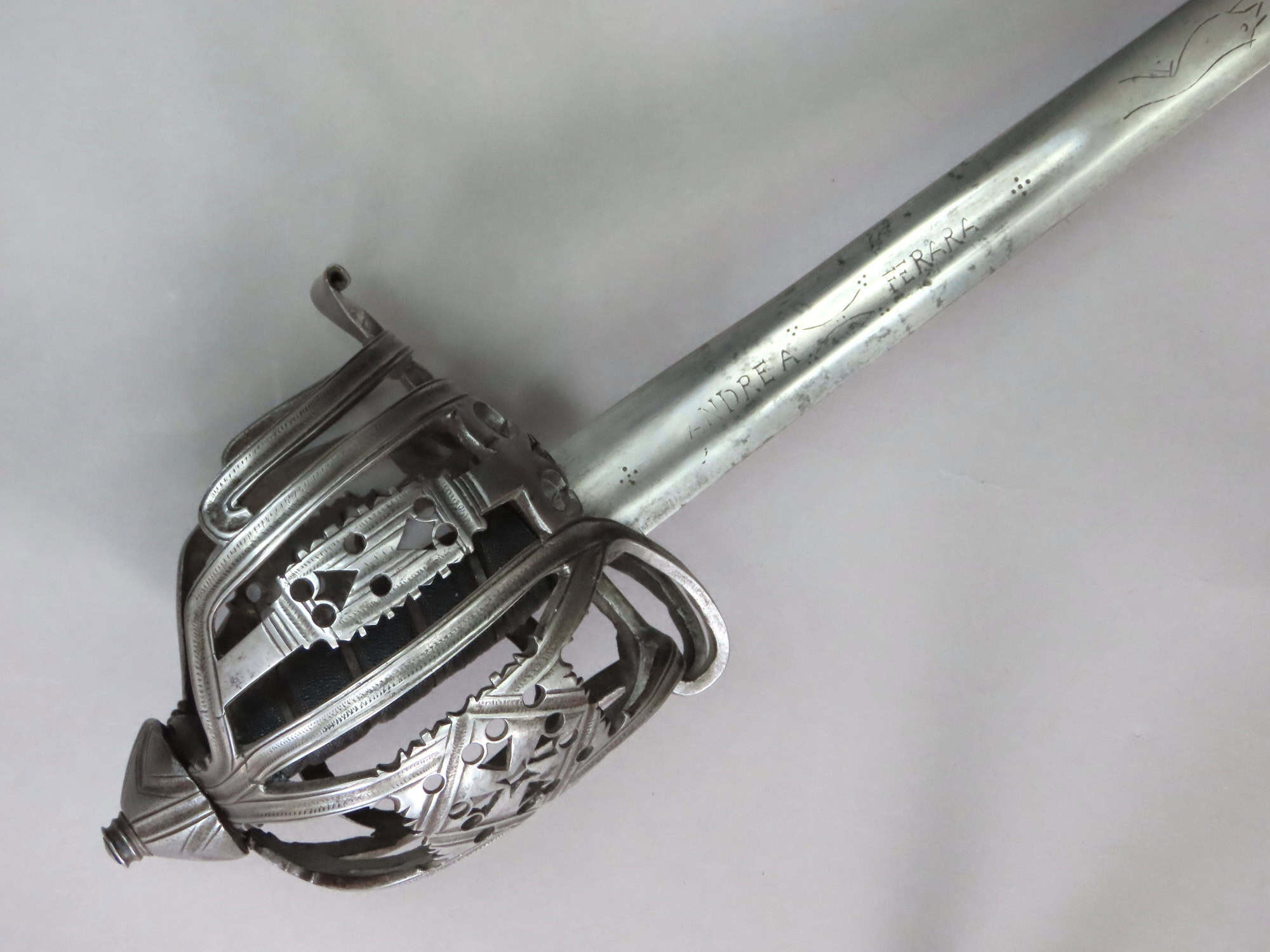
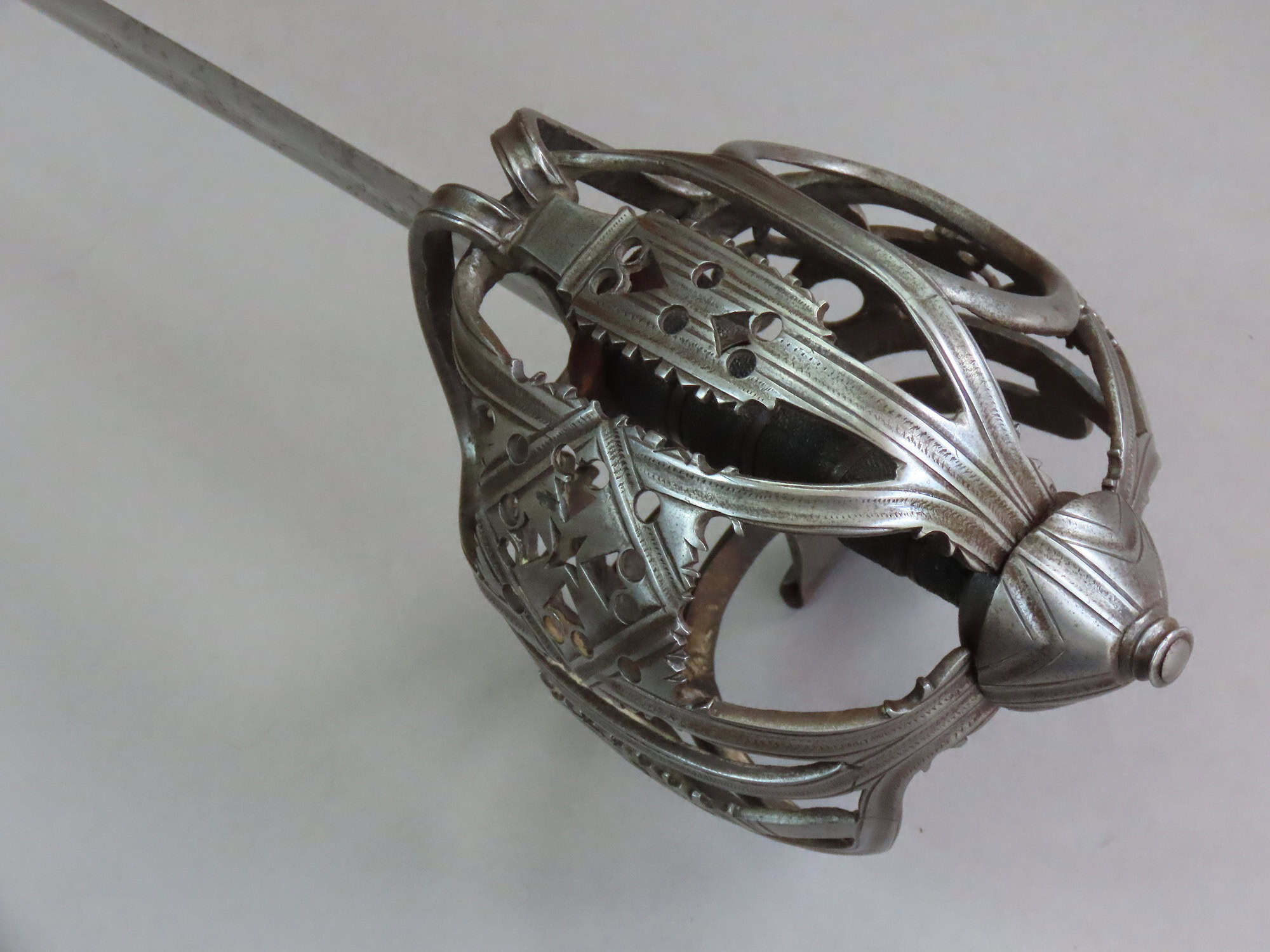
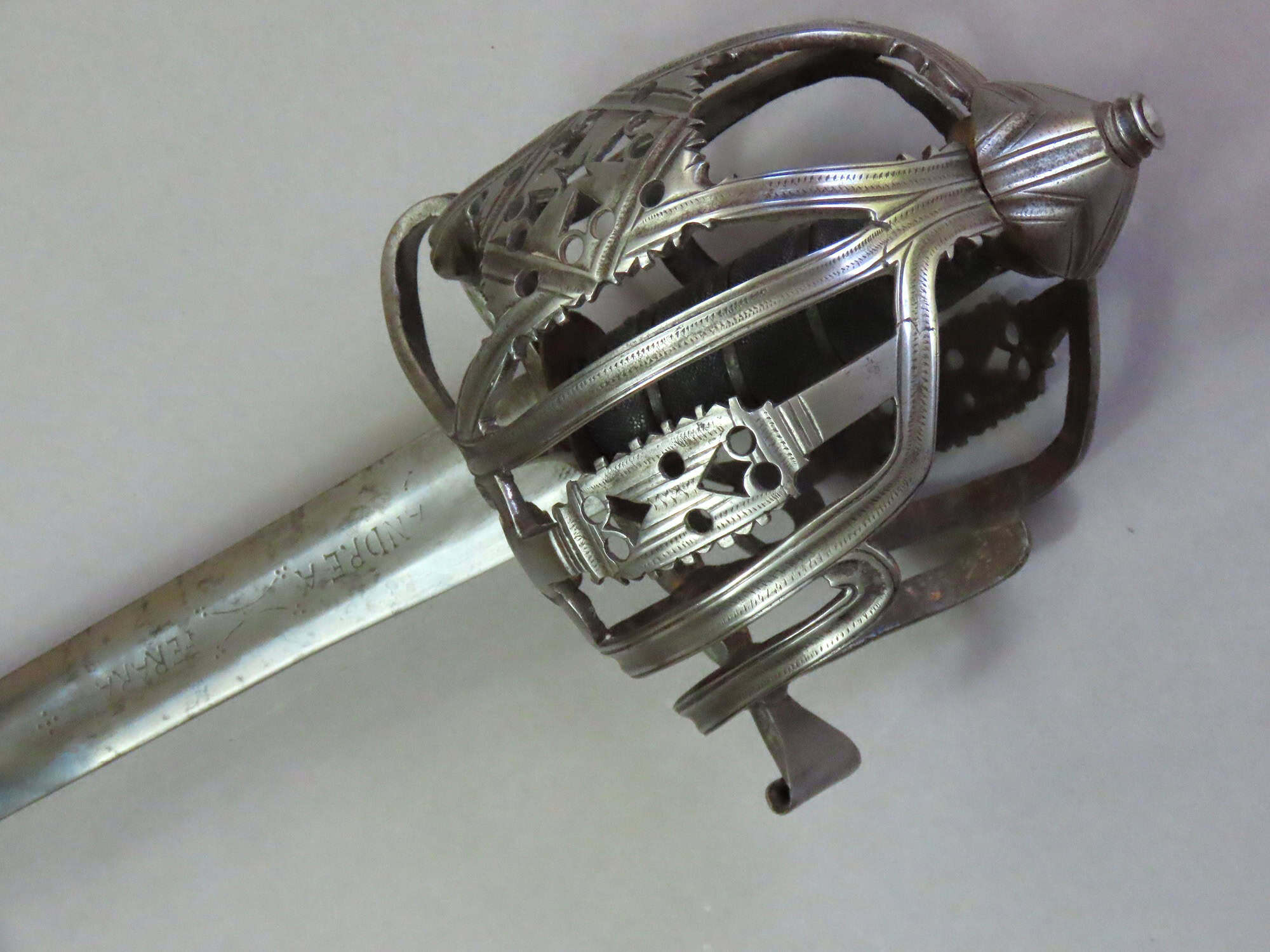
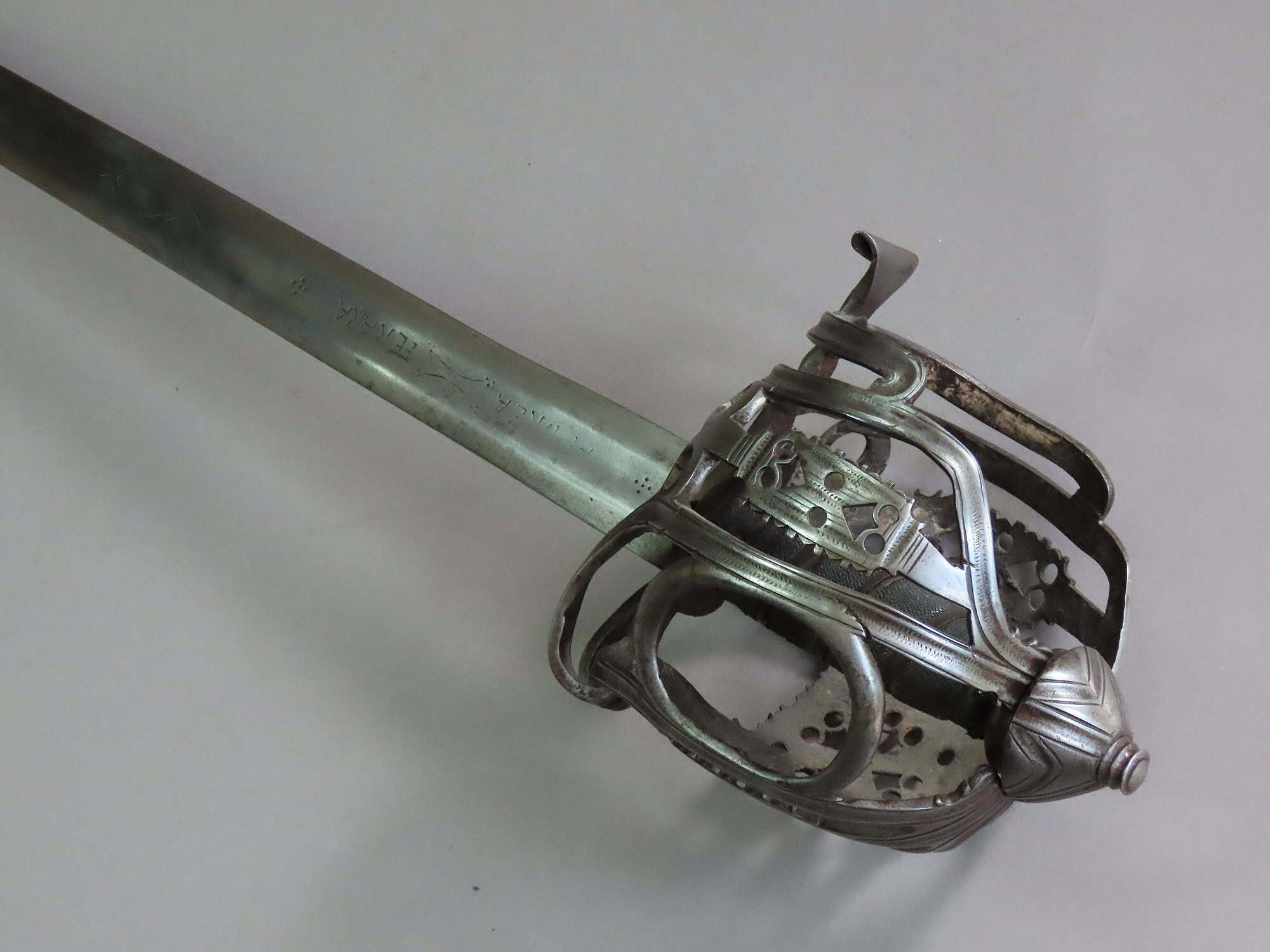
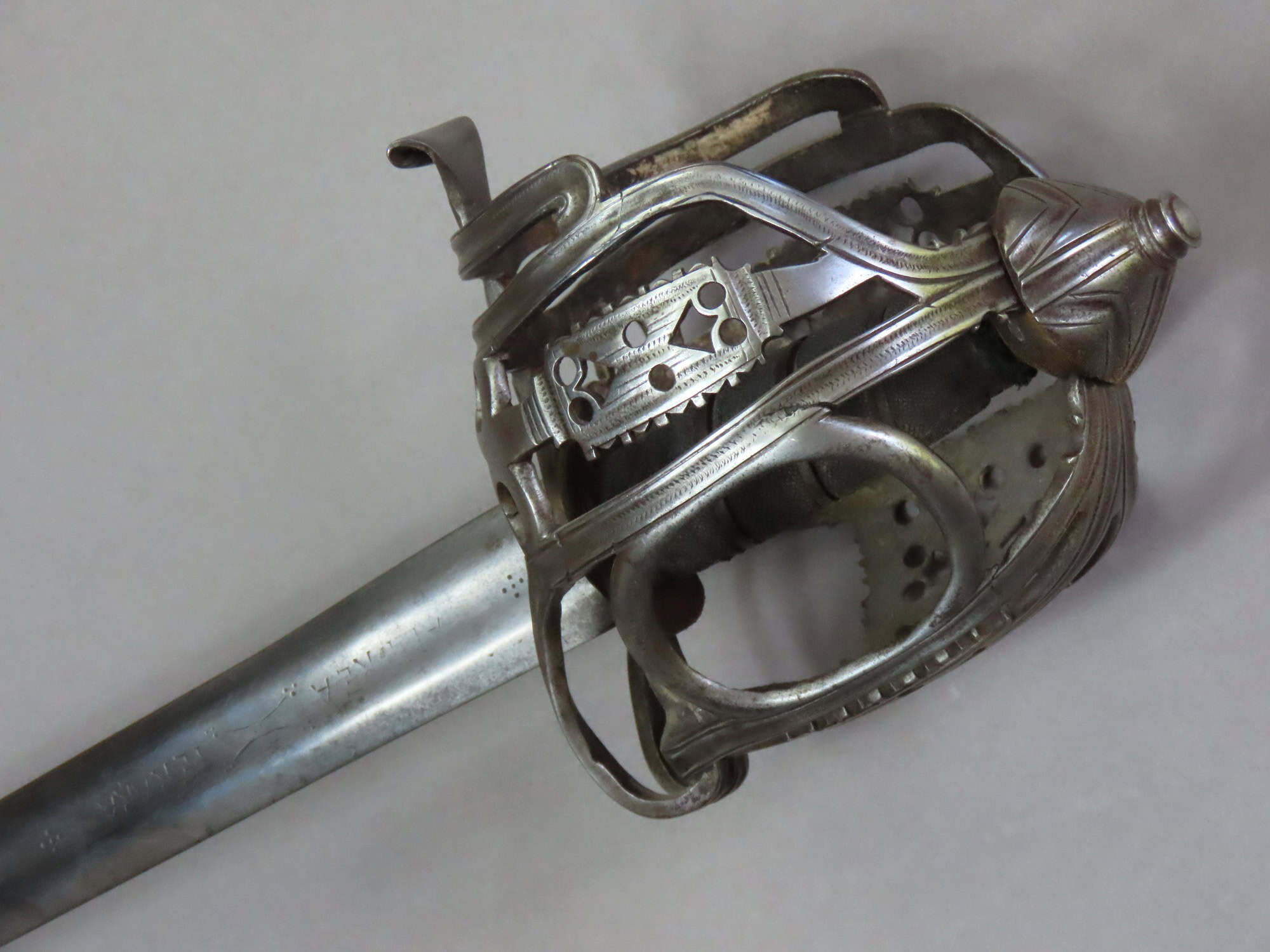
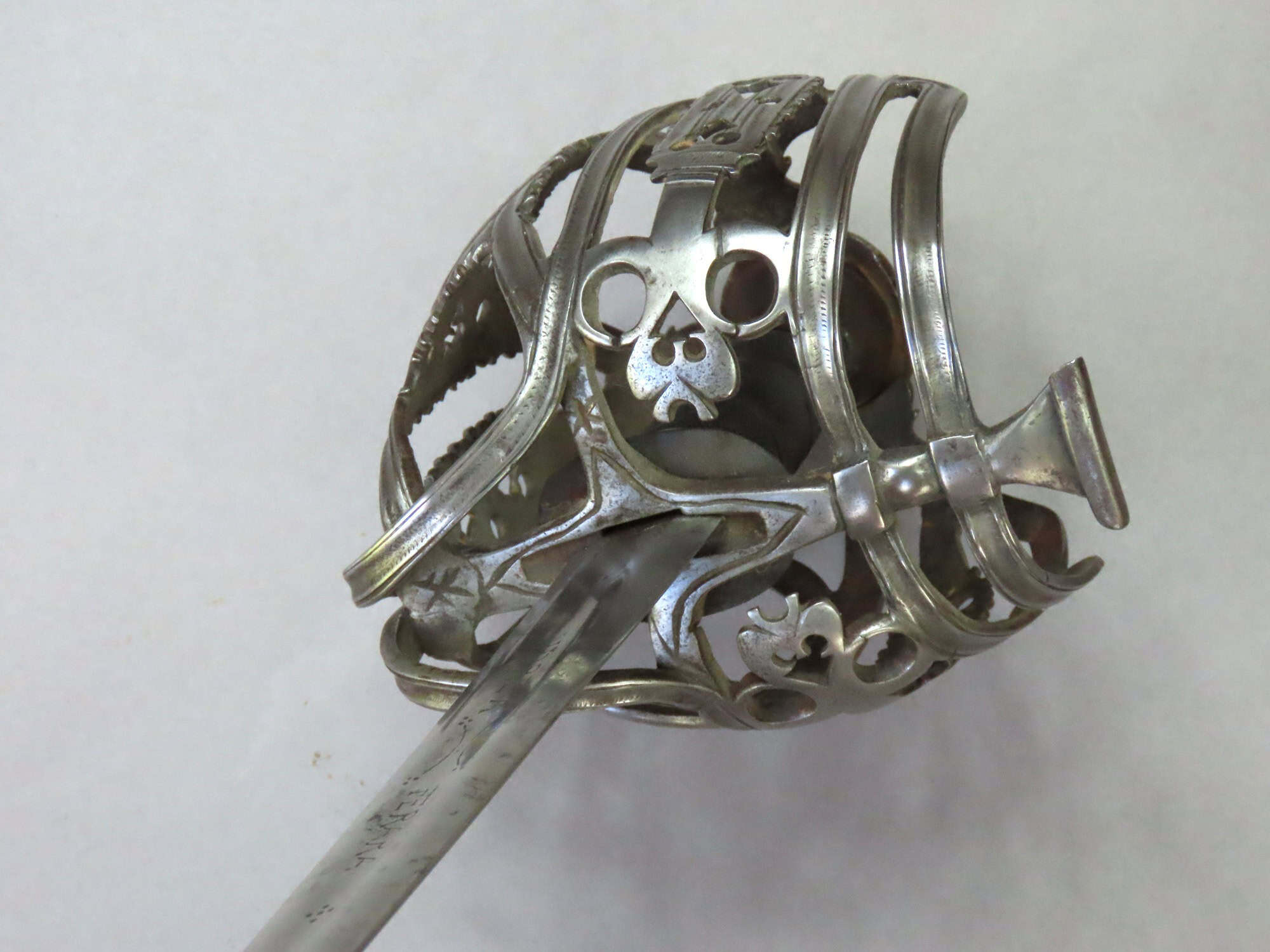
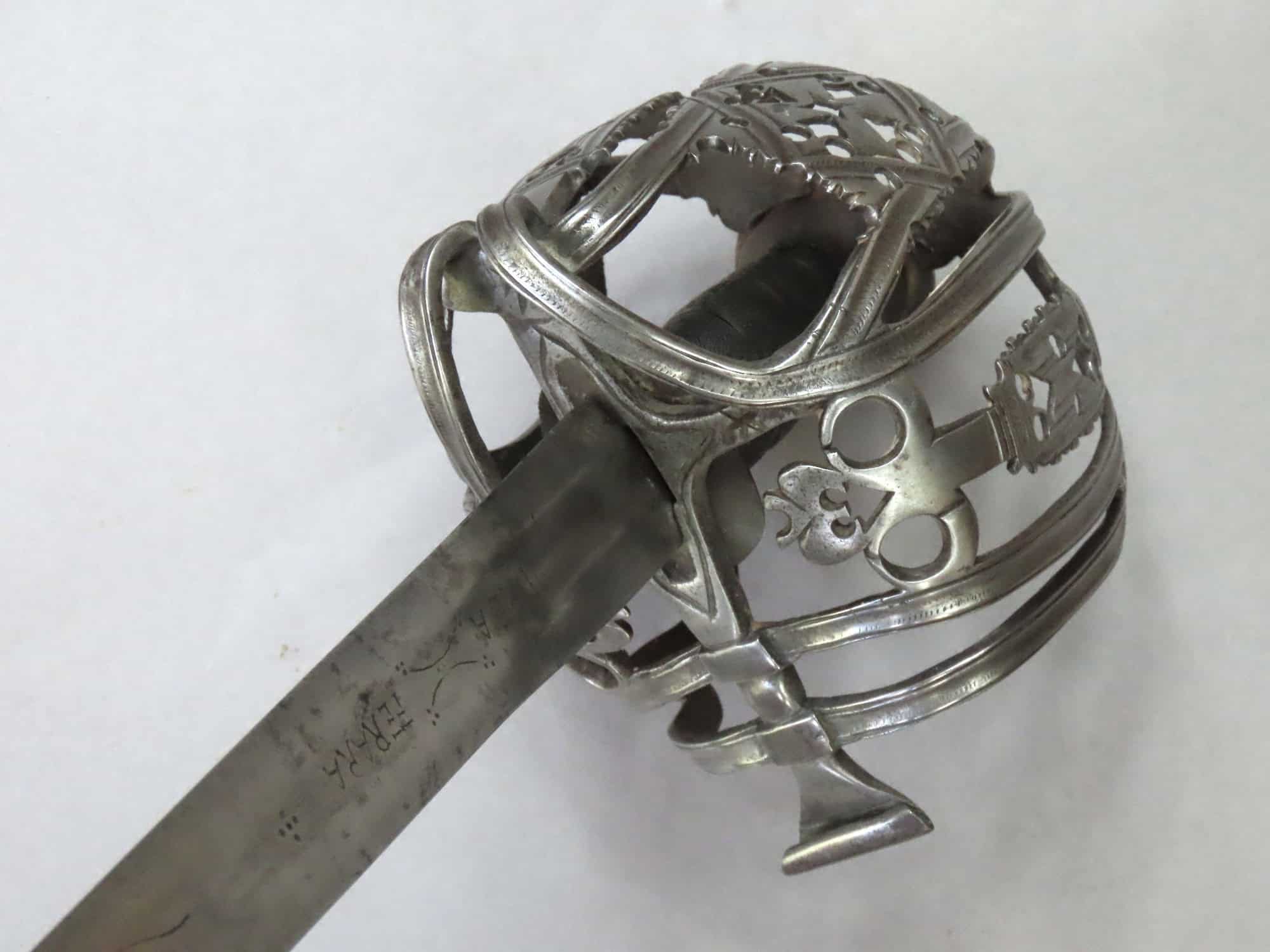
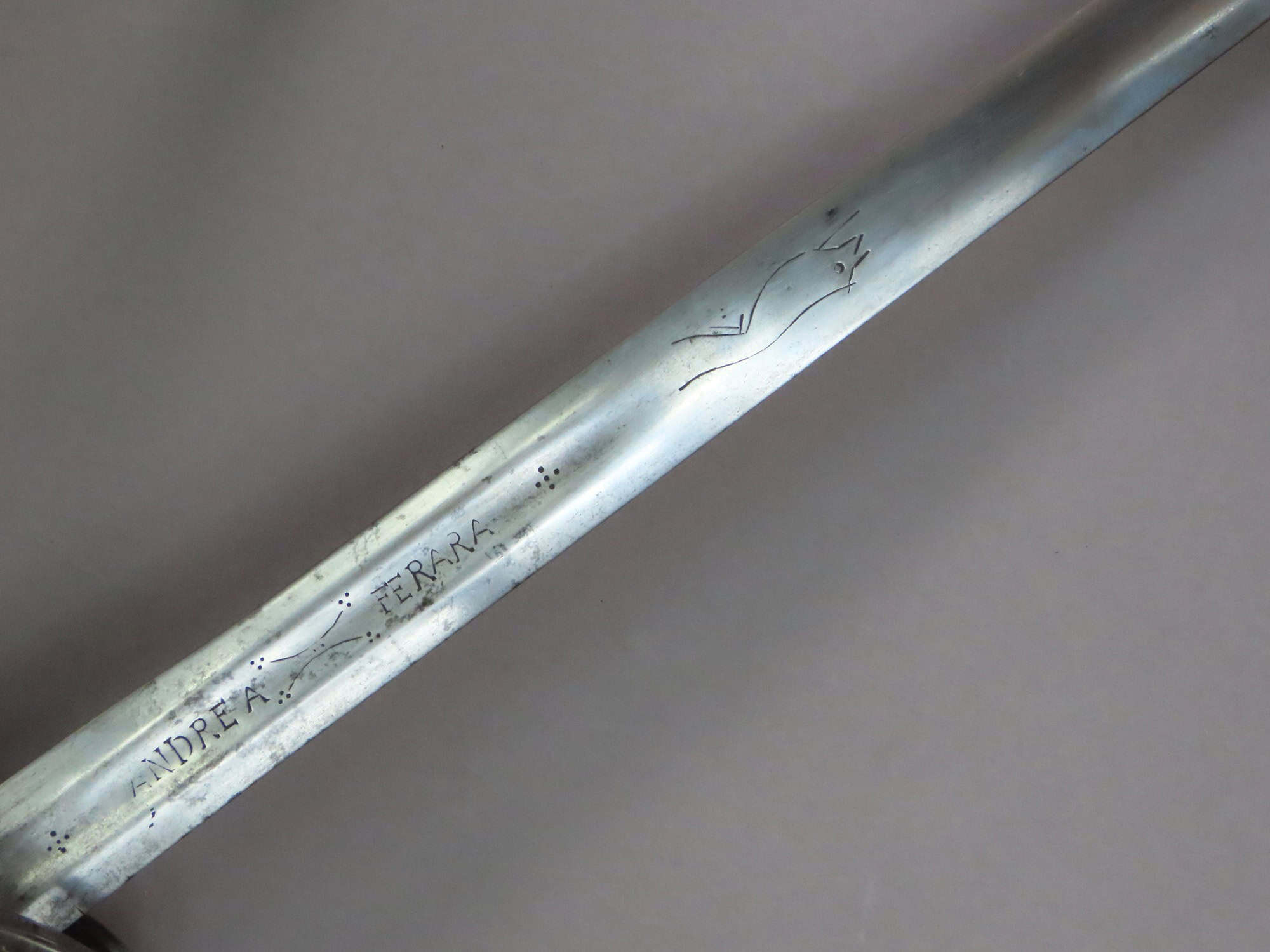
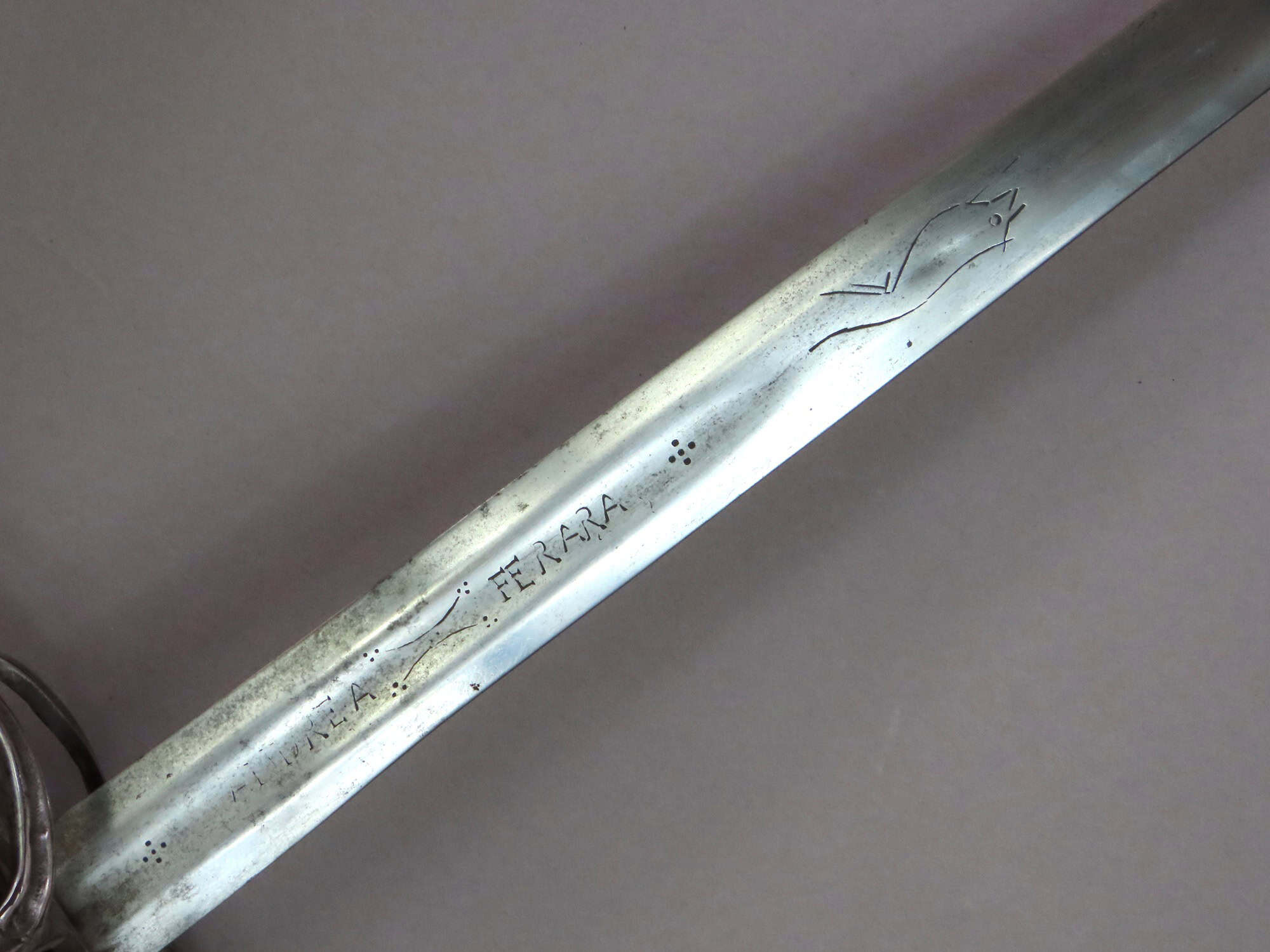
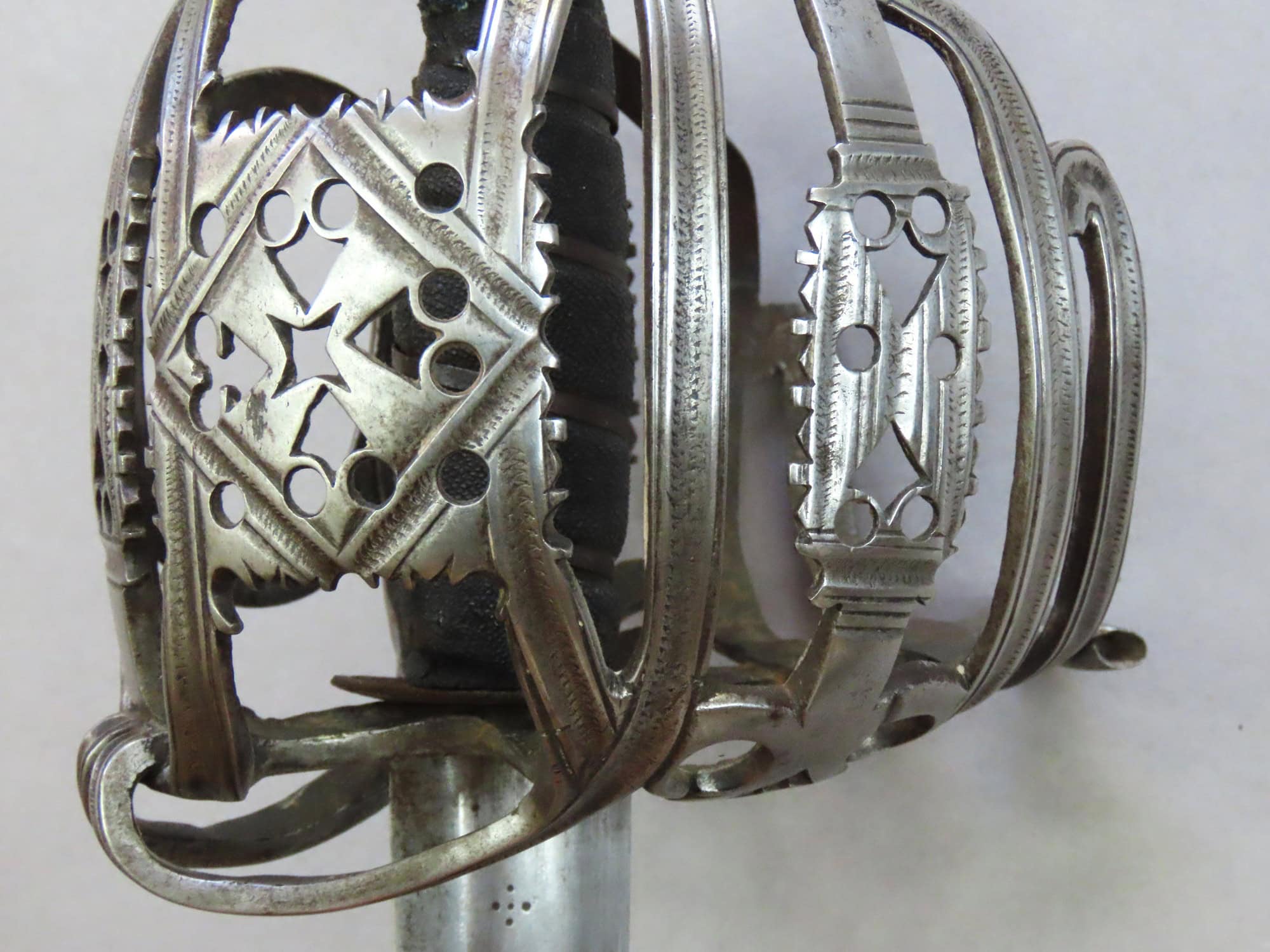
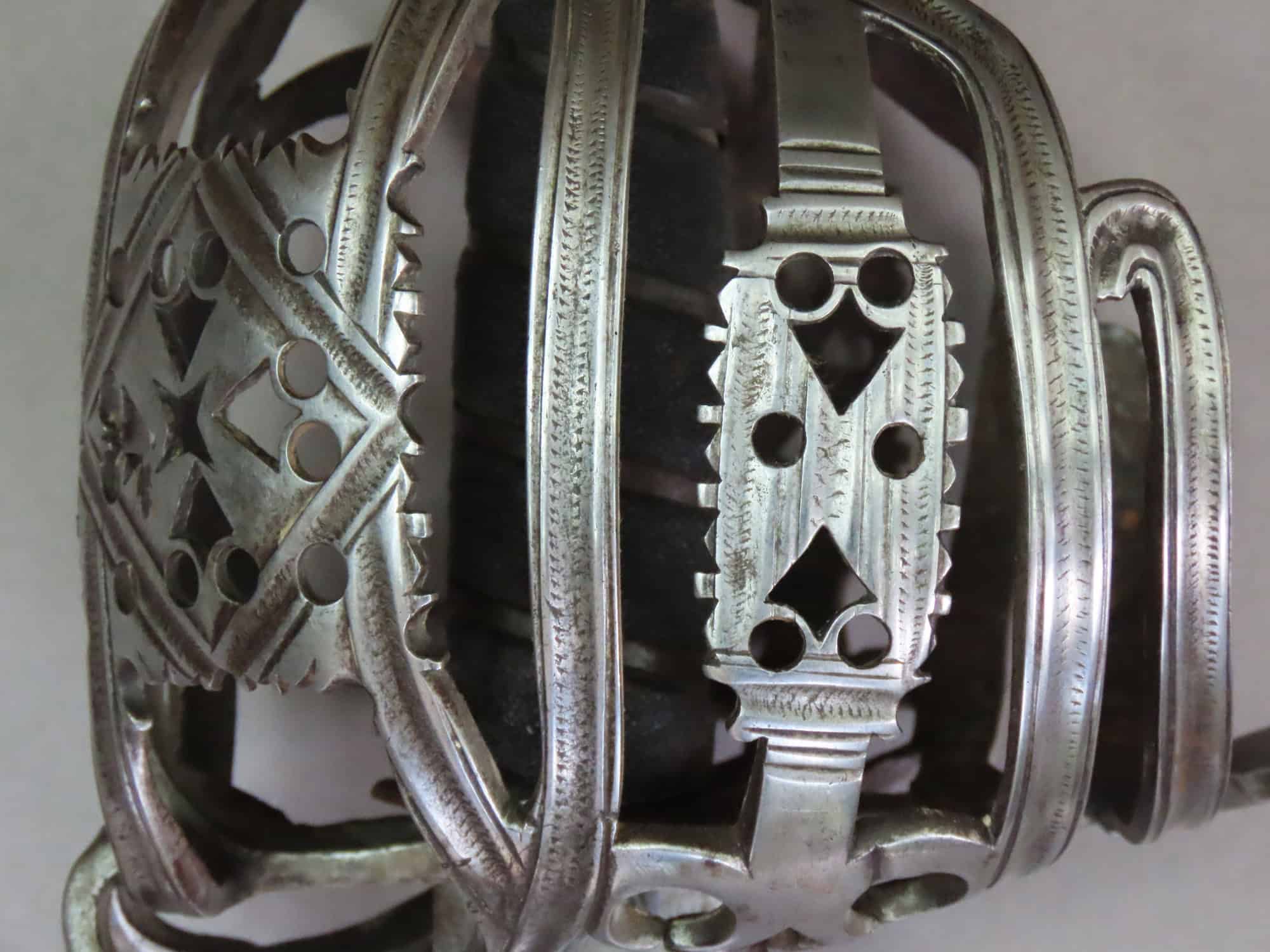
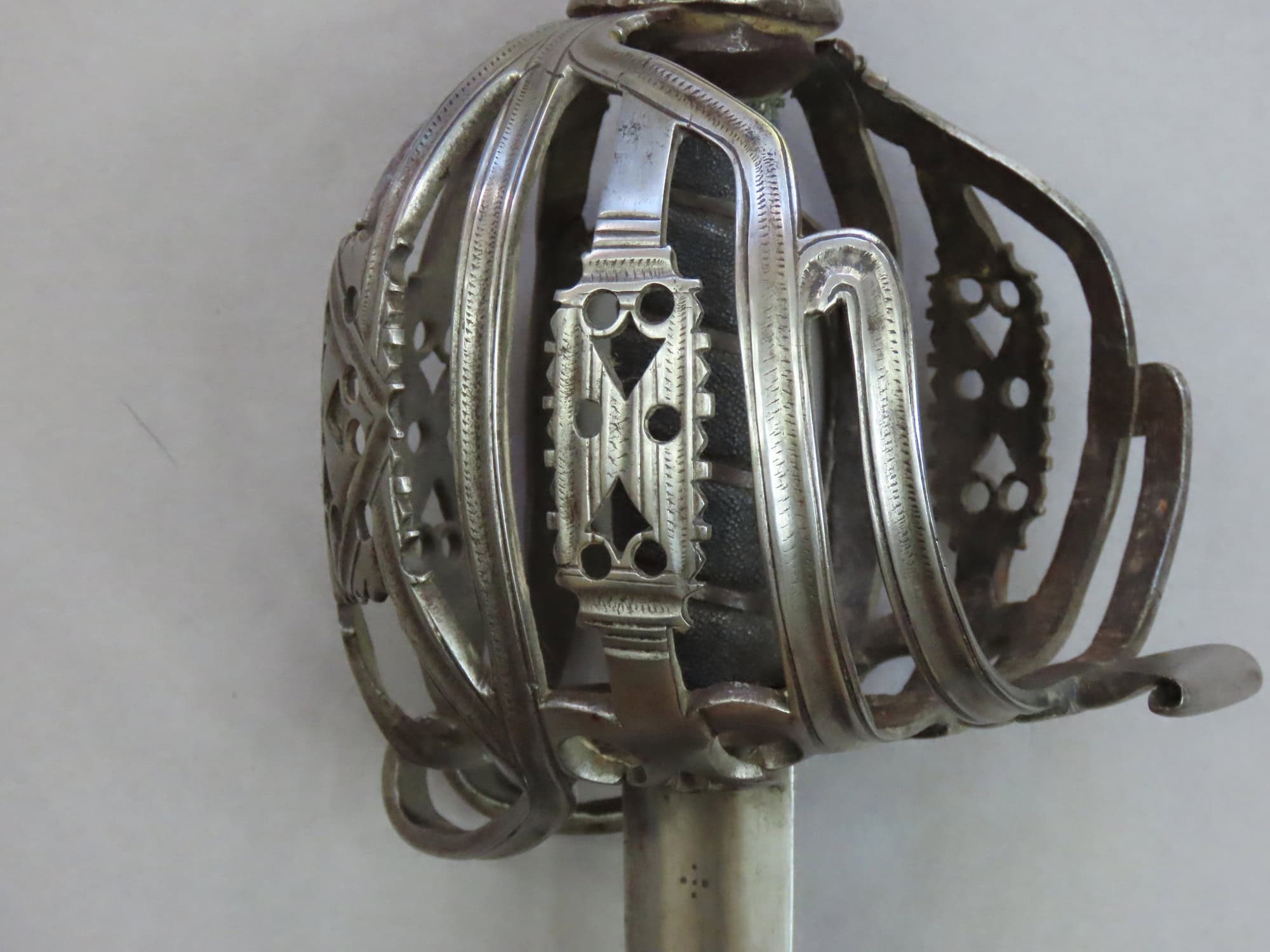
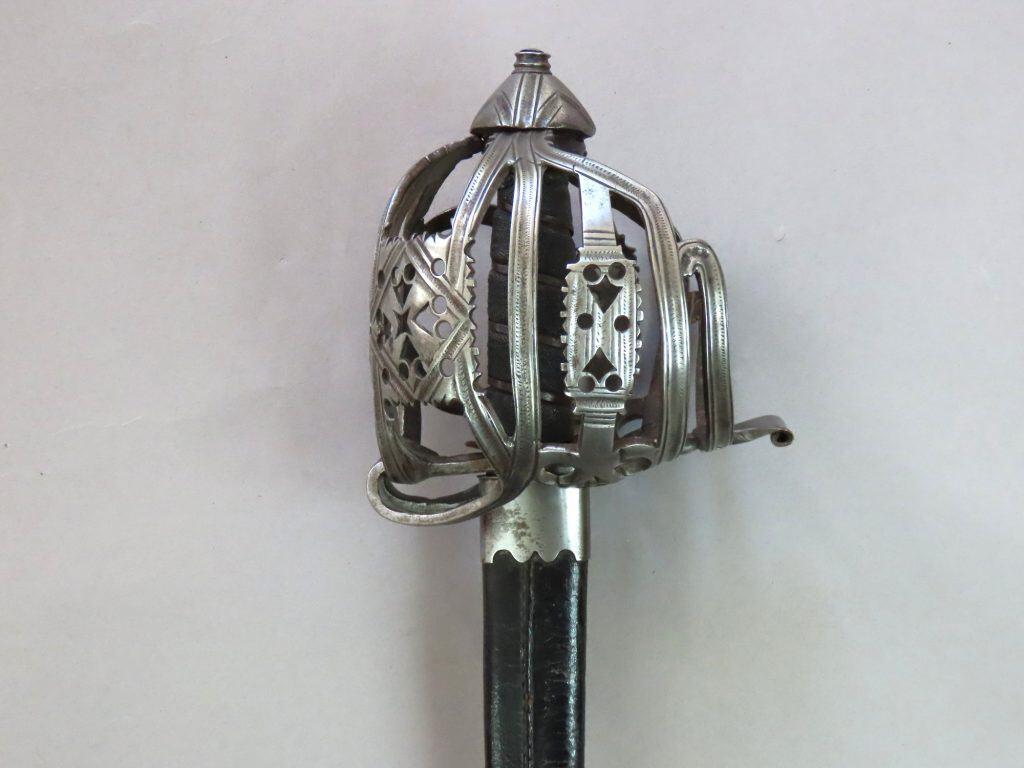
A very fine and attractive Scottish basket hilted sword dating to the beginning of the 18th century. The sword is mounted with an elegant and finely contoured robust hilt and retains its scabbard. The distinctive line decoration is of “Glasgow” style and typical of the production of the Glasgow armourers in the late 17th and 18th centuries. The sword is in particularly fine condition with the rare feature of extensive “dog tooth” engraved decoration applied to the main bars of the hilt. The sword retains its scabbard and is mounted with a fine quality blade marked by the bladesmith ANDREA FERARA.
The sword is typical of one made for a Scottish Highland Clan Chieftain in the early 18th century. Whilst it was made to be an effective weapon, a sword with such an imposing appearance was also employed to reinforce the martial and social status of the owner.
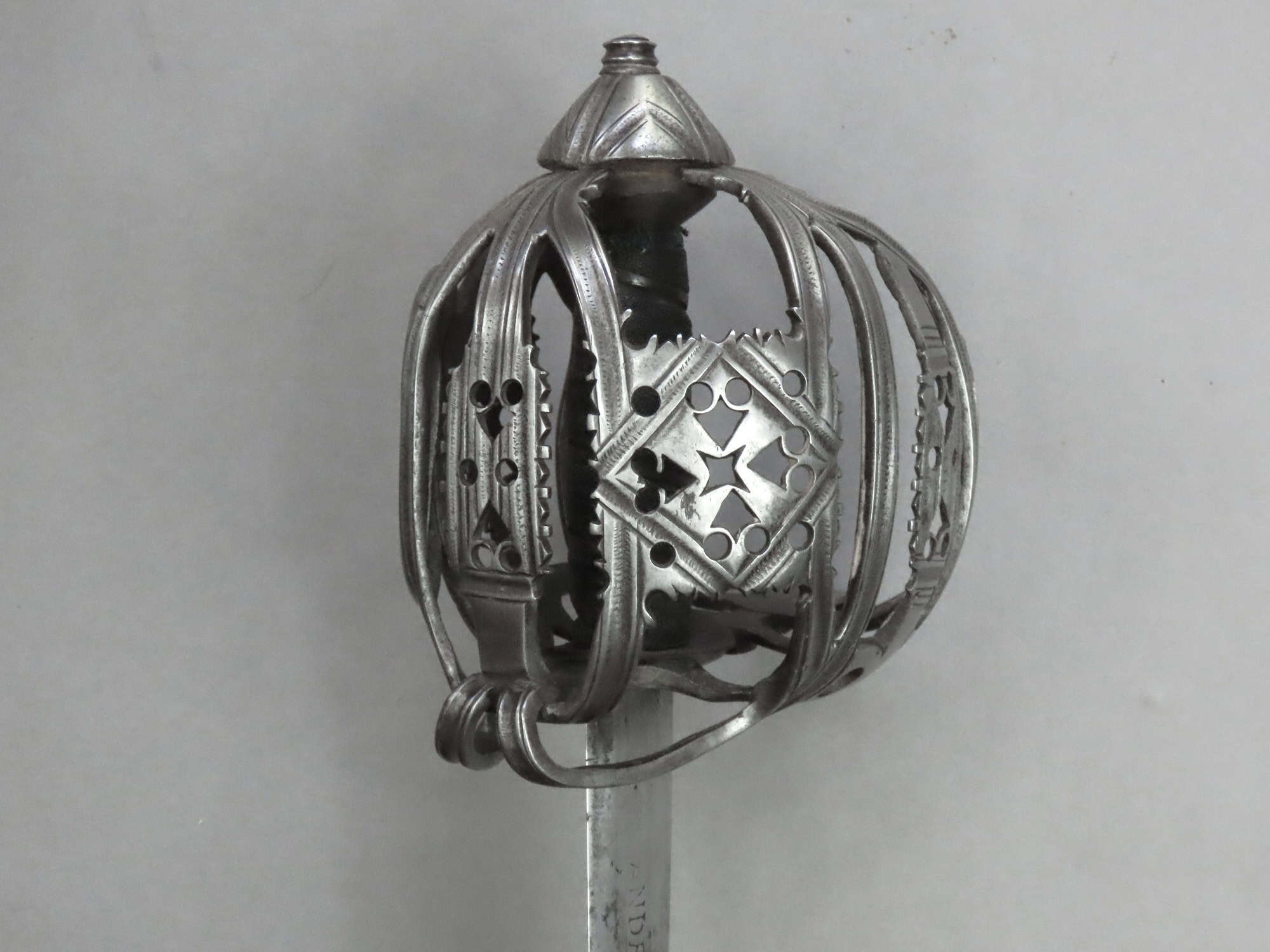
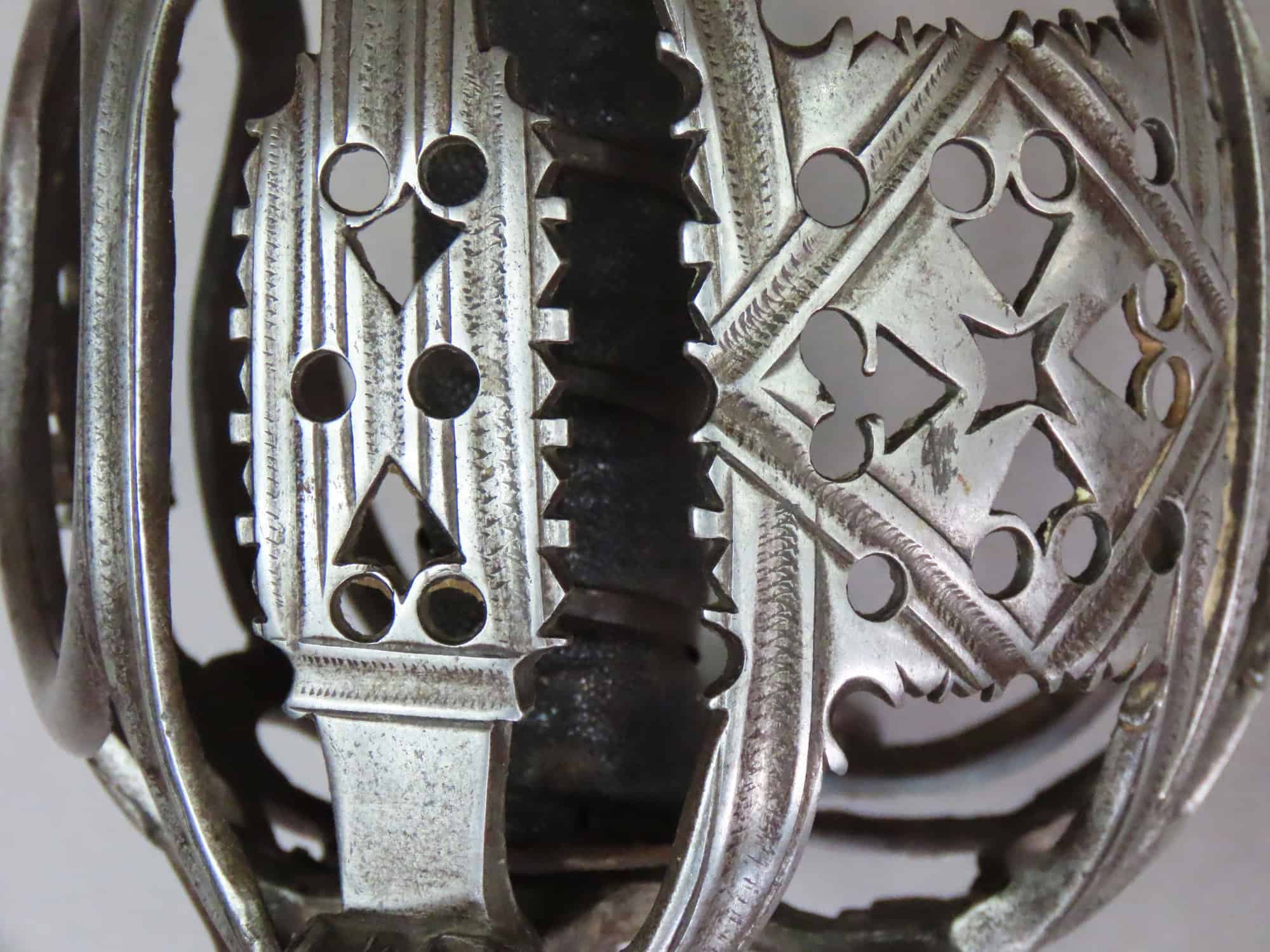
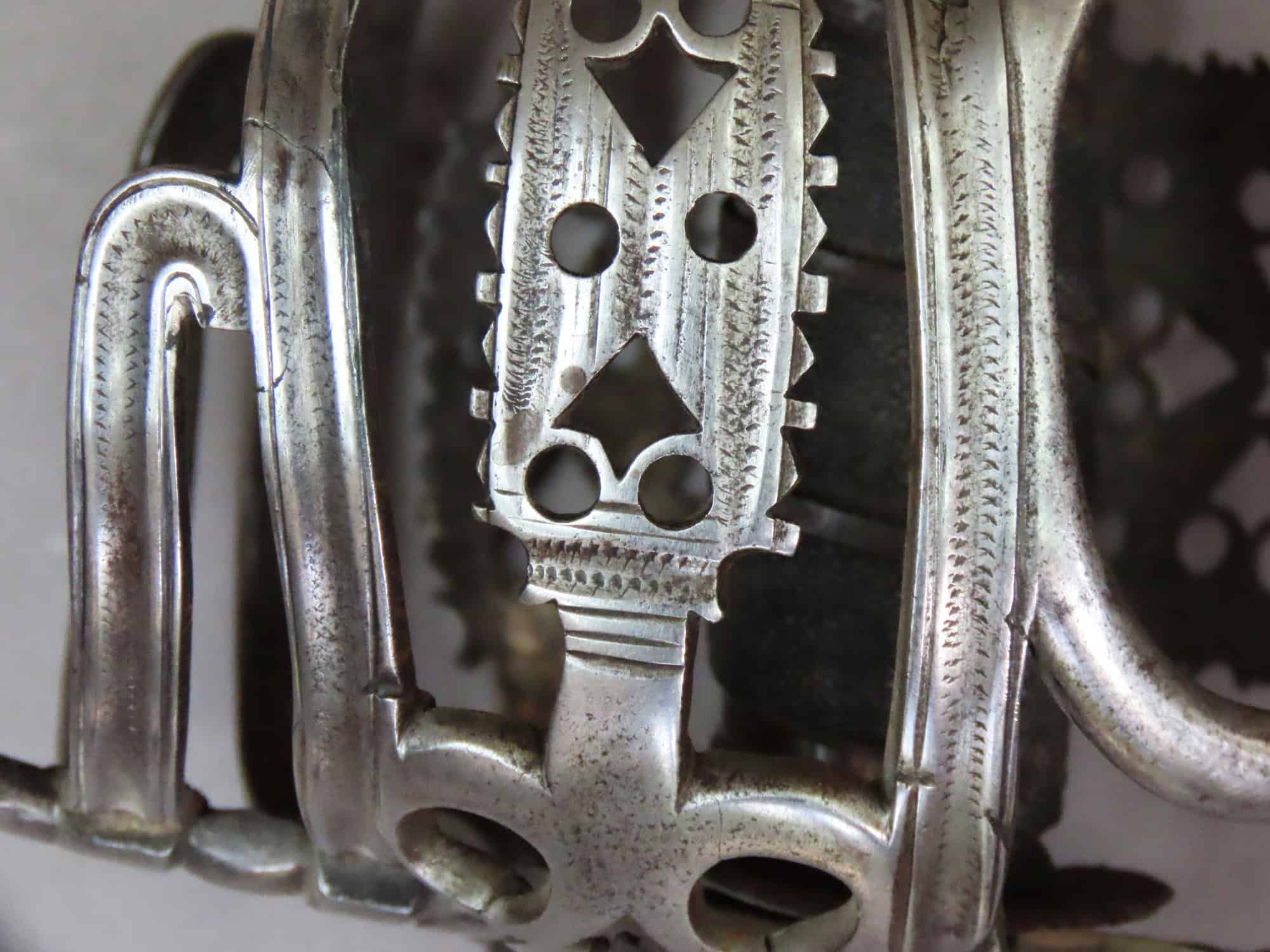
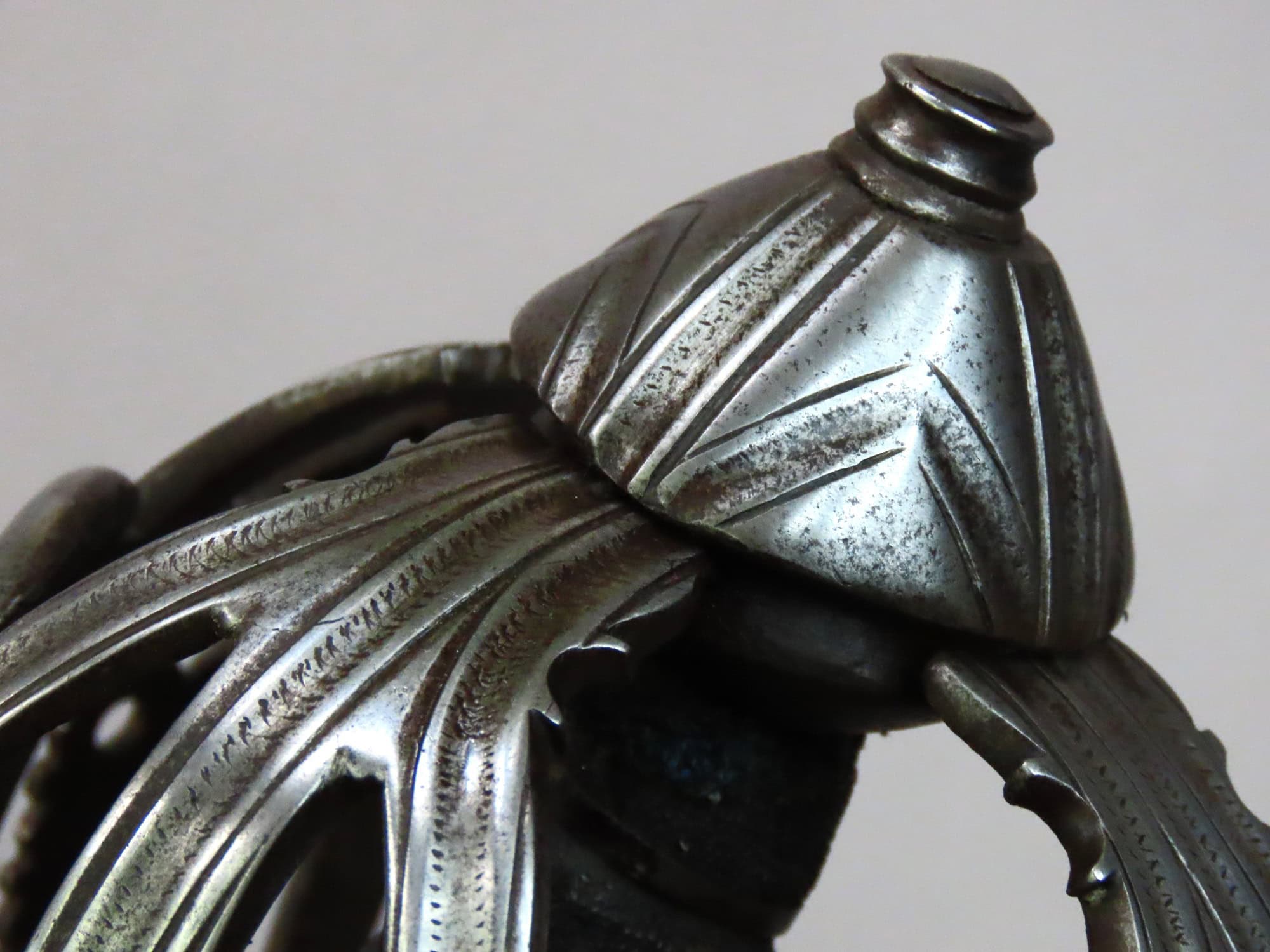
The hilt is representative of the high-quality workmanship of the early 18th century Glasgow makers consisting of strong thick structural bars of flattened rectangular section. These are decorated on the outside with broad longitudinal grooves along the middle, with narrower incised lines on either side, in what has become known to historians as the distinctive “Glasgow Style” of hilt decoration. The style was developed in the second half of the 17th century and flourished until the third quarter of the 18th. This sword has the additional and rare feature of “dog tooth” or wrigglework engraved decoration applied to the middle grooves of the hilt guard bars. This is lightly engraved and almost all of it has survived.
The Glasgow style was adopted by the most skilled smiths in other sword making centres in Scotland and was also copied by the British military for some of its own basket hilted swords made in the Scottish style from the mid-18th century. Filing and incising the bars in this manner was a time consuming and skilled task demanding many hours of labour and reserved only for the best and most expensive hilts.
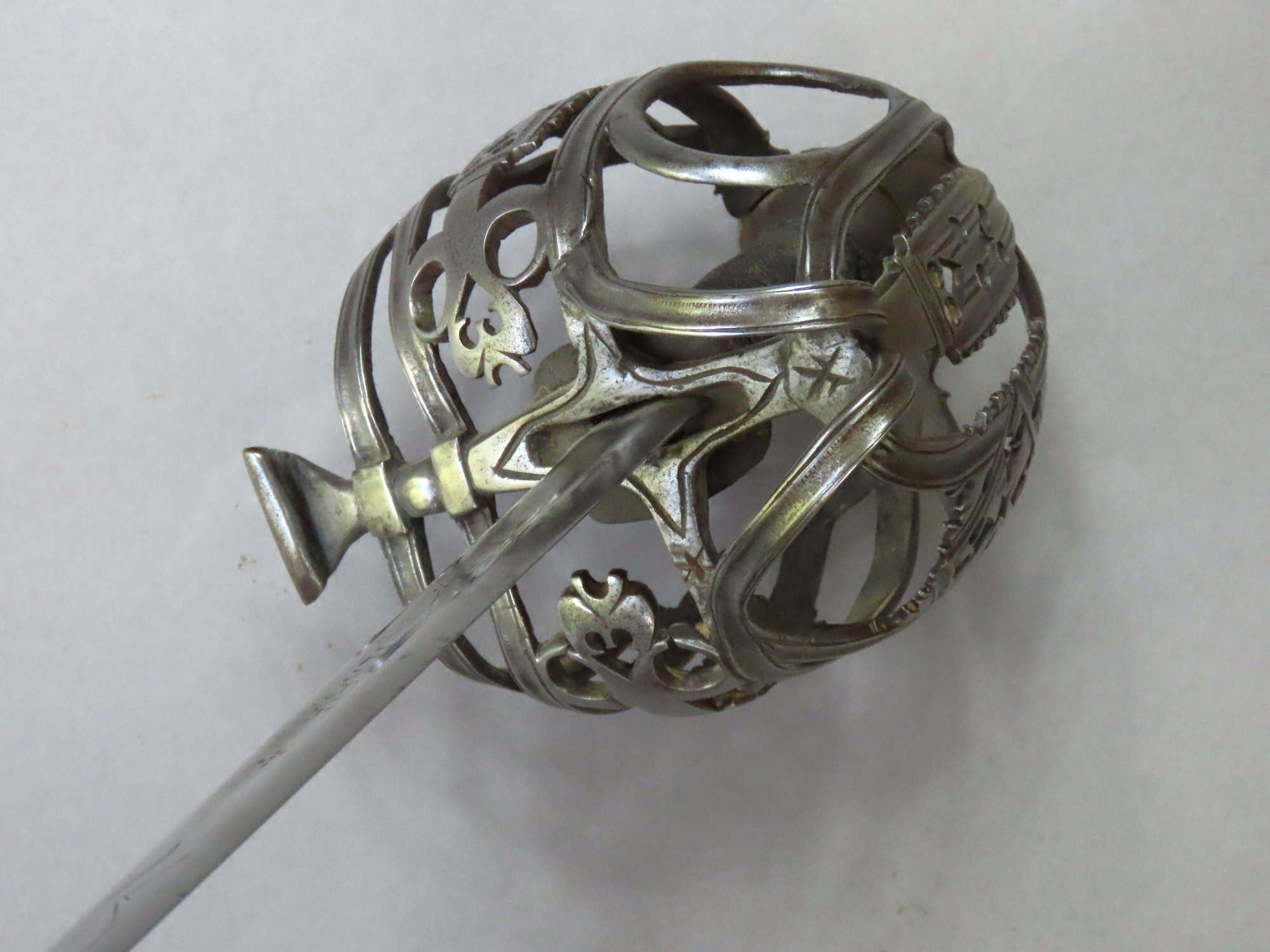
This hilt is an example of the hiatus of the Glasgow style. The primary and secondary guard plates are finely fretted with merlons and squares at the edges and pierced with geometric patterns of triangles and circles. On one side of the knuckle bow an oval ring is built into the hilt in the “horseman” style. On the other side the primary guard plate is engraved with a diamond shape in the same Glasgow manner. The side guard plates terminate at the base with well-formed rounded merlons. The cross bar is of bold construction and terminates in a sturdy scrolled wrist-guard. The forward loop guards are well defined and also decorated in the Glasgow manner.
The cone shaped pommel is mounted with a ribbed button on top from which four equally spaced sets of Glasgow style grooves radiate towards the pommel edge. Chevrons are cut into the spaces between in the same style. The guard arms of the hilt tuck securely into a groove cut around the pommel just below its middle in the traditional Scottish manner. The tops of these guard bars are also fretted with merlons. The baluster shaped wooden grip is spirally grooved, bound with shagreen and fixed with a band of silver or steel riband. The grip retains the remnants of a worn blue fringe fixed between the top of the grip and the pommel base.
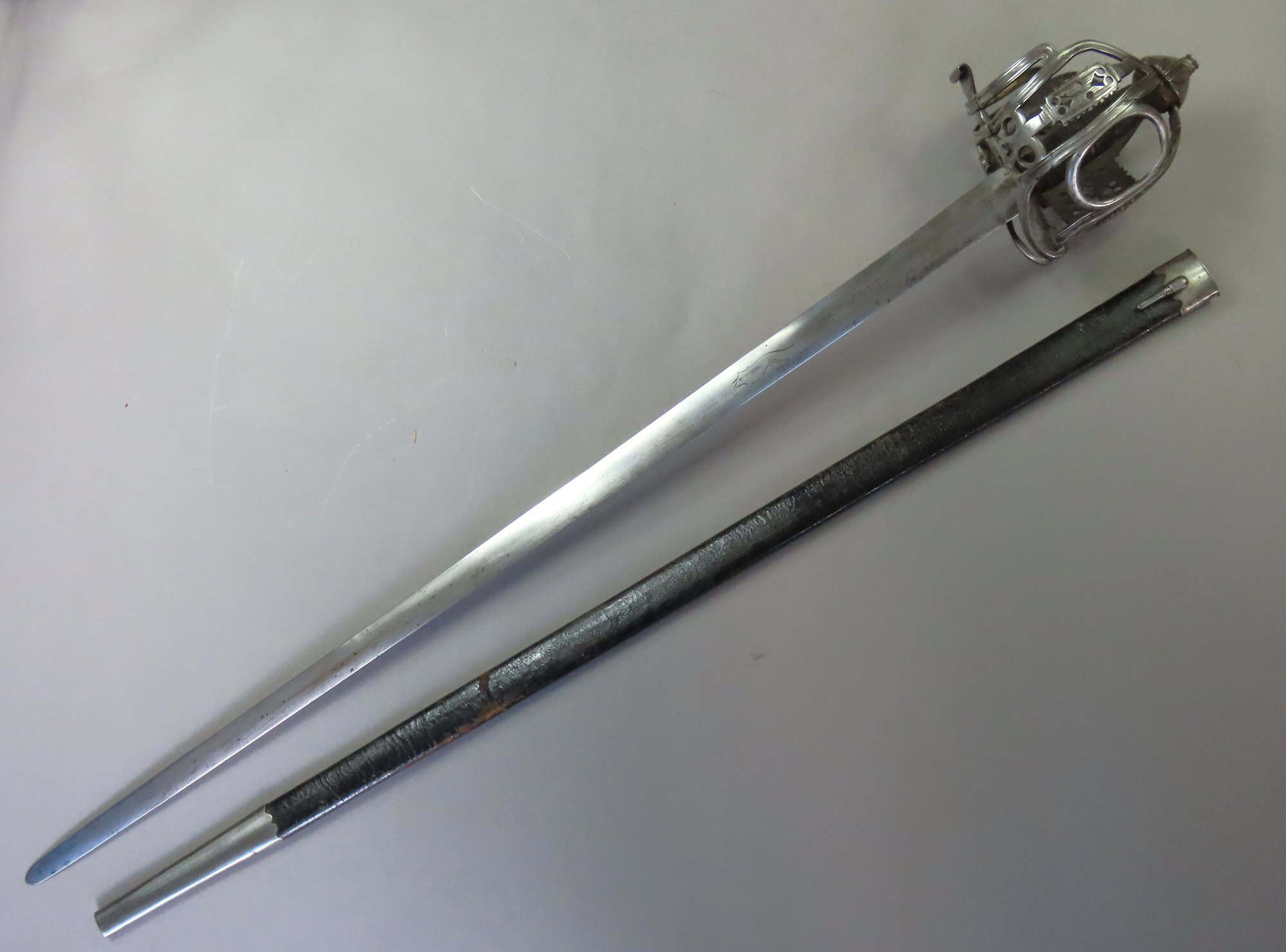
The fine quality double edged blade tapers to its rounded tip and is 32.25 inches (82 cm) long. It has a broad fuller on each side which extends for 6.5 inches (16.5 cm) from the hilt inside which the name ANDREA FERARA is incised flanked by quatrefoils of dots and separated by pairs of concave crescents with each line terminating in trefoils of dots. Beyond the fuller on each side a clear and bold “running wolf” is incised.
The shoulders of the ricasso are housed in a groove which accommodates the blade into the hilt in the Scottish manner. The perimeter of the groove is enhanced with an incised border line. This feature appears on the earliest fully formed Scottish basket hilts.
The sword retains its black leather scabbard mounted with its forged iron chape and mouthpiece. The overall length of the sword is 37.75 inches (96 cm).