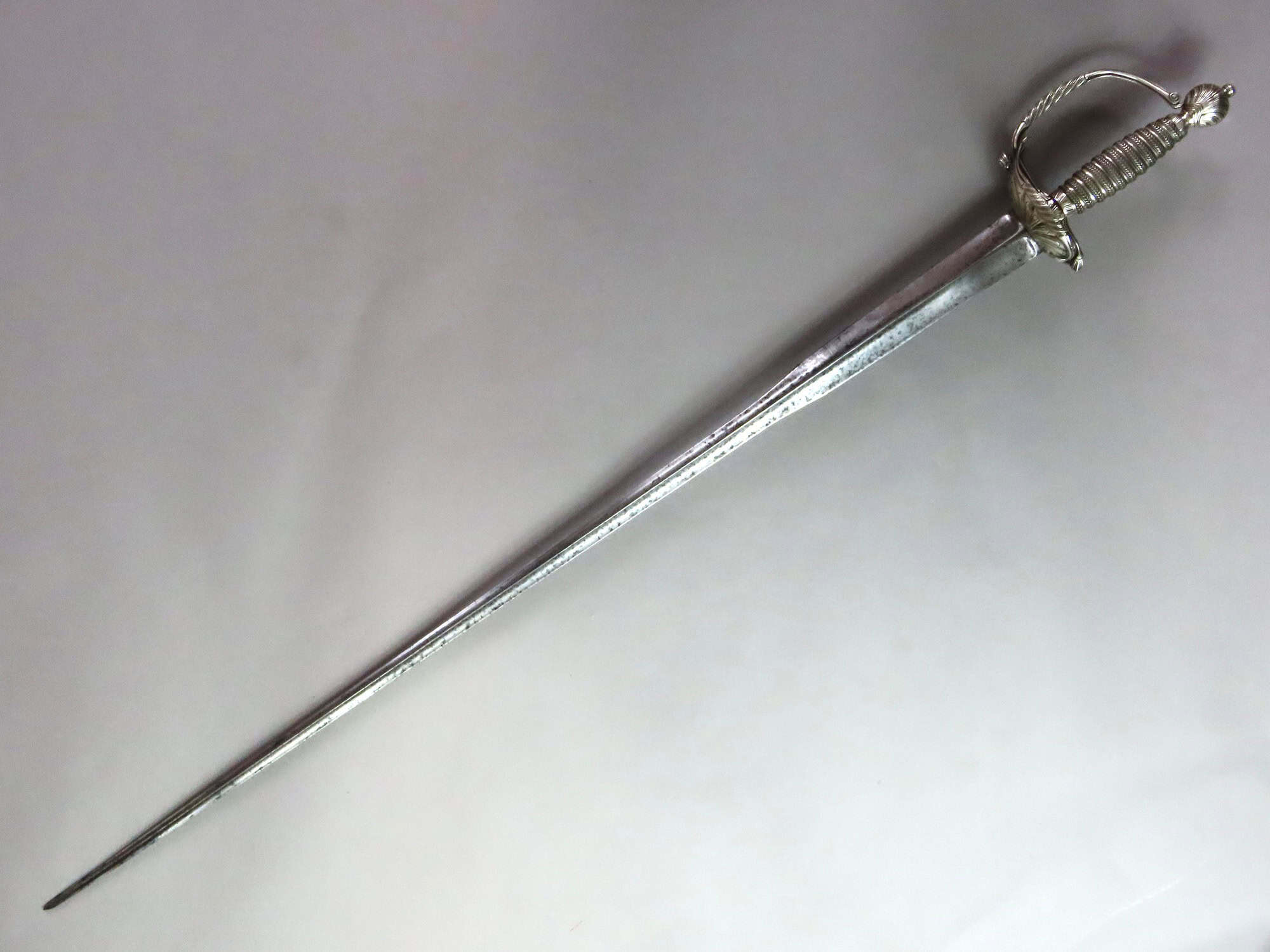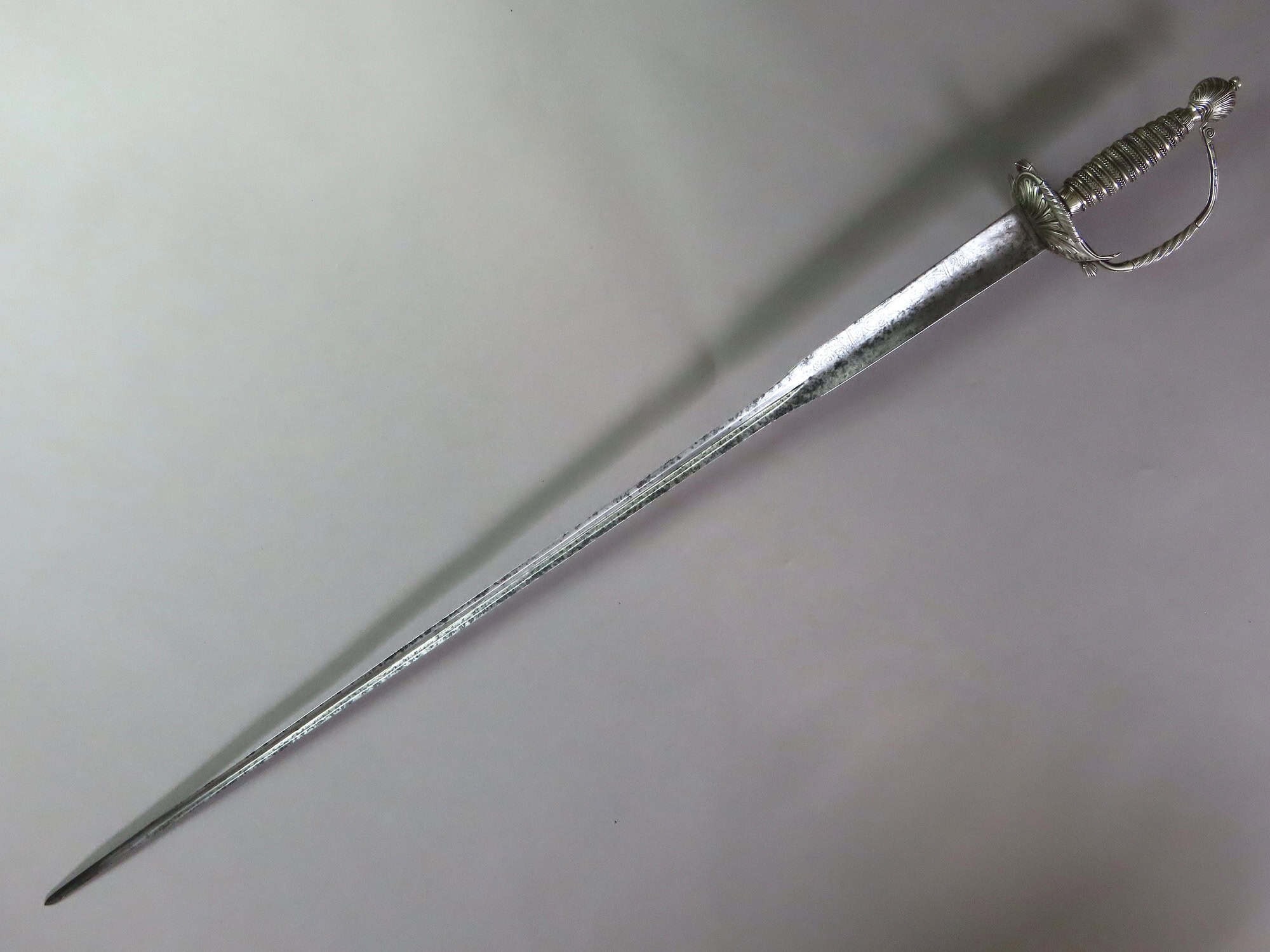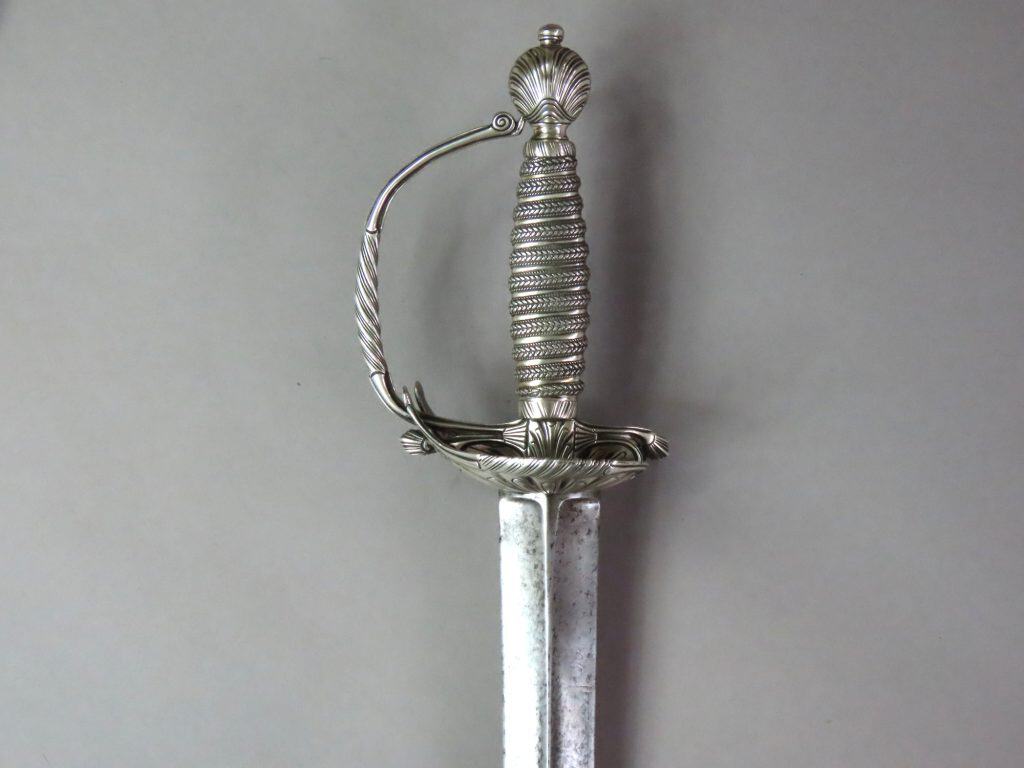
An English Silver Hilted Small Sword with Boat Shell Guard by Thomas Bass of London Hallmarked for 1741 / 1742
To enquire about this itemplease click here
Price: £1,800
Ref: 52120344
Item Description
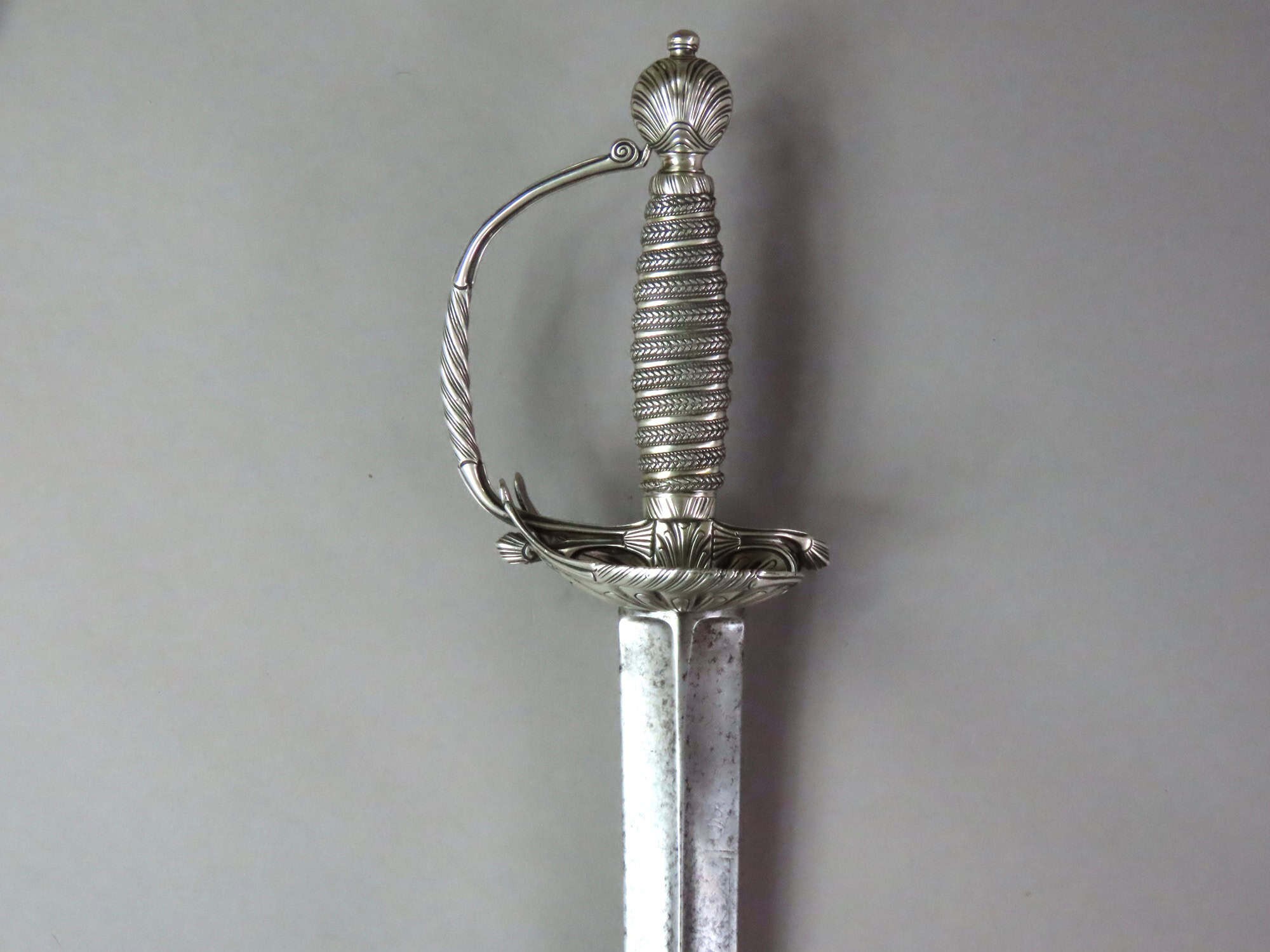
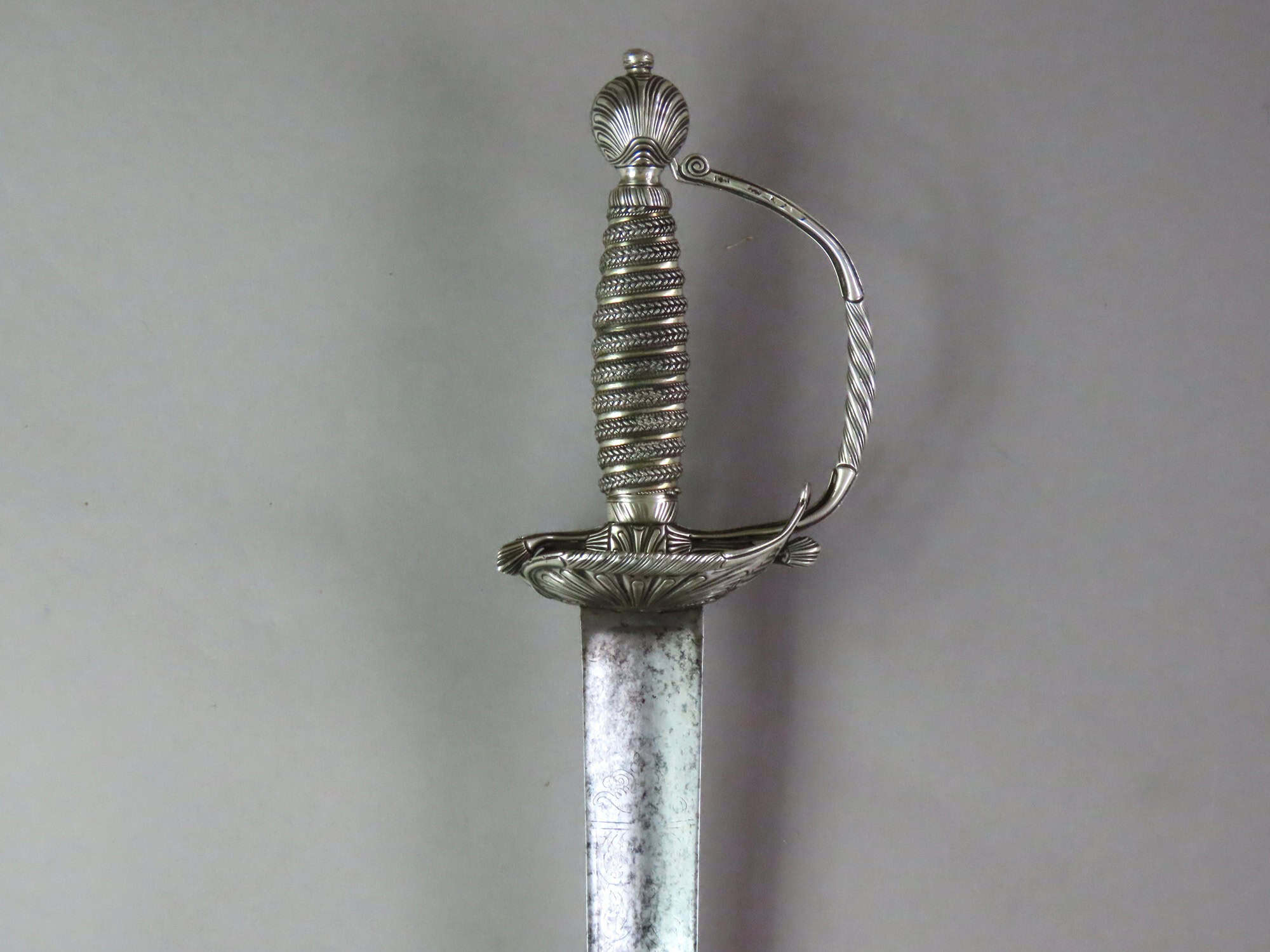
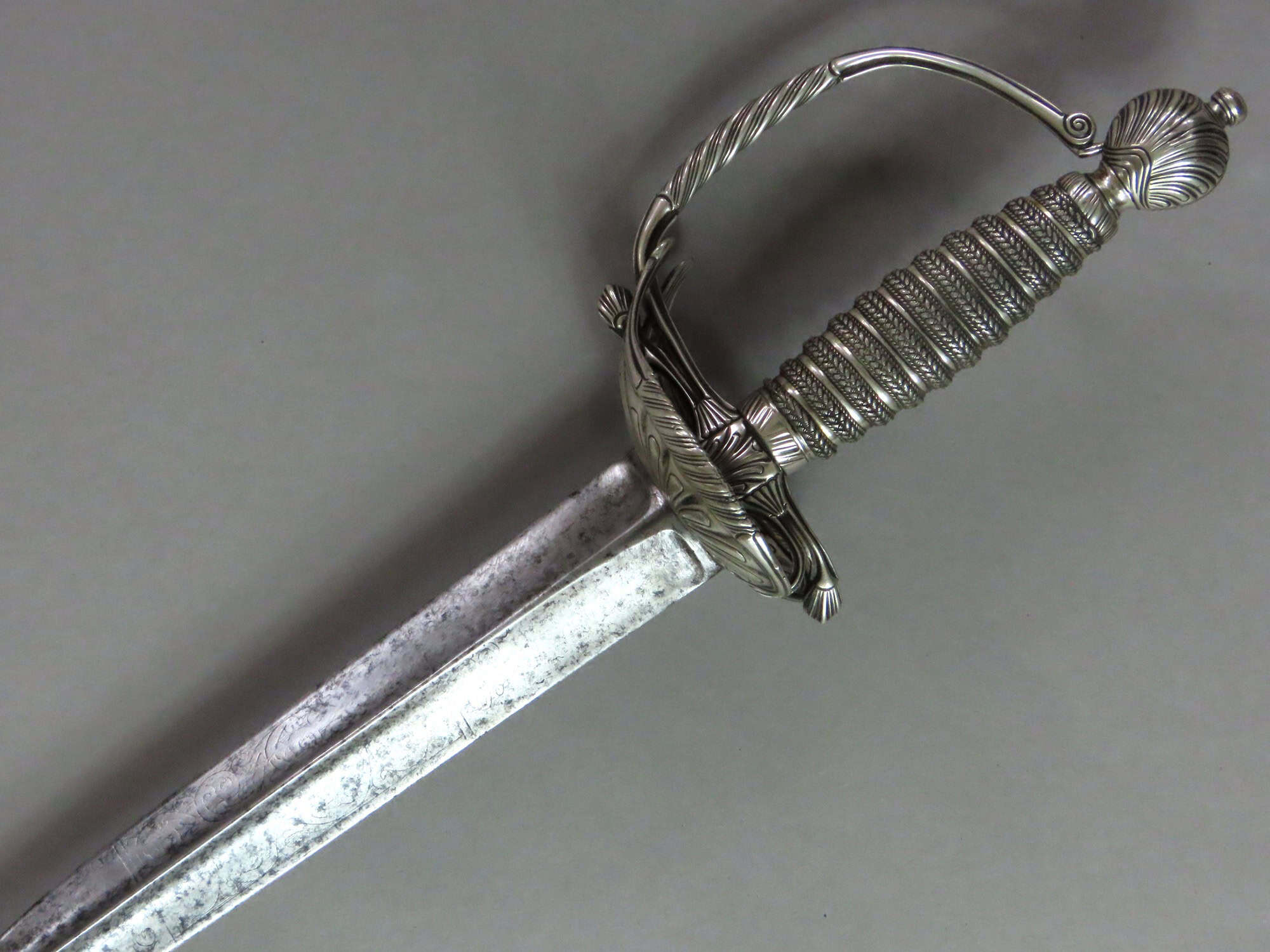
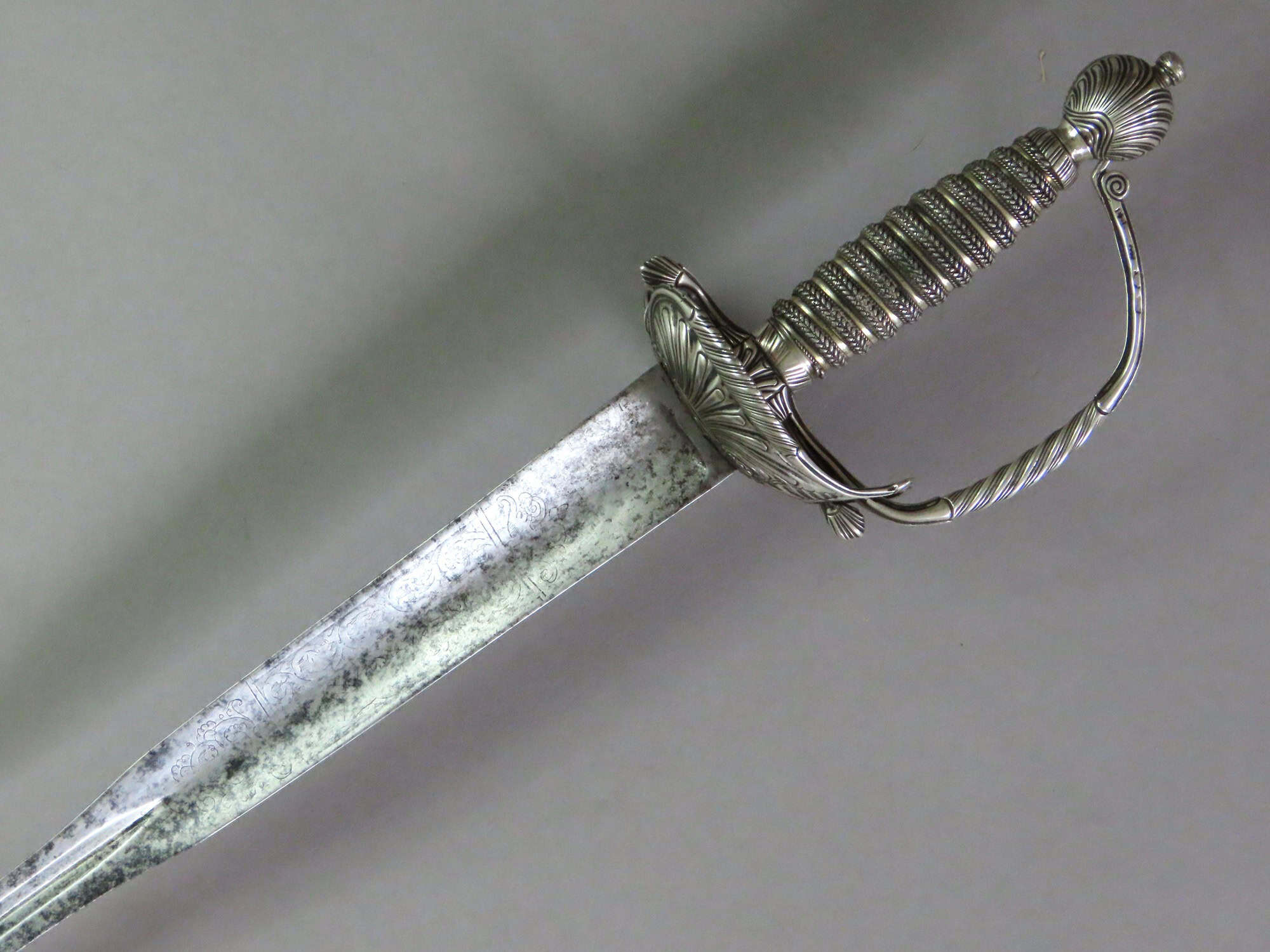
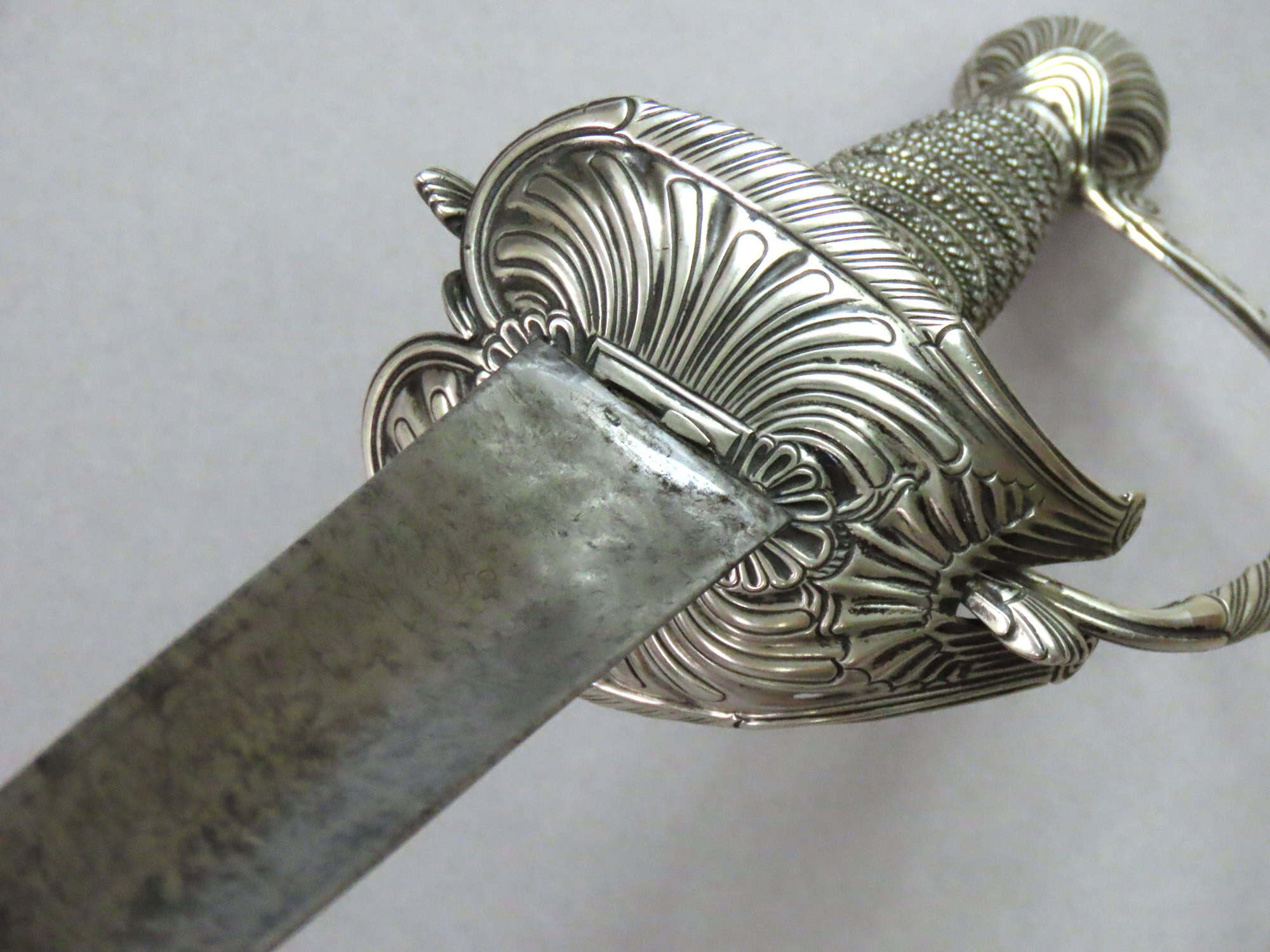
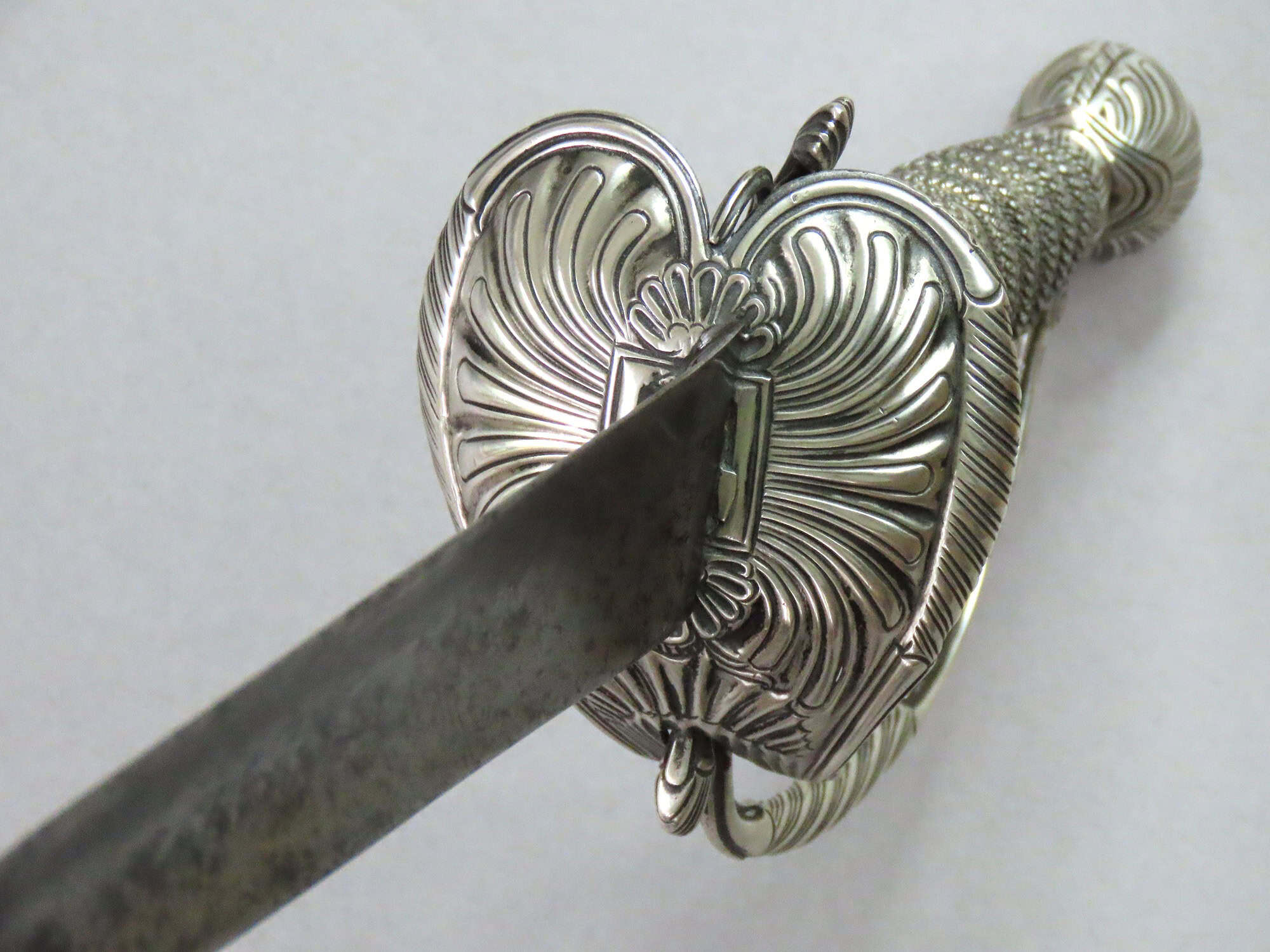
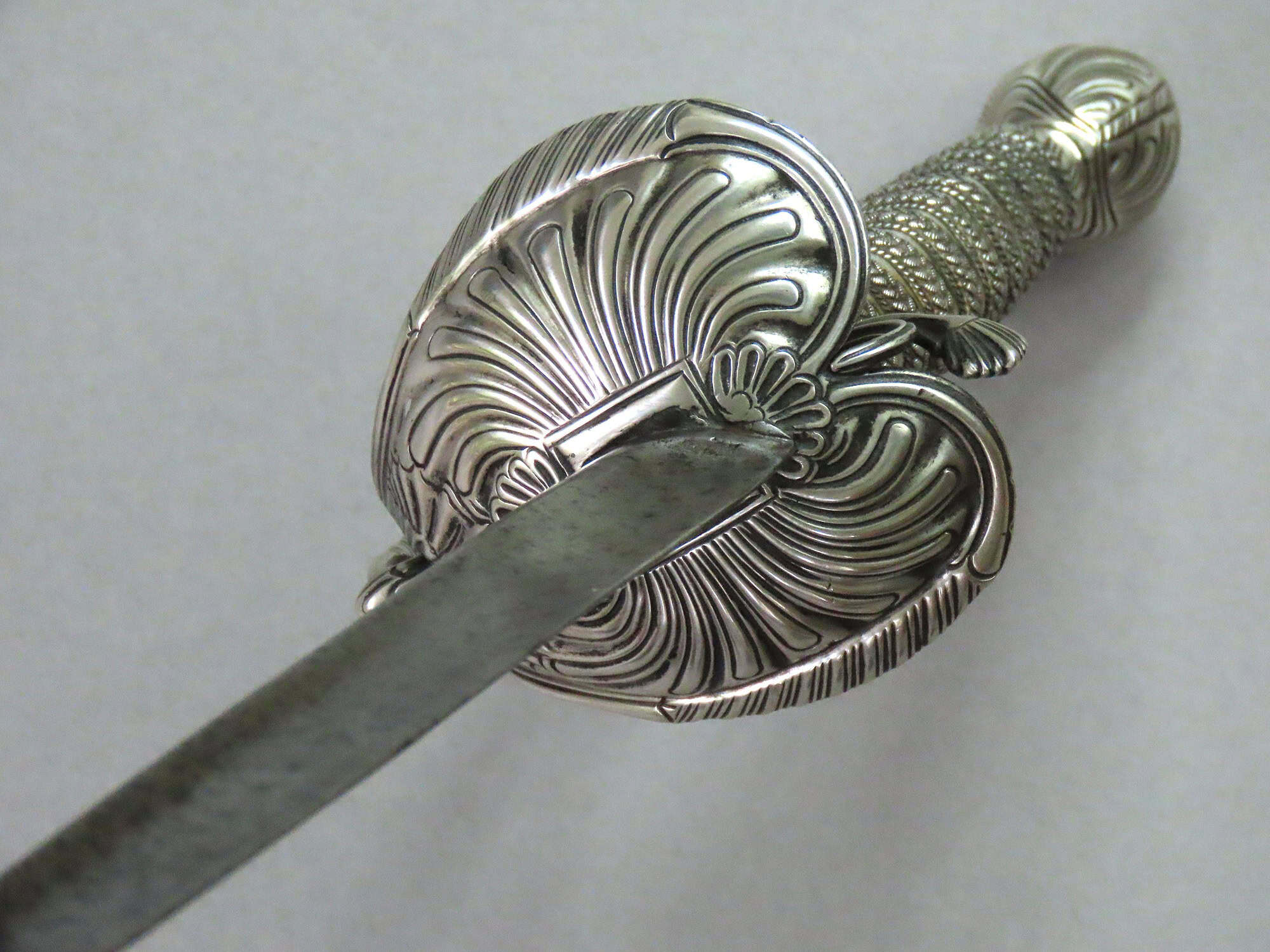
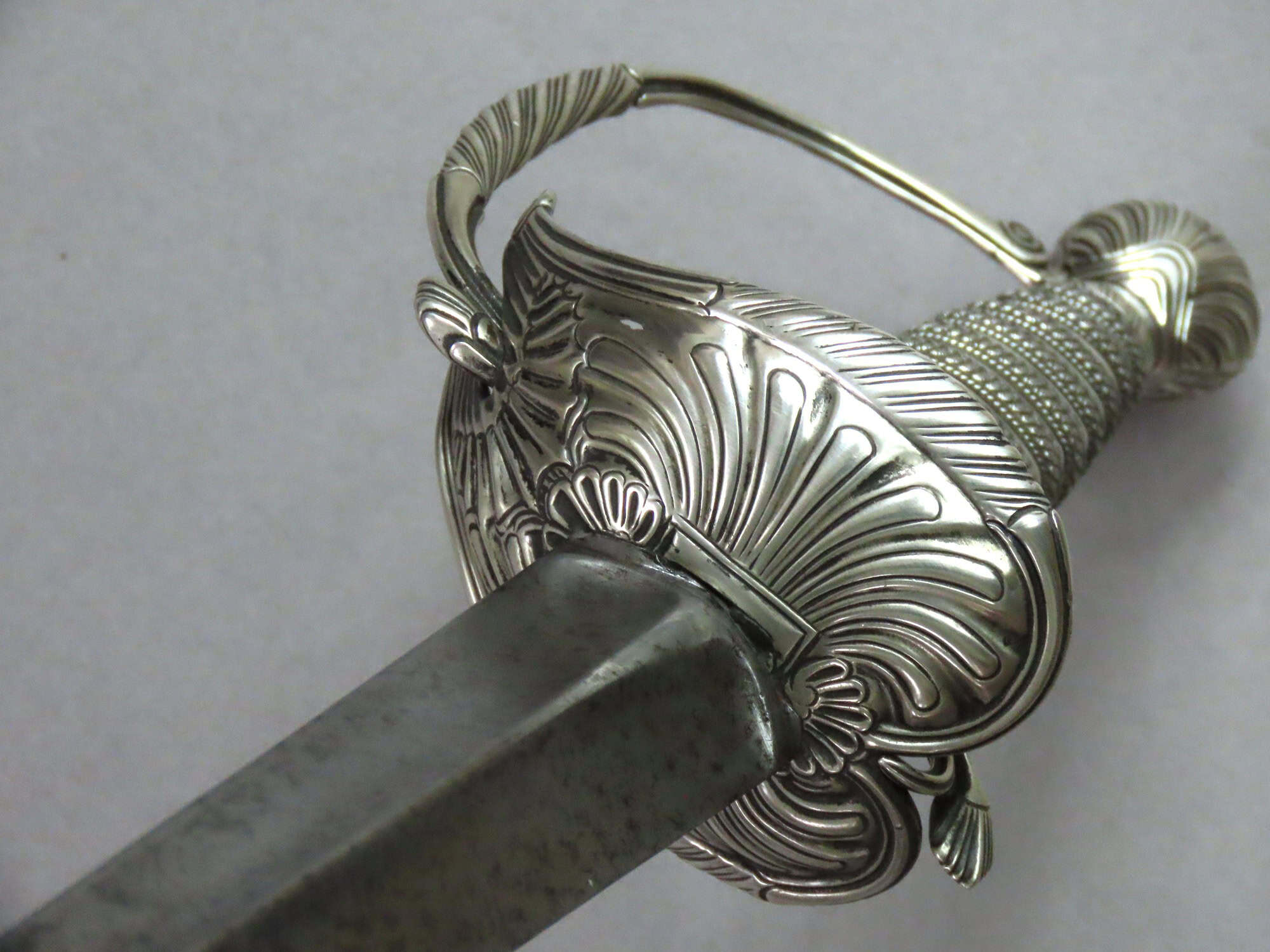
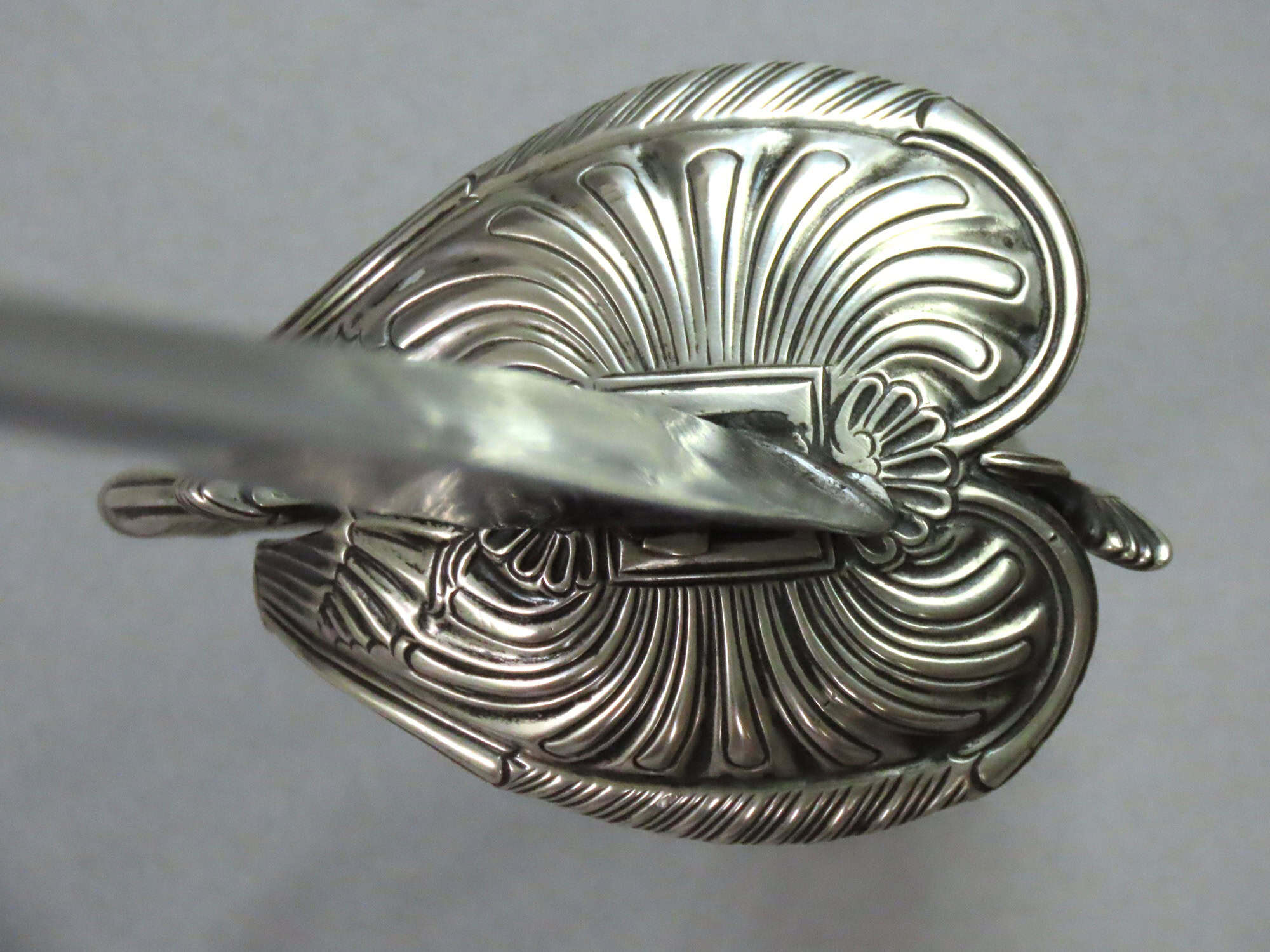
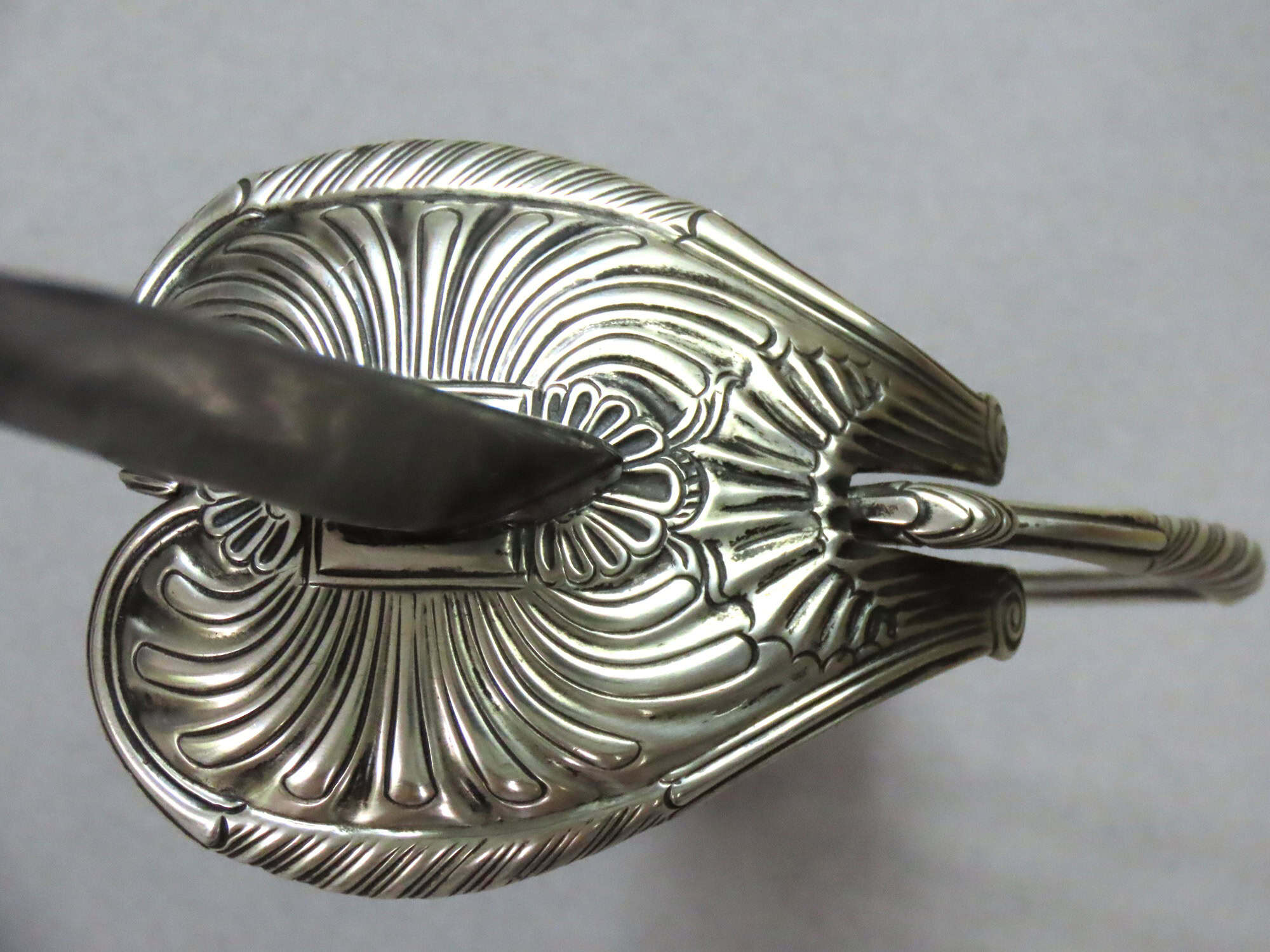
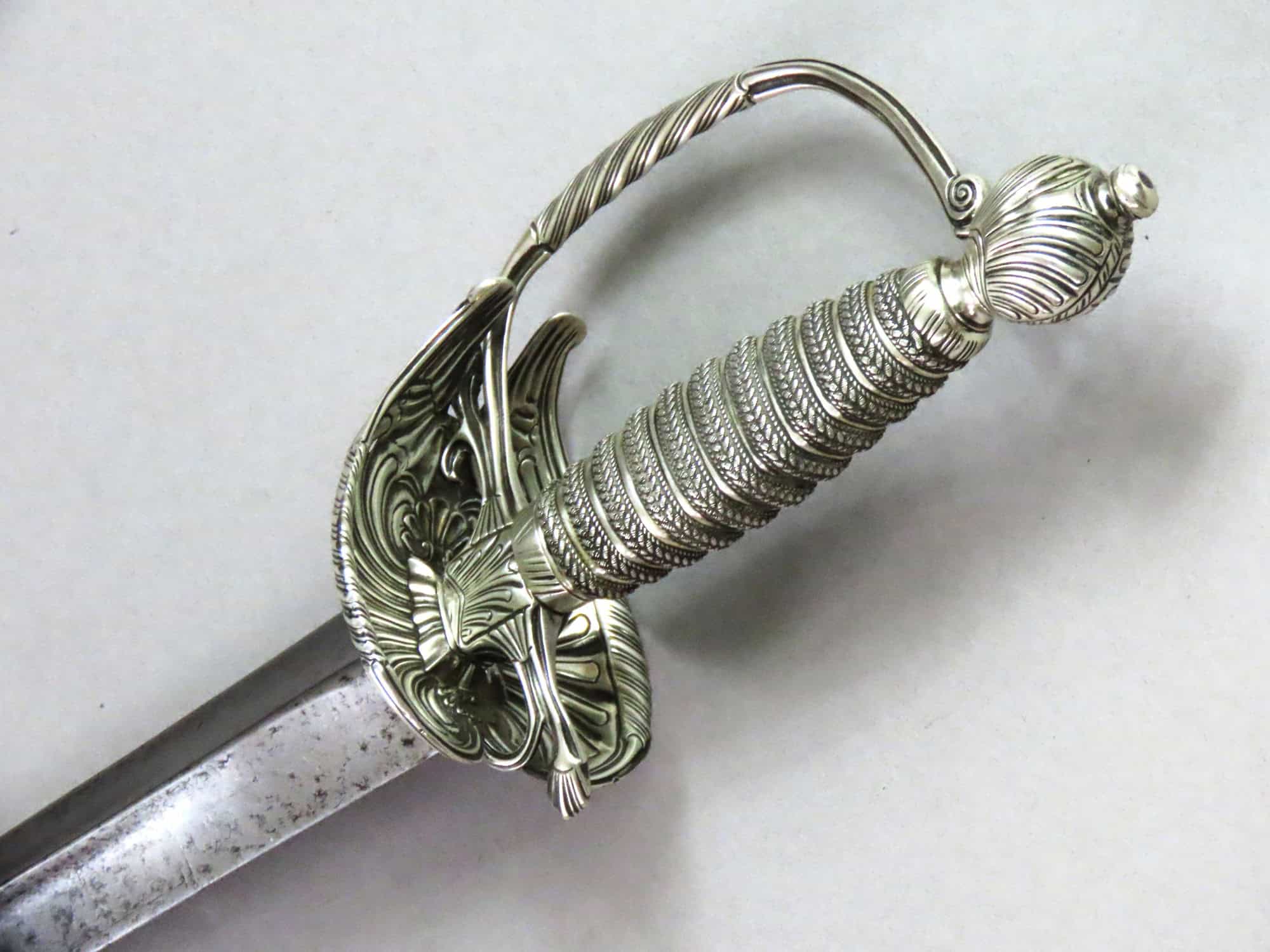
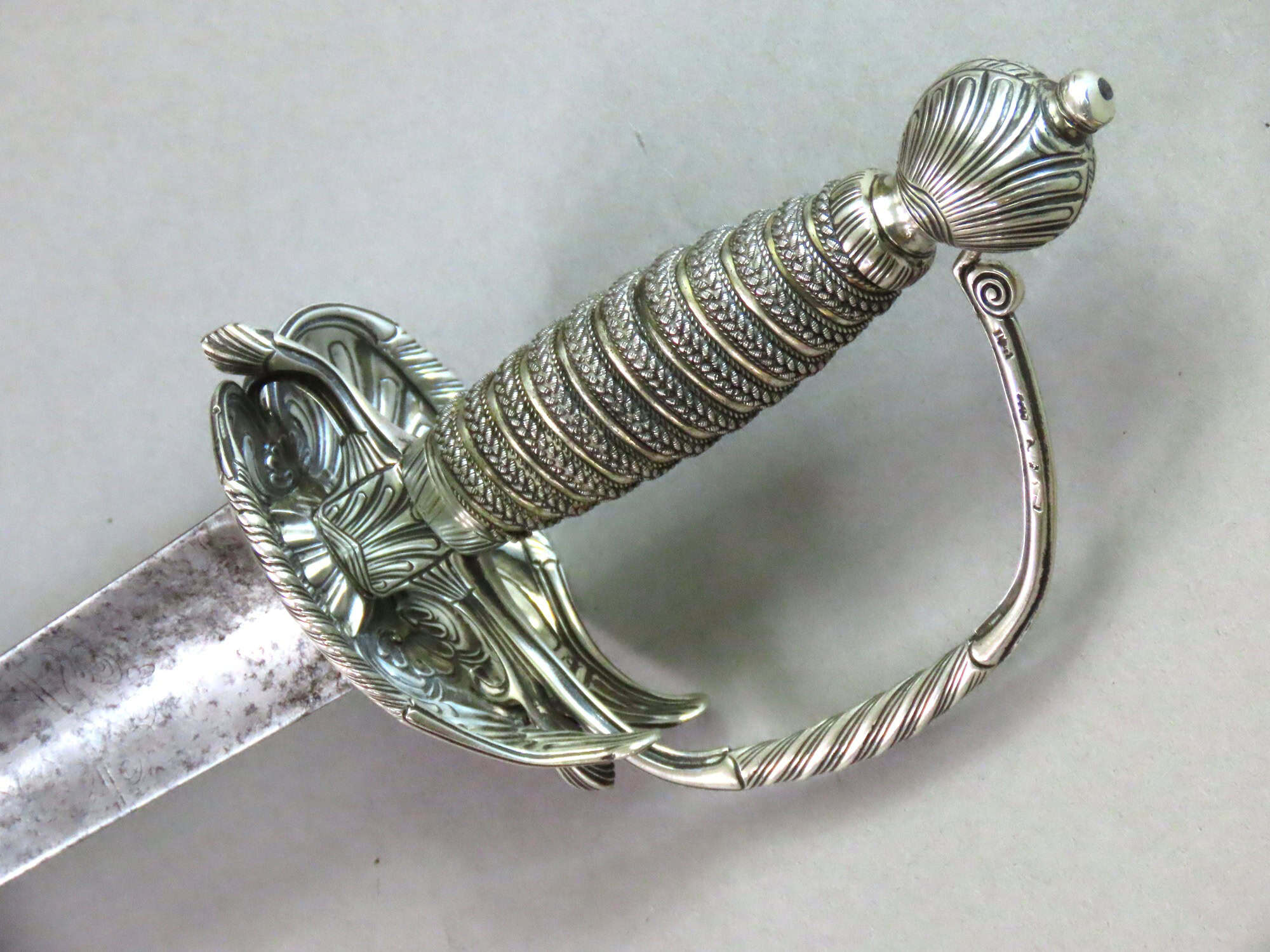
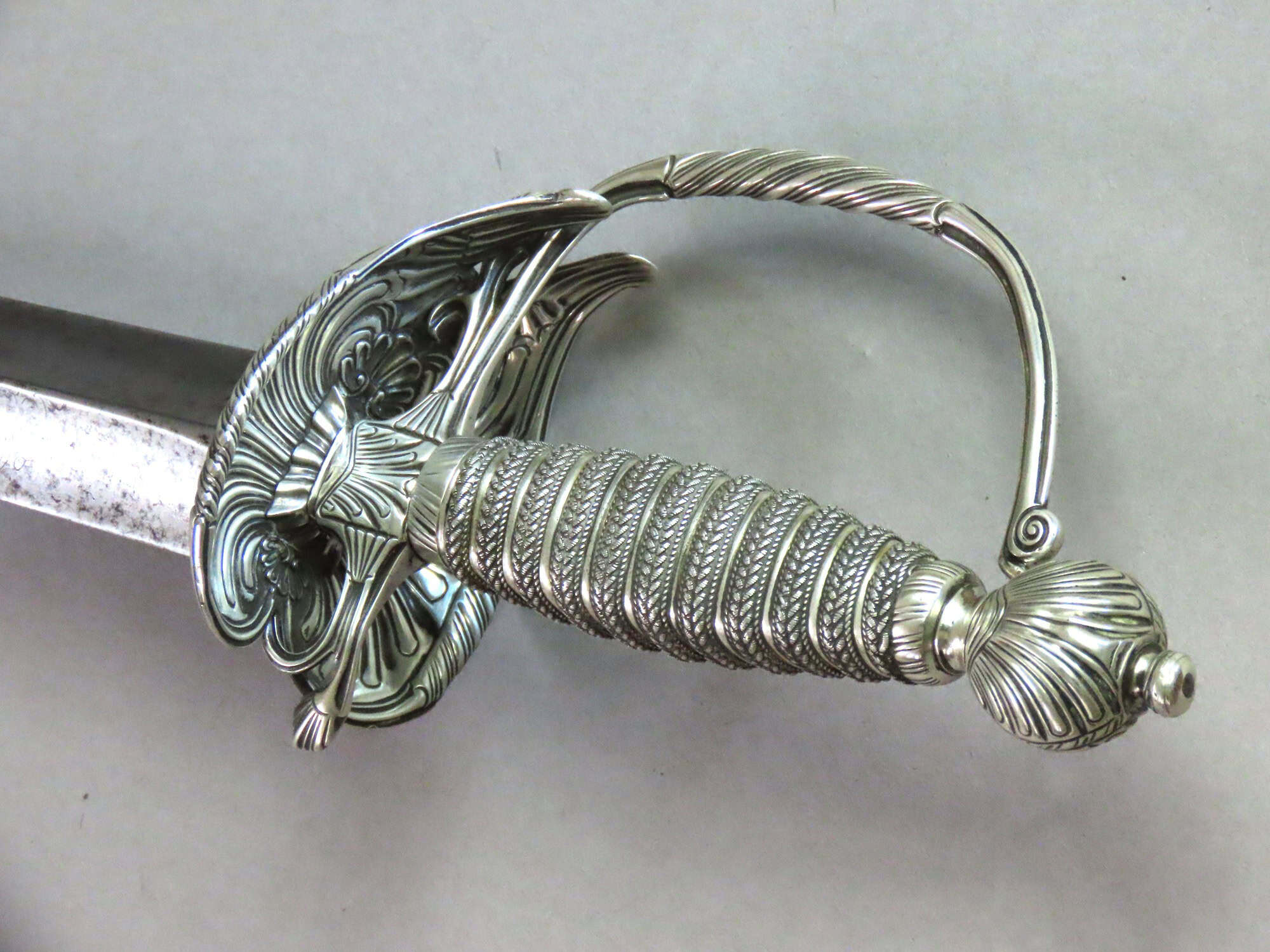
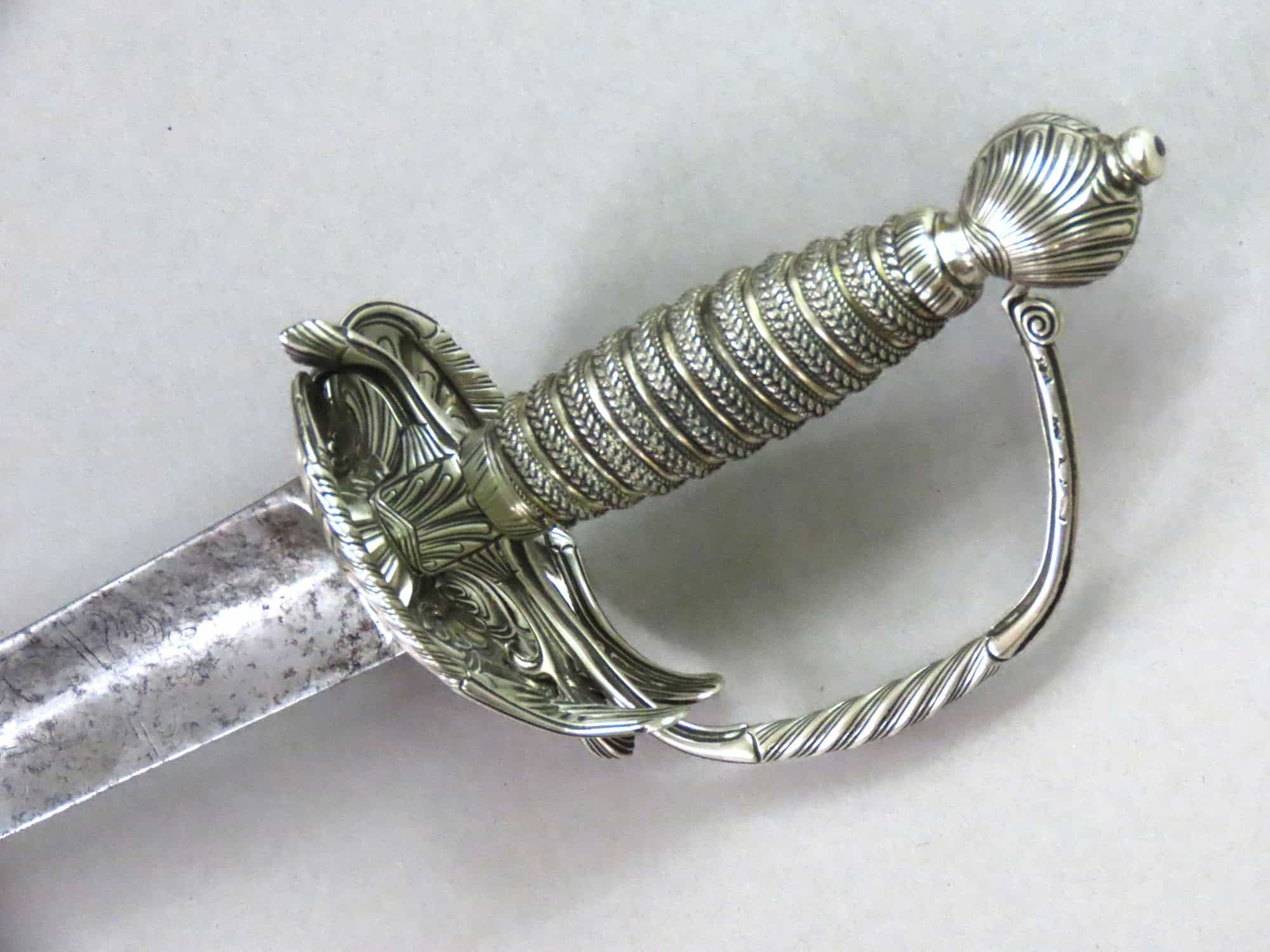
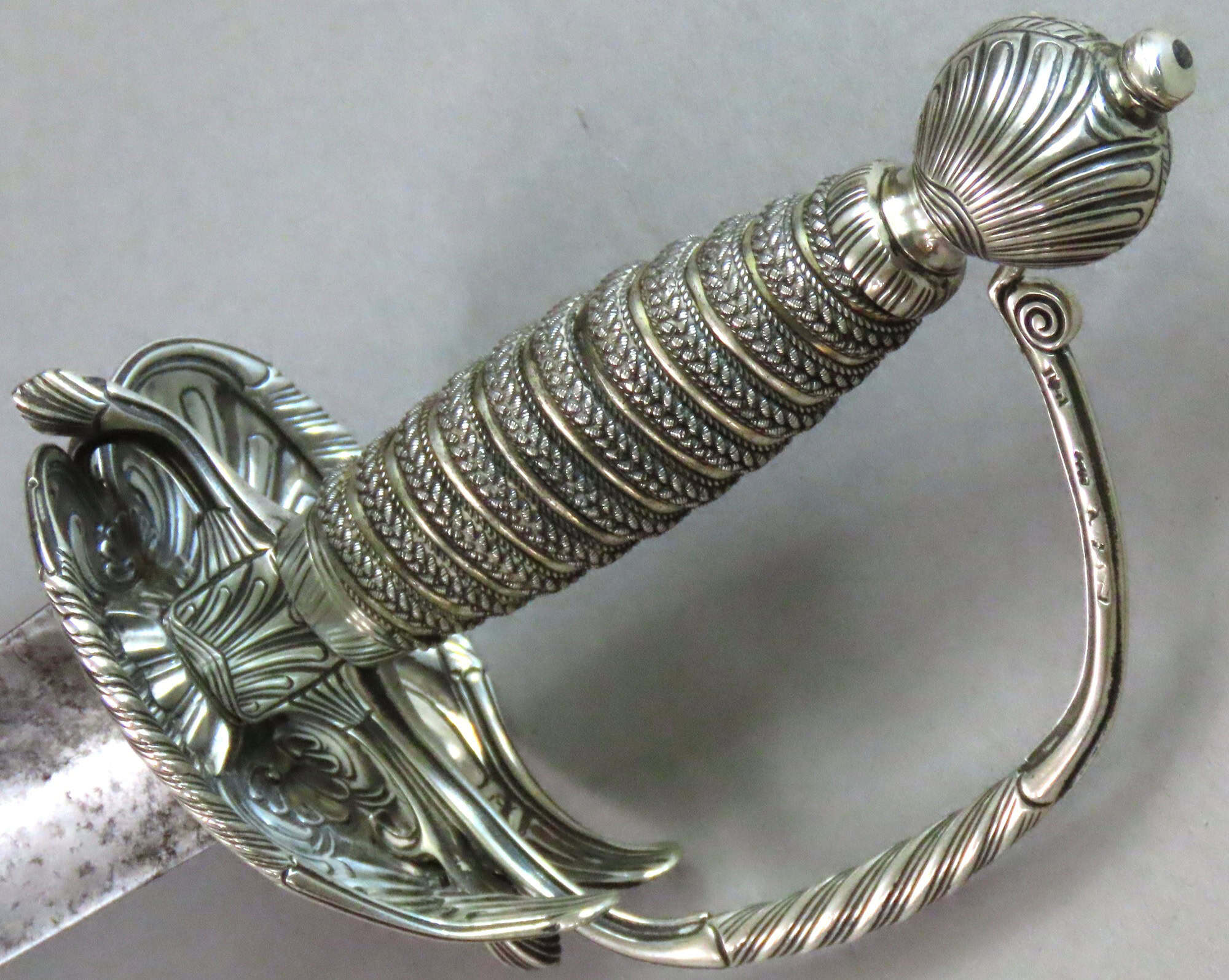
A fine English silver hilted smallsword by the London silversmith Thomas Bass mounted with a boat shell guard hallmarked for 1741 / 1742. The boat shell was one of the most robust guard designs adopted by the London small sword makers. This example is of typically solid form with boldly and finely executed gadrooning to the pommel, shell brim, knuckle bow, quillon terminals and ricasso.
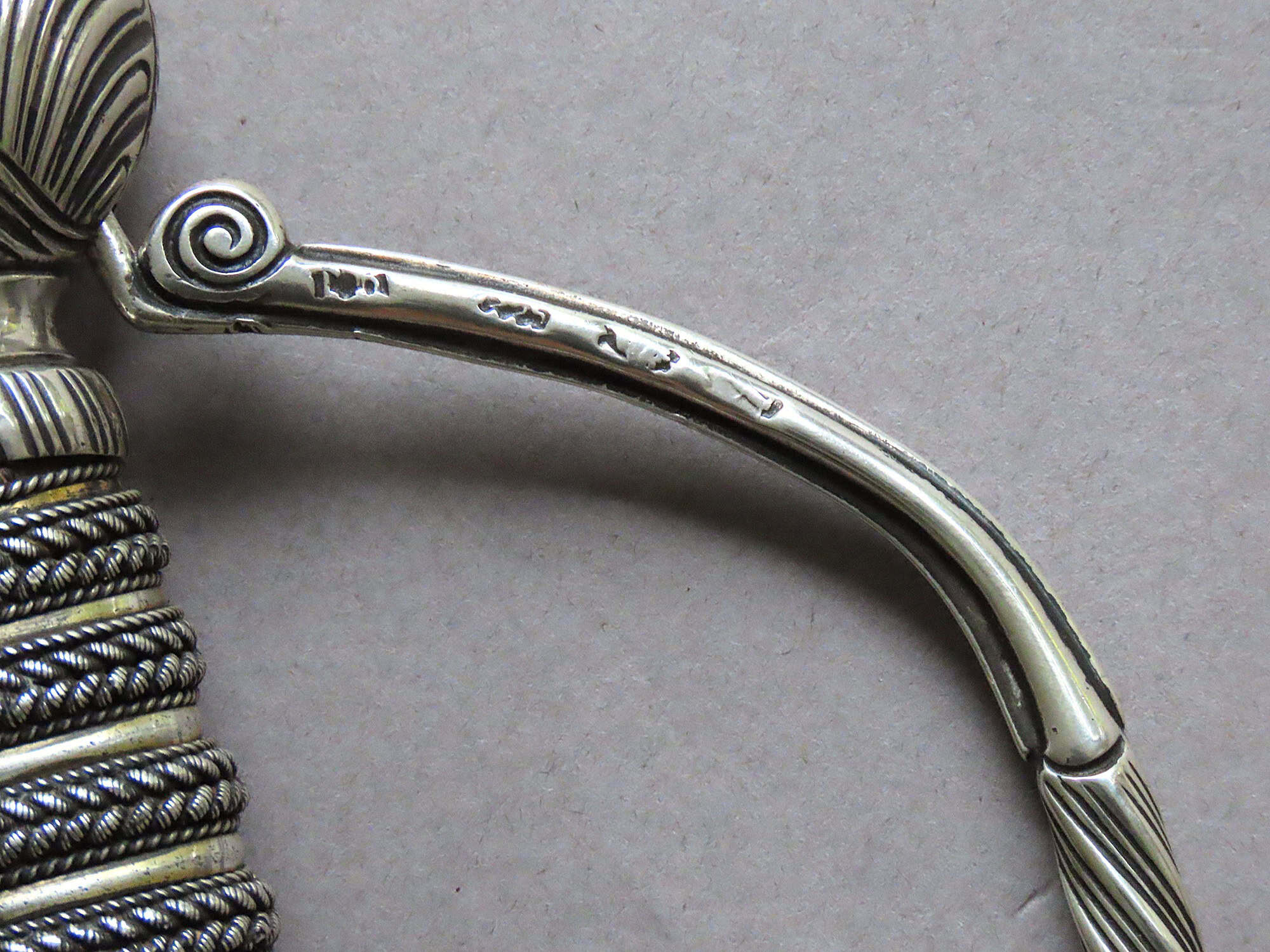
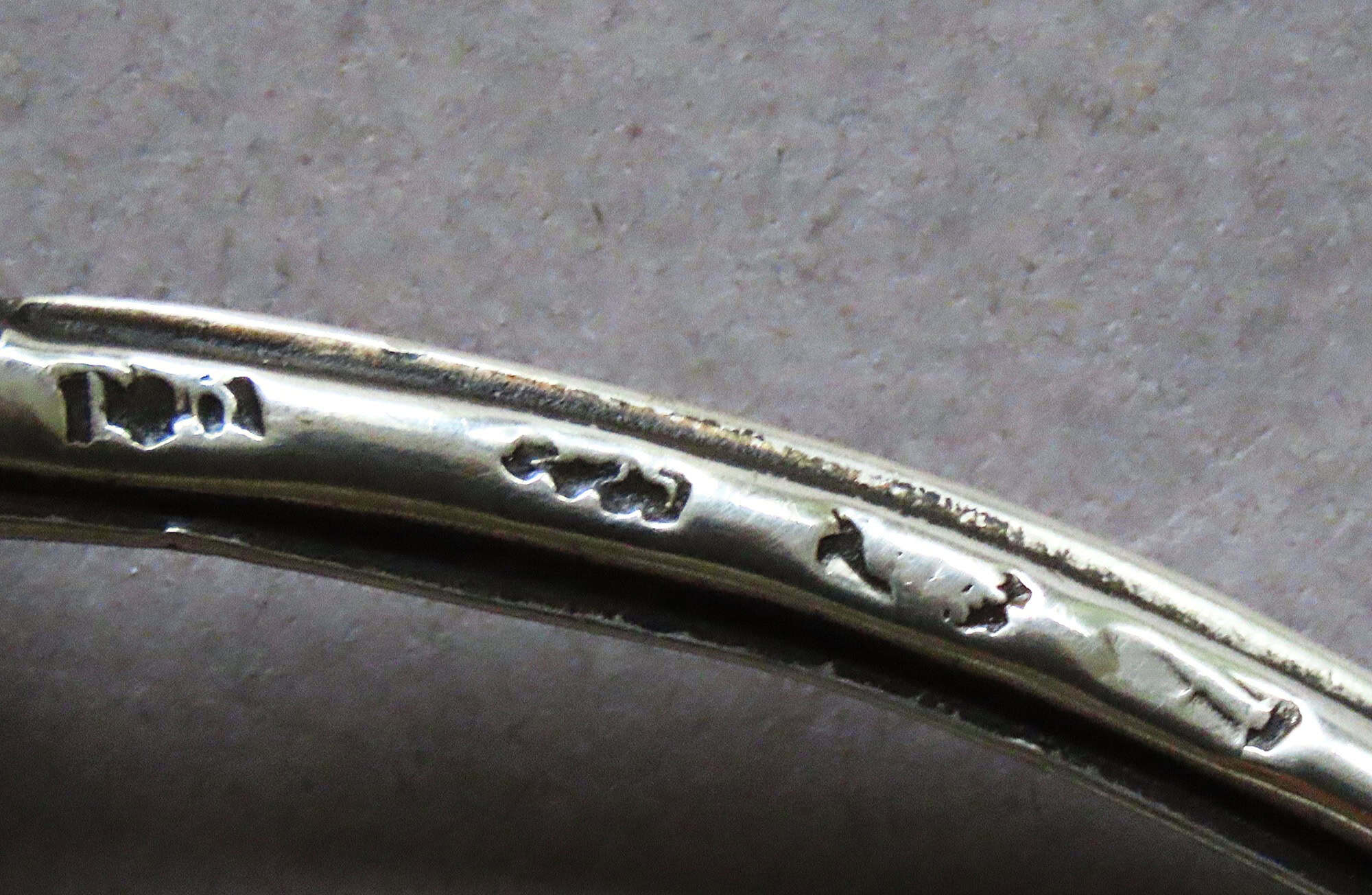
The full suite of hallmark stamps are on the knuckle bow near the pommel. These are comprised of the leopard’s head assay mark, the Royal lion passant mark of purity to the Sterling standard and the maker’s mark “TB” in raised relief inside a depressed rectangle. The date mark is the stylised letter “f”.
The baluster shaped wooden grip is of rounded rectangular section bound with silver strip interspaced with contra twisted double roped wire flanked by thinner roped wires on each side. It is mounted with gadrooned silver cap terminals top and bottom. The sword is a typical example of the high standards of design and execution required of the 18th century London silversmith as it is of an effective weapon.
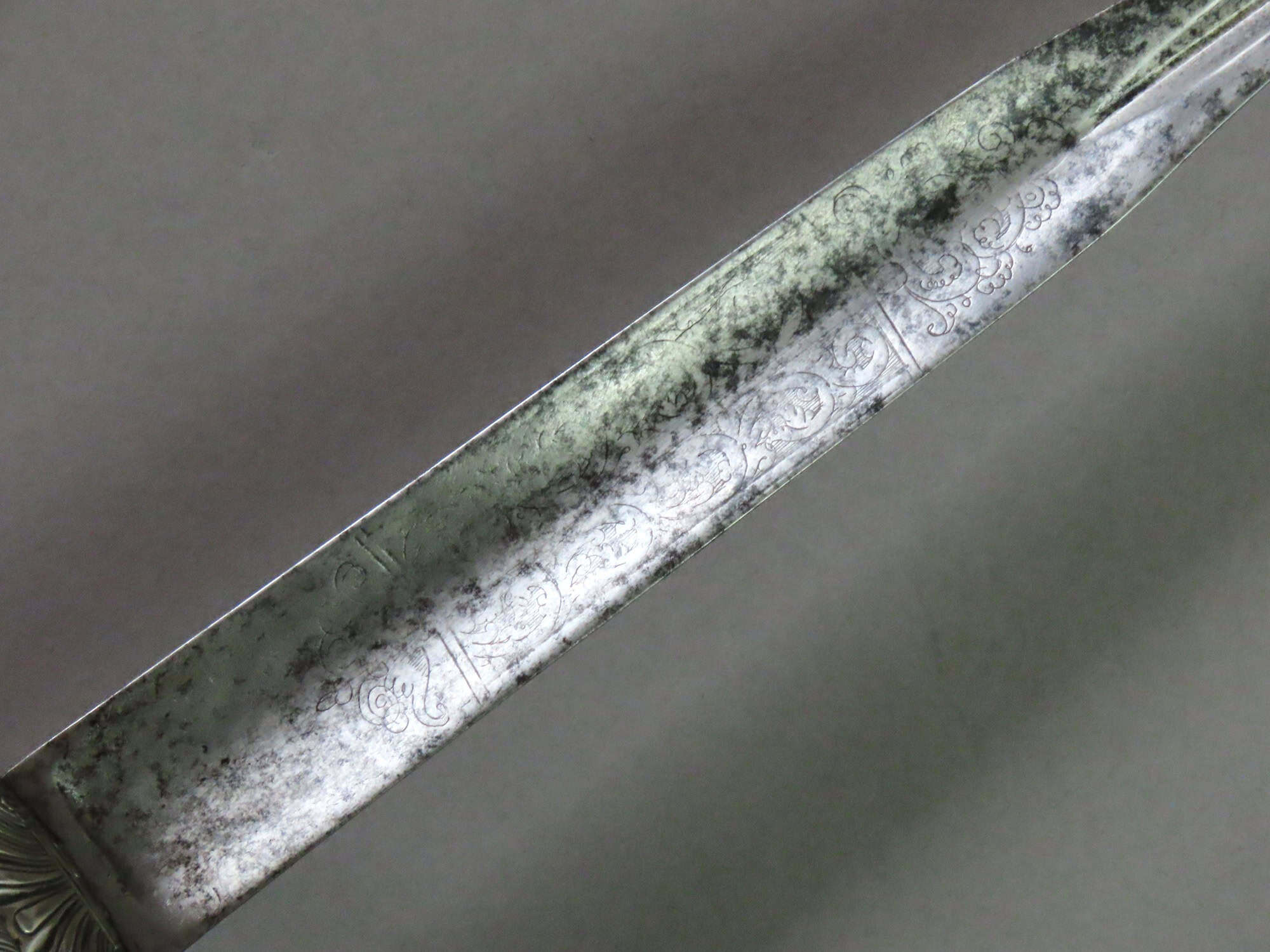
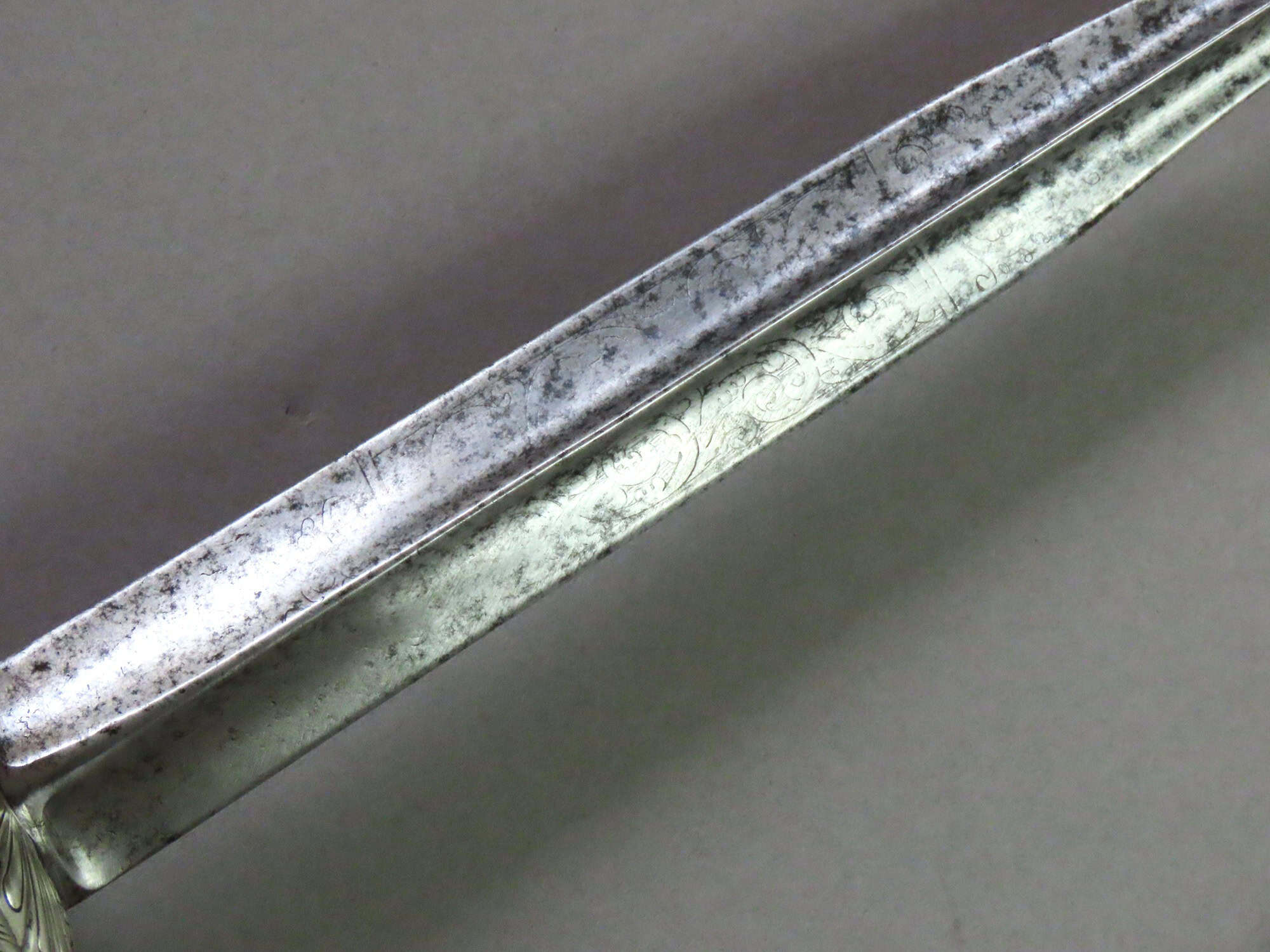
The tapering hollow ground triangular section blade is boldly formed. The sword was probably owned by a military officer. It is heavier and more robust than is usual with a pronounced colichemarde profile. It It is in good condition with a consistent speckled age patination all over and retains much of its original engraving in panels in the wider segment near the hilt. Often these fine engravings have rubbed away due to unsheathing then sheathing a sword in its tightly fitting scabbard over time. The scabbard of this sword is now lost. Only a small proportion of the whole have survived.
Silver hilted small swords were fashionable attire for 18th century gentlemen. Mostly worn for effect as a show of wealth and taste, someone wearing such a sword was also announcing to the world that he could use it, and was at risk of being invited to do so. Despite the stylish and delicate appearance of these swords they were formidable dueling weapons.
A feature of the lives of London silver hilted sword makers of the 18th century was that talent in working with silver was not necessarily a guarantee of commercial success. To succeed they also needed business acumen. Some silversmiths were very successful and became wealthy men. However, the records show that many talented silversmiths, evidenced by the quality of their surviving works, lived a sparse existence and sometimes ended their lives in penury. Thomas Bass seems to have one such unfortunate case.
Thomas is recorded from 1701 to 1760 as a silver hilt maker and sword cutler. He was indentured to the profession by the cutler Joseph Reason for seven years and sworn “free” of the Cutlers’ Company on 15th April 1708, after which he is recorded as working in Fetter Lane in the City of London where he remained for the next 50 years and registered his first mark. He indentured his one known apprentice, Isaac Stewart, in 1712, and registered his second (Sterling) mark in 1720. On 5th October 1721 the Court of Assistants of the Cutlers’ Company excused Thomas from taking livery due to his “mean” circumstances. A year later he was excused again:
“Thomas Bass being sumon’d did not appear but several Members knowing him to be poor the Court doth think fit to excuse him till he is in better Circumstances”.
It seems that Thomas struggled with poverty all his life and spent his last years in a workhouse to be buried at St Andrew’s Church, Holborn, on 22nd February 1760. The above reference work borrows from Leslie Southwick, page 41 of “London Silver-Hilted Swords”, their makers, suppliers and allied traders, with directory, Royal Armouries, 2001. The maker’s mark, which was Thomas’s second mark, can be seen in Grimwade reference 2685.
The blade is 32.25 inches long (or 82 cm) and the overall length is 38.5 inches (or 98 cm)