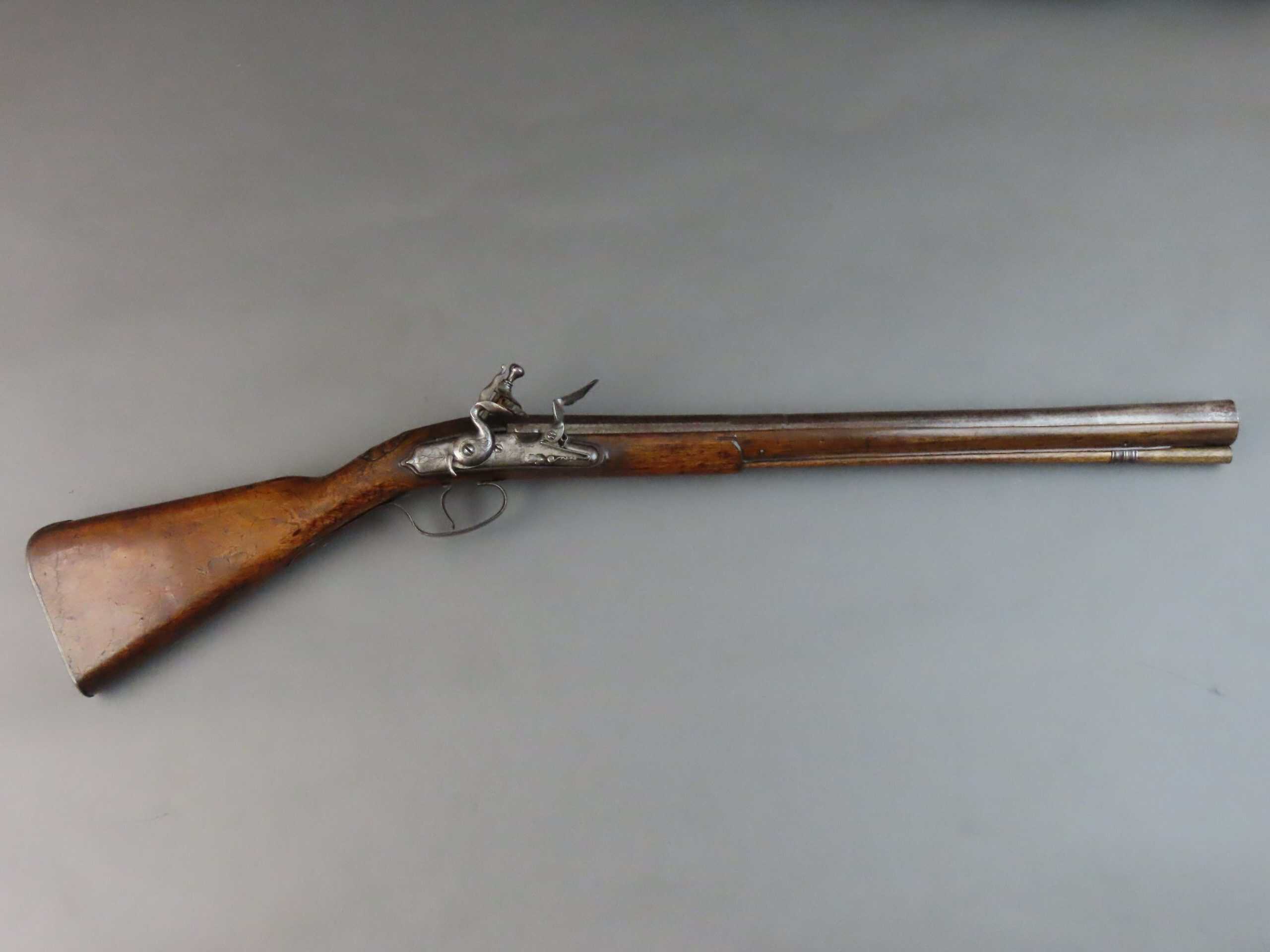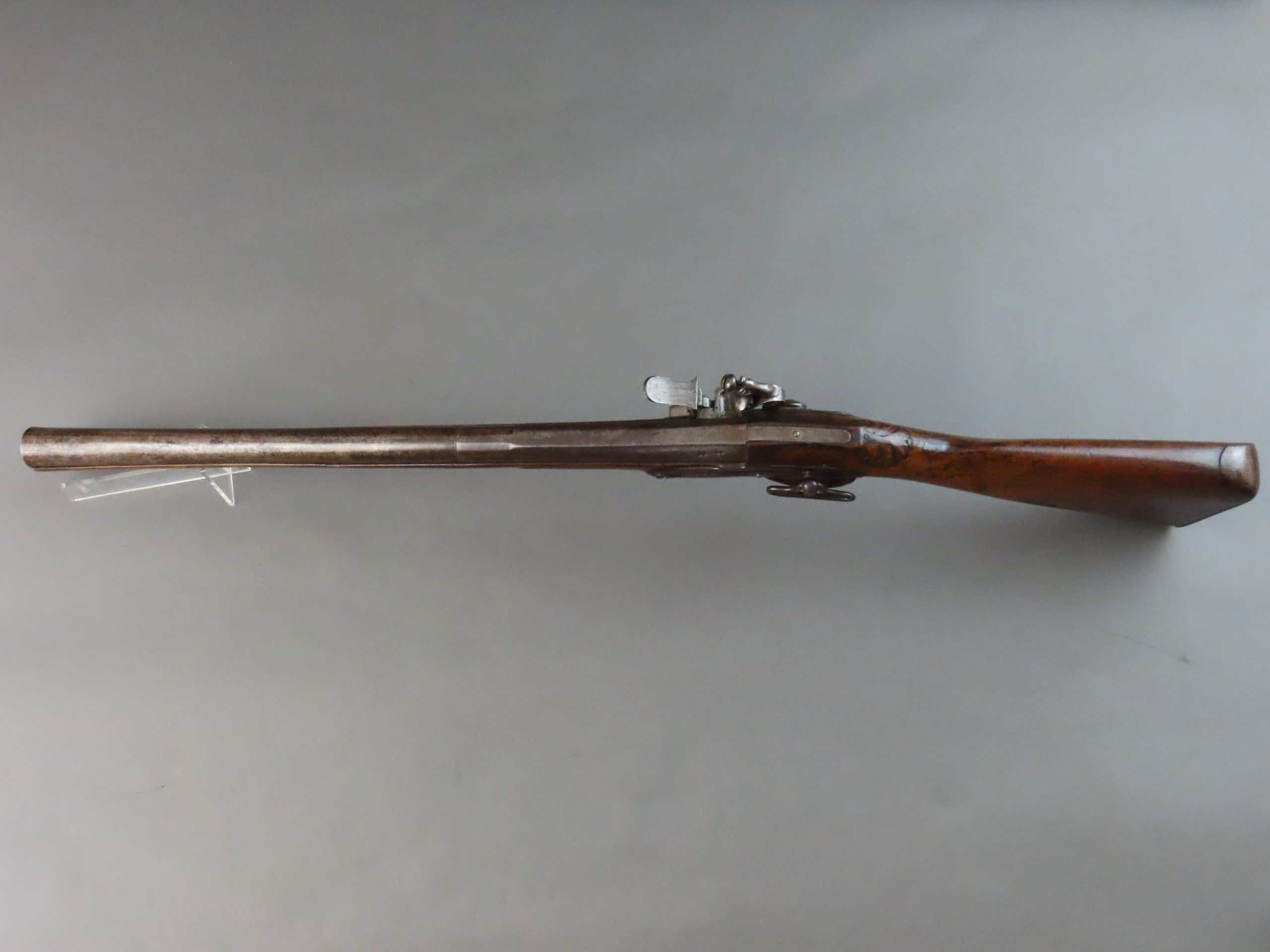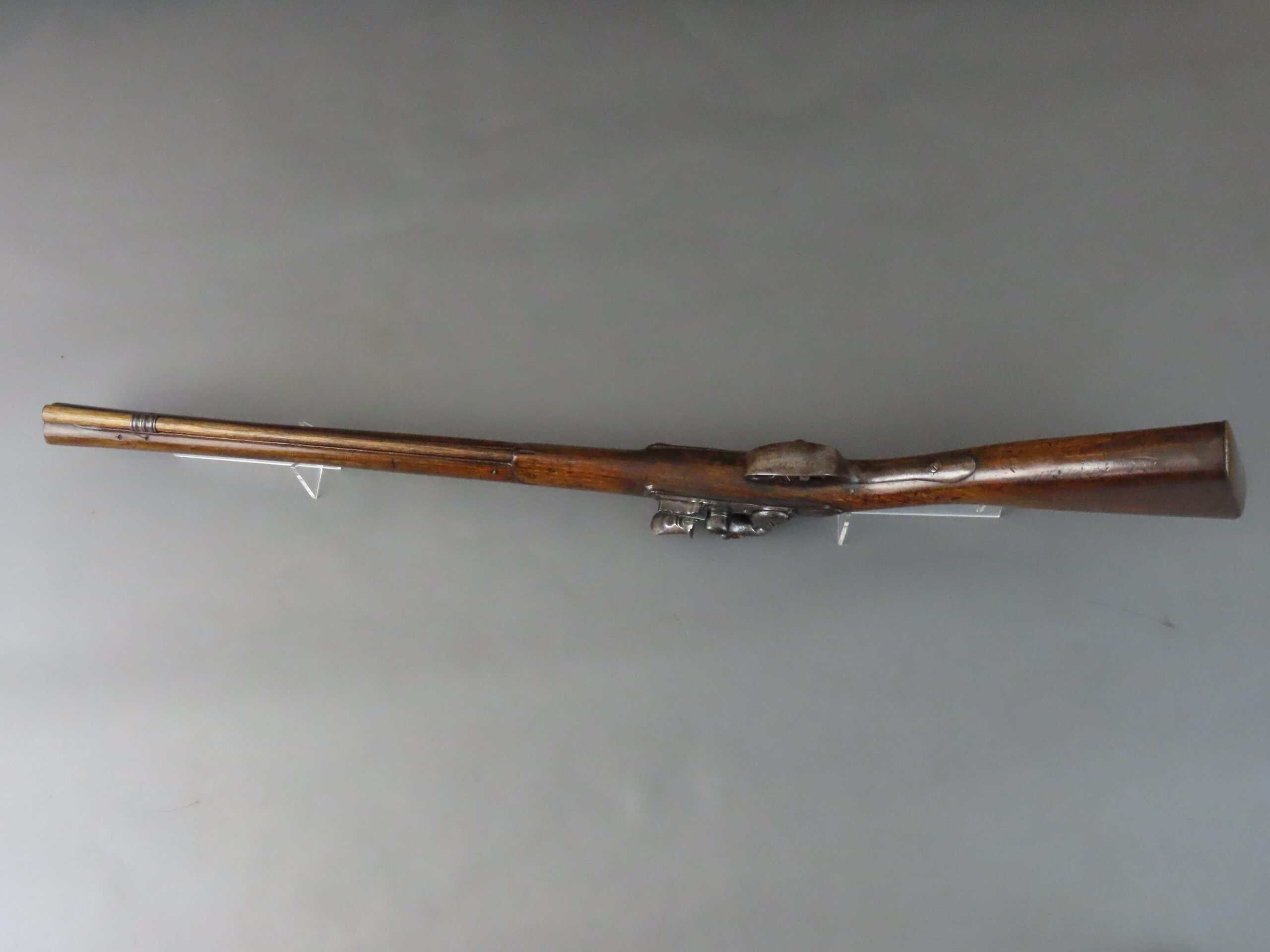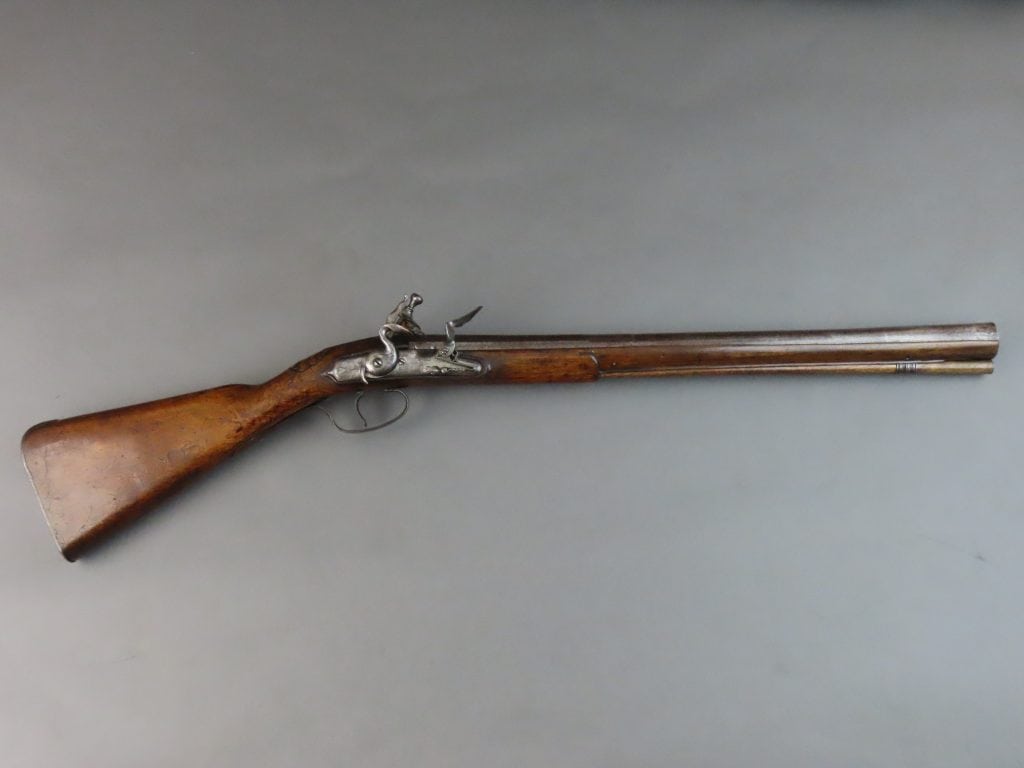
A Rare English Restoration Period Musketoon by William Palmer dating to circa 1670 to 1680
To enquire about this itemplease click here
Price: £14,000
Ref: 62080689
Item Description
This rare and fine Musketoon by William Palmer represents an important stage in the evolution of English gunmaking as the austere years of the Cromwellian years were left behind after the Restoration in 1660 and London developed into an important centre for gunmaking and for other arts and crafts.
After the Restoration of the monarchy in England in 1660 firearms increased in popularity with people at all levels of society. They were in demand with entities that needed to protect themselves from robbery such as coaching companies, precious metals, jewelry, wealthy home owners, etc. In day to day life firearms were increasingly used by people for personal protection. This social change led to a renaissance in English gunmaking turning it into a high art. This Musketoon by Palmer is a fine and early representation of the fine quality guns produced in London at this time.
After the more sombre and restrictive years of the preceding decades social developments moved towards higher quality and greater expense for those that could afford it in almost all consumer areas in a more liberal environment including dress, domestic silverware, furniture etc often influenced by “continental” styles. With the high levels of military demand seen in the Civil War periods abated, gunmakers turned their attention to making tasteful and attractive weapons that were not only functional but reflected the wealth and status of owners more than previously. This exceptional Musketoon was made by William Palmer and its fine quality reflects this trend.
A Musketoon in its simplest term is a long blunderbuss approaching carbine length. They were used in both military and civilian environments. The extra length of the barrel enabled a tighter shot pattern and higher velocity thereby increasing its range and impact compared to the usual 17th century blunderbusses of shorter length. English Musketoons of the Restoration period are very rare.
William Palmer completed his apprenticeship (1) towards the end of the Protectorate period in England which ended in 1659, a year before the monarchy was restored under Charles II in 1660. He was made free of the Gunmakers’ Company in 1657 to which he was elected Assistant in 1658 and Master in 1669. Evidently, by virtue of these appointments, he was a man of high standing in the new regime. Alongside some other London gunmakers Palmer was a contractor to the Board of Ordnance from 1661 to 1680, and the Hudson’s Bay Company, from 1674 until his death in 1681. Palmer had a son, also called William, and also a successful gunmaker, who followed in his father’s footsteps. He was made free of the Gunmakers’ Company in 1677 and also supplied guns to the Ordnance for two years, probably working alongside his father, then disappears from the records and died sometime before 1691. For reasons outlined below this Musketoon is thought to have been made by the first William Palmer.
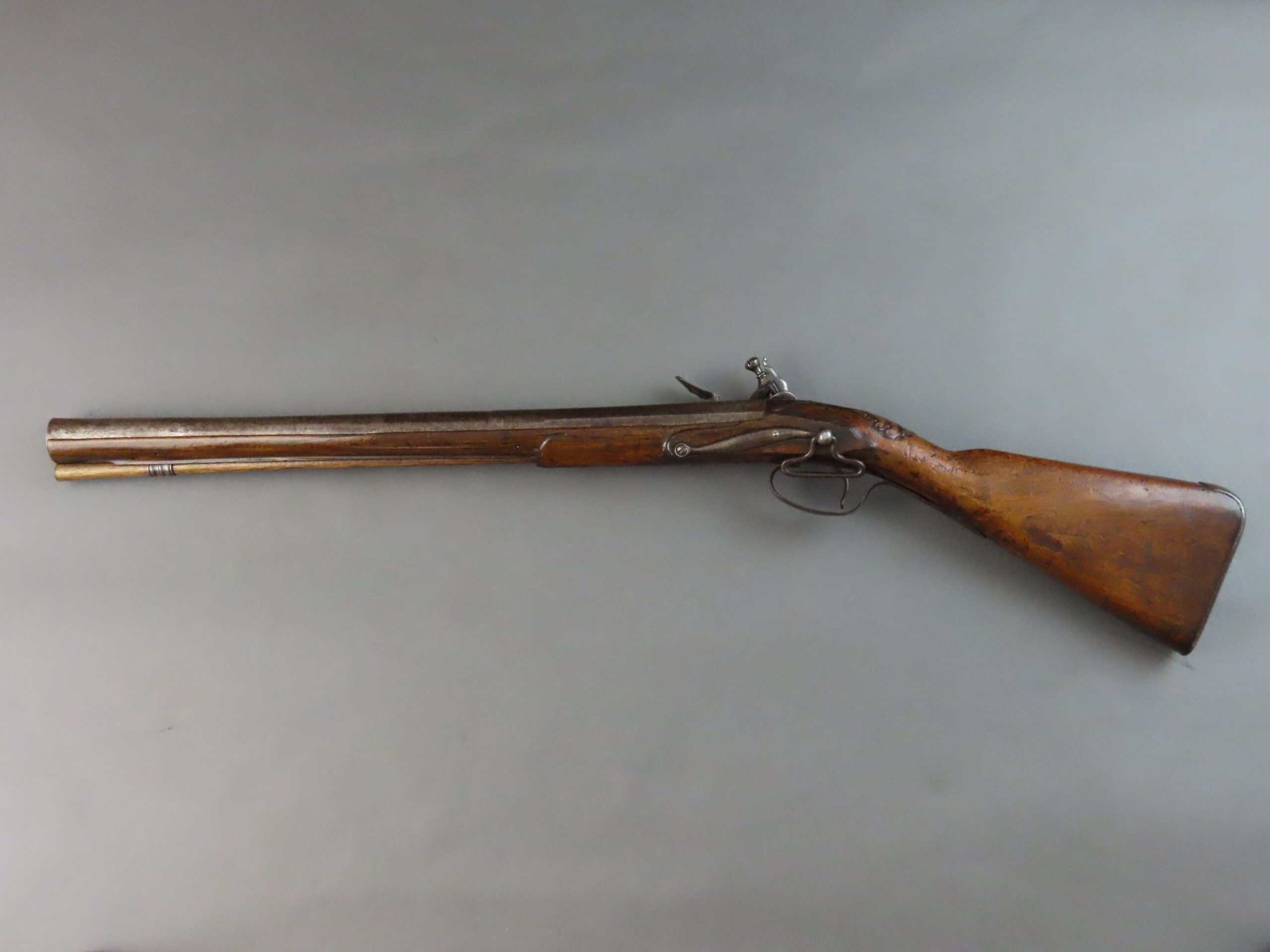
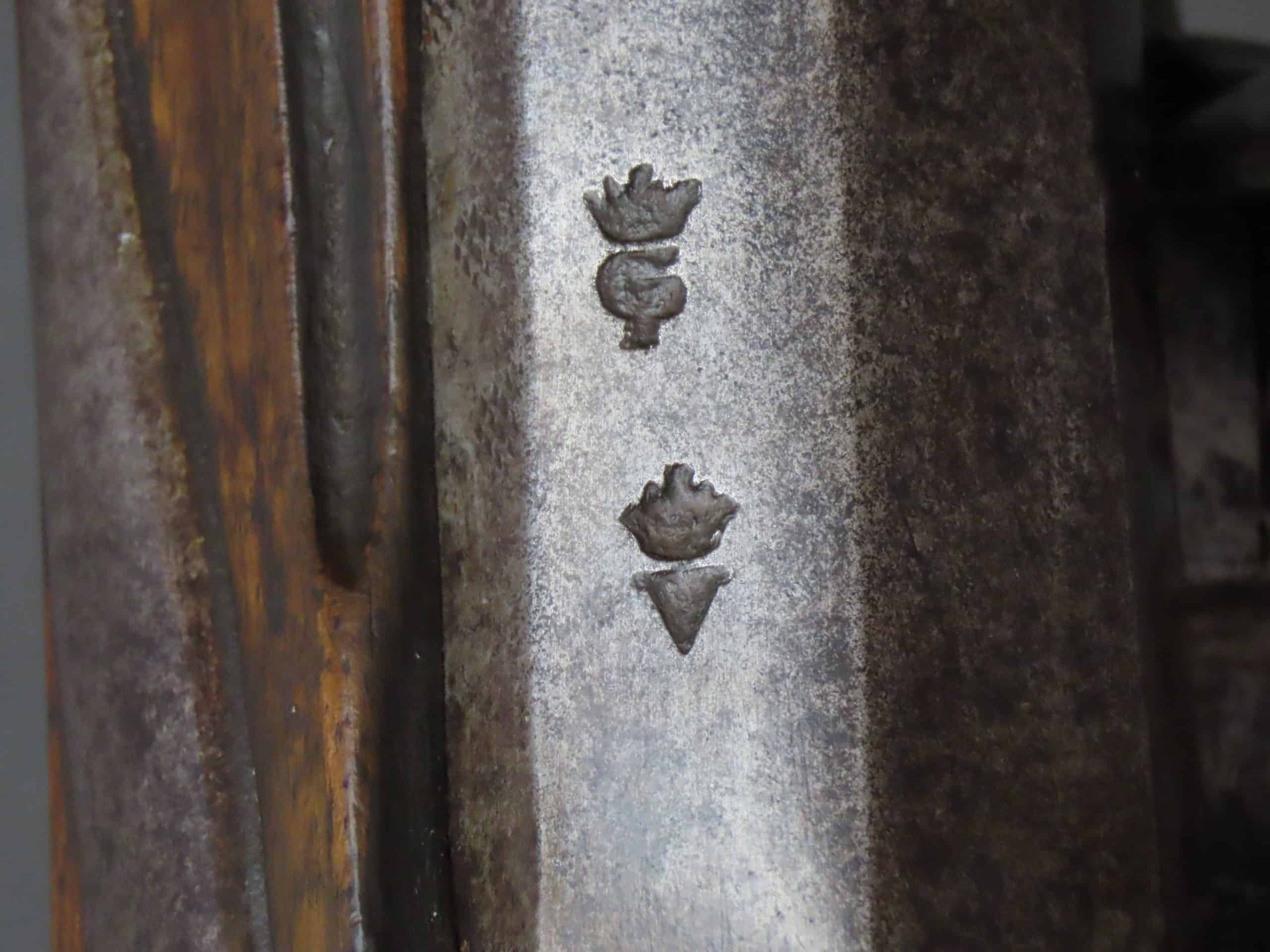
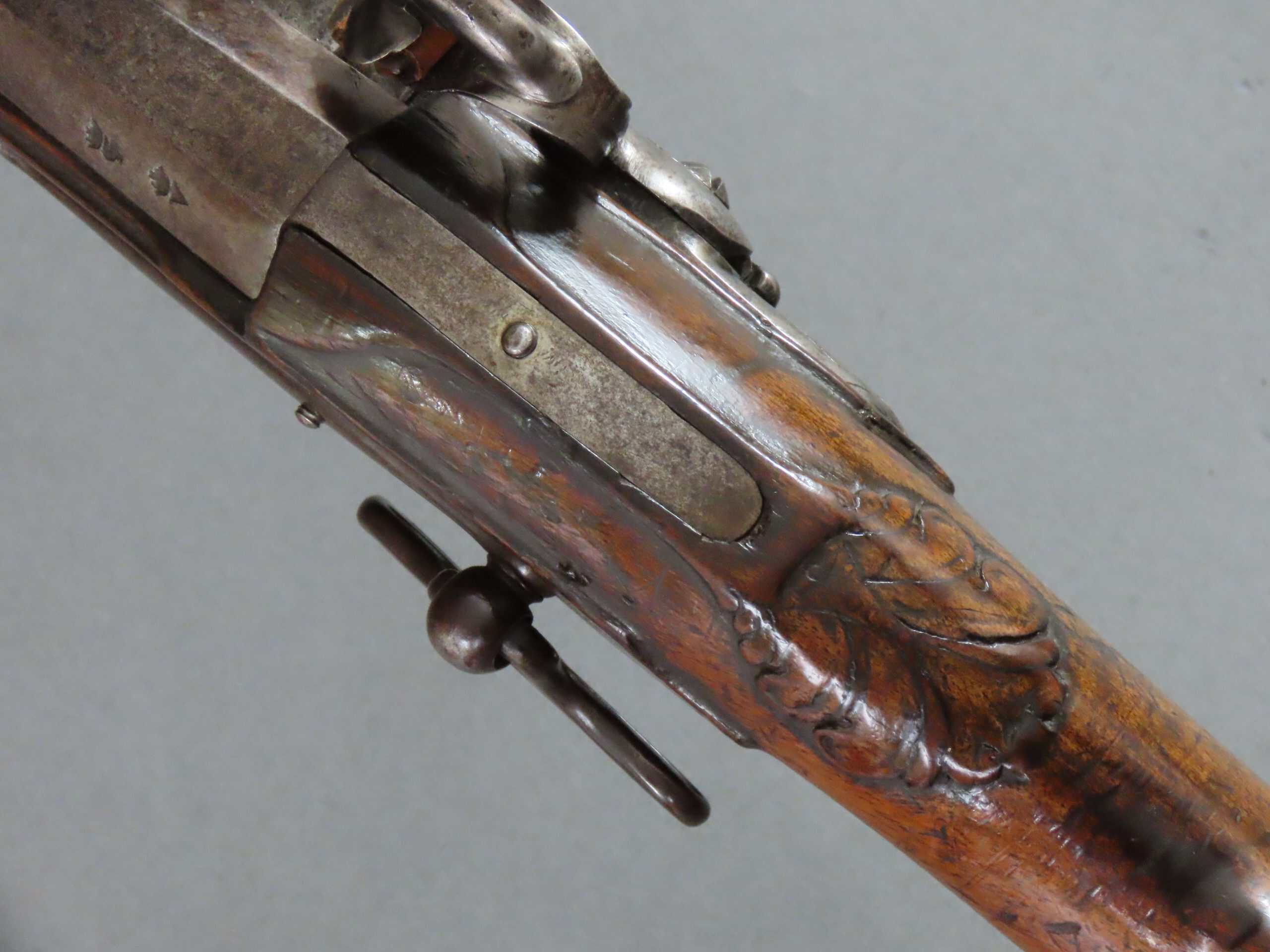
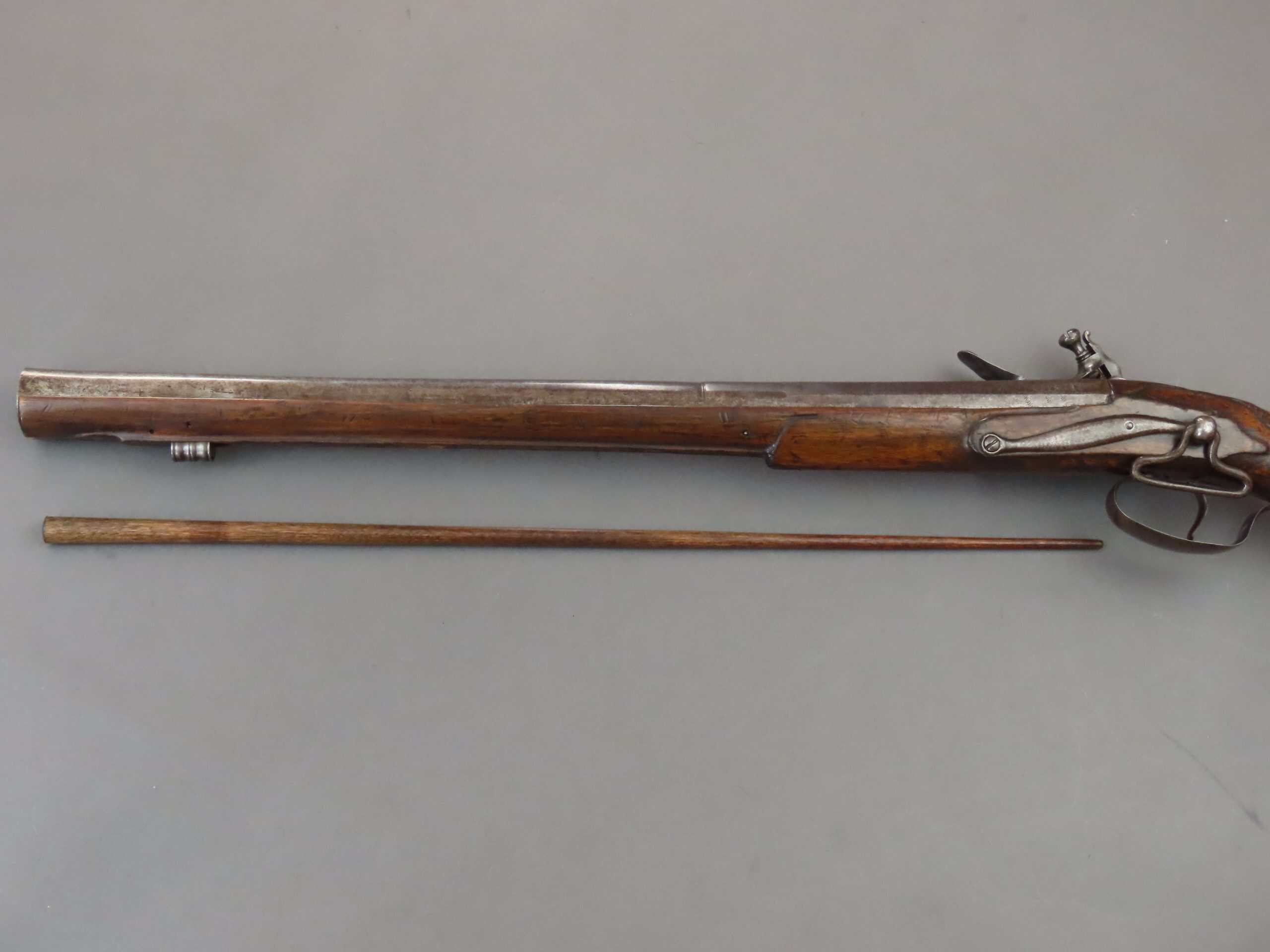
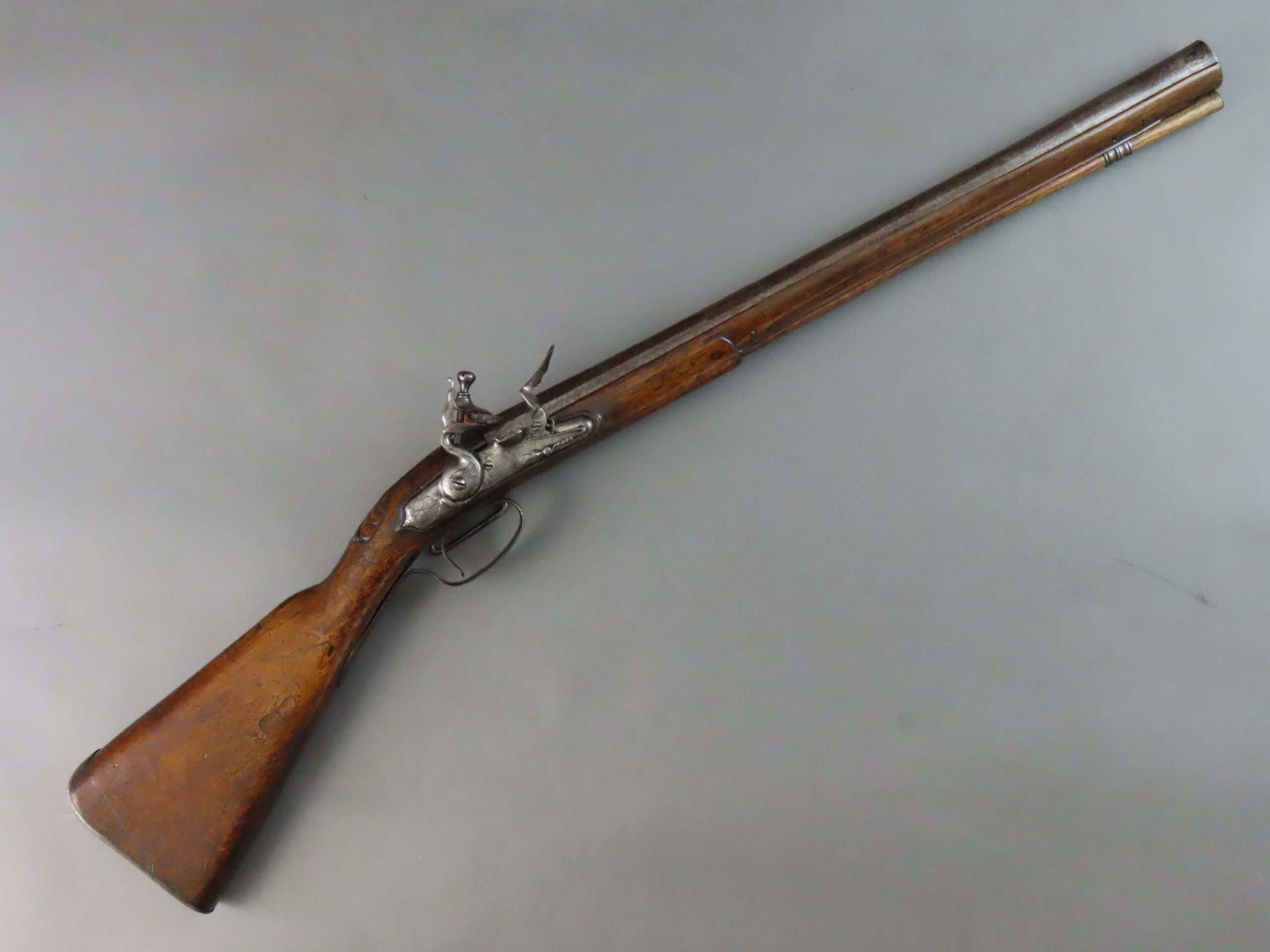
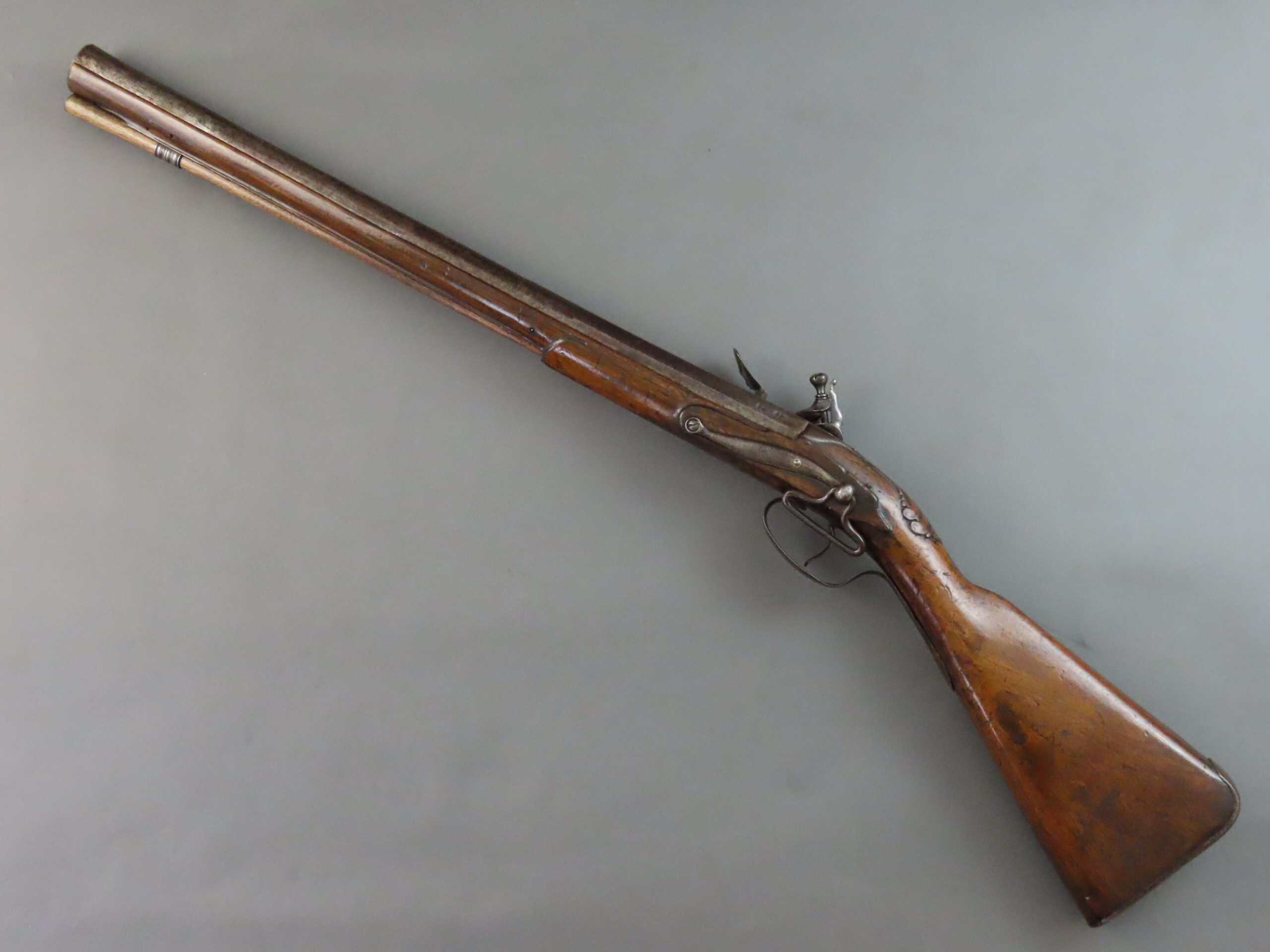
The Musketoon is mounted with a flared iron barrel stamped on the off-side at the breech with the Proof and View marks of the London Gun Company. The barrel is fixed at the breech with an iron tang, through which the end of a screw protrudes which enters the stock near the trigger below. The barrel is of octagonal section for a few inches from the breech, then becomes 16 sided for a short distance. These 16 flat sides terminate in a waistline at the narrowest part of the barrel, after which it is of rounded section gently swelling towards the muzzle.
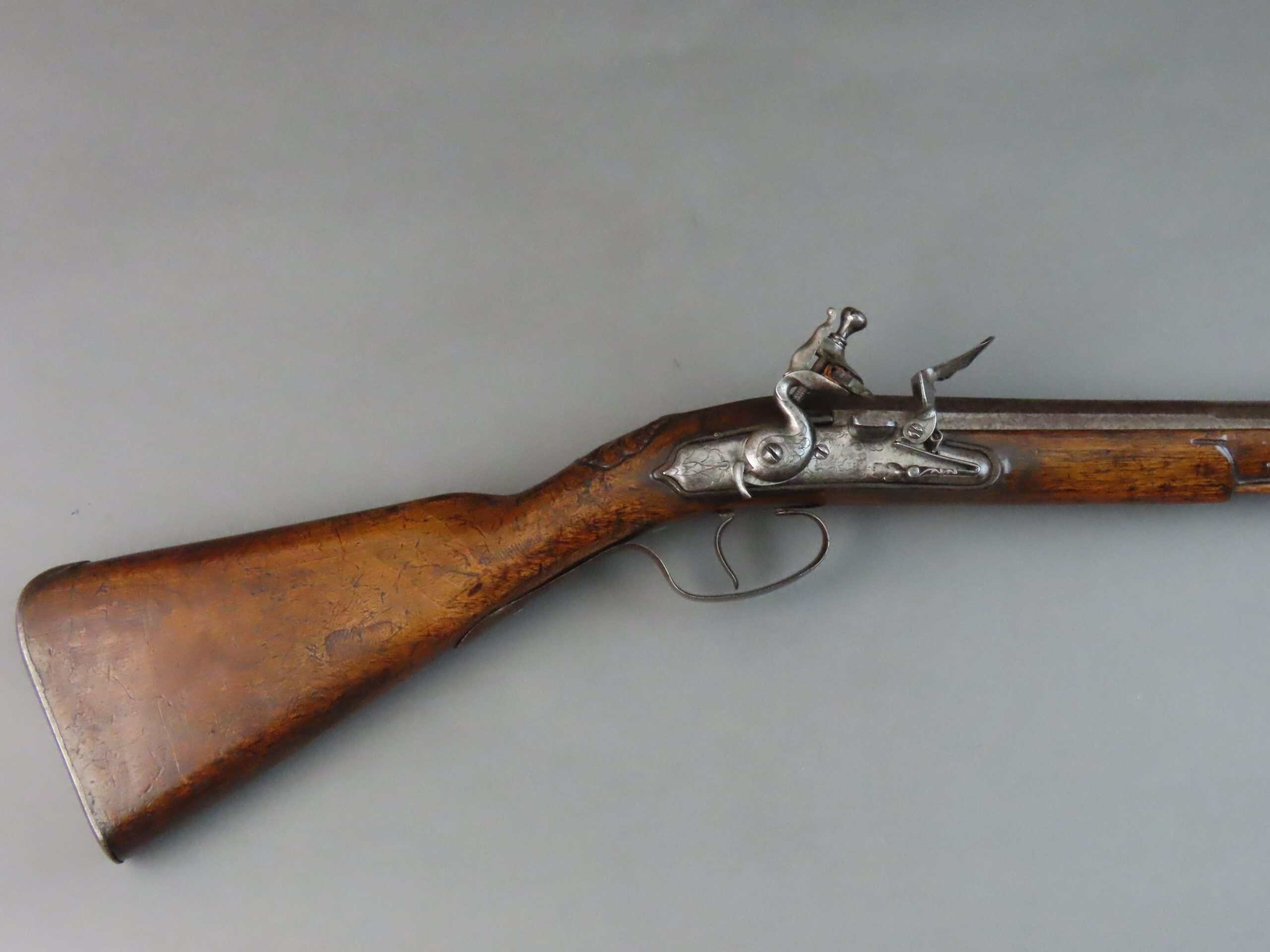
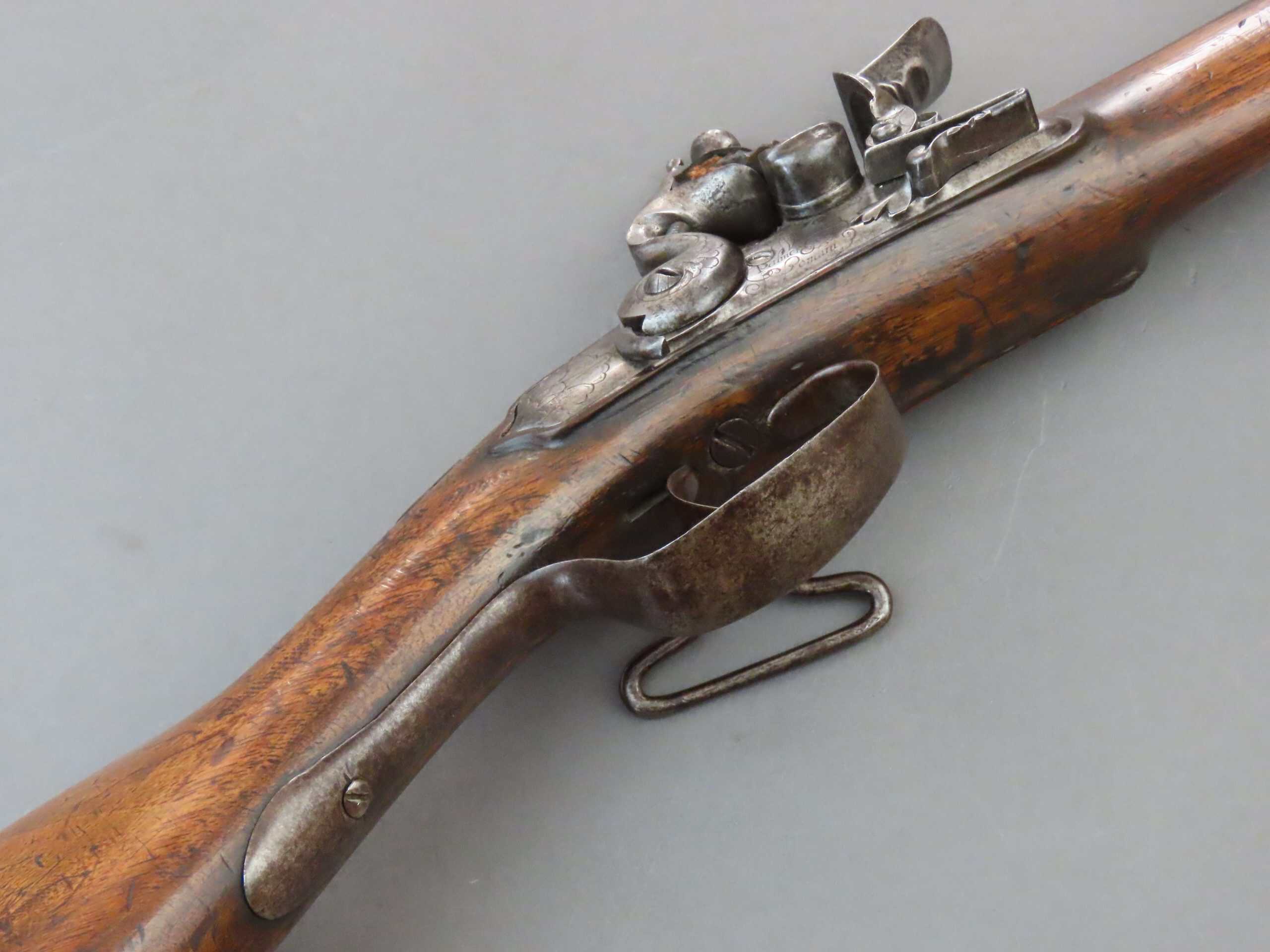
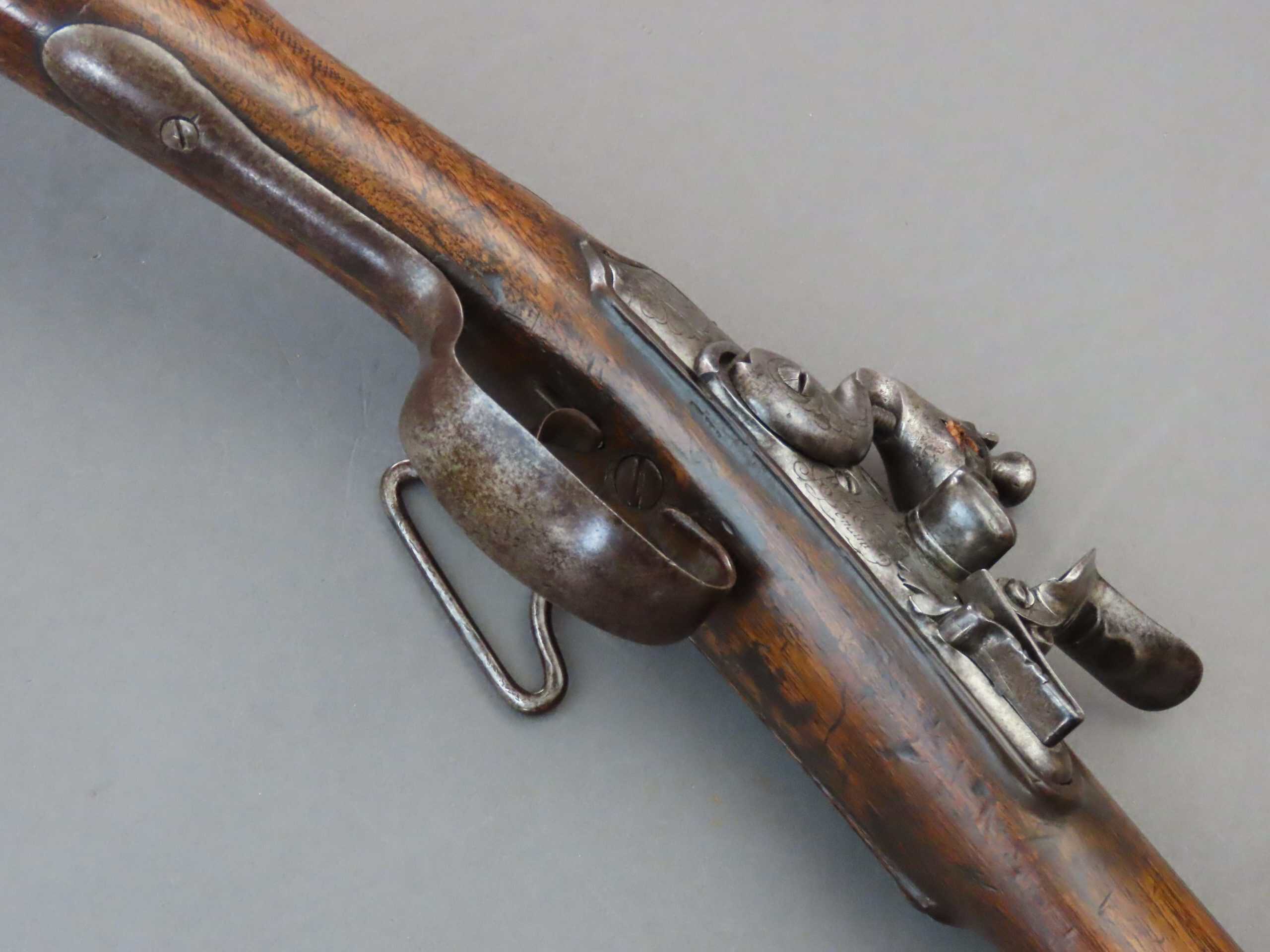
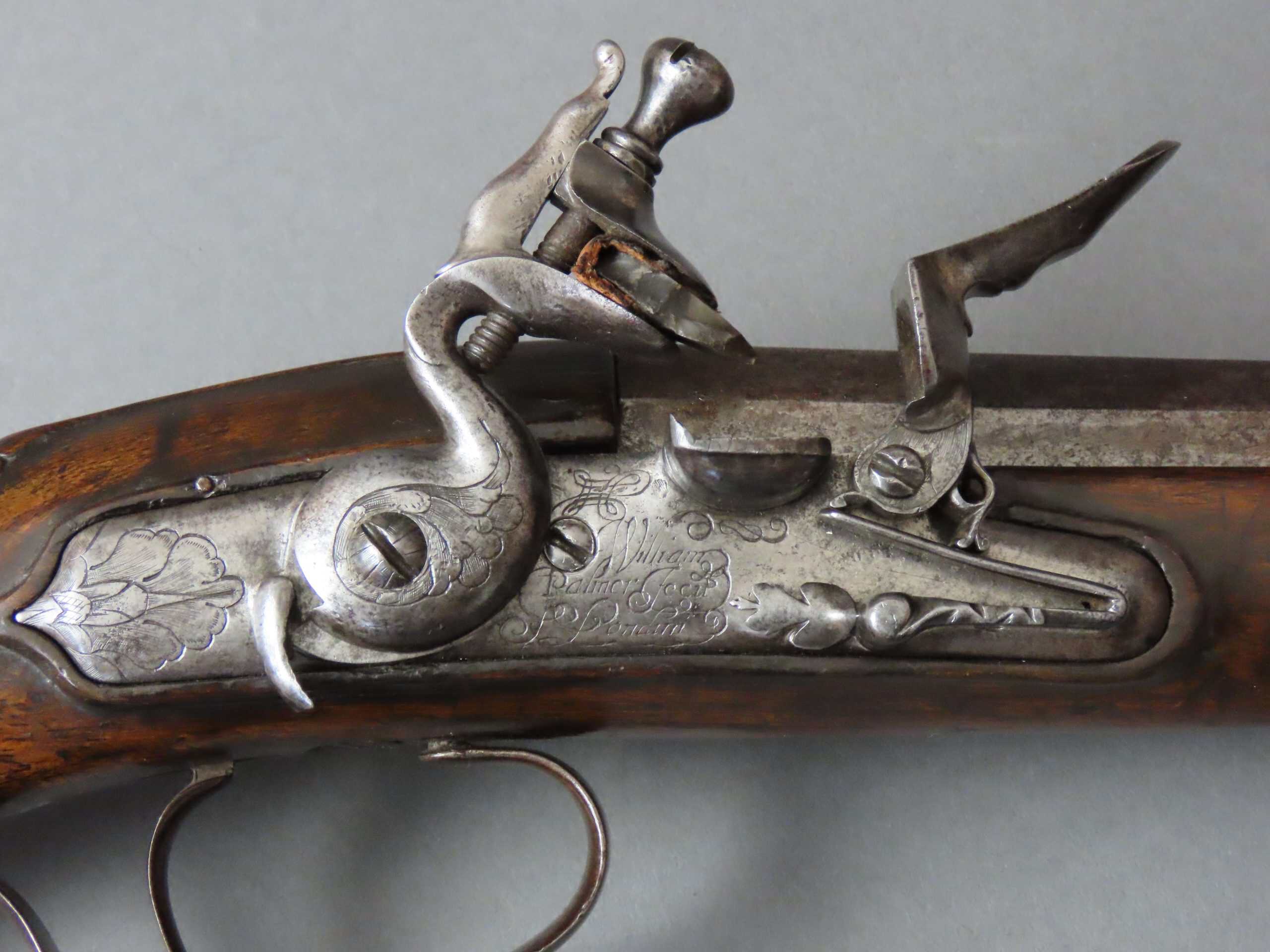
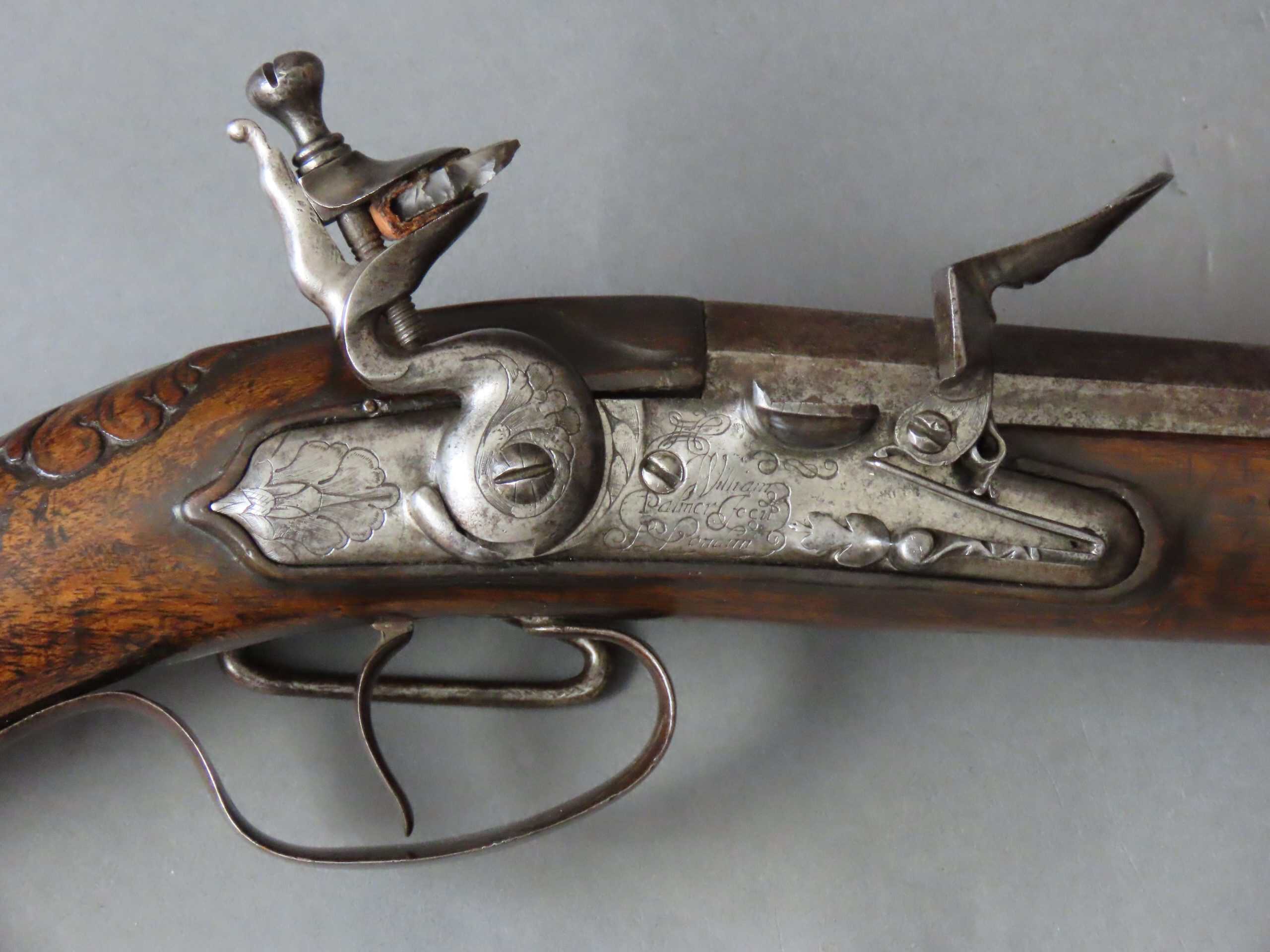
The Musketoon is mounted with a ”Type 2” English lock, a development from the earlier type of English lock, in that the dog catch, which holds the cock in the half cock position until released, is reduced in size. This type is also often referred to as a lock with a “vestigial” dog catch. It was produced from the 1640s to the early 1680s. The lockplate is of rounded section with a pinched-in tail which forms a pointed finial. This feature is not unusual on other English guns of the Restoration Period.
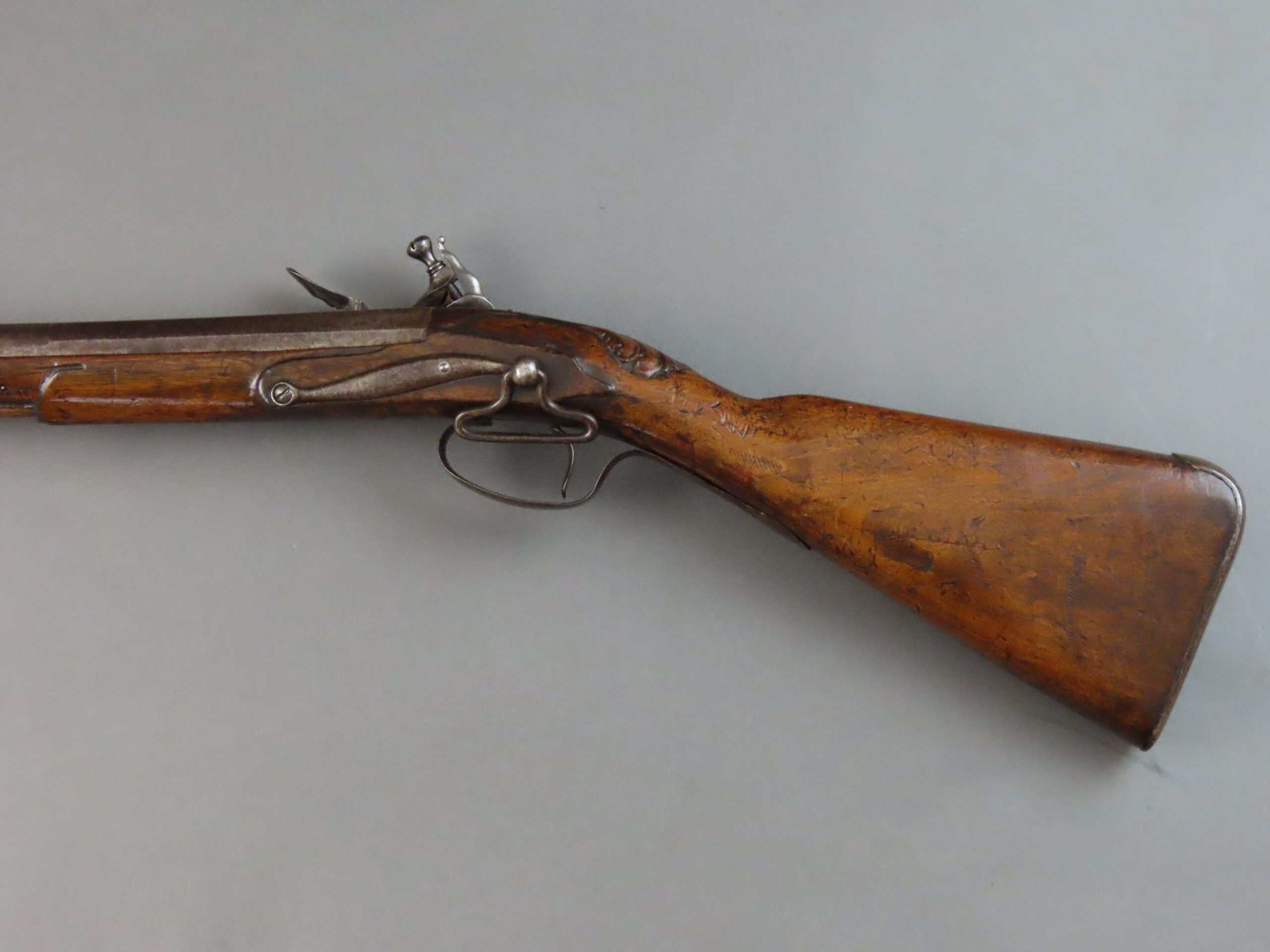
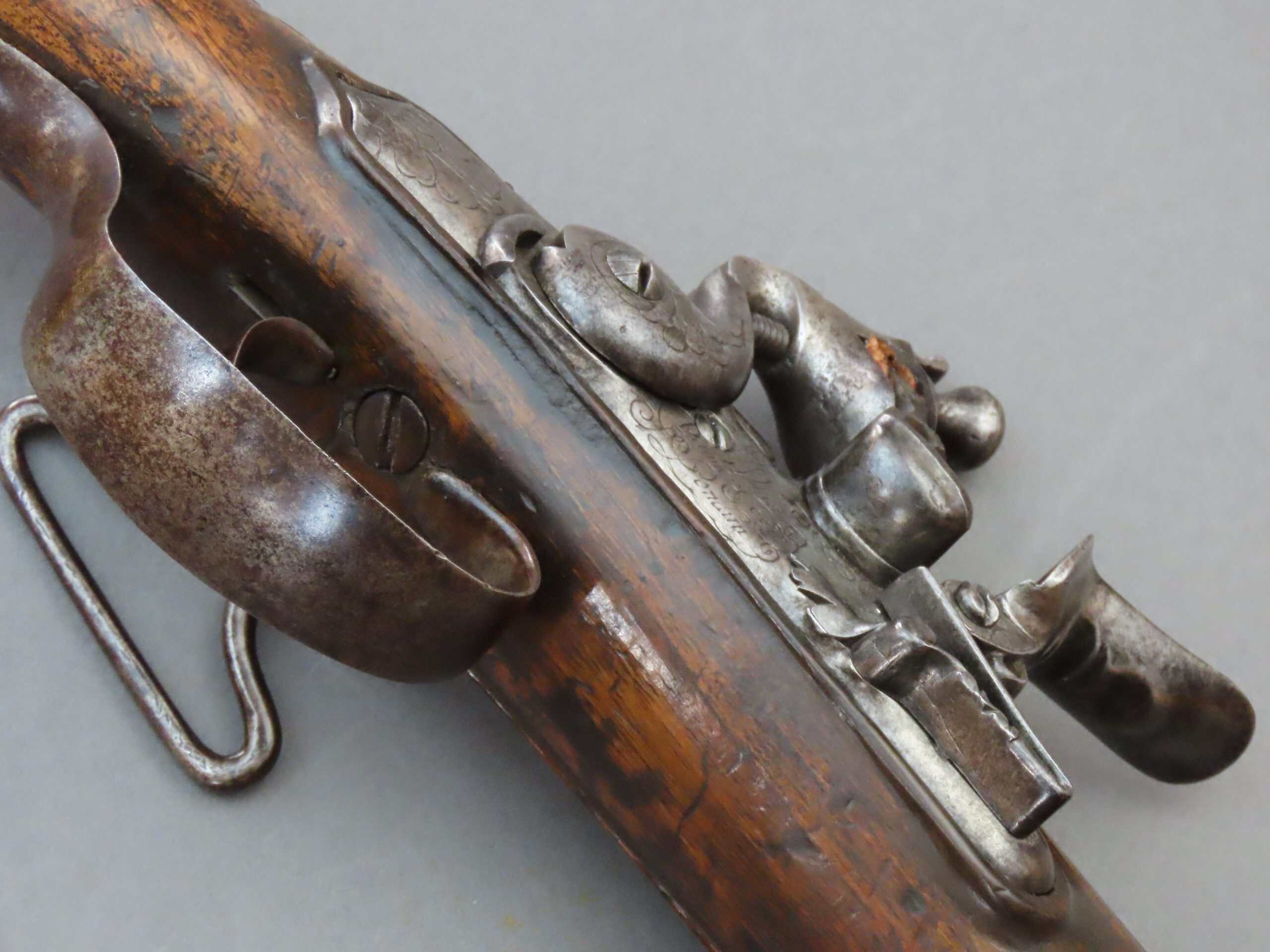
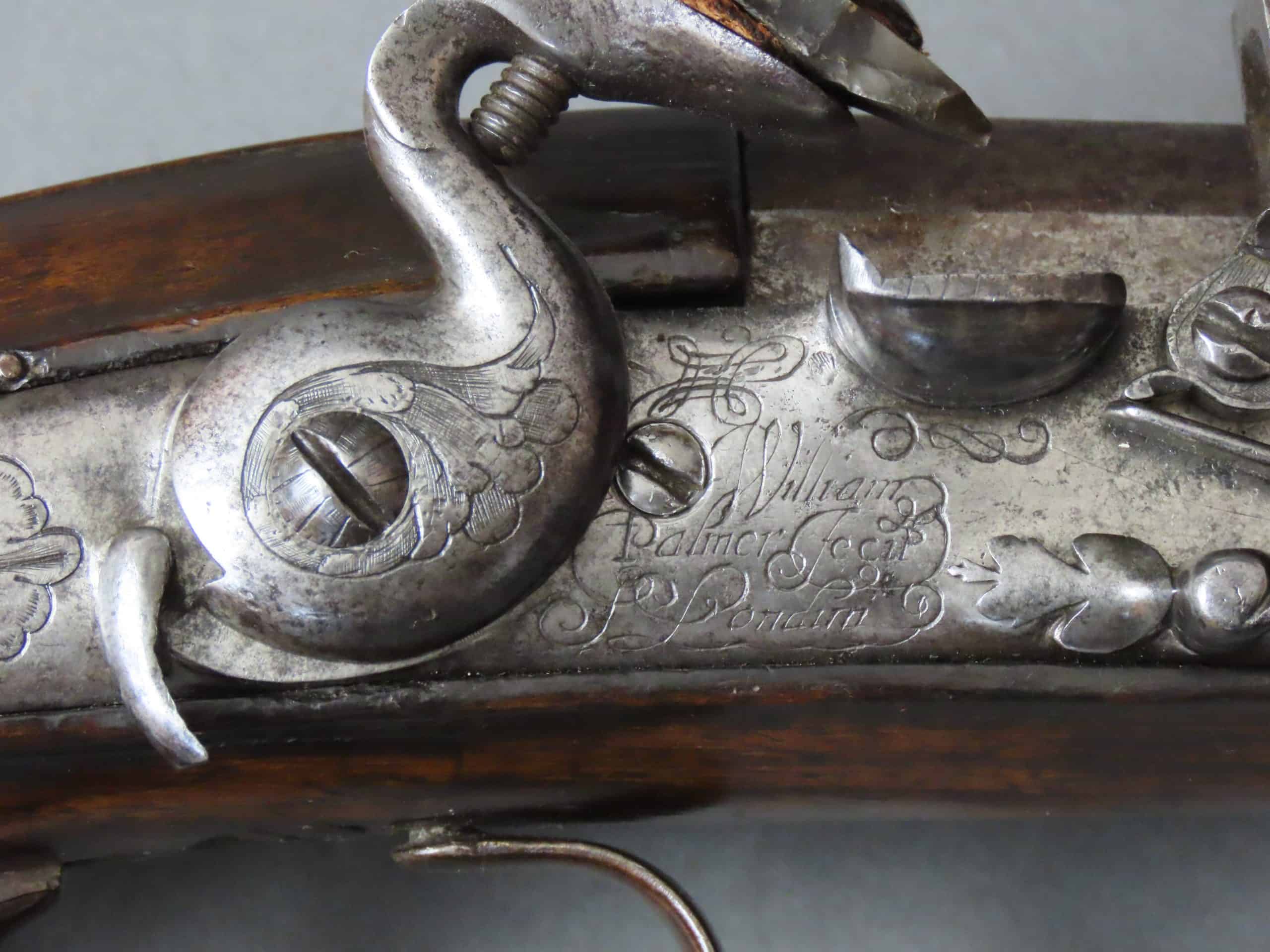
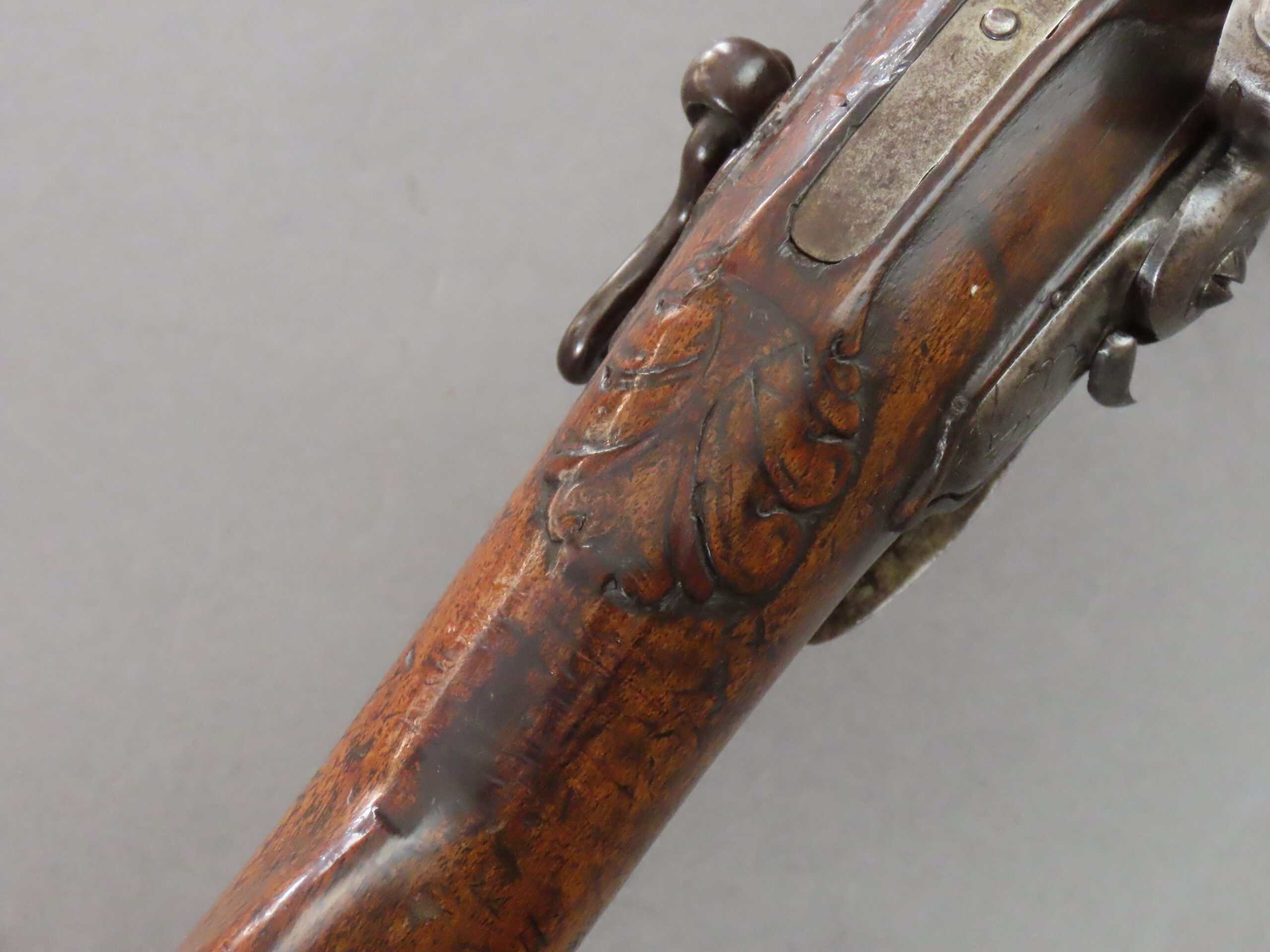
The lock sits in the stock in a moulded surround. The rounded side plate on the off-side opposite the lock, secures the lock through two oppositely directed screws whilst a third provides a swivel head which secures the iron suspension loop for a lanyard. The side plate sits on a raised flattened area shaped like the lockplate. The cock and lockplate are engraved with foliage and scrolls in the typical English manner. The maker’s name is finely engraved in front of the cock on the lockplate “William Palmer fecit Londun” framed by scrolls.
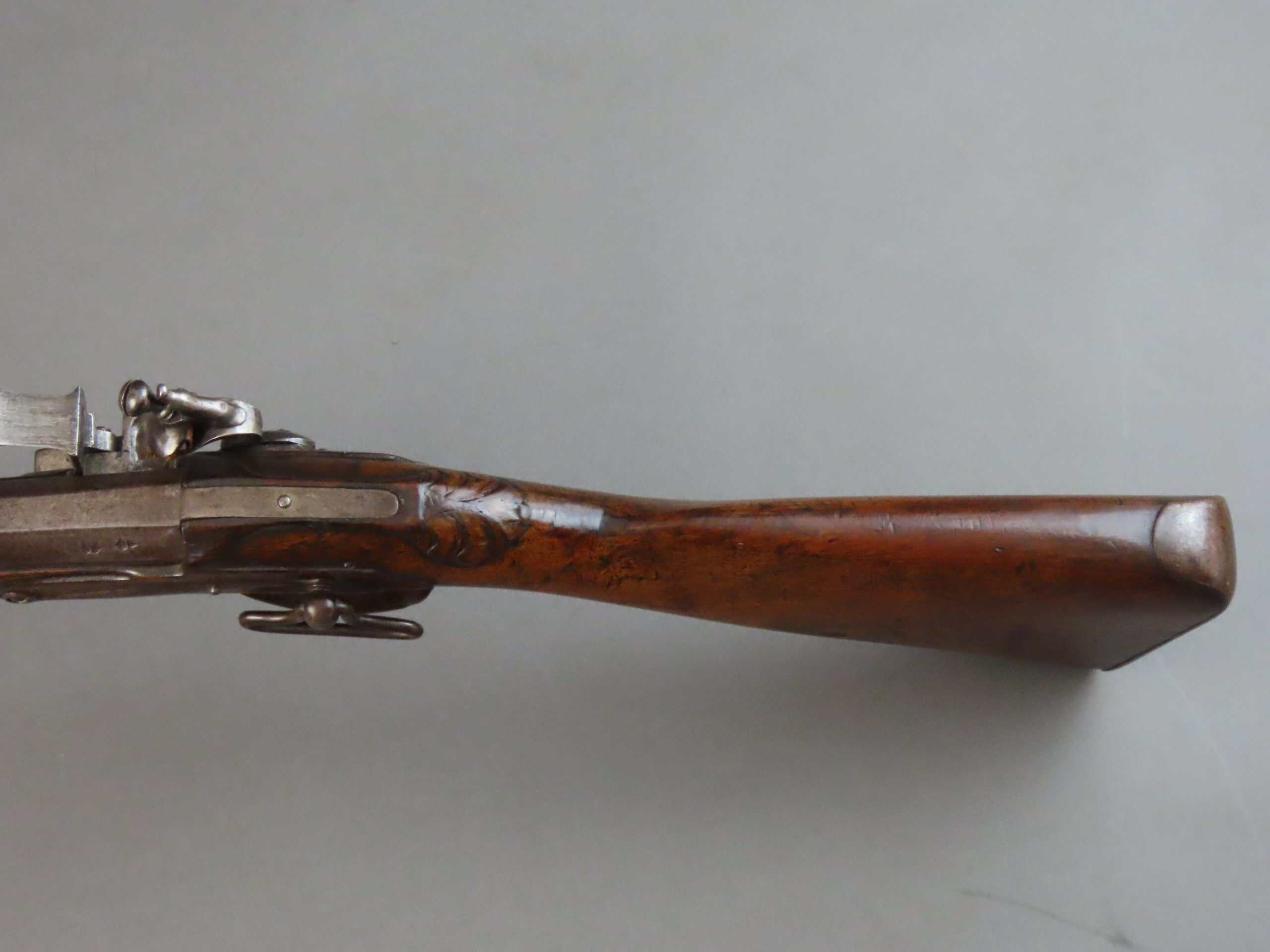
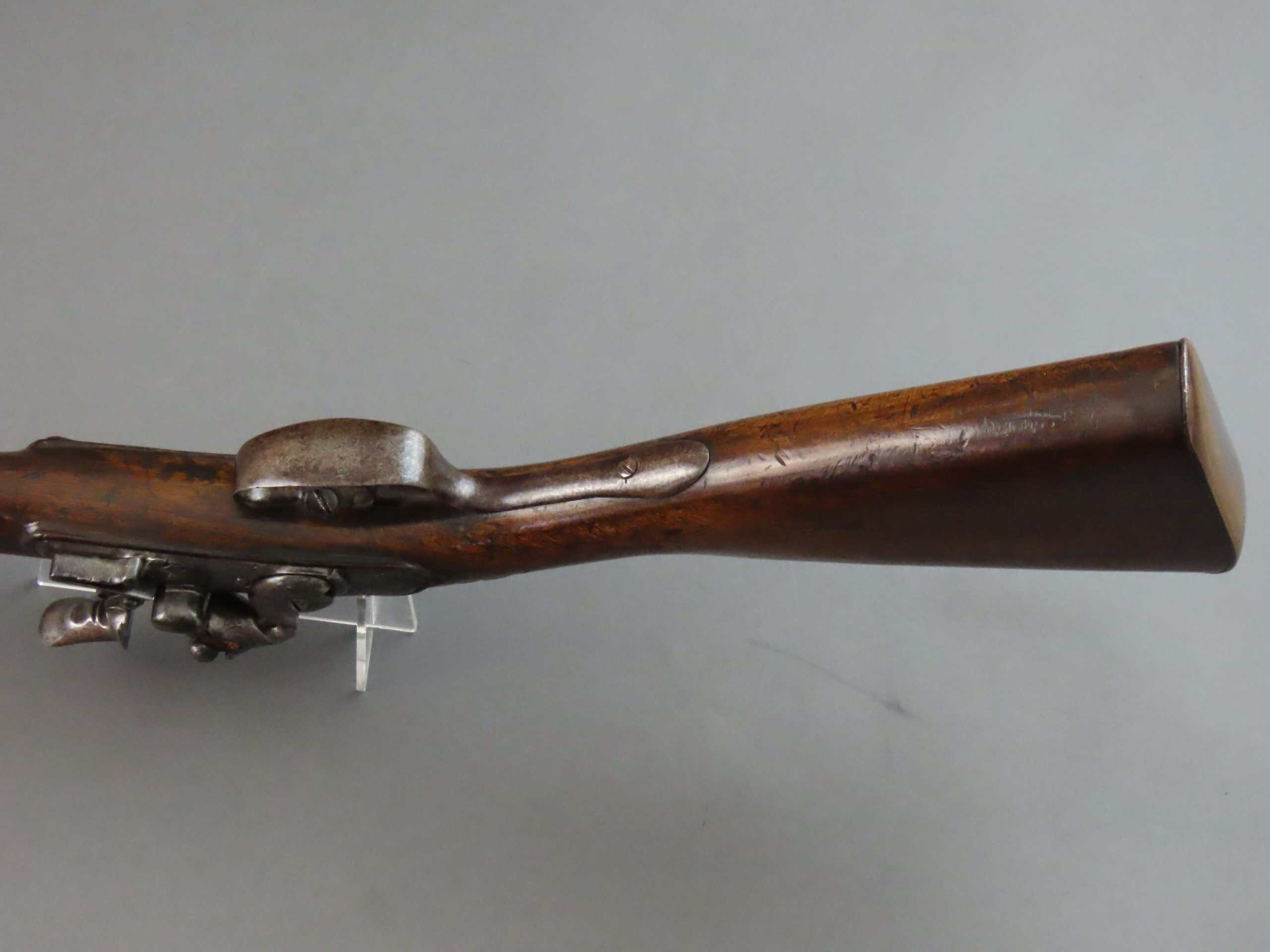
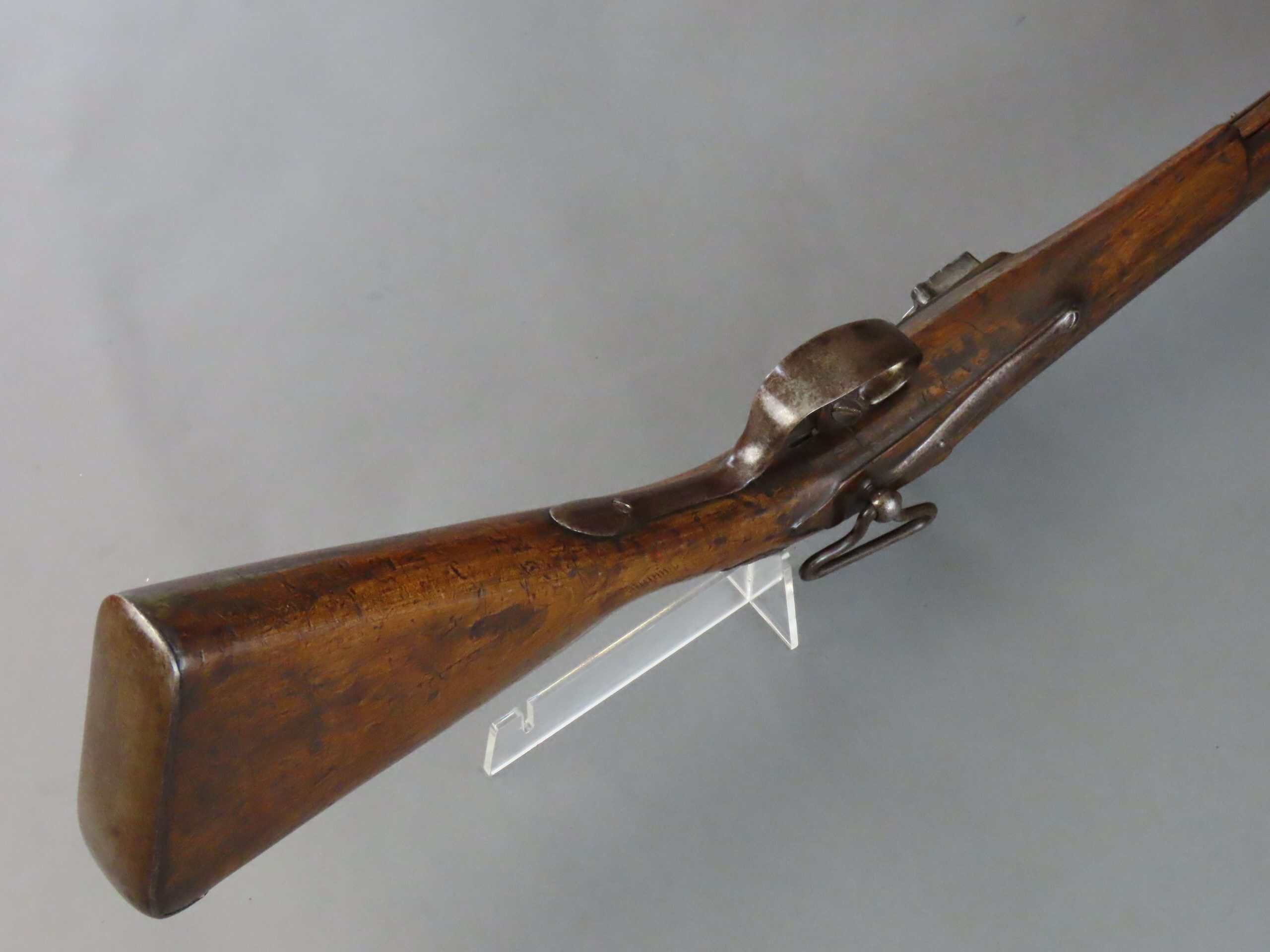
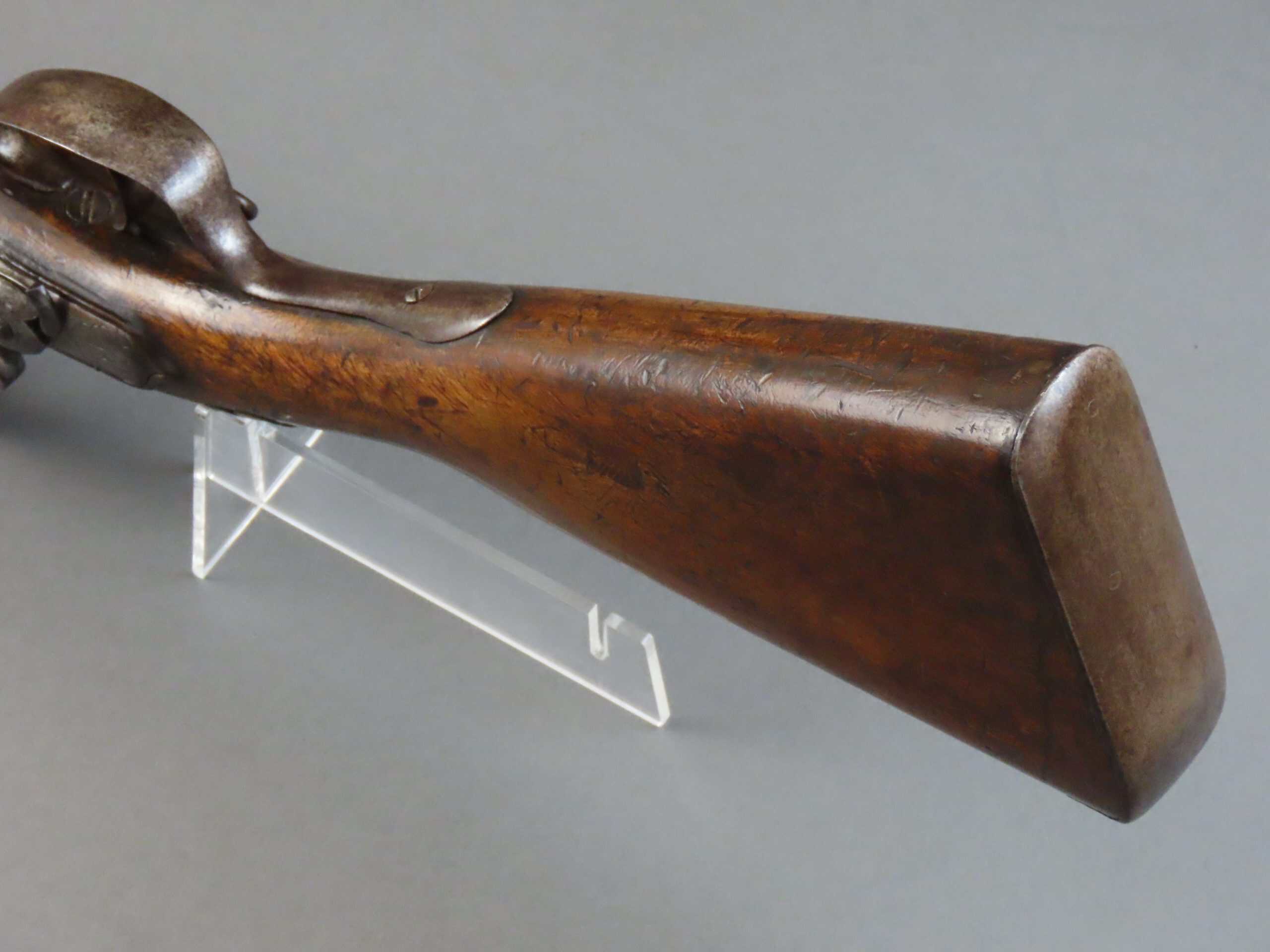
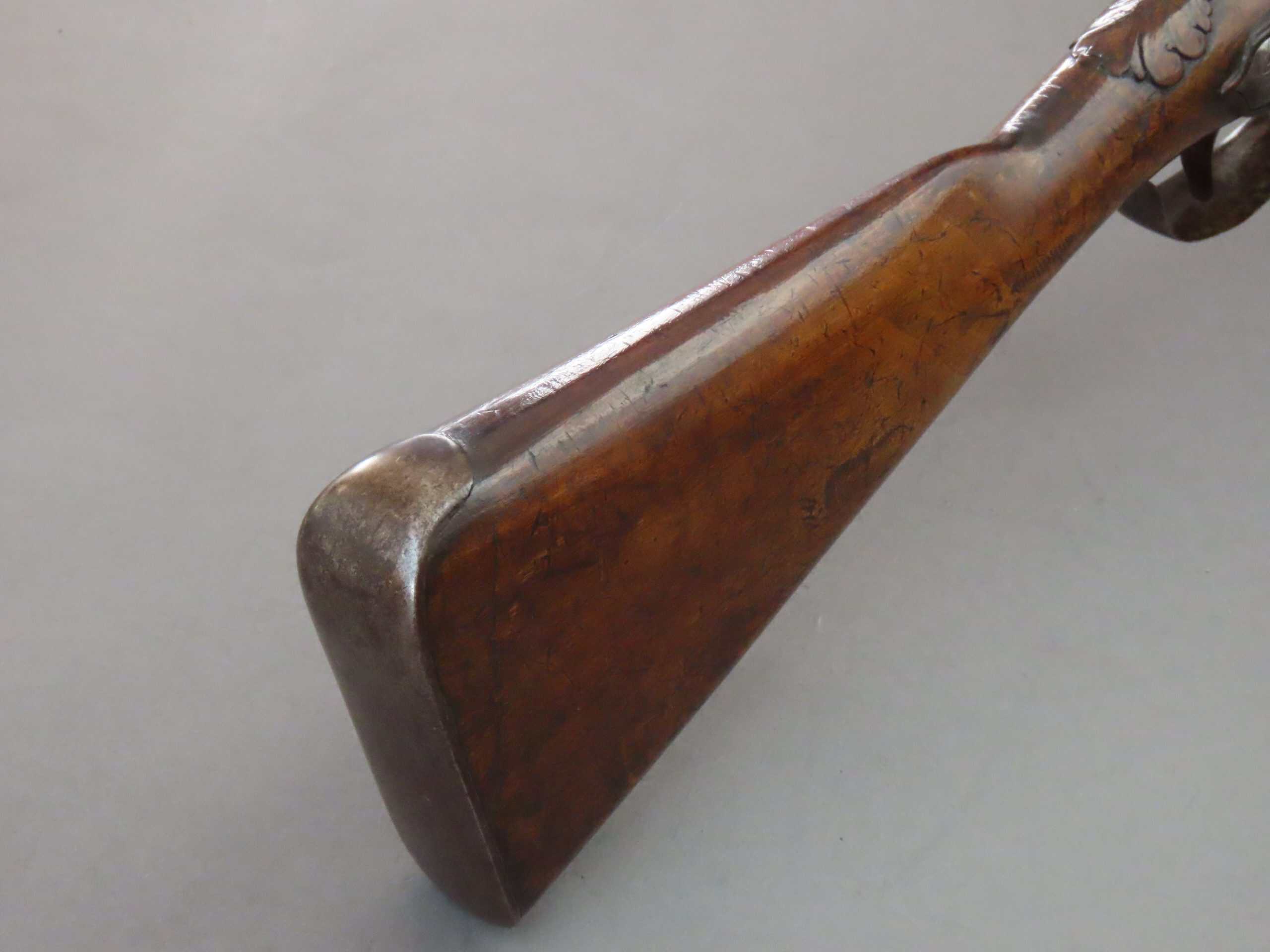
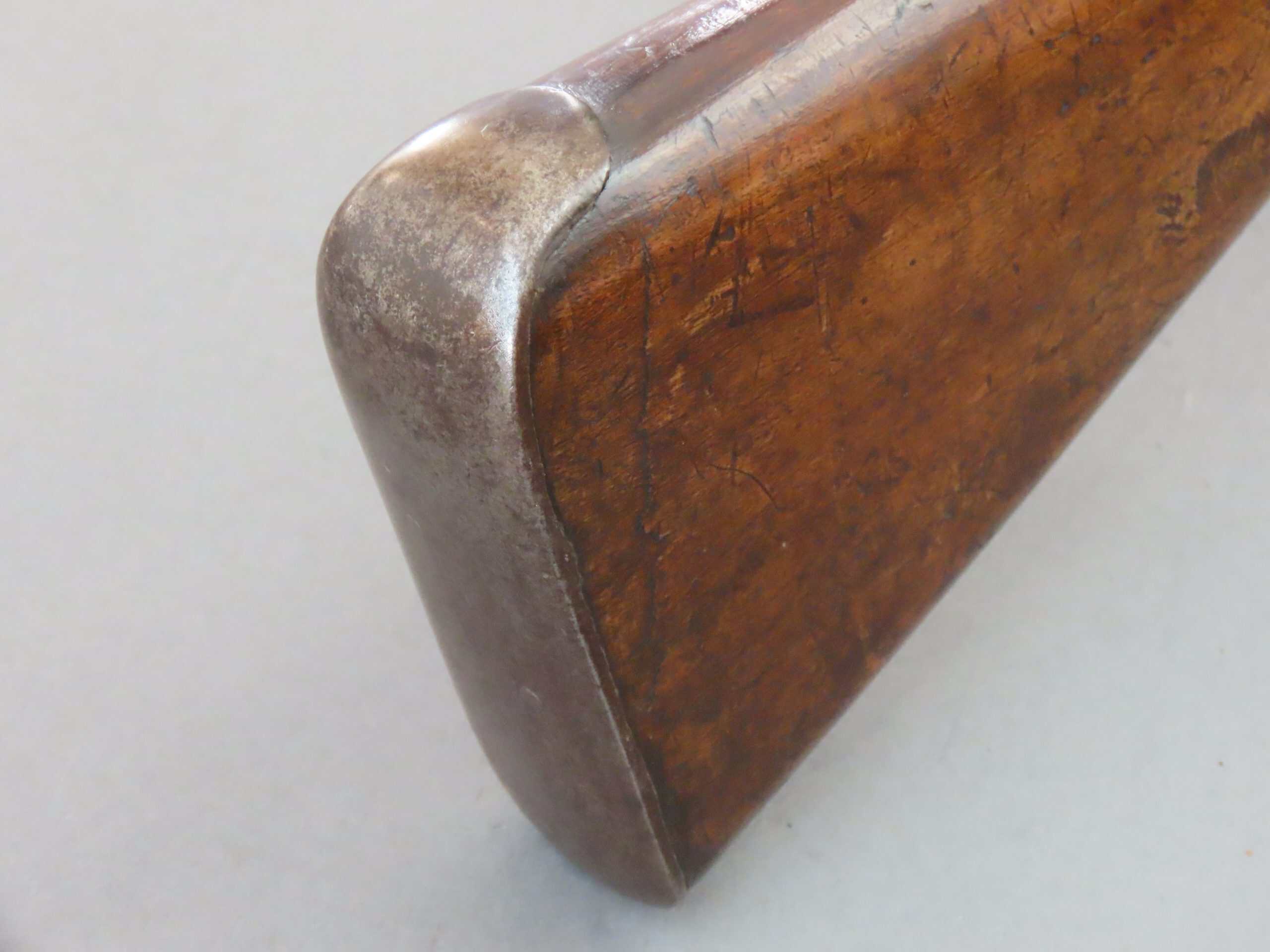
The figured walnut stock is carved with a raised apron around the barrel tang shaped as a fern. The iron butt plate is secured to the stock with flattened iron tacks almost invisibly flush with the surface of the plate. The tapering wooden ramrod is mounted with a thin iron cap and is secured to the stock inside a single ribbed ramrod pipe and the tail tube bored into the stock. The trigger guard is of iron underneath which the head of the screw which secures the barrel tang to the stock on top is visible in front of the trigger in the early manner. The trigger is slightly curved and curls backwards at the tip.
The angle of the wrist of this weapon appears more acute than usual because of the non-vertical angle of the butt plate and narrower stature of the butt which causes a more pronounced slope on top. Too few Musketoons of this age are known for general comparison but the same feature and visual effect is present in some English Civil War period muskets (2) indicating that the feature on this Musketoon dates to the earlier part of the Restoration period.
The Musketoon is in fine overall condition considering its age. The stock has some bruises and a small old repair at the tip of the fore end. The iron parts possess an attractive smooth aged patination as does the stock which has a rich chestnut colour darkened in the recesses.
(1) See Howard L Blackmore, “A Dictionary of London Gunmakers 1350-1850”, Phaidon Christie’s Oxford, 1986, page 153.
(2) For example see the muskets of various types published in Thom Richardson and Graeme Rimer, “Littlecote”, Royal Armouries, 2012, XII.5341(M26), XII.5371(M56) and the carbines, XII.5467(C8), XII.5474(C15), and page 33 bottom, Howard L Blackmore, British Military Firearms 1650-1850, Cox & Wyman Limited, 1961.