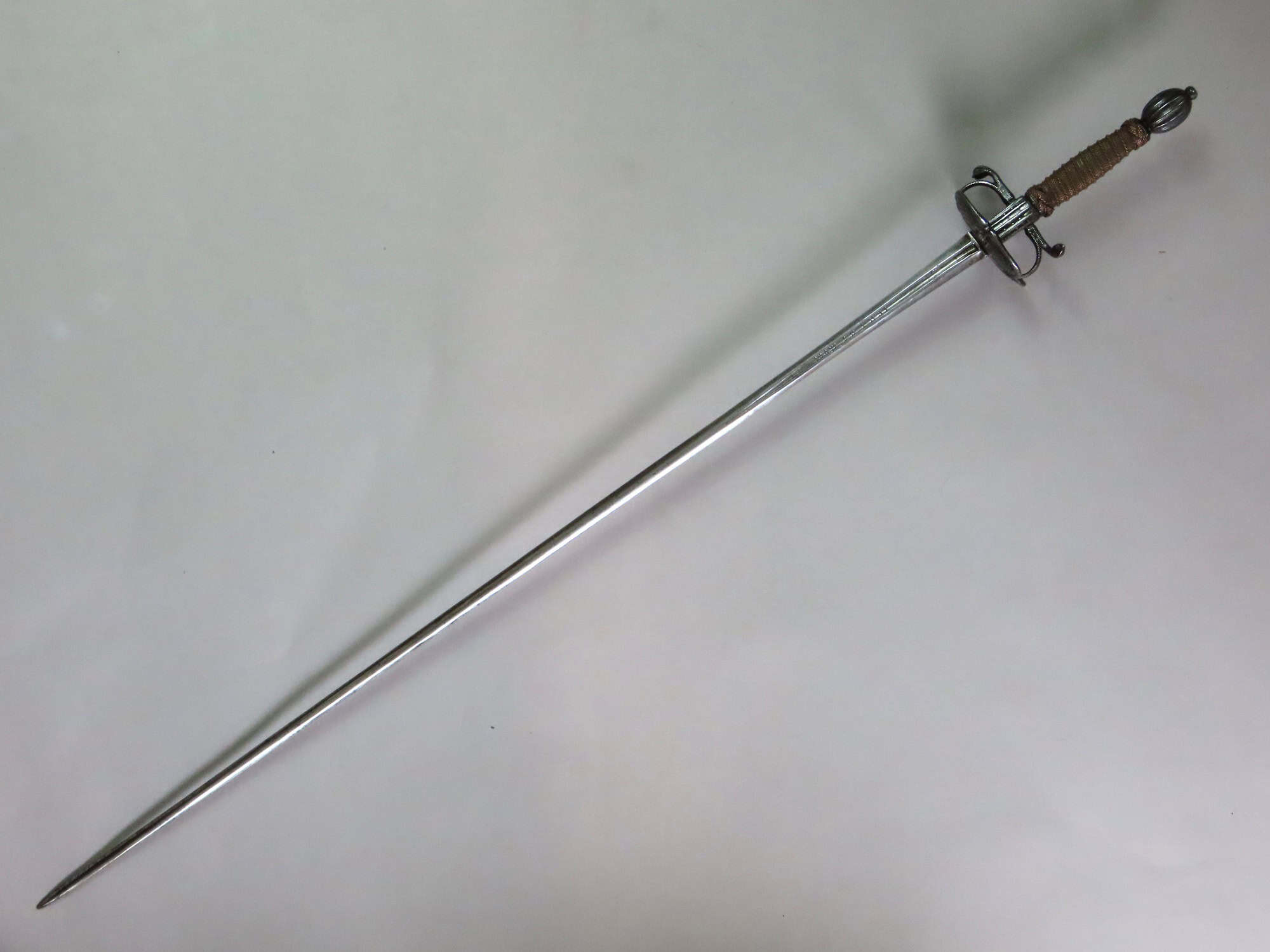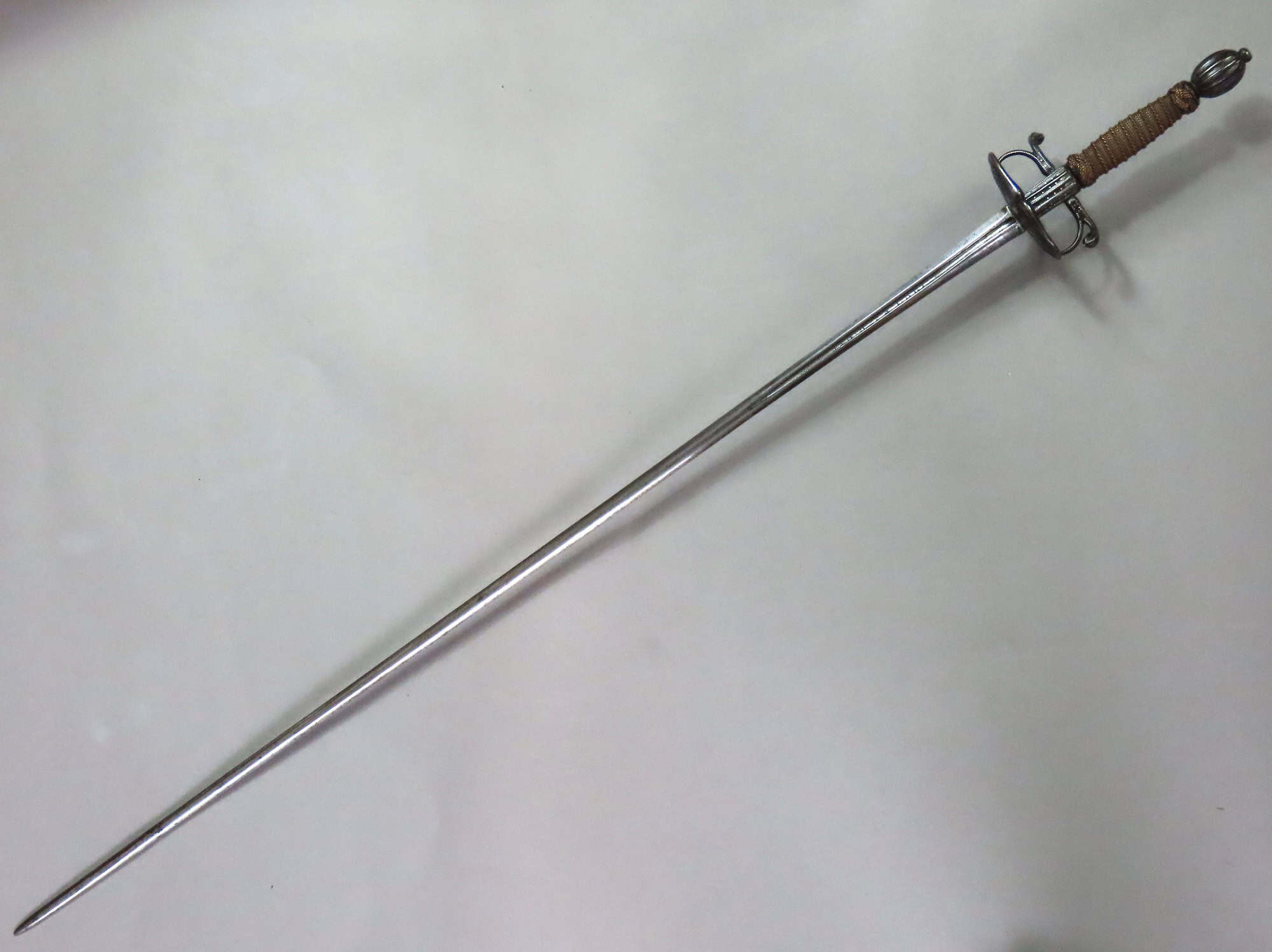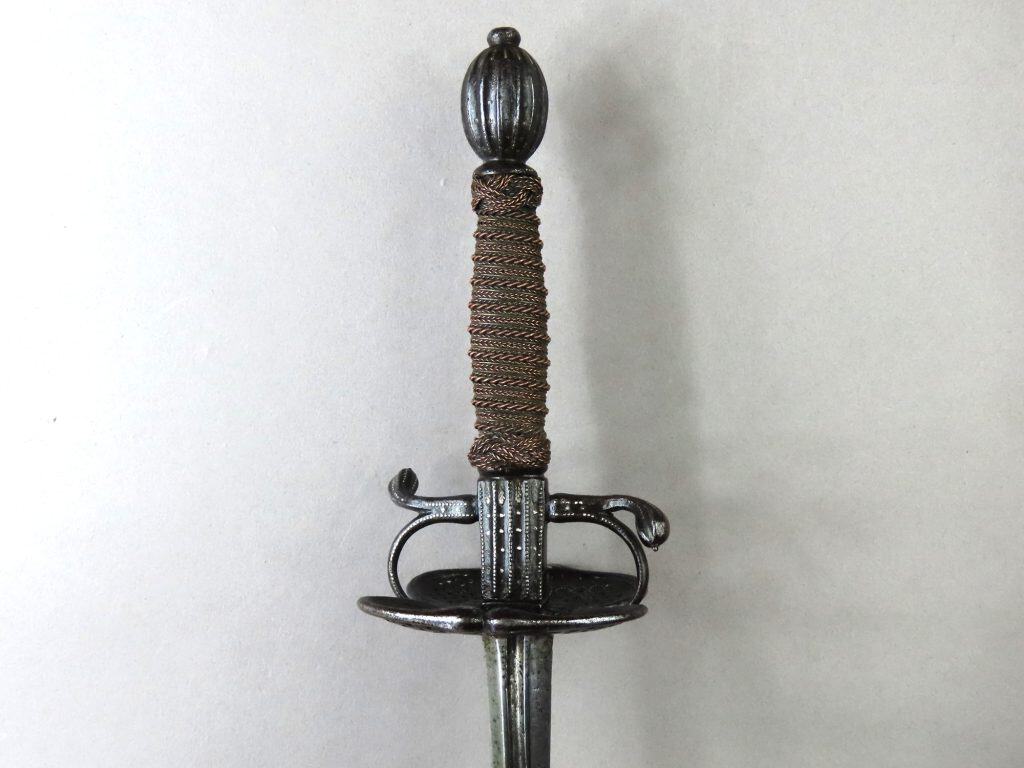
A Rare mid 17th century Silver Encrusted English Transitional Rapier / Small Sword
To enquire about this itemplease click here
Price: £4,450
Ref: 62040762
Item Description
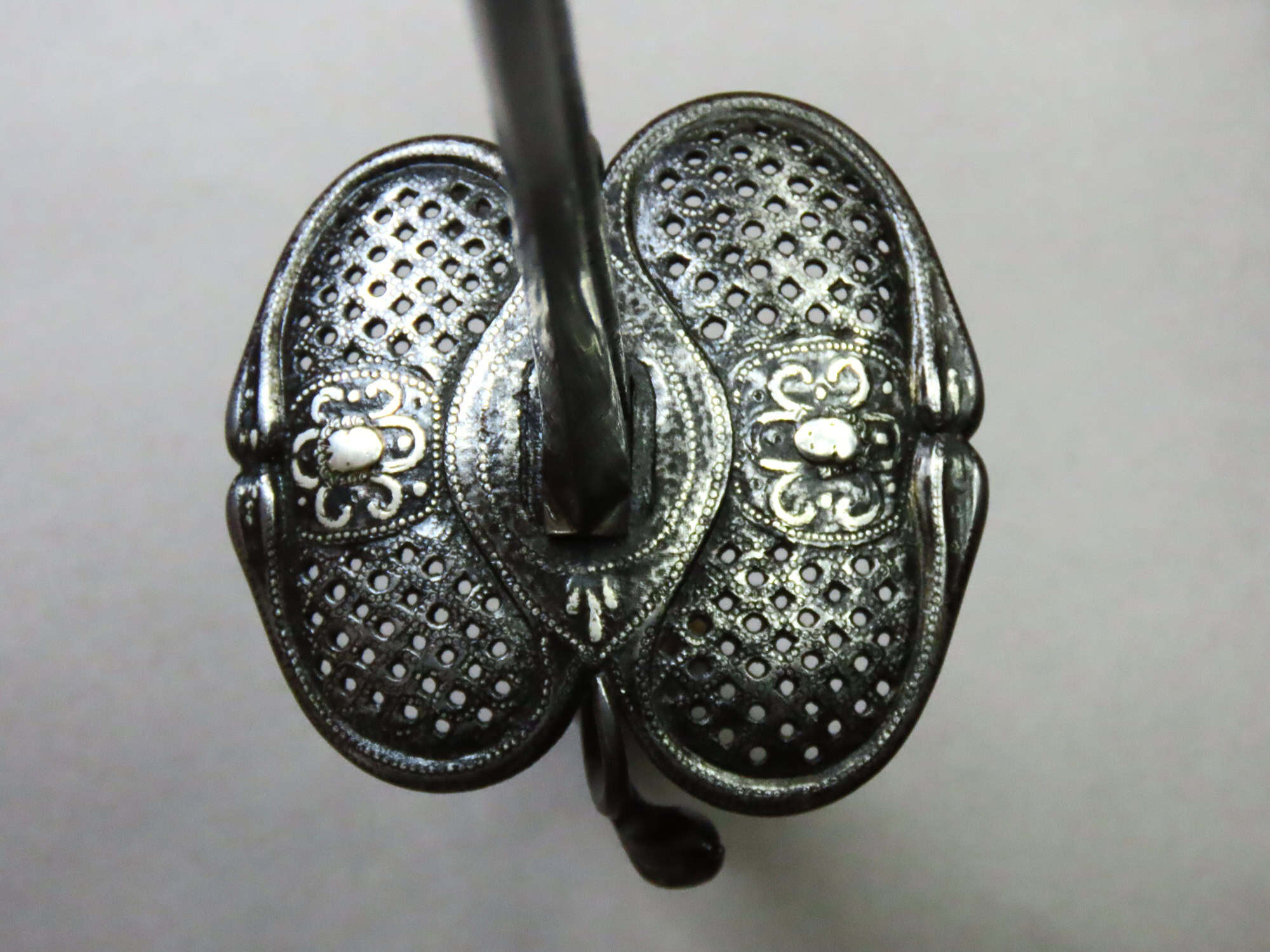
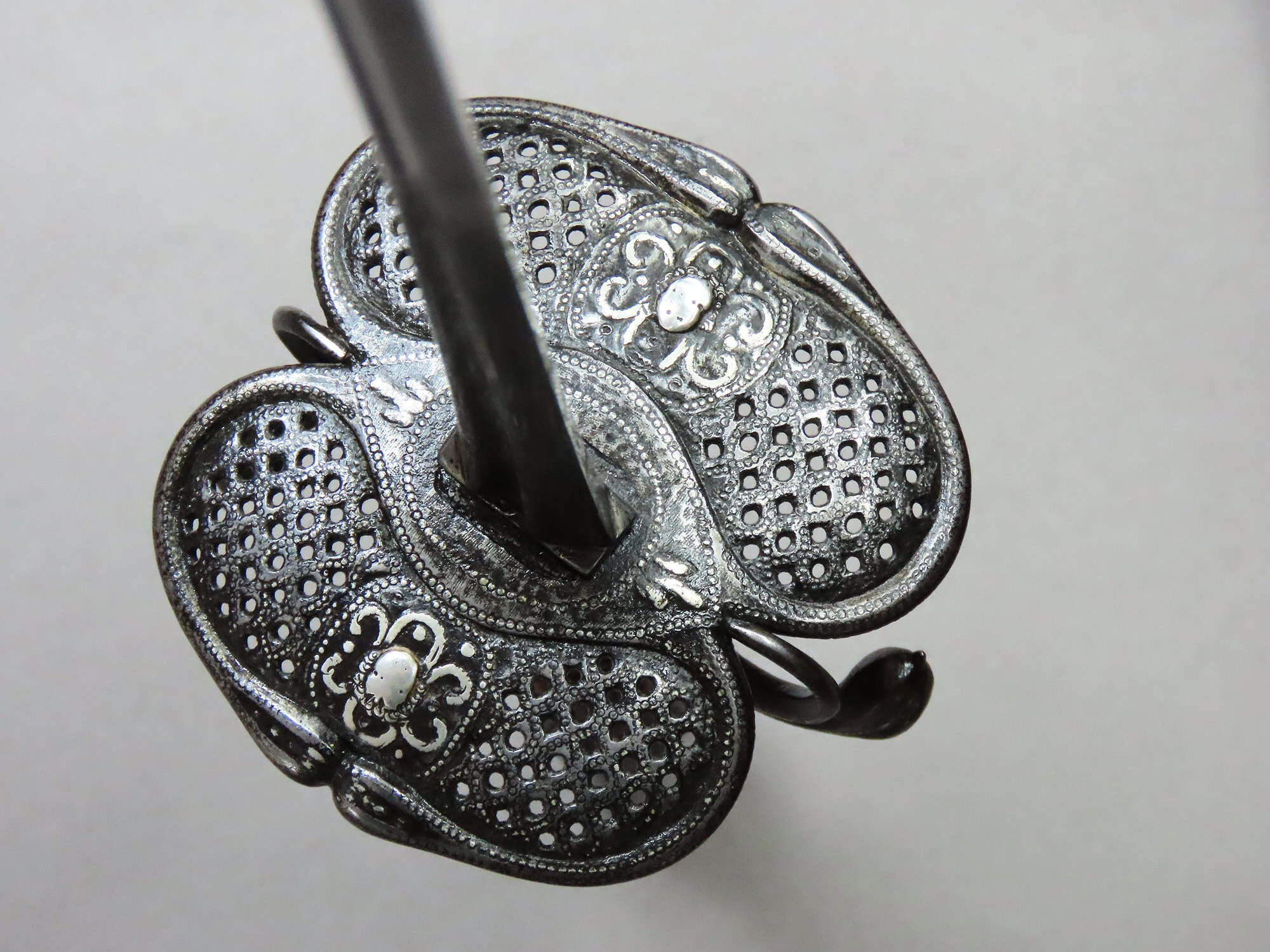
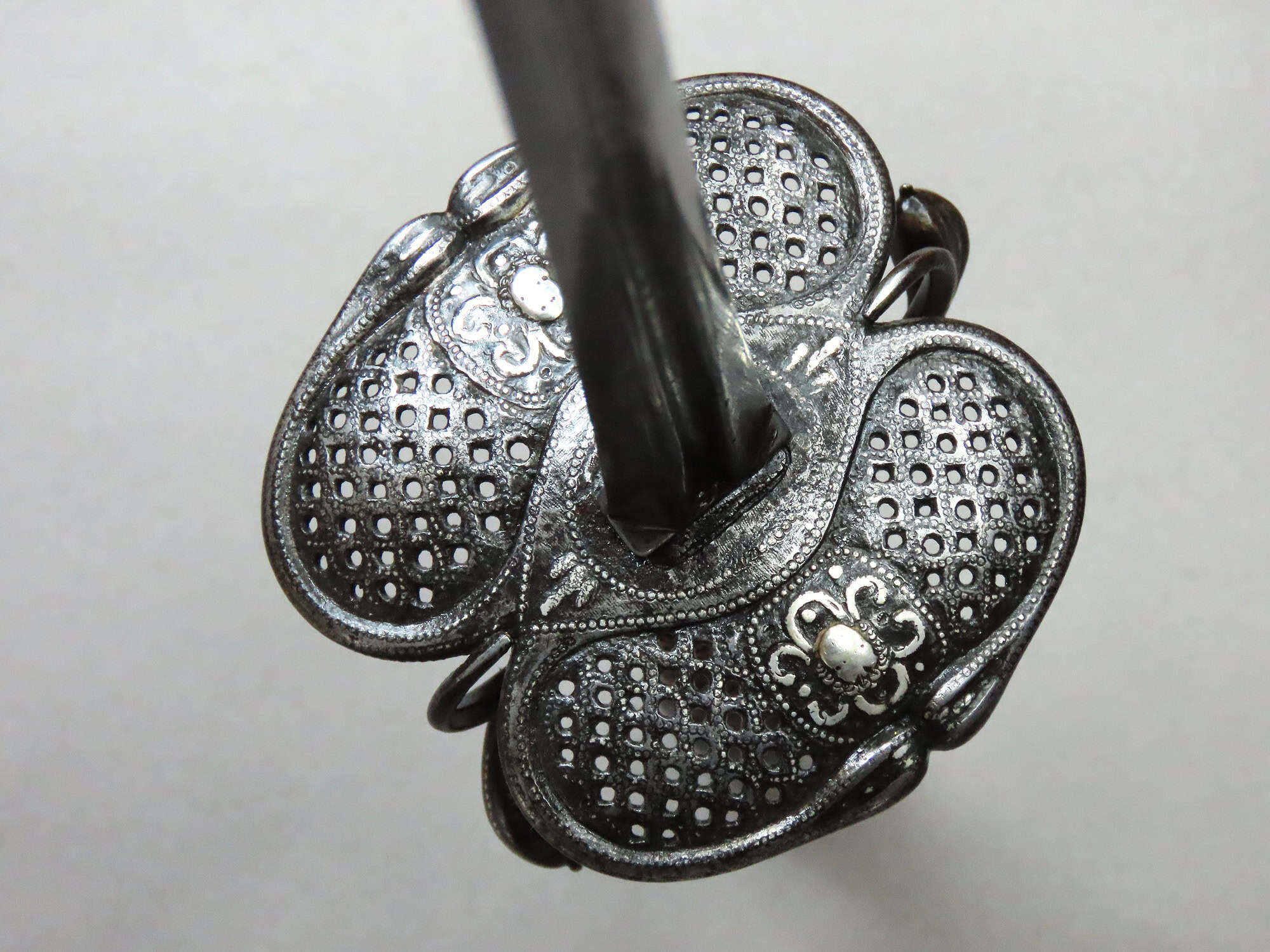
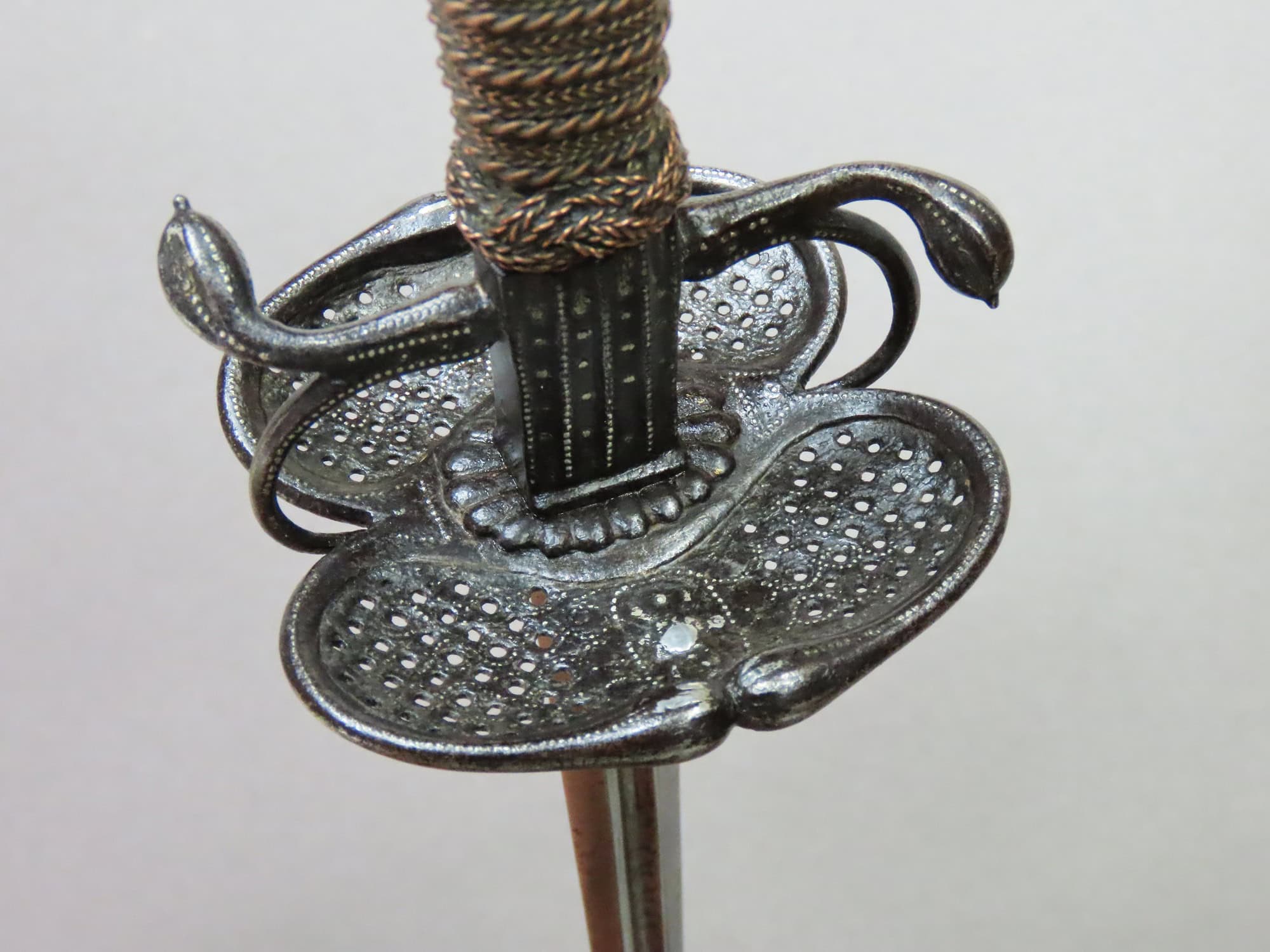
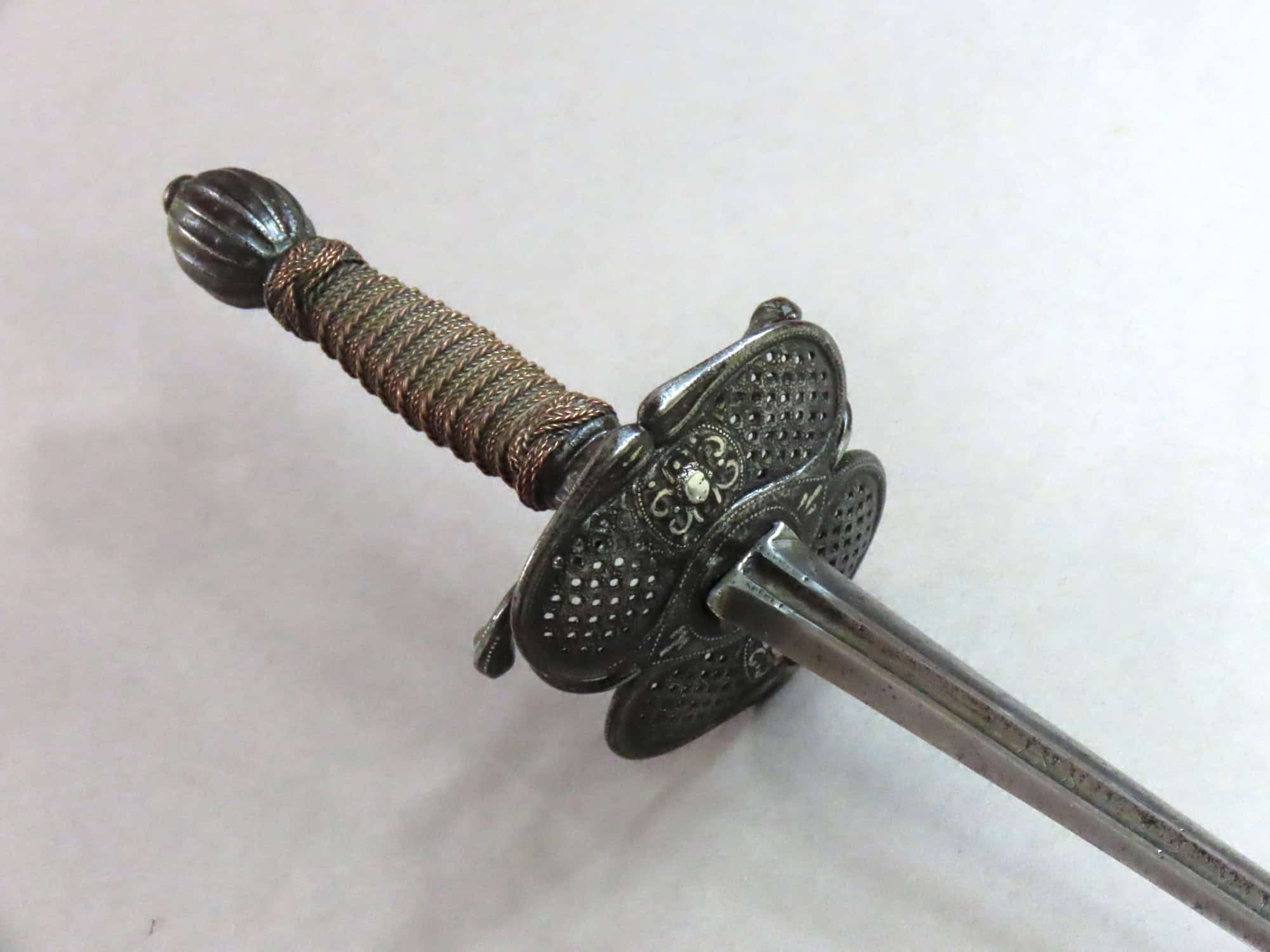
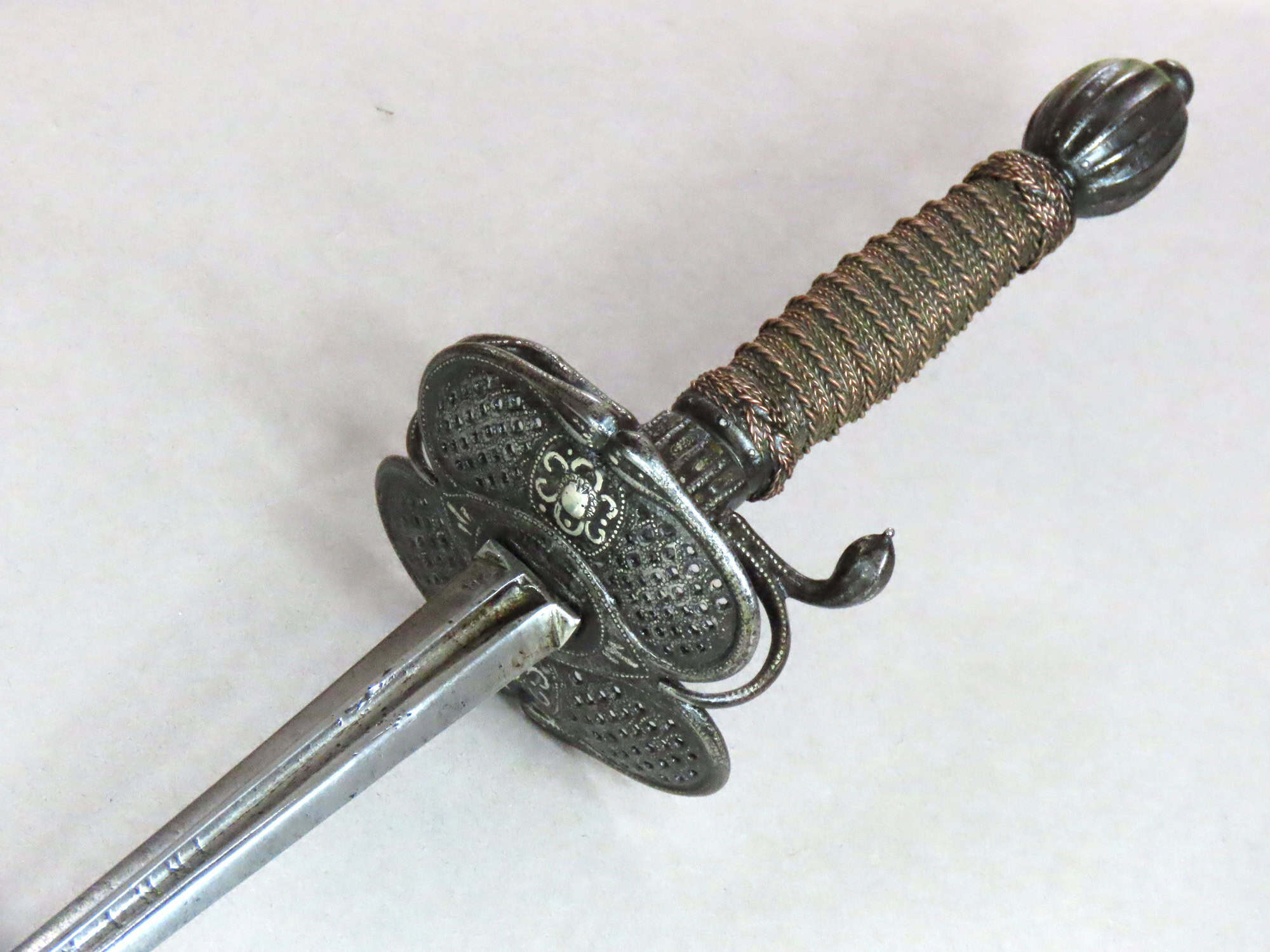
A fine and attractive English Transitional Rapier / Small Sword with a blackened and silver encrusted hilt dating to the mid 17th century. This rare type of hilt decoration was reserved for the nobility and gentry as contemporary portraits show. Many surviving examples are in institutional collections and those still in private hands rarely come up for sale.
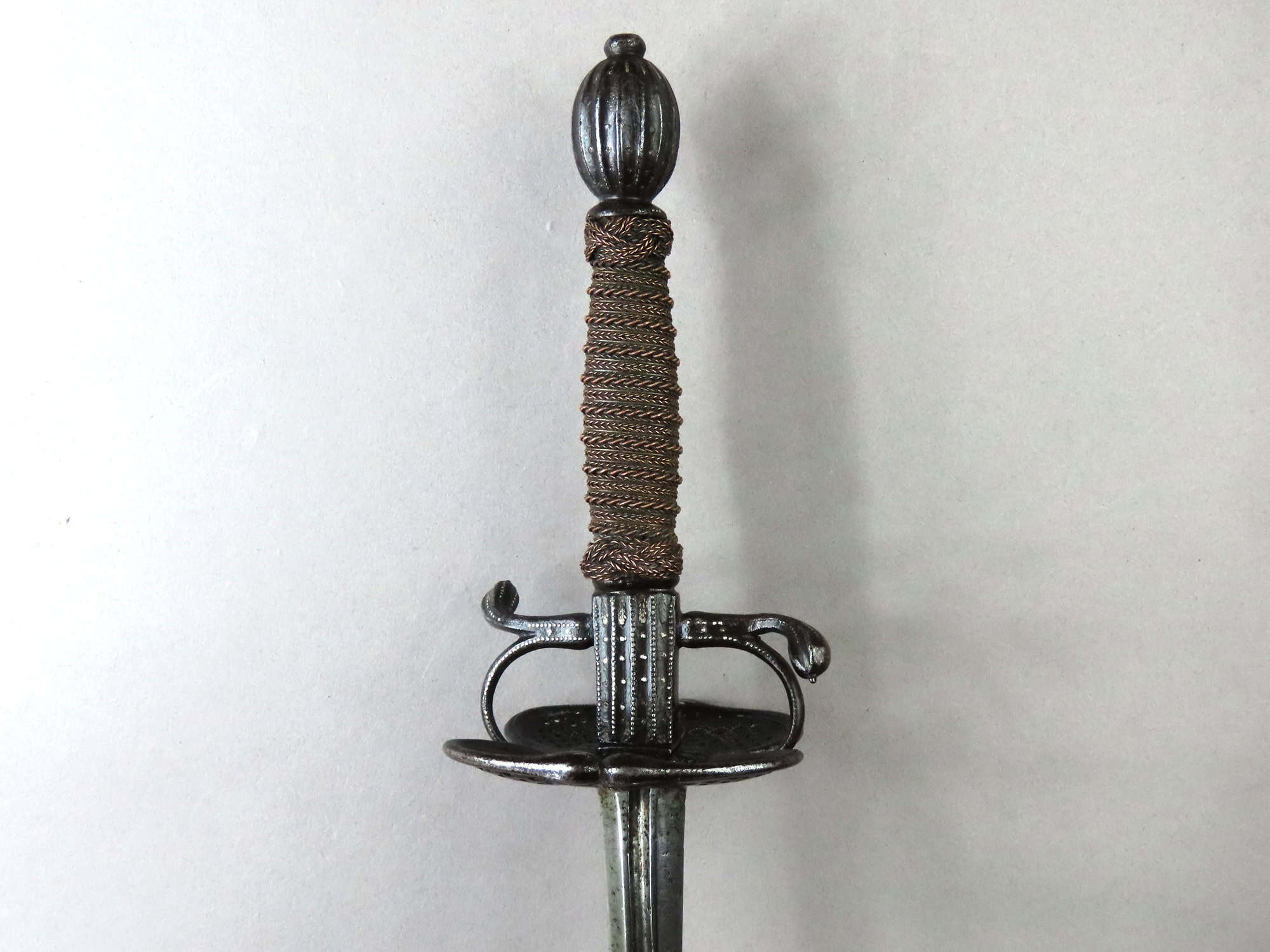
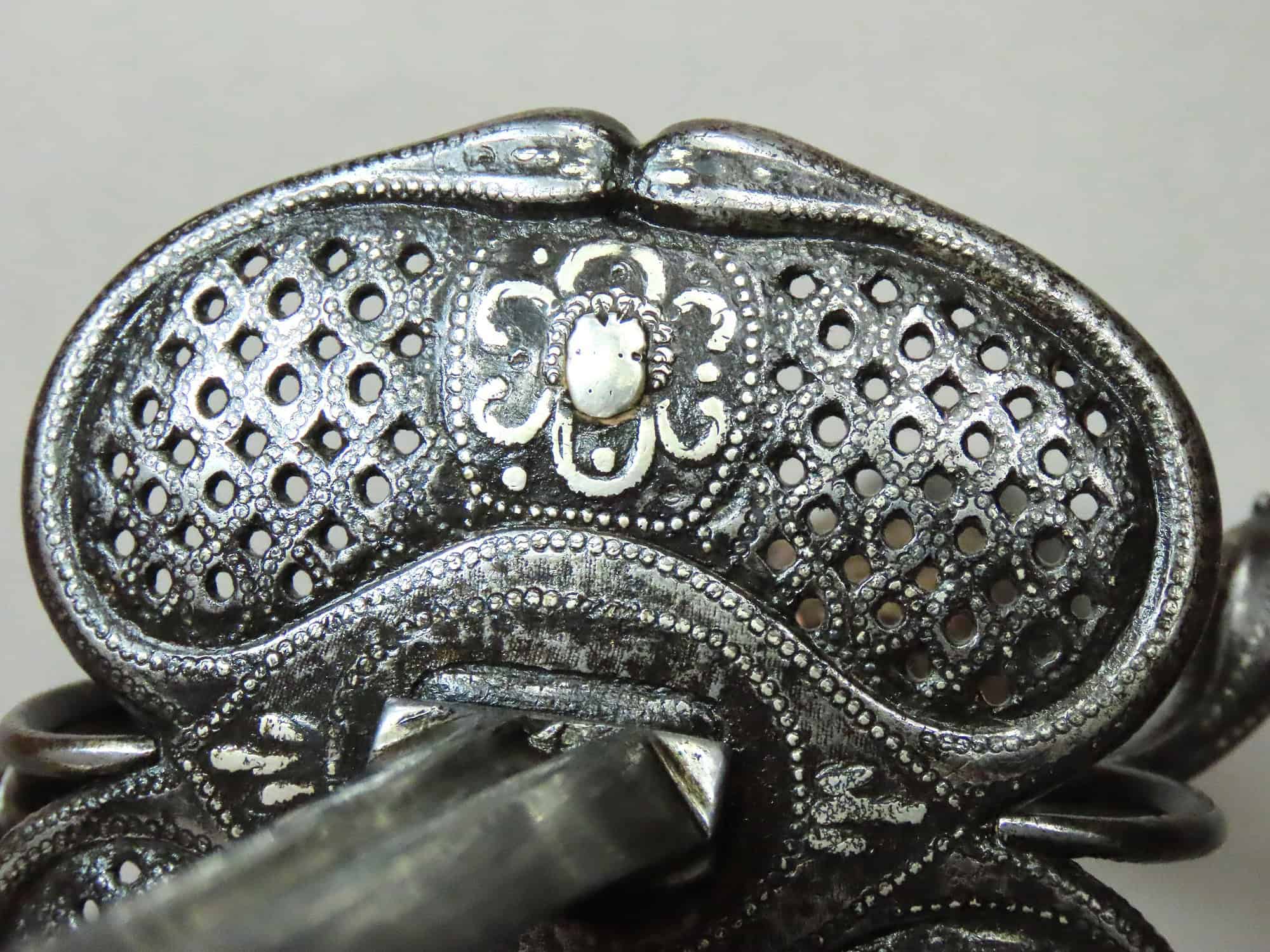
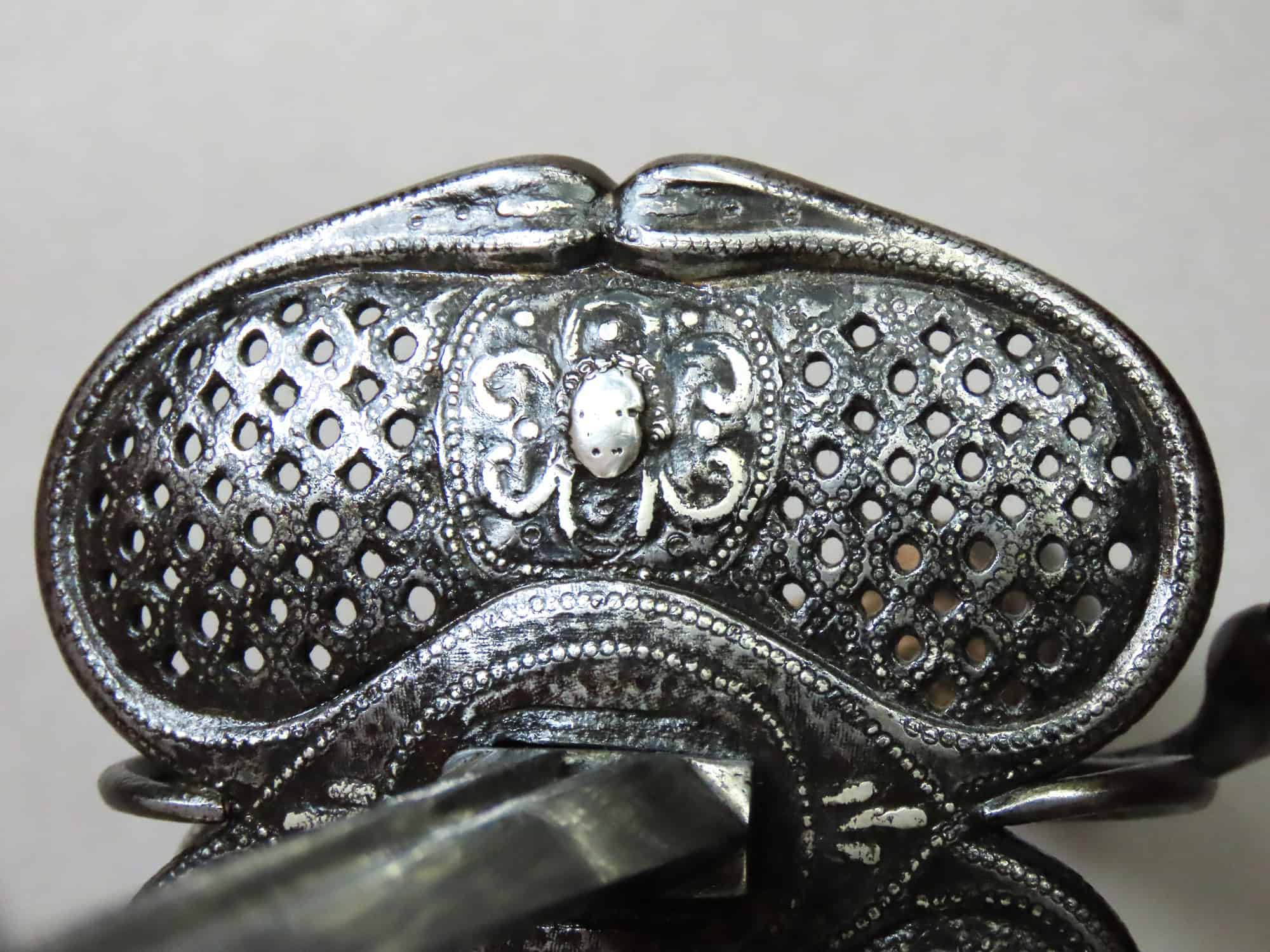
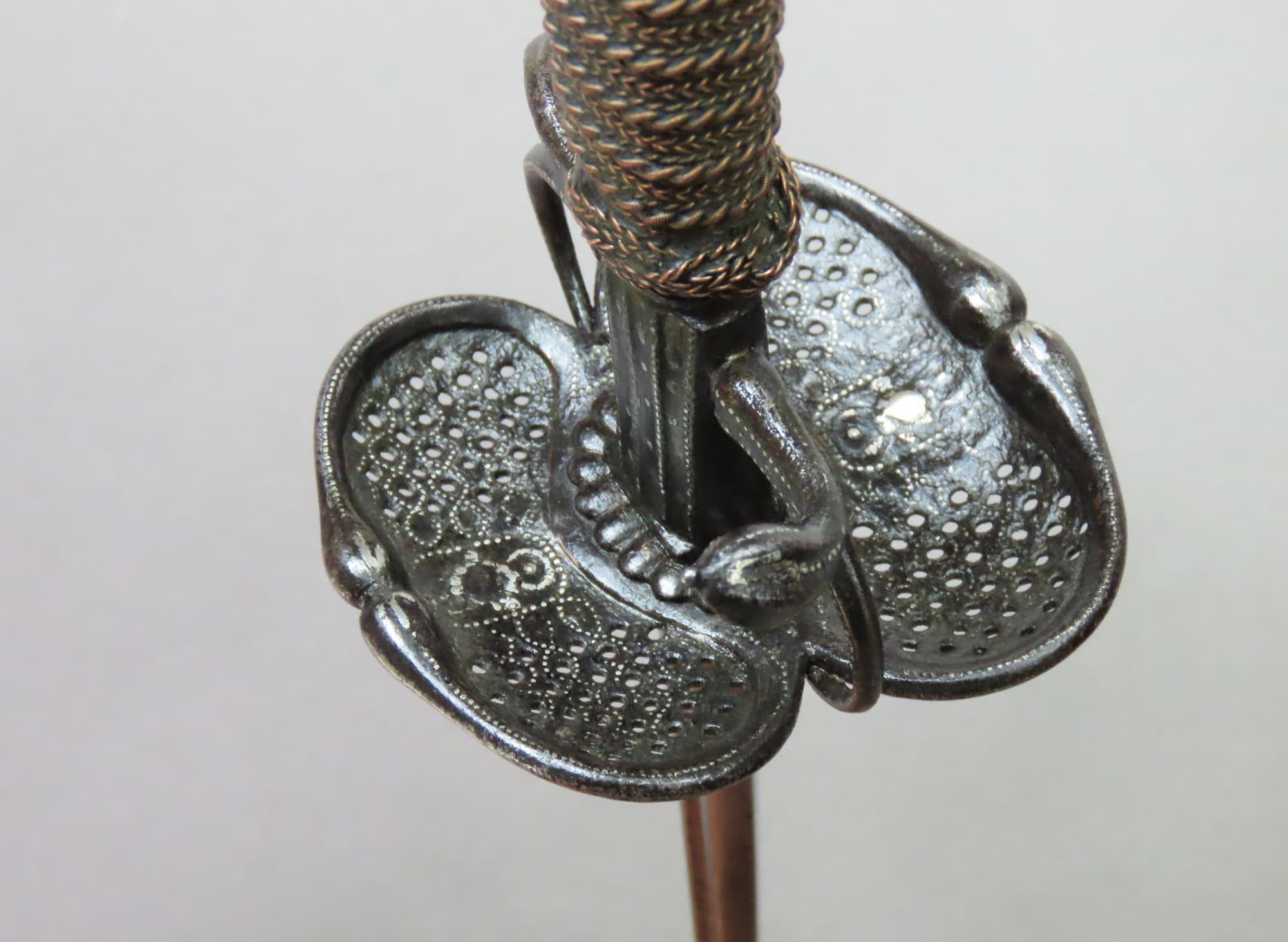
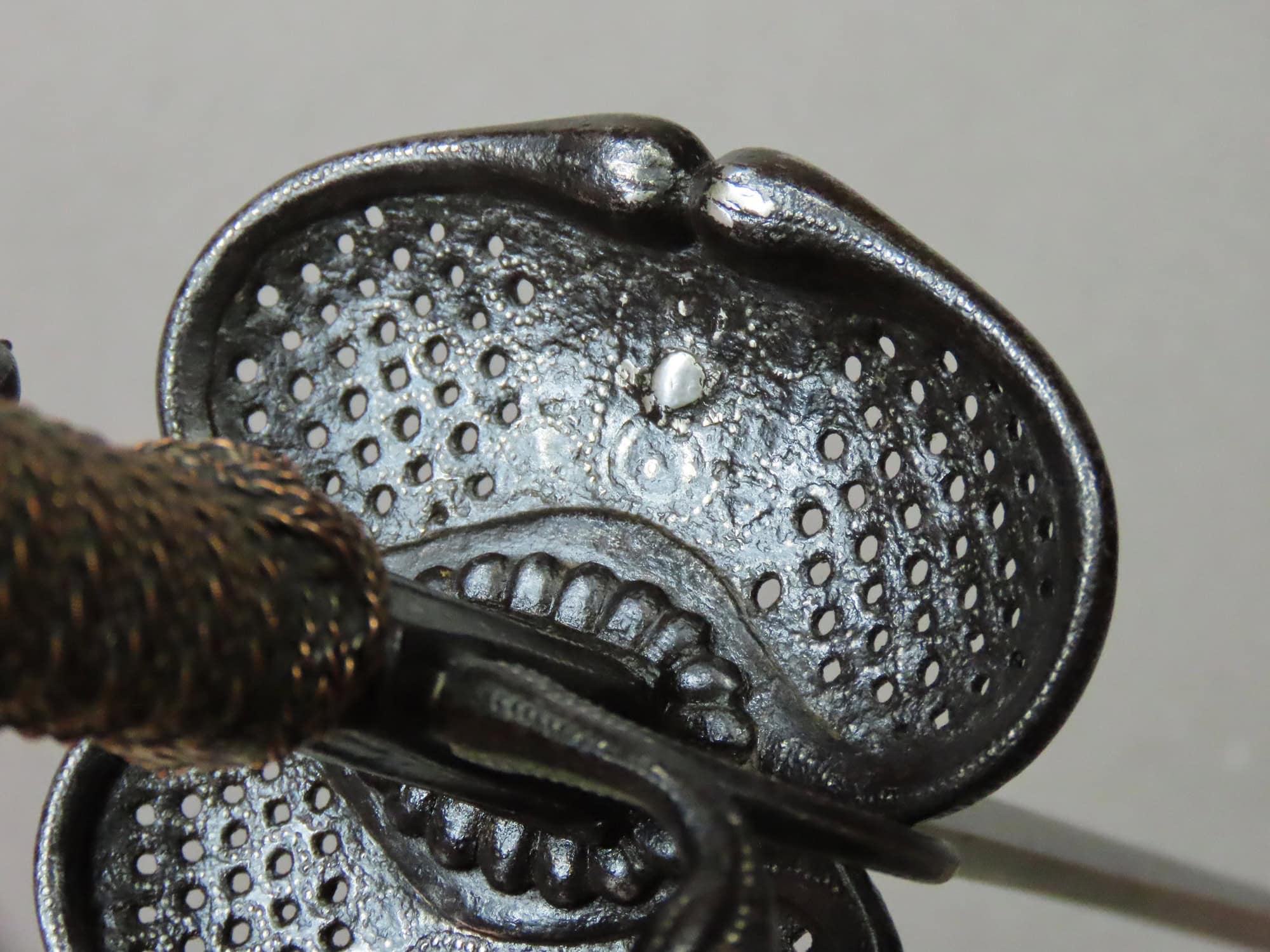
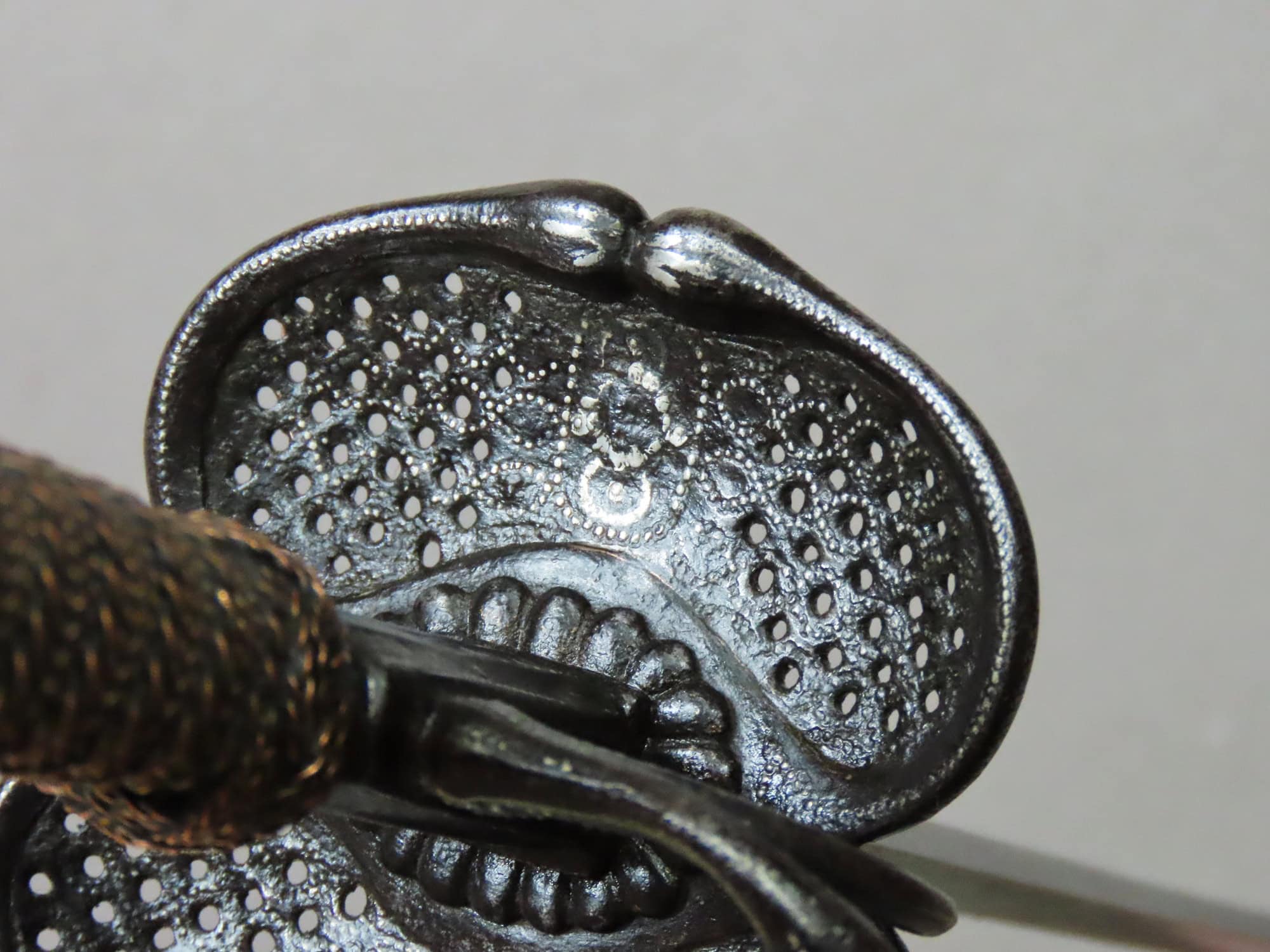
The iron surfaces of the hilt have been delicately chiselled into linear patterns, designs and shapes, including winged cherubs’ heads in raised relief. The hilt has then been blackened and the raised shapes and other features encrusted with silver highlighted by lines of individually applied minute silver dots which markedly contrasts with the blackened background to give a striking appearance. This decorative technique required more time, skill and silver than was needed in standard contemporary silver gilding and was much more expensive to carry out.
The technique was only applied to the best manufactured English swords of the time including rapiers, riding swords, pillow swords, robe swords, basket hilted swords and to transitional swords like that described here, which is the only surviving example that we are aware of finished in this manner. The technique seems to have arrived in England in the late 16th century from Europe and tailed off in the Restoration period. At this time transitional swords like this one were replacing rapiers in popularity and eventually evolved into silver hilted small swords of distinctly English type in the later 17th century.
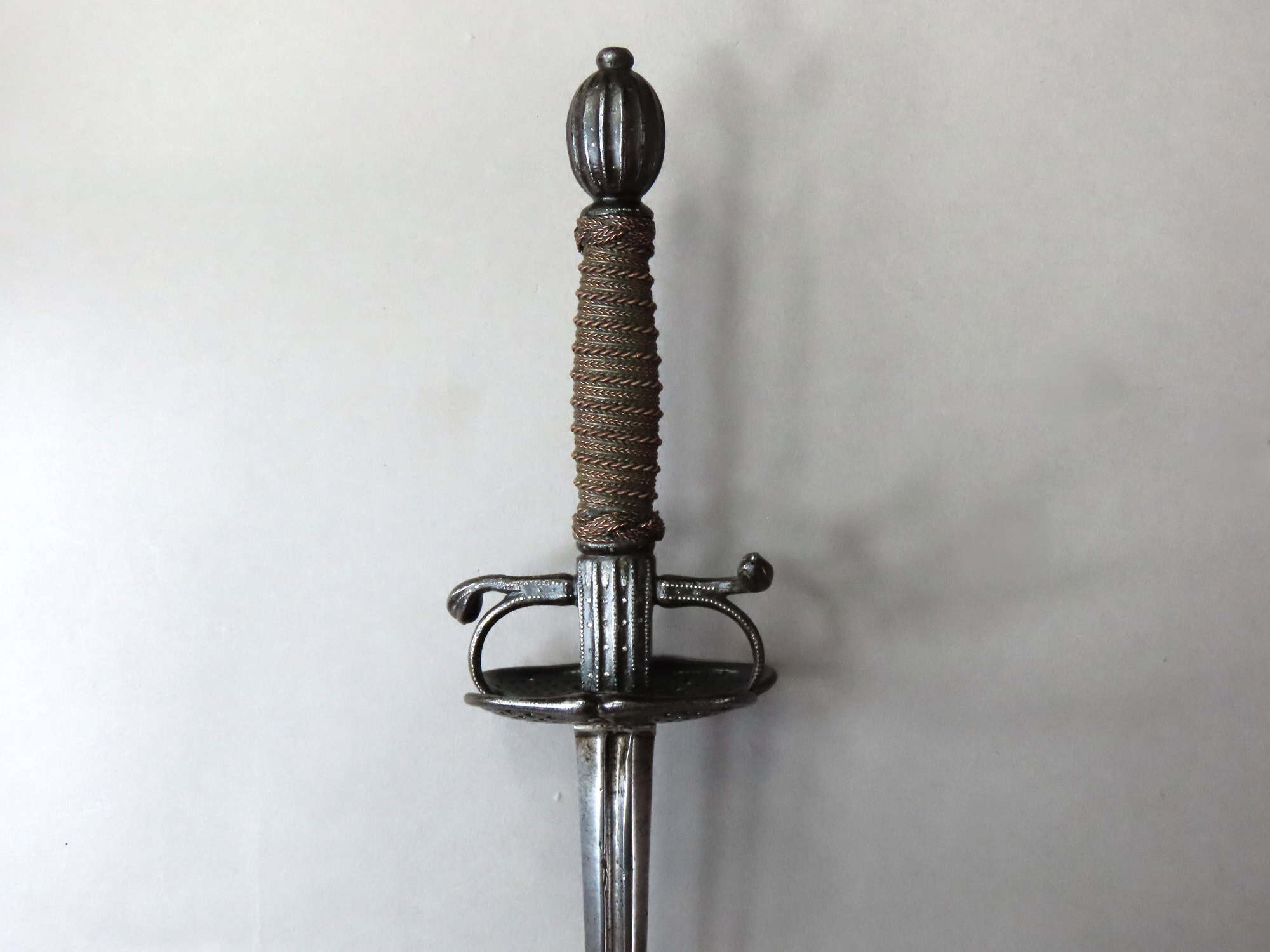
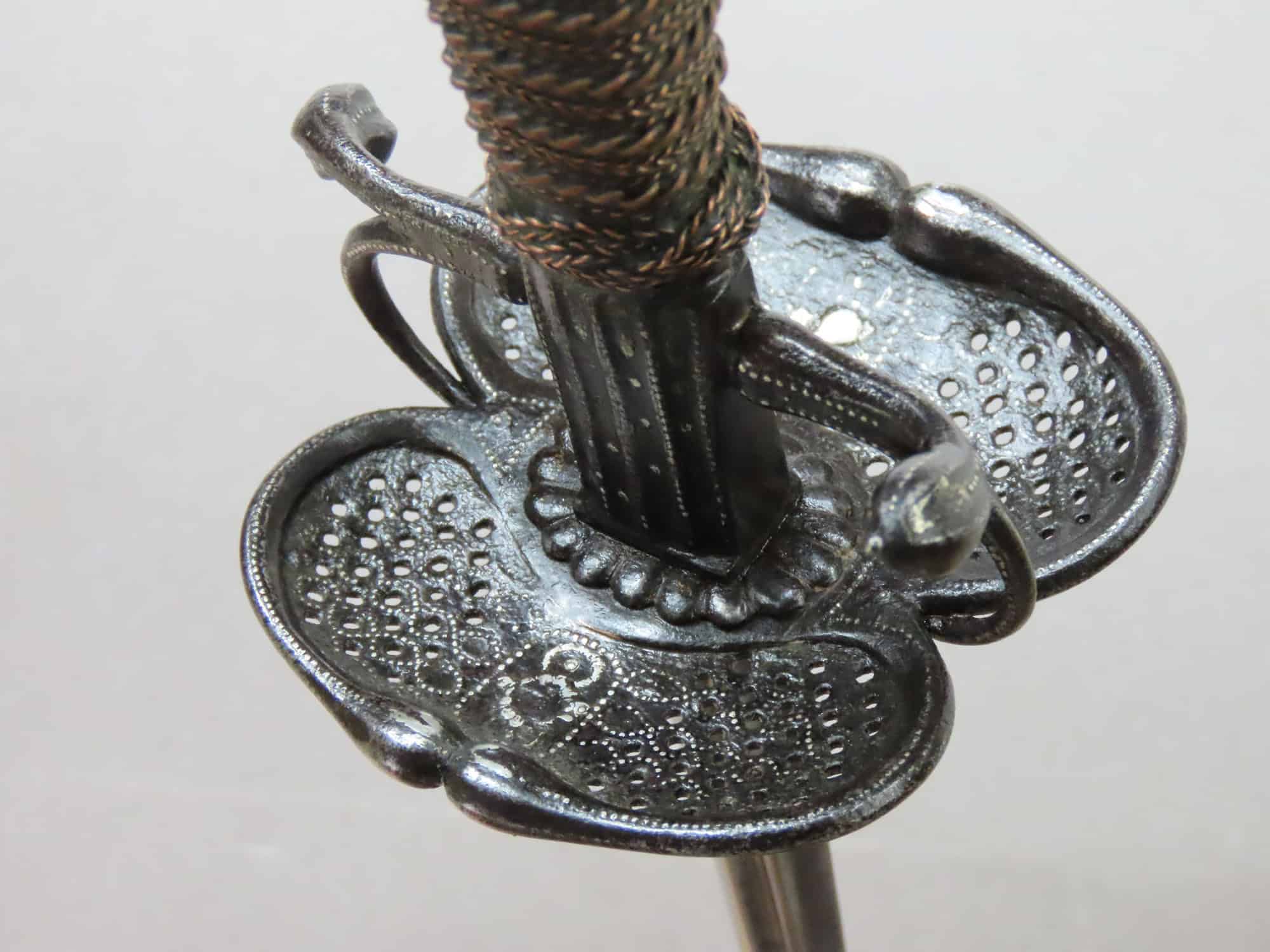
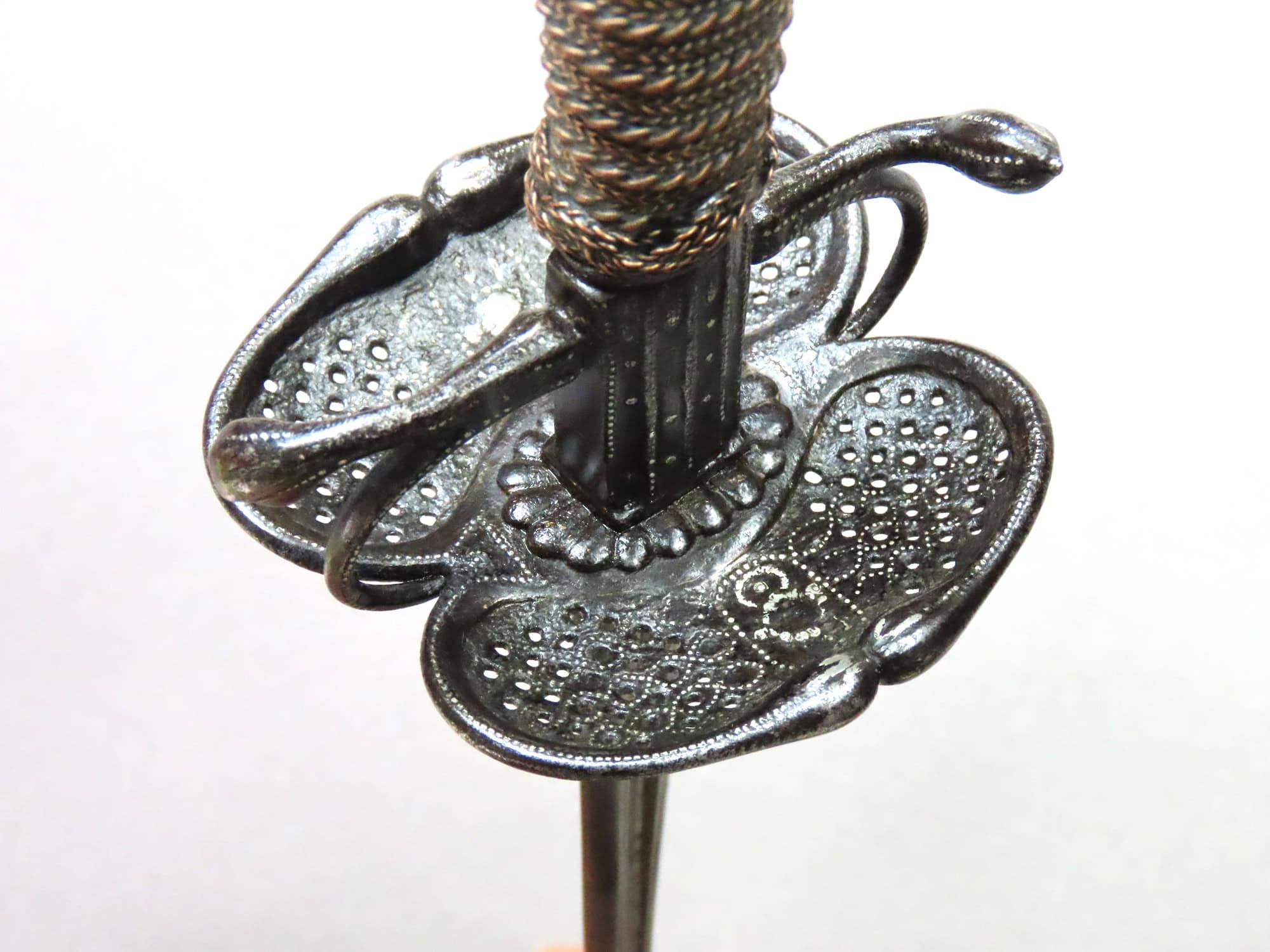
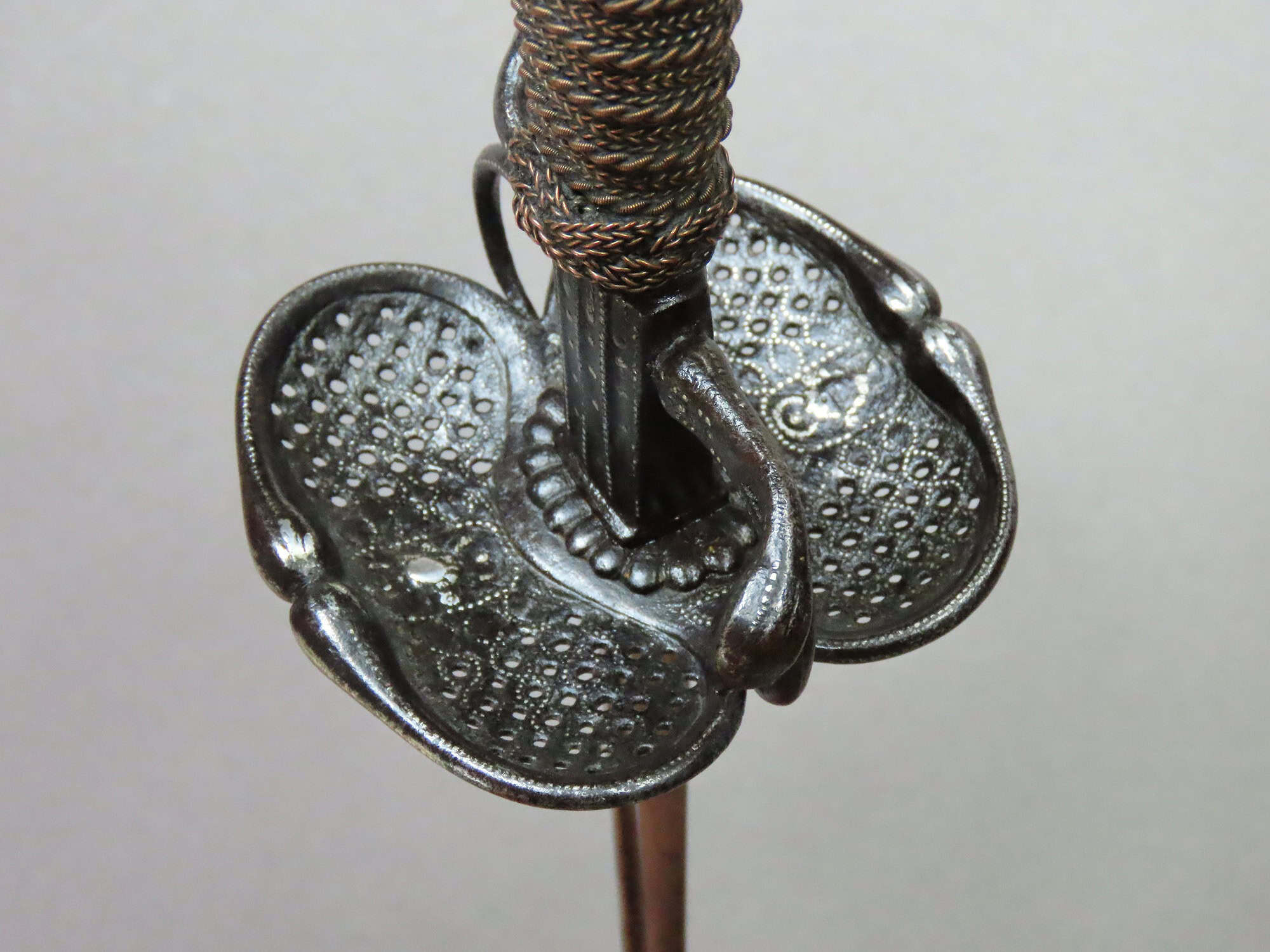
The salient feature of the hilt is the asymmetrical convex double shell guard. Each shell has a reinforced rim which is knopped in the middle in the same style as English Walloon Swords of the time. The middle of each shell on each side is centred with a silver spray with a cherub’s head in the middle of which one is missing and the others now worn. Each side of the spray the shells are finely pierced with deliberate patterns of tiny holes highlighted by silver dotted lines imbetween. The well formed pas d’ ane rings are also highlighted with silver dotted lines as are the countercurved quillons which terminate in swellings of hexagonal cross section and small button endings.
The bold rectangular section quillon block is finished with four vertical flutes on each side. The ridges are highlighted with lines of silvered dots similar to those already mentioned and the grooves between are highlighted with more widely spaced larger dots. The ricasso has a ridged neck above also decorated with dots on which the base of the grip sits.
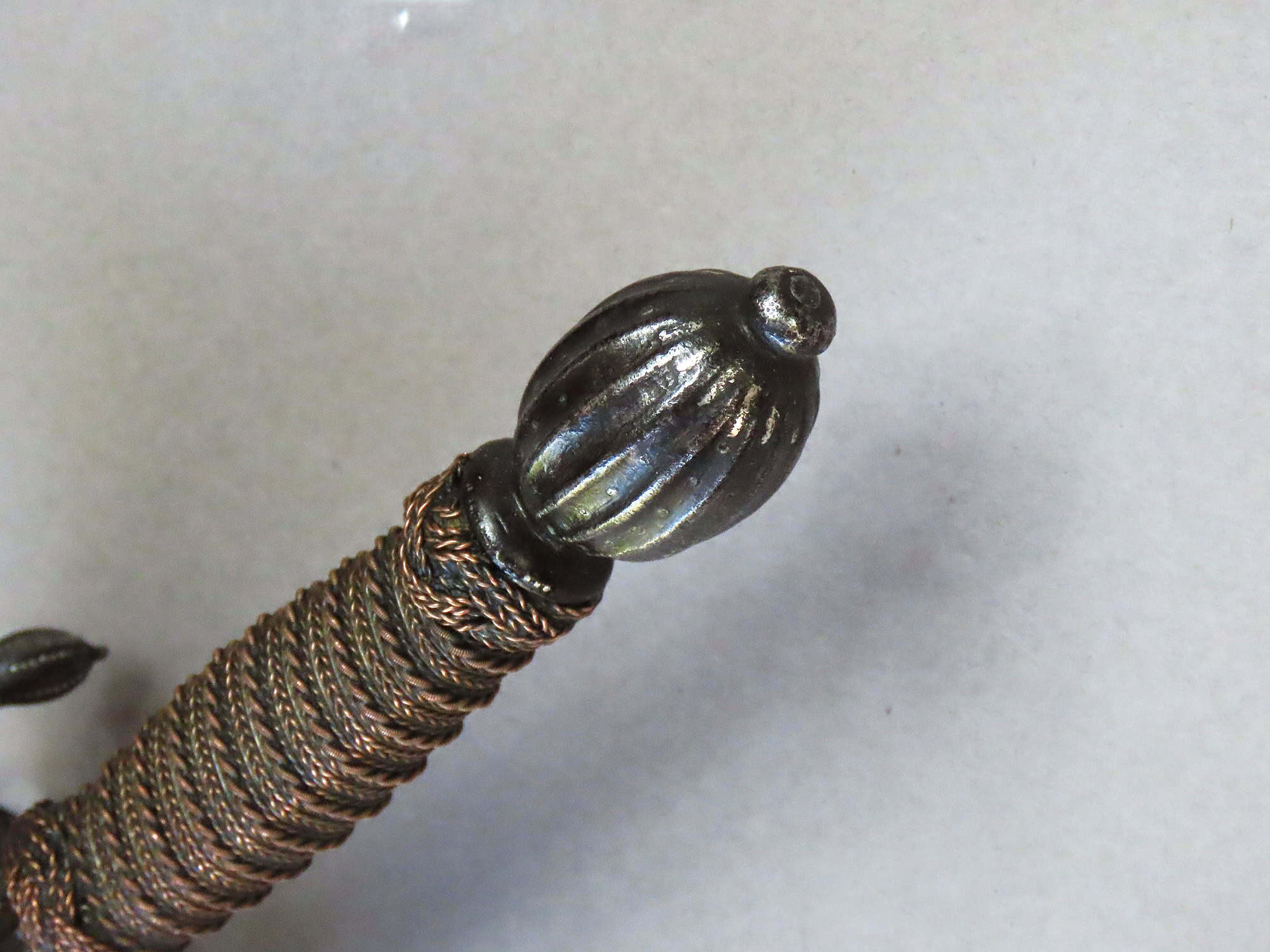
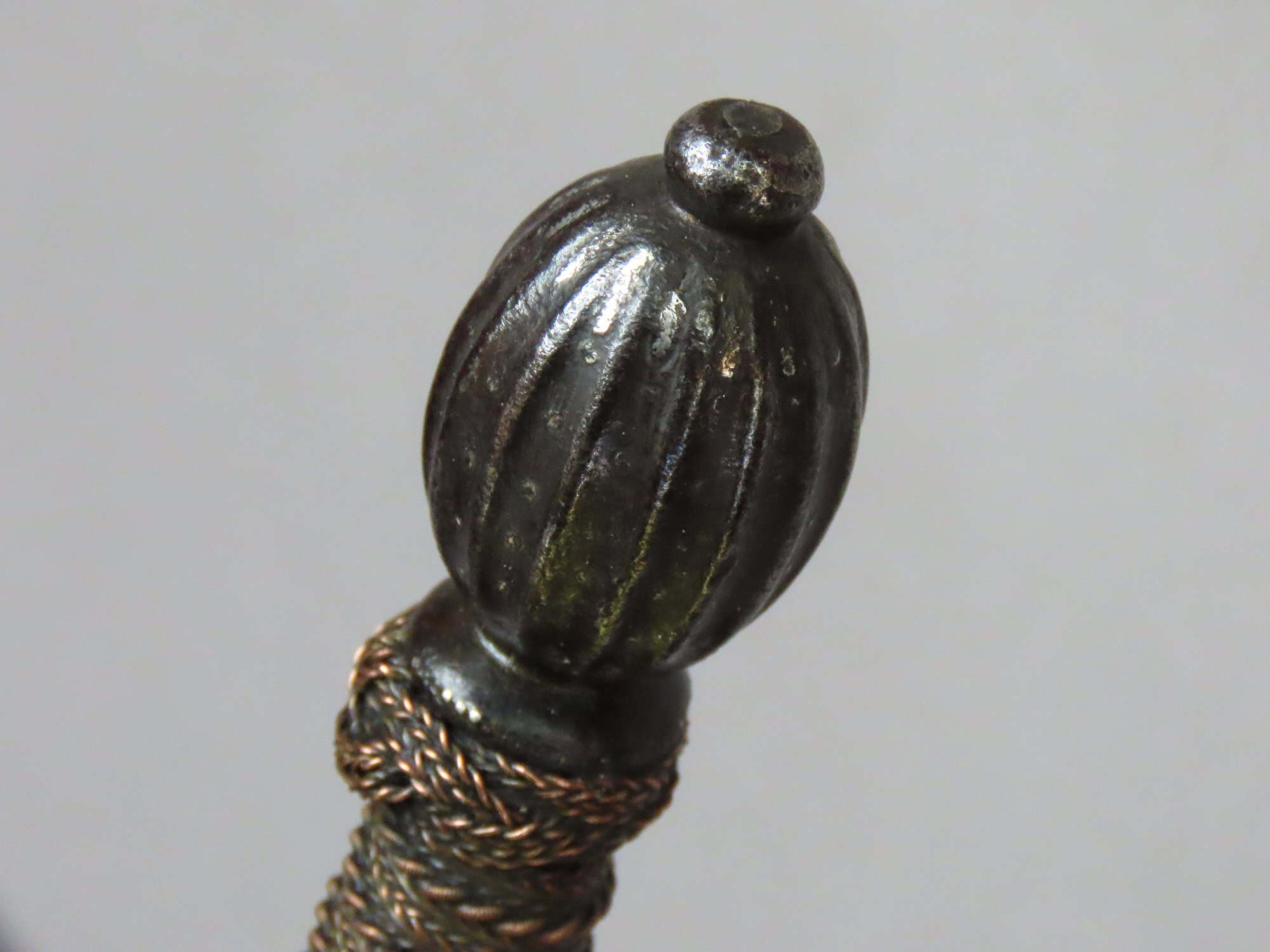
The solid oval pommel is vertically fluted and decorated in the same manner as the quillon block. It has an integral waisted button on top and a flared neck beneath which also has evidence of silvered dots. The attractive rounded rectangular section baluster shaped wooden grip is mounted with woven copper wire “Turks’ Heads” top and bottom between which a sophisticated and attractive binding of twisted roped copper wire of varying thicknesses is applied.
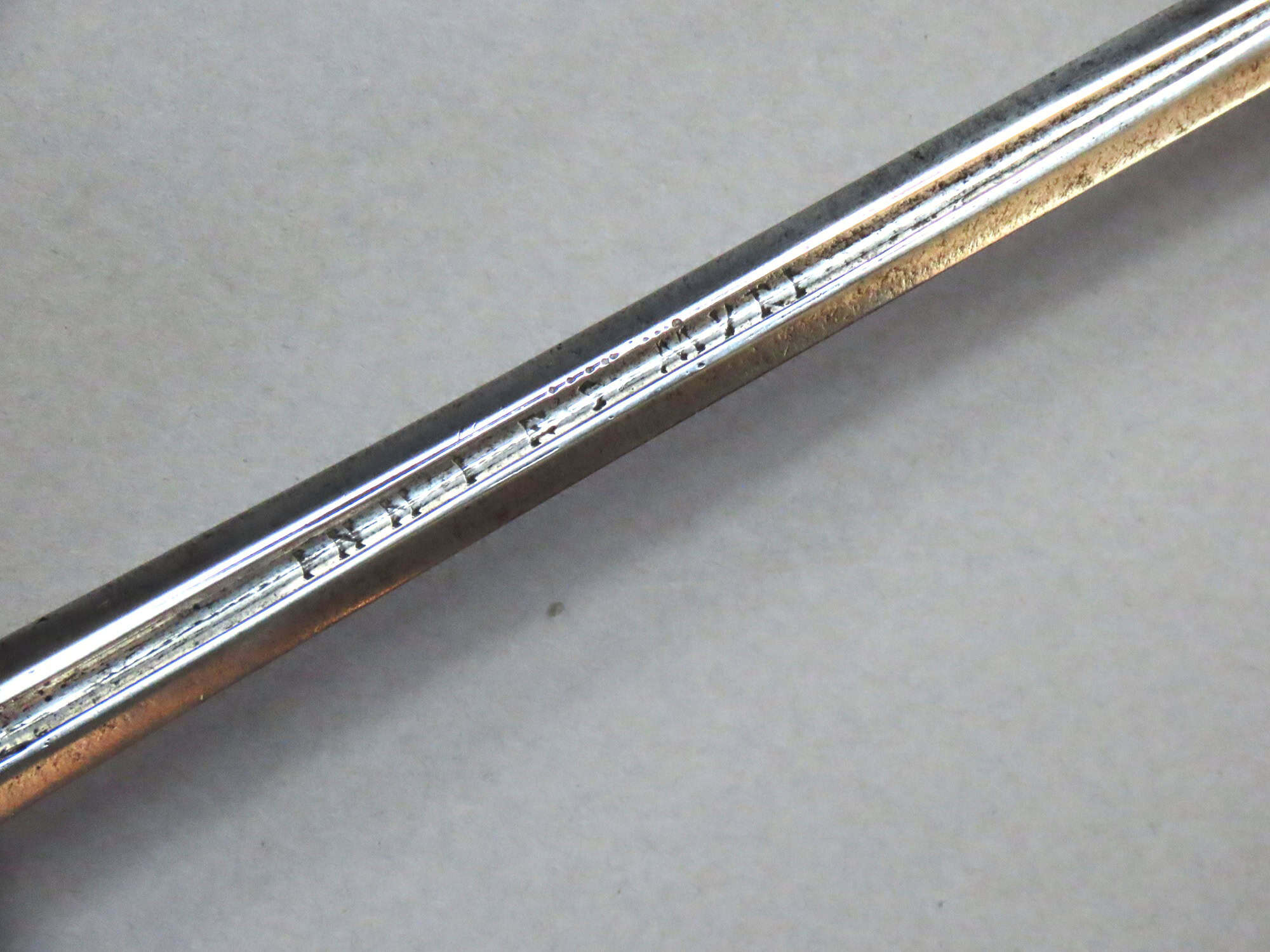
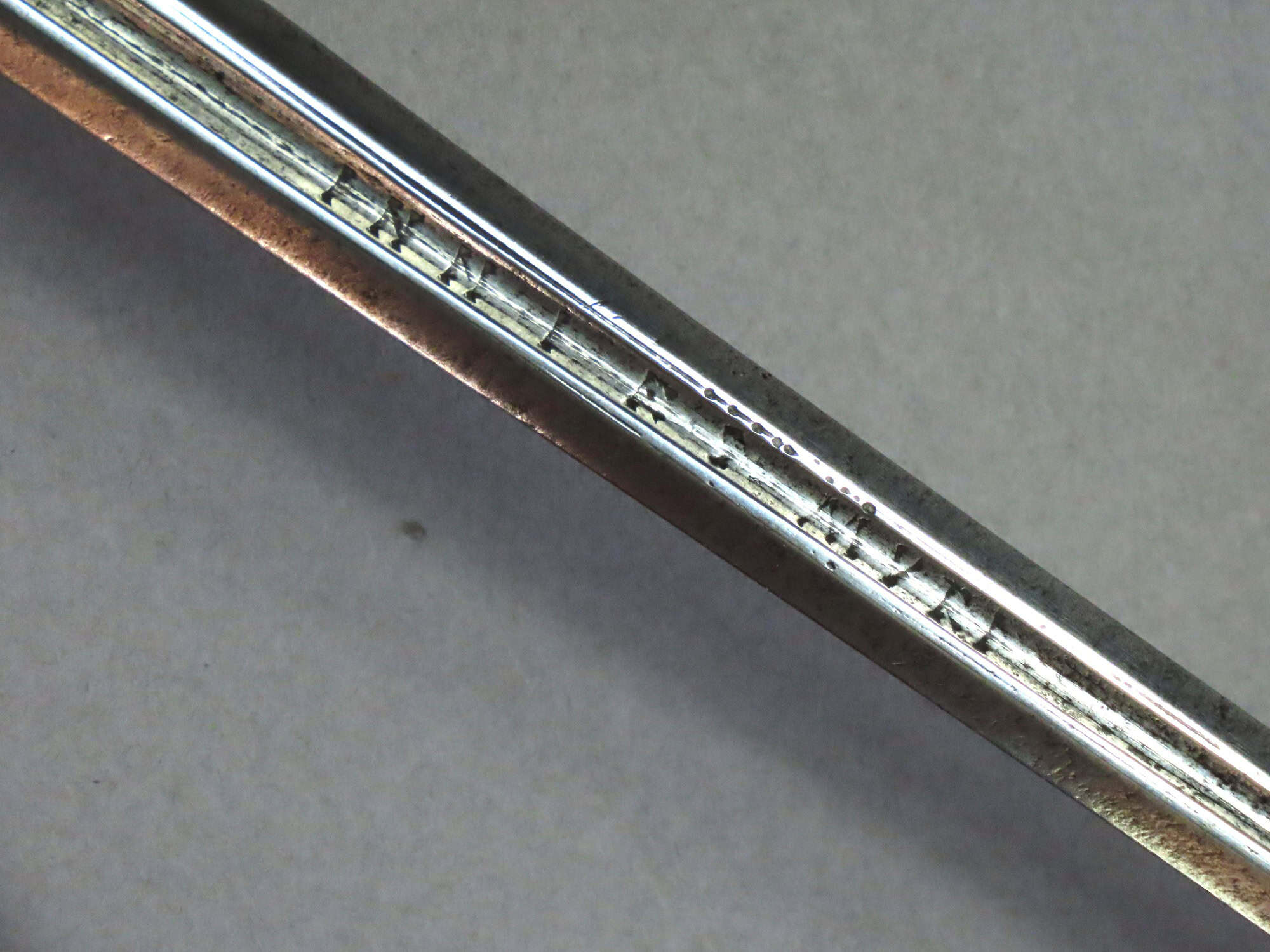
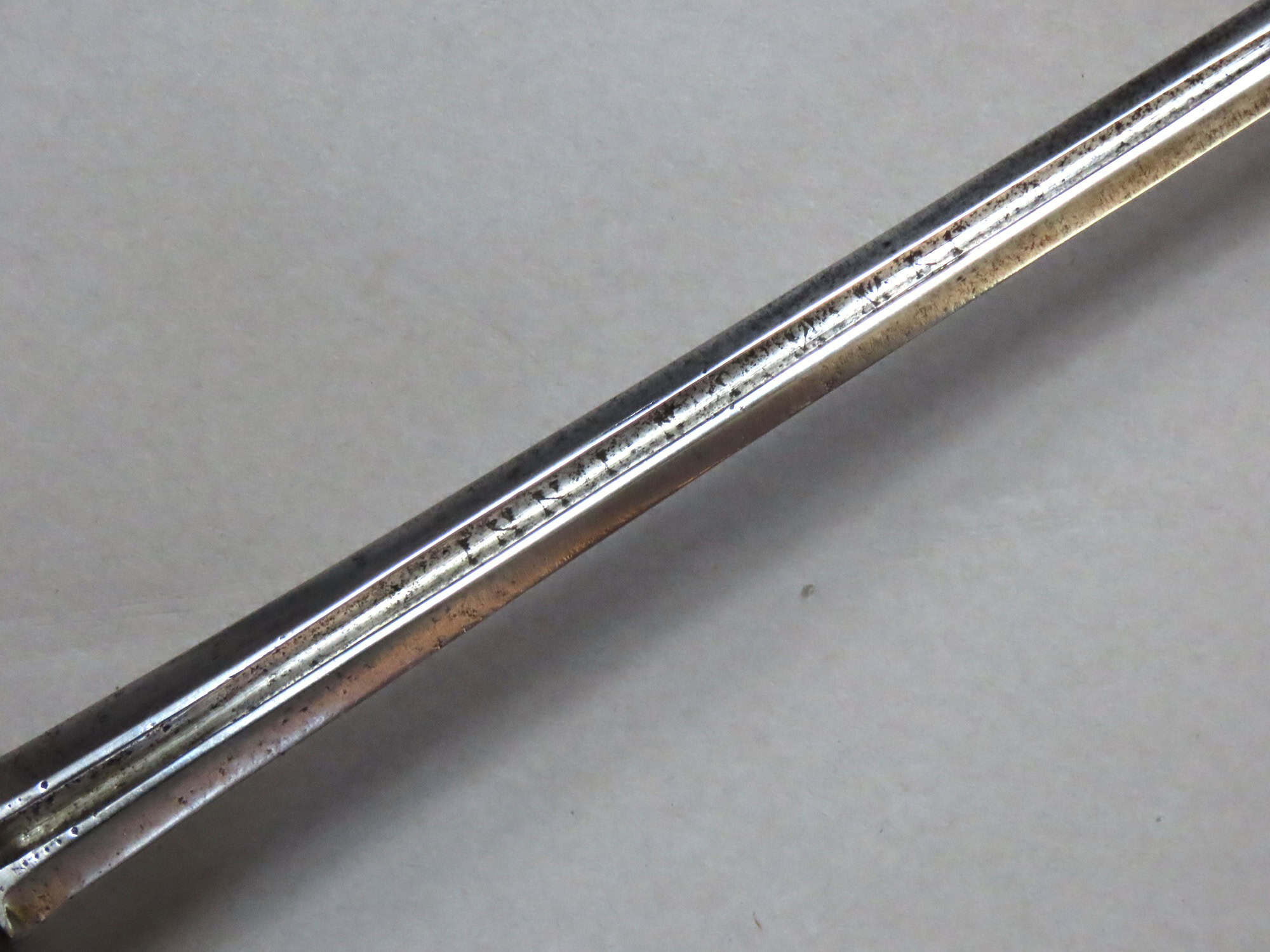
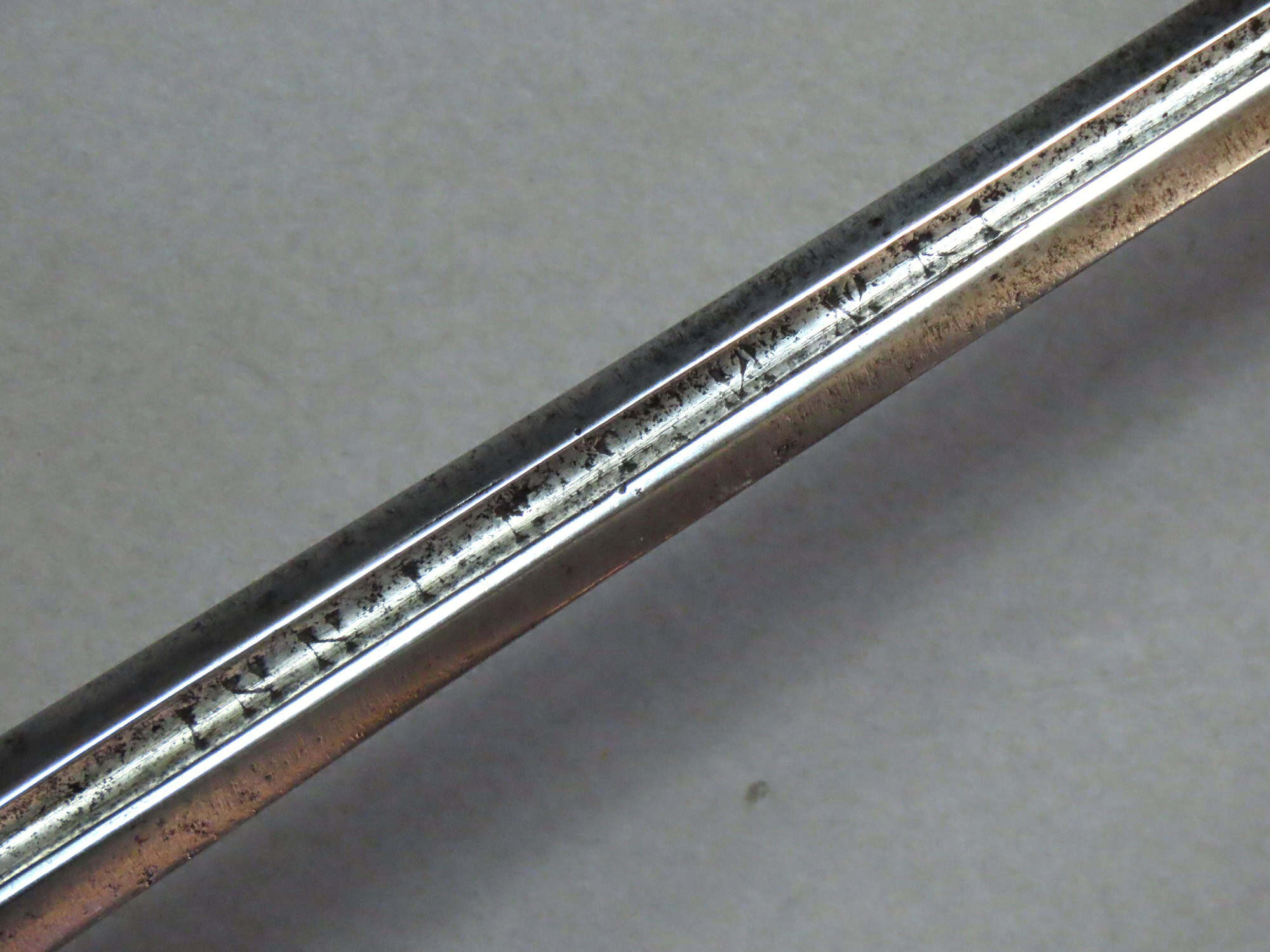
The fine quality tapering blade is of stiff flattened lenticular section and has a short ricasso. It is 32.25 inches (82.0 cm) long with a deeply cut central fuller on each side which tapers from the ricasso to a shallow point after 7.5 inches (19 cm) inside which the bladesmith’s mark INNI ET MVRI is incised.
As well as being a fine English sword it provides a reference example of early 17th century English silver on-lay techniques. The sword is in fine condition with some minor wear to the silver on-lay in parts.