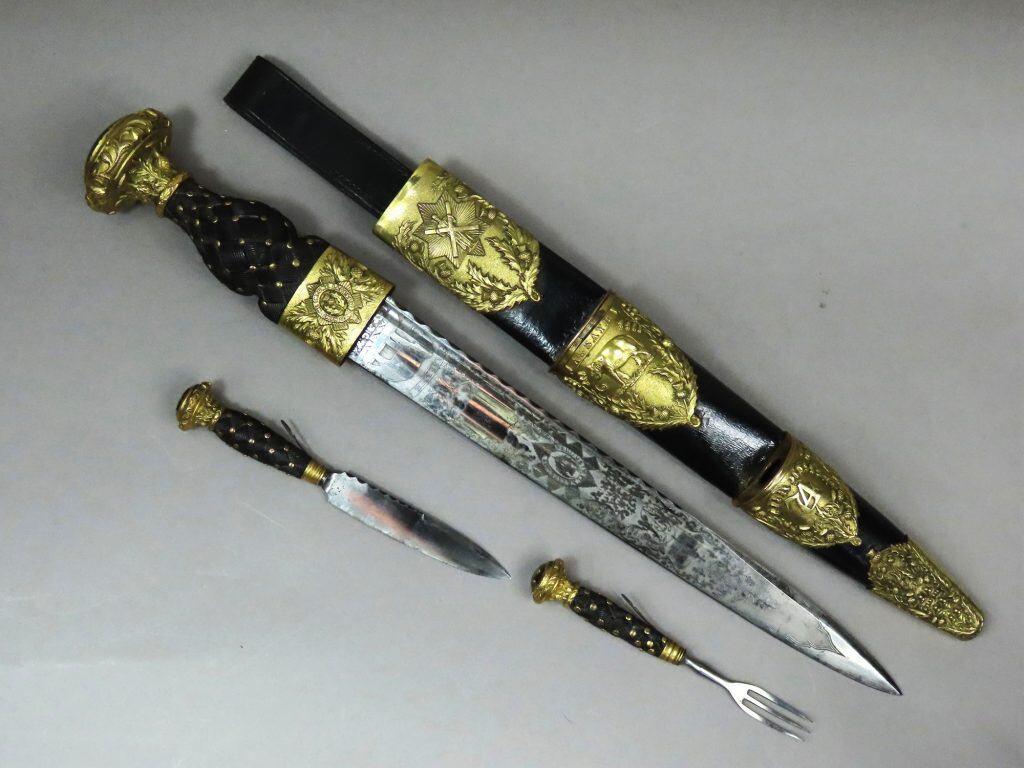
A Majestic Victorian Scottish Dirk for a 74th Highlanders Officer dating to before 1881
To enquire about this itemplease click here
Price: £4,650
Ref: 52111235
Item Description
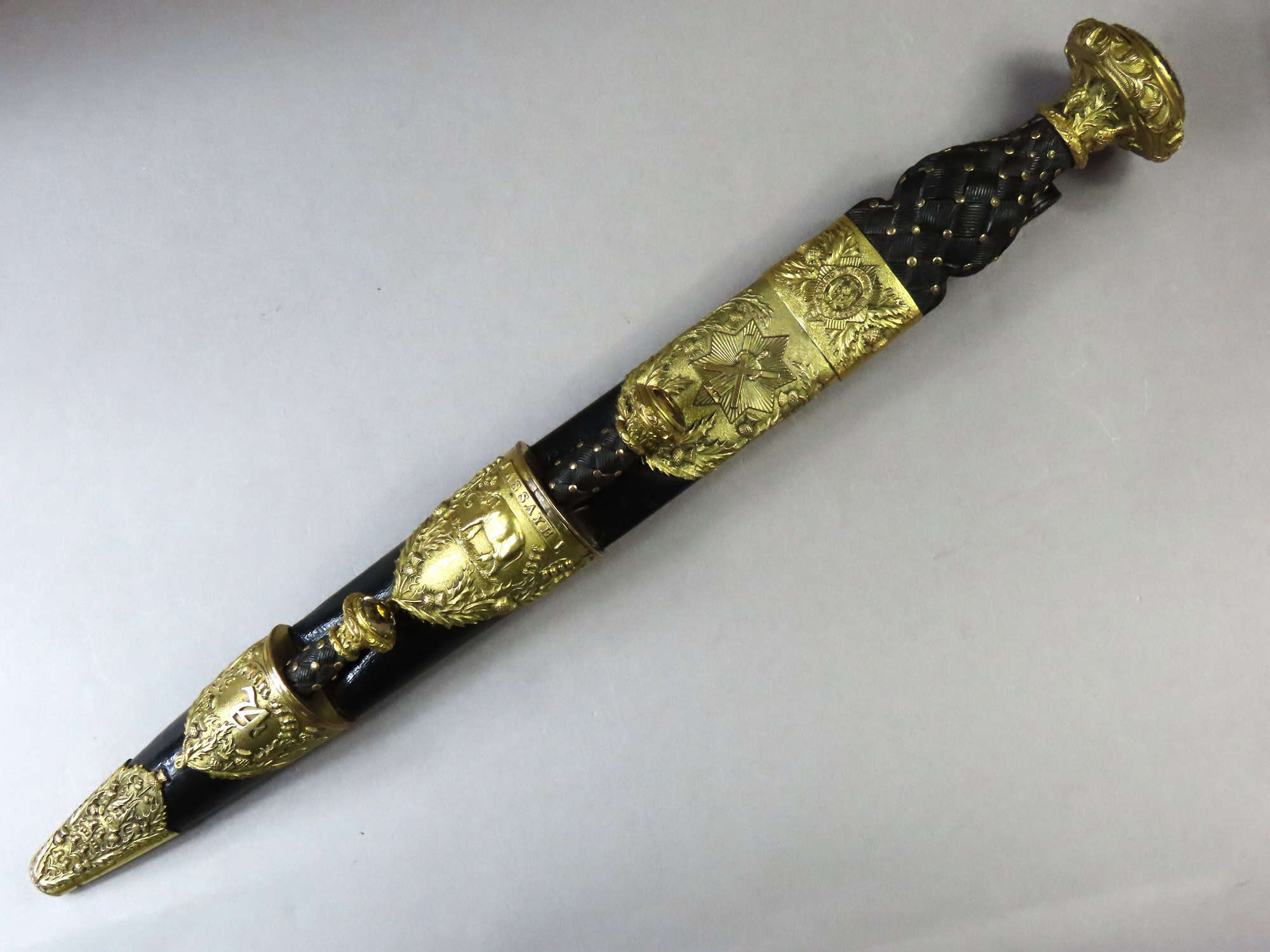
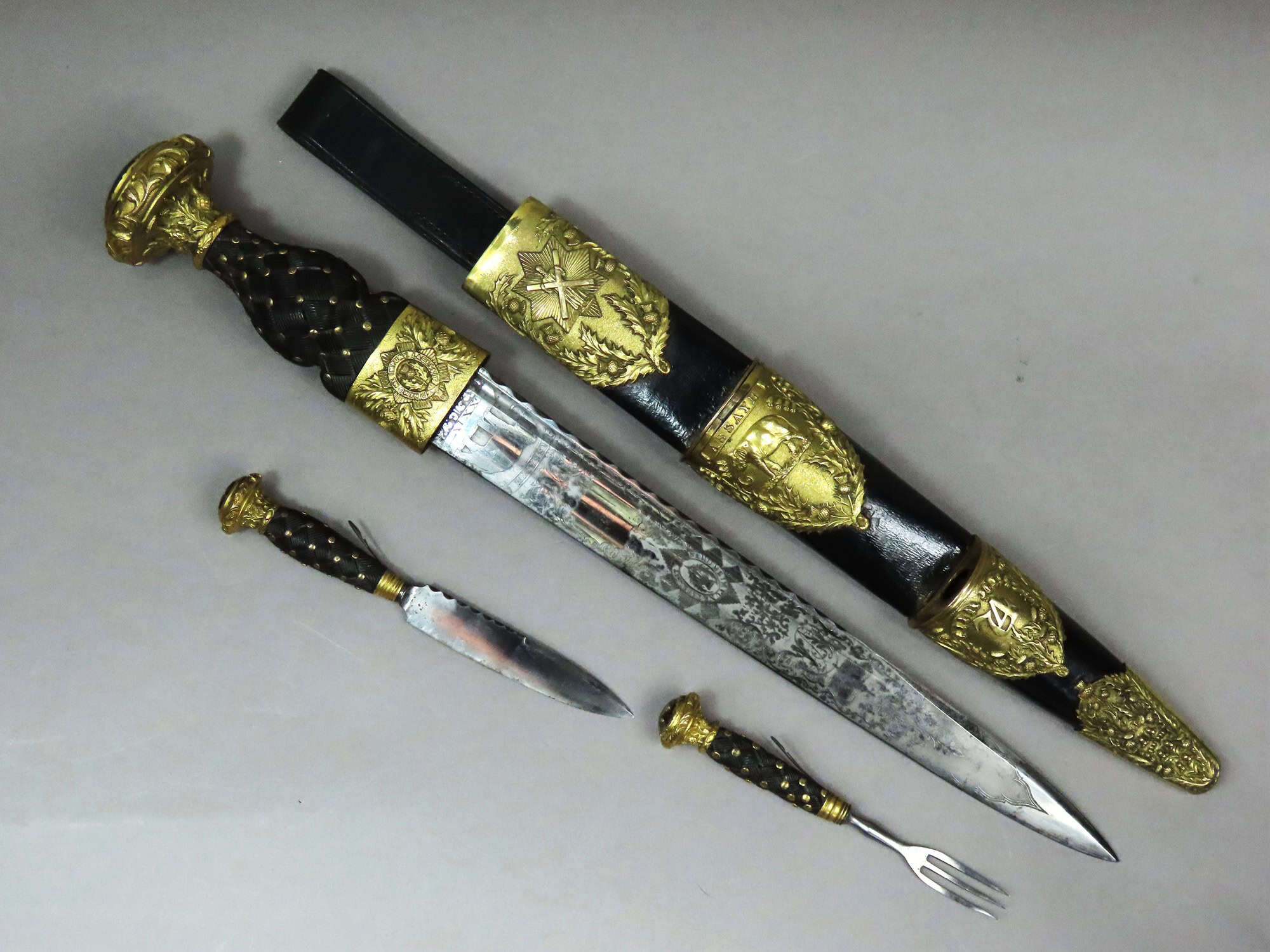
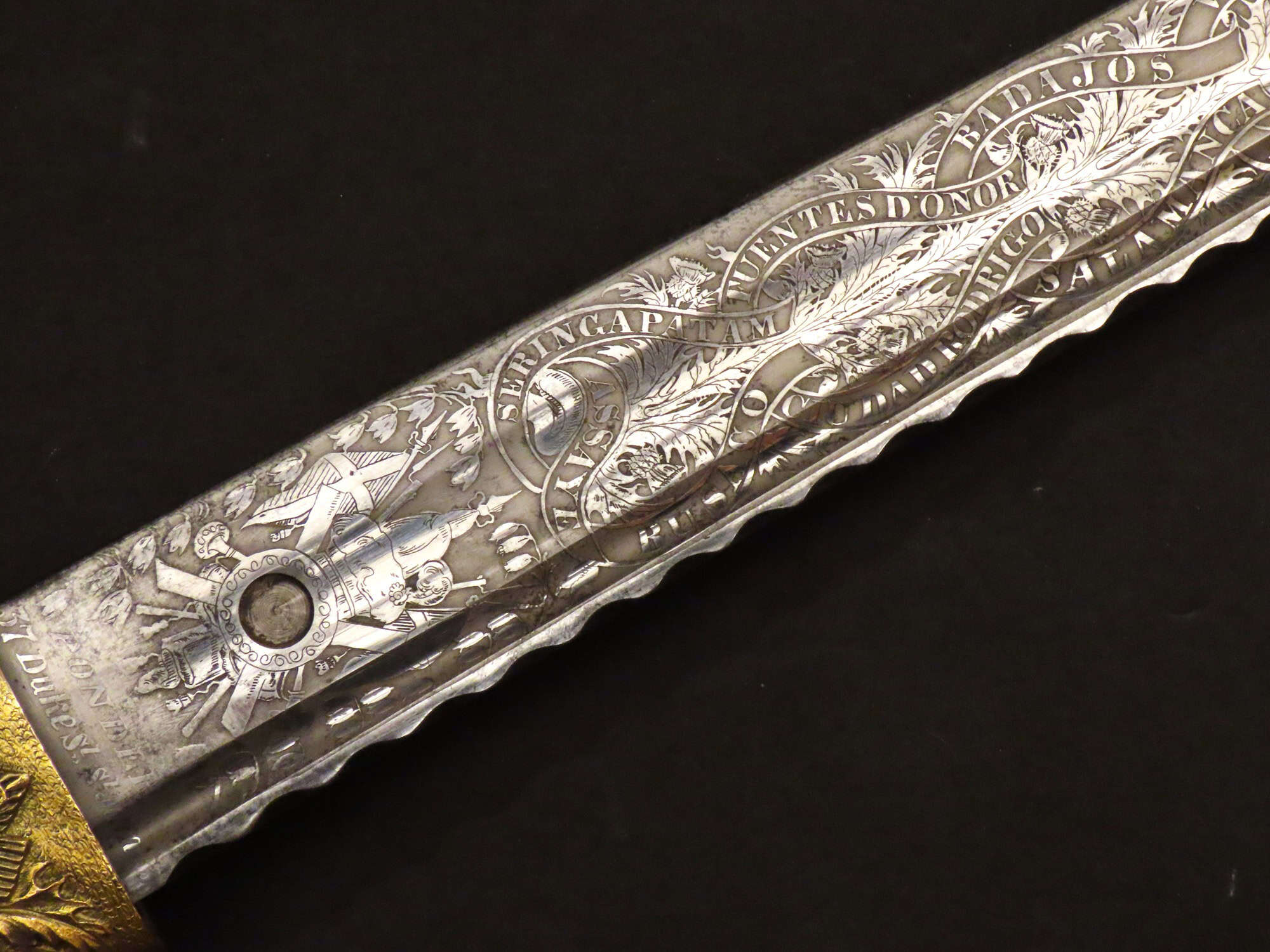
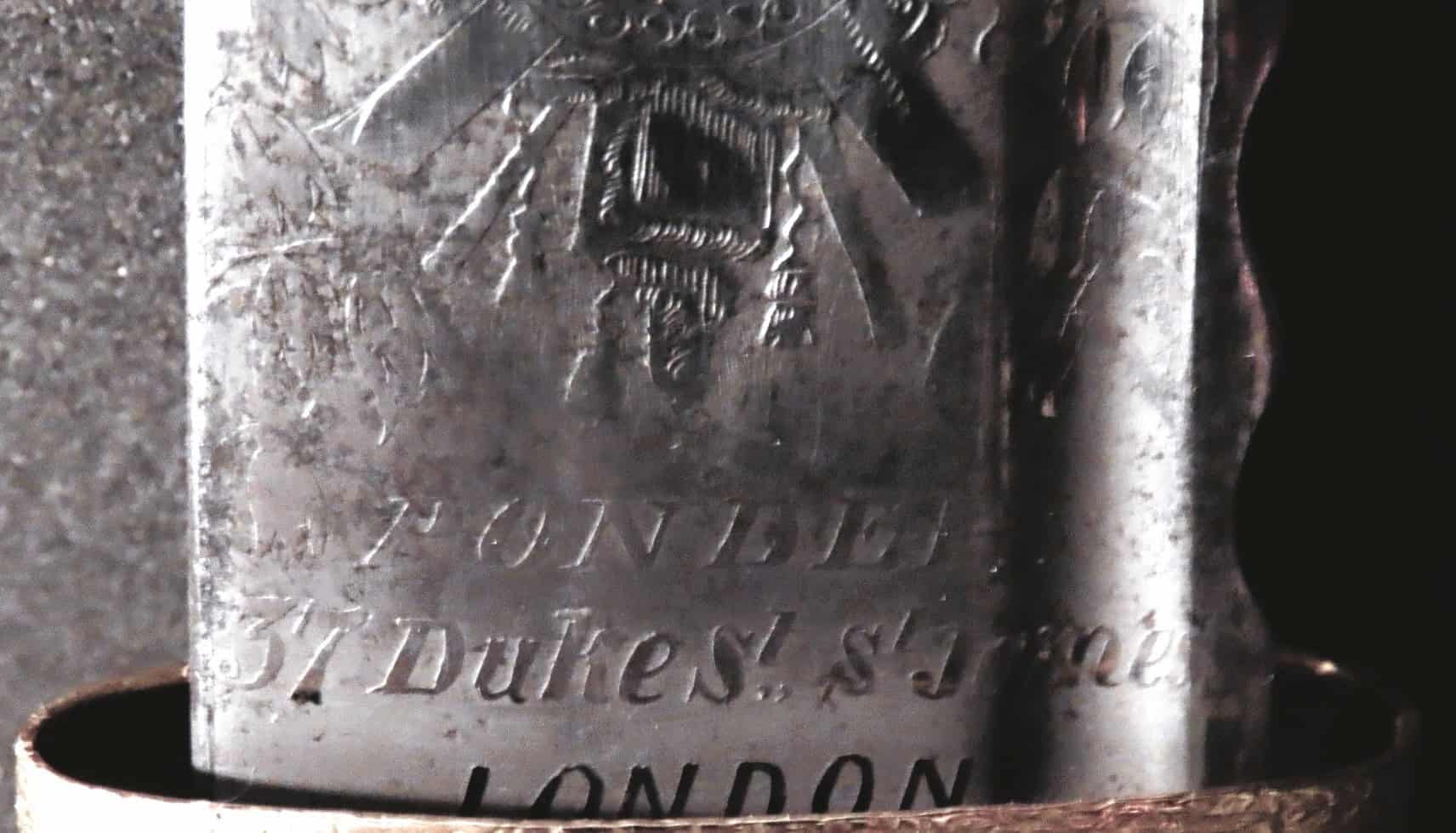
A very nice dirk of bold proportions for an officer of the 74th (Highland) Regiment of Foot dating to before the widespread reforms to the British Infantry implemented by the Secretary of State for War Hugh Childers in 1881. As part of these reforms the 74th (Highland) Regiment amalgamated with the 71st (Highland) Regiment to become the Highland Light Infantry with the 74th forming the 2nd Battalion. The dirk mounts are of gilt bronze and it was retailed by Ponder, 37 Duke Street, St James, London.
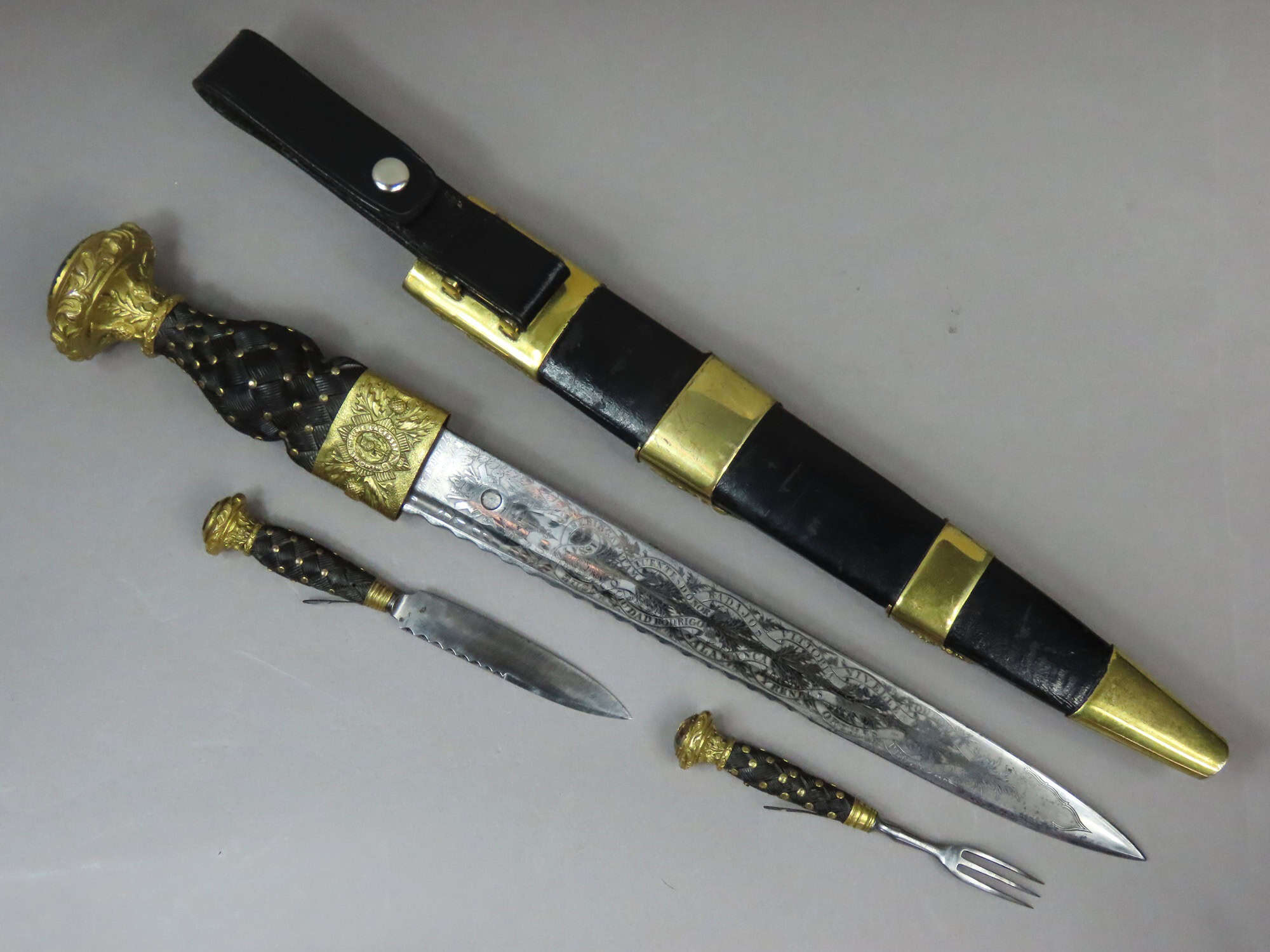
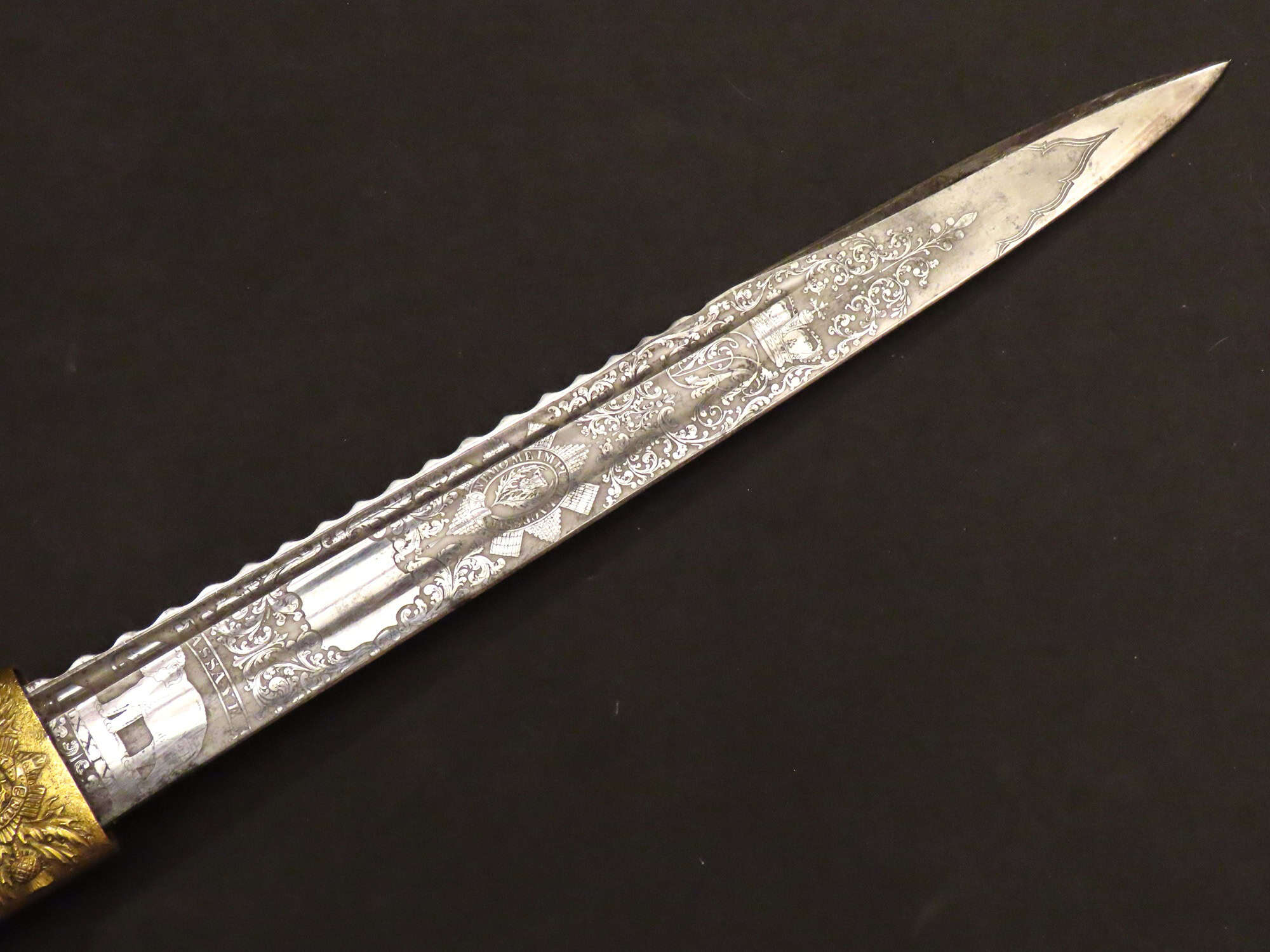
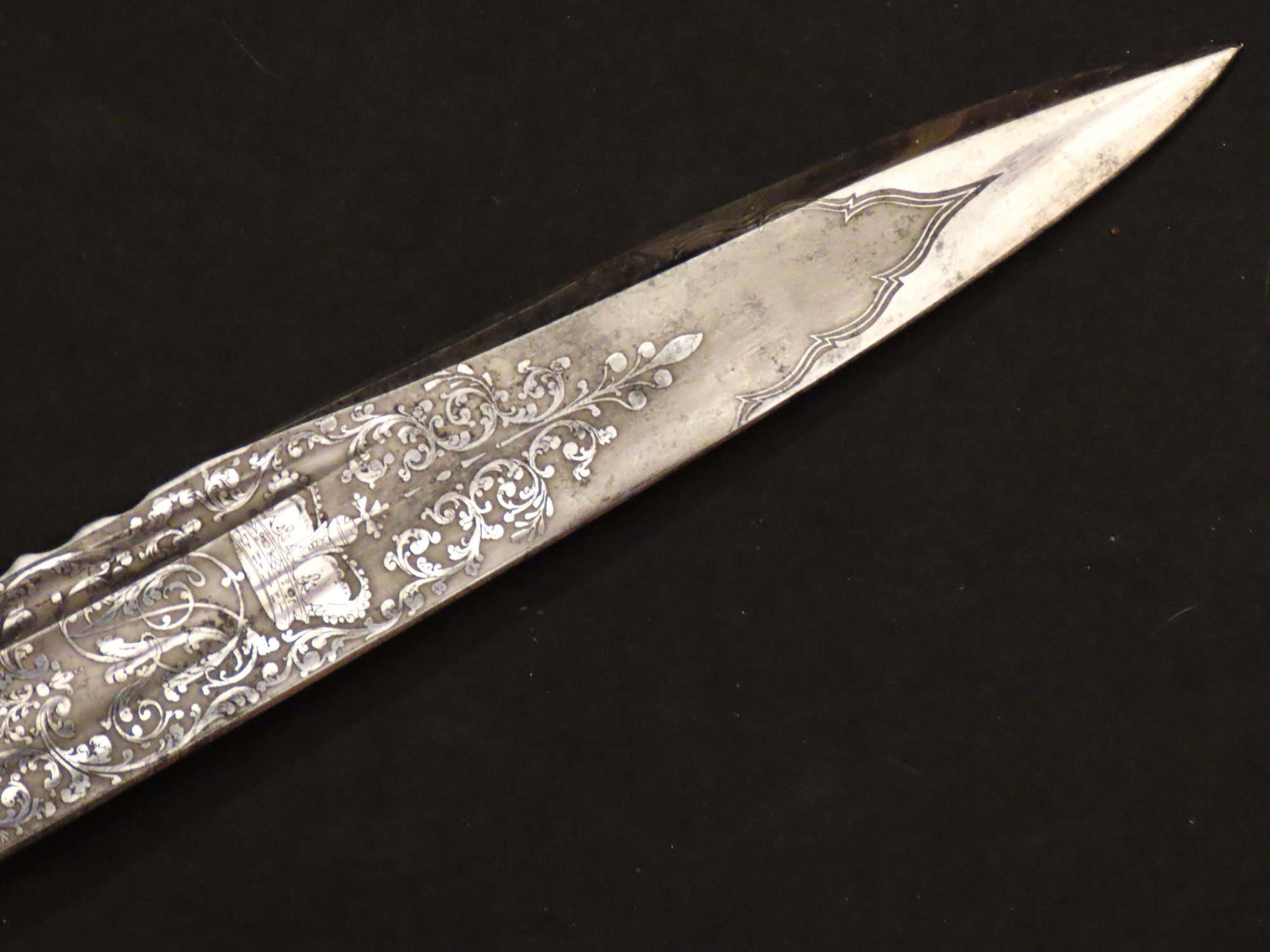
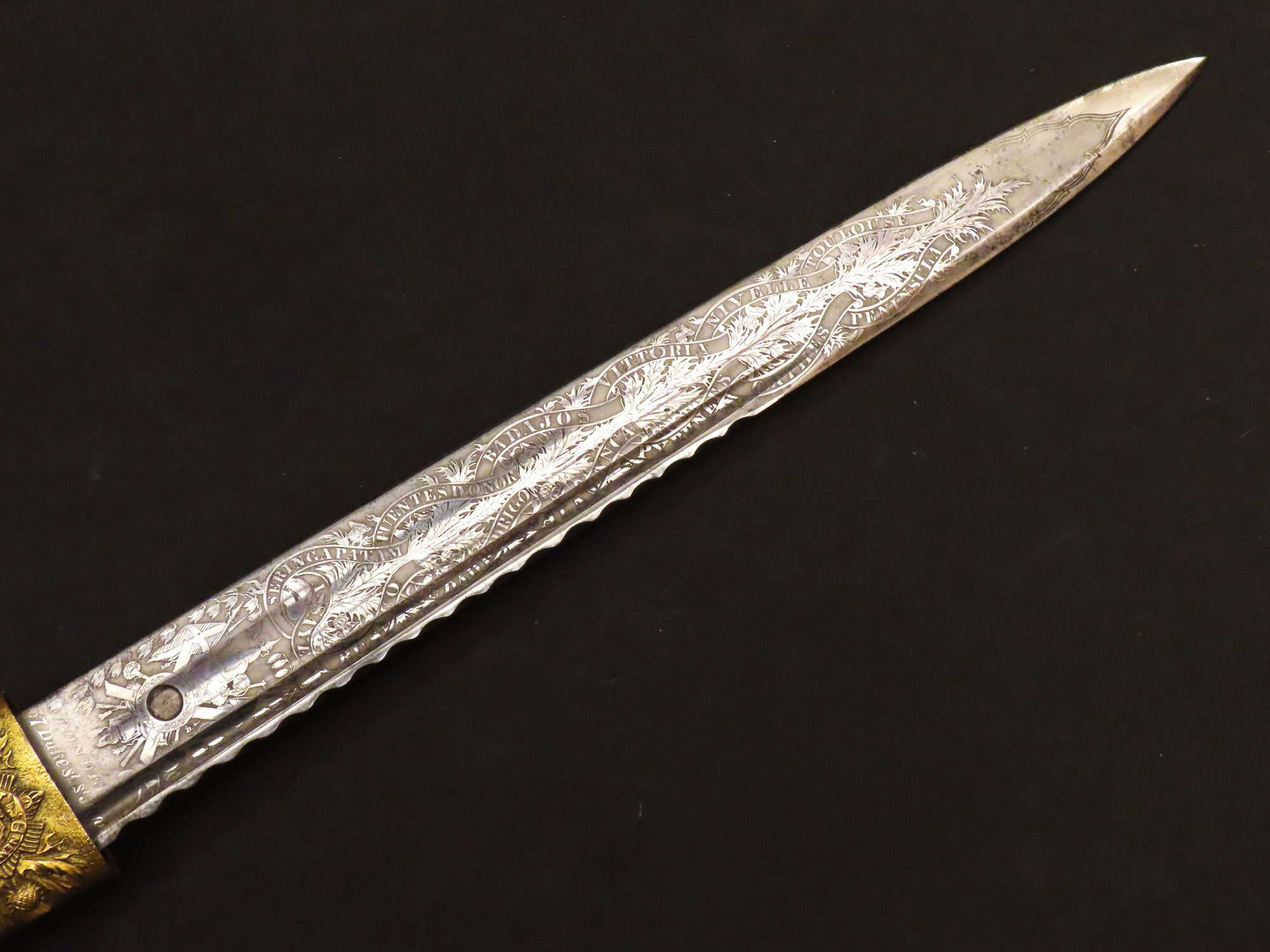
The single-edged leaf shaped blade is just under a foot long (just over 30 cm) and has a blunt back edge extending 7 inches (18 cm) from the base of the grip which is scalloped for most of its length after which it is double edged to the tip. A single pronounced fuller runs underneath the blunt back edge with a broader, shallower fuller running beneath along the middle of the blade.
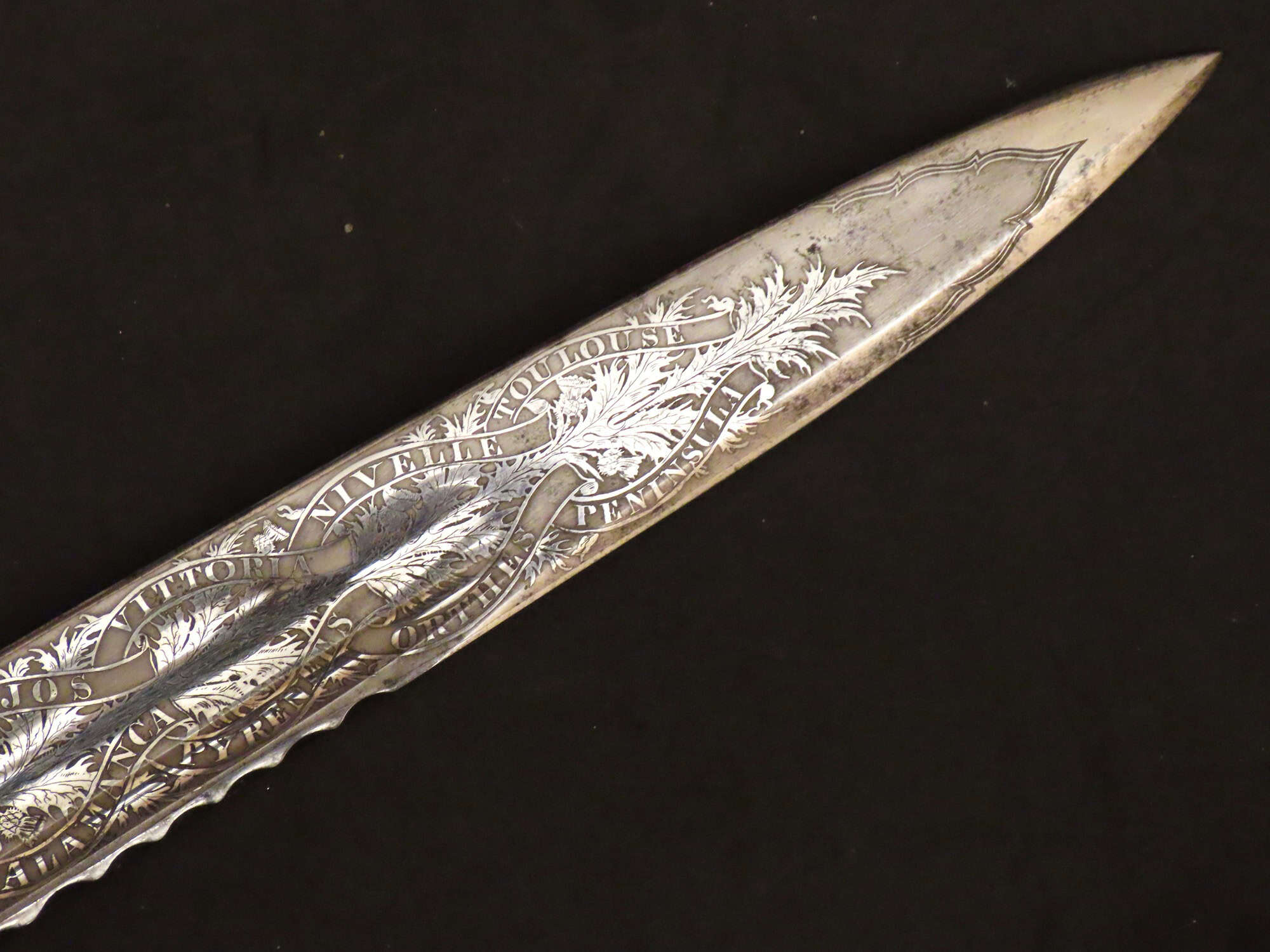
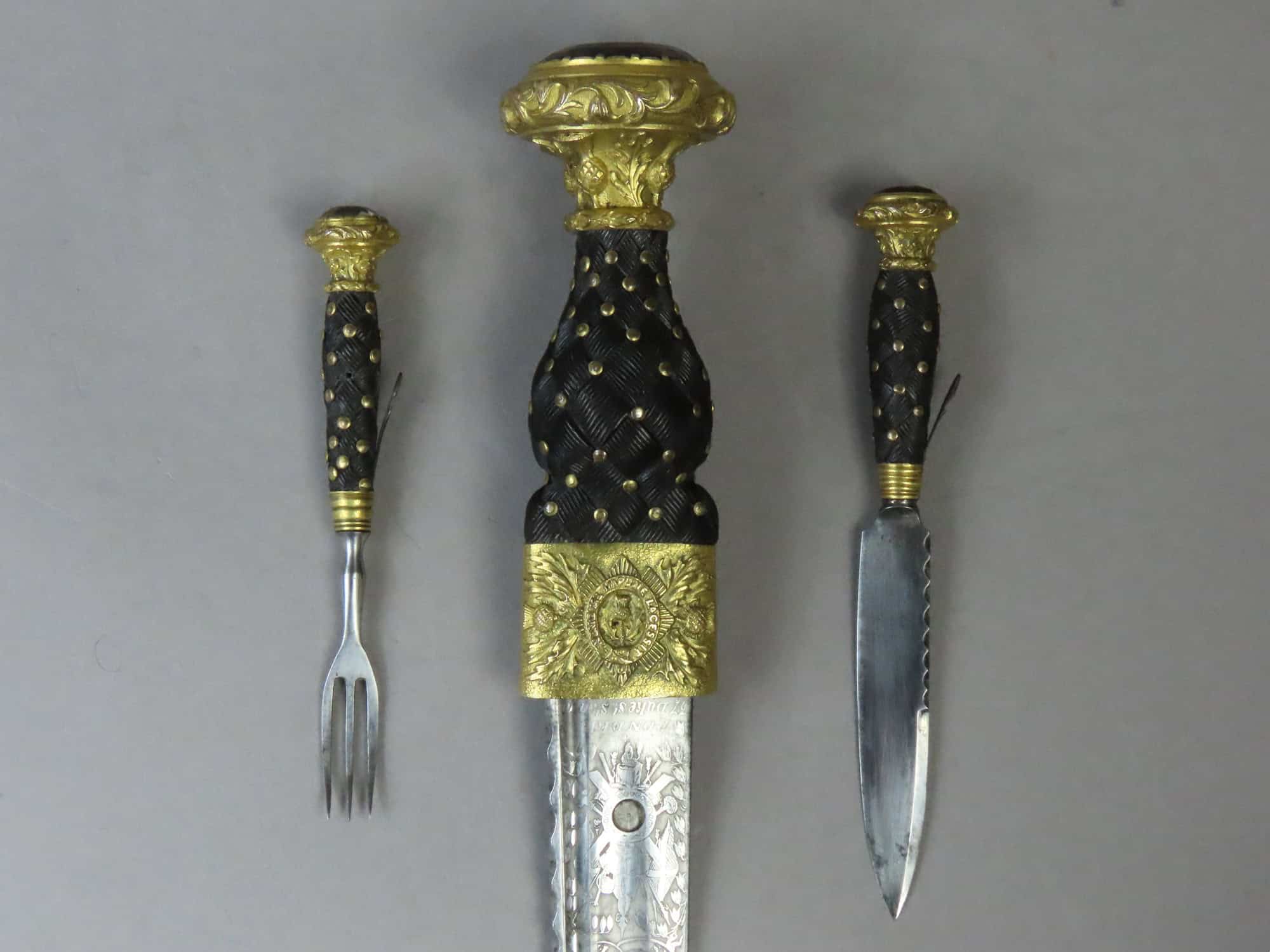
The blade is sumptuously etched and engraved on both sides. The side with the cutting edge to the left when the dirk is held upwards has the name of the retailer near the grip with a stand of arms above featuring banners, muskets, trumpets and a bonnet. A vacant circular depression in the middle of the stand of arms once contained a small circular brass stud which is now missing. The rest of the blade is taken up with 13 battle honours in scrolling script beginning with the Sieges of Seringapatam in India in 1792 / 1799 and ending with the Peninsular Campaign of the Napoleonic Period and the Battle for Toulouse in 1814
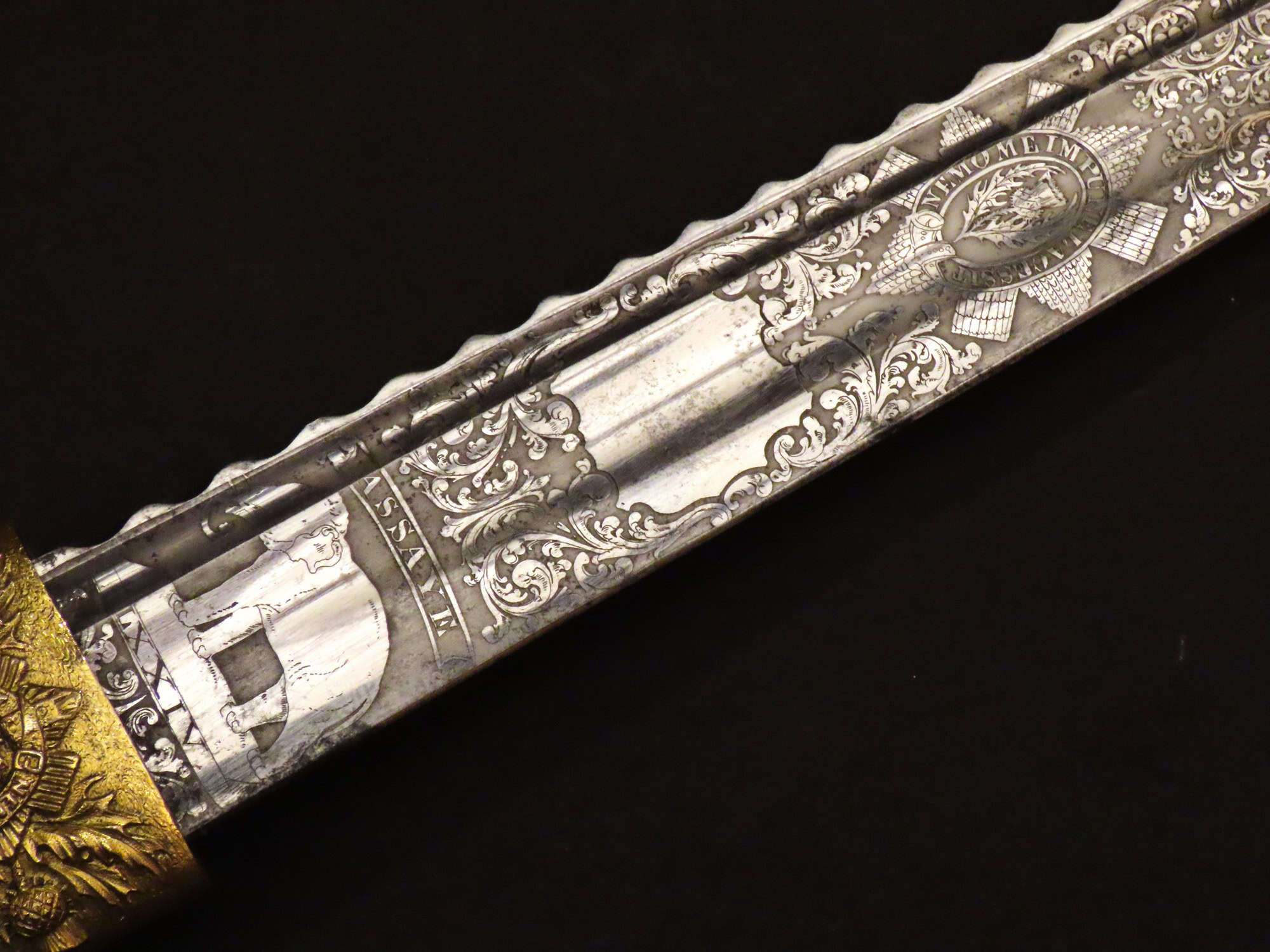
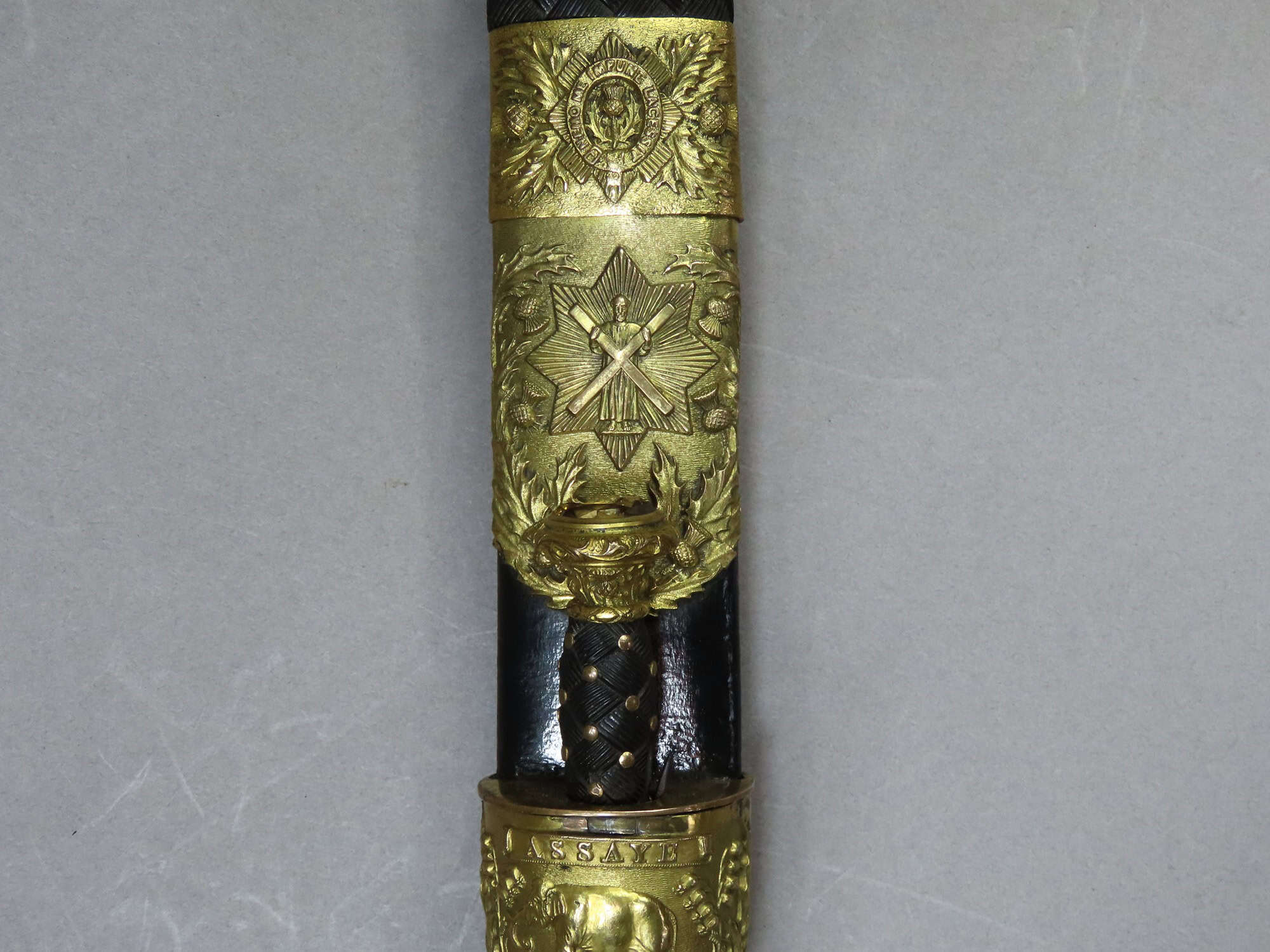
On the reverse side near the grip an elephant is present over which “ASSAYE” marks the involvement of the Regiment in the battle of that name in India in 1803. Above this a complex foliate panel contains a vacant cartouche in the middle. Above this the regimental badge is present on a star surround centred with a thistle surrounded by a circular belt with the words NEMO ME IMPUNE LACESSIT (NO ONE PROVOKES ME WITH IMPUNITY) engraved within its borders , followed by another foliate panel containing the VR cypher and a crown above.
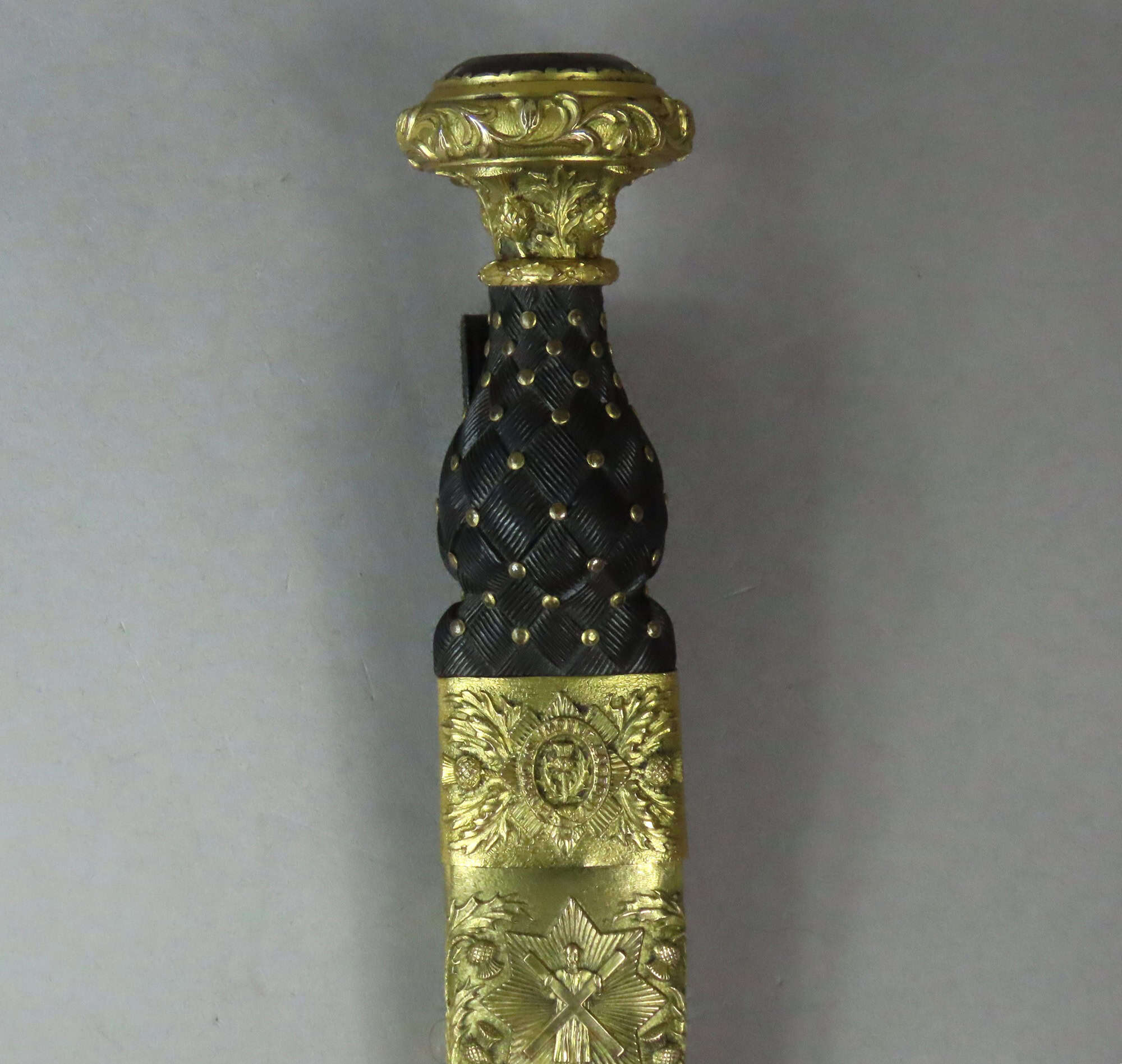
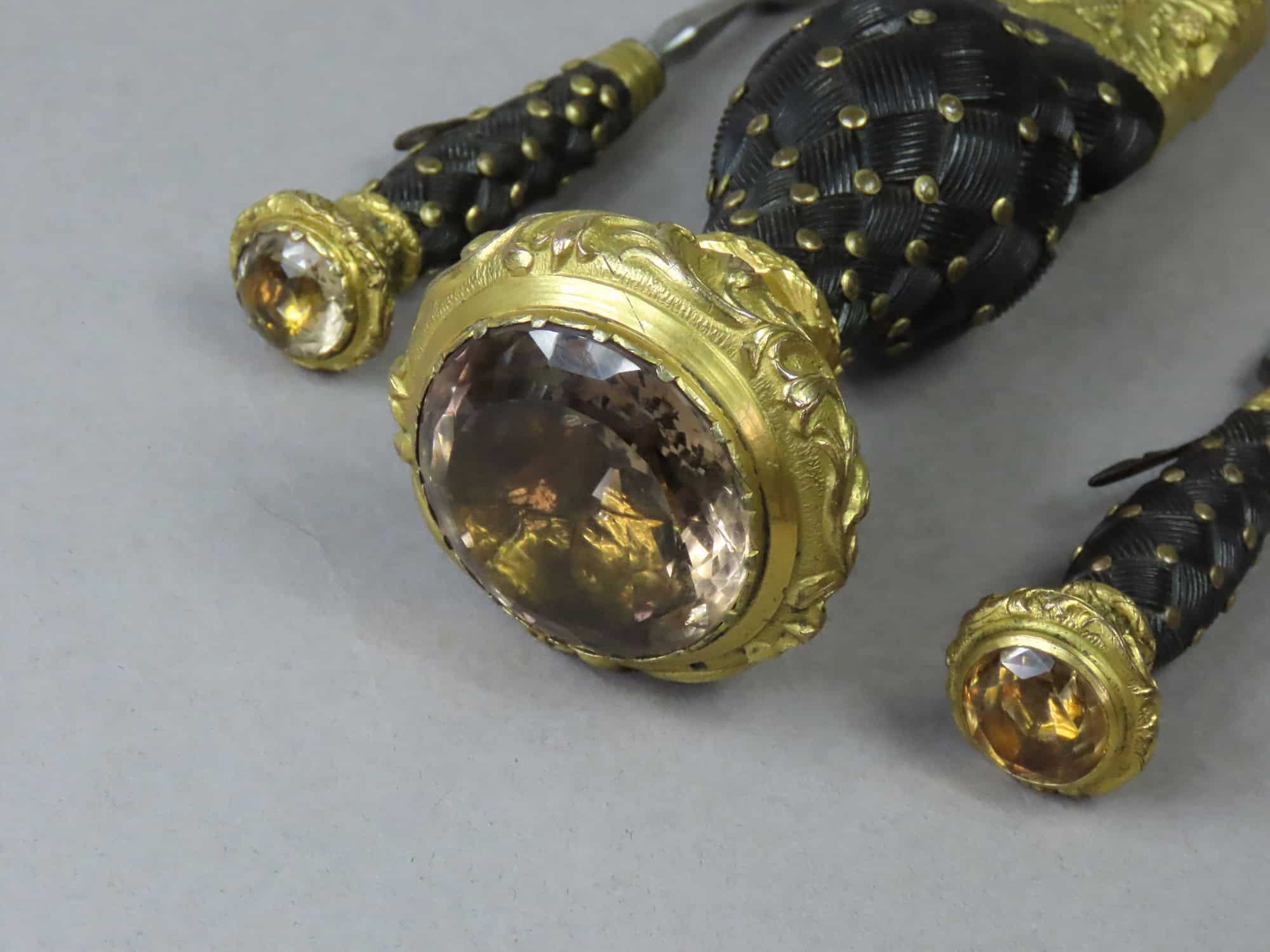
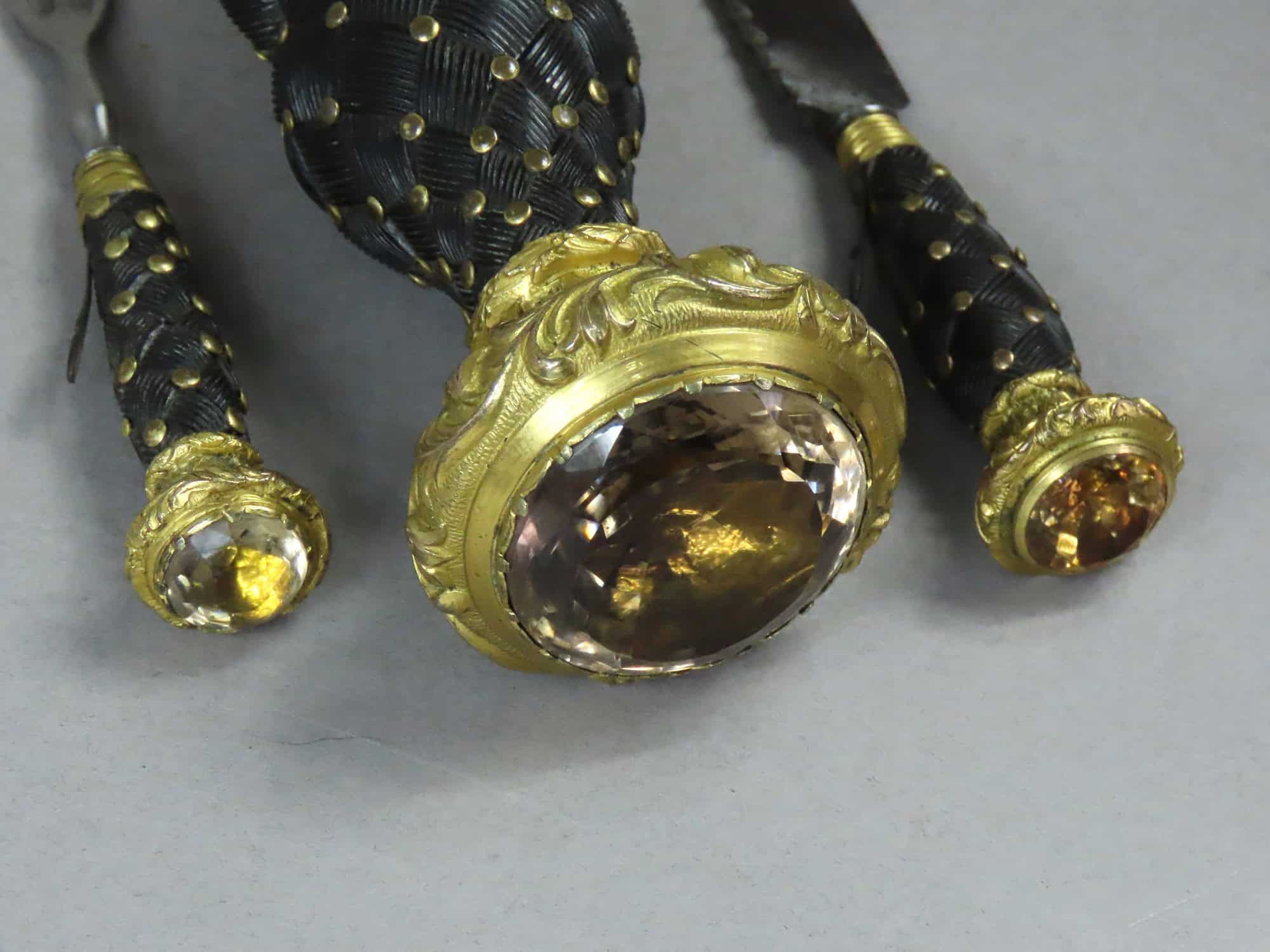
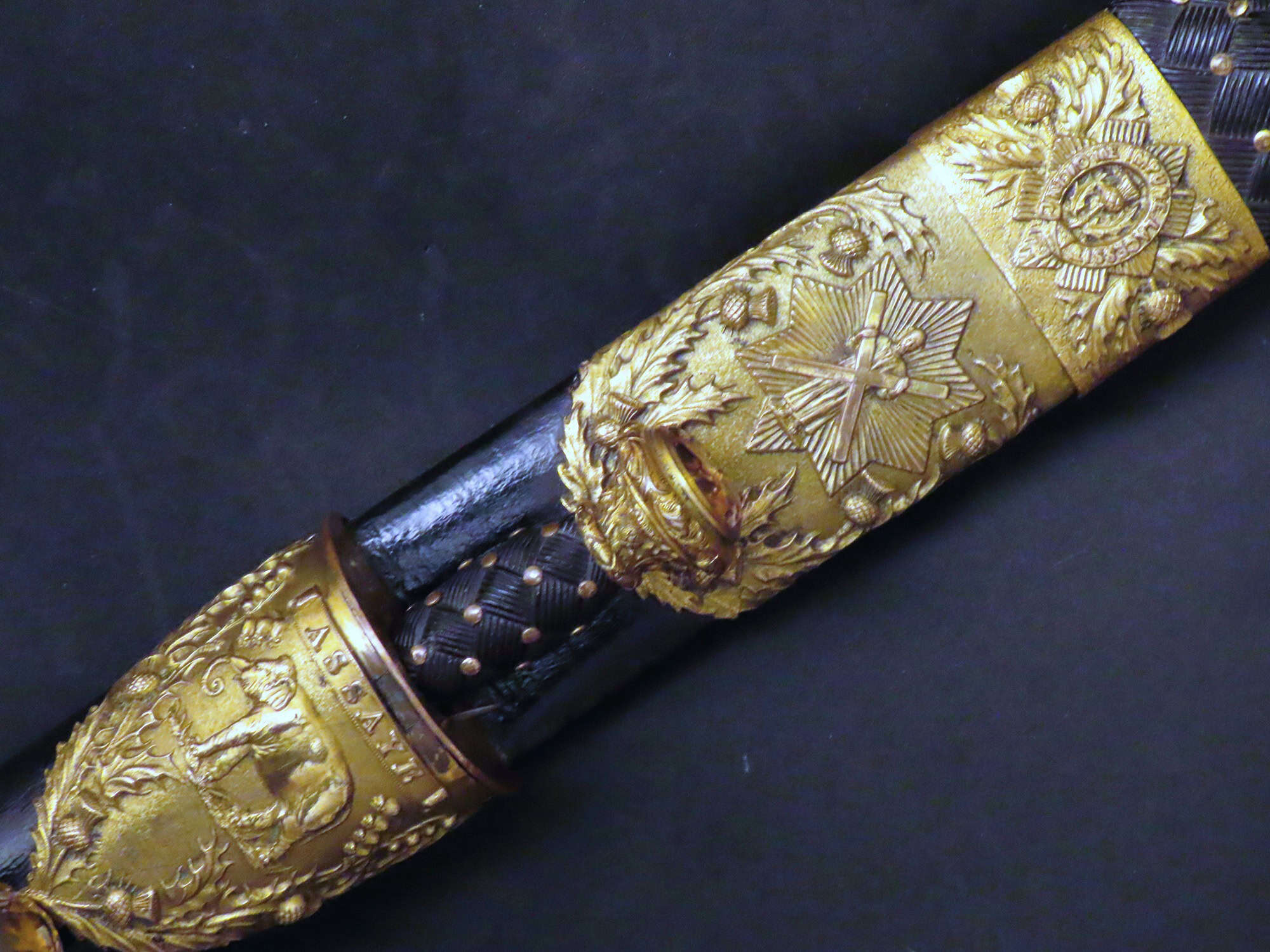
The grips of the dirk, by-knife and fork are baluster shaped and of black hardwood cut with fluted basket weave patterns with brass studs mounted at the intersections. Each piece is mounted with a pommel with bold foliage and thistles in raised relief with yellow backed multi-faceted citrines mounted on top. The by-knife and fork are secured in their pockets with blued sprung steel clips mounted onto each grip on one side. The Regimental badge and motto “NEMO ME IMPUNE LACESSIT ” is applied either side of the base mount of the dirk grip, similar to the badge on the blade, on a background of thistles and foliage. This was the Latin motto of the Royal Stuart dynasty of Scotland from at least the reign of James VI when it appeared on the reverse side of merk coins minted in 1578 and 1580. It is still the adopted motto of the Order of the Thistle and of some Scottish regiments of the modern British Army.
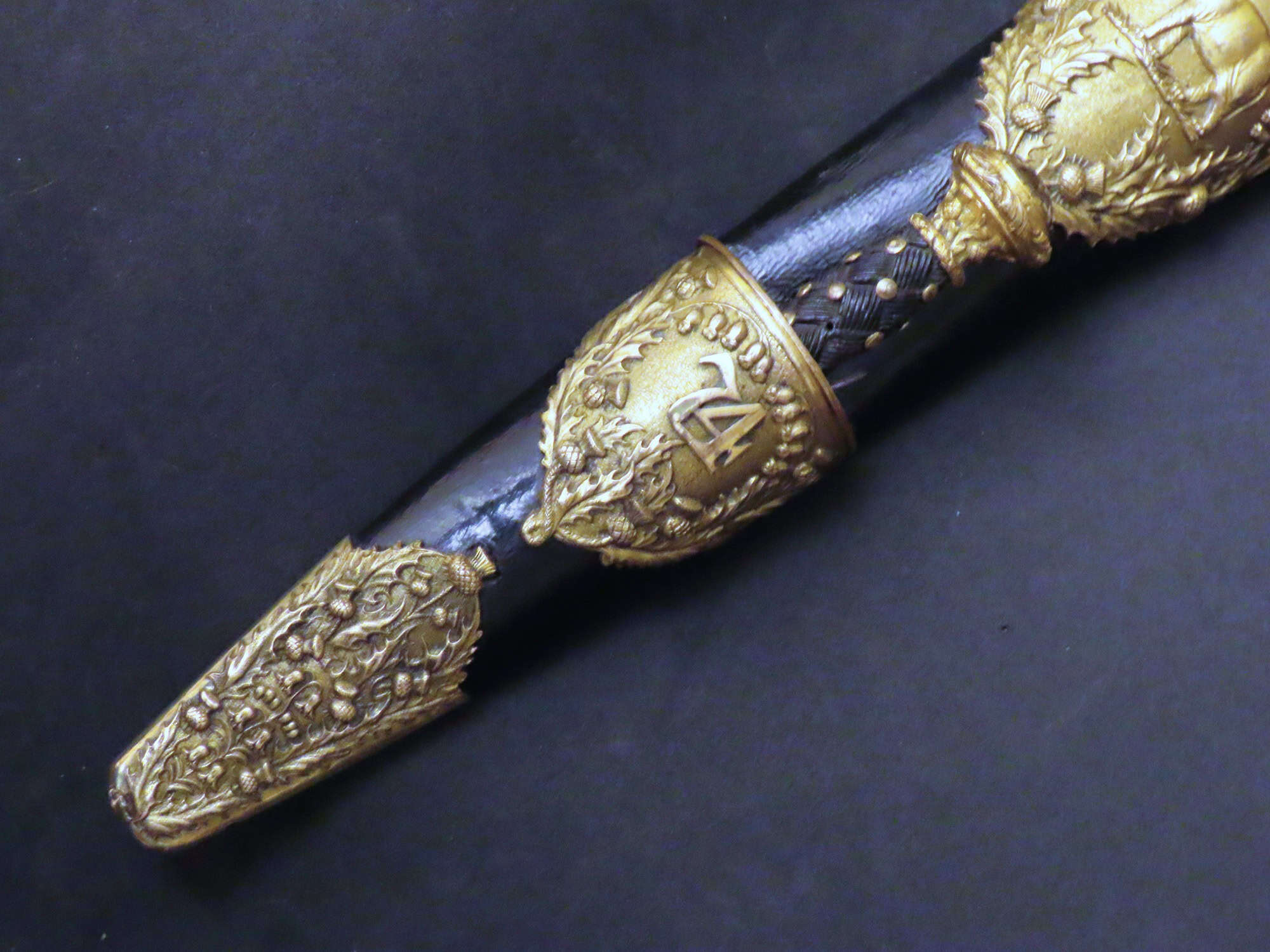
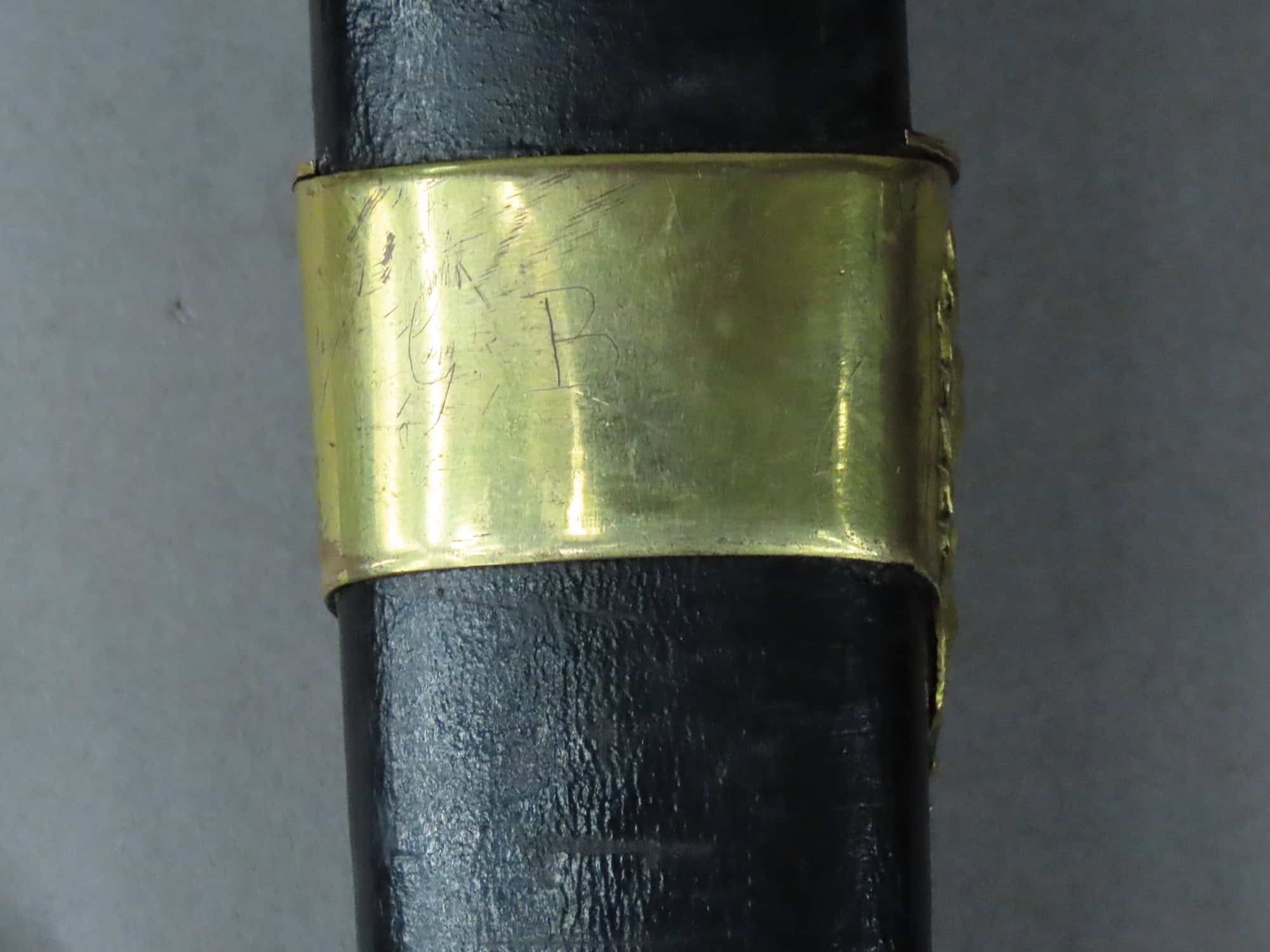
The scabbard is of wood covered with black leather and retains its suspension bar and strap at the back. The mouthpiece to the front shows St Andrew holding a cross on a background of a star surrounded with foliage and thistles. The mount for the by-knife pocket shows an Indian Elephant with “ASSAYE” above, as on the blade, surrounded with thistles and foliage. On the mount of the by-fork pocket is the Regimental number “74” within a frame of foliage and thistles. The chape possesses further thistle designs.
The dirk is in overall fine condition. The bronze mounts retain almost all of their gilt cover. The blade is in good condition. The pommel stones and their housings are intact. The overall length of the dirk in its scabbard is just over 189 inches (48.5 cm) long. The dirk alone is 17.75 inches (44.5 cm) long.
The 74th was raised in 1787 by Archibald Campbell, their first Colonel, and was known as Campbell’s Highlanders. The Regiment first saw action in India during the Mysore campaign of 1789, and subsequently saw action under Arthur Wellesley in the Mahratta War of 1802.
Returning to Europe, the 74th served under Wellington again in the Peninsular campaign, and fought at Busaco, Fuentes d’Onoro, (both sieges of Badajoz), also the siege of Ciudad Rodrigo, Salamanca, Vittoria, Nivelles, Tarbes, Orthe, and Toulouse. It was then sent to help garrison Ireland, and so missed the Battle of Waterloo, although it was on its way to embark for Belgium when news of the battle arrived.
The Regiment remained in Ireland until 1818 and was then in Canada and New Brunswick until 1828, Bermuda for a year, and in Ireland again from 1830 to 1834. Later in the 1830s and into the 1840s, the 74th was stationed in St. Lucia, Barbados and other islands in the West Indies; its personnel keeping remarkably healthy apart from one outbreak of fever and dysentery. Without coming home again, the Regiment went to Quebec in Canada. The 74th came back to Britain from Canada in March 1845 and later that year became the 74th (Highland) Regiment and served in the Kaffir War and in the Sepoy Rebellion.
In 1881 as part of the Childers Reforms, the 74th amalgamated with the 71st (Highland) Regiment of Foot to become the 2nd battalion, Highland Light Infantry.