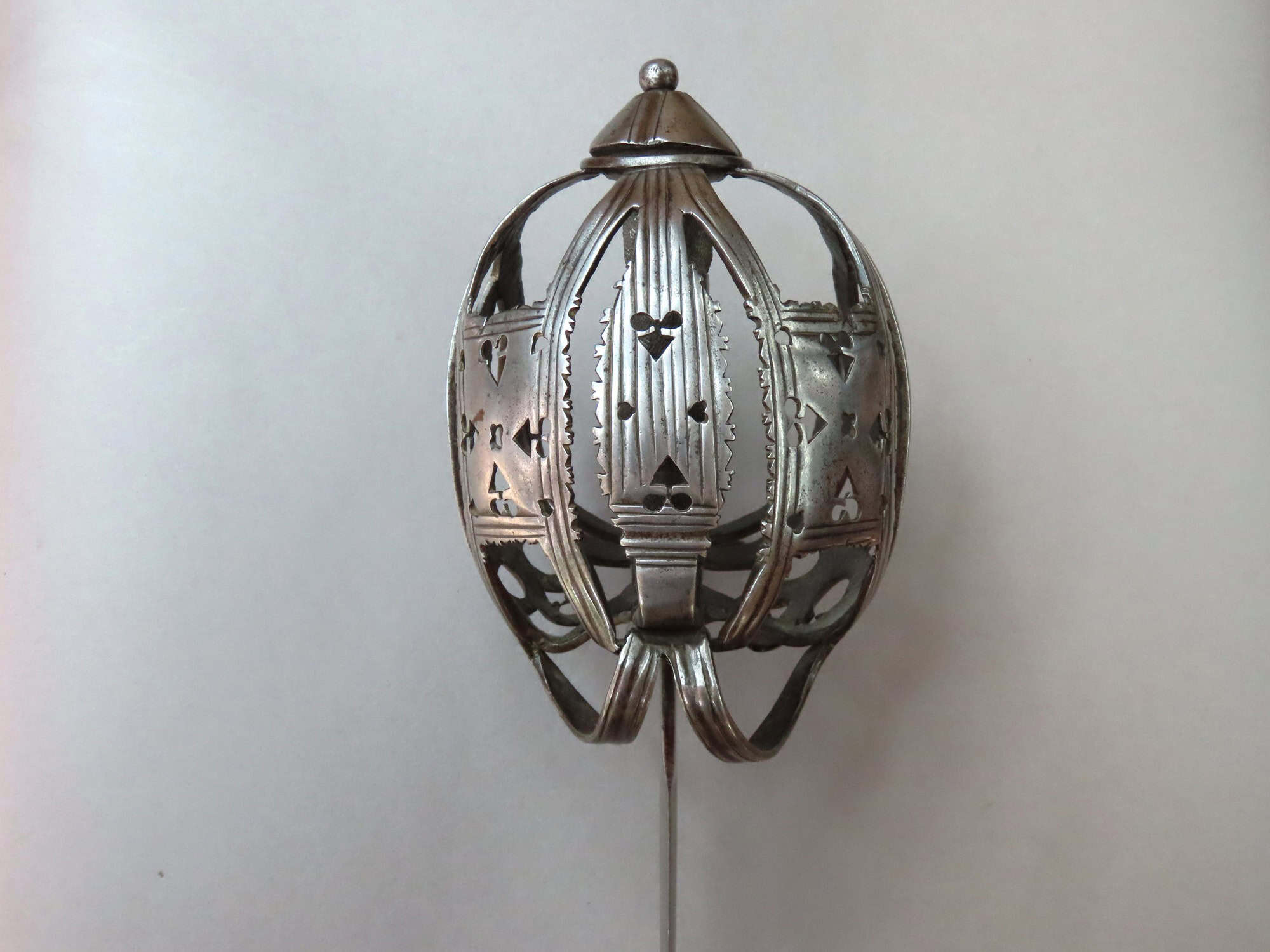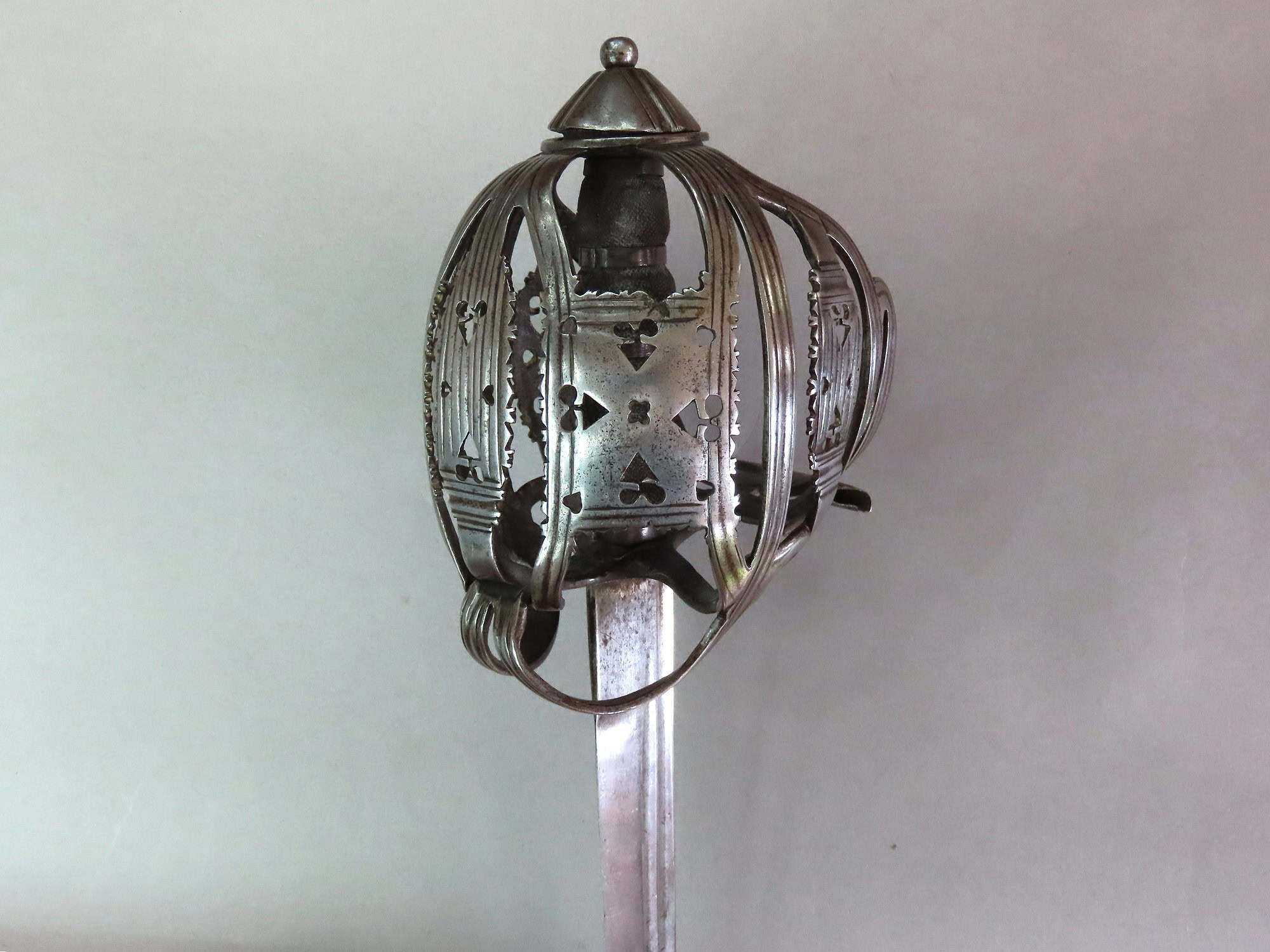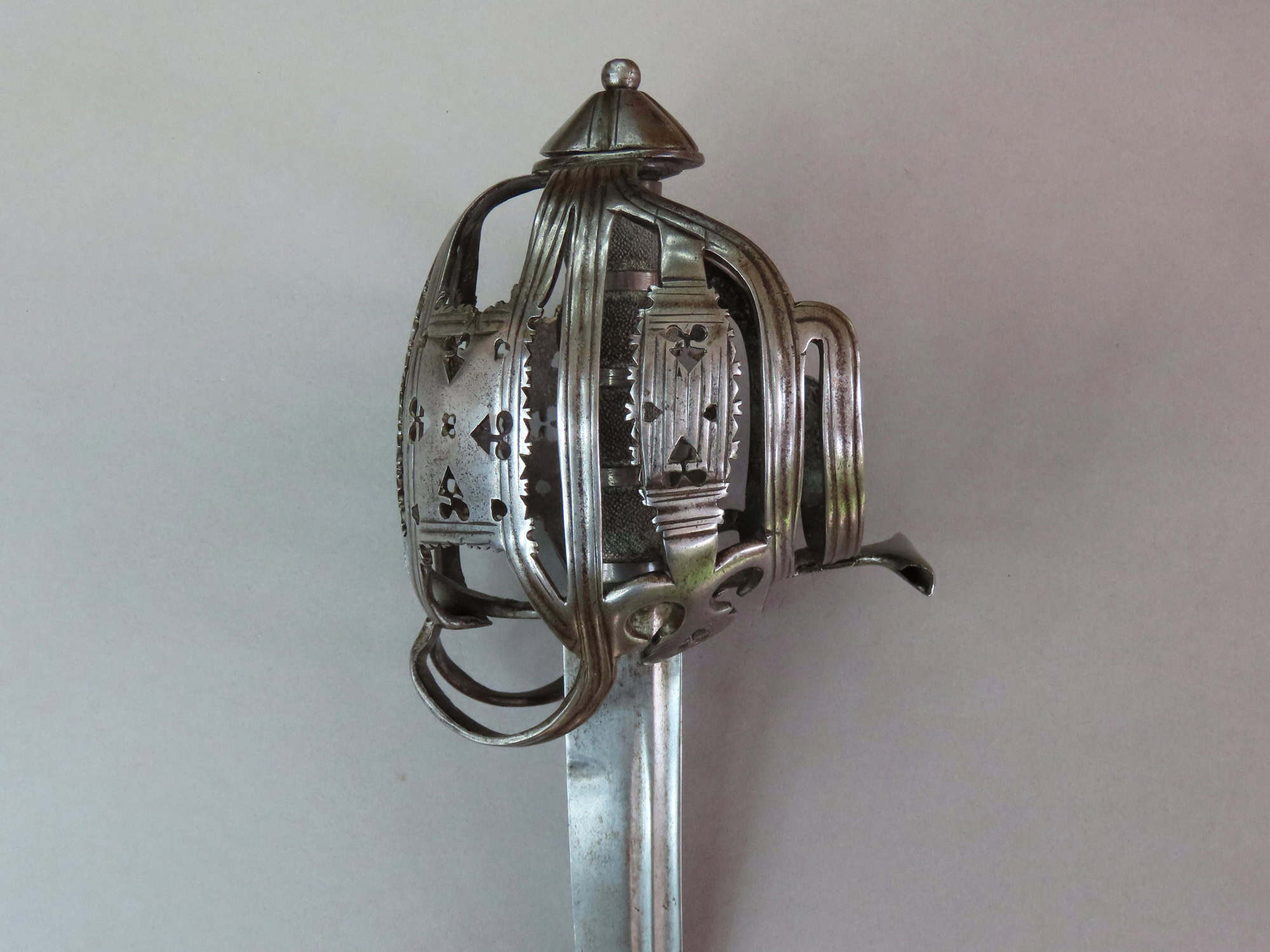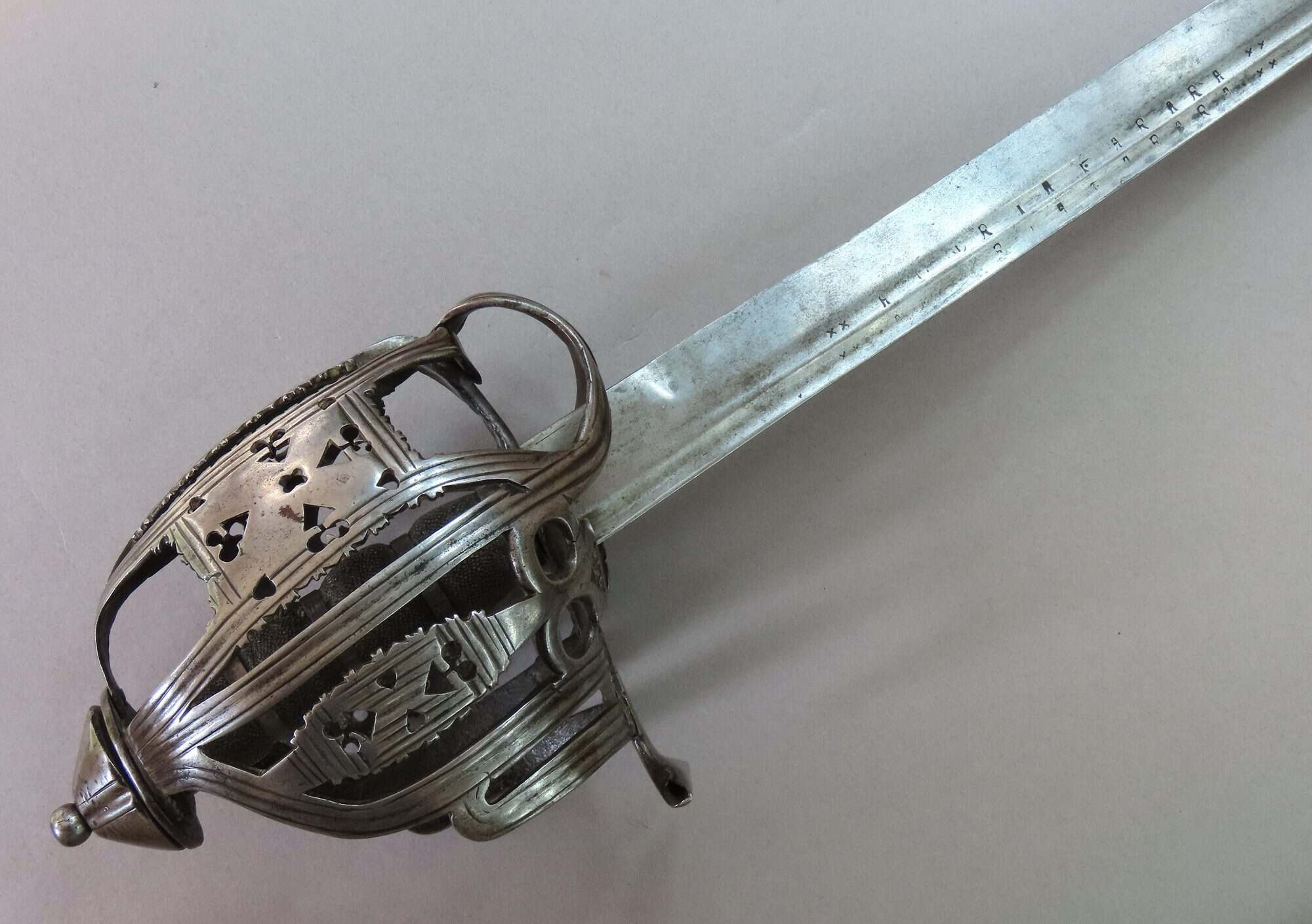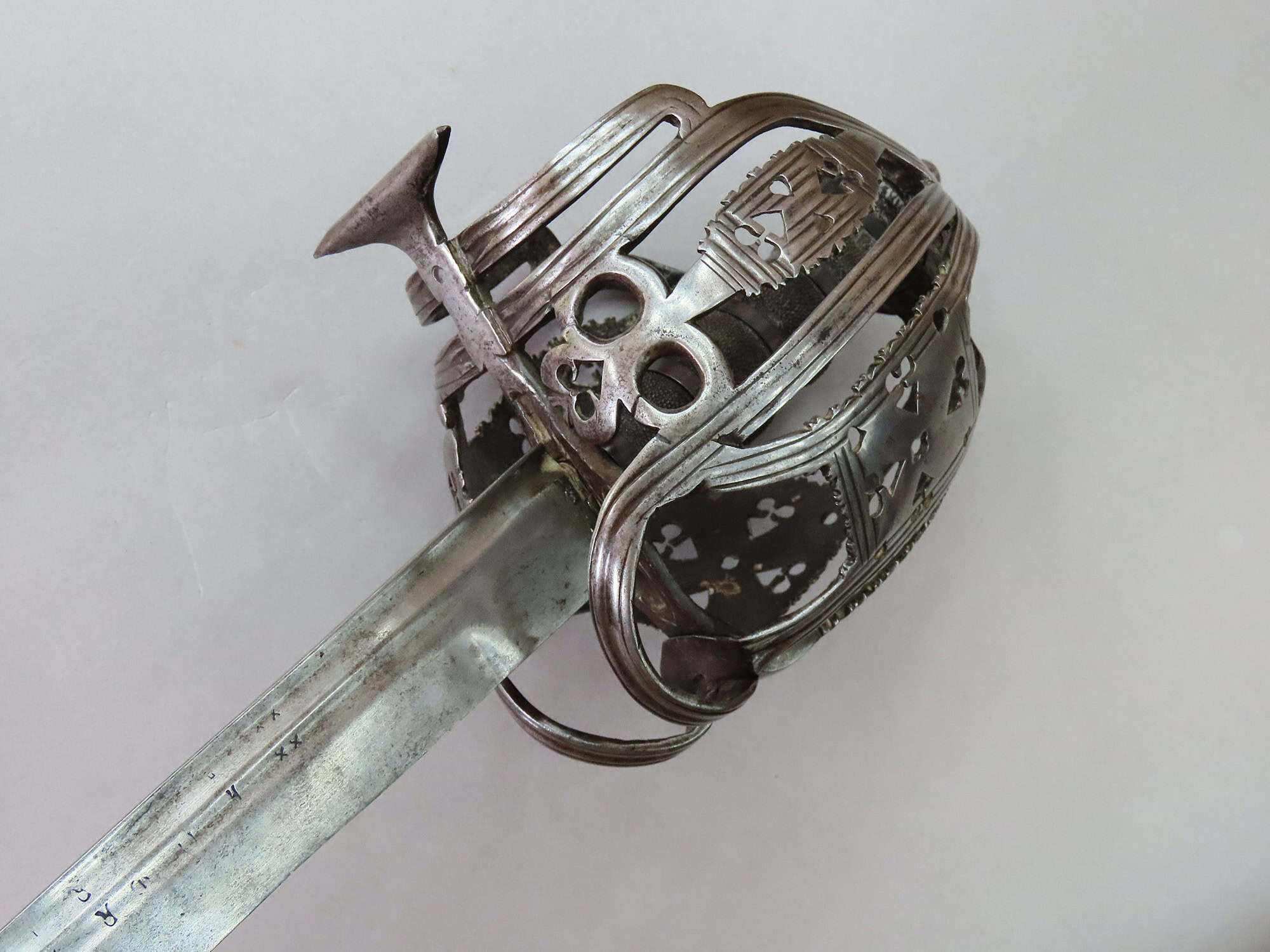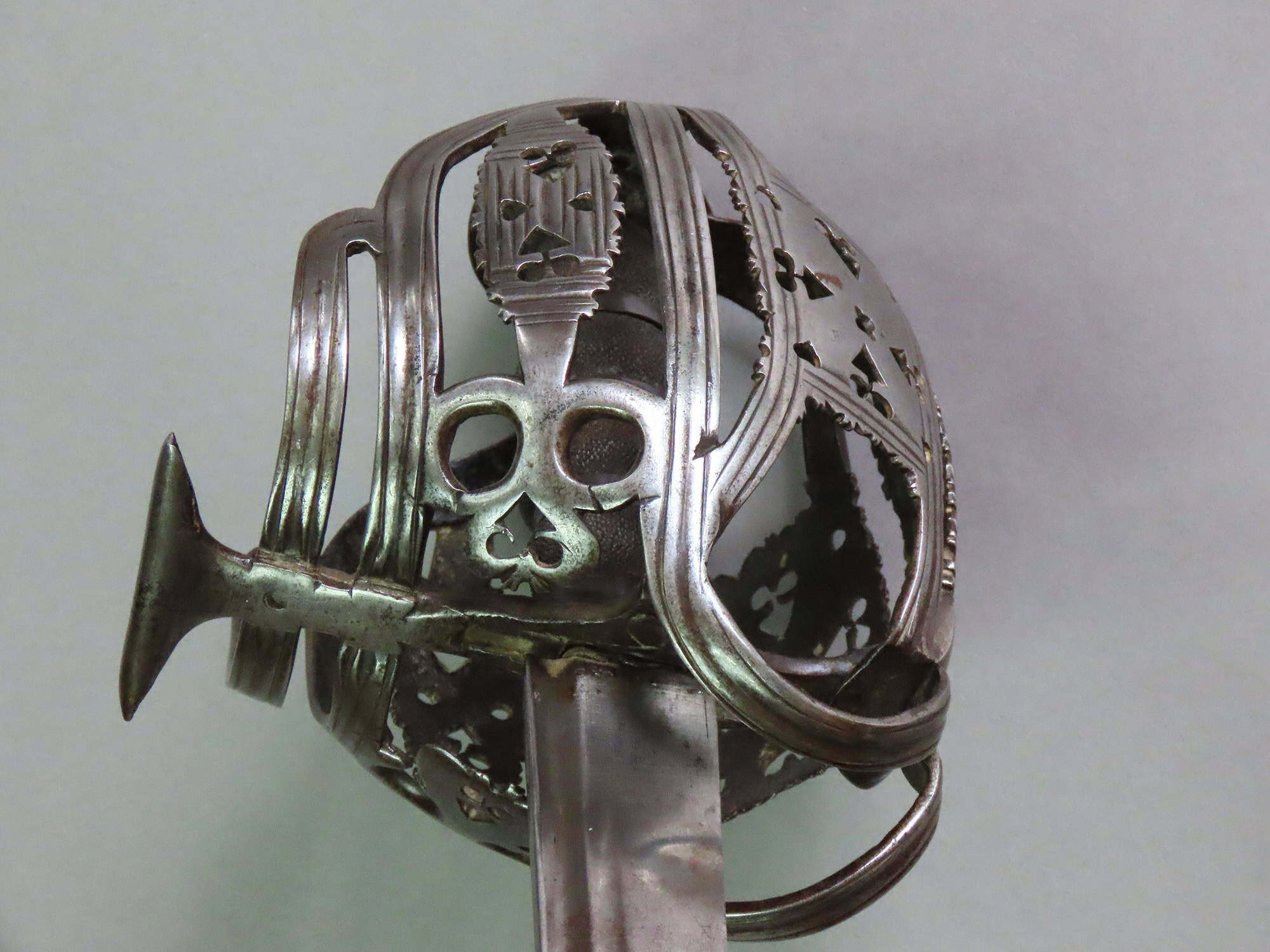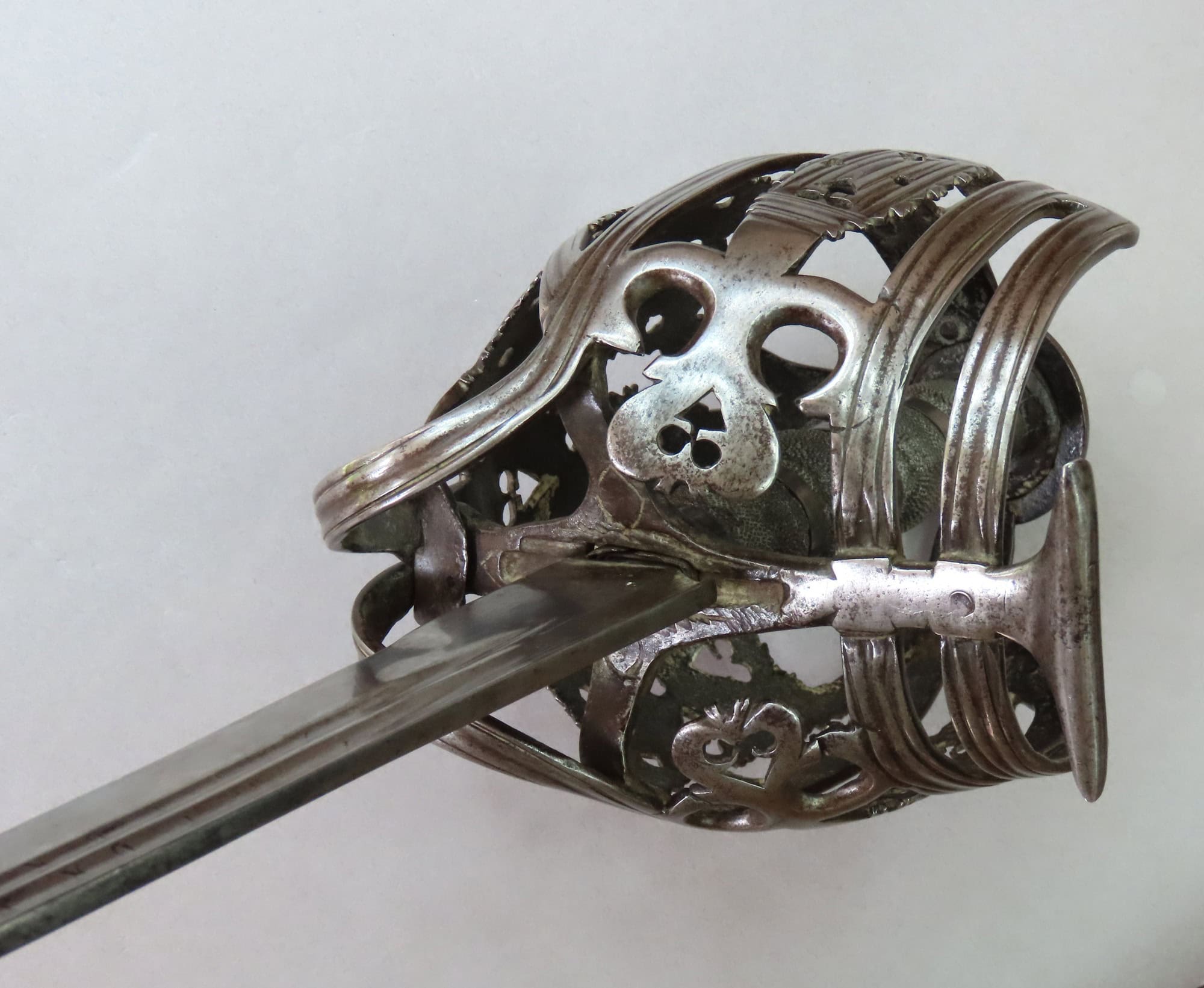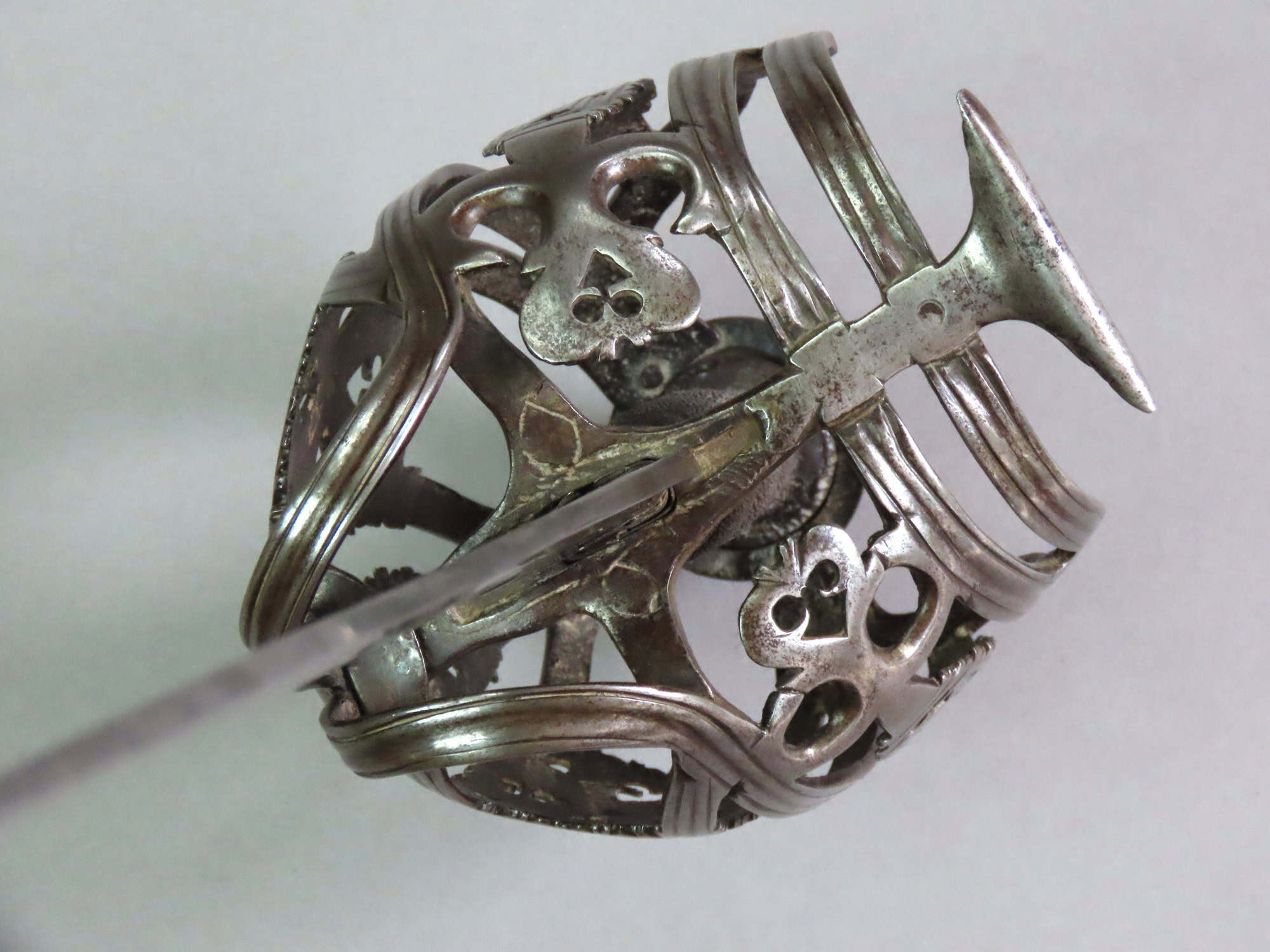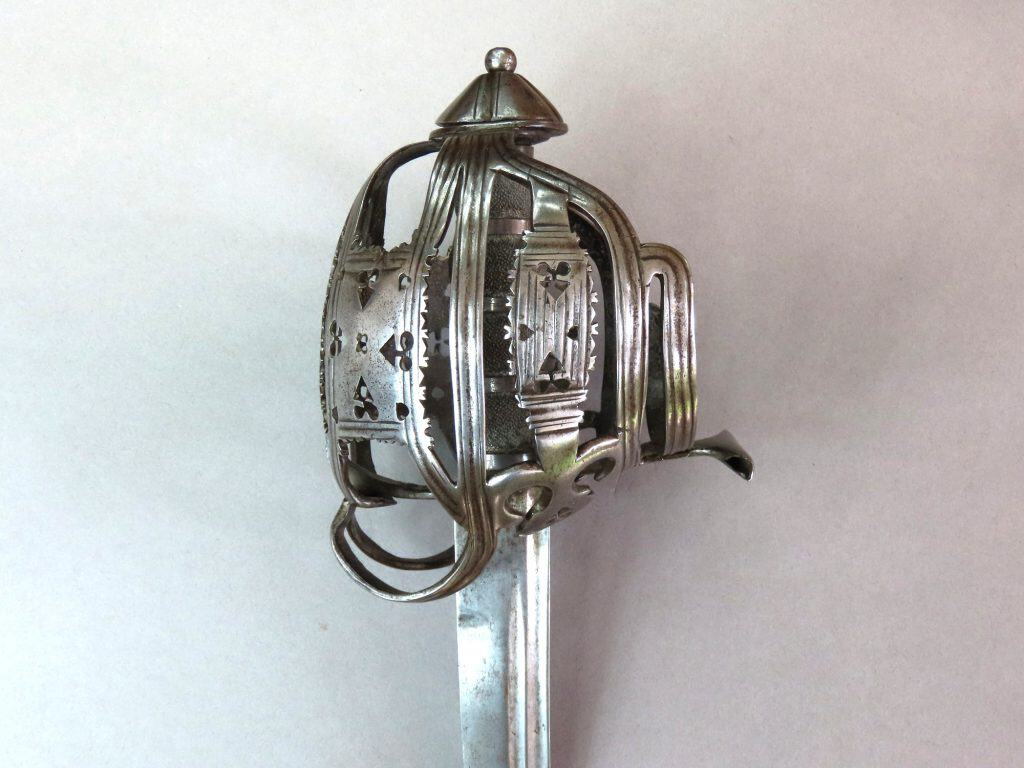
A historically important early 18th century Scottish Basket Hilted Sword of “Glasgow” style from the estate of the Earl of Stair.
To enquire about this itemplease click here
Price: £25,000
Ref: 62062480
Item Description
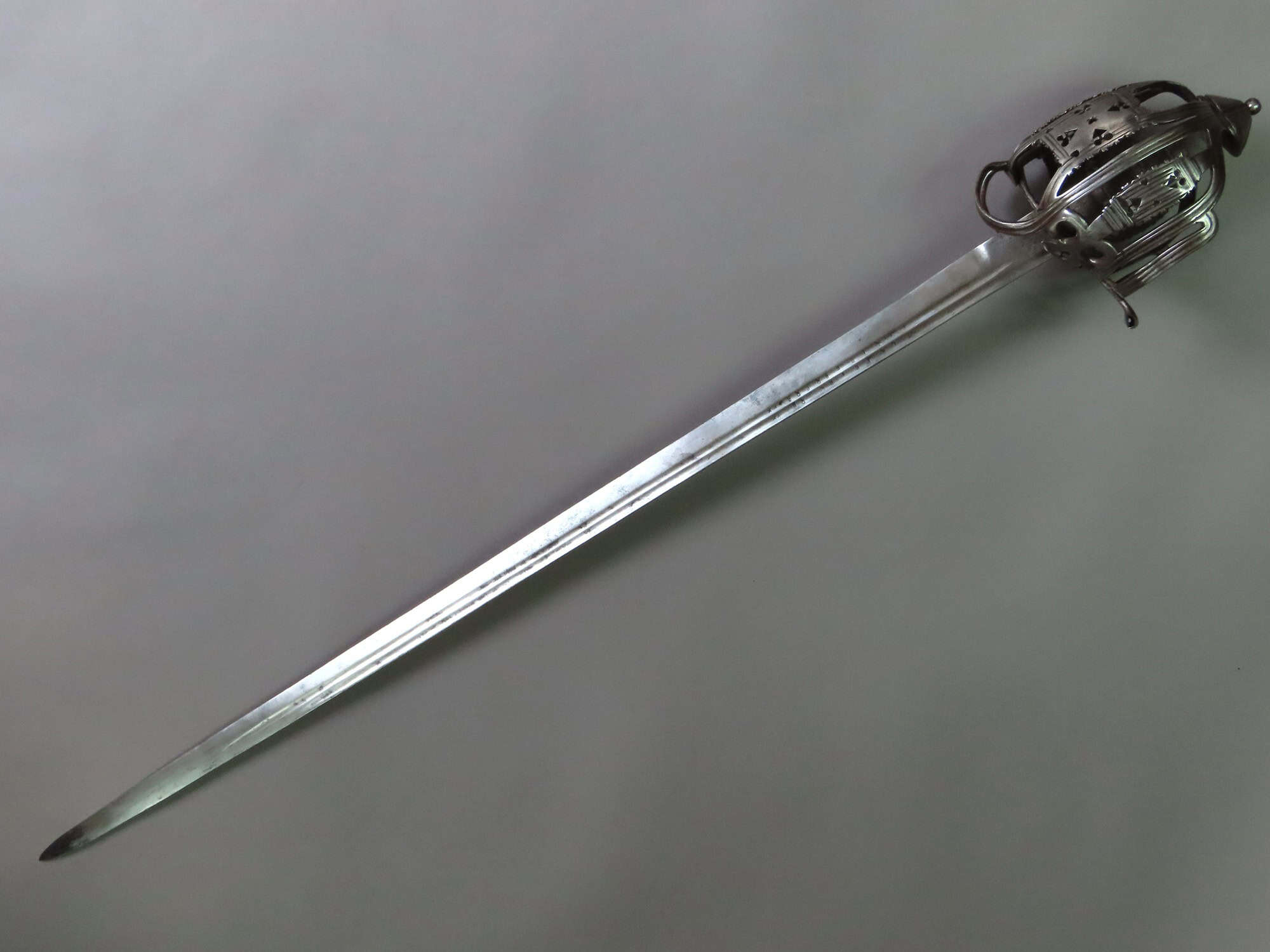
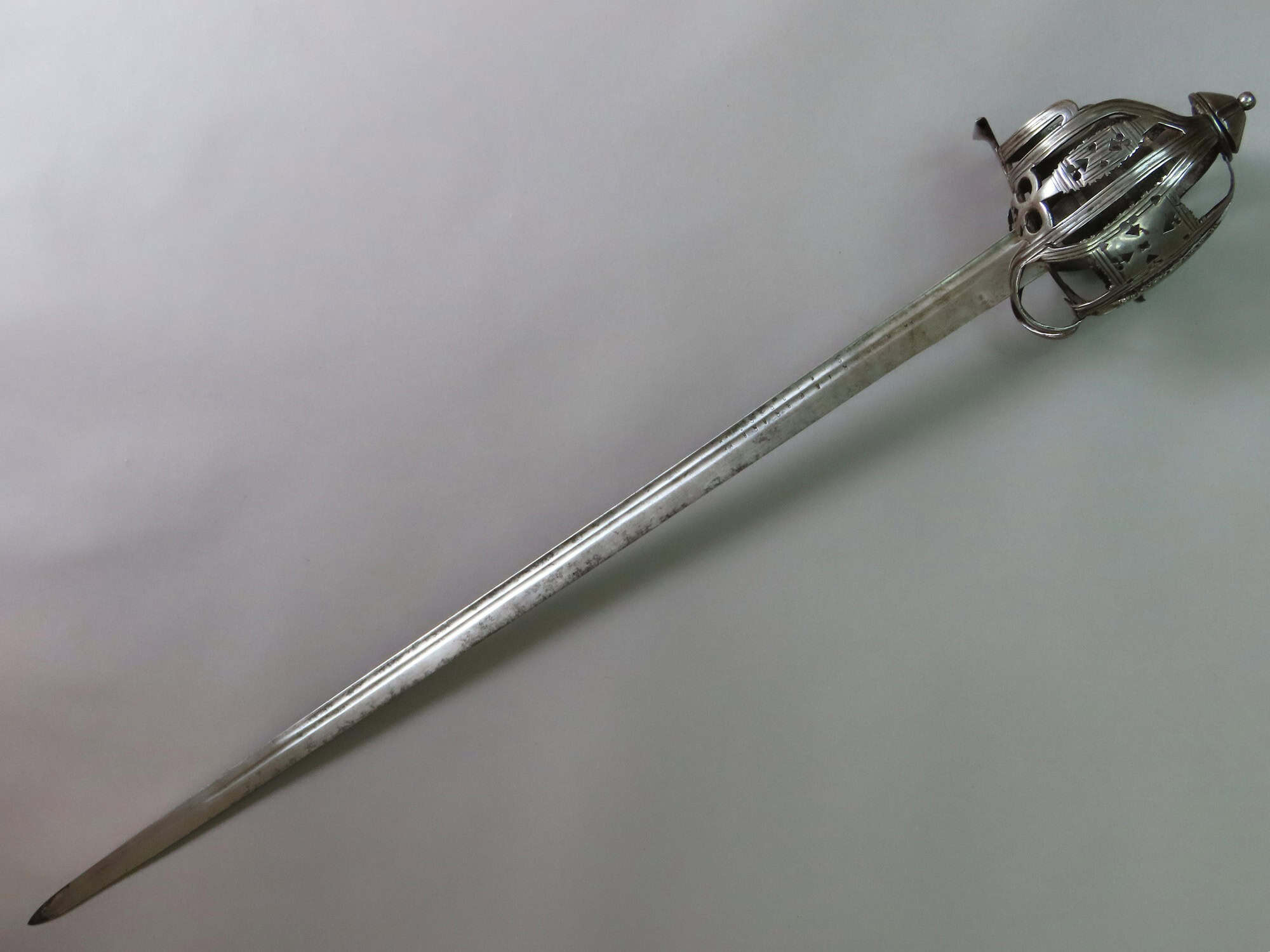
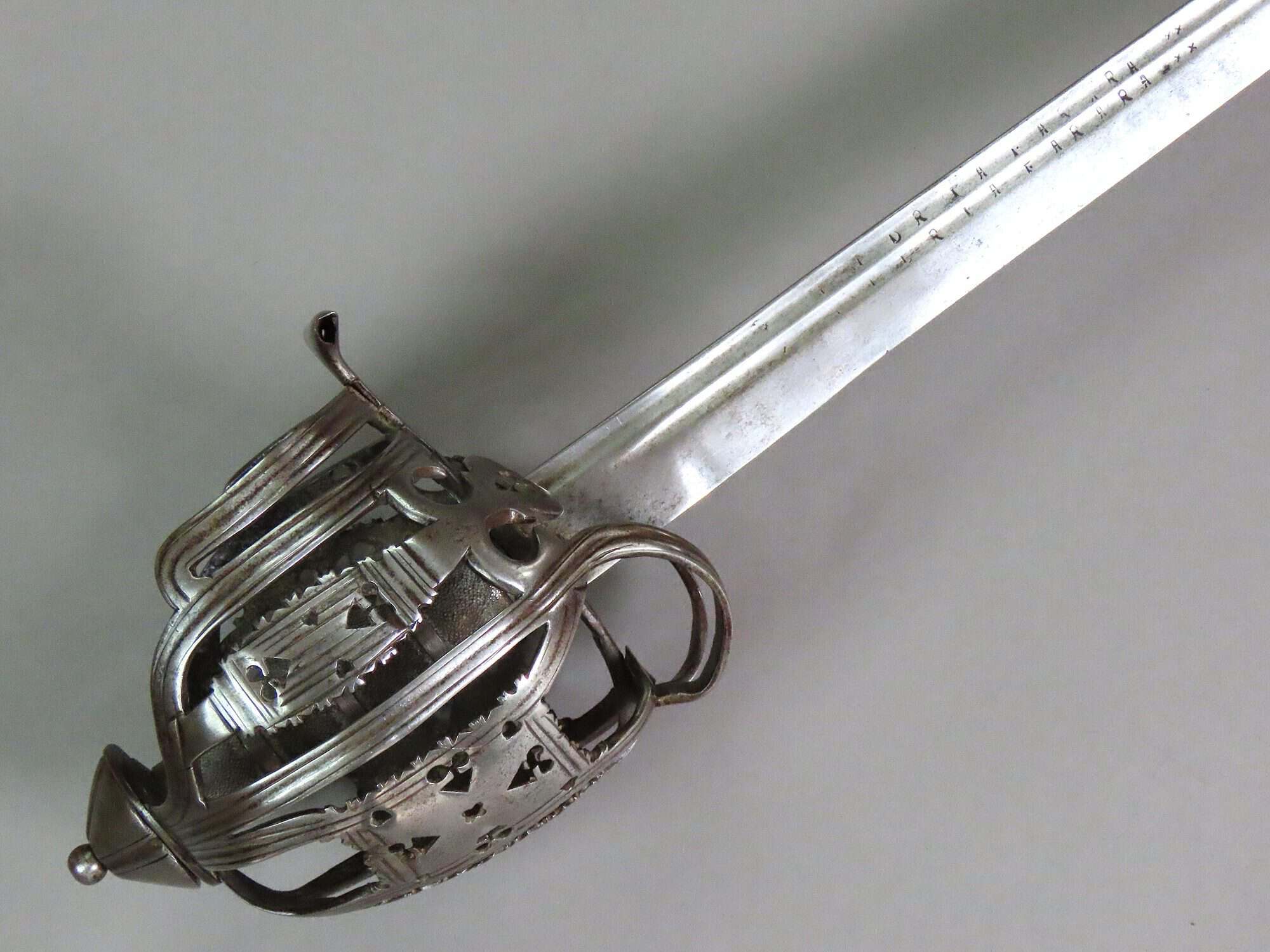
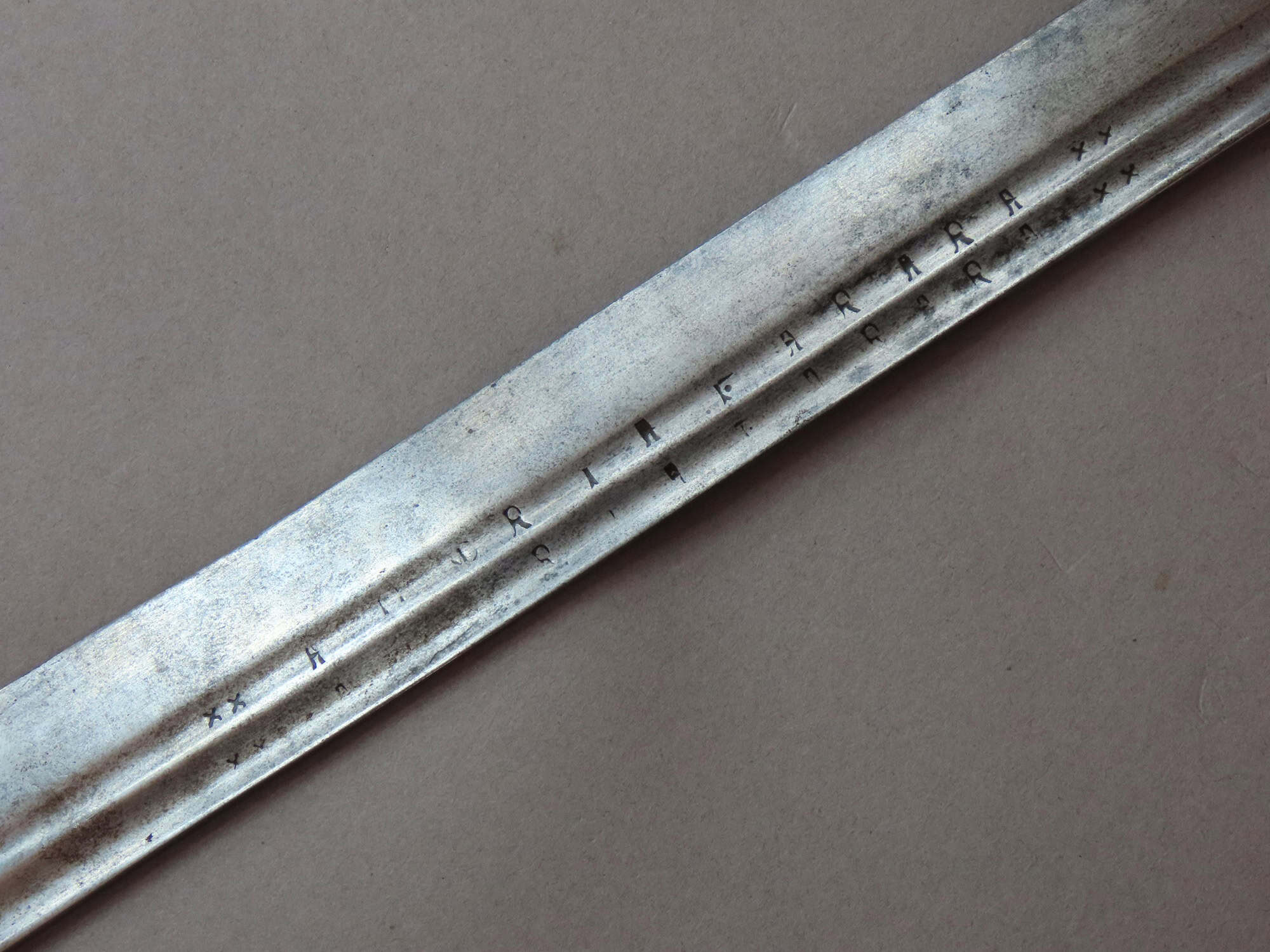
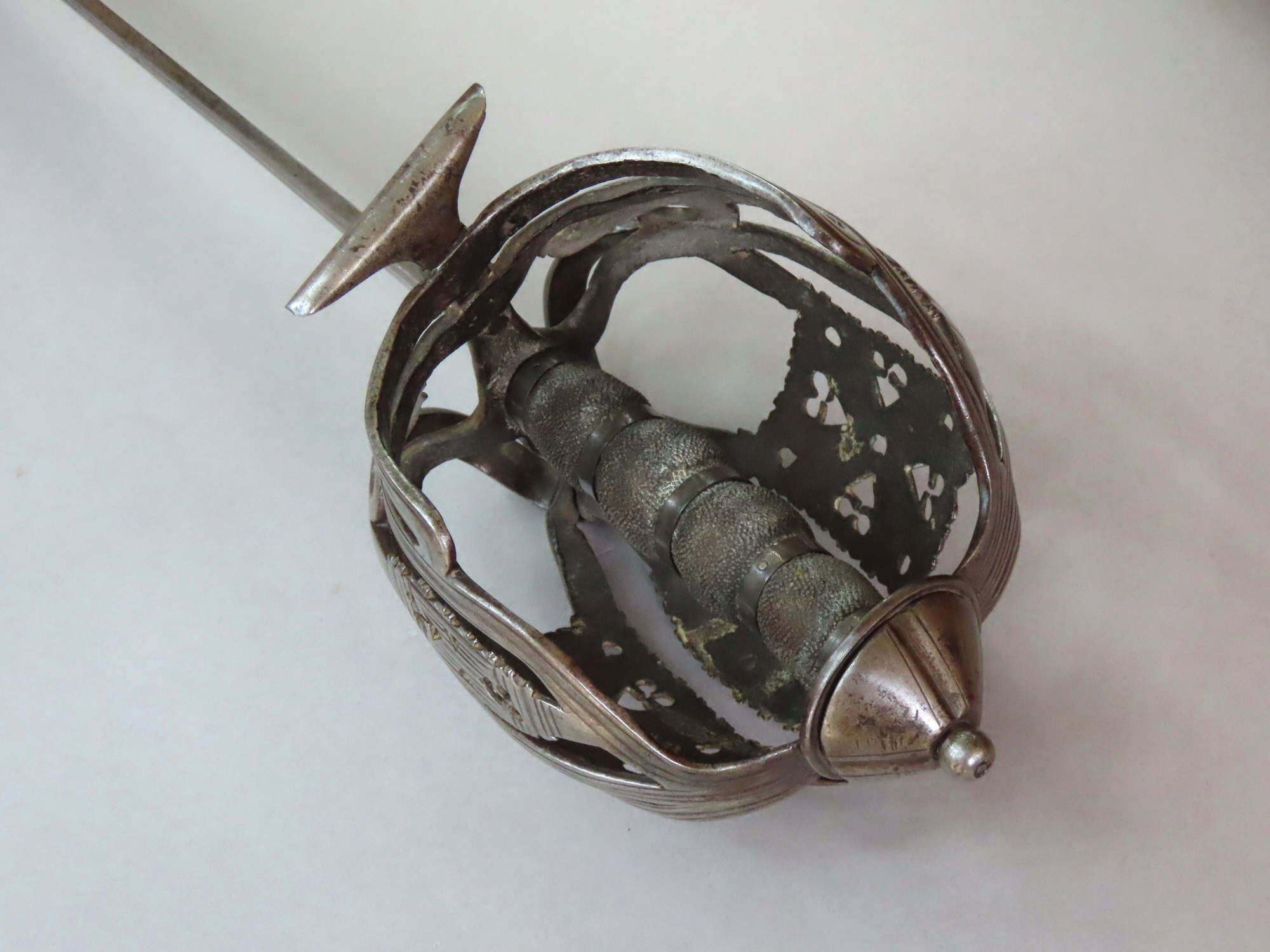
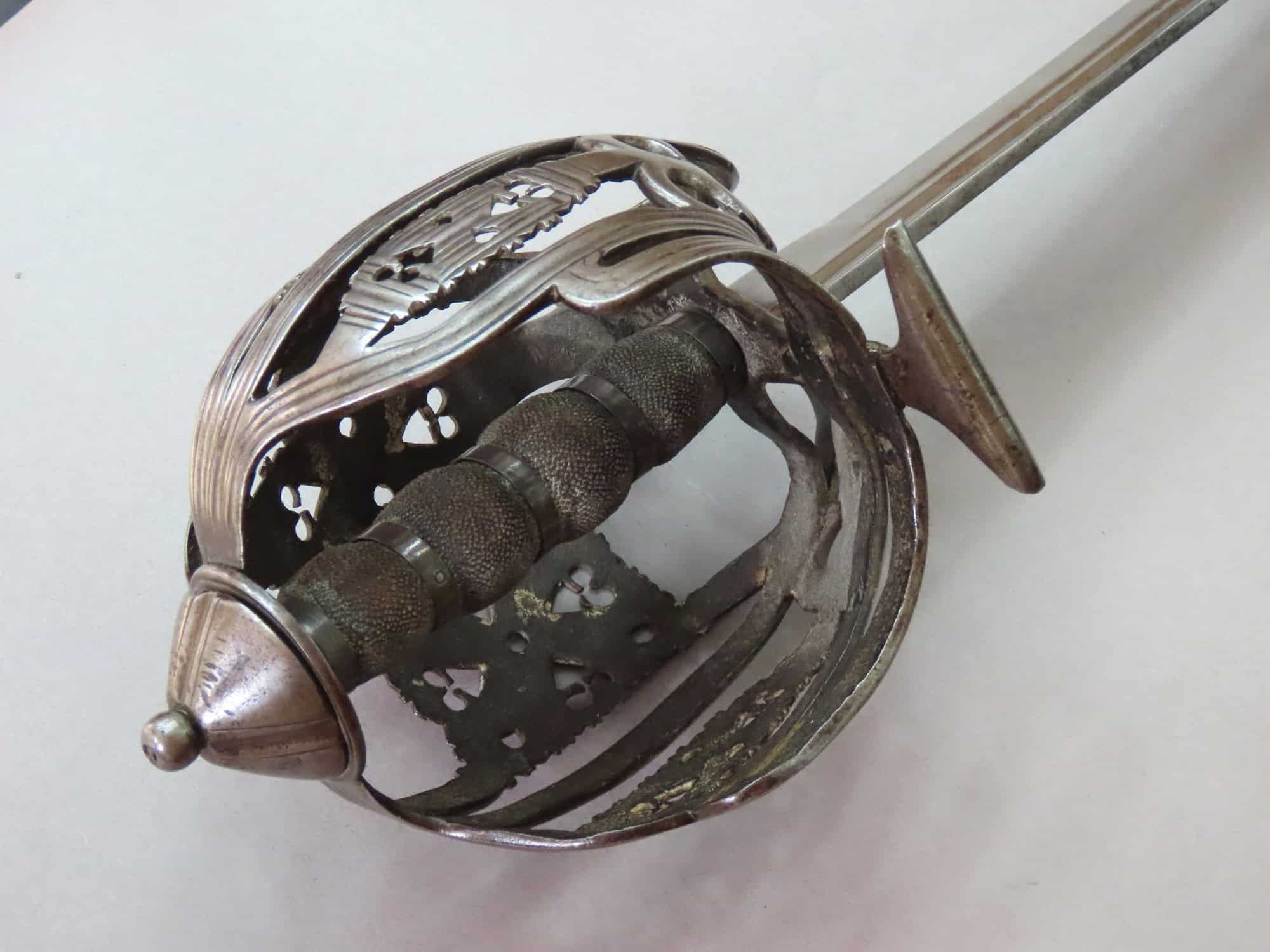
An important, rare and attractive Scottish basket hilted sword dating to the beginning of the 18th century. The sword is mounted with an elegant and finely contoured hilt decorated with the distinctive line decoration of “Glasgow” style developed by Glasgow’s armourers in the late 17th and 18th centuries. The sword is in fine condition and mounted with a high quality Solingen made blade with the bladesmith’s mark ANDRIA FARARA stamped into the fullers. Whilst an effective weapon, a sword with such an imposing appearance was also employed to reinforce the martial and social standing of the owner.
The sword belonged to the estate of the Earl of Stair until it was sold together with other effects at Christies in London in 1972. Known as the Earl of Stair’s Sword, it was questioned at the time of the sale whether the sword belonged to John Dalrymple, the 1st Earl of Stair (1648 to 1707). As Joint Secretary of State in Scotland 1691–1695, he played a key role in suppressing the Jacobite rising of 1689 and was forced to resign in 1695 for his part in the Massacre of Glencoe in 1692. Restored to favor and made an Earl in 1703 he played a key role in the negotiations concerning the 1707 Acts of Union but died just before the Acts became law.
Christies concluded at the time of the sale that the sword dated to circa 1720 and as the Earl died in 1707, there was deemed to be no connection. It was assumed therefore that the historical relationship of the sword with an Earl of Stair was with his son, the 2nd Earl (also John Dalrymple – 1673 to 1747), who succeeded to the Earldom in 1707. The 2nd Earl was also a prominent historical figure. He was a successful commander under Marlborough in Europe in the War of the Spanish Succession in the early 18th century. He also gathered valuable intelligence on the eve of the 1715 Jacobite Rising for the British State whilst on diplomatic service in France by utilising his extensive networks there. Resuming his military career he was appointed Field Marshal in the British Army in 1742 and involved in the War of the Austrian Succession where he led Britain and its allies to victory at the Battle of Dettingen in 1743.
More recent examination of the sword has indicated that it dates to earlier than 1720. In arriving at their date Christies experts were most likely influenced by the addition of a pommel ring to the hilt which is a later feature on Scottish basket hilted swords, and would not have been part of the hilt when the sword was first made. This raises the distinct possibility that it may have been in the possession of the 1st Earl towards the end of his life then passed on to the 2nd Earl after his death. The sword was kept as a heirloom in the family collections at two properties owned by the Dalrymple family, Oxenfoord Castle near Edinburgh, and Lochinch Castle near Stranraer.
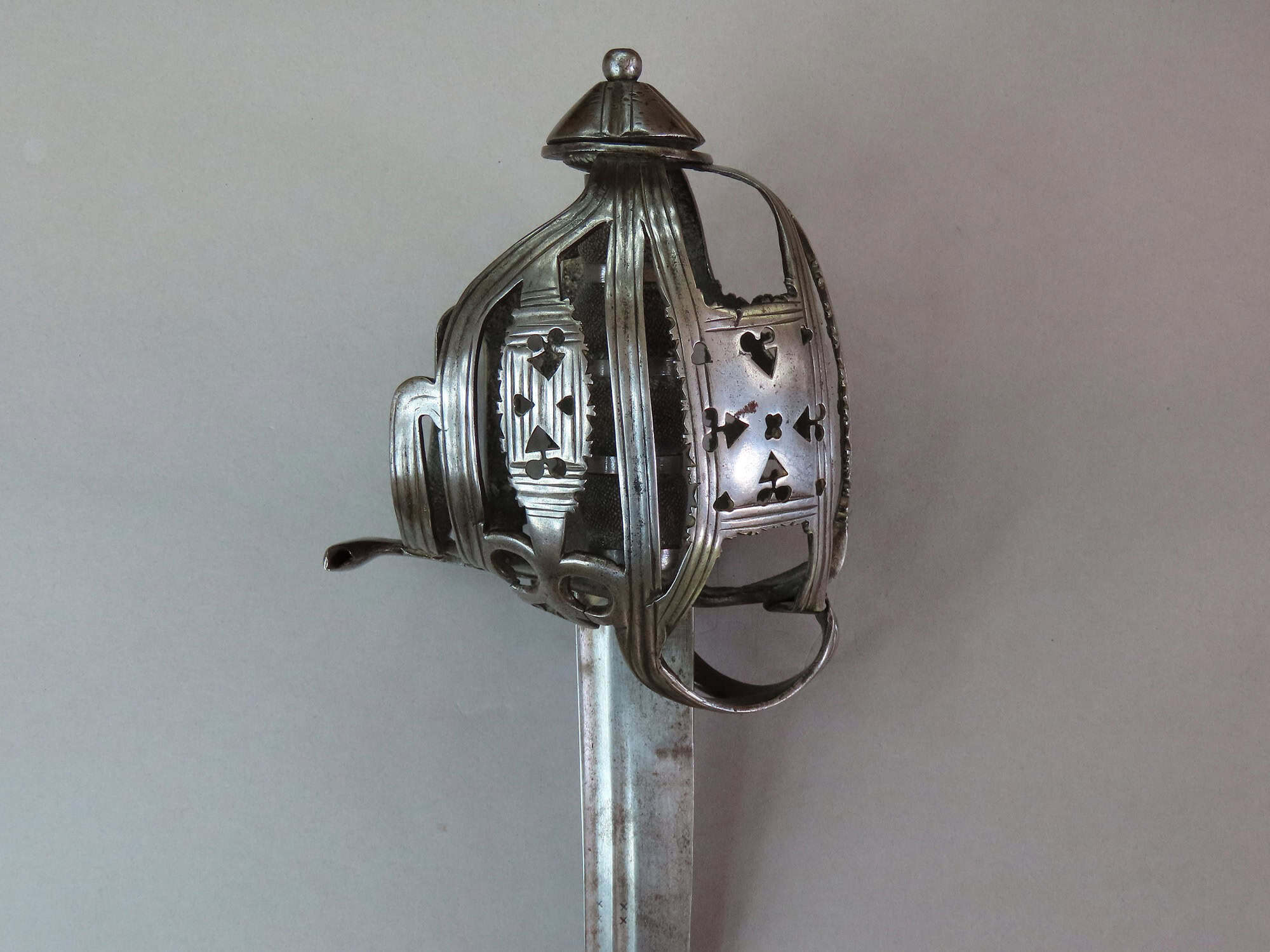
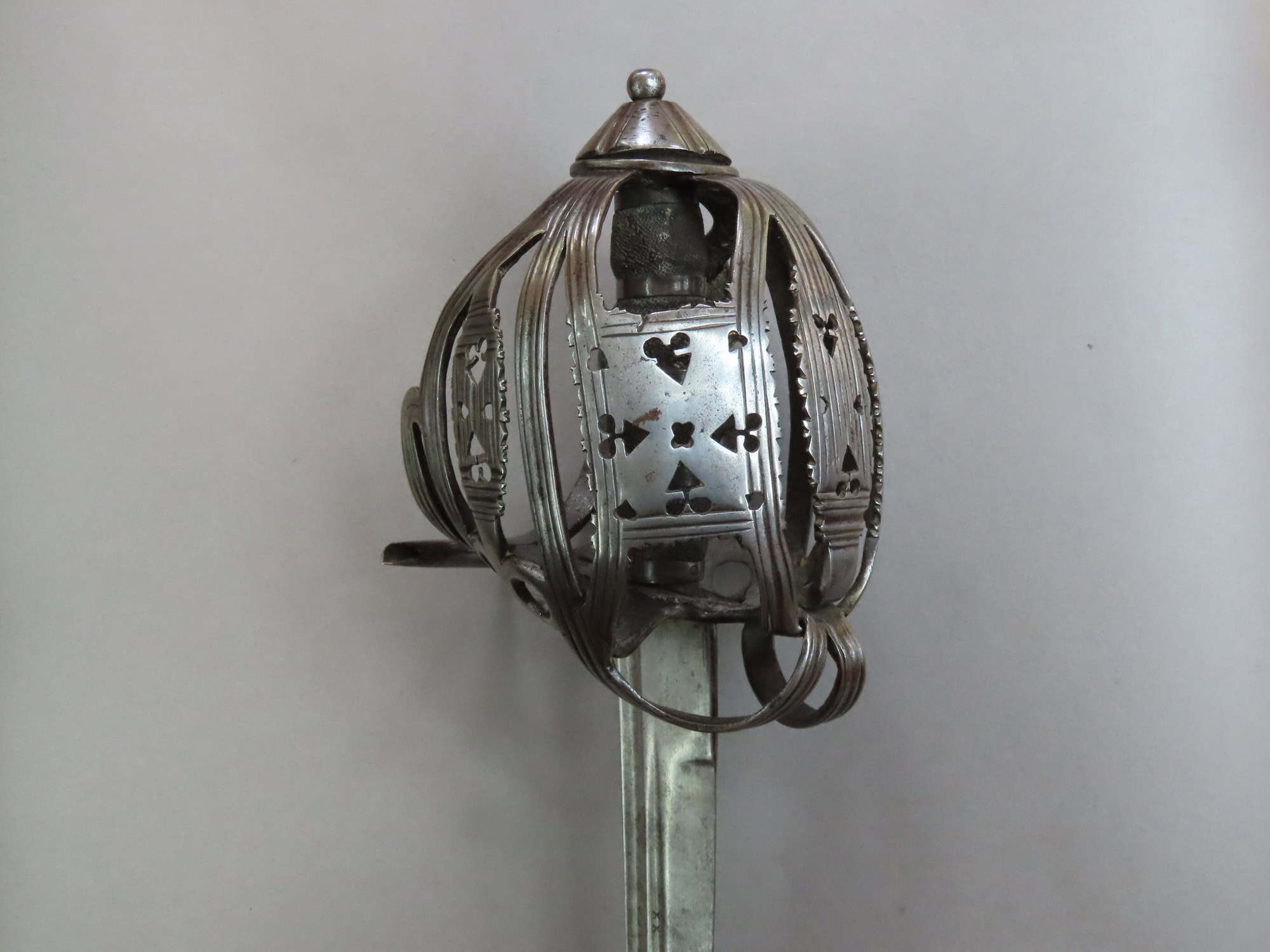
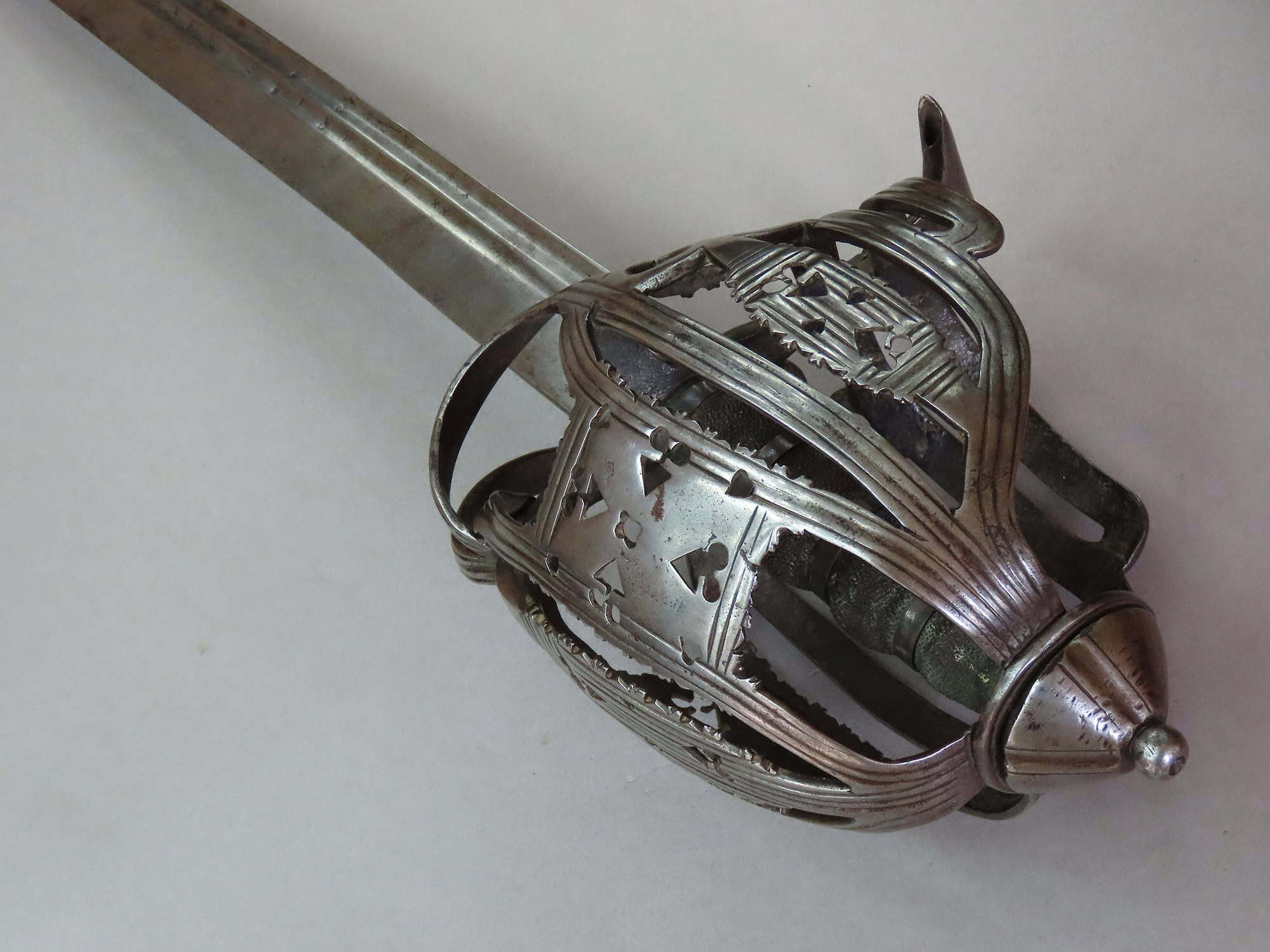
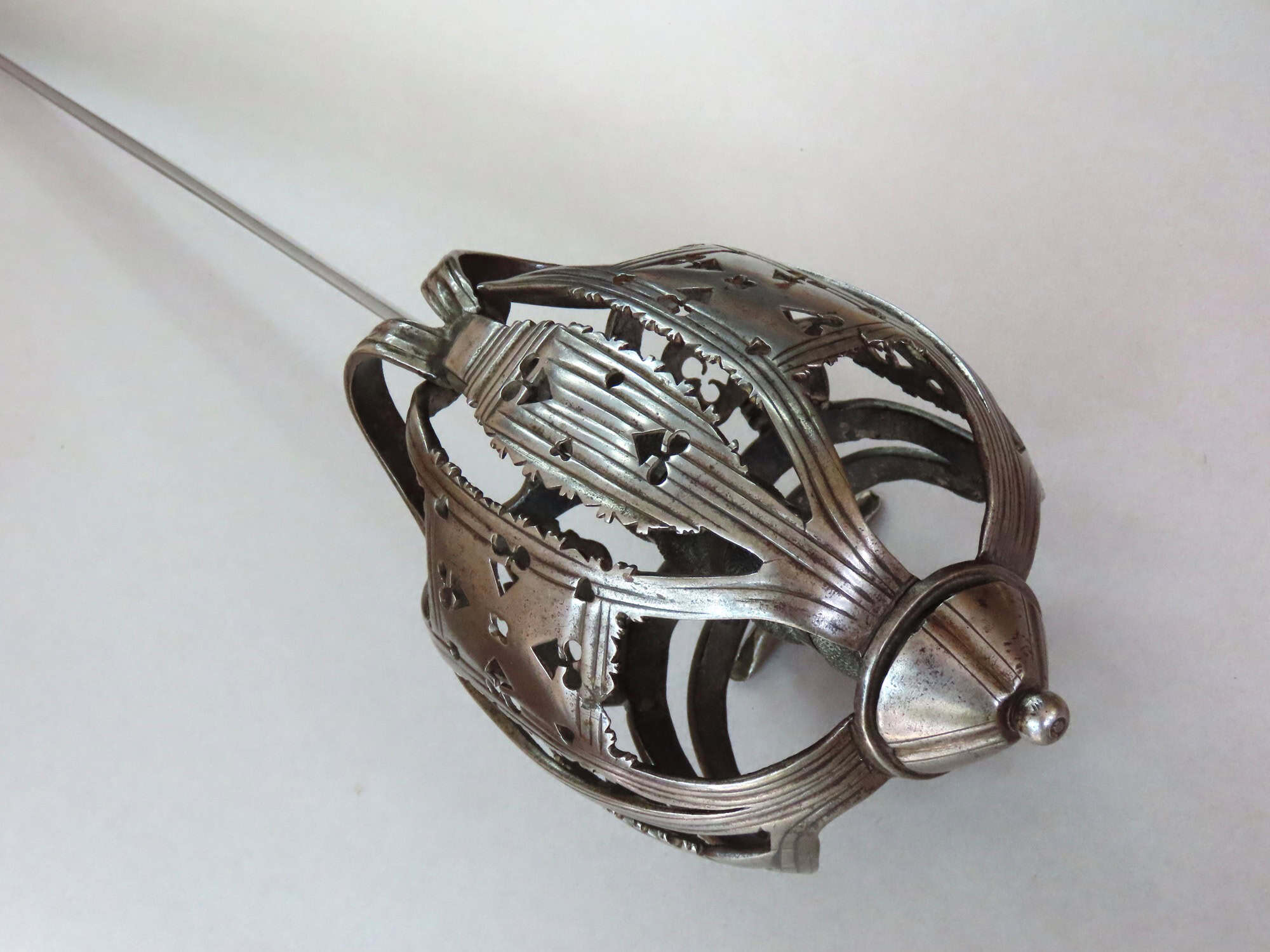
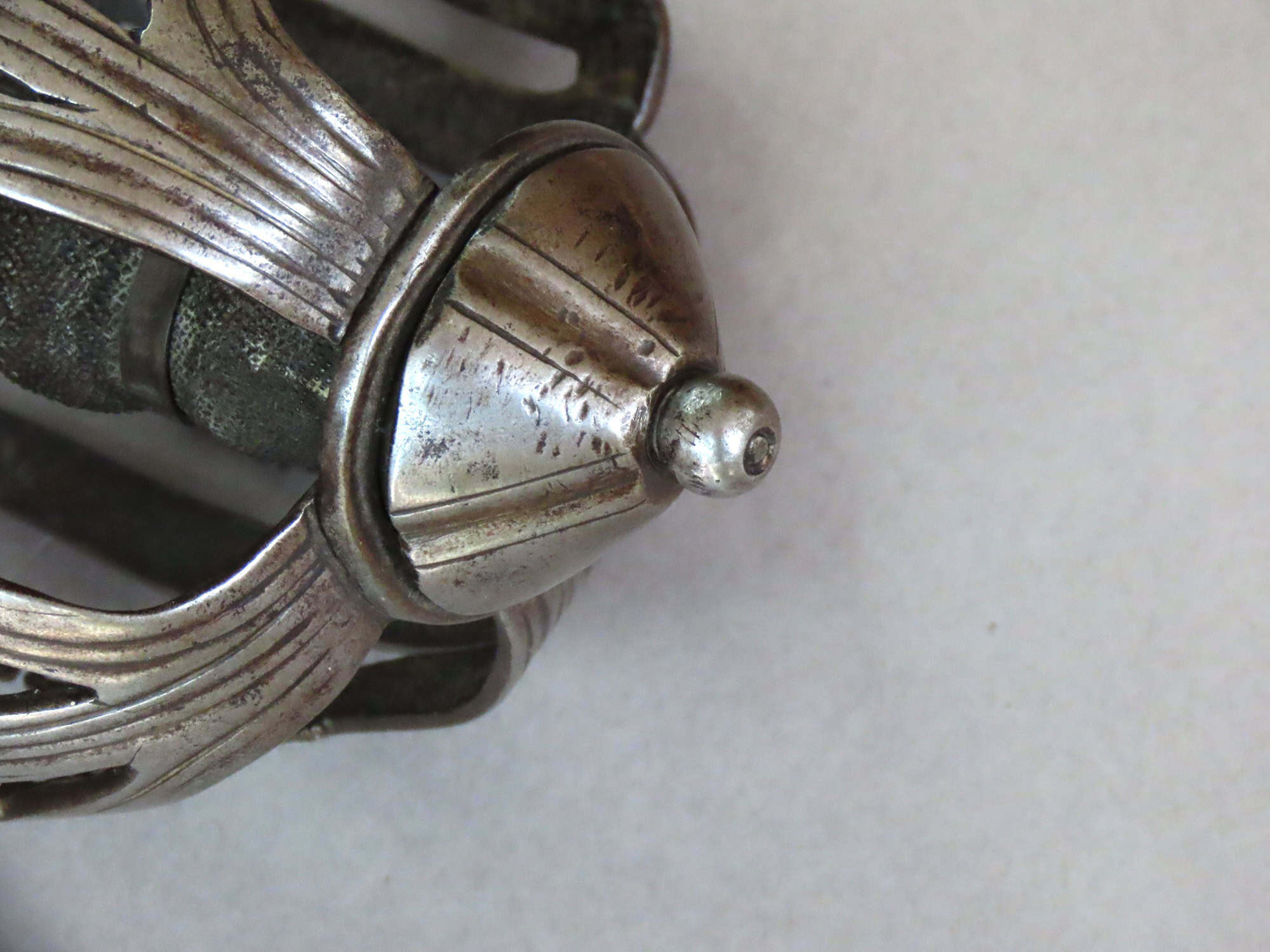
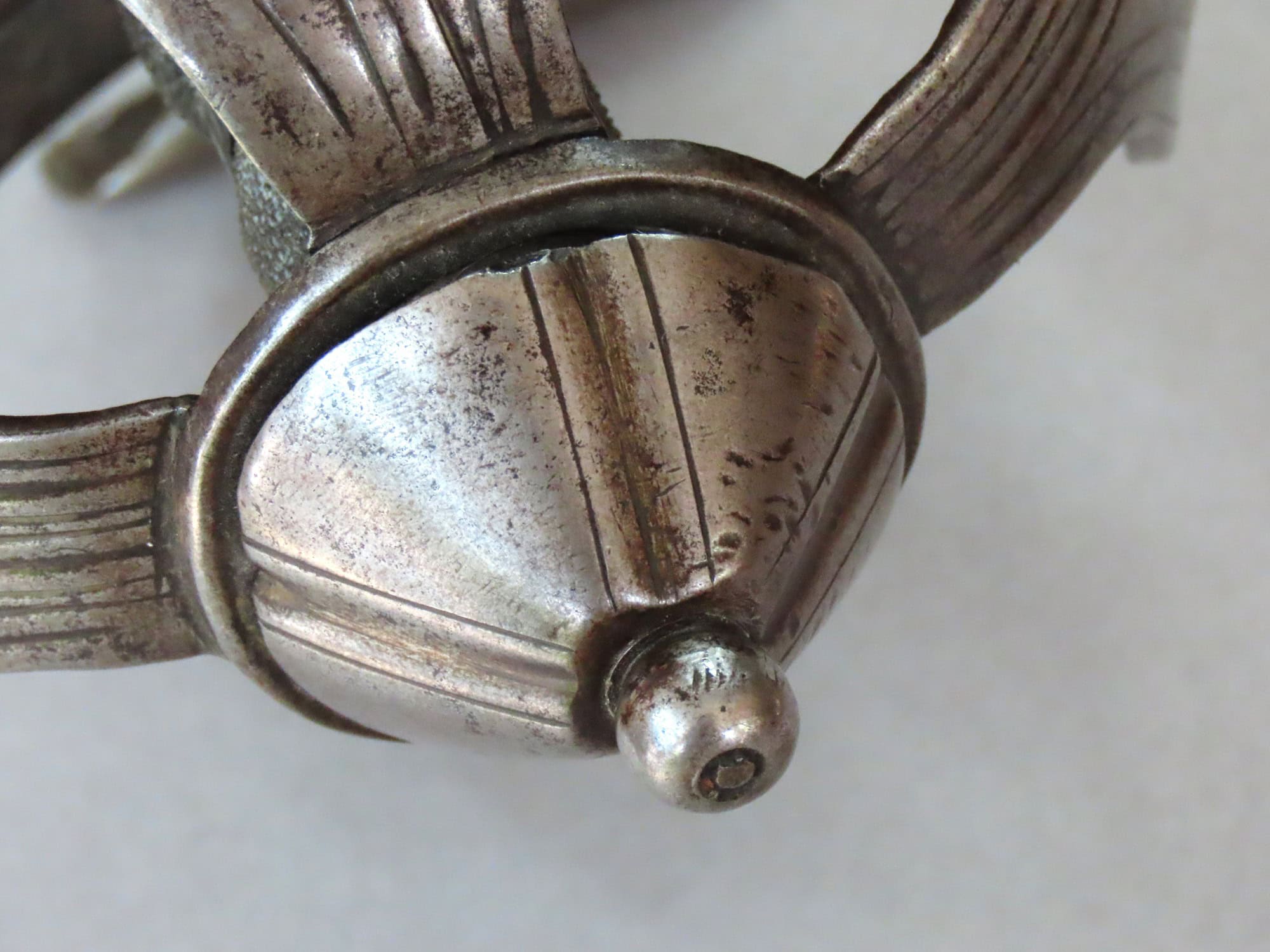
The hilt is representative of the high-quality workmanship of Glasgow’s hilt makers consisting of strong structural bars, of flattened rectangular section, forged into a attractively shaped basket guard. These are decorated on the outside with broad longitudinal grooves along the middle, with narrower incised lines on either side, in what has become known to weapons historians as the distinctive “Glasgow Style” of hilt decoration. The style was developed in the second half of the 17th century and flourished until the third quarter of the 18th.
The Glasgow style was adopted by the most skilled smiths in other sword making centres in Scotland and was also copied by the British military for some of its own basket hilted swords made in the Scottish style from the second quarter of the 18th century. Filing and incising the bars in this manner was a time consuming and skilled task demanding many hours of labour and reserved only for the best and most expensive hilts.
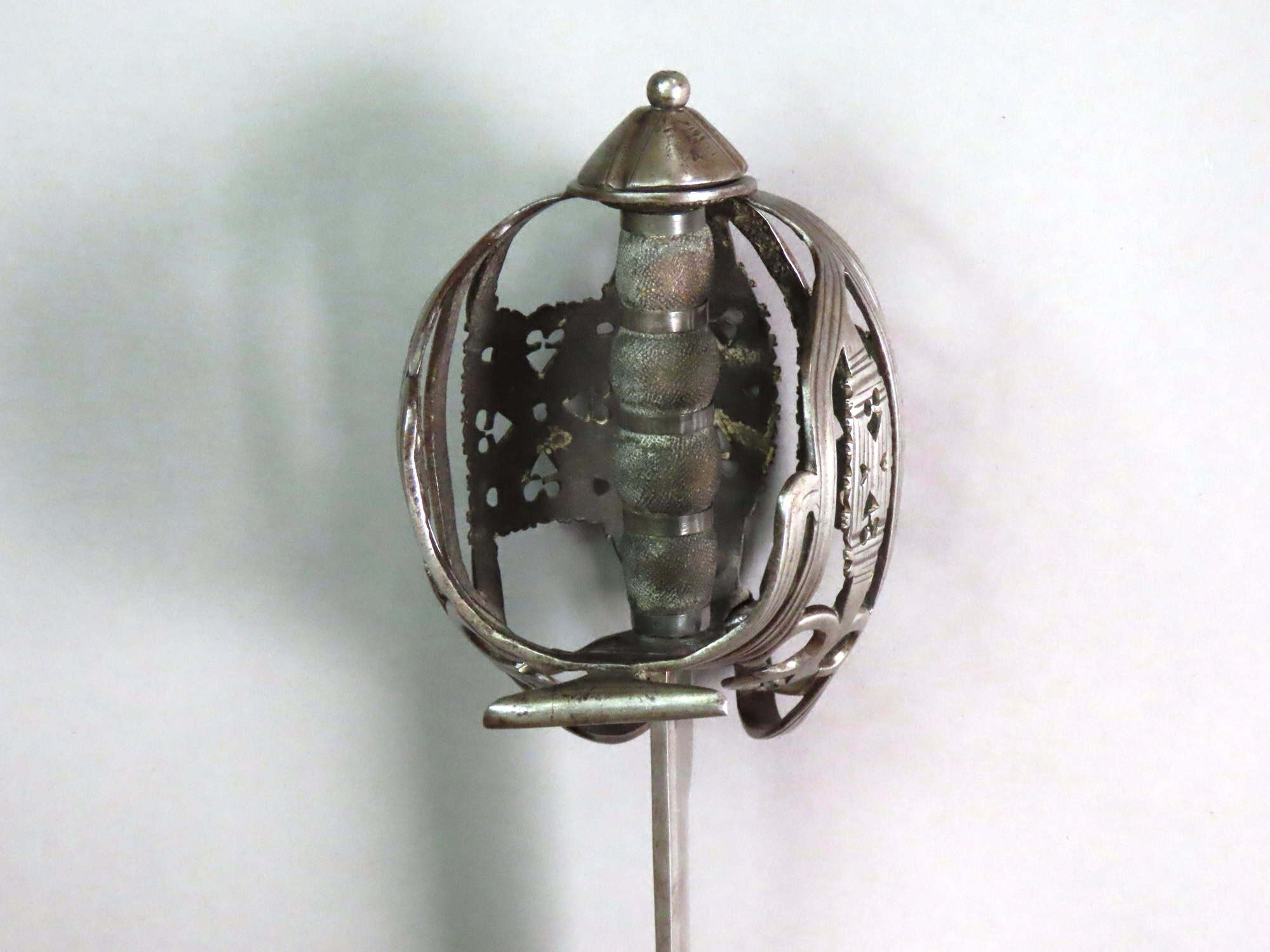
This hilt is an example of the hiatus of the Glasgow style. The primary and secondary guard plates are finely fretted with merlons and triangles at the edges and pierced with geometric patterns of triangles and circles. The side guard plates terminate at the base with well-formed rounded merlons. The cross bar is of bold construction and terminates in a sturdy scrolled wrist-guard. The forward loop guards are well defined and also decorated in the Glasgow manner.
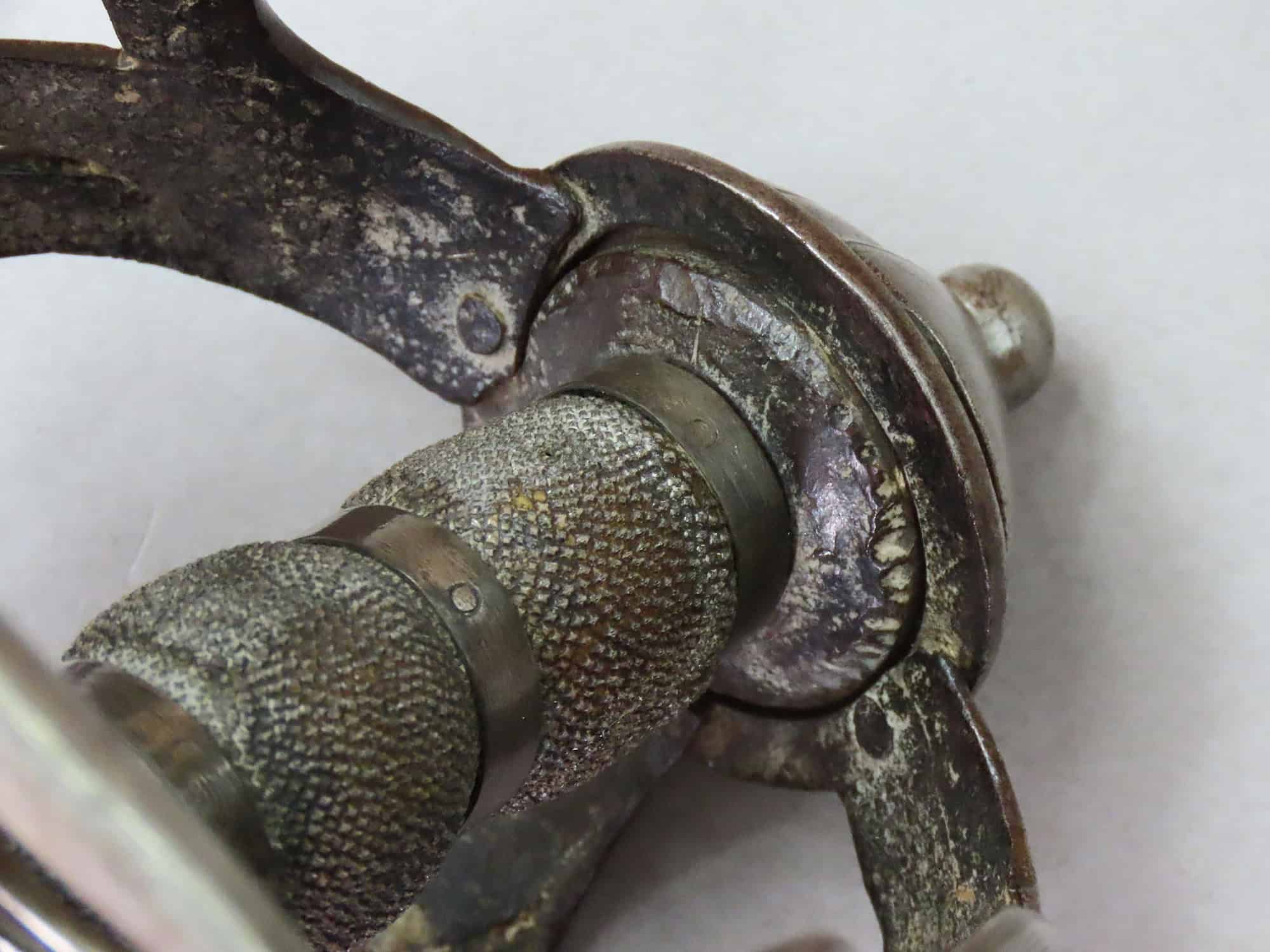
The cone shaped pommel is mounted with a globular button on top from which four equally spaced sets of Glasgow style grooves radiate towards the pommel edge. The guard arms of the hilt converge into two side terminals and one at the front at the pommel. When the hilt was first made these terminals tucked firmly underneath the pommel rim to secure the structure in the traditional Scottish manner.
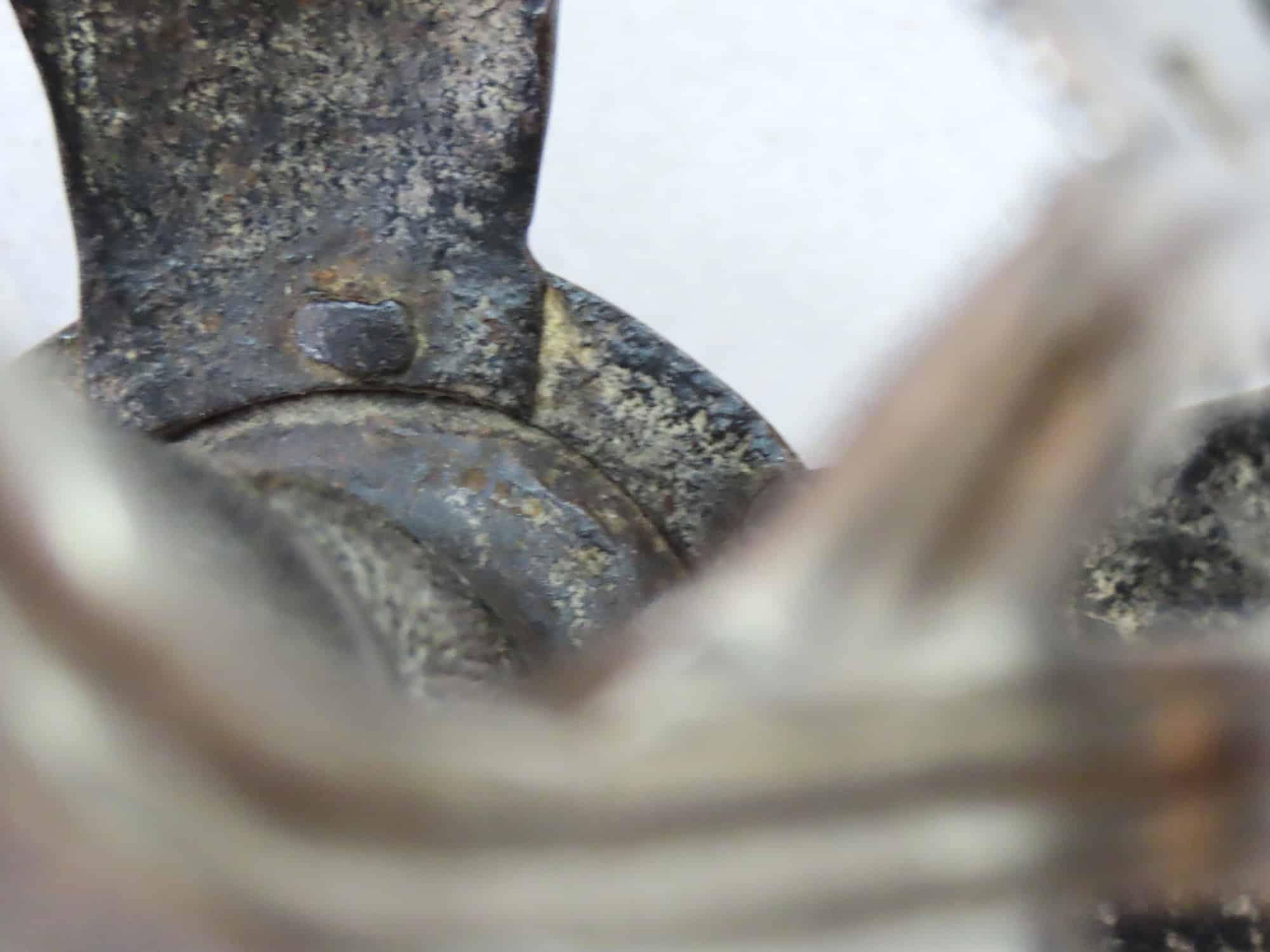
At some time later the tops of the guard arms have been riveted onto a flat iron pommel ring. This work is of good quality but inconsistent compared to the rest of the hilt which consists of bars forged together. The use of pommel rings in basket hilt design in the second quarter and middle of the 18th century was an English feature adopted by makers manufacturing swords for the British Army, including some influenced by traditional Scottish styles. It would seem therefore that the Stair sword was “updated” in an English manner probably in the second quarter of the 18th century.
The baluster shaped wooden grip is laterally grooved, bound with shagreen and fixed with bands of riveted silver strip.
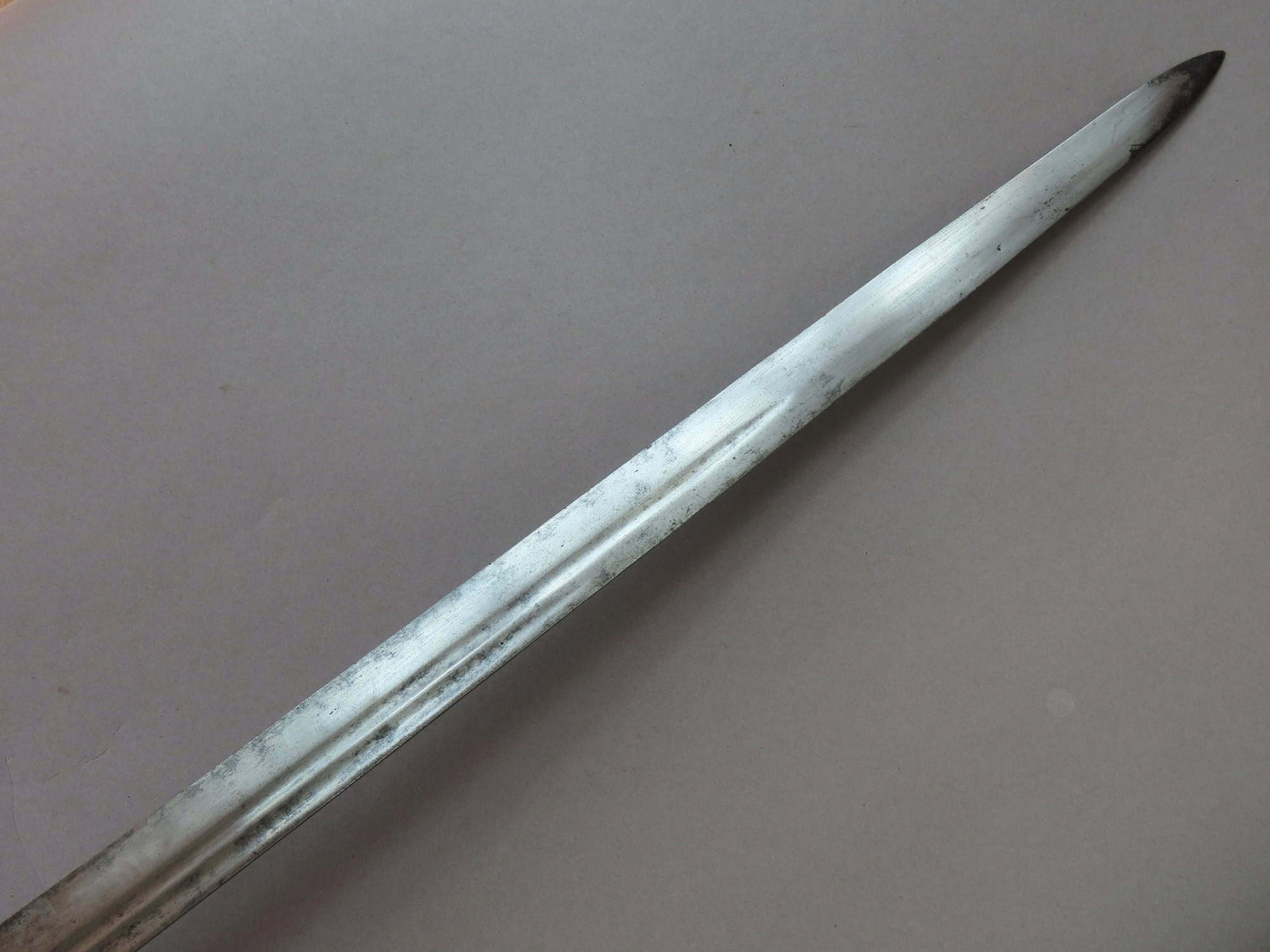
The fine quality single edged blade tapers to its tip and is 34 inches (86.5 cm) long. It has a pronounced ricasso with a blunt edge 1.75 inches long. A broad fuller extends from the hilt under the blunt back edge for 24 inches (61 cm) after which the blade becomes double edged. A second fuller extends from the end of the ricasso and terminates 7 inches from the tip. Inside each fuller on each side the name ANDRIA FARARA is stamped from individual letters flanked by crosses.
The shoulders of the ricasso are housed in a groove chiselled underneath the cross guard which accommodates the blade into the hilt in the Scottish manner. The perimeter of the groove is enhanced with an incised border line with loops on each side. This feature appears on the earliest fully formed Scottish basket hilts of the late 17th and early 18th centuries. The overall length of the sword is 40 inches (101.5 cm).
Provenance: The Earl of Stair, Christies “Fine Antique Arms and Armour”, April 12, 1978, lot 187, Plate 23,